A while back, I saw this meme posted by a woman who is in a significant position of leadership in a Christian organization.
Ladies – especially those of us who lead, teach, and minister to women – we ought not be posting or teaching things like this.
First of all, it’s misleading. This is not what Ephesians 2:10 says. Ephesians 2:10 says:
For we are his workmanship, created in Christ Jesus for good works, which God prepared beforehand, that we should walk in them.
Someone has taken it upon herself to summarize the verse in her own words and created a meme which makes it look like Ephesians 2:10 is being quoted. And her summary is incorrect – a mishandling of God’s Word.
Which brings me to point number two. This is not what Ephesians 2:10 means.
The “good works” God has prepared for us to walk in are seldom amazing – at least not in the way we usually define the word “amazing”.
The “good works” God has prepared for us to walk in are seldom amazing – at least not in the way we usually define the word “amazing”. Changing diapers, doing the laundry, breaking up fights between siblings, dealing with unreasonable bosses and annoying co-workers, and scrubbing toilets can all be “good works” God has ordained for us to perform to His glory, but most people wouldn’t call those things “amazing”. They’re mundane. Ordinary. Everyday life types of things.
And that’s OK!
First Thessalonians 4:10b-12 puts it like this:
But we urge you, brothers…to aspire to live quietly, and to mind your own affairs, and to work with your hands, as we instructed you, so that you may walk properly before outsiders and be dependent on no one.
God has called us to serve Him and one another, and that is usually plain, unglamorous, non-prestigious, hard work. Forget “amazing” – often, no one will notice or thank us for our good works, or if they do notice, they might criticize the job we’ve done.
Cotton candy “theology” ends up being discouraging in the long run.
Finally, cotton candy “theology” like this ends up being discouraging in the long run:
“God created me to to amazing things, huh? This morning I ironed, cleaned dog vomit off the rug, and spent an hour ferrying kids to various activities. That doesn’t feel very amazing. When does this ‘amazing’ thing kick in? How long do I have to wait?”
Or:
“I’m a single mom with a full time job and three kids. I barely make it to church every week and struggle to get six hours of sleep a night with all I have to do. I’m exhausted. And now you’re telling me I have to do something ‘amazing’ on top of that?”
Or:
“I’m just an ordinary woman. God hasn’t really given me anything ‘amazing’ to do. Maybe He doesn’t love me. Maybe I don’t have enough faith, or I’m not praying hard enough, or there’s some secret sin in my life that I’m not aware of. Maybe I’m not even saved. What a failure I am.”
Ladies, ideas like the one in this meme do more harm than good. If we want to encourage each other, we need to do it biblically – with what God’s word actually says and with what God’s word actually means – with good, sound theology.
If we want to encourage each other, we need to do it biblically – with what God’s word actually says and with what God’s word actually means – with good, sound theology.
What are your thoughts on Resolution 9 that recently passed at the 2019 annual meeting of the Southern Baptist Convention?
It seems like every year there’s that one controversial resolution that everybody’s talking about. This year, it’s Resolution 9: On Critical Race Theory And Intersectionality.
If you don’t know what CRT and intersectionality are, you’re not alone. Far from it, in fact. There’s no way I can fully explain each of them, so I would encourage you to Google the terms and get ready for some heavy duty academic reading, some of which is going to conflict with itself depending on who and what you read. Also, see the “Additional Resources” section below.
Briefly and uber-broadly, what you see playing out in race relations in the U.S. right now is basically the end result of CRT: Privilege. Reparations. Oppression. Repent of and renounce your whiteness. White people’s racism is so deep seated we’re not even conscious of it. White power and privilege are inextricably embedded in politics, education, religion, economics- every single system in existence. It is a paradigm through which social justice issues are viewed and addressed.
Intersectionality is almost like saying: “On a scale of 1-10, how oppressed are you?” The fewer minority groups you fit into, the less oppressed you are, and vice versa. A white, male, heterosexual, educated, middle class, Christian would be on the “privileged” end of the scale. A poor, black, female, homosexual, transgender, Muslim would be on the “oppressed” end of the scale. The more oppressed you are, the more you are to be heard and taken seriously on the social issues of the day.
(People are going to say those are over-generalizations. I agree. Like I said, Google it and study the issue more thoroughly.)
In the Southern Baptist Convention, any messenger (a church member representing her church at the convention) can propose a resolution about almost anything (It’s actually pretty interesting to go back as far as 1845 and read past resolutions.). If her resolution is approved by the Committee on Resolutions, it’s voted on by everybody else in attendance (why, in 2019, we haven’t come up with some method of distance voting online is beyond me, but that’s for another article). Because of SBC polity and the autonomy of each local church, resolutions are non-binding. Generally speaking, no SBC church or church member is required to abide by a resolution that passes, and resolutions are often a merely an encouragement for SBC churches/members to affirm something biblical or to repudiate something that’s unbiblical anyway.
Such was the case with Resolution 9, which called on Southern Baptists to – in a nutshell – recognize that CRT and intersectionality are unbiblical ways of addressing “social justice” issues and that they are creeping in to SBC churches and entities, repudiate CRT/intersectionality, and affirm that the Bible is authoritative and sufficient for dealing with these and all other issues.
At least, that’s what the originalresolution authored by Pastor Stephen Feinstein of Sovereign Way Christian Church called on Southern Baptists to do. But that’s not the resolution SBC messengers got to vote on.
You see, when a messenger submits a resolution to the Committee on Resolutions for approval, “The SBC Committee on Resolutions is vested with the authority to…reword submitted resolutions…”. And reword, they did. Not just the format, but the content. So much so that the revised resolution bears so little resemblance to the original that had I authored any resolution altered to this extent, I would have ended up voting against my own resolution. The committee’s rewording changed the meaning of the resolution from “The CRT/intersectionality paradigm is sinful at its foundation. We need to repudiate it altogether, keep it out of our churches and entities, and address these issues biblically,” to “Some people have used the CRT/intersectionality paradigm unwisely, but we can learn some things by using it, so as long as it doesn’t override Scripture, it’s fine,” and the revised version of the resolution passed.
So that’s the quick recap of the issues at play (as I have read about them – I was not able to attend the convention this year). What are my thoughts?
•My first reaction to both versions of the resolution and the passage of the revised version was that most of the messengers likely did not understand what they were voting on for two reasons:
First, the format and wording of SBC resolutions tends to be somewhat formal and stilted. That’s not a bad thing in and of itself, and I’m certainly not saying any of my SBC brethren are unintelligent (I struggle to slog through them myself sometimes), but I look at the wording and format of both resolutions and I compare them to simply worded and formatted social media posts, blog articles, etc., that many people seem to have trouble understanding, and I have to think it would be helpful to begin each resolution with a simply worded four or five sentence summary of its main points so people have a better shot at knowing what they’re voting about.
Second, the vast majority of Southern Baptists (and probably Christians in general) do not keep up with current events in evangelicalism and probably have never heard of CRT or intersectionality – which are relatively new terms and concepts anyway – much less know what those terms mean well enough to make an informed decision on which way to vote. (I don’t blame them. It’s impossible to keep up with everything going on in the world of evangelicalism.) Neither version of the resolution offered much of an explanation as to what CRT and intersectionality are. They both seemed to carry the assumption that those reading the resolution would already know. My guess is that most did not.
I later discovered that my friend, Pastor Tom Buck had a similar takeaway. I thoroughly agree with him.
•Tom also spoke against the revised resolution from the floor, and Tom Ascol, president of Founders Ministries, offered some clarifying amendments (which, unfortunately did not pass) to the revised resolution. I thought both were very helpful, and I wish the messengers had taken their remarks to heart.
•I am shocked and appalled at the changes the Committee on Resolutions made to Pastor Feinstein’s resolution. I realize that the committee has the right to “reword” resolutions, but I don’t think they ought to have the right to water down or change the meaning of the content of a resolution. Grammar, format, correcting objectively incorrect facts, eliminating redundancies – all fine. But for a revised version of a resolution to be so dramatically different from the original – no.
•I can only speculate as to why the revised version of the resolution differed so greatly – mainly in that the language seemed softened and the urgency and danger of the issue seemed watered down. Either the members of the Committee on Resolutions aren’t very familiar with CRT and intersectionality and the dangers they pose and watered down the language in order not to offend or alarm anyone, or the members of the committee are knowledgeable of, and at least somewhat favorably disposed to, CRT and intersectionality and are trying to fly them into the SBC under the radar.
As I said, this is only speculation and I am not making any accusations or casting aspersions. With the exception of Trevin Wax, I am not familiar with any of the members of the committee, but I will say this: I would be very surprised to encounter anyone on faculty or staff at an institution of higher learning (such as a seminary) that isn’t at least acquainted with the basics of CRT and intersectionality. I suppose it’s not impossible, but it would be very surprising to me.
•Big picture short term: Very few of the millions of Southern Baptists in the U.S. and around the globe will even know about this resolution since, proportionally, very few Southern Baptists attend the convention or keep up with convention business. Even most of those who were present and voted to approve the resolution will probably have forgotten about it within a month or so since it has no enforceability at the church or individual level and since many voters likely did not fully understand what they were voting about in the first place. While the adoption of the resolution is not a good sign, I don’t expect there to be an en masse mad rush of Southern Baptists into full blown CRT and intersectionality tomorrow.
•Big picture long term: Barring direct intervention from God Himself in the form of revival, the SBC will eventually go down the same path of theological liberalism as all the other major denominations. Doctrinally sound churches will split off and either form their own denomination or remain independent, autonomous churches. This resolution is only one of the the first steps down that road.
•It is my hope that some good will come from this resolution in the form of awareness. That average people in the pew will hear the words “Critical Race Theory” and “intersectionality” and wonder what they mean and how they connect to the SBC. That they will study and research and be moved by a holy zeal, not only cry out to God to keep these and other unbiblical ideas out of the SBC, but to stand up and act – to contend for the faith once for all delivered to the saints.
If you have a question about: a Bible passage, an aspect of theology, a current issue in Christianity, or how to biblically handle a family, life, or church situation, comment below (I’ll hold all questions in queue {unpublished} for a future edition of The Mailbag) or send me an e-mail or private message. If your question is chosen for publication, your anonymity will be protected.
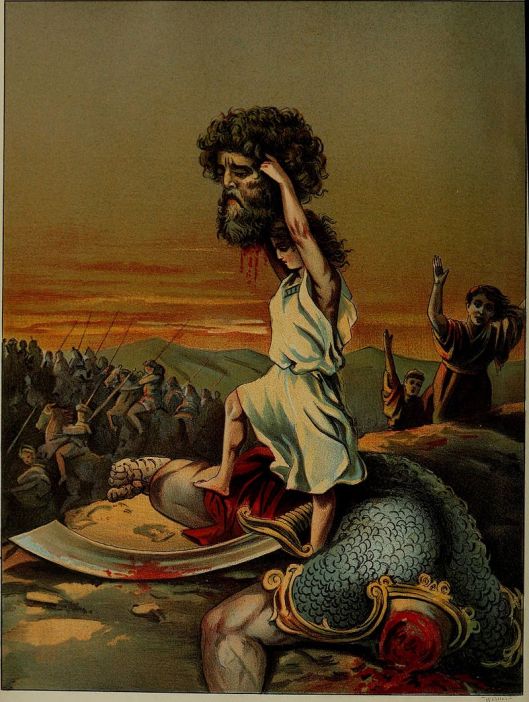
I recently finished reading through the life of David during my quiet time. When we think of David, the first thing to jump to mind is probably “and Goliath” or “and Bathsheba” or maybe that he was a king or a psalmist. But have you ever thought of David and the first thing to come to mind was “lousy father”? I haven’t. And the Bible doesn’t explicitly tell us that he was a bad dad. And, let’s face it, even the most godly parents in the world can have a kid or two who turn out to be prodigals. But if you look at how some of David’s children turned out, you have to at least wonder about his parenting skills.
First you’ve got Amnon – as disgusting a specimen of a human being as ever walked the planet. He makes himself physically ill lusting day after day for his half sister, Tamar. That’s a lot of lust. But at least – at least – he keeps it to himself. For a while, that is.
Amnon’s got an equally disgusting cousin, Jonadab – who, instead of smacking him senseless when Amnon shamelessly confesses his dastardly daydreams – devises a scheme to help Amnon indulge his foul and festering flesh by tricking David into making Tamar available to him. David sends Tamar to Amnon’s house, and Tamar pleads with him not to force himself on her.
(While Tamar is pleading with her pustule of a brother, she says something interesting: “Please speak to the king, for he will not withhold me from you.” Now, arguably, it’s likely she was just saying whatever she could think of in the moment to get away from Amnon and didn’t really believe David would allow Amnon to marry her. But if she did believe that to be true, that definitely says something about David. Because, by that time in Israel’s history, intermarriage between two people who shared a parent was big-time illegal with severe consequences for the offenders. And David and everybody else in the kingdom knew that. Did David’s children think he would break the law for them and excuse them from punishment? And for such a nauseating reason?)
But Amnon ignores Tamar’s heartbreaking pleas and forcibly rapes her. He rapes his sister. David finds out what happened and is understandably angry. But does he follow the law and have Amnon executed? Nope. (So we at least have our answer to the question of whether or not David would break the law for his children.) If David did anything about the situation, the Bible doesn’t record it.
Fast forward two whole years. David has still not made his rapist son face the music, so Absalom, Tamar’s full brother, metes out his own brand of justice, putting Amnon to death.
Fast forward a few more years and Absalom thinks, “I believe I’d make a better king than dear old Dad.” So he sets about manipulating and stealing the hearts of his countrymen away from David and stages a bloodless coup. David ends up having to flee for his life from his own son. Meanwhile, Absalom moves into the palace, sets up a love nest on the roof where everybody can see, and sleeps with David’s concubines. Then, Absalom gathers up an army to hunt David – his father – down in order to kill him and secure his throne.
David’s men fight valiantly for him, risking their own lives. Joab, the commander of David’s army – perhaps considering David’s command to “deal gently” with Absalom as ludicrous after all Absalom has done – seizes an opportune moment, and kills Absalom. David flips out in grief, so much so that Joab has to rebuke him: all these men risked their lives to save you, David, and you’re crying and moaning over this wretch who was trying to kill you! Snap out of it or they’re going to turn on you! Fortunately, David has the sense to listen to him.
After some more wars, some famine, and a “sin-sus,” Adonijahdecides he can pull off the coup his brother Absalom so spectacularly failed at. David is old and sickly, and it should be easy for Adonijah to make a grab for the throne. And in the description of Adonijah, here’s what was said that initially got me thinking David wasn’t Dad of the year:
His [Adonijah’s] father [David] had never at any time displeased him [Adonijah] by asking, “Why have you done thus and so?”
Are you picking up what the author of 1 Kings is laying down? David was an indulgent father. He had never at any time questioned his son’s actions or intervened in a way that upset him. He let Adonijah run wild and do what he wanted to do. And the way Amnon and Absalom acted, it’s reasonable to surmise that David raised them the same way, along with all the rest of his children. It’s a miracle Solomon turned out as well as he did (at least until his wives drew him away from the Lord into idol worship). Reading the first nine chapters of Proverbs, I can’t help but wonder if Solomon observed David’s parenting and was determined not to follow his poor example. Listen to my instructions, son. Get wisdom. Don’t be a fool.
Sometimes Bible characters set a great example for us. David, a man after God’s own heart, set many. But sometimes God lets us see their poor and sinful behavior so we can learn not to follow their example. Moms and Dads, let’s make sure we are men and women after God’s own heart when it comes to parenting our kids.
Happy Father’s Day, y’all.
If this article sounds familiar, it’s because you just read it in last Friday’s Random Ramblings, Ruminations, and Resources. A reader asked if I would make it a stand-alone article for easier sharing. :0)
As is my usual summertime custom, I’m taking a break from blogging this week to spend some time with family. So my normal blog schedule is out the window and I’ll be re-running articles from the archives all this week, and possibly next Monday (6/17).
As it happens, this week is also the annual meeting of the Southern Baptist Convention, so the articles I’ll be re-running will center around Southern Baptists and the SBC (although all are relevant to non-SBC Christians). Aside from being a theme geek, there’s an important reason I’m doing this. I would deeply appreciate it if you would pray for the SBC. There are some very unbiblical movements afoot that need to be stopped and repented of. Will you please pray that the Holy Spirit will convict Southern Baptists of sin wherever that conviction is needed, grant us the gift of repentance, and give us a hunger for holiness? I am hoping that each day’s article will be a small reminder to pray for us.
If you are participating in the 1&2 Timothy study, please use this week to catch up, read ahead or go back and concentrate on any passage you’d like to dig deeper into. I’m planning to have a new lesson for you next week.
My flesh is in a bad 👏mood 👏 today. (Do you like the claps? I like the claps. Some people don’t like the claps. What can ya do?) It’s one of those rainy days where it doesn’t just rain and get it over with and then the sun comes out. It stays grey all 👏day 👏long 👏 and rains just lightly and intermittently enough to make you crazy. That is, if the heat and the million per cent humidity hasn’t already put you over the edge. Good ol’ summertime in south Louisiana.
But God is good even on the yuckiest of days and Random Ramblings, Ruminations, and Resourcesis a fun way to cheer up and focus on stuff that’s way more important than the weather. Let’s dive right in, shall we?
Listen Up, Feed Back
I dropped the word on Facebook and Twitter a couple of days ago that Amy Spreeman (yes, that Amy Spreeman from Berean Research, Fighting for the Faith, etc.) and I are looking into doing a podcast together. So I need some feedback from y’all on two questions:
1. If we did do a podcast, would you listen?
2. Can you help us think of a name for the podcast? (We will be talking about a variety of biblical topics.)
A while back, I had said a great name for a podcast like this would be Discerning Women, a play on the title of the 80’s sitcom Designing Women. But the more I thought about it, the more I realized a significant portion of our potential listeners have probably never heard of that show (I’ve only seen a few episodes myself), so it wouldn’t work. So help us think of a good title and drop it into a comment here or on social media.
Bad Dad David?
I recently finished reading through the life of David during my quiet time. When we think of David, the first thing to jump to mind is probably “and Goliath” or “and Bathsheba” or maybe that he was a king or a psalmist. But have you ever thought of David and the first thing to come to mind was “lousy father”? I haven’t. And the Bible doesn’t explicitly tell us that he was a bad dad. And, let’s face it, even the most godly parents in the world can have a kid or two who turn out to be prodigals. But if you look at how some of David’s children turned out, you have to at least wonder about his parenting skills.
First you’ve got Amnon – as disgusting a specimen of a human being as ever walked the planet. He makes himself physically ill lusting day after day for his half sister, Tamar. That’s a lot of lust. But at least – at least – he keeps it to himself. For a while, that is.
Amnon’s got an equally disgusting cousin, Jonadab – who, instead of smacking him senseless when Amnon shamelessly confesses his dastardly daydreams – devises a scheme to help Amnon indulge his foul and festering flesh by tricking David into making Tamar available to him. David sends Tamar to Amnon’s house, and Tamar pleads with him not to force himself on her.
(While Tamar is pleading with her pustule of a brother, she says something interesting: “Please speak to the king, for he will not withhold me from you.” Now, arguably, it’s likely she was just saying whatever she could think of in the moment to get away from Amnon and didn’t really believe David would allow Amnon to marry her. But if she did believe that to be true, that definitely says something about David. Because, by that time in Israel’s history, intermarriage between two people who shared a parent was big-time illegal with severe consequences for the offenders. And David and everybody else in the kingdom knew that. Did David’s children think he would break the law for them and excuse them from punishment? And for such a nauseating reason?)
But Amnon ignores Tamar’s heartbreaking pleas and forcibly rapes her. He rapes his sister. David finds out what happened and is understandably angry. But does he follow the law and have Amnon executed? Nope. (So we at least have our answer to the question of whether or not David would break the law for his children.) If David did anything about the situation, the Bible doesn’t record it.
Fast forward two whole years. David has still not made his rapist son face the music, so Absalom, Tamar’s full brother, metes out his own brand of justice, putting Amnon to death.
Fast forward a few more years and Absalom thinks, “I believe I’d make a better king than dear old Dad.” So he sets about manipulating and stealing the hearts of his countrymen away from David and stages a bloodless coup. David ends up having to flee for his life from his own son. Meanwhile, Absalom moves into the palace, sets up a love nest on the roof where everybody can see, and sleeps with David’s concubines. Then, Absalom gathers up an army to hunt David – his father – down in order to kill him and secure his throne.
David’s men fight valiantly for him, risking their own lives. Joab, the commander of David’s army – perhaps considering David’s command to “deal gently” with Absalom as ludicrous after all Absalom has done – seizes an opportune moment, and kills Absalom. David flips out in grief, so much so that Joab has to rebuke him: all these men risked their lives to save you, David, and you’re crying and moaning over this wretch who was trying to kill you! Snap out of it or they’re going to turn on you! Fortunately, David has the sense to listen to him.
After some more wars, some famine, and a “sin-sus,” Adonijahdecides he can pull off the coup his brother Absalom so spectacularly failed at. David is old and sickly, and it should be easy for Adonijah to make a grab for the throne. And in the description of Adonijah, here’s what was said that initially got me thinking David wasn’t Dad of the year:
His [Adonijah’s] father [David] had never at any time displeased him [Adonijah] by asking, “Why have you done thus and so?”
Are you picking up what the author of 1 Kings is laying down? David was an indulgent father. He had never at any time questioned his son’s actions or intervened in a way that upset him. He let Adonijah run wild and do what he wanted to do. And the way Amnon and Absalom acted, it’s reasonable to surmise that David raised them the same way, along with all the rest of his children. It’s a miracle Solomon turned out as well as he did (at least until his wives drew him away from the Lord into idol worship). Reading the first nine chapters of Proverbs, I can’t help but wonder if Solomon observed David’s parenting and was determined not to follow his poor example. Listen to my instructions, son. Get wisdom. Don’t be a fool.
Sometimes Bible characters set a great example for us. David, a man after God’s own heart, set many. But sometimes God lets us see their poor and sinful behavior so we can learn not to follow their example. Moms and Dads, let’s make sure we are men and women after God’s own heart when it comes to parenting our kids.
Happy Father’s Day, y’all.
And Speaking of David…
It seems like there’s never anything decent on TV in the summertime – I need something to watch while I’m folding the laundry to make it bearable – so I’ve taken to watching old movies in the summer instead of TV. David and Bathsheba (1951) happened to be on recently, so I recorded it, thinking, “The Ten Commandments, Ben Hur, The Robe, etc. were all good. Gregory Peck and Susan Hayward…how bad could it possibly be?”
Well let me just tell you – it was a stinkeroo from the word go.
I’m really going to date myself here, but…remember when the newspaper used to have those fun little puzzles in the comics section? One of them was a picture and you were supposed to look at it and find everything that was wrong with the picture: a car with a doughnut in place of a tire, a swing with only one chain, etc. That’s what this movie was like. So much ridiculous and crazy stuff thrown in, and even the parts that were true to Scripture were chronologically out of order.
I like Bible story movies, and I have no objection to the writers “filling in the blanks” of a Bible story as long as whatever they fill in is biblically and culturally plausible and doesn’t conflict with anything in Scripture. God already wrote the script – stick to it!
I give David and Bathsheba five boos and a hiss, because it was also very monotone, too long, and just plain dull much of the time. (How anybody can make that story dull is beyond me, but they managed it somehow.) If you’re looking for a more biblical version of this story, even VeggieTales’ King George and the Ducky would fit the bill. If you like those “what’s wrong with this picture” puzzles and you want to work one for two hours straight, knock yourself out:
But honestly, read the book. It was so much better than the movie.
One word of caution – just like when you walk into the “Christian” section of a bookstore, you’ll need to have your discernment radar on full alert. Some of the “Christian” videos at Prime are materials put out by false teachers, Mormons, New Agers, etc.
Ladies and Gentlemen
In the midst of the war on the biblical roles of men and women that’s raging right now, a thought occurred to me that I don’t believe I’ve heard anybody else bring up.
As complementarian women, we’re not only blessed that God has not burdened us with teaching men, He has also blessed us by allowing us to receive biblical instruction from both men and women.
Think about that. As a godly woman, you can attend a conference where the speakers are all male, all female, or a mix of both. You don’t need to worry about whether your Sunday School teacher is a man or a woman. You’ll of course, need to concern yourself with other issues, like whether the woman teacher is also teaching men, or is teaching false doctrine, but as far as the sex of the person teaching you, there’s nothing to worry about. Godly men don’t have that option. When the Bible is being taught in the church setting, their only option is a male teacher. Ever think about that? It’s a pretty nice perq!










 A while back, I had said a great name for a podcast like this would be Discerning Women, a play on the title of the 80’s sitcom
  David and the first thing to come to mind was “lousy father”? I haven’t. And the Bible doesn’t explicitly tell us that he was a bad dad. And, let’s face it, even the most godly parents in the world can have a kid or two who turn out to be prodigals. But if you look at how some of David’s children turned out, you have to at least wonder about his parenting skills.
 David
David  available to you.