Mailbag, Worship

The Mailbag: Potpourri (Boundaries… Submit vs. address sin?… Discernment- Who do you think you are?)

Welcome to another โ€œpotpourriโ€ edition of The Mailbag, where I give short(er) answers to several questions rather than a long answer to one question.

I like to take the opportunity in these potpourri editions to let new readers know about my comments/e-mail/messages policy. Iโ€™m not able to respond individually to most e-mails and messages, so here are some helpful hints for getting your questions answered more quickly. Remember, the search bar (at the very bottom of each page) can be a helpful tool!

Or maybe I answered your question already? Check out my article The Mailbag: Top 10 FAQs to see if your question has been answered and to get some helpful resources.


This comment was left on my article, Taking Offense:

Thank you for this biblical truth: โ€œJesusย taught usย toโ€ฆlove our enemies, do good to those who hate us, bless those who curse us, pray for people who abuse us, turn the other cheek, give to those who want to take from us, treat others the way we want to be treatedโ€. Are boundaries biblical then? Do we stick around when someone is pouring out non-stop criticism and verbally abusing us or talking behind our back? Family members can be the worst. People who are not following Jesus and who are consumed with darkness, hate people who are walking in the Light. I understand not taking offense, but in my experience, when I turn the other cheek to abusers, they keep abusing and hate you more. It is not good to allow them to sin against us because when their sin flows freely, it not only harms me but it harms them too. Thoughts?

Great question! It’s one Amy Spreeman and I have received numerous times over the past few years, so we’ve recorded a podcast mini-series on it!

Beautiful Biblical Boundaries- part 1 deals with the Scriptures and biblical precepts addressing boundaries. We discuss how and when to erect boundaries (and how and when not to). This episode is currently scheduled to drop next Wednesday, November 12.

In Beautiful Biblical Boundaries- part 2, we’ll answer listeners’ questions about boundaries in their own lives and relationships. This episode is currently scheduled to drop in about two weeks, on Wednesday, November 19.

Please note that the links above will not work until the dates specified.


This comment was left on my article, Marriage: Itโ€™s My Pity Party and Iโ€™ll Cry if I Want To ~ 7 Ways to Take Your Focus Off Yourself and Put it Back onย Christ (By the way, yes, I realize that the length of the titles of some of my articles rivals those of many of the Puritans’ books and pamphlets. I’m OK with that.๐Ÿ˜€)

I have a question about number 7…

This article pertains to normal, relatively healthy, Christian marriages. In other words, not abusive marriages. If you are being abused, get yourself and your children to a safe place, and call the police, your pastor, or a loved one for help.

Of course, I agree that we should be subject to our husbands. However, are we not to call them out gently on their sin when they are acting like โ€œan ungodly jerkโ€ according to various verses such as Proverbs 27:5, Luke 17:3, Matthew 18:15, and Galatians 6:1? I guess Iโ€™m just confused because both commands seem to contradict each other.

This is another super question! The short answer is, “Yes,” but as Ecclesiastes 3:1,7 tells us, “there is a time for every matter under heaven…a time to be silent and a time to speak,” and in the moment when your husband is acting like “an ungodly jerk,” he’s apt to respond poorly to his sin being exposed and corrected, which just compounds his sin. (And frankly, we wives usually respond just as poorly in that moment when the shoe is on the other foot.)

In that moment, generally speaking, it’s usually a time to be silent, and, assuming he’s not asking you to sin, do whatever it is he’s gruffly or impatiently asking you to do with a gracious, kind, willing, and loving attitude and demeanor, as opposed to pouting and feeling sorry for yourself – which is the theme of the article (and also why #7 focuses on the “a time to keep silent” aspect of submission rather than the “a time to speak” aspect of addressing your husband’s sin).

Have you ever heard the phrase “killing someone with kindness”? God has an amazing way of taking our example of godly obedience, kindness, and refusing to retaliate, and using that to convict the other person of his sin. He does that Himself with us:

Or do you think lightly of the riches of His kindness and forbearance and patience, not knowing that the kindness of God leads you to repentance?

Romans 2:4

So, yes, there’s a time to speak and – approaching your husband the way you would want to be approached – kindly and humbly address his sin. That time is usually… later. Not in the moment.


What makes you confident in your ability to determine who is a true or false teacher of the Bible? Are you a theologian or do you have background in studying theology and the Bible? Just curious.

(I’ve distilled this question down from a much longer laundry list of complaints from a follower about a Facebook post in which I warned against false teacher Priscilla Shirer. It’s hard to tell from the wording in the brief excerpt above, but this was not a genuine, good faith question from someone desiring to grow in her discernment skills. It was tossed out in a snarky, accusatory, “Who do you think you are?” tone. My tone below, per Proverbs 26:5, is a biblically appropriate response to hers.)

The Bible makes me confident in my ability to determine who is a true or false teacher of the Bible. And if you’re a genuinely regenerated Christian, it should make you confident too.

Our authority as Christians comes from God’s Word, not from a seminary. You don’t have to go to seminary to be a discerning Christian (in fact, many seminaries are so rife with false doctrine that you’d better be discerning before you get there). If you think about it, none of the people who wrote the Bible’s teachings on false teachers and false prophets ever went to seminary, including the Bereans, whom God praised for their discernment.

Scripture tells us:

Beloved, do not believe every spirit, but test the spirits to see whether they are from God, because many false prophets have gone out into the world.

1 John 4:1


Examining teachers and comparing their teaching and behavior with Scripture is a command from God for Christians, not an option, and certainly not something for Christians to criticize and scorn other Christians for doing (as long as they’re doing it biblically, which I am).

So the question here is not why am I obeying God’s Word, testing this spirit against Scripture, and when she’s found to be a false teacher, warning other Christians about her. The question is, if you’re a Christian, why aren’t you? Why aren’t you studying your Bible so that you understand it, and can see how Shirer’s words and actions conflict with it? Why aren’t you warning others against her? I would be very concerned about that for my own spiritual life if I were you.

I hope this resource will answer any other objections to the Bible’s command for discernment that you may have.

I later added these remarks (slightly edited here) to the remainder of the commenters on that post:

I would encourage you younger ladies (especially those who have been commenting in the “Where do you get off?!?!” vein to me) to consider this:

“When one becomes so familiar with His Word you can spot a false teacher a mile away – I told my girls that when you walk close to God and His WORD you become sensitive to the clanging gong of false teachers.”

This quote is from a 70+ year old “Titus 2:3-5 woman” who has been walking with the Lord and a passionate student of God’s Word for over 50 years. And she’s right. And as a younger woman (I’m 56), I’m very thankful for the wisdom she just spoke into my life.

As I said, I’m 56. I have been a faithful member of decent churches since 9 months before I was born. I’ve been saved since I was 12. That means I’ve been walking with the Lord and studying His Word at church, a Christian high school and college, in other Christian organizations, and on my own for 44 years. Longer than many of you have been alive. Furthermore, I’ve been blogging and “doing discernment ministry” for over 17 years.

If you had a doctor with 44 years of training and 17 years of diagnostic experience and he gave you a diagnosis you didn’t like, would you immediately throw it back in his face with a sassy, disrespectful, “What qualifies YOU to say so?” or “What makes you so sure you’re right? MY opinion is…”. I doubt it. You might respectfully ask him some questions or request some resources to help you understand. You might even politely seek a second or third opinion, but you would not be so brash and arrogant to immediately assume he has no idea what he’s talking about and is just being mean to you, and you know better than he does.

I’m not saying this to toot my own horn or “look down on anyone’s youth” (that would be out of context, anyway), and I’m certainly not saying I’m without sin or never make mistakes. I’m saying there’s a reason Titus 2:3-5 specifies that older women are to train younger women. (Which implies that younger women should listen to older women instead of immediately dismissing us out of hand when we say something you don’t like – especially when it’s backed up with rightly handled Scripture and other mature, doctrinally sound Christians corroborate it.) Younger women do not have the same spiritual maturity, life experience, wisdom, and biblical training that older women have who have been walking with the Lord for decades. (I definitely didn’t have it when I was a younger woman!)

By all means, get a second opinion from rightly handled, in context Scripture. Politely ask questions. Do the research on your own. But stop being so reactionary and lashing out every time you hear something biblical that you don’t like. All you’re doing is showcasing your spiritual immaturity and ignorance of Scripture and your lack of self control. Or, worst case scenario, you’re bearing the fruit of someone who isn’t saved.

I’m far from perfect, but I didn’t just fall off the turnip truck and start slinging the label of “false teacher” around willy nilly. By God’s incredible grace, mercy, wisdom, and sanctification, I’ve been doing this a long time, and I know what I’m talking about – all glory to Him.


If you have a question about: a Bible passage, an aspect of theology, a current issue in Christianity, or how to biblically handle a family, life, or church situation, comment below (Iโ€™ll hold all questions in queue {unpublished} for a future edition of The Mailbag) or send me an e-mail or private message. If your question is chosen for publication, your anonymity will be protected.

Ministry, Worship

Real Ministers of Musicโ€™s Wives of Anychurch, U.S.A. ~ Part 2

Originally published April 10, 2014

diverse-group-of-women

Iโ€™ve been married to a minister of music for over 20 years. My husband has served at many different churches in a variety of capacities: on staff, interim, supply, revivals, conferences, retreats, etc. Over those 20+ years and in those various capacities, Iโ€™ve observed a number of things about him, pastors, church musicians, and congregations from a unique vantage point.

Now, with a little help and a lot of input from a few sister minister of musicโ€™s wives, itโ€™s true confession time. Time for us to tell all, here in Part 2 of Real Ministers of Music’s Wives of Anychurch, U.S.A.ย 

You can read Part 1 here.

Turn Your Radio On, and Listen to the Music in The Air
The minister of music understands that there are songs we love to sing along with on Christian radio or Spotify that weโ€™d also like to sing in church, and, in a lot of cases, heโ€™d probably like to, too. There are a variety of reasons why the songs we like might not get sung in church:

  • ย Itโ€™s a solo. Most of the songs we hear on the radio (especially contemporary ones) are written and performed as solos, and donโ€™t work for congregational singing because: the timing is difficult for a large group to follow, there are too many spontaneous riffs and change ups, there are complicated and/or numerous bridges and tags that are difficult for large groups to follow, etc. Not every song works for large group singing.
  • tube-radio-67772_640
    ย The lyrics contain faulty or watered down theology. The minister of musicโ€™s job is to lead us in worship. We canโ€™t worship if weโ€™re singing something that conflicts with Godโ€™s Word or doesnโ€™t focus on Him and His nature, character, and deeds.
  • The accompanists arenโ€™t comfortable with it. A lot of the songs people want to sing in the worship service can be difficult for pianists and other instrumentalists whose main experience is in other genres of music. While every musician should strive to improve his skills, the minister of music doesnโ€™t want to put his accompanists on the spot if theyโ€™re uncomfortable with the technical requirements of the music.
  • Your minister of music isn’t comfortable with it.ย If the minister of music is in his 60’s he may not feel he can carry off a top ten CCM song made popular by somebody in his 20’s, especially if he doesn’t have a worship band equal to the one we’re used to hearing on the radio.
  • Thereโ€™s no sheet music available. Or itโ€™s not available in the right key or for the right instruments, etc.
  • Itโ€™s โ€œoff limitsโ€. Occasionally, and for various reasons, the pastor, elders, or others in leadership over the minister of music will make a decision that a certain song is not to be used in the worship service. Depending on the circumstances, there may not be a diplomatic way to explain this to people who love that song and want to sing it in church.
play-piano-7626_640

Play Us a Song, Youโ€™re the Piano Woman
Just by way of information, not every minister of musicโ€™s wife plays the piano. Iโ€™m one of them. Sorry. I wish I could.

sing-201027_640


One Singular Sensation
Regardless of how many pop stars got their start by singing in church, the purpose of the worship service is to worship God. There are many wonderful and talented soloists who, in humility and faithfulness, pour their hearts out to God in song at their local churches and do a great job of it. There are also a few divas on their way up the ladder looking for a stepping stone to greatness. Church isnโ€™t American Idol. Find a karaoke bar.

Fool boy is waiting his girlfriend

Show a Little Bit of Love and Kindness
Itโ€™s always encouraging for a minister of music to hear that he did a great job with the choir or that you really worshiped this morning. Itโ€™s encouraging when a pastor mounts the platform for his sermon and says thank you, or “I really liked that song,” or refers back to/quotes one of the songs during his sermon. Little things like that go a long way, so offer your minister of music a word of encouragement when you can.

Also, if your church participates in pastor appreciation month (usually the month of October), please donโ€™t forget your minister of music, youth pastor, associate pastor, etc. They all work hard to shepherd you, and it doesnโ€™t feel good to be left out.

War- What is it Good For?
The worship wars (contemporary worship music vs. traditional hymns) are alive and well. Sometimes, rather than being a general in that war, our minister of music might just be a casualty of it.

Competition

Everybody has particular genres of music that weโ€™re most comfortable with. When a different style comes along, it can be jarring. It can cause angst. It can cause arguments. But when we worship God, our focus is not to be on what makes us happy or comfortable. Often, we get so concerned about whether the worship at church pleases or offends us that we donโ€™t stop to think about whether it pleases or offends God.

But thatโ€™s the main concern of the minister of music. Which songs, regardless of style, will be pleasing to the Lord and lead people into truth about Him? While heโ€™s trying to do his best to sort this out week by week, heโ€™s possibly being pulled in a variety of directions by a variety of people over style. How many people will leave the church if we sing more hymns than contemporary songs? How many people will stop giving in the offering if we sing more contemporary songs than hymns? Whoโ€™s going to accost me after church and complain? How will the pastor and elders react to this weekโ€™s order of service? It can be a lot of pressure and take his focus off of where it needs to be: what will be pleasing to God?

Just as one man’s trash is another man’s treasure, the songs we don’t like might just be someone else’s favorite. What if we looked at singing the songs we don’t particularly like as a way to serve and encourage our brothers and sisters in the congregation who do like those songs?

th

Whyโ€™s Everybody Always Pickinโ€™ on Me?
Thereโ€™s no nice, sweet way to say this, so Iโ€™m just gonna throw it out there. Church members can sometimes be mean. I mean, mean. Let me hasten to add that most of the time, most church members are not. The majority of church members are kind, loving, supportive, and definitely appreciated by the pastor and staff. However, the others are definitely out there. I have seen church members treat pastors, ministers of music, and other church staff the way I wouldnโ€™t treat a dog. Thereโ€™s no excuse for that.

The minister of music isnโ€™t perfect. There may be times when he does something unbiblical or hurtful and at those times, itโ€™s necessary for the appropriate person to talk with him, under the provisos of Matthew 18, about whatever is wrong. But there are other times when people get their feathers ruffled โ€“even though the minister of music hasnโ€™t done anything wrong or unbiblicalโ€”simply because their personal preferences havenโ€™t been catered to.

Itโ€™s OK to talk with our ministers of music about things, even personal preferences, but letโ€™s do it in an encouraging and helpful way rather than a griping or attacking way. Screaming, threatening, name calling, constant complaints, and nasty anonymous notes and emails are never appropriate, and if thatโ€™s what is transpiring, then the problem is not with the minister of music itโ€™s with the person whoโ€™s acting that way. If we know that a member of our church is acting that way towards anyone, pastor, staff, or layperson, we must intervene and be a catalyst for making things right.

God calls us to encourage one another and build each other up, so letโ€™s get at it! Letโ€™s try to affirm our ministers of music (and pastors and other staff!) whenever weโ€™re able!


What’s something you can do
to be an encouragement to your minister of music?

Ministry, Worship

Real Ministers of Music’s Wives of Anychurch, U.S.A. ~ Part 1

Originally published April 3, 2014

four-women-walking-in-a-line-holding-hands

Iโ€™ve been married to a minister of music for over 20 years. My husband has served at many different churches in a variety of capacities: on staff, interim, supply, revivals, conferences, retreats, etc. Over those 20+ years and in those various capacities, Iโ€™ve observed a number of things about him, pastors, church musicians, and congregations from a unique vantage point.

Now, with a little help and a lot of input from a few sister minister of musicโ€™s wives, itโ€™s true confession time. Time for us to tell allโ€ฆ

Sing, Sing a Songโ€ฆ
Singing is often the only opportunity church members have (besides the offering) to take an active role in worship. Letโ€™s all take advantage of it!

congregation-worshipping

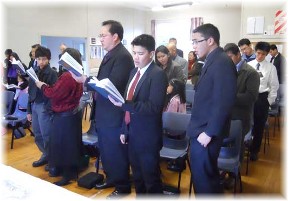
The music portion of the worship service is just that: worship and service, but sometimes we can slip into thinking of it as โ€œfiller timeโ€ before the โ€œmain eventโ€ of the sermon. If weโ€™re spending the music time chatting with our friends, checking Facebook on our phones, knitting, or clipping our nails (sadly, yes, Iโ€™ve seen all of those happen) arenโ€™t we robbing God and ourselves of the precious few hours per week we set aside for worship? Is it fair to God to spend the time weโ€™re supposed to be worshiping on these kinds of distractions? God commands our worship and God deserves our worship. So, letโ€™s give God our full attention and worship Him!

aretha-franklin-respect-1967-3

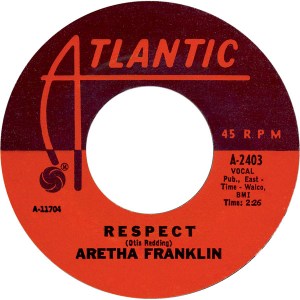
R-E-S-P-E-C-T โ€“ find out what it means to your minister of music.
The minister of music doesnโ€™t just roll out of bed on Sunday morning, jump up on the platform, and wave his arms around for thirty minutes. He works hard during the week to plan a worship service that honors God and grows and trains the congregation spiritually. He often does so amid a number of challenges: the varied talents of his accompanists, a hymn request by the pastor or a church member, bugs in the sound system, musicians going out of town, the choir soloist getting the flu. He rehearses with the instrumentalists, the praise team, the choir, and others. When he stands in front of us to lead the music, he deserves the same respect we give the pastor when he preaches or a teacher imparting knowledge or someone at work whoโ€™s making a presentation: our attention.

Someone To Watch Over Me
Singing in the choir or on the praise team kinda goes hand in hand with being a minister of musicโ€™s wife, so weโ€™re often up on the platform near our husbands. I need to tell you a little secret:

We can see you out there.

congregation-worshipping

It is incredibly encouraging to see people who are focused on Christ and engaged with Him as theyโ€™re worshiping. Itโ€™s obvious theyโ€™re communing with their Savior and thinking about Him as they sing. It makes the minister of music feel like heโ€™s been successful in helping them connect with the Lord in worship.

On the other hand, itโ€™s very discouraging to see people with their hands stuffed in their pockets, not singing, or, conversely, mindlessly rattling off lyrics, and with a countenance that says, โ€œIโ€™d rather be at the dentist.โ€ I once saw a televised worship service where the congregation was singing the hymn, โ€œAll that Thrills My Soul is Jesus.โ€ It would be difficult to describe just how unthrilled most of them looked. The word โ€œcorpsesโ€ comes to mind.

Jesus said to love the Lord with all our heart, soul, mind, and strength. When we engage all four of those areas in worship, weโ€™re not just pleasing Him by our obedience, Heโ€™s growing us into stronger, more mature Believers. And thatโ€™s the best encouragement of all for our minister of music.

Where He Leads Me, I Will Follow
We minister of musicโ€™s wives are blessed that our husbands have, for the most part, worked under pastors who are supportive and set a great example for their congregations. Pastors, you have an enormous influence on your congregation even when youโ€™re not aware of it. And one area in which you may not be aware that church members are watching and emulating you, even when weโ€™re not aware of it, is during the music portion of the worship service.

hymn_singing

Your congregation can see you during the worship time, whether youโ€™re sitting on the stage or in a pew. What you convey with your own behavior about the importance of worship, we will absorb and reflect. If you are engaged and sing heartily to the Lord, we will get the message that you think God is worthy of all of our worship and we will follow suit. If you spend the worship time engaged in other activities, we will get the message that worship time is more like the coming attractions before a movie than a time to join in and commune with the Lord through what we sing.

Additionally, when your congregation is actively engaged in worship, it gets our hearts prepared to soak up the message you have for us in your sermon. So, when youโ€™re worshiping with gusto, youโ€™re not only setting a great example, youโ€™re also getting people right where you want them: ready to drink in Godโ€™s word!

Part two of this article is on its way!

What are some things you appreciate about your
minister of music or worship leader?

Mailbag, Worship

The Mailbag: Potpourri (Judas in Hell?… Dementia & submission… Supporting Israel… Replace the sermon with ___?)

Welcome to another โ€œpotpourriโ€ edition of The Mailbag, where I give short(er) answers to several questions rather than a long answer to one question.

I like to take the opportunity in these potpourri editions to let new readers know about my comments/e-mail/messages policy. Iโ€™m not able to respond individually to most e-mails and messages, so here are some helpful hints for getting your questions answered more quickly. Remember, the search bar (at the very bottom of each page) can be a helpful tool!

Or maybe I answered your question already? Check out my article The Mailbag: Top 10 FAQs to see if your question has been answered and to get some helpful resources.


Did Judas go to Hell when he died?

Although there is no Bible verse that says verbatim, โ€œJudas died and went to Hell,โ€ and we always have to be very careful with speculating, I believe we can safely infer from two passages (and their surrounding contexts) that Judas is, indeed in Hell.

The first passage is Matthew 26:20-25. This is the scene at the Last Supper when Jesus has just told the disciples that one of them (Judas) will betray Him. He says about His betrayer in verse 24, โ€œwoe to that man by whom the Son of Man is betrayed! It would have been better for that man if he had not been born.โ€ โ€œWoe,โ€ and โ€œbetter if he had not been born,โ€ are not phraseology anyone, let alone omniscient Jesus, would use to describe someone who would be entering Heaven mere hours later.

The second passage is John 17, Jesusโ€™ high priestly prayer for His disciples just prior to His crucifixion. In verse 12, Jesus says, โ€œnot one of them perished but the son of perdition,โ€ referring to Judas. Again, Jesus knows Judasโ€™ death is only hours away. He also knows whether Judas will be in Heaven or Hell afterward. If Jesus knew Judas would be in Heaven, why would He call him โ€œthe son of perditionโ€? Furthermore, the Greek word translated “perdition” or in other Bible translations, “destruction,” is apoleia. This word can carry the connotation, โ€œdamnable,โ€ and โ€œthe destruction which consists of eternal misery in Hellโ€ (Strongs, G684).

So, yes, Scripture indicates that Judas is spending eternity in hell.

Additional Resources:

Was Judas Iscariot forgiven / saved? at Got Questions?

Did Judas repent? by John MacArthur


This question was submitted in response to my article The Mailbag: What Is Submission?

My cousin’s (a professing Christian) husband has Alzheimerโ€™s, and his mental state has gone downhill very quickly (she is 59 and he is 77.) At one point in the conversation, she mentioned all the responsibilities sheโ€™s taken on that he used to handle, and said that she was now the head of the household. Iโ€™m wondering if any Biblical texts address a wifeโ€™s role in that situation.

My heart goes out to your cousin. Alzheimer’s Disease and other forms of dementia are such cruel conditions, both for the patient and his or her loved ones.

There is nothing in the Bible that specifically addresses caring for a spouse with dementia or any other mental incapacitation, or what a wife’s submission to her husband might look like in that situation.

I think what your cousin probably meant by her remark about being “head of the household” is that she now has to take over all of the family “business” responsibilities her husband used to handle: paying the bills, getting things around the house fixed, handling legal paperwork and taxes, making decisions, and so on. And, sadly, her husband is also not able to lead her in Bible study, prayer, and spiritual matters, so she’s having to handle that as well.

These are all things she would immediately have to take over and handle if her husband suddenly dropped dead of a heart attack, and we wouldn’t think a thing of it.

What’s happening to your cousin’s husband is a slow death. His body isn’t dying all at once, but day by day, bit by bit. So, she’s gradually taking over the things his body has died to and is unable to handle any more. And, biblically, that’s not just OK, that is being a faithful, godly helper.

If she came to me for counsel, I’d advise her to keep doing what she’s doing. If her husband has moments of lucidity in which she can tell he’s making a reasonable decision or request, she should certainly submit to that. If her husband made non-sinful decisions before he became ill, she should continue to submit to and carry out those decisions*. But otherwise, she should continue to love and serve him the best she can, and that includes gradually taking over what he can no longer do.

*(Thank you to “hiltonjp5c174e0fe6” for her comment below on 10/8/25, which reminded me of this.)


Are Christian Americans ALWAYS supposed to back Israel? The people of Israel now may not even be Jesus believing Christians or even God believing Jews. Should we support everything they say and do, just because they live in the country? Iโ€™m not implying anything, one way or another, but it seems a lot of Christians say, โ€œwe back Israel so we will be blessedโ€ and it sometimes seems like a blind backing.

Much has been written and said in the last hundred years or so about Israel, eschatology, end times prophecy, and so on, but sometimes it gets a little complicated and convoluted. I think there might be a simpler way to look at things.

First, I would have to ask: What does it mean for a Christian individual in 2025, who’s not a politician or a pastor, to “back Israel”? What does that look like in your daily life? Posting supportive things about Israel on social media? Voting for politicians who promise to create legislation and policies that are favorable to Israel? Those are really the only things I can think of. You and I have no power to do anything substantive to “back Israel” in our day to day lives, so this question is mostly moot for the majority of us as individuals.

Second, Christians handle and evaluate situations according to Scripture as they come up. If an issue comes up with Israel, we look at it biblically:

Did Israel’s government make a decision that the Bible clearly says is sin? Christians can’t support that. God certainly has never supported Israel’s sin just because they’re Israel. Just take a gander at how He responded to Israel’s sin in the Old Testament. He sent diseases, natural disasters, the armies of pagan nations to attack them, and finally exiled them for 70 years. In Jeremiah 7, God essentially tells them they can’t go out and commit a bunch of abominations and then expect Him to deliver them.

Did Israel’s government make a decision that doesn’t conflict with God’s commands or biblical principles? Then we evaluate the wisdom of it according to Scripture, and we have the freedom in Christ to support or not support that decision (whatever that might mean) accordingly.


Iโ€™m curious if replacing the preaching of Godโ€™s Word on the Lordโ€™s Day during the morning worship service with a gospel music concert or a VBS commencement is biblically appropriate and/or considered to be our worship of Him? I am seeing a doctrinal shift toward the progressive left in some areas of my local church, and Iโ€™m burdened and heartbroken as I pray for God to make clear what I perceive as concerns and how I can glorify Him in this matter.

I’m so sorry. I know firsthand what it’s like to be in a good church that goes bad. It is heartbreaking and stressful.

Scripture doesn’t give us a line by line order of service to follow for the worship service, but that doesn’t mean anything goes, either. Typically, churches follow either the regulative principle of worship (RPW) or the normative principle of worship (NPW). The NPW is the idea that we can do anything in the worship service that isn’t prohibited in Scripture. The RPW basically says that we are only to do things in the worship service that are prescribed in Scripture: preaching the Word, worshiping God through song, praying, giving offerings, and so on.

Now, you’ll notice that God commands both the preaching of the Word and singing in His church, but He doesn’t specify how much time we’re to devote to each. However, when we look at the overall picture of the church that the New Testament presents, it’s easy to see that the preaching and teaching of the Word should be central as a general rule.

That being said, it is my opinion that it’s perfectly OK for a doctrinally sound church to occasionally (maybe a couple of times a year) have a service in which the music portion of the worship service is longer than the preaching portion, as long as the Word is being proclaimed through the music.

For example, my church usually holds a worship service a couple of weeks before Christmas called “Lessons and Carols”. Scriptures pertaining to Christ’s incarnation are alternated with Christmas carols and hymns that echo those Scriptures. That takes up most of the service. At the end, my pastor gives a briefer than normal gospel presentation / sermon.

I think something like that or a Christmas or Easter cantata is fine.

I would not agree that it would be appropriate to replace the sermon with a “gospel music concert” (if, by that, you mean a singer/group comes in and gives a performance) or a VBS commencement, to the exclusion of the sermon. Neither a concert-style performance nor a commencement program are elements of worship prescribed in Scripture. And if you’re seeing other doctrinal problems alongside these things, it’s probably indicative of the overall declining spiritual health of your church. Time to make an appointment with the pastor, and kindly and lovingly express your concerns.

I pray your pastor will listen, and I hope you won’t need this, but just in case you do, you can always find the Searching for a new church? tab in the blue menu bar at the top of this page.


If you have a question about: a Bible passage, an aspect of theology, a current issue in Christianity, or how to biblically handle a family, life, or church situation, comment below (Iโ€™ll hold all questions in queue {unpublished} for a future edition of The Mailbag) or send me an e-mail or private message. If your question is chosen for publication, your anonymity will be protected.

Church, Holidays (Other), Worship

7 Ways to Honor Mothers During Your Mother’s Day Worship Service

Originally published May 7, 2021

Mother’s Day is just around the corner.

It’s nice to have a day set aside to recognize moms, be thankful for them, and appreciate them for all their hard work and everything they’ve done for us.

And if there’s anywhere motherhood should be honored, it’s in the church. Over and over, the Bible teaches us that motherhood is a high calling. A sacred trust. A solemn responsibility. No woman should ever be made to feel that she’s “just” a wife and mother. That’s the world’s perspective, not God’s.

So, pastors and women’s ministry leaders, how can the church best honor moms during the Mother’s Day worship service? Here are seven ways…

How can the church best honor moms during the Mother’s Day worship service? Here are seven ways…

1.
Don’t

2.
No, seriously…don’t.

Yes, you read that right. Don’t make the sermon, songs, and prayers all about motherhood, and don’t do the typical “honoring of the mothers” hoo-hah that has become traditional in many churches during the Sunday worship service that coincides with Mother’s Day:

  • “Will all of our mothers please stand?” Congregation applauds. Sometimes a flower or other small gift is handed out to all the mothers standing.
  • Honoring of the youngest mother, or mother with the youngest baby present (“newest mother”) with a flower, gift, or corsage
  • Honoring of the oldest mother (strangely, I’ve never seen the mother with the oldest child present honored) with a flower, gift, or corsage
  • Honoring of the mother with the most children (or most children present) with a flower, gift, or corsage

Why? Because, though it might not be visible on the surface, when you do this, you open a Pandora’s Box of thoughts and emotions. And not all of those are godly or happy thoughts and emotions.

When you take people’s focus off worshiping God and put it on honoring people, what they’re going to be thinking about is their feelings toward the people being honored, and their feelings about themselves:

“That woman is the meanest old biddy in the church. She shouldn’t be getting honored for anything.”

“I have more children than she does, but some of mine live out of state. It’s not fair that she gets the corsage just because she guilted all of her kids – who don’t even go to church – into showing up today.”

“Us single women never get honored for anything.”

“I’d give anything to have a baby. Why them and not me, Lord?”

“This is excruciatingly embarrassing. Thanks for reminding me and the entire congregation that the reason I’m the youngest mother here is because I sinfully gave up my virginity at 14.”

Keep people focused on Jesus during the worship service. That’s where their focus is supposed to be anyway, and as an added bonus, you’ll avoid stirring up all of those often-ungodly thoughts and feelings.

3.
And especially don’t…

…do this thing that some churches have started doing of honoring all women on Mother’s Day. You think what you’re doing is preventing anybody’s feelings from getting hurt, but in many cases, you’re just pouring salt in the wound:

“Sorry you’ve been going through the agony of infertility for ten years. Here’s a piece of Christian kitsch for a consolation prize.”

“Here’s a carnation to highlight the fact that not only do you not have children, you’re in your forties and are still waiting for Mr. Right.”

“So you’re getting puked on, and pulled at, and you’re dealing with colic and temper tantrums and potty training every day, and your family budget is decimated and you’re operating on about three hours of sleep a night and you can’t even get five minutes alone in the bathroom? We’re going to take the woman sitting next to you who put her career first, has power, prestige, and position in the world, plenty of money in the bank, and all the “me time” she wants, and we’re going to honor her the same way we’re honoring you.”

That’s not how kind and loving churches mean it to come across, of course, but that’s how it can feel to the women being “honored,” nonetheless.

About thirty or so years ago, some well meaning person in kids’ sports came up with the idea of every team – win or lose, and every kid on every team- super jock or perpetual ball-dropper, getting a trophy at the end of the season so nobody’s feelings would get hurt.

It didn’t work. Those kids knew which teams had won the most games and lost the most games. They knew who the best players were and who always got sent out into deep, deep, deep right field (like I did). They knew who had earned the trophies and who had not. And when everybody got a trophy at the end of the season, it was a meaningless prize for the winners and feelings of shame for an undeserved award for the losers.

The women in your church know it’s Mother’s Day – a day for honoring mothers. And they know whether or not they are mothers and whether or not they’ve “earned,” so to speak, or qualified, for the honor you’re giving them.

If you really don’t want to hurt the feelings of women who aren’t mothers, keep everybody’s focus on Christ and His Word instead of on Mother’s Day.

If you really don’t want to hurt anyone’s feelings, keep everybody’s focus on Christ and His Word instead of on Mother’s Day.

4.
And along those same lines, don’t…

…reinforce narcissistic navel-gazing – the “it’s all about me and my feelings of worth / loss / sadness / fulfillment” that they’re already being fed by the truckload by the world and by pop-women’s “Bible” study.

Many women are already living life being led around by their noses by their feelings. They wear their feelings on their sleeves. They’re easily offended. They lash out at anyone who even inadvertently hurts their feelings. They demand that the sharp corners of the world be padded so their feelings won’t be hurt.

And if you’re doing the “honor all women” thing on Mother’s Day, I know you don’t mean to, but you’re subtly reinforcing that outlook and coddling any feelings of bitterness, discontentment, resentment, entitlement, and anger that are silently flying around the room. (“Please don’t freak out because the mothers all got a flower and you didn’t. Here, you can have a flower too.”)

Yes, the pain in the heart of a woman who has lost a child, has wayward children, has lost a mother, had an abusive mother, has been unable to conceive, or desperately wants to be married is deep and real. And it is absolutely and inarguably incumbent upon us as compassionate, caring, kind, and merciful followers of Christ to weep with those who weep in the midst of suffering.

But God also requires us to draw upon His strength, look past our own pain, and rejoice with those who rejoice. Just as it is good and right to comfort a friend whoโ€™s infertile or grieve with parents who have miscarried, it is also good and right for that friend and those parents to rejoice on Motherโ€™s Day and Fatherโ€™s Day with those whom God has chosen to bless with children, or to celebrate with loved ones who have just announced a pregnancy. We take the focus off ourselves and put it on others, just like Jesus did.1

If you really want to honor all the women in your church, counter the worldliness, fleshliness, and selfishness many of them are imbibing. Teach them – all year round – that God’s Word is their authority, not their feelings. Drill down on the golden rule. Show them how to put others first. Help them learn how to weep with those who weep and rejoice with those who rejoice.

5.
Don’t neglect…

…the ministry of the Word. What all Christians – mothers and non-mothers alike – need during the worship service is to have God’s Word proclaimed to them.

Now I know that some pastors will immediately respond, “But I’m going to be preaching the Word. I’m preaching on Naomi and Ruth / Mary / Hannah / Proverbs 31, etc.” And if you’re rightly dividing and expositing whatever that passage is, I’m not knocking that, but you’re the exception, not the rule.

Just some food for thought between you and the Lord as you consider your sermon on the Sunday of Mother’s Day…

  • Are you really rightly handling the Word, or is this basically a Hallmark homily or a sentimental eulogizing of mothers?
  • Are all of the Mother’s Day awards, songs, videos, testimonies, and so on cutting down on the sermon time so that you don’t have time to properly proclaim the Word?
  • Are you so focused on motherhood that you’re leaving out of the proclamation of God’s Word anyone who’s not a mother – men, children, childless couples, singles?
  • If your ladies aren’t yet well schooled in not being led by their feelings, and/or you’re of a mind not to hurt anyone’s feelings, is your motherhood-focused sermon going to hurt the feelings of women who aren’t mothers (and are you going to get an earful about it on Monday morning)?
  • Are your Mother’s Day and Father’s Day sermons accidentally falling into the pattern many have noted in recent years: mothers can do no wrong, and fathers can do no right, mothers are “saints,” and fathers are “sinners”?
  • If you’re typically an expository preacher and a motherhood-focused sermon deviates from the book you’re currently preaching through, are you deviating because God is leading you to do so? Or is this deviation being led by the calendar? Or by the thought that the women of your church will pitch a fit if you don’t focus on motherhood during the Mother’s Day sermon?
  • Do you realize that many doctrinally sound mothers prefer that you keep right on preaching through whatever book you’re currently in because they’re enjoying it and God is using it to grow them? I’m one of them, and I’ve heard from many others like me: “I don’t want to hear how great I am. I want to hear how great Christ is.”

I don’t want to hear how great I am. I want to hear how great Christ is.

6.
Don’t overlook…

…the fact that there are lots of ways and times you can honor and encourage mothers besides during the Mother’s Day worship service.

  • When you’re preaching through a book and come to a passage about mothering, go ahead lift up what the Word says about mothering. (That might sound a little contradictory to what I’ve already said, but preaching about motherhood on October 9 or July 31 is a lot less emotionally triggering than it is on Mother’s Day. Plus, there’s a good chance the passage isn’t exclusively about motherhood.)
  • Have a Mother’s Day potluck or picnic – everyone invited, of course – after the service where the dads and kids do all the set up, cooking, and clean up. (And have one for Father’s Day, too, with moms and kids serving!)
  • Host a parents’ night out from time to time to give moms a break and give husbands and wives some quality time together.
  • Make sure you’ve got Titus 2:3-5 going on, in some form, in your church. Young women need spiritual moms to lean on and to train them.
  • Make a baby cry/nursing room (with sermon piped in) and a nursery available during the worship service for those who want them, and offer children’s classes or child care whenever adult classes are offered. Also, don’t make being on the nursery rotation a requirement for moms to leave their children in the nursery.

    I know these ideas won’t be popular with some churches, but hear me out: as a young, stay at home mom with lots of small children, some weeks the only time I made it out of the house and got to talk to other adults was Sundays and Wednesdays at church. The churches I belonged to that offered a nursery and the other aforementioned amenities served, honored, appreciated, and loved me well by doing so. I needed that brief time of undistracted respite in God’s Word with God’s people to rest, recharge, and keep from losing my mind.

A quick “Happy Mother’s Day to all you moms out there!” from the pastor is no big deal, but, generally speaking, keep the focus on God during the worship service, and have fun honoring Mom some other time.

7.
And most importantly, don’t forget…

…God. A worship service isn’t (nor should it be) like any other gathering of people. At any other gathering of people, people are in charge, and people are the focus. People decide the reason for the gathering, the theme of the gathering, who or what the gathering is to center on, who’s going to run things, which materials are or aren’t appropriate for the gathering, which activities are going to take place during the gathering, and what’s going to please or displease the people who are gathering.

Not so with a worship service. God dictates all of those components and parameters in His Word, and we obediently carry them out.

The reason for the worship service is to honor God – not mothers or any others – and worship Him.

The theme of the worship service is worshiping God.

The worship service is to center on God.

The men God has appointed to the offices of pastor and elders are to run things during the worship service.

The only appropriate materials for the worship service are God’s Word and materials that focus our worship on God and His Word.

The activities that are to take place during the worship service – the proclamation of the Word, prayer, praise, singing, and giving offerings – are prescribed by God in His Word and directed to God.

And the worship service isn’t about what’s pleasing or displeasing to the people in attendance, it’s about what’s pleasing to God.

Should mothers be appreciated, even honored, by the church? Sure! But not during the time we’ve specifically set aside to honor God. And really, shouldn’t mothers and motherhood be appreciated and honored much more than one hour a year?

Happy Mother’s Day to all you moms out there!

Let’s hear from you, readers.
What’s a great way to honor moms and motherhood that keeps the
focus of the worship service on God, where it’s supposed to be?


1Excerpted from my article Safe Spaces and Wearing Our Hearts on Our Sleeves: 6 Ways to Follow Jesusโ€™ Example of Handling Hurt