Women of Genesis Bible Study

The Women of Genesis: Lesson 26- Dinah

Previous Lessons: 1, 2, 3, 4, 5, 6, 7, 8,ย 9, 10, 11, 12, 13, 14, 15, 16, 17, 18, 19, 20, 21, 22, 23, 24, 25

๐Ÿ“–๐Ÿ“–๐Ÿ“–๐Ÿ“–๐Ÿ“–

Read Genesis 34

๐Ÿ“–๐Ÿ“–๐Ÿ“–๐Ÿ“–๐Ÿ“–


Questions to Consider

1. Briefly review lesson 25 (link above), as well asย Genesis 30:20-21 and 33:18-20ย to refresh your memory on the events leading up to today’s passage. Connect the names mentioned in 33:19 to the names mentioned in chapter 34. How had Jacob and his family become acquainted with Shechem and his family? (33:19) What nationality (33:18) was Shechem’s family?

2. From whose perspective is chapter 34 written, Dinah’s or the men of Jacob’s and Shechem’s families? Do we hear anything from Dinah or Leah? (1) Considering the story arc of the Bible, the customs and culture of the era, and the Bible’s emphasis on men leading and protecting their families, what might be some reasons God chose for this story to be told from the perspective of the men rather than Dinah’s and/or Leah’s perspective?

3. Examine verses 1-3 and 26b. If Dinah were telling her side of the story, what details from these verses would she include in her account?

4. Did the events of chapter 34 take place before or after the Law (i.e. the 10 Commandments, Levitical law, etc.) had been given? How did Dinah’s brothers react to the news of her rape? (7) If the law had not yet been given, how did they know Shechem had done something wrong, and why were they angry? What does this tell us about the universality of sin and its consequences?

5. Examine the words and actions of Jacob, Jacob’s sons, and Shechem, and describe each of their attitudes about Dinah. If someone were to instruct all of these men in how to regard and treat women in a godly way, what would be some good (Old or New Testament) Scriptures to use?

6. Examine verses 8-17 in light of both Abraham and Isaac eschewing the idea of their sons marrying Canaanites, and review question 2 from lesson 18 (link above). Aside from their anger over Dinah being raped, why else would Dinah’s brothers not have wanted her to marry Shechem?ย What might the future ramifications of possessing the Promised Land (Canaan) have been if Jacob’s child(ren) had intermarried with Canaanites and had descendants who were partially Canaanite? Examine verses 20-23. Why did Shechem’s tribe want to intermarry with Jacob’s tribe?

7. Do you remember what the name “Jacob” means? List the ways in this story that Jacob’s (now Israel’s) sons personified his old name. How did they respond to the situation with “deceit” and “cheating”? What was Jacob’s reaction to his sons’ actions? (30) Why did he react this way?

8. Study verse 31. What did Simeon and Levi mean when they said Shechem had treated Dinah “like a prostitute”? What are some other synonymous words that could be substituted for that phrase? “Should he treat our sister ______?” Clearly, Dinah’s brothers valued her. What are some biblical ways fathers, husbands, brothers, and brothers in Christ can demonstrate care for and value of their sisters in the home and in the church?

9. Currently, it is being suggested in some Christian circles that the way to fix the problem of (real or imagined) misogyny in the church is to elevate more women to unbiblical positions of leadership. Is this the way Jacob and his sons handled what happened to Dinah? Did they unbiblically elevate Dinah, or did they deal with the specific sin a certain man had committed?

10. Where is God in chapter 34? Do we see God speaking to anyone? Anyone crying out to God for help or direction? Jacob speaking God’s words to Dinah or his sons, or his sons speaking God’s words to Shechem? How does the concept of “Everyone did what was right in his own eyes” fit into chapter 34?ย What happens when you experience a terrible situation and God is not part of the equation? For God’s people – both in chapter 34 and today – how should tragedies and trials point us to God?


Homework

Imagine Dinah is a friend of yours at church and she tells you this story of being raped. List three specific ways you could show kindness and compassion to her, and three passages of Scripture she might find comforting. In what ways – through your words or actions – could you encourage her to trust and pursue Christ as He heals her from her pain? Is there a Dinah you could reach out to at your church?


Suggested Memory Verse

But they said, โ€œShould he treat our sister like a prostitute?โ€
Genesis 34:31

Women of Genesis Bible Study

The Women of Genesis: Lesson 25

Previous Lessons: 1, 2, 3, 4, 5, 6, 7, 8,ย 9, 10, 11, 12, 13, 14, 15, 16, 17, 18, 19, 20, 21, 22, 23, 24

๐Ÿ“–๐Ÿ“–๐Ÿ“–๐Ÿ“–๐Ÿ“–

Read Genesis 32-33

๐Ÿ“–๐Ÿ“–๐Ÿ“–๐Ÿ“–๐Ÿ“–


Questions to Consider

1. Briefly review lesson 24 (link above). What events precipitated the journey we see Jacob and his family taking in today’s passage?

2. Examine 32:3-21. How had Jacob and Esau left things the last time they had seen each other that would have caused Jacob to act this way? Approximately how many years had it been since they had seen each other? How was Jacob expecting Esau to act? (6-7) Why do you think Jacob arranged/organized his present (14-15) to Esau the way he did (16)?

3. In what ways was the “wrestling with God” incident (32:22-32) a turning point in Jacob’s life? What was the significance of God re-naming Jacob? What phase of his life was Jacob turning from, and what phase was he turning to? Think about the land he was coming from and the land he was enteringย (33:18). How does this serve not only as a reminder of Abram leaving his homeland to go to the Land of Promise, but also hint ahead to the Israelites leaving Egypt and entering the Promised Land? How do both of these things reinforce that God is keeping His promises in the Abrahamic Covenant?

4. How did God answer, in chapter 33, Jacob’s prayer from chapter 32? What does this answer to prayer teach us about God’s character and nature? In what ways have you seen these attributes of God when He has answered your own prayers?

5. Examine the words and behaviors of Jacob and his servants, wives, and children in chapter 33. What can we learn about the customs and culture of that time and place from this passage?

6. What are some specific ways Jacob demonstrates humility and dependence on God in chapters 32-33?

7. Compare 32:1-2 with Genesis 28:10-12,19, and 32-33 with 28:10-22. In what ways has Jacob come full circle? How has God kept his promises to Jacob? How has Jacob kept his vow to God?

8. What does 33:20 tell us Jacob did to bring closure to all that has transpired in his life? Using your footnotes, what does the name of the altar mean? Who is Jacob focusing on? Why is worship always an appropriate response to God’s work in our lives, whether that work brings joy or suffering? What is God doing in your life right now that should lead you to worship Him?


Homework

Analyze Jacob’s prayer in 32:9-12. Write down the purpose (ex: praise, request, etc.) of each of the statements he makes. What are some spiritual characteristics (ex: faith, humility, etc.) we can see in Jacob through this prayer? In verse 12, Jacob recites back to God a promise God made to Him. What is the purpose of praying God’s promises back to Him? Spend some time in prayer about an issue in your own life, using Jacob’s prayer as a model. What are some of God’s promises that you can pray back to Him demonstrating that you trust Him and believe His Word? (Hint: Make sure it’s a promise directly from rightly handled, in context Scripture, and make sure it’s a promise to Christians, not to Israel, a specific Bible character, etc.)


Suggested Memory Verse

There he erected an altar and called it El-Elohe-Israel.
Genesis 33:20

Women of Genesis Bible Study

The Women of Genesis: No New Lesson Today


Sorry, ladies. No new lesson today. Life intervened yesterday and I was unable to get the study written.

Use today to get caught up or revisit any lessons you wanted to go back and spend more time on.

Lord willing and the creek don’t rise, we’ll be back on track next week.

Women of Genesis Bible Study

The Women of Genesis: Lesson 24- Rachel and Leah

Previous Lessons: 1, 2, 3, 4, 5, 6, 7, 8,ย 9, 10, 11, 12, 13, 14, 15, 16, 17, 18, 19, 20, 21, 22, 23

๐Ÿ“–๐Ÿ“–๐Ÿ“–๐Ÿ“–๐Ÿ“–

Read Genesis 30:25-31:55

๐Ÿ“–๐Ÿ“–๐Ÿ“–๐Ÿ“–๐Ÿ“–


Questions to Consider

1. What are some things you remember about Jacob’s, Leah’s, and Rachel’s personalities and family dynamics that can give you some insight for today’s lesson?ย Briefly review lesson 23 (link above) or other previous lessons if necessary.

2. Carefully examine 30:25-34, and summarize the dialog and negotiation between Jacob and Laban in your own words. What does Jacob want to do? Why does he want to go? What does he initially ask for from Laban? Does Laban want him to go? Why or why not? What offers are made? What do they eventually settle on?

3. What does the name “Jacob” mean? (use your footnotes) In which incidents in today’s passage did Jacob live up to his name? In which incidents were the tables turned and Jacob became the deceived instead of the deceiver? (A little trivia for you: In Hebrew, Laban’s name means “white.” Is he wearing the good guy’s “white hat” in this passage?)

4. What’s this crazy stuff Jacob is doing with the sticks and breeding the sheep and goats (30:37-43)? Research time! Check out these links from the MacArthur Study Bible, CCEL Commentaries, andย Bible Hub commentaries. How does Jacob’s success (30:43) demonstrate that God provides for His people’s needs?

5. Imagine that you are Rachel or Leah listening to what Jacob has to say in 31:4-13. How was it a show of respect and dignity to his wives that Jacob sat them down and explained all of this before uprooting them from the only home they had ever known? Were they hearing more about how Laban did Jacob wrong or how God did Jacob right? What was Jacob teaching them about God? Make a list of the attributes of God (ex: kindness, provider, etc.) that are showcased in this passage. After making this list, write down some ways you have seen each of these attributes of God in your own life.

6. How did Rachel and Leah respond to the news that they were moving? (31:14-16) What motivated this response – their desire to be godly, submissive wives, or another reason?

7. Considering Jacob’s and Laban’s words and actions in 31:17-43, how do you think Rachel and Leah felt about their father? What do you think would have happened if Laban had found the idols Rachel stole? (31:29,32) The passage doesn’t specifically say, but what are some of the reasons Rachel might have stolen the gods?

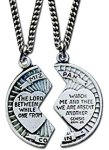
8. Carefully examine 31:44-54 in the context of all that has transpired between Jacob and Laban in this passage. Have you ever seen a set of Mizpah necklaces? They are usually shared by best friends, close loved ones, or boyfriends and girlfriends on the occasion of an impending temporary absence as a fond blessing that anticipates a happy reunion in the future. Knowing what you now know about the Mizpah (31:49) is this the correct usage and context of this verse? What is the correct understanding of this verse?

9. How does Jacob’s redeeming and rescuing of Rachel and Leah from Laban point to Christ as Redeemer and Rescuer? In what ways does it point further ahead to Christ taking Christians Home at the second coming?


Homework

Review the meaning of Jacob’s name from question 3. Write down your observations about the meaning of Jacob’s name as it compares to his statement in 30:33, and to Proverbs 22:1. Think about your own reputation – is it godly? Honest? Ethical?ย Why is it important for Christians to have an honest reputation? Examine 2 Corinthians 5:20, and consider how your reputation impacts your representation of Christ to others. What are some other New Testament Scriptures that address the importance of a godly reputation?


Suggested Memory Verse

Then the Lord said to Jacob, โ€œReturn to the land of your fathers and to your kindred, and I will be with you.โ€ย 
Genesis 31:3

Women of Genesis Bible Study

The Women of Genesis: Lesson 23- Rachel and Leah

Previous Lessons: 1, 2, 3, 4, 5, 6, 7, 8,ย 9, 10, 11, 12, 13, 14, 15, 16, 17, 18, 19, 20, 21, 22

๐Ÿ“–๐Ÿ“–๐Ÿ“–๐Ÿ“–๐Ÿ“–

Read Genesis 29:31-30:24

๐Ÿ“–๐Ÿ“–๐Ÿ“–๐Ÿ“–๐Ÿ“–


Questions to Consider

1. Briefly review lesson 22 (link above), recalling the events that transpired to bring Jacob, Leah, and Rachel into this marriage. In what ways did this marriage start off on the wrong foot?

2. Readย these passages. Did God design marriage to be polygamous or monogamous? What do these passages tell us are the theological reasons for this? What are the practical and interrelational problems with polygamy that Jacob’s marriage to Leah and Rachel demonstrates inย Genesis 29-30?

3. Compare Leah’s and Rachel’s experience with infertility, subsequent pregnancies, and use of surrogates with Sarah’s experience (see lesson 11, link above). How were their experiences similar? Different?

4. Consider how Abraham (see lesson 11, link above) and Jacob both responded to their wives’ giving their maidservants to them as surrogates. How could these men have responded to their wives in a godly way? How would this have been a good opportunity for Jacob to instruct Leah and Rachel in trusting the Lord, especially in light of 30:2? What are some examples of God’s faithfulness and trustworthiness in Jacob’s own life that he could have shared with his wives?

5.ย In Rachel’s and Leah’s culture, the main way women achieved status, and were viewed as blessed and successful by society, was by bearing children, particularly sons. How does this piece of cultural information help you understand the competitive attitude between Rachel and Leah and the emotional pressure of the situation? How would understanding God’s sovereignty over conception have helped both Rachel and Leah to be at peace in their hearts, with each other, and with Jacob?

6. Make a list of Leah’s comments after the birth of each of her sons, then make the same list of Rachel’s comments. What can we learn about the desires of their hearts from these comments? What can we learn about their relationships with each other, with Jacob, and with God? In what ways might each of them have been tempted to sin in their hearts (ex: coveting)? What Scriptures can you think of that address these sins?

7. Imagine that you’re working on a degree in biblical counselingย and you’re assigned Jacob’s, Leah’s, and Rachel’s situation as a case study. Using what Scripture says about marriage, children, sin, the fruit of the Spirit, God’s attributes, etc., pinpoint at least two issues in this family that need biblical correction.

8. Now imagine you’ve graduated and are working as a biblical counselor. Jacob, Leah, and Rachel come to you for help in making their family more godly and getting along better. How do you advise each of them individually and/or as a family unit about the two issues you’ve pinpointed? What are some Scriptures that tell them what they should notย be doing or believing? What are some Scriptures that tell them what theyย should be doing or believing?

9. Rachel and Leah were focused only on their own family and their personal desire to bear children, but what was God’s larger purpose for their sons? How does today’s passage demonstrate that God’s plans cannot be thwarted by the actions of man?


Homework

Go back to the lists you made for question 6. Do you have a heart attitude about something that’s similar to one Rachel or Leah had? For example: Are you coveting something? Envious of someone? Willing to use ungodly methods to get what you want? Resentful? Prideful? Unable to be peaceful and content where God has placed you? Write out some specific Scriptures that address this sin of the heartย – both why you should not sin this way, and the godly action you should take or attitude you should have instead. Be sure to spend some time in prayer asking God to forgive you and to help you do what is right.


Suggested Memory Verse

Then God remembered Rachel, and God listened to her and opened her womb.
Genesis 30:22