Wednesday's Word

Wednesday’s Word ~ Zephaniah 1

zeph 1 2

Zephaniah 1

The word of the Lord that came to Zephaniah the son of Cushi, son of Gedaliah, son of Amariah, son of Hezekiah, in the days of Josiah the son of Amon, king of Judah.

“I will utterly sweep away everything
    from the face of the earth,” declares the Lord.
“I will sweep away man and beast;
    I will sweep away the birds of the heavens
    and the fish of the sea,
and the rubble with the wicked.
    I will cut off mankind
    from the face of the earth,” declares the Lord.
“I will stretch out my hand against Judah
    and against all the inhabitants of Jerusalem;
and I will cut off from this place the remnant of Baal
    and the name of the idolatrous priests along with the priests,
those who bow down on the roofs
    to the host of the heavens,
those who bow down and swear to the Lord
    and yet swear by Milcom,
those who have turned back from following the Lord,
    who do not seek the Lord or inquire of him.”

Be silent before the Lord God!
    For the day of the Lord is near;
the Lord has prepared a sacrifice
    and consecrated his guests.
And on the day of the Lord‘s sacrifice—
“I will punish the officials and the king’s sons
    and all who array themselves in foreign attire.
On that day I will punish
    everyone who leaps over the threshold,
and those who fill their master’s house
    with violence and fraud.

10 “On that day,” declares the Lord,
    “a cry will be heard from the Fish Gate,
a wail from the Second Quarter,
    a loud crash from the hills.
11 Wail, O inhabitants of the Mortar!
    For all the traders are no more;
    all who weigh out silver are cut off.
12 At that time I will search Jerusalem with lamps,
    and I will punish the men
who are complacent,
    those who say in their hearts,
‘The Lord will not do good,
    nor will he do ill.’
13 Their goods shall be plundered,
    and their houses laid waste.
Though they build houses,
    they shall not inhabit them;
though they plant vineyards,
    they shall not drink wine from them.”

14 The great day of the Lord is near,
    near and hastening fast;
the sound of the day of the Lord is bitter;
    the mighty man cries aloud there.
15 A day of wrath is that day,
    a day of distress and anguish,
a day of ruin and devastation,
    a day of darkness and gloom,
a day of clouds and thick darkness,
16     a day of trumpet blast and battle cry
against the fortified cities
    and against the lofty battlements.

17 I will bring distress on mankind,
    so that they shall walk like the blind,
    because they have sinned against the Lord;
their blood shall be poured out like dust,
    and their flesh like dung.
18 Neither their silver nor their gold
    shall be able to deliver them
    on the day of the wrath of the Lord.
In the fire of his jealousy,
    all the earth shall be consumed;
for a full and sudden end
    he will make of all the inhabitants of the earth.

The Holy Bible, English Standard Version Copyright © 2001 by Crossway Bibles, a publishing ministry of Good News Publishers.

Questions to Consider:

1. Who wrote the book of Zephaniah? Which genre of biblical literature is this book? Who was the intended audience of the book? What is the theme or purposed of this book?

2. What is the theme of Zephaniah 1? Which aspect of God’s character does this chapter showcase? Sometimes people think of God as wrathful in the Old Testment and loving in the New Testament. Is this true? How can God be good, loving, and wrathful all at the same time? How does God’s wrath demonstrate His goodness?

3. During which king’s reign did Zephaniah prophesy? (1) What impact might his prophecy have had on the king, and, through the king’s actions, on the people?

4. What is the sin the priests are committing in verses 4-6? Verse 5 says the priests “bow down and swear to the Lord.” Who else does it say they bow and swear to? Why would this anger God? Which Scriptures are the priests violating?

5. How do verses 14-18 describe the “great day of the Lord” (the day of judgment)? List the descriptors following the phrase “a day of…” in verses 15-16. Why will God bring judgment on the earth? (17) Why do Christians not need to fear God’s judgment and wrath against sin?
Wednesday's Word

Wednesday’s Word ~ 3 John

3 john 11

3 John

The elder to the beloved Gaius, whom I love in truth.

Beloved, I pray that all may go well with you and that you may be in good health, as it goes well with your soul. For I rejoiced greatly when the brothers came and testified to your truth, as indeed you are walking in the truth. I have no greater joy than to hear that my children are walking in the truth.

Beloved, it is a faithful thing you do in all your efforts for these brothers, strangers as they are, who testified to your love before the church. You will do well to send them on their journey in a mannerworthy of God. For they have gone out for the sake of the name, accepting nothing from the Gentiles.Therefore we ought to support people like these, that we may be fellow workers for the truth.

I have written something to the church, but Diotrephes, who likes to put himself first, does not acknowledge our authority. 10 So if I come, I will bring up what he is doing, talking wicked nonsense against us. And not content with that, he refuses to welcome the brothers, and also stops those who want to and puts them out of the church.

11 Beloved, do not imitate evil but imitate good. Whoever does good is from God; whoever does evil has not seen God. 12 Demetrius has received a good testimony from everyone, and from the truth itself. We also add our testimony, and you know that our testimony is true.

13 I had much to write to you, but I would rather not write with pen and ink. 14 I hope to see you soon, and we will talk face to face.

15 Peace be to you. The friends greet you. Greet the friends, each by name.


The Holy Bible, English Standard Version Copyright © 2001 by Crossway Bibles, a publishing ministry of Good News Publishers.


Questions to Consider:

1. Who wrote 3 John? To whom was 3 John written? (1) What was the purpose of this epistle?

2. How many times is the word “truth” used in this passage? What truth is John talking about? Who are John’s “children” (4) who are walking in the truth? What do the terms “my children” (4) and “beloved” (2,5,11) indicate about John’s relationship with Gaius and the church?

3. What is the connection between the truth of the gospel John emphasizes and…
…Gaius? (1-4)
…the visiting brothers? (8) (5-8)
…Diotrephes? (10) (9-11)
…Demetrius? (12)

4. Word of Faith (prosperity gospel) leaders often like to quote verse 2 from the King James Version as evidence that God wants all Christians to be “prosperous” (wealthy and successful). Examine the KJV alongside these other reliable translations. Is that what this verse is saying? Even if John did mean wealth and success, to whom was this passage written? (1) In context, is this a promise to all Christians in general, or a simple salutation to a particular person?

5. What can we learn about Christian hospitality and caring for those who make their living proclaiming the gospel from verses 5-10? Compare verse 8 with 1 Corinthians 9:14. How do verse 8 and 2 John 10-11 relate to one another? Can you think of a situation in which you might be able to extend hospitality to someone in Christian ministry?

Wednesday's Word

Wednesday’s Word ~ Nahum 1

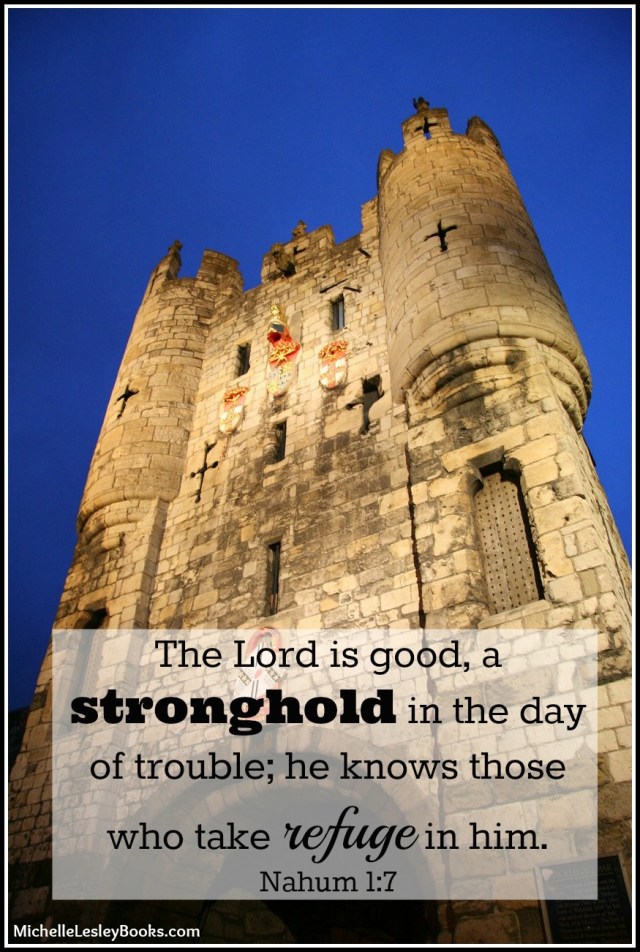
nahum 1 7

Nahum 1

An oracle concerning Nineveh. The book of the vision of Nahum of Elkosh.

The Lord is a jealous and avenging God;
    the Lord is avenging and wrathful;
the Lord takes vengeance on his adversaries
    and keeps wrath for his enemies.
The Lord is slow to anger and great in power,
    and the Lord will by no means clear the guilty.
His way is in whirlwind and storm,
    and the clouds are the dust of his feet.
He rebukes the sea and makes it dry;
    he dries up all the rivers;
Bashan and Carmel wither;
    the bloom of Lebanon withers.
The mountains quake before him;
    the hills melt;
the earth heaves before him,
    the world and all who dwell in it.

Who can stand before his indignation?
    Who can endure the heat of his anger?
His wrath is poured out like fire,
    and the rocks are broken into pieces by him.
The Lord is good,
    a stronghold in the day of trouble;
he knows those who take refuge in him.
    But with an overflowing flood
he will make a complete end of the adversaries,
    and will pursue his enemies into darkness.
What do you plot against the Lord?
    He will make a complete end;
    trouble will not rise up a second time.
10 For they are like entangled thorns,
    like drunkards as they drink;
    they are consumed like stubble fully dried.
11 From you came one
    who plotted evil against the Lord,
    a worthless counselor.

12 Thus says the Lord,
“Though they are at full strength and many,
    they will be cut down and pass away.
Though I have afflicted you,
    I will afflict you no more.
13 And now I will break his yoke from off you
    and will burst your bonds apart.”

14 The Lord has given commandment about you:
    “No more shall your name be perpetuated;
from the house of your gods I will cut off
    the carved image and the metal image.
I will make your grave, for you are vile.”

15 Behold, upon the mountains, the feet of him
    who brings good news,
    who publishes peace!
Keep your feasts, O Judah;
    fulfill your vows,
for never again shall the worthless pass through you;
    he is utterly cut off.


The Holy Bible, English Standard Version Copyright © 2001 by Crossway Bibles, a publishing ministry of Good News Publishers.


Questions to Consider:

1. Which genre of biblical literature (epistle, wisdom, prophecy, historical narrative, etc.) is the book of Nahum? The theme of Nahum is God’s judgment against which people? (1) Which book of the Bible would you read to find out more about God’s dealings with Nineveh?

2. Why was God going to execute judgment on Nineveh? (8,11,14) How and why would God’s judgment of Nineveh have been a comfort to Judah? (12-13,15)

3. Verses 1-3a and 6 highlight which attribute of God’s nature? Verses 3b-5 showcase His power over what? What emotion and response are these verses designed to evoke from the enemies of God? From God’s people, Judah? How can it be a comfort to Christians to know that God will one day judge His enemies?

4. What does verse 7 say about the nature and character of God? Does this contradict the previous six verses showcasing His wrath and power? Why not? How can God be simultaneously good and wrathful? Would it be right to say that God’s wrath against sin demonstrates His goodness?

5. Compare verse 3 to Jonah 3 and 2 Peter 3:9. What do all of these passages teach us about God’s patience towards sinners and His desire for them to repent? Is God’s patience ever an excuse to put off salvation or obedience to Him?

Wednesday's Word

Wednesday’s Word ~ Micah 7

sky-264778_1280

Micah 7

Woe is me! For I have become
    as when the summer fruit has been gathered,
    as when the grapes have been gleaned:
there is no cluster to eat,
    no first-ripe fig that my soul desires.
The godly has perished from the earth,
    and there is no one upright among mankind;
they all lie in wait for blood,
    and each hunts the other with a net.
Their hands are on what is evil, to do it well;
    the prince and the judge ask for a bribe,
and the great man utters the evil desire of his soul;
    thus they weave it together.
The best of them is like a brier,
    the most upright of them a thorn hedge.
The day of your watchmen, of your punishment, has come;
    now their confusion is at hand.
Put no trust in a neighbor;
    have no confidence in a friend;
guard the doors of your mouth
    from her who lies in your arms;
for the son treats the father with contempt,
    the daughter rises up against her mother,
the daughter-in-law against her mother-in-law;
    a man’s enemies are the men of his own house.
But as for me, I will look to the Lord;
    I will wait for the God of my salvation;
    my God will hear me.

Rejoice not over me, O my enemy;
    when I fall, I shall rise;
when I sit in darkness,
    the Lord will be a light to me.
I will bear the indignation of the Lord
    because I have sinned against him,
until he pleads my cause
    and executes judgment for me.
He will bring me out to the light;
    I shall look upon his vindication.
10 Then my enemy will see,
    and shame will cover her who said to me,
    “Where is the Lord your God?”
My eyes will look upon her;
    now she will be trampled down
    like the mire of the streets.

11 A day for the building of your walls!
    In that day the boundary shall be far extended.
12 In that day they will come to you,
    from Assyria and the cities of Egypt,
and from Egypt to the River,
    from sea to sea and from mountain to mountain.
13 But the earth will be desolate
    because of its inhabitants,
    for the fruit of their deeds.

14 Shepherd your people with your staff,
    the flock of your inheritance,
who dwell alone in a forest
    in the midst of a garden land;
let them graze in Bashan and Gilead
    as in the days of old.
15 As in the days when you came out of the land of Egypt,
    I will show them marvelous things.
16 The nations shall see and be ashamed of all their might;
they shall lay their hands on their mouths;
    their ears shall be deaf;
17 they shall lick the dust like a serpent,
    like the crawling things of the earth;
they shall come trembling out of their strongholds;
    they shall turn in dread to the Lord our God,
    and they shall be in fear of you.

18 Who is a God like you, pardoning iniquity
    and passing over transgression
    for the remnant of his inheritance?
He does not retain his anger forever,
    because he delights in steadfast love.
19 He will again have compassion on us;
    he will tread our iniquities underfoot.
You will cast all our sins
    into the depths of the sea.
20 You will show faithfulness to Jacob
    and steadfast love to Abraham,
as you have sworn to our fathers
    from the days of old.

The Holy Bible, English Standard Version Copyright © 2001 by Crossway Bibles, a publishing ministry of Good News Publishers.

Questions to Consider:

1. Who wrote the book of Micah? (1:1) What is the purpose or theme of the book? Which literary genre (historical narrative, wisdom, epistle, prophecy, etc.) is the book of Micah?

2. In verses 1-6, as Micah recounts the woes of his society, how would you characterize his outlook (hope, anger, joy, zeal, etc.)? What are some of the specific problems Micah lists in this section? What are some specific problems you see in the church and/or society that might leave you with feelings of hopelessness and despair?

3. How does verse 7 serve as a pivot point in this chapter? To whom does Micah turn as the solution? (7-8) List the attributes of God and actions He will take that are discussed in verses 7-9. Take a moment to pray about the problems you listed in #2, thanking God that He is the solution, hope, and salvation in each of them.

4. What are some names, places, and incidents in this chapter that remind us that it was written to and for a specific people (Judah) about their unique situation? Examine verses 11-17, 20. Knowing that these specific details were for Judah, what are some general biblical principles we can glean from this passage that apply to Christians today? Can you think of New Testament verses that support these principles?

5. What do verses 7-9 and 18-19 teach us about sin, repentance, God’s mercy, forgiveness and salvation? How do they point ahead to Christ as our ultimate forgiveness and salvation?

Wednesday's Word

Wednesday’s Word ~ Jonah 3

For further study on the book of Jonah, try my study, Jonah.

jonah 3 10

Jonah 3

Then the word of the Lord came to Jonah the second time, saying, “Arise, go to Nineveh, that great city, and call out against it the message that I tell you.” So Jonah arose and went to Nineveh, according to the word of the Lord. Now Nineveh was an exceedingly great city, three days’ journey in breadth. Jonah began to go into the city, going a day’s journey. And he called out, “Yet forty days, and Nineveh shall be overthrown!” And the people of Nineveh believed God. They called for a fast and put on sackcloth, from the greatest of them to the least of them.

The word reached the king of Nineveh, and he arose from his throne, removed his robe, covered himself with sackcloth, and sat in ashes. And he issued a proclamation and published through Nineveh, “By the decree of the king and his nobles: Let neither man nor beast, herd nor flock, taste anything. Let them not feed or drink water, but let man and beast be covered with sackcloth, and let them call out mightily to God. Let everyone turn from his evil way and from the violence that is in his hands. Who knows? God may turn and relent and turn from his fierce anger, so that we may not perish.”

10 When God saw what they did, how they turned from their evil way, God relented of the disaster that he had said he would do to them, and he did not do it.


The Holy Bible, English Standard Version Copyright © 2001 by Crossway Bibles, a publishing ministry of Good News Publishers.


Questions to Consider:

1. Jonah is officially considered a book of prophecy, but what other category of biblical literature (apocalyptic, epistle, wisdom, historical narrative, etc.) does it seem to fit into? What is the theme or purpose of the book of Jonah? Who are the main characters?

2. Verse 1 says this was the second time the word of the Lord came to Jonah. What was His word the first time, and what happened? How was Jonah’s response to God different this time? (3)

3. What was Jonah’s message to Ninevah? (4) Who were first to hear and respond to Jonah’s message, the people or the king? (5-6) Who initiated the fasting, sackcloth, and repentance? (5-6) Whom does verse 5 say the people believed?

4. What does verse 9 seem to indicate was the king’s primary motive for repentance, at least initially- avoiding the consequences of sin, or sorrow that he and his people had grieved God? Compare the king’s words with these passages. Explain the Bible’s emphasis on repentance from the heart.

5. In what ways does Jonah prefigure Christ? How was Jonah’s ministry in this passage similar to Jesus’ ministry? Compare the people they preached to and the message they preached. How does the mercy God showed the Ninevites (10) point ahead to His mercy toward us, through the cross, when we repent and place our faith in Christ?

Jonah is a fantastic little book. If you’d like to check out my 12 lesson, on line study of Jonah, click here.