
Marriage, Sanctification, Sunday School, Women

Godly Womanhood – Introduction ~ Sunday School Lesson ~ 11-3-13

sunday school

These are my notes from my ladies’ Sunday School class this morning. I’ll be posting the notes from my class here each week. Click here for last week’s lesson.

Godly Womanhood – Introduction

I. Proverbs 31

A. Structure

1. Two oracles, or poems

a. v. 2-9: The Wise King

b. v. 10-31: The Excellent Wife

2. Descriptive, rather than prescriptive, passage

B. The “cast” of Proverbs 31

1. Solomon

2. King Lemuel

3. King Lemuel’s mother

4. The excellent wife/woman

C. What can we learn from this passage that God desires of women and values in them?

An excellent woman…

1. …is rare (1)

2. …is precious (1)

3. …is trusted by her husband and is trustworthy in general (3, 11)

4. …loves her husband and treats him well (12)

5. …takes the initiative and works willingly, not resentfully (13,24

6. …works diligently, and isn’t lazy (14,18,19,22, 27)

7. …puts her family’s, and others’, needs ahead of her own (15)

8. …is organized and plans ahead (16,21)

9. …tries to contribute to bettering her family’s situation (16)

10. ..is strong (17,25)

11. ..helps the needy (20)

12. ..is the “woman behind the man,” and is admired by others for her character (23)

13. ..is characterized by dignity (25)

14. ..is characterized by wisdom and kindness, and grows others in these qualities through parenting and mentoring (26)

D. Results of being a woman of excellence

1. Gratitude from husband and children (28-29)

2. The rewards of her hard work and good character (31)

3. God is pleased (30)

Charm is deceitful, and beauty is vain,
but a woman who fears the Lord is to be praised. (30)

“The Woman is the Neck” from My Big Fat Greek Wedding

The Council on Biblical Manhood and Womanhood

Faith, Salvation, Sanctification, Sunday School

How Can I Be Certain I’m Saved? ~ Sunday School Lesson ~ 10-27-13

sunday schoolThese are my notes from my ladies’ Sunday School class this morning. I’ll be posting the notes from my class here each week. Click here for last week’s lesson.

How Can I Be Certain I’m Saved?

The Character of Genuine
SAVING FAITH*

2 Corinthians 13:5: Examine yourselves, to see whether you are in the faith. Test yourselves. Or do you not realize this about yourselves, that Jesus Christ is in you?—unless indeed you fail to meet the test!

**Scripture is the measuring stick we use for examining ourselves. (2 Timothy 3:16-17; Psalm 19:7-8)
**Direction, not perfection.

1: EVIDENCES THAT NEITHER PROVE NOR DISPROVE ONE’S FAITH

A. Visible Morality: Matt. 19:16–21; 23:27.
*Rom. 3:10
B. Intellectual Knowledge:
**Notre Dame professor on O’Reilly
Rom. 1:21; 2:17ff.
C. Religious Involvement: Matt. 25:1–10
D. Active Ministry:
**Justin Peters Lecture 1
**Justin Peters Lecture 2
Matt. 7:21–24
E. Conviction of Sin: Acts 24:25
F. Assurance: Matt. 23
G. Time of Decision: Luke 8:13, 14


 2: THE FRUIT/PROOFS OF AUTHENTIC/TRUE CHRISTIANITY:

**These are not things we strive to do, but what God works in our hearts as He sanctifies us day by day. 

A. Love for God: Ps. 42:1ff; 73:25; Luke 10:27; Rom. 8:7; **1 John 4:19
B. Repentance from Sin: Ps. 32:5; Prov. 28:13; Rom. 7:14ff; 2 Cor. 7:10; 1 John 1:8–10; **Psalm 119:128
C. Genuine Humility: Ps. 51:17; Matt. 5:1–12; James 4:6, 9ff.
D. Devotion to God’s Glory: Ps. 105:3; 115:1; Is. 43:7, 48:10ff.; Jer. 9:23, 24; 1 Cor. 10:31.
E. Continual Prayer: Luke 18:1; Eph. 6:18ff.; Phil. 4:6ff.; 1 Tim. 2:1–4; James 5:16–18
F. Selfless Love: 1 John 2:9ff, 3:14; 4:7ff.
G. Separation from the World: 1 Cor. 2:12; James 4:4ff.; 1 John 2:15–17, 5:5
H. Spiritual Growth: Luke 8:15; John 15:1–6; Eph. 4:12–16
I. Obedient Living:


J. Hunger for God’s Word

K. Transformation of Life

Matt. 7:21; John 15:14ff.; Rom. 16:26;

1 Pet. 1:2, 22; 1 John 2:3–5

1 Peter 2:1-3; 2 Cor. 5:17


If List I is true of a person and List II is false, there is cause to question the validity of one’s profession of faith. Yet if List II is true, then the top list will be also.

3: THE CONDUCT OF THE GOSPEL:

A. Proclaim it:               Matt. 4:23


B. Defend it:                  Jude 3

C. Demonstrate it:          Phil. 1:27

D. Share it:                    Phil. 1:5

E. Suffer for it:               2 Tim. 1:8

F. Don’t hinder it:           1 Cor. 9:12

G. Be not ashamed:       Rom. 1:16

H. Preach it:                  1 Cor. 9:16

I. Be empowered:           1 Thess. 1:5

J. Guard it:                    Gal. 1:6:-8

*This document was written by Dr. John MacArthur and is part of the MacArthur Study Bible notes. It can be found on line here.

**Supplementary information I have added to Dr. MacArthur’s original document.

Money, Sanctification

To Tithe or Not to Tithe…

tithetithe_challenge….that is the question. But should it be? And is it really as simple as that? Yes. And no. On the “simple answer” side, there are two things to keep in mind:

First, Christians today are not required to keep any of the civil or ceremonial laws of Old Testament Israel. If you disagree, I hope you’ve got a parapet around the perimeter of your roof  and that when you harvest your wheat you’re sure to leave the gleanings on the ground. (Christians are, however, called to obey God’s moral laws –many of which are initially laid down in the Old Testament– not in order to earn or keep our salvation, but because we love our Savior and want to flee as far away from sin as possible.)

If you’re interested in the whys and wherefores of the reasons Christians are not required to keep the law of the tithe, there downloadare a number of great articles out there to help you understand. Check out this one, this one, and this one  for starters.

Second, the words “tithing” and “giving” are not synonymous. The New Testament is rife with admonitions to Christians to give, and examples of Christians giving (many of which went far beyond the amount that would have been required by tithing laws) to meet the needs of the church.

So, tithing- no. Giving- yes.

But there’s another aspect of this question, a bigger picture, that doesn’t fit neatly into a “yes or no” category. It’s the heart of the matter. The matter of our hearts.

There are those who will read the articles I’ve linked to above, and, despite solid biblical teaching on why Christians are not required to keep the law of the tithe, will balk at the idea. I know this because that’s exactly what I did when I was first introduced to this teaching. Most of the churches I’ve attended have taught that tithing is a requirement for Christians. It wasn’t a question of “should we or shouldn’t we,” it was the parsing of “gross or net”. Tithing was just assumed. And when you hear something that goes against what you’ve been taught in church all your life, you just naturally resist it. (As well you should. Many of the “new teachings” and “fresh approaches” you’ll encounter out there are nothing but centuries old heresies with a shiny new coat of paint on them.) But sometimes somthing we’ve been taught in church all our lives is wrong. Once you put your Berean spectacles on and thoroughly examine the Scriptures, do you still bristle at the idea of throwing out the requirement to tithe? Why?

Because it’s easier to write a check on autopilot than to take the time to examine our hearts.

Raise your hand if you remember offering envelopes in Sunday School. When I was a little girl, we filled out an offering envelope every Sunday in Sunday School whether we were giving an offering or not. There were little check boxes on the front of the envelope that said things like “Bible brought,” “Attending worship,” “Bible read daily,” etc. It was the way the teachers counted attendance and organized statistics. 

As fallen creatures, we are bent towards keeping one of those offering envelopes in the back of our minds. “Read my Bible today.” Check. “Prayed.” Check. “Wrote out my tithe check.” Check. And our spiritual lives never go deeper than a check on a checklist.

Remind you of anybody? The Pharisees, perhaps? Ouch.

Time and again, Jesus told them that their relationship with God wasn’t about surface behaviors, but a heart to heart –my heart to God’s heart—communion and intimacy with their Creator and Redeemer.

And I don’t know about you, but my fallen, broken, old nature resists that like the devil. Why? Because it’s messy and dirty. There’s no clear cut, singular, magic “right answer”. It requires a lot of time and effort and trial and error. It can get frustrating and discouraging. It’s inefficient.
tithingIt’s so much easier to just check off a few boxes, be done with it, and be on my way.

But that bent of our hearts is exactly the opposite of what God wants. He doesn’t want to receive our remuneration; He wants to consume our hearts.

“You have heard it said…” Jesus said to the Pharisees, quoting the law, “but I say to you…” it goes much deeper than that.

It’s not enough to keep from murdering somebody. What are the selfish motives in your heart that made you angry with your brother in the first place?

It’s not enough to refrain from the act of adultery. What’s going on in your heart that you’re even looking at that woman?

It’s not enough just to dutifully fulfill the requirement of the law. I want you to have a heart that is so dead to self and alive to Christ that it goes the extra mile joyfully.

Woe to you, scribes and Pharisees, hypocrites! For you tithe mint and dill and cumin, and have neglected the weightier matters of the law: justice and mercy and faithfulness. These you ought to have done, without neglecting the others. You blind guides, straining out a gnat and swallowing a camel!

Woe to you, scribes and Pharisees, hypocrites! For you clean the outside of the cup and the plate, but inside they are full of greed and self-indulgence. You blind Pharisee! First clean the inside of the cup and the plate, that the outside also may be clean.
Matthew 23:23-26

How’s that cup and plate looking? What’s going on in our hearts that we’re not already –simply as a result of being a new creature in Christ—giving of what we have whenever we see a need? It didn’t occur to the early church to quibble over percentages and gross vs. net. Their brothers and sisters were in need, and they dipped into the coffers of the treasure of their heartstheir love for Christ and the brethrenand met those needs.

Maybe we’re just not as acutely aware of the need today. Well get aware, and rejoice in your opportunity to give!

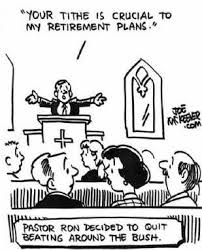
Your pastor and your worship leader and, depending on the dynamics and circumstances of your church, other church staffimages members, need to be able to support their families above the poverty level.
There are people in your church who have lost their jobs, and despite their best efforts, haven’t been able to find new ones. They need your help.

There are pregnant teenagers all over your city who don’t want to abort their babies but don’t see any other options. What can your offering do to help them?

There are people groups all over the globe who have never seen a Bible or heard the name of Jesus. How can we best steward our money to get the gospel to them?

People are dying and spending eternity in hell. Starving to death. Being abused. Living on the streets. Risking their lives to get their hands on a Bible. Trying to put food on the table as they labor to bring you God’s word. The check you put in the offering plate every Sunday can help them.

Forget the percentages and requirements of the law. How can a follower of Christ look upon those needs and ask, “Where’s my calculator?”

Where’s your heart?

Poetry, Sanctification, Suffering

Crafted Like Christ

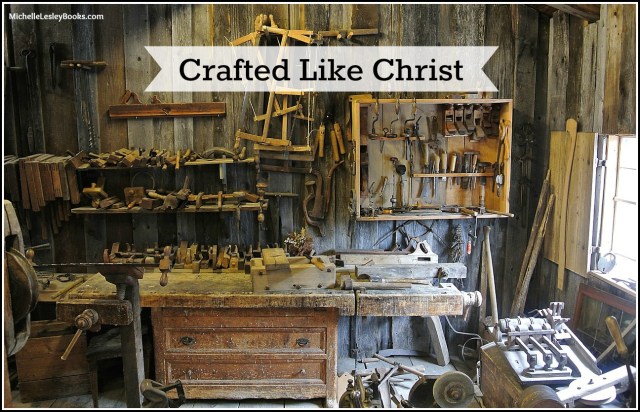
crafted like christ“Lord, make me more like Jesus,” I prayed.

“Yes, Beloved. I will,” He smiled.
He began to lay out the tools of His trade,
A sculptor’s tools, for shaping His child.

“Oh no, Lord, not those,” I gently whined,
As chisel and mallet He took in hand,
“Use instruments of a softer kind,
To help me walk as faith demands.”

“See, over here, the tools I’ve laid,
To gladden my spirit and brighten my eye.
Surely, the velvet cloth of blissful days,
Will change my heart into one like Christ’s.”

“And here,” I went on, “Another I’ve brought,
A feathered brush of comfort and ease,
To keep at bay life’s dust and rot,
This will bring holiness, certainly.”

“At end, I’ve laid a pleasant salve,
Of bountiful health and silver and gold,
Take this, Lord; it’s yours to have,
To make me for the gospel bold.”

“Wish you to remain a stone?”
I heard my Master say,
“My tools are used to chip and hone
What looks not like Christ away.”

“The mallet of trial, the chisel of need,
The grind of suffering,
These in love and grace I wield,
To conform you to the likeness of your King.”

“Your implements will come, in time,
Velvet will dry the tears you weep,
Feathers brush off toil’s grit and grime,
Salve, your deepest pain will ease.”

“This will make me like my Lord?” I groaned in disbelief…
“Do not spurn my tools, my child” my God said, lovingly,
“For Christ was a Man of Sorrows, acquainted with grief,
And learned obedience through suffering.”

Obedience, Sanctification

Order My Steps

Whatever I command you, you shall be careful to do; you shall not add to nor take away from it. Deuteronomy 12:32

Remember long division? Some of us probably remember it fondly. For others, it was a nightmare of ghoulish proportions. Likely, most of us can still remember how to do it.

Ever tried to teach it to an eight year old?

That was my life last week.

If you think about it, it’s really not that any of the steps in long division are that hard. You have to know your times tables and you have to know how to subtract. That’s pretty much it as far as mathematical operations go. The tough part is working step by step and getting all the steps in the right order. One number out of place, one step out of order, and the whole thing falls apart.

And then, so does your eight year old.

The Old Testament is the story of long division. God told His people what to do, how to do it, and in what order to do it…

Bring Me the firstfruits, then you can use what is left.

Marriage first, then sex.

Work six days, then rest.

Put Me first in everything.

He spelled it all out for them, even carved it in stone, and still, they couldn’t get it. Many times, the majority of them gave up even trying and openly rebelled. For others, initially desiring to be obedient, striving became the order of the day. They added layers and layers of rules on top of the ones God had given to protect themselves from even coming close to breaking God’s original commands. And somewhere along the way, they lost the heart of God, and began to worship rule-keeping. Their steps were out of order at the deepest and most basic level, and things fell apart for them. Often. And badly.

But don’t judge the Israelites harshly. We do exactly the same thing. Some of us rebel. Some of us strive. And both ways are equally displeasing to God.

Because the first step in coming to God is to realize and admit that we can’t get it right. God never intended that we should be saved and in right standing with Him by keeping His Law and doing good deeds. Galatians 3:24 tells us that the whole purpose of the Law was to show us that we can’t keep it, and to lead us to throw ourselves upon the mercy of God for forgiveness and salvation.

Does God desire our obedience? Of course. But not as a way to garner His favor or to outweigh the bad things we’ve done. Because it’s not our outward behavior itself that pleases Him, it’s a heart that’s wholly His. He desires that we obey out of a heart of love and gratitude to Him for saving us.

Love Him first, then obedience will be a natural outflow.

Just take it one step at a time.