

Prayer, Sanctification, Worship

Great Expectations

expectgreatthings-necklace (1)

Do we expect too much from God? Is that even possible?

No.

Yes.

Well, kinda.

You see, I’m not talking about expecting something and God being unable to deliver it. That’s just plain silly when talking about our omnipotent God. No, what I’m talking about is whether or not the expectations we come up with are grounded in biblical reality.

What do we mean when we talk about “praying expectantly” or coming to a time of corporate worship, study, or prayer, and “expecting God to do something”? Just what is it we are expecting God to do?

Could it be that He’s already doing something and we’re just not seeing it?

Sometimes, when we read God’s word, we expect God to do something just as “big” as He did in Moses’, Paul’s, or some other Bible hero’s life. We forget that the Bible is sort of like a “highlight reel” of the events in the lives of a handful of people that God drafted to be part of His visible activity at that moment in history.

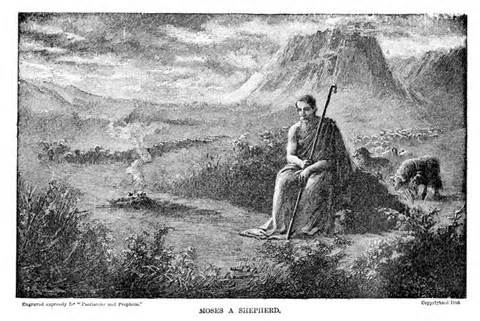
We focus on the moments Moses had at the burning bush or walking through the Red Sea, and that’s what we want, too. r643167_4468740But we forget that Moses’ life wasn’t like that every day. We forget about the eighty years he spent wandering around the desert, half in the day to day monotony of shepherding on the back side of Midian, the other half, wandering around the wilderness with the people of Israel.

Eighty years of nothing special. Day after day of ordinary. Week after week of God not “showing up” and doing something amazing. Eighty years. That’s a lifetime for most of us.

Was God any less at work in Moses’ eighty years of desert thwandering than He was when He gave Moses the Law or spoke to him face to face or sent manna? Of course not. During those days, God was protecting Moses from the heat and wild animals, providing food and shelter for him, blessing him with a wife and children, directing his steps, teaching him obedience and trust.
Just like He does for us.

Have you read a Bible passage this week that allowed you to see more of God’s glory? God is doing something. He’s revealing Himself to you.

Are you praying for someone’s salvation? God is doing something. He’s working on the heart of that person.

Did you have a place to sleep last night and food on your table today? God is doing something. He’s providing for your needs.

Do you leave church on Sundays having been fed the truth of God’s word by your pastor? God is doing something. He’s growing you to spiritual maturity.

Is it possible that we’re expecting God to do something in our lives that isn’t in His particular plan for us? You aren’t Moses, and neither am I. Neither were the million or so other Israelites Moses led out of Egypt, and neither have the billions of other people been who have inhabited earth since Creation. Moses was Moses. You are you. God doesn’t have the same plan for your life He had for Moses’ life.

And, by the way, have you ever noticed that most of the people in the Bible through whom God did something “big” were not expecting it or asking for it? Moses wasn’t expecting God to show up in that burning bush. David wasn’t asking God to do great things in his life when Samuel dropped by to anoint him as the next king. Both of them were hanging out with the sheep when God called them. Paul thought he was already an awesome servant of God when he got knocked off his high horse. Mary wasn’t expecting to be expecting. She was just a teenage girl growing up and learning how to run a household.

1 Thessalonians 4:10b-12 says:

But we urge you, brothers to do this more and more, and to aspire to live quietly, and to mind your own affairs, and to work with your hands, as we instructed you, so that you may walk properly before outsiders and be dependent on no one.

That’s what all of those Bible characters were doing when God chose them. Just regular people living regular lives doing regular work. Just like billions of other people through whom God has not chosen to do anything big and spectacular.

keep-calm-god-is-at-workBut that doesn’t mean God hasn’t been “doing something” in all of our lives. In fact, the vast majority of the work God does in our lives every single day goes unnoticed and unappreciated.

So, instead of setting our expectations on those very rare “wow factor” works of God that seem so appealing, maybe we should be asking Him to open our eyes to, and make us thankful for, all of the things He’s already doing in our lives. Instead of having great expectations of things that God has never promised us, maybe we should ask Him for, and expect Him to, do what He has promised:

Forgiveness for our sin

Christ-likeness

Provision for our needs

Endurance

The ability and opportunity to help others

Faithfulness

Humility

Patience

The opportunity to share the gospel

Because “all the promises of God find their Yes in him.” You can expect it.

Sanctification, Sovereignty of God, Sunday School

Ishmael and El Roi ~ Sunday School Lesson ~ 1-19-14

sunday school

These are my notes from my ladies’ Sunday School class this morning. I’ll be posting the notes from my class here each week. Click here for last week’s lesson.

Through the Bible in 2014 ~ Week 3 ~ Jan. 12-18
Job 32-42, Genesis 12-21
Ishmael and El Roi

What does “Ishmael” (Genesis 16:11) mean? El Roi (16:13)? Ishmael means “God hears.” El Roi means “the God who sees me.” Today, we’re looking at God’s sovereignty as displayed in the passages we read this week.

What do we mean when we say God is “sovereign”? Omnipotent? Omniscient? “Sovereignty” the way we use the word in the church today, means that God has authority and control over all things, people, and circumstances. He is omnipotent (all powerful) and omniscient (all knowing). Nothing in the universe happens without His knowledge, causation, or permission. We’ll see how God defines His sovereignty towards the end of today’s lesson. Because God is sovereign, we can TRUST Him.

Elihu (Job 32-34, Focal Passage- 33:29-30): God’s knowledge is perfect and complete. Ours is not. Elihu (as well as Job’s other three friends) thought he had God’s reasons for Job’s suffering all figured out: God brings suffering in order to lead men to repentance. Since Job was still suffering, he must still be in unrepentant sin. Elihu (and the others) were partly right. Sometimes, that is why God allows us to suffer. But not in Job’s situation. Each of them had a small piece of the puzzle, but none of them had the whole picture. Job wisely trusted God, who was the only one in this situation who knew the whole story, instead of his friends’ counsel.

42:7-9– Because our knowledge is incomplete, we must be extremely careful what we say about, or on behalf of, God. (Acts 20:26-27; Revelation 22:18-19, 2 Timothy 2:15) We are not to go farther than Scripture, nor stop short of declaring the full counsel of God. We are not to add to nor take away from God’s word. We are to handle God’s word rightly. We are to believe what God’s word says in context. Otherwise, we risk slandering the character of God.

Abram (Genesis 12-21): God isn’t just sovereign over the “big” things. He’s sovereign over the “small” things, too. He can be trusted in all things.

Abram trusted God’s sovereignty in the “big” things (Genesis 12:1-4; 15:1ff; 17:1-14)… Abram trusted God in a lot of “big” things. When God came to him and told him to leave his comfortable home and surroundings for a life of being a nomad, and didn’t even tell him where he was going, Abram went without question. When God told Abram He would give him innumerable descendants even though Sarai was barren, and that He would give Canaan to those descendants hundreds of years later, “he believed the Lord, and [God] counted it to him as righteousness.” (15:6) When God introduced the idea of circumcision to this 99 year old man, Abram didn’t try to talk God out of it or suggest a different way, he trusted God and obeyed.

…but sometimes he had trouble trusting God’s sovereignty in the “small” things (Genesis 12:11-13, 20:1-3; 16:1-2, 17:15-21; So did Lot’s daughters- 19:1ff; Genesis 2:24, Matthew 19:4-6) Abram trusted God when He rearranged and relocated his entire life. He trusted God to give him a myriad of descendants when he didn’t even have one child. He trusted that God would give thousands of square miles of land to his greatgreatgreatgreatgreat… grandchildren, yet when it came to protecting him and his wife, Abram gave in to fear and lied not once, but twice, about Sarai being his wife. Then, instead of trusting the God who had made all these great promises to him to cause Sarai to conceive on His timetable, he and Sarai took matters into their own hands with Hagar and violated God’s plan for marriage. Abram “listened to the voice of Sarai,” not the voice of God. (Just because bearing children “through” a handmaid was culturally acceptable at the time and Scripture doesn’t record God’s verbal disapproval of it doesn’t mean it was OK with Him.)

We see the same thing later with Lot’s daughters. Instead of trusting the God who sovereignly protected them from gang rape and the destruction of Sodom to give them husbands and children (or that it was OK with God for them to remain single and childless), they took matters into their own hands in a vile way. It is never God’s will for us to violate God’s word in order to bring about what we think are His purposes.

Hagar (Genesis 16:1ff, 21:8-21): God is sovereign over all circumstances, even the bad ones. His sovereignty brings comfort and shows He is trustworthy. Hagar was a slave. No one asked her if she wanted to sleep with Abram or bear his child. She had no choice. She was a victim of Sarai’s and Abram’s disobedience. But see how tender God is with her in these two passages! God comforts her personally and shows her she can trust Him by telling her a little about how He is going to use her circumstances in the future, and by His provision of the well. She can trust Him because He is sovereign over her situation. He has heard her cry (Ishmael) and is the God who sees her (El Roi).

Sodom and Gomorrah (Genesis 13:13, 18:22-19:29; Ezekiel 18:23; 2 Peter 3:9): God is gracious and patient, yet sovereign over sin, and sovereign in judgment. We learn as far back as chapter 13 that “the men of Sodom were wicked, great sinners against the Lord,” yet it isn’t until chapter 18 that we learn of God’s imminent plan to destroy the cities. We can’t be sure of the precise timing, but we do learn in chapter 12 (right before chapter 13 when God states that the men of Sodom were wicked) that Abram is 75 years old, and we find in chapter 17 (right before chapter 18 when Abram intercedes for Sodom) that Abraham is 99 years old. If the events are in chronological order, it appears (not knowing how long they had been “wicked” before chapter 13) that God mercifully spared his judgment against Sodom for at least 24 years. We see in other places, such as with Egypt (Exodus 12:40-41) and in our own day (since Christ’s ascension) that God waited hundreds or thousands of years before bringing judgment.

God is kind, gracious, and patient, because of His sovereignty over sin and judgment. He knows the kind of judgment that’s required and what it will be like. Over and over He provides ways for people and nations to repent, escape the penalty for their sin, and turn to Him. But when the time of His patience is fulfilled, He faithfully and righteously executes judgment.

God says, “ Have I any pleasure in the death of the wicked, declares the Lord God, and not rather that he should turn from his way and live?” and “The Lord is not slow to fulfill his promise as some count slowness, but is patient toward you, not wishing that any should perish, but that all should reach repentance.” He has provided a way for us to escape judgment- placing our faith in Christ’s death, burial, and resurrection to pay the penalty for our sin.

What does God have to say about His sovereignty? (Job 38-42; Focal Passages: 40:1-2,7-14; 42:1-6)

Where were you when I laid the foundation of the earth?
Or who shut in the sea with doors?
Have you comprehended the expanse of the earth?
Have you entered the storehouses of the snow?
Do you know the ordinances of the heavens?
Can you establish their rule on the earth?
Can you hunt the prey for the lion,
    or satisfy the appetite of the young lions,
Do you give the horse his might?

Shall a faultfinder contend with the Almighty?
He who argues with God, let him answer it.”

“Dress for action like a man;
I will question you, and you make it known to me.
Will you even put me in the wrong?
Will you condemn me that you may be in the right?
Have you an arm like God,
and can you thunder with a voice like his?

“Adorn yourself with majesty and dignity;
clothe yourself with glory and splendor.
Pour out the overflowings of your anger,
and look on everyone who is proud and abase him.
Look on everyone who is proud and bring him low
and tread down the wicked where they stand.
Hide them all in the dust together;
bind their faces in the world below.
Then will I also acknowledge to you
that your own right hand can save you.

Then Job answered the Lord and said:

“I know that you can do all things,
and that no purpose of yours can be thwarted.
‘Who is this that hides counsel without knowledge?’
Therefore I have uttered what I did not understand,
things too wonderful for me, which I did not know.
‘Hear, and I will speak;
I will question you, and you make it known to me.’
I had heard of you by the hearing of the ear,
but now my eye sees you;
therefore I despise myself,
and repent in dust and ashes.”

Discernment, False Teachers, Sanctification, Suffering, Sunday School

When Bad Things Happen to Blameless People ~ Sunday School Lesson ~ 1-12-14

sunday school

These are my notes from my ladies’ Sunday School class this morning. I’ll be posting the notes from my class here each week. Click here for last week’s lesson.

Through the Bible in 2014 ~ Week 2 ~ Jan. 5-11
Job 6-31
When Bad Things Happen to Blameless People

One of Job’s main stances in this section is that he is “blameless” in God’s eyes. What does it mean to be blameless? (Job 6:24, Psalm 15:2, 18:23, 19:13) It carries the connotation that no one can accuse this person before the Lord of current, willful, unrepentant sin. A blameless person is one who loves the Lord, desires to please Him, and has a track record of good fruit- he avoids sin, repents of sin and asks forgiveness from those he has wronged, and does good works.

What does “blameless” NOT mean? (Romans 3:10, 23, Psalm 51:5) Blameless doesn’t mean perfect or without sin. We are all sinners from conception.

Why Job is suffering? (1:8, 2 Corinthians 12:7-10) We know that it’s BECAUSE Job is blameless that he’s suffering (1:8- Compare to Paul in 2 Cor.), but Job and his friends don’t know this. Job doesn’t understand why he’s suffering, but his friends think they do.

Why do Job’s friends think he is suffering? Job’s friends start from the false assumption/conventional wisdom that suffering is always a direct result and punishment of sin, and that blessings are always a direct result of good/godly behavior. Notice, they all come from the same line of thinking, but bring up slightly different points to Job.

Bildad (8:5-6, 18:5, John 16:33, Matthew 6:9-13): “You just need to ‘get right with God’.” Bildad says Job needs to repent of his sin. If Job would just “get right with God” everything would be fine. Jesus says to his disciples: In this world you WILL have tribulation.

Bildad is partially right. We can suffer for sins we’ve committed. If you have an affair, you will probably suffer the loss of your marriage. If you don’t, you won’t. If we are walking in constant repentance (as in the example of the Lord’s Prayer) and communion with the Lord, our consciences are sensitive to sin, we’re more alert to temptation, strengthened to avoid it, and more likely to be, as Job was, blameless.

Job responds (9:2-3, 14-15; 12:9): “Nobody is sinless, but I am walking blamelessly.” Nobody can stand sinless before God. Job is as right as he knows how to be. He can’t think of any sin in his life he hasn’t repented for, and he has a track record of walking with the Lord. God knows all of that , and still, He is the one who is allowing all this calamity, so what Bildad is saying can’t be true.

Zophar (11:4-6; 20:29): “These calamities are proof that there is sin in your life.” Zophar takes the attitude that the calamities themselves are proof that Job not only has sin in his life, he is lying to cover up that sin by saying he’s blameless. Therefore, Job deserves even worse than what he’s getting.

Job responds (13:15; 27:1ff, John 6:66-69): “I don’t know why God is doing this, but I’m not going to give up hope in Him.” Job will not abandon his hope in the Lord. Even though he doesn’t understand God’s ways right now, he knows he’s right with the Lord. Besides, there’s no hope in anything else. Compare to Peter’s confession of Christ.

Eliphaz (15:20, 2 Timothy 3:12, John 15:18, Jeremiah 12:1): “Only evildoers suffer. Godly people prosper.” What does Jesus say about that? “All who desire to live godly in Christ Jesus will be persecuted.” “If the world hates you, know that it has hated me before it hated you.” “Why does the way of the wicked prosper? Why do all who are treacherous thrive?”

Job responds (21:7,16; 2 Corinthians 11:24-28): “Our own daily experience tells us that’s not true.” We all know, or know of, people who live very godly lives, yet suffer with illness, deaths of loved ones, financial ruin, family problems, and evil people who have everything they could dream of. Compare to Paul.

If this were true, what would motivate people to come to Christ? (1:9-11) Greed. Selfishness. A “What can I get from God?” mentality. This is exactly what many popular “Christians” teach today. Come to Jesus for healing. Come to Jesus for wealth. Come to Jesus for success. Never, “Come to Jesus for His tender mercy and the forgiveness of your sin.” Come to Jesus for stuff. That’s what they teach, and that’s what Satan assumed Job was serving God for (1:9-11). God showed through Job that that’s not why His true children serve Him.

Jesus (Matthew 5:45, Job 29-31, Romans 8:28): “For he makes his sun rise on the evil and on the good, and sends rain on the just and on the unjust.” This is exactly what Job is saying in chapters 29-31. He has walked blamelessly all these years and had good circumstances. Now, he’s still walking blamelessly and he has bad circumstances. He hasn’t changed. His goodness didn’t earn God’s blessings as payment, and his badness (remember, he wasn’t perfect and still sinned during the “good years”) didn’t disqualify him from them. Only his circumstances have changed.

All things, bad or good, come through God’s hands, and they come because He loves us. Romans 8:28 says “for those who love God all things work together for good.” All things- the good and the bad. The good things may be for comfort, joy, provision, testing our faithfulness or obedience, to allow us to help others, etc. The bad things may be for some Heavenly reason (as with Job) that we know nothing about, to draw us away from the things of the world, to teach us obedience or dependence on Christ, to allow us to know Him as Provider, Healer, Comforter, Peace. We can’t know Him experientially in those ways if we never walk through times when we need provision, healing, comfort, peace, etc.

As parents, sometimes we give our child ice cream to eat and sometimes we give him Brussels sprouts. Do we give ice cream because we love him and Brussels sprouts because we hate him? No. Both are done out of love, the ice cream because it brings him joy, and the Brussels sprouts because it has the nutrients he needs to be strong and healthy. It would not be loving for a parent to give only ice cream OR only Brussels sprouts. In the same way, it would not be loving for God to give us only blessings or only difficult times.

Let’s ask God to help us walk with Him blamelessly so we can say, as Job did (23:10-12):

But he knows the way that I take;
when he has tried me, I shall come out as gold.
My foot has held fast to his steps;
I have kept his way and have not turned aside.
I have not departed from the commandment of his lips;
I have treasured the words of his mouth more than my portion of food.

Sanctification, Sin, Sunday School

Obedience: Adam, Eve, Cain, and Babel vs. Abel, Enoch, Noah, and Job ~ Sunday School Lesson ~ 1-5-14

sunday school

These are my notes from my ladies’ Sunday School class this morning. I’ll be posting the notes from my class here each week. Click here for last week’s lesson.

This week, we started a new study. We will be reading through the entire Bible in 2014 using “Back to the Bible’s” chronological reading plan (reading Biblical events in the order in which they actually happened). Each Sunday’s lesson will cover a story(s)/event(s) contained in the previous week’s (Sun. – Sat.) reading.

Through the Bible in 2014 ~ Week 1 ~ Jan. 1-4
Genesis 1-11, Job 1-5
Obedience: Adam, Eve, Cain, and Babel vs. Abel, Enoch, Noah, and Job


What is obedience? (Deuteronomy 15:5) Obedience is simply doing what God commands. Bringing our lives/behavior/hearts in line with what God tells us to do.

Why are we to obey God? (John 14:15, 21, 23-24, 1 John 5:3) We do NOT obey God’s commands in order to get to Heaven or to balance out our sin. Our obedience shows that we are already saved because it springs from the love and gratitude in our hearts to Christ for saving us from our sin.

What can we learn about disobedience from…

Adam & Eve:
Flee from, don’t flirt with, temptation. (Genesis 3:1-5) Eve didn’t flee temptation, she stood around, had a conversation with it, and let it convince her.

Your disobedience doesn’t just affect you. (Genesis 3:6-24) Eve’s sin caused Adam to sin, which caused the whole world to sin for every successive generation. Your sin can have far reaching effects.

Cain:
Sin snowballs. (Genesis 4:1-16) First Cain disobeyed God’s parameters (not stated in Genesis) for offerings. The root sin of this was rejection of God’s authority. God didn’t have the right to tell Cain what to do, he’d do it his own way.

This led to anger (not grief, shame, or repentance at his disobedience—anger) at God for rejecting his offering. His anger was rooted in the sin of mischaracterizing God as unfair or wrong. Anger led to murder, then murder led to lying to God to cover it up.

God graciously warns us about disobedience. (Genesis 4:7) He’s such a good God, that just as He warned Cain of the consequences of disobedience, and that he needed to avoid temptation, God gives us a Bible full of examples of the dire consequences of disobedience, culminating in the death of Christ to pay the penalty for sin.

Babel:
We must obey God even if it’s hard, we don’t want to, or it doesn’t make sense to us. (Genesis 9:1,7; 11:1-9) After the flood, God told Noah’s family to spread out and fill the earth. 11:4- They wanted the exact opposite. They were supposed to bring glory to God’s name, but they wanted glory for themselves.

God is sovereign and will have His way despite our disobedience. (Genesis 11:8-9) Nothing, including our disobedience takes God by surprise or thwarts His plans.

What can we learn about obedience from…

Abel:
Obedience isn’t always a grand gesture. Obedience in the “small” things is just as important to God. (Genesis 4:1-16) If it weren’t for Cain’s disobedience, we probably wouldn’t know about Abel’s obedience. How many times that weren’t recorded had he obediently offered a sacrifice? Abel’s obedience is the true hero of this story, yet he’s little more than a bit player. He simply and quietly obeys God, and God “has regard” for his offering.

Faith in Christ and love for Him are what motivate obedience that is pleasing to God. (Hebrews 11:4) Not fear of punishment, not grudging legalism.

Enoch:
Obedience is to be a day by day, continual practice. (Genesis 5:22-24) “I’ll obey when I feel like it, when it’s convenient, etc.,” is totally foreign to God’s definition of obedience. In some stories we see special “big” acts of obedience, but in Enoch’s life we see a steady, daily walk with God. That is the type of story most Christians will live out.

God rewards obedience. (Genesis 5:24, Hebrews 11:5) Possibly materially, definitely spiritually.

Noah:
God requires our obedience even if everyone around us disobeys. (Genesis 6:5-8) Noah (and his family) was the only one on EARTH obeying God. Had he chosen a life of rebellion like the others, he would have died like the others.

The world will often respond negatively to our obedience. (Genesis 6:5, John 15:18) “…every intention of the thoughts of his heart was only evil continually.” That’s not a heart that loves and embraces the things of God. John 15:18: “If the world hates you, know that it has hated me [Jesus] before it hated you.” Just as the world hates God, so, when we display His truths in our lives, they will also hate us.

Job:
Obedience and faithfulness does not guarantee health, wealth, or smooth sailing. (Job 1:8-19) Job was the most blameless and upright guy on earth, according to God, and for God’s own purposes, not to punish Job for disobedience, He took away all the good things in his life.

We obey God even in the most difficult circumstances (Job 1:20-22) Even in times of extreme difficulty, we worship, we obey, we don’t charge God with wrong. Because God doesn’t owe us material goodies or positive circumstances as payment we earn with our obedience, neither can we “quit our job” of being obedient when tough times come. God may be trying to bless us with something even more valuable: knowing Him more closely, feeling His comfort, maturing, leading someone to Christ, taking us home to Heaven, etc.

We are only servants, called to obey a kind and loving Master (Luke 17:7-10; Matthew 25:23)

Marriage, Sanctification, Sunday School, Women

Godly Womanhood – Submission ~ Sunday School Lesson ~ 11-24-13

sunday school

These are my notes from my ladies’ Sunday School class this morning. I’ll be posting the notes from my class here each week. Click here for last week’s lesson.

Godly Womanhood – Submission
Ephesians 5

Background on Ephesians:

Written by: Paul in A.D. 60-62, from prison in Rome (prison epistle)

To: The church at Ephesus. See Acts 19.

5:1-21– What is the main idea of this section as summed up in verses 1-2?

5:22-23– What does it mean to submit? What does it NOT mean?

1. Greek: hupotasso. Hupo- “under”. Tasso- “Arrange in an orderly manner to a certain position.” Military term

2. Submission does not mean all women submit to all men. (v. 22)

3. Submission is not just for wives whose husbands are Christians. (1 Peter 3:1-2; 1 Corinthians 7:12-16)

4. Submission is not permission for domestic violence.

Domestic violence is serious sin on the husband’s part. Submission is something women lovingly and from a position of power CHOOSE to GIVE, just as Christ, from a position of power, chose to lay down His life for us (John 10:18). If a husband is forcing or demanding submission, it is no longer submission, it is oppression. It’s not a gift, it’s being stolen. The church has a weighty responsibility to act in DV situations, making sure women are safe and men are held accountable. God’s word in no way condones domestic violence or even suggests that women should stay in a dangerous situation. If you are in danger, let your pastor or a trusted friend know so that we can help you!

5. Submission, like a husband’s self-sacrificing love, is about dying to self (Matthew 16:24-25), turning the other cheek, and going the extra mile (Matthew 5:38-42).

5:23-32– Marriage is a picture of the relationship between Christ and His church.

1. V. 23-24- The husband signifies Christ. The wife signifies the church.

2. V. 25- Christ loved the church enough to sacrifice Himself for her.

3. V. 26-27- Christ’s desire is what’s best for the church.

4. V. 28-31- Christ nourishes and cherishes the church.

5. V. 32-33- Christian marriage shows the world the relationship between Christ and His church.

Since none of our husbands love us perfectly as Christ loves the church perfectly, there will be many times when we will need to extend grace and forgiveness.

Forgiving as Jesus Has Forgiven Us

Be kind to one another, tenderhearted, forgiving one another, as God in Christ forgave you. Ephesians 4:32

To forgive as Jesus forgave, we must remember that the act of forgiveness takes place before the offender’s repentance. (Romans 5:8; 2:4)

To forgive as Jesus forgave, our mercies must be new every morning, just as His are. (Lamentations 3:21-24)

When we pray that God will make us more like Jesus, we have to remember that “He was despised and rejected by men…a man of sorrows and acquainted with grief.” (Isaiah 53:3) and that, “Although He was a son, He learned obedience through what He suffered.” (Hebrews 5:8) And, yet, He was still forgiving to those who caused the suffering.

When Jesus said, “Father forgive them” from the cross, He knew that the people who put Him there had not repented, and many never would. Most would go to their graves thinking they had done the right thing. Still, Jesus demonstrated a heart of forgiveness in the moment, and left the final accounting for their sin to His Father (Luke 23:34).

“Vengeance is mine. I will repay,” says the Lord (Romans 12:19). “To the contrary, if your enemy is hungry, feed him; if he is thirsty, give him something to drink.” (Romans 12:20) We are to “love [our] enemies and pray for those who persecute [us].” (Matthew 5:44). Leave God to deal with his heart. We must do what God has commanded us to do, regardless of circumstances.

When people came to Christ in repentance, He didn’t hold a grudge, punish, or demand penance. He didn’t keep a mental list of the ways people had sinned against Him to bring up as ammunition at a later time (1 Corinthians 13:5) . He graciously, lovingly, and completely forgave from the heart.

Additional Resources

Christianity + Submissive Wives = Domestic Violence? by Georgia Purdom

Genesis, Wifely Submission, and Modern Wives by Georgia Purdom