Mailbag

The Mailbag: Is it all right for a Christian to get divorced?

mailbag

Is it all right for a Christian to get divorced? What are the biblical grounds for divorce?

God holds marriage in very high esteem because it is a picture of Christ and His bride, the church (Ephesians 5:22ff). In Matthew 19:1-9, Jesus is clear that marriage is precious and not to be discarded carelessly as it was in the Old Testament under the Mosaic covenant. Here, He also gives us one of two reasons Christians may (but are not required to) biblically divorce: adultery.

The second reason Christians may divorce on biblical grounds is found in 1 Corinthians 7:15. If an unbelieving spouse abandons the believing spouse, the believer is not held to the bonds of marriage and may divorce.

Naturally, divorce is a last resort even in these two situations. There are many beautiful stories of marriages surviving adultery through forgiveness. As well, there are many husbands who have been saved after witnessing their wives’ faithfulness to Christ. God’s desire is always for reconciliation whenever possible.

Additional Resources:

Divorce and Remarriage at Grace to You

What does the Bible say about divorce and remarriage? at Got Questions


If you have a question about: a well known Christian author/leader, a Bible passage, an aspect of theology, a current issue in Christianity, or how to biblically handle a family, life, or church situation, comment below (I’ll hold all questions in queue {unpublished} for a future edition of The Mailbag) or send me an e-mail or private message. If your question is chosen for publication, your anonymity will be protected.

Mailbag

The Mailbag: Grandparents an Ungodly Influence on My Kids

mailbag


My husband’s family is unsaved and over the years they have encouraged my children to ignore our teachings, rules and God’s word to the point of encouraging and helping them to sneak around. Our oldest son moved out (because he didn’t like our rules) and in with his grandma (who is not saved and we repeatedly asked her not to allow him to live with her) she encourages and allows drinking, pre-marital sex.

I also have two young children. I am struggling with having a relationship with people who have and do tell my children that the Bible is not true, they don’t have to follow the rules at our home and they may live with them so they can live their lives as they please. I don’t know scripturally how respond to this ongoing situation.

I’m so glad you want to handle this situation scripturally. As Christians, we should always go to Scripture first to learn what to do in any circumstance.

We need to start by remembering our heirarchy of responsibility. As Christians, our first responsibility is to love and obey Christ. As Christian wives and moms, our next responsibility is to submit to our husbands’ leadership. Finally, we are responsible for raising our children in a godly way. But we also want to love and honor our extended family, and that can be really difficult when they aren’t saved and have a pagan worldview.

It’s such a comfort to me to know that Jesus knew and addressed the fact that He would be a dividing line between people, sometimes even within families:

“Do not think that I have come to bring peace to the earth. I have not come to bring peace, but a sword. For I have come to set a man against his father, and a daughter against her mother, and a daughter-in-law against her mother-in-law. And a person’s enemies will be those of his own household. Whoever loves father or mother more than me is not worthy of me, and whoever loves son or daughter more than me is not worthy of me.”
Matthew 10:34-37 (see also Luke 12:51-53)

But Jesus reminds us that, despite those painful divisions and our love for our family members, our loyalty to Him and His word must come first. It’s important to note that the God who said these words in Matthew and Luke is the same God who said in Exodus 20:12 (the Ten Commandments):

Honor your father and your mother, that your days may be long in the land that the Lord your God is giving you.

I think that might be your dilemma. How do we honor Christ in our home and still honor our parents who stand in opposition to Christ?

Let’s look at a few more passages, again, remembering that our first obligation is to obey God’s word. God has made it incumbent upon parents, particularly fathers, to raise our children to know His word and to walk in His ways:

You shall therefore lay up these words of mine in your heart and in your soul…You shall teach them to your children, talking of them when you are sitting in your house, and when you are walking by the way, and when you lie down, and when you rise.
Deuteronomy 11:18a,19

Train up a child in the way he should go; even when he is old he will not depart from it.
Proverbs 22:6

Your children also have a responsibility to honor and obey their parents:

Children, obey your parents in the Lord, for this is right.
Ephesians 6:1

But while you’re raising your children in the ways of the Lord and training them to obey you, you need to make sure you’re not doing things that would make that difficult for them, because doing so will “provoke your children to anger” or “exasperate” them:

Fathers, do not provoke your children to anger, but bring them up in the discipline and instruction of the Lord.
Ephesians 6:4

Imagine how difficult it must be for a child – who already wants only to gratify his fleshly desires – to obey mom and dad’s instruction in godliness when mom and dad keep having him spend time with grandparents whom they love and who allow them to gratify those desires of the flesh. It would be difficult for an adult to be obedient in that situation of being pulled both ways, let alone a child.

In order to discover what God would have you do about your relationship with your in-laws, you and your husband will need to discuss what God’s word says about honoring his parents and raising your children in a godly way. Ultimately, as the spiritual leader of your home, the final decision about the relationship your family will have with his parents rests on his shoulders, and you will need to honor and respect his decision. As you prayerfully study God’s word and discuss things, you might find the following questions helpful:

  • Are our younger children being exasperated or frustrated in their attempts to obey Ephesians 6:1 when we have them spend time with grandparents who are encouraging them to disobey God’s word? Is continually exposing our children to their grandparents’ ungodliness putting a “stumbling block” in front of a weaker person?
  • Since we know God’s word does not contradict itself, how can we honor our parents (Exodus 20:12) even though they are enemies of Christ (Matthew 10:34-37)? Is there a way we can modify the way we spend time with them and/or the amount of time we spend with them so that we still have a relationship with them, yet minimize or remove the ungodly influence they have on our children? Does honoring our parents require us or our children to spend a particular amount of time with them? Is the situation so extreme that our loyalty to Christ demands that we sever the relationship altogether?
  • First Corinthians 15:33 says: Do not be deceived: “Bad company ruins good morals.” Does it make a difference, biblically, if the “bad company” is relatives? Would we let our children spend time with people like this if they were not related to us?
  • Am I, individually, and are we, as a family, regularly praying about this situation and praying for my in-laws’ salvation? Are we sharing the gospel with them? Are we trusting God to answer our prayers and work through this situation?

If you have a question about: a well known Christian author/leader, a Bible passage, an aspect of theology, a current issue in Christianity, or how to biblically handle a family, life, or church situation, comment below (I’ll hold all questions in queue {unpublished} for a future edition of The Mailbag) or send me an e-mail or private message. If your question is chosen for publication, your anonymity will be protected


Mailbag

The Mailbag: What Is the Unpardonable Sin?

mailbag


What is the unpardonable sin -the blasphemy of the Holy Spirit – and can a Christian, or anyone else, commit it today?

Jesus mentions the unforgiveable sin, blasphemy of the Holy Spirit, in Matthew 12:31-32:

“Therefore I tell you, every sin and blasphemy will be forgiven people, but the blasphemy against the Spirit will not be forgiven. And whoever speaks a word against the Son of Man will be forgiven, but whoever speaks against the Holy Spirit will not be forgiven, either in this age or in the age to come.”

Earlier in chapter 12, the crowd had expressed amazement at Jesus’ healing of a demon oppressed, blind and mute man, by exclaiming, “Can this be the Son of David [the Messiah]?” (23) The Pharisees, wishing to discredit Jesus, responded, “It is only by Beelzebul, the prince of demons, that this man casts out demons,” (24) attributing the work of the Holy Spirit, through Jesus, to Satan.

It is is in this context that Jesus speaks in verses 31-32 about blasphemy of the Holy Spirit (attributing the work of the Holy Spirit to Satan).

It is generally agreed upon by reputable theologians that Christians today who have been genuinely born again cannot, nor would they desire to if they could, give Satan the credit and glory for works done by God the Holy Spirit. The first resource I have listed below makes a compelling argument that no one can commit this sin today since its context was limited to the miracles done by Jesus while He was on earth.

Additional Resources:

Blasphemy Against the Holy Spirit—The “Unpardonable Sin” at Apologetics Press

What is Blasphemy of the Holy Spirit? Can A Christian Commit it? at CARM

Blaspheming the Holy Spirit, part 2 at Grace to You


If you have a question about: a well known Christian author/leader, a Bible passage, an aspect of theology, a current issue in Christianity, or how to biblically handle a family, life, or church situation, comment below (I’ll hold all questions in queue {unpublished} for a future edition of The Mailbag) or send me an e-mail or private message. If your question is chosen for publication, your anonymity will be protected.

Mailbag

The Mailbag: Eating Disorder Resources

mailbag


Do you know of any doctrinally sound resources for dealing with eating disorders in a biblical way?

This is not my area of expertise, so I asked a theologically solid friend who is a certified biblical counselor, and who was gracious enough to point me in the right direction. I have not personally read any of these resources. As with any Christian resource, read discerningly, compare everything to Scripture, and reject anything that doesn’t line up with God’s word.

Eating Disorders:
The Quest for Thinness

by Ed Welch

ed welch

Love to Eat, Hate to Eat:
Breaking the Bondage of Destructive Eating Habits
by Elyse Fitzpatrick*

love to eat

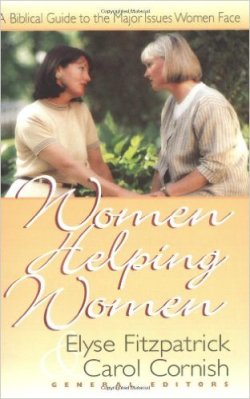
Women Helping Women:
A Biblical Guide to Major Issues Women Face
Edited by Elyse Fitzpatrick* and Carol Cornish

women helping

This is a topical discipleship book which covers a
wide variety of issues including eating disorders.

biblical-counseling-coalition

Biblical Counseling Coalition has several resources on eating disorders.
(You may also wish to use their search bar for more specific terms,
such as “anorexia,” “bulimia,” etc.)

ccef

Christian Counseling and Education Foundation
has several resources on eating disorders.
(You may also wish to use their search bar for more specific terms,
such as “anorexia,” “bulimia,” etc.)


*I am recommending only these two resources from Elyse Fitzpatrick, and no others. Concerns have come to light about her theological trajectory in recent years (which I will address in another article). These are two of her older books.


If you have a question about: a well known Christian author/leader, a Bible passage, an aspect of theology, a current issue in Christianity, or how to biblically handle a family, life, or church situation, comment below (I’ll hold all questions in queue {unpublished} for a future edition of The Mailbag) or send me an e-mail or private message. If your question is chosen for publication, your anonymity will be protected.

Mailbag

The Mailbag: What Are DNA Discipleship Groups?

mailbag


Do you have any information on DNA (Discover, Nurture, Act) groups?

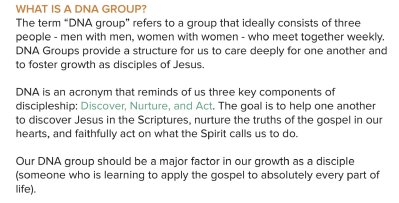
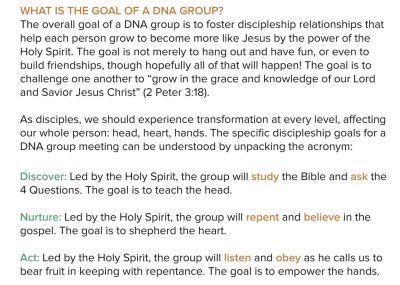
DNA groups are an accountability partner discipleship program for church members developed by Soma, a nationwide network of Reformed, gospel-centered churches. The groups usually consist of three women or three men. Groups normally meet weekly for ninety minutes to discuss the events of life and how Scripture and the gospel apply, what they’ve been learning in their personal Bible study time, and any incidents requiring repentance. The groups study Scripture together and pray with, and for, one another.

You can download and read the DNA program manual here. A couple of excerpts that help explain the program:

Screenshot_2016-05-28-22-19-55_kindlephoto-13502875

Screenshot_2016-05-28-22-16-33_kindlephoto-13561799

The DNA group concept seems like a doctrinally solid discipleship program. It demonstrates intentionality in building disciples. It is centered on the gospel, Scripture, prayer, and repentance. It encourages church members to sharpen one another and bear one another’s burdens.

A few minor things jumped out at me that I think it would be helpful for Soma to tweak and clarify just a bit.

  • Several times, the phrase “listen to the Holy Spirit,” or something similar, is used. At first, this concerned me because this is the type of language used in contemplative prayer and New Apostolic Reformation false doctrine. Reading the document in context, however, it is clear that this is not what Soma is referring to, but, rather, being led by the Holy Spirit and hearing Him speak through Scripture.
  • “Pubs” (in addition to other venues) are mentioned a couple of times as meeting places for DNA groups. I’m not aware of any definition of the word “pub” other than “bar.” If “pub” is a new slang word for coffee house, or something, it would be helpful to clarify that. If by “pub” they actually mean a bar, I would personally not endorse a discipleship group (or any individual Christian or group of Christians) meeting in a bar.
  • Evangelism is presented as “telling your story with Jesus as the hero.” It can sometimes be helpful when evangelizing to share your story of salvation, and the manual describes a way to do this which is biblically correct (emphasis on your sin and your need for a Savior, etc.). However, I think Scripture bears out that a law/gospel presentation is the primary way the gospel should be proclaimed and that “our story” should mainly be used as a supplement or addendum. That being said, every Christian should be able to verbally and cogently explain how she was saved, and the manual does show the biblical way to do this.
  • One of the steps in forming a DNA group is to “read and discuss The Story of God Summary.” The Story of God Summary (included in the manual) is basically an overview of the narrative of Scripture from Creation through the establishment of the church, and the promise of Christ’s return. I understand it would be impossible to read the entire Bible and discuss it in one or two sessions as a step in setting up a DNA group (thus, the summary), but I’m uncomfortable with the fact that – while the summary is biblically accurate – no actual Scripture is cited. I think it would be beneficial to add in some acutal passages of Scripture to flesh out the main points of the summary.

Overall, from what I’ve seen “on paper” this looks like a discipleship model that I would have no trouble recommending. I would encourage anyone interested to read the manual for further details.


If you have a question about: a well known Christian author/leader, a Bible passage, an aspect of theology, a current issue in Christianity, or how to biblically handle a family, life, or church situation, comment below (I’ll hold all questions in queue {unpublished} for a future edition of The Mailbag) or send me an e-mail or private message. If your question is chosen for publication, your anonymity will be protected.