Faith, Sin

Throwback Thursday ~ The “Forbidden Fruit” Fallacy

Originally published February 20, 2015
You’ve heard the old adage: “forbidden fruit is sweeter.” When people use this phrase, what they mean is that if you tell someone he can’t have or do something, he’s going to want to have or do it all the more just because it’s forbidden.

I heard this little cliché several times last week on blogs, on Facebook, in discussion groups, etc., in reference to the deluge (yes, I contributed to it) of Christian blog and press articles decrying the movie Fifty Shades of Grey, and discouraging Christians from attending. Apparently – and I can see where they’re coming from, a little, I guess – some folks felt that the strong, repetitive, and biblical stand against Fifty Shades turned it into a piece of forbidden fruit that a) actually informed Christians (who would have been otherwise oblivious) that this movie even existed (Really? People are tech savvy enough to be on Facebook, Twitter, and blogs, but they were completely unaware of this movie? Ok, I suppose it’s possible.) and b) made Christians want to go see the movie because of its verboten status. The implication was that, if Christians went to see this movie, it was the fault – at least in part – of Christian writers who had warned against it.

Seems reasonable, right?

Until, that is, you start looking at this line of thinking a little more closely through the lens of Scripture.

Pop quiz: What does the phrase “forbidden fruit” allude to?
a) prunes
b) Snow White’s poisoned apple
c) the fruit of the tree of the knowledge of good and evil in Eden

Please tell me you answered “c,” because, if you didn’t, I might have to sit down and cry. When God put Adam in the Garden way back in Genesis 2, He said, “You may surely eat of every tree of the garden, but of the tree of the knowledge of good and evil you shall not eat, for in the day that you eat of it you shall surely die.” (2:16-17) Fruit. Forbidden. Boom.

Notice that God is the One who forbade Adam from eating this fruit. God’s way, throughout the entirety of Scripture, is to warn the people He loves of the dangers and consequences of sin, not to remain silent and keep His fingers crossed that they don’t stumble into a pit. God didn’t stick the tree in the middle of the Garden and say to Himself, “Gee I hope Adam doesn’t notice this tree and eat from it, but I’m not going to mention it to him because I’m scared that I’ll make him aware that it exists, and that he’ll want to eat from it just because I said he can’t.” Uh uh. God pointed it out and said, “No.”

God’s way, throughout the entirety of Scripture, is to warn the people He loves of the dangers and consequences of sin, not to remain silent and keep His fingers crossed that they don’t stumble into a pit.

And let’s take a gander at something else in this story. What caused Adam and Eve to eat from the tree? Was it God telling Adam not to eat from it? No. If that was all it took, why don’t we find Adam eating the fruit immediately after God told him not to? Why didn’t Eve immediately eat from the tree upon learning from Adam of God’s prohibition against it?

Because the warning is not what led them to sin.

We don’t see Eve lay a finger on that fruit until Satan enters the picture. He tempted her, and she gave in to sin.
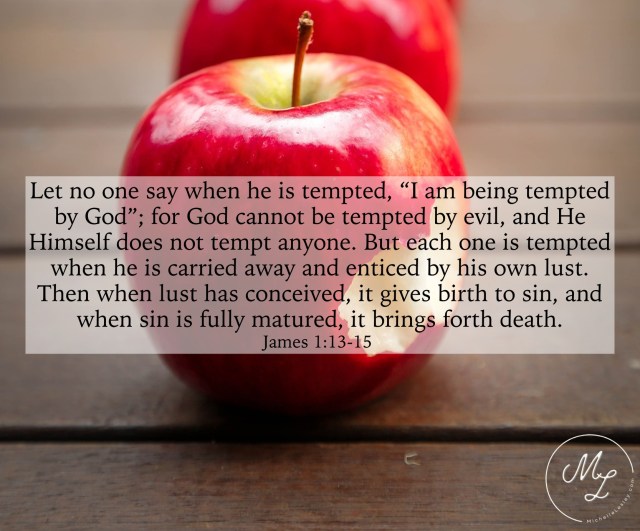
It wasn’t God’s fault for putting the tree there. It wasn’t God’s fault for warning them. It was Adam’s fault and Eve’s fault for being disobedient.

And giving in to sin is still our fault today. If you went to see Fifty Shades of Grey, it’s not God’s fault for allowing the movie to exist. It’s not some Christian blogger’s fault for making you aware of the movie or warning you not to see it. It’s your fault. You were tempted. You gave in to sin. (The good news is that if you will repent, God will graciously forgive you.)

As Christians we are to be imitators of God. “Whoever says he abides in him ought to walk in the same way in which he walked.” (1 John 2:6) That means that when we see sin that could easily ensnare our brothers and sisters, we don’t turn our heads. We don’t mind our own business. We don’t keep our mouths shut to be polite. We do the same thing God did time after time in the Bible. We run into the fray to rescue those we love.

When we see sin that could easily ensnare our brothers and sisters, we don’t turn our heads. We don’t mind our own business. We don’t keep our mouths shut to be polite. We run into the fray to rescue those we love.

And we are not to blame if there are those who choose to charge headlong into sin rather than heed the alarm we sound.


Faith, Salvation

Throwback Thursday ~ Layers

Originally published October 30, 2012

And one of the synagogue officials named Jairus came up, and on seeing Him, fell at His feet and pleaded with Him earnestly, saying, “My little daughter is at the point of death; please come, that by coming, You may lay Your hands on her, so that she will be saved and live.” And He went off with him; and a large crowd was following Him and pressing in on Him.

While He was still speaking, they came from the house of the synagogue official, saying, “Your daughter has died; why trouble the Teacher anymore?” But Jesus, overhearing what had been spoken, said to the synagogue official, “Do not be afraid, only believe.” And He allowed no one to accompany Him, except Peter and James and John the brother of James. And they came to the house of the synagogue official; and He saw a commotion, and people loudly crying and wailing. And entering in, He said to them, “Why are you making a commotion and crying? The child has not died, but is asleep.” And they began laughing at Him. But putting them all out, He took along the child’s father and mother and His own companions, and entered the room where the child was. And taking the child by the hand, He said to her, “Talitha kum!” (which translated means, “Little girl, I say to you, arise!”). And immediately the little girl stood up and began to walk, for she was twelve years old. And immediately they were completely astounded. And He gave them strict orders that no one should know about this, and He said that some food should be given to her to eat.

Mark 5:22-24, 35-43

Did you see it?

The wall in my bedroom isn’t painted very well. It’s obvious that someone rolled on a dusty rose color, but I can also see through that layer of paint to an underlying cream color. I have to take a moment and really look at it, but it’s there. Two distinct, yet bonded, layers of paint.

Do you see the two layers to this story? Take a moment. Really look at it.

Do you see the two layers to this story? Take a moment. Really look at it.

There’s the obvious top layer:

Here is a daddy who loves his little girl. She’s dying. He’s in anguish.

Here is a Savior who has compassion on both father and daughter. He raises her back to life, and there is great rejoicing in their home.

Jesus, our Messiah, has the power to heal. Power over death. He is exactly who He claims to be: God in human flesh.

But look more closely. Do you see it?

This isn’t just a story about a nameless little girl in first century Israel. It’s about us and the strikingly beautiful story of salvation.

Here is a little girl. Not a son, so highly prized among the Israelites in that day and age, but a daughter. Virtually valueless, except to her father.

There was nothing intrinsically worthy in her to earn Christ’s favor or attention. She had no wealth, no position, no power, nothing to offer anyone. And on top of that, she was dead.

But her father loved her for no other reason than that she was his, and he was willing to lay down everything he had to save her. He sacrificed his dignity. He risked His reputation and laid aside His position of authority. All for the love of this child—a child whose past had offered him nothing but childishness and disobedience. A child whose future promised the same.

Do you see it?

We are that little girl. Valueless. Unworthy. Childish. Disobedient. Dead.

And for no other reason than our Father’s love for us, Christ comes to us when we cannot come to Him, and raises us from the dead.

And you were dead in your transgressions and sins… But God, being rich in mercy because of His great love with which He loved us, even when we were dead in our transgressions, made us alive together with Christ—by grace you have been saved— and raised us up with Him, and seated us with Him in the heavenly places in Christ Jesus, so that in the ages to come He might show the surpassing riches of His grace in kindness toward us in Christ Jesus.

Ephesians 2:1, 4-7

For no other reason than our Father’s love for us, Christ comes to us when we cannot come to Him, and raises us from the dead.

Faith, Prayer

Throwback Thursday ~ Hamartiology Hits the Homefront

Originally published March 1, 2013

I admit it. I struggle against sin. A lot of sin. Often.

Sometimes it’s a small, easily won skirmish. Sometimes it’s a hard fought, bloody battle. Yesterday, God helped me take a hill.

For a couple of weeks, I’d been feeding on this sort of casserole of worry, doubt, fear, unbelief, distrust, and frustration with the Lord. I needed Him to act, and He wasn’t acting. Every time I tried to pray about the issues that were tempting me into this mélange of anxiety, I ended up feeling even more anxious.

So I quit praying about it. Smart and spiritually mature, huh?

“Lord, You know what all these issues are. Please, just handle it.”

From time to time, it can be helpful to pray like that. But not when you’re using it as a semi-spiritual cover for avoidance, which is what I was doing.

Yesterday, I finally heard the bugle sound the call to arms. I felt God pushing me toward the battle line. The urgency to pray through this mess was absolutely compelling.

So I laid it all out before God. Every last bit of it.

And as I did, conviction of sin rolled in.

Sometimes we think of conviction as a negative thing. It makes us feel bad. Guilty. Humiliated.

But conviction of sin by the Holy Spirit is really a good thing for the Christian. It gives us pinpoint accuracy and clarity on exactly how we’re offending God. It gets everything out in the open and brings things to a head so that we can repent, be made right with Him, and start fresh. None of us are so weak that we can’t deal with a little guilt if it pushes us up and over the wall of repentance to reconciliation. Buck up, soldier.

As I continued to pray, God began bringing all manner of applicable Scripture to my mind (this is how God speaks to us—through His written word). I remembered how God dealt with the ungrateful, complaining Israelites in the wilderness. I also remembered what David said in Psalm 103:2-3

Bless the Lord, O my soul,
and forget not all his benefits,
who forgives all your iniquity,
who heals all your diseases,

I realized my sin was a double edged sword of commission and omission. It wasn’t just what I was doing—doubting and worrying—it was also what I wasn’t doing—being thankful and remembering how God had been faithful to me in the past.

convection_weather2

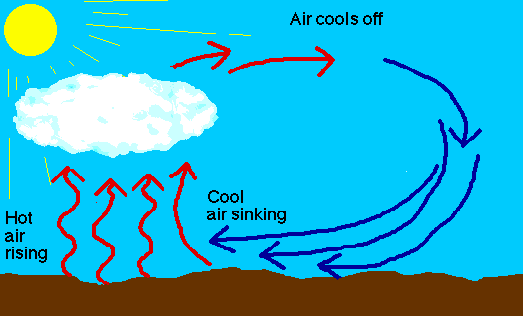
It reminded me of the way wind is formed. Warm air rises into the atmosphere, and cold air rushes in to fill the void left by the warm air. Voids don’t last long in our spiritual lives. Something is always rushing in to fill them.

At the end of a long day of fighting, my doubt, fear, unbelief, worry, distrust, and frustration lay on the battlefield as bloody casualties, replaced by fresh, mighty warriors of faith, gratitude, love, and remembrance.

Sin. It’s the only battle you can win by surrendering.

Bless the Lord, O my soul,
and all that is within me,
bless his holy name!
2 Bless the Lord, O my soul,
and forget not all his benefits,
3 who forgives all your iniquity,
who heals all your diseases,
4 who redeems your life from the pit,
who crowns you with steadfast love and mercy,
5 who satisfies you with good
so that your youth is renewed like the eagle’s.

6 The Lord works righteousness
and justice for all who are oppressed.
7 He made known his ways to Moses,
his acts to the people of Israel.
8 The Lord is merciful and gracious,
slow to anger and abounding in steadfast love.
9 He will not always chide,
nor will he keep his anger forever.
10 He does not deal with us according to our sins,
nor repay us according to our iniquities.
11 For as high as the heavens are above the earth,
so great is his steadfast love toward those who fear him;
12 as far as the east is from the west,
so far does he remove our transgressions from us.
13 As a father shows compassion to his children,
so the Lord shows compassion to those who fear him.
14 For he knows our frame;
he remembers that we are dust.

15 As for man, his days are like grass;
he flourishes like a flower of the field;
16 for the wind passes over it, and it is gone,
and its place knows it no more.
17 But the steadfast love of the Lord is from
everlasting to everlasting on those who fear him,
and his righteousness to children’s children,
18 to those who keep his covenant
and remember to do his commandments.
19 The Lord has established his throne in the heavens,
and his kingdom rules over all.

20 Bless the Lord, O you his angels,
you mighty ones who do his word,
obeying the voice of his word!
21 Bless the Lord, all his hosts,
his ministers, who do his will!
22 Bless the Lord, all his works,
in all places of his dominion.
Bless the Lord, O my soul!

Psalm 103

Sin. It’s the only battle you can win by surrendering.

Faith, Sin

Repeating Wrongs Renders Right?

Originally published September 17, 2013

“Four hundred thirty seven.”

“Sorry, that’s not right. Try again, Buddy.”

scribble scribble scribble

“Oh, ok. Four hundred thirty seven.

“No, Honey. You just said that, and I just told you it was wrong. Give it another try.”

“But it’s 437!”

“Son, I have the answer book right here in front of me. The answer is not 437. Repeating the wrong answer over and over again doesn’t magically make it right.”

I can’t tell you how many times I’ve had this conversation -nearly verbatim- with each of my four children in the fourteen years I’ve been home schooling.

But I can tell you that this morning was the first time I realized that this is the same way many people relate to God and the Bible.

When this dialogue takes place between my child and me, it is because the child has done something wrong. He has forgotten to carry the one. Confused a peninsula with an isthmus. Mistaken an adverb for an adjective.

But he can’t see what he’s done wrong, or indeed, that he’s done anything wrong. And because he’s blind to his wrongness, his default position is to assume that he is right and I am wrong. Forget that he’s in fifth grade and I have a bachelor’s degree, half a master’s degree, and nearly two decades of teaching experience. Never mind that this is the fourth time I’ve taught fifth grade from this very same book. Completely disregarded is the fact that I have the teacher key right in front of me that shows exactly what he did wrong and what the right answer is.

No. He’s right. I’m wrong. The book is wrong. Math is stupid.

Foolishness is indeed bound up in the heart of a child.

But foolishness is bound up in all of our hearts when it comes to sin:

“My husband doesn’t treat me right.
God wouldn’t want me to be miserable
for the rest of my life, so my relationship
with the guy at work is just fine.”

“What the Bible says about
homosexuality only had to do
with male cult prostitutes, so my
monogamous homosexual relationship
with my partner isn’t a sin.”

“I’ve gone to church all my life.
Once, I even repeated a ‘sinner’s
prayer’ and was baptized. It doesn’t
matter what my life looks like now,
I’m sure I’m saved because of that.”

“The Bible says women aren’t
to instruct men in the church?
But I feel that God has called me
to be a pastor, so that verse must
not mean what it clearly says.”

Over and over we say it, hoping to convince ourselves, to drown out God’s law that’s written on our hearts, and to shout down anyone who would call us to repentance. Because we’re blind to our wrongness, our default position is to assume that we’re right and God, and His Word, are wrong. Never mind the fact that He’s God -Creator of the entire universe, knows everything, sees everything, has power over everything, and is perfect in holiness- and we’re, well… not.

No. We’re right. He’s wrong. The Bible is wrong. People who agree with God’s Word are just haters.

But, just like I tell my children: repeating the wrong answer over and over again doesn’t magically make it right.  When each of us stands before God on the day of judgment, it’s not going to matter how many times we’ve tried to convince ourselves, others, and God that our way is right. It’s only going to matter what God says is right.

There is a way that seems right to a man,
but its end is the way to death.
Proverbs 14:12

Faith, Justice, Tough Passages

Throwback Thursday ~ Shall Not the Judge of all the Earth Do What Is Just?

Originally published July 10, 2013

Now therefore, kill every male among the little ones, and kill every woman who has known man by lying with him.

Numbers 31:17

That’s a pretty tough verse, isn’t it?

Married women. Widows. Little boys.

When I read that verse, I think of somebody like me. Or, somebody like my ten year old. It’s hard for me to put myself in a Midianite woman’s sandals and imagine the Israelites coming for my son. My son, who’s basically a good kid, and certainly hasn’t done anything worthy of an army coming after him to execute him.

Do you ever follow criminal trials in the news? With 24-hour news channels and courtroom TV channels, we’ve probably all watched for the verdicts of a few. Have you ever been surprised by a jury’s verdict or a judge’s sentence? Maybe you were certain the defendant was guilty, but the jury acquitted him. Or, you figured a life sentence was a sure thing but only a few years were handed down.

It’s easy to lambaste a judge or jury for making what we consider to be the wrong decision. But, think about it: that judge and jury sat through hours of testimony, legal arguments, instruction on the law, and presentation of evidence. They know much more about the case and all the players in it than we do. They know things we don’t know. And those things we’re ignorant about are likely the very things that led them to make a different decision than we, with our limited knowledge of the case, would have made.

What if your spouse, parent, or best friend had been a juror in one of those cases in which you were appalled at the verdict, and he had voted opposite the way you thought he should have? What if he told you, “Look, I’ve been told not to discuss the case, but, trust me, this was the right decision.”? Would you trust him?

It’s the same way with God.

We come to passages like this one, and our first reaction is righteous indignation. How could God make a decision like this? It seems so unjust. An arbitrary, capricious, and callous verdict. It’s easy to throw stones thousands of years later.

But, if God is God, He is, by definition, absolutely perfect in justice, perfect in love, perfect in mercy, perfect in patience, perfect in wisdom, and perfect in His knowledge of every detail of every situation on earth, ever, including people’s thoughts and intentions. He never makes a wrong decision. If He were lacking one iota in any of these areas, He would cease to be God, and there would be no reason to trust Him.

But He isn’t. So we can.

We generally trust human judges and juries to carry out justice in the cases they’re assigned, despite the fact that we know of cases of judges who have been bribed, juries that have been tampered with, defendants who have been framed, and jurors who vote guilty based on race, sex, status, or some other irrelevant condition.

But God doesn’t fall into any of those categories. He is the perfect Judge, able to mete out perfect justice, because He’s also the perfect eyewitness. He knew everything about the case of the Midianites because He saw each of them, and everything that was going on in the world around them, inside and out.

I can’t say that about my knowledge of this case. Can you?

God’s not discussing the case of the Midianites with us, but, “Trust Me,” He says, “This was the right decision.”

He’s got a pretty good track record of being right. I’m going to trust Him on this one since I don’t know all the details. How about you?

Far be it from you to do such a thing, to put the righteous to death with the wicked, so that the righteous fare as the wicked! Far be that from you! Shall not the Judge of all the earth do what is just?”

Genesis 18:25