Entertainment, Movies, Sanctification

Don’t Get Your Theology from the Movies

I recently received the kindest e-mail from a sweet lady at a movie subscription service – sort of a “family-friendly” version of Netflix – asking me to write an article pointing my readers to the movie subscription service (hereafter: “MSS”) as a resource for whatever issue I was addressing in the article:

I am hoping to hear your advice on some ways to relay valuable lessons to others in a post on your page. Maybe you have used a book or a movie to help someone better understand how to deal with bullying. Or maybe you have used parables from the Bible to demonstrate how to deal with a tough situation. We would love our movies to be a resource for your readers to utilize as a tool, since we have many relevant Christian movies and shows.”

This is a brilliant and creative marketing/publicity strategy, and I really admire whoever it was at the MSS who came up with and implemented this idea. It’s grassroots, it reaches their target audience, they get to harness the creativity and energy of the bloggers they contact, and it’s free. Very smart.

Nice people, smart marketing, a variety of attractive products, the desire to help others, a company built on wholesome morality- what’s not to endorse, right? And if they were selling hand cream or light bulbs or waffle irons, I’d agree.

The thing is, when you sell something, that product is supposed to correctly fill a need your potential customers have. You sell hand cream to people with dry hands, light bulbs to people wondering why they’re sitting around in the dark, and waffle irons to people who want to enjoy breakfast in their jammies rather than driving across town to IHOP.

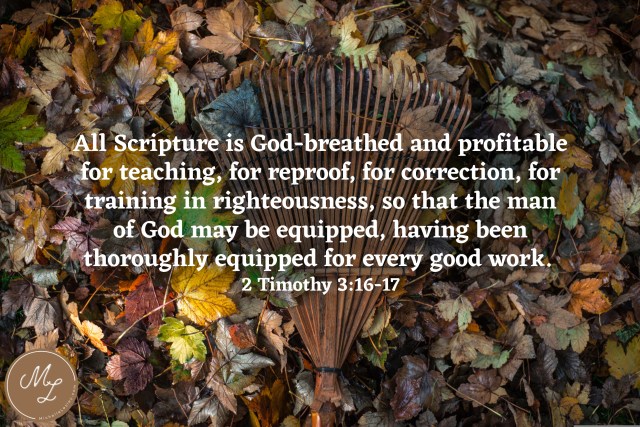
But this MSS is not selling you the right tool for your problem. Though I’m sure they have the noblest of intentions, they’re attempting to sell you a waffle iron to rake your yard with: movies as theology.

Though I’m sure they have the noblest of intentions, they’re attempting to sell you a waffle iron to rake your yard with: movies as theology.

I like movies. I watch them all the time with my family (at home- have you seen the price of a movie ticket lately?!?!). But movies are for leisure time fun and entertainment, not for proper instruction on how to live a godly life or the way to solve personal problems, and certainly not for what to believe about God, as we’ve recently seen with The Shack debacle. When Christians have issues, questions, and problems, we don’t go to the movies, we go to the Bible.

When Christians have issues, questions, and problems, we don’t go to the movies, we go to the Bible.

God’s word is the primary source document for Christians. It is the authority that governs our thoughts, words, and deeds. It is the sufficient answer to any question we might have about life and godliness. Above any other advice, instruction, help, or input, we need the Bible, and we can rest assured that its counsel is always right and trustworthy since its words come straight from the lips of God.

But just for the sake of argument, let’s try it the MSS’s way. Let’s say you do have the problem of being bullied. And let’s say this MSS has a good movie about a character in similar life circumstances to yours who overcomes being bullied. So you watch it, hoping to get some advice on how to handle your own problem. You’re a Christian, so, by definition, you want to address the situation without sinning, in a way that pleases God, and, hopefully, in a way that is conducive to sharing the gospel with the bully.

How do you know whether or not the character in the movie overcame her bullying problem in a godly way? That’s right- you have to open your Bible, study it, and compare what she did in the movie with rightly handled, in context Scripture. So why not just go straight to the Source and spend the hour and a half you invested in the movie studying Scripture instead?

Another issue with watching movies to learn how to solve your problems or teach you how to live rightly is that doing so subtly trains you in poor hermeneutics. It trains you to follow the example of a character who is just as broken, sinful, and unwise as you are instead of looking directly to the perfect, holy, infallible instruction of God Himself. Which is often the way people incorrectly read the Bible.

As I’ve previously mentioned, there are two main types of Scripture: descriptive and prescriptive. Like a movie, descriptive passages describe something that happened: Noah built an ark. Esther became queen. Paul got shipwrecked. These passages simply tell us what happened to somebody. Prescriptive passages are commands or statements to obey. Don’t lie. Share the gospel. Forgive others.

If we wanted to know how to have a godly marriage, for example, we would look at passages like Ephesians 5:22-33, 1 Corinthians 7, and Exodus 20:14,17. These are all passages that clearly tell us what to do and what not to do in order to have a godly marriage.

What we would not do is look at David’s and Solomon’s lives and conclude that polygamy is God’s design for marriage. We would not read about Hosea and assume that God wants Christian men to marry prostitutes. We would not read the story of the woman at the well and think that being married five times and then shacking up with number six is OK with Jesus. All of which is the same reason we should not be watching movies – even “Christian” movies – as a resource for godly living.

“But,” the kind MSS lady would probably reassure me, “our MSS also has non-fiction videos of pastors and Bible teachers that could be helpful.” And indeed they do. There are a handful of documentaries on missionaries, some of the Reformers, current moral and societal issues, and Bible teaching that look like they could be solid. The problem is, they’re mixed in with the likes of Joyce Meyer, John Hagee, Henri Nouwen, Greg Laurie, a plethora of Catholic leaders, and even those who don’t claim to be Christians like Betty White, Frank Sinatra, and Liberace. The few videos with good teaching are combined with many that teach worldly ideas, signs and wonders, mysticism, Bible “codes” and “secrets,” false prophecy, faulty eschatology, and other false doctrine.

It’s a great example of why God tells Christians we’re not to receive false teachers nor to partner with them, as, sadly, this MSS has chosen to do. Mixing biblical truth with false teaching confuses people. A little leaven leavens the whole lump.

When a little bit of truth is mixed in with the false, how are we to know which is which? We have to do exactly what the Bereans did with Paul- examine the teachings against Scripture, accept what matches up and reject what doesn’t. Again, why spend the time and confusion searching for, hoping you’ve found, and watching a video you’re not sure will teach you biblical truth when you could simply pick up your Bible, study it, and confidently believe what God says about the issue instead?

There are some good, clean movies on this MSS that would make for an enjoyable evening of family fun, and there’s certainly nothing wrong with that. But for instruction in holy living and resolving the dilemmas of life in a godly way, we need to use the right tool for the job: the Bible.

Rake your yard with a rake, not a waffle iron.

Rake your yard with a rake, not a waffle iron.

Entertainment, Marriage, Movies, Throwback Thursday

Throwback Thursday ~ “No Greater Love”– Movie Review

Originally published March 21, 2011

I stumbled across this movie at my local library a few days ago, and, boy am I glad I did.

Jeff and Heather were the “lucky ones”.  Best friends from childhood, high school sweethearts, and married by 22, they were inseperable soul mates.

After the birth of her first and only child, Heather Baker (Danielle Bisutti) fell into a deep depression.  Hopelessly lost, she did the unthinkable– she abandoned her husband and her infant son –and vanished.  Jeff Baker (Anthony Tyler Quinn) was forced to raise their son Ethan as a single father.

Ten years after his wife’s disapperance, Jeff is finally ready to move on and is on the verge of marrying his new girlfriend.  His world, however, is dramatically rocked when Heather shockingly reappears in the most unusual place.
(From the “No Greater Love” web site.)

If you liked the movie Fireproof, you’ll almost certainly like No Greater Love.  The acting is much better, and so is the production quality.  Of course, that’s to be expected when a movie is made by a professional studio hiring professional actors rather than by a church using mostly church members as actors.  (That’s certainly not a dig at Sherwood Baptist Church.  They did a fantastic and admirable job with both Fireproof and Facing the Giants –both of which you should see, if you haven’t already –it’s just that professional studios and production companies have the resources and budget to put together a more polished product.)

The storyline of No Greater Love is unique and endearing, but believable.  The only thing I found to be a bit of a stretch was, well, how do I say this without giving too much away?  Let’s just put it like this: It can take a long time and a lot of difficult, painful emotional work for the most Godly among Christians to forgive someone who has wounded them unfathomably.  Generally speaking, one would expect that, for a similarly wounded unsaved person, forgiveness would probably come much more slowly and with even greater difficulty.  But I suppose there are exceptions to the rule.

Theologically, this movie is right on target.  Director, Brad Silverman, says in his commentary on the movie that his goal was to be as theologically correct as possible, and I think he nailed it.  To be honest, one of the reasons I picked up this movie was to see if there were any false doctrine or theology in it, so I was on the lookout for Biblical error.  None to be found as far as I could tell.

Does No Greater Love overtly share the Gospel, spelling it out step by step?  No.  That’s your job and mine, not the job of a movie.  I think, primarily, this is an entertaining movie which reinforces Biblical truth that Christian viewers (should) already know.  But it would also be a great movie to share with unsaved friends as a conversation starter for sharing the Gospel in detail.

For more information on No Greater Love, visit the web site and “like” the Facebook page.

No Greater Love is available for purchase at:
Lionsgate Studios
ChristianBook.com
Amazon.com

Biblical Resources, Entertainment, Parenting

Throwback Thursday ~ Playing Go Fish

Originally Published March 9, 2009

Go-Fish

Not long ago, I stumbled across a fabulous vocal band called Go Fish. They bill themselves as “great music for kids that won’t drive parents bonkers!” and they certainly live up to that declaration. I would classify them as a Christian version of “The Wiggles” except that The Wiggles drive me somewhat bonkers. They have released a number of songs that will appeal to adults as well, particularly their Christmas music. My favorite is “It’s About the Cross”:

I also love The Mom SongBible Book Bop, and so many others! Plus, they have an amazing assortment of Vacation Bible School curricula.

Go Fish’s music is available for purchase (MP3 downloads as well as CDs) on their web site (link above), walmart.com, CBD, and Amazon.com.

Bible, Entertainment, Movies, Television

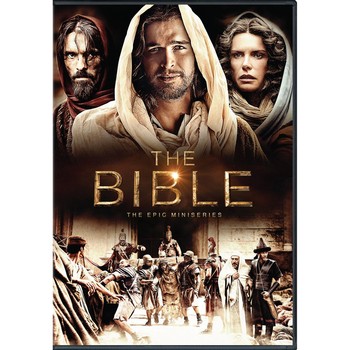
Six Thoughts on History’s “The Bible” ~ Part 3 ~ REDUX

thWith the movie Son of God releasing in theaters tomorrow, February 28, for the past two Thursdays I’ve been rerunning a three part series I wrote on last year’s History Channel miniseries, The Bible. This is the final installment. Son of God is Roma Downey’s and Mark Burnett’s movie about Jesus that is drawn from The Bible’s scenes pertaining to His life and ministry, as well as deleted scenes that did not make it into the miniseries.

Also see: Should Christians Boycott ‘Son of God’? Three Things to Consider


Six Thoughts on History’s “The Bible” ~ Part 3

This is the third of a three part series on The History Channel’s The Bible miniseries*. You can find Part 1 here and Part 2 here.

5. The faulty theology of “The Bible’s” theological advisors is influencing and slanting the way God’s word is being presented.

Rick Warren’s twisting of Scripture to fit his “Purpose Driven” overview of God’s nature and character, Joel Osteen’s self esteem boosting and positive thinking, T.D. Jakes’ prosperity gospel and modalism (an unbiblical doctrine of the Trinity), and Roma Downey’s New Age spiritual psychology degree have crept into The Bible’s stories and subtly shifted the Scriptures’ real focus on sinful man’s need of God’s redemption to a “follow the leader and together we’ll change the world” paradigm.

Go back to the beginning of the series and watch it again, counting the number of times the word “leader” is used. Every major Old Testament character has been cast as a “leader,” and Israel’s prosperity or demise is portrayed as contingent on whether the leader was good or bad and whether or not Israel followed his leadership. This is not the message of God’s word. When Israel was obedient to God, she flourished. When she rebelled and chose idolatry, she crashed and burned. Kings, judges, and prophets had influence on the people, but it was Israel’s obedience to God Himself that was the hinge on which the nation swung.

0bc90ac98e8e3d20a24be1f335b5966aIt was especially disturbing to hear prophets such as Jeremiah and Daniel being cast as “leaders.” The prophet’s job was not to lead the people. The prophet’s job was to speak the words of God to the people and exhort them to submit to Him, just as pastors are supposed to do today. Leaders say, “Follow me.” Prophets say, “Follow God.”

Further, nowhere in God’s word does it say that Jesus came to “change the world,” or “change people’s lives,” nor does the Bible teach that Christians are to do these things. Jesus came to seek and to save the lost (Luke 19:10), to serve, and give His life as a ransom for many (Mark 10:45). Christians are exhorted, not to the lofty goal of “changing the world,” but to the abasing role of denying ourselves, taking up our crosses daily (Luke 9:23), being persecuted (2 Tim. 3:12), and making disciples (Matt 28:19-20).

Jesus did change the world, and He does change our lives, but this was a side effect of His life, death, and resurrection, not His goal. He was here to carry out God’s plan of redemption. The movie’s “change the world” mentality puts the focus on us. Scripture puts the focus on God’s sovereign redemptive purposes.

6. The glory has departed from “The Bible.”

From the beautiful picture of Jesus’ sacrificial death for us in the story of Abraham’s sacrifice of Isaac, to the overwhelming mercy and forgiveness of God after David’s sin with Bathsheba, to the awe-inspiring, God given faith in Shadrach, Meshach, and Abednego’s refusal to bow to an idol, the glory of God, which fairly drips from the Scriptures, is achingly absent from The Bible. To be fair, I don’t think any movie could ever completely capture the same revelation of God’s magnificence that a Christian experiences when he sits down and interacts with the Bible as the Holy Spirit moves in and among the living and active words. But there are movies that have come much closer than this one has. The Scriptures are not just a collection of stories meant to inspire us to emulate their heroes. Rather, they reveal to us who God is; a different facet of His glorious nature and character in each story we read.

As I conclude these six observations about History’s The Bible, it is my hope and prayer that the overall effect of the series having been telecast will be a positive one for the Kingdom. For those of us who belong to Christ, may we use it as a springboard to share the gospel with the lost and encourage discernment and study of God’s word for our brothers and sisters in Christ and for ourselves.

*Just a note for future readers: This article was written during the week between episodes 3 and 4 of the miniseries. Episode 3 wrapped up the Old Testament and introduced the New Testament, covering Jesus’ birth through the calling of Peter. As I write, I have not seen episode 4 or 5.

Bible, Entertainment, Movies, Television

Six Thoughts on History’s “The Bible” ~ Part 2 ~ REDUX

With the movie Son of God releasing in theaters on February 28, for the next three Thursdays I’ll be rerunning a three part series I wrote on last year’s History Channel miniseries, The Bible. Son of God is Roma Downey’s and Mark Burnett’s movie about Jesus that is drawn from The Bible’s scenes pertaining to His life and ministry, as well as deleted scenes that did not make it into the miniseries.

Also see: Should Christians Boycott ‘Son of God’? Three Things to Consider

Six Thoughts on History’s “The Bible” ~ Part 2

This is the second of a three part series on The History Channel’s The Bible miniseries*. You can find Part 1 here and Part 3 here.

4. Does it really matter if “The Bible” is factually inaccurate and skips a lot of important stuff? It’s artistic license after all! 

Yes, it matters. And it matters on a lot of levels.

First, I’ve noticed a lot of details that this movie has gotten wrong when it would have been just as easy/inexpensive/practical to get it right. A few small examples:

0bc90ac98e8e3d20a24be1f335b5966aIn Scripture, when the Philistines wanted to bribe Delilah to betray Samson, they went to her (Judges 16:5). In the movie, the Philistines summoned Delilah to come to them.

In Scripture, Daniel was cast into a pit or cave with lions, and a stone was rolled over the opening (Daniel 6:17). In the movie, Daniel was put into a dungeon with lions and a door was closed and locked behind him.

In Scripture, it is clear that Sodom and Gomorrah were destroyed primarily for the sin of homosexuality (Jude 7). In the movie, homosexuality in Sodom and Gomorrah is not even hinted at.

Now, if the movie makers can’t even get these simple details correct, can they be trusted to get the much more complex details of Jesus’ life, teachings, and propitiatory death and resurrection correct? As I said before, a lot of people won’t pick up their Bibles or have a Christian share the gospel with them after seeing the movie. What about them and the real Jesus they need for salvation?

Second, the Bible isn’t just an anthology of short stories which are unrelated to one another. The Bible is one unified story—the story of God’s redemption of sinful man in the person of Jesus Christ. Every story, every incident, every jot and tittle of the Old Testament shows man’s need for redemption and points to the Redeemer to come: Christ. The gospels tell the story of Christ’s redemptive mission. Acts through Revelation point us back to the first coming of Christ and ahead to His second coming. When you omit or mangle any of the links in that chain, the story of redemption –the entire point of the Bible—breaks down, gets tarnished, gets lost in the shuffle. Why is that important? Because the Bible shows us our need of redemption from our sin. Our eternity depends on it.

Finally, and most importantly, God’s word is high and holy, and it must be treated as such rather than playing fast and loose with it. He has preserved it through thousands of years and at the cost of many lives. God takes His word seriously, and so should we.

Heaven and earth will pass away, but my words will not pass away.
Matthew 24:35

I warn everyone who hears the words of the prophecy of this book: if anyone adds to them, God will add to him the plagues described in this book, and if anyone takes away from the words of the book of this prophecy, God will take away his share in the tree of life and in the holy city, which are described in this book.
Revelation 22:18-19

To be continued…

*Just a note for future readers: This article was written during the week between episodes 3 and 4 of the miniseries. Episode 3 wrapped up the Old Testament and introduced the New Testament, covering Jesus’ birth through the calling of Peter. As I write, I have not seen episode 4 or 5.