Comedian Jeff Foxworthy hit the big time several years ago with his “You Might Be a Redneck” one-liners. He frequently introduced the bit by saying, “I’ve found that there are rednecks all over, but sometimes people don’t know they’re rednecks. So, I came up with this little test…” and continued with such gems as:
“If you’ve ever had to carry a bucket of paint to the top of a water tower to defend your sister’s honor, you might be a redneck.”
“If your wife has ever said, ‘Honey, come get this transmission out of the tub so I can take a bath!’ you might be a redneck.”
“If you’ve ever been accused of lying through your tooth, you might be a redneck.”
It was a routine that a lot of us in the South found hilarious because we knew someone (or were someone) who fit nearly every one of Jeff’s jabs.
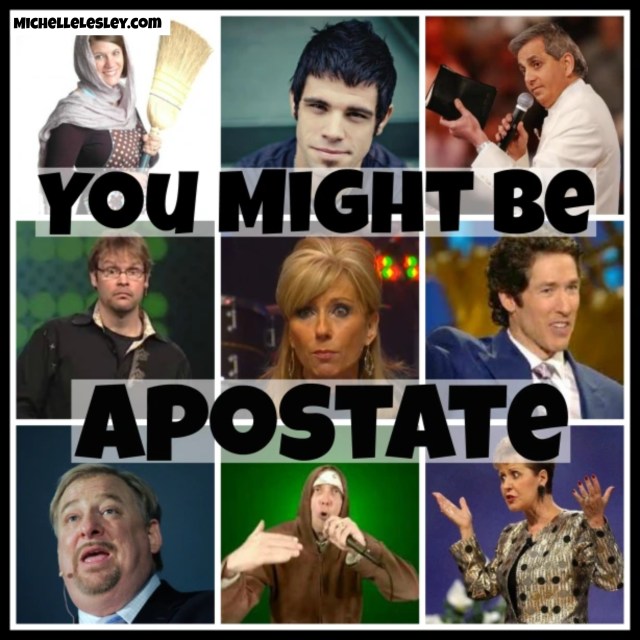
Like rednecks, there are apostate false teachers all over the place out there, only a lot of them (and their disciples) don’t know they’re false teachers. And the fruit of their lives and ministries is far wackier than anything a redneck has ever dreamed up. That fruit is a sign that we’d better examine the root of doctrine from which the fruit sprang.
So if any of the preachers and teachers you’re following have ever said or done the following things (or something even crazier), watch out, because they Might Be Apostate.
If you feature a Naked Cowboy impersonater (aka- your youth “pastor”) at your “Christian” women’s conference, you might be apostate.
If you’ve ever purposefully applied the pronoun “herself” to God, you might be apostate.
If you celebrated your 35th birthday by preaching at the “church” of your mentor, T.D. Jakes, and placing a $35,000 check in his offering wheelbarrow, you might be apostate.
If you’ve ever said, regarding your church’s worship service, “I probably wouldn’t have a stripper on stage…” but leave the door open to the idea because “God told Isaiah to walk around naked for three years,” you might be apostate.
If you say you’re a trinitarian, but think the Father, Son, and Holy Ghost are three “manifestations” of God rather than three Persons, you ARE apostate.
If your senior pastor father sexually abused boys at your church and paid them off to keep them quiet and you, as the subsequent pastor, knew about it but didn’t speak up, you might be apostate.
If you think that between the cross and the resurrection Jesus went to Hell and that Satan and the demons jumped up and down on His back, you might be apostate.
If a currently practicing homosexual couple wants to serve in leadership at your church and your only problem with it is that one of them isn’t yet divorced from his wife, you might be apostate.
If you are considering commenting or sending me an e-mail objecting to the fact that I warn against certain teachers, please click here and read this article first. Your objection is most likely answered here. I won’t be publishing comments or answering emails that are answered by this article.
This article is kept continuously updated as needed.
Generally speaking, in order for me to recommend a teacher, speaker, or author, he or she has to meet three criteria:
a) A female teacher cannot currently and unrepentantly preach to or teach men in violation of 1 Timothy 2:12. A male teacher or pastor cannot allow women to carry out this violation of Scripture in his ministry. The pastor or teacher cannot currently and unrepentantly be living in any other sin (for example, cohabiting with her boyfriend or living as a homosexual).
b) The pastor or teacher cannot currently and unrepentantly be partnering with or frequently appearing with false teachers. This is a violation of Scripture.
c) The pastor or teacher cannot currently and unrepentantly be teaching false doctrine.
I recommend against any teacher or ministry who violates one or more of these biblical tenets.
I am not very familiar with most of the teachers I’m asked about (there are so many out there!) and have not had the opportunity to examine their writings or hear them speak, so most of the “quick checking” I do involves items a and b (although in order to partner with false teachers (b) it is reasonable to assume their doctrine is acceptable to the false teacher and that they are not teaching anything that would conflict with the false teacher’s doctrine). Partnering with false teachers and women preaching to men are each sufficient biblical reasons not to follow a pastor, teacher, or author, or use his/her materials.
Just to be clear, “not recommended” is a spectrum. On one end of this spectrum are people like Nancy Leigh DeMoss Wolgemuth and Kay Arthur. These are people I would not label as false teachers because their doctrine is generally sound, but because of some red flags I’m seeing with them, you won’t find me proactively endorsing them or suggesting them as a good resource, either. There are better people you could be listening to. On the other end of the spectrum are people like Joyce Meyer and Rachel Held Evans- complete heretics whose teachings, if believed, might lead you to an eternity in Hell. Most of the teachers I review fall somewhere in the middle of this spectrum (leaning toward the latter).
If you’d like to check out some pastors and teachers I heartily recommend, click the Recommended Bible Teachers tab at the top of this page.
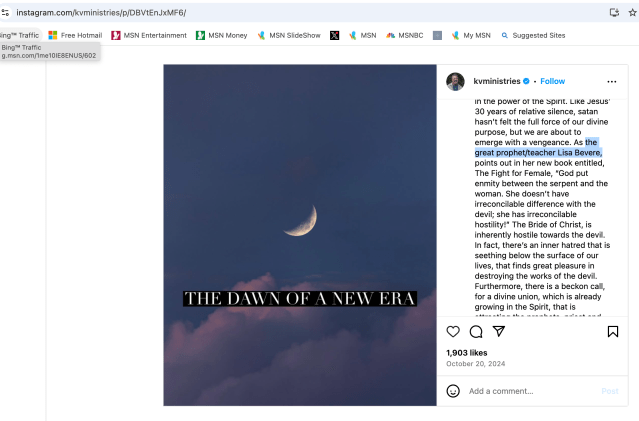
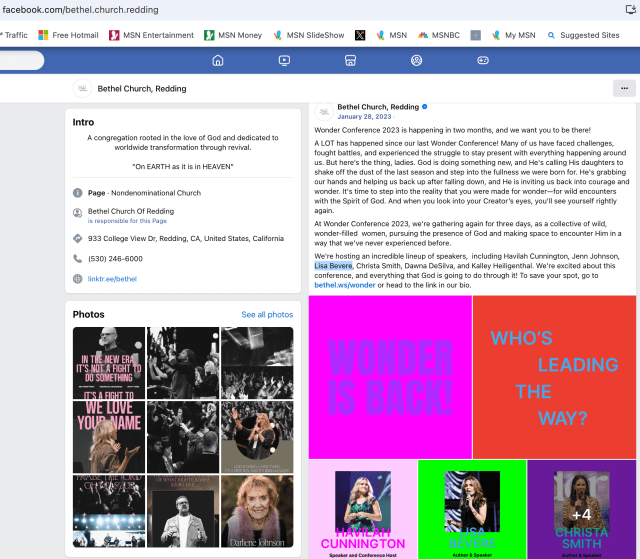
NAR false teaching: John and Lisa’s false teaching can be observed in the many videos linked under “Yoking in Ministry with Other False Teachers” (below). They teach a lot about so-called prophecy and extra-biblical revelation.
Preaching to men: Lisa can be observed preaching to men in most of the videos linked under “Yoking in Ministry with Other False Teachers” (below). Her speaking engagement calendar boasts a number of dates when she is preaching the Sunday services at various churches.
Lisa also advocates for women preaching/pastoring in her book Without Rival.
In her article, Women: The Great Commission is Your Permission, you can watch Lisa mercilessly twist Acts 4 and the Great Commission (from The Message, no less) in an attempt to make Scripture endorse women preaching. She even goes so far as to compare Christians who rightly understand that Scripture prohibits women from preaching to the council of Pharisees and Sadducees who imprisoned and “threatened” the apostles (and in the very next chapter, beat them) for preaching the gospel:
For more than two millennia religious leaders have limited and at times prohibited thousands of the church’s daughters from preaching and teaching in the sacred spaces under its governance. Read Acts 4:18 again: So they called them and charged them not to speak or teach at all in the name of Jesus. As I pondered this verse, I heard the Holy Spirit whisper, “Far too many of the daughters I called and gifted by my Spirit for ministry have been held back and denied their call by the church.” You might have heard religious leaders say, “Women can teach other women but not men.” Or, “Women can share, but there is to be no preaching.” And: “Women can lead, as long as it is outside the church.” These veiled threats appear to be more reasonable, but the result is the same: the gospel is contained…Yet the question before us is the same one raised by Peter and John. Is it right in the sight of God to listen to men rather than to obey God?
“Missions”: John and Lisa have a missions organization called Messenger International, through which they spread their heresy all over the world. Notice the word “resources” in the image below. It doesn’t mean “trustworthy translations of the Bible”. It means their own books.:
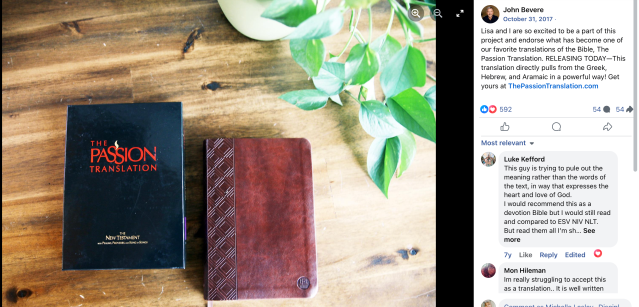
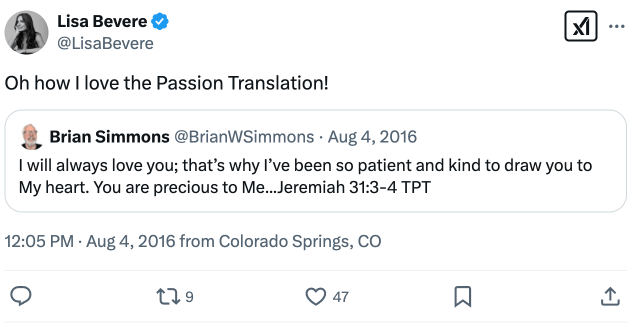
The Passion “Translation” is not a translation at all, but more like an NAR fanfic of the Bible, or the NAR’s dangerous and twisted re-write of the Bible. The Beveres not only frequently quote and teach from TPT (and The Message – also not a translation of the Bible, but an error-laden paraphrase from another false teacher, Eugene Peterson), they wrote a hearty endorsement on the TPT website (right alongside some of the worst of the worst NAR heretics alive today: Bill Johnson, Bobbie Houston, Lou Engle, James Goll, Patricia King, Heidi Baker, Banning Liebscher, Che Ahn, Chuck Pierce, Lana Vawser, and Bianca Olthoff.)
John also wrote a devotion for the TPT blog, and Lisa wrote two. And John and Lisa have both gushed over TPT on social media.
Yoking in Ministry with Other False Teachers
John and Lisa associate and partner in ministry almost exclusively with some of the worst of the worst false teachers. Here are just a handful of hundreds of examples:
Benny Hinn (NAR, faith healer):
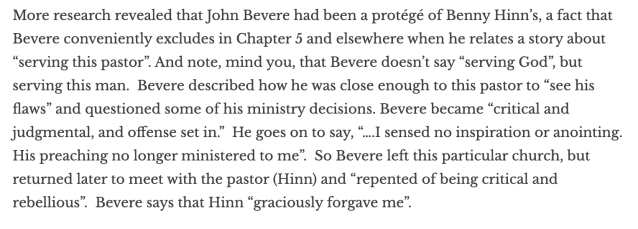
Early in his ministry, John served in various pastoral capacities under his pastor, Benny Hinn. Because this was in the 1980’s-90’s (pre-Internet), and because John has attempted to distance himself from this fact, there appears not to be any hard online proof (links, pictures, screenshots, etc.) readily available, but it is common knowledge and can be researched offline.
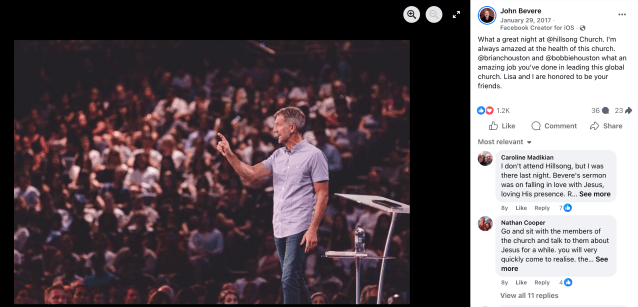
John has preached at Hillsong multiple times: “What a great night at @hillsong Church. I’m always amazed at the health of this church. @brianchouston and @bobbiehouston what an amazing job you’ve done in leading this global church. Lisa and I are honored to be your friends.”
A who’s who of false teachers and heretics have written endorsements for Lisa’s books. Just one example: Without Rival carries written endorsements from: “Pastor” Holly Wagner, Chris Hodges, Sheila Walsh, “Pastor” Caroline Barnett, “Pastor” Charlotte Gambill, “Pastors” Steven and Holly Furtick, “Pastor” Victoria Osteen, Kris Vallotton, James Robison, Jenn Johnson, Sarah Bessey, Lisa Harper, “Pastors” Brian and Bobbie Houston, Jentezen Franklin, Christine Caine, and Mark Batterson.
2025 UPDATE: The article below was published in February 2024, approximately one year prior to Gather25. Yesterday (February 12, 2025), Amy and I dropped a much more detailed A Word Fitly Spoken podcast episode about Gather25, which will take place in a little over two weeks: Friday, February 28- Saturday, March 1. I encourage you to give it a listen, and warn your church, your friends, or anyone you think might be interested in attending or streaming.
Does anyone know what Gather25 is about? Is it similar to IF:Gathering?
This past weekend was IF:Gathering 2024. I shared my article about it on social media and one of my followers asked this question. I’m glad she did so I could give you a heads up and you can have a whole year to warn your church and your friends away from it.
According to its website, Gather25 is a 25 hour global simulcast of “prayer, worship, repentance, and commissioning” (i.e. sending people out under the auspices of the Great Commission, ostensibly, to share the gospel) which will take place in March 2025.
“Gather25 is being organized and led by an alliance of Christian organizations: IF:Gathering, YouVersion, illumiNations, Right Now Media, and many more international ministries and churches. The original vision for Gather25 was cast by Jennie Allen.”
Jennie Allen is a false teacher and founder of IF:Gathering, an annual conference for evangelical women (and, no doubt, some men) which routinely platforms false teachers, women pastors, and women who preach to men.
YouVersion is hosted by Craig Groeschel’s LifeChurch.TV. He is a false teacher and platforms many other false teachers and women who preach to men.
illumiNations seems to be a Bible translation and distribution organization, which may be just fine, but I’m concerned that all of the evangelical celebrities they currently and proudly list on their home page as supporting their organization (Elevation Worship, Lecrae, Sadie Huff, Passion, IF:Gathering, MVMNT Conference, and Chris Tomlin) are false/woke teachers, or conferences and individuals that platform false/woke teachers.
And these are just the four organizations mentioned by name on the FAQ page. There are many more sponsors, and the ones I’m familiar with are all doctrinally unsound and/or run by false teachers. This thing is absolutely saturated with false teachers.
This event is going to sucker in a lot of undiscerning pastors, because, “What could possibly be wrong with prayer, worship, repentance, and commissioning people to share the gospel? We can just set aside the ‘secondary issue’ differences we have with these people and join them.”. But Scripture forbids us from having anything to do with false teachers. And if your pastor invites these false teachers into your church via simulcast, he is disqualified from the ministry. Titus 1:9 is part of the biblical qualifications for pastors and elders:
He must hold firm to the trustworthy word as taught, so that he may be able to give instruction in sound doctrine and also to rebuke those who contradict it.
Titus 1:9
Furthermore, what sort of false gospel might these false teachers be “commissioning” people to spread? What sort of unbiblical prayer and worship practices will they lead participants in? What is the definition of “repentance” these false teachers hold to? Will they lead participants to “repent” of things like “whiteness,” refusing to baptize practicing homosexuals, oppressing women by not allowing them to be pastors, and such?
If you think your pastor might be the type to have your church participate in this event, I would recommend you start praying now, start preparing now, and prayerfully consider whether or not you should warn him about Gather25 now so that he has plenty of time to be obedient to the Titus 1:9 mandate the Lord has given him.
If you have a question about: a Bible passage, an aspect of theology, a current issue in Christianity, or how to biblically handle a family, life, or church situation, comment below (I’ll hold all questions in queue {unpublished} for a future edition of The Mailbag) or send me an e-mail or private message. If your question is chosen for publication, your anonymity will be protected.
Every time I hear “I speak Jesus over you” I cringe. I can’t exactly explain why. Is it scriptural??
No it’s not, which is why it makes you cringe. It’s pretending to be biblical and your John 10:5, 27 sheep ears know it’s not. Here’s why it’s not:
• There’s nothing in Scripture that tells us to do, or shows an example of anyone doing anything of the sort. The Bible speaks in terms of encouraging, teaching, preaching, exhorting, rebuking, reproving, and comforting others with the written Word of God. If that’s what the person using this phrase means, then that’s what she should say.
Christians should use biblical terminology for biblical concepts, not made up, mystic linguistics. But what “I speak Jesus over you” sounds like, and what she probably means is some sort of supernatural transaction in which she mystically, verbally pulls Jesus down out of Heaven and invisibly spreads Him out over you, like a tarp or an umbrella, to ward off evil spirits or negative circumstances. Sounds kinda pagan, and witchcrafty or incantationy doesn’t it? That’s because it is, which brings us to the second reason you’re cringing…
• You don’t hear doctrinally sound, biblical Christians saying this. This is a buzzword/phrase typical of New Apostolic Reformation heretics. You probably heard this from an NAR false teacher or someone you know who’s into NAR (Bethel, etc.) garbage. This is John 10 at work in your spirit again: Christ’s true sheep (genuinely regenerated Believers) know His voice – what His teaching of sound doctrine from Scripture sounds like – and they will not follow the voice of strangers (false teachers).
• It’s grammatically… incorrect stupid. We speak words. We can’t speak objects or people. It’s impossible. It makes no more grammatical sense to “speak Jesus” over someone than it does to “speak a frying pan” over her.
God ontologically wired human beings for language, and the structure and grammar that goes with it, and we intuitively know when something is linguistically whackadoodle, even if we can’t put our finger on why. That’s another reason you’re cringing.
So if someone said “I speak Jesus over you” to me, I’d have some questions:
• What is that supposed to accomplish, or what will the result of that be so I can watch for it?
People who use this kind of phraseology are going to have trouble coming up with answers to those questions, because “I speak Jesus over you” is not taught in Scripture and doesn’t even make logical or grammatical sense.
◦◦◦◦◦
I was asked this question publicly on X. Since I don’t listen to pop “Christian” music – and especially not “Christian” music of this theological caliber – I was not aware that I Speak Jesus is the title of a song by an artist named Charity Gayle. I misunderstood the lady who asked the question to mean that this is a phrase she’s heard people using in conversation (I’ve heard NAR people say similar things), so that’s the way I answered. After I answered, she informed me that it’s a song.
(Just a little aside here: I do try to keep abreast of things and people in evangelicalism, I promise, but there are so many things and so many people that it’s impossible. Followers often ask me brief questions with little context, use acronyms I’m not familiar with, vaguely allude to situations I’ve never heard of, etc., assuming I’ll know what they’re talking about. I’m very flattered that my followers think I’m up on everything that’s going on out there, but I just want to be perfectly transparent that I’m not. I can’t be. Sorry about that. So when you have a question, do have mercy on me and make sure I know what you’re talking about so I can give you an answer that will actually be helpful to you. I don’t want to be unhelpful. :0)
So now that I know it’s a song, I thought this would be a good opportunity to demonstrate for you, step by step, using I Speak Jesus as an example, how to vet the purportedly “Christian” music you might be listening to.
1.
You hear a song. It’s catchy. You like it. You’re kind of half paying attention to the lyrics, but nothing jumps out and slaps you in the face as overtly heretical, like “🎶 Ooo, ooo… the Trinity doesn’t exist…🎶” or “🎶 Shall we continue in sin that grace may abound? YES, baby, YES! 🎶.”
2.
You listen again, this time paying attention to all of the lyrics. You still don’t hear anything overtly heretical. On the surface, everything seems like it aligns with Scripture, or at least doesn’t contradict it. In fact, you’re pretty sure you heard some theological words or part of a Bible verse in there, somewhere. It must be a biblical song, right? Not so fast, there, Skippy.
3.
🎶 Whoa, whoa… listen to the music…🎶 NOT. Turn the music off, get a text copy of the lyrics (It’s easy to do this by typing the title of the song, followed by the word “lyrics” into your preferred search engine.), slowly, carefully, and discerningly read the words, and compare them to rightly handled, in context Scripture.
Why read instead of listen? Because, whether you realize it or not, the music itself is impacting you. You wouldn’t have finished listening to the song the first time if you hated the music. It’s pleasing your senses, drawing you in, and dulling your objectivity*. You don’t need that distraction when you’re trying to be discerning. Additionally, listening to a song, no matter how slow the tempo, doesn’t give you the time you need to stop and ponder the words in light of Scripture, nor do you have all of the words in front of you at once.
*(Full disclosure: I gave the answer above to the lady on X about the phrase, “I speak Jesus over you” and went through the lyrics of this song two or three times before I listened to it, and even then I could feel a little tickle at the back of my brain going, “The music is great. Maybe the song isn’t so bad after all.” That’s probably exactly how Eve was feeling in the Garden when the serpent offered her that beautiful piece of fruit. And we all know how that turned out. It’s imperative that our brains, logic, and rational thought keep our feelings and senses in check when we’re trying to be discerning.)
Let’s look at the lyrics of I Speak Jesus:
I Speak Jesus
Verse 1: I just wanna speak the name of Jesus Over every heart and every mind ‘Cause I know there is peace within Your presence I speak Jesus
Verse 2: I just wanna speak the name of Jesus ‘Til every dark addiction starts to break Declaring there is hope and there is freedom I speak Jesus
Refrain: ‘Cause Your name is power Your name is healing Your name is life Break every stronghold Shine through the shadows Burn like a fire
Verse 3: I just wanna speak the name of Jesus Over fear and all anxiety To every soul held captive by depression I speak Jesus
Refrain
Bridge: Shout Jesus from the mountains Jesus in the streets Jesus in the darkness, over every enemy Jesus for my family I speak the holy name Jesus, oh (oh)
Repeat bridge
Refrain
Repeat verse 1 Repeat bridge and refrain as artist desires
OK, so what is the singer saying she wants to do here? She wants to speak the name of Jesus.
Over whom? Verse 1: Over every heart and mind (all people) Verse 2: Over addiction itself (as a spirit or entity), or over people with addictions (it’s unclear) Verse 3: Over fear and all anxiety (as spirits or entities), and over people with depression
Why? Because she believes merely speaking the word “Jesus” taps into His power, healing, and life. She believes that speaking the word “Jesus” can break every stronghold; that the word “Jesus” will shine through the shadows and burn like a fire. (You’d have to ask the songwriters exactly what they mean by those last two metaphors, but I’m surmising that they mean something along the lines of, “Speaking the word ‘Jesus’ brings light to spiritual darkness.”)
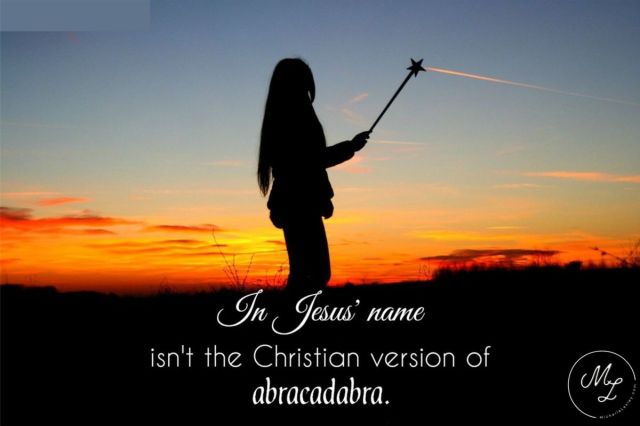
Is this biblical? No. Not in the way it’s being presented, as if the word “Jesus” is some sort of magic word you say, like “Abracadabra!” or “Hocus Pocus!” that – TA DAAAA! – magically makes things like addiction and depression disappear.
If saying the word “Jesus” did that, you’d see a lot more healing and peace and all the other things mentioned in the song happening, because a lot of people “speak Jesus” in vain a lot of the time. I mean, when was the last time you were watching a TV show and one of the characters blasphemously exclaimed, “J—s!”? Did that heal you of the flu or your gout? No, of course it didn’t.
To which Charity and the songwriters would probably reply, “Well, we didn’t mean it like that! We mean Christians speaking the name of Jesus over people with faith that doing so will heal them, bring them peace, etc.”.
Maybe so, but that’s not what they’re saying. The lyrics of the song imply that there is some sort of intrinsic power in the word “Jesus” itself. “Your nameis power. Your nameis healing. Your nameis life.” The lyrics don’t give any other provisos other than the word passing someone’s lips.
But let’s grant them the benefit of the doubt that when they say “speak Jesus” they mean Christians speaking it with some sort of faith in what saying it will accomplish. Is that biblical?
No, it’s not. It is actually a violation of the third Commandment (taking God’s name in vain) and the laws and commands against practicing witchcraft, magic, and casting spells. Because that is exactly the way they’re using the name of Jesus – the same way witches cast spells. They’re attempting to speak words that harness supernatural power that doesn’t belong to them in order to exercise power and control over things that only God has power and control over.
And God was doing extraordinary miracles by the hands of Paul, 12 so that cloths or aprons were even carried from his body to the sick, and the diseases left them and the evil spirits went out. 13 But also some of the Jewish exorcists, who went from place to place, attempted to invoke over those who had the evil spirits the name of the Lord Jesus, saying, “I implore you by Jesus whom Paul preaches.” 14 Now seven sons of one named Sceva, a Jewish chief priest, were doing this. 15 And the evil spirit answered and said to them, “I recognize Jesus, and I know about Paul, but who are you?” 16 And the man, in whom was the evil spirit, leaped on them, subdued all of them, and utterly prevailed against them, so that they fled out of that house naked and wounded. 17 And this became known to all, both Jews and Greeks, who lived in Ephesus; and fear fell upon them all and the name of the Lord Jesus was being magnified. 18 Also, many of those who had believed kept coming, confessing and disclosing their practices. 19 And many of those who practiced magic brought their books together and were burning them in the sight of everyone;
The magicians burning their books of spells in the fear of God in verse 19 demonstrates that they recognized that the Jewish exorcists “invoking the name of the Lord Jesus” (13) were doing essentially the same thing they were doing- casting spells. The magicians saw what happened to the exorcists and they didn’t want that to happen to them, too.
And invok[ing] over those who had the evil spirits the name of the Lord Jesus (13) is exactly what I Speak Jesus is teaching. Go back up to “Over whom?” above. See how I’ve notated the lyrics “addiction,” “fear,” and “anxiety,” as “a spirit or entity”? There’s a reason for that. The NAR doesn’t teach sin like the Bible does. It doesn’t say, “You’ve committed the sin of drunkenness and you need to repent.” It says, “The spirit of addiction is on you and you need to be delivered from that spirit.” The NAR teaches that sin (and illness) happen because you’re possessed by, or at least influenced by, demonic spirits, and you need “deliverance” from those demons and spirits (Sounds an awful lot like the “exorcists” trying to drive out “evil spirits” in v. 13, doesn’t it?). This is not at all what the Bible teaches about sin (or illness either, for that matter). Here’s what God says about why we sin:
But each one is tempted when he is carried away and enticed by his own lust. Then when lust has conceived, it gives birth to sin, and when sin is fully matured, it brings forth death. James 1:14-15
No demons. No evil spirits. You and I sin because our flesh wants to. Because our flesh craves and lusts after something unholy that we’re not supposed to have. “The devil made me do it,” was a Flip Wilson comedy routine, not biblical theology. We are responsible for our sin, not some demon or spirit.
This was funny at the time because everyone – even pagans – knew it was ridiculous. But this is basically what’s now being taught at New Apostolic Reformation “churches” all over the world.
The Bible does not teach us to “speak Jesus over” anyone or anything for the purpose of bringing about results (healing, peace, freedom from sin, conquering the enemy, etc.) that are strictly within the purview of God. If you want to see people set free from sin, fear, anxiety, depression, and addiction, the biblical thing to do is to call them to repent and believe the gospel.
Is this song biblical? No. It teaches false doctrine and is completely unbiblical.
4.
Now, maybe you’re not so much with all this “right brain” stuff – artsy words and metaphors and such. You’re more of a “left brain,” analytical, “Just the facts, ma’am,” kind of gal. Or maybe you’re just looking for a faster way to find out whether a song is worth listening to in the first place.
I have good news for you. Assuming the artist in question is somewhat prolific, there’s often a faster and easier way to find out what you should or shouldn’t be listening to. And it’s also a more biblical way than vetting individual songs.
When the Bible deals with false teachers, it doesn’t teach us to sift through every article they’ve written or every sermon they’ve preached and keep what’s good and throw out what’s bad. (In common parlance, this is often referred to as “chewing up the meat and spitting out the bones,” and it is an unbiblical way of dealing with false teachers.) The Bible teaches us to stay away from them, altogether.
Romans 16:17-18– “Turn away from” or “avoid” them. 2 John 9-11– “Do not receive him into your house and do not give him a greeting”. Titus 3:10– “Reject” a factious man.
Scripture teaches us to avoid that teacher completely. Avoid him as a person and every piece of content he has ever created. And that’s the model we should be following with Christian musicians as well. In the same way you wouldn’t listen to a “good” sermon from heretics like Bill Johnson or Steven Furtick, you shouldn’t be listening to “good” songs from doctrinally unsound or heretical musicians. And churches should definitely not be using music from heretical sources in their worship services.
How do you find out who should be avoided? You examine the musician’s life, doctrine, and practices. If you need a little help, you can use the resource I’ve created for vetting teachers: Is She a False Teacher? 7 Steps to Figuring it Out on Your Own.
The first thing I would suggest looking for is any ties to Bethel, Hillsong, or Elevation – all households of heresy (New Apostolic Reformation / Word of Faith). Bethel practically holds a monopoly on the Christian music industry (Hillsong, not as much any more since all the scandals, but Elevation is still hanging in there as a wannabe.), so any evangelical musician seeking fame and fortune is going to be looking to hitch her wagon to Bethel’s star. So look for connections to Bethel and anyone with strong ties to Bethel, for example, Phil Wickham. But also look for connections to any musician or band that you know has bad theology. I’ve got a few listed here, but this is honestly not an area I keep current with, so you may need to bounce things off a discerning friend who is more in the know than I.
Is “I speak Jesus over you” a biblical concept? Nope. Is the song I Speak Jesus biblical? Nope. Keep being discerning as you decide which music and artists to listen to.
If you have a question about: a Bible passage, an aspect of theology, a current issue in Christianity, or how to biblically handle a family, life, or church situation, comment below (I’ll hold all questions in queue {unpublished} for a future edition of The Mailbag) or send me an e-mail or private message. If your question is chosen for publication, your anonymity will be protected.
You’ve probably heard it a million times, just like I have. The old “counterfeit money” illustration about discerning false doctrine and false teachers. If you’re not familiar, it goes a little something like this:
When training tellers to detect counterfeit bills, banks don’t have them study counterfeit money. Tellers are trained to become so familiar with authentic bills that when a counterfeit bill comes their way, they immediately detect it.
This, we’re told, is THE way to learn to discern false doctrine or spot a false teacher – not by being warned about them by name or description (i.e. studying counterfeit money), but only by knowing our Bibles well (i.e. studying authentic bills).
Unless that illustration is being used as a subtle way to say, “Hey, stay away from those mean old discernment bloggers!” it’s a decent illustration, as far as it goes. It’s correct, but not complete.
And if we base our understanding of discernment on this illustration rather than on what Scripture actually teaches about discernment, we’re going to get it wrong. Scripture tells us pastors are to preach sound doctrine AND ALSO rebuke those who contradict it.
The overseer must be…holding fast the faithful word which is in accordance with the teaching, so that he will be able both to exhort in sound doctrine and to reprove those who contradict.
Titus 1:7a, 9
Rebuking, sounding the alarm, and warning against false teachers and false doctrine is one of the biblical qualifications for pastors. In other words, if a pastor doesn’t warn against false teachers and false doctrine, (i.e. doesn’t warn you and train you about counterfeits) he’s only doing half his job and is disqualified.
Likewise, saying that the only way bank tellers learn about counterfeits and counterfeiters is by handling real money is untrue. When there’s a counterfeiter on the loose, the police alert banks and businesses. There are “Wanted:” posters with the suspect’s name, picture, and M.O., if available.
The media run news stories with surveillance video and descriptions of the counterfeit bills. The police want to get the word out so banks, businesses, and citizens won’t be fooled and taken advantage of, and so the criminal can be caught and brought to justice.
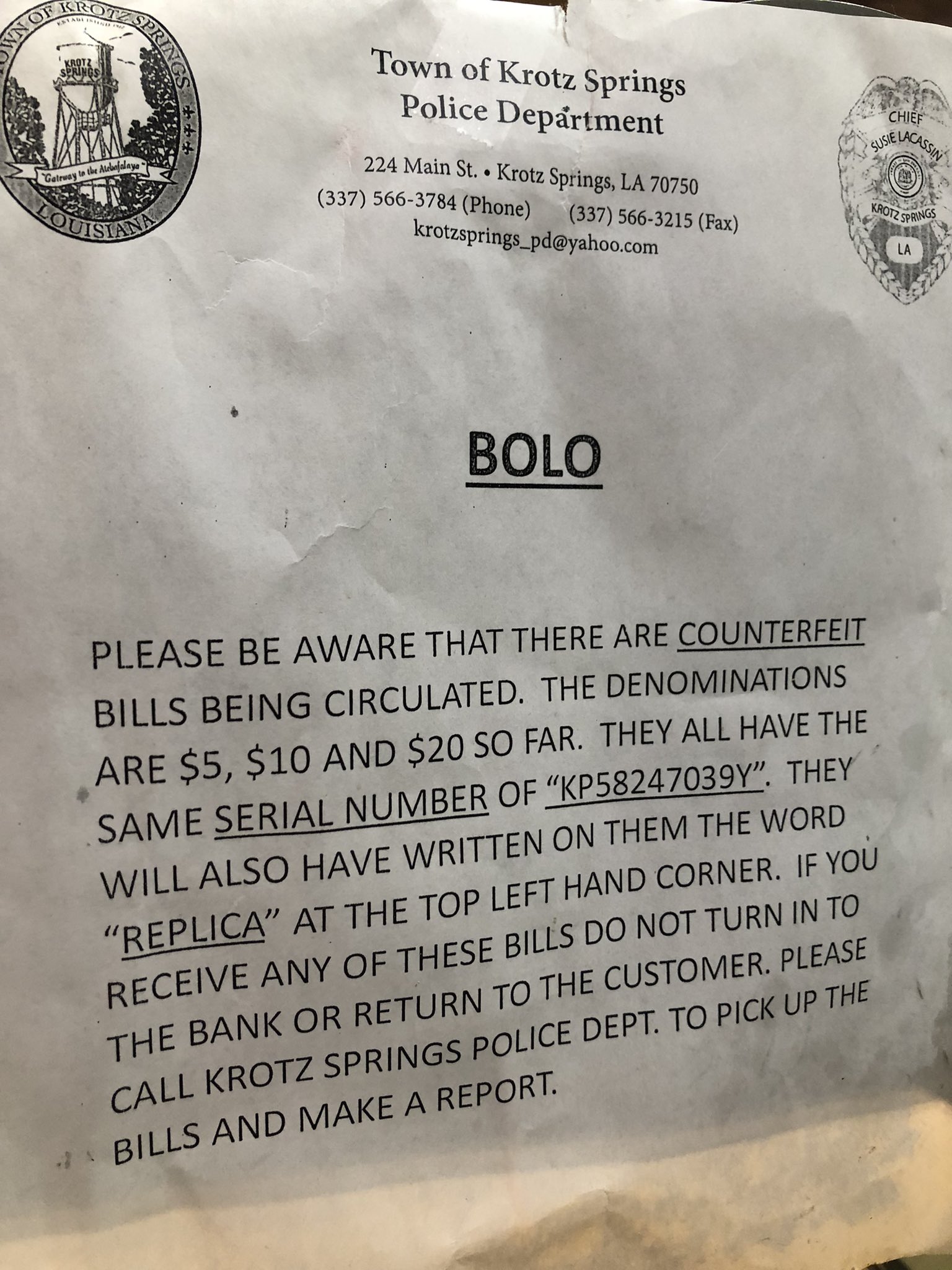
Providentially, not long ago, I spotted this “be on the lookout” (BOLO) warning from the police department of a small town near me. It was posted near a store’s cash register, where all the clerks could see it and be ready when counterfeit bills came their way.
It’s imperative that we study our Bibles and know them well. That knowledge of Scripture is like a filter that can catch all sorts of bad teaching before it has a chance to take root in our brains. But it’s only half the story. We also have to be familiar with the counterfeit teachings and teachers prevalent in evangelicalism today, and warn our churches, friends, and loved ones about them.
This is the complete picture of discernment given to us in Scripture. So, yeah, use the counterfeit money illustration to your heart’s content, but make sure you tell the whole story.