Basic Training, Prayer

Basic Training: 8 Things You Need to Know about Prayer

For more in the Basic Training series, click here.
When I was a little girl, I remember one of my Sunday School teachers saying, “Prayer is just talking to God.” With all the complex, confusing, convoluted, and even conflicting resources out there today on prayer, that sounds rather simplistic to our adult ears, but it’s still the best definition of prayer I’ve ever heard. Prayer is, indeed, simply talking to God.

And, along with studying God’s word and being a faithful member of a local church, it’s one of the three legs of the stool we call sanctification, or growth in Christ. Yet prayer is the leg that tends to be most neglected in our churches, our families, and our personal walk with the Lord.

Why is that? Why don’t we want to sit down and just talk – no frills, no weird machinations, just talk – to the most interesting, powerful, loving, and kind Being in the universe? If you received an invitation to sit down and chat with the President, your favorite celebrity, or a long lost loved one, you’d jump at the chance, right? I would, too. So what is it about our broken brains and hardened hearts that causes us to say, “Nah, not today,” to a simple monologue with our King? Those broken brains have learned some unbiblical things about prayer, and those hardened hearts have some ungodly attitudes toward prayer.

1. We don’t NEED God enough
Western Christians are pretty prosperous and self-sufficient people. We don’t have to cry out to God to provide food so we don’t starve. We have jobs and grocery stores. We don’t have to pray that we won’t be arrested for reading our Bibles or going to church, because that’s not happening where we live (yet). Except in the most dire of circumstances, we don’t have to plead with God to heal. We have doctors, hospitals, and medicine. Don’t get me wrong, those are all tremendous blessings, but one of the pitfalls of being blessed is that we start trusting in the blessing rather than trusting in the Blesser. And when that happens, we tend to pray less often and more superficially. Daily prayer is part of our battle to be dependent on God.

2. We’re idolaters
My husband’s uncle used to say, “You do what you want to do.” In other words, you spend your time and resources on the things you value most. I’m a Type A personality: workaholic, git ‘er done, ain’t got time to die. One of the reasons I neglect my own prayer time is that I don’t want to take time out of my busy schedule to stop and do nothing but pray. When I operate that way, I’m demonstrating that I don’t want to pray- that I love something else more than I love obeying God and spending time with Him. That’s idolatry.

3. We don’t trust God and His prescribed methods
When we’re in need, when we want to commune with God, when we want to grow in holiness, God’s way is for us to pray. Not climb the highest mountain or offer some amazing sacrifice or fulfill a bunch of items on a checklist- pray. But, to our fleshly hearts, this just doesn’t compute. It’s not enough. We’ve got to conjure up our own efforts and do something worthy of God acting on our behalf. Our hearts don’t trust God enough to simply take Him at His word, bring all of our requests to Him, and believe that He will take care of us. We don’t pray because we don’t trust God to follow through on His Word.

4. “Fervency” in prayer is qualitative, not quantitative
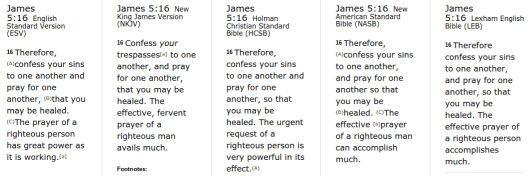
Sometimes we get it into our heads that being “fervent” in prayer means we have to constantly voice that prayer over and over in order to get God to give in and do what we want Him to do. But Godโ€™s provision isnโ€™t dependent on our prayers. He truly does know what we need before we ask. In other words, you could stop praying right this minute for that thing you desperately want, and never pray about it again, and God is not going to forget that thatโ€™s what you want, or move it to a lower priority level on His prayer-answering list, or punish you by denying your request simply because you stopped praying about it. There are things God blesses us with that weโ€™ve never spent a moment praying for. There are things we stop praying for that God finally gives us years later. And there are things we pray constantly for that God says โ€œnoโ€ about. God is going to do what is best for you and what brings Him the most glory, and that doesnโ€™t hinge on whether you pray about that specific thing every day or not. “Fervency” doesn’t mean repetition. It means an intense trust and dependence on God to do what is right in His eyes in response to your prayer. Sometimes it helps to examine a few good translations side by side:

5. Prayer isn’t a letter to Santa Claus
Back in the stone age of my childhood there used to be this thing called the Sears catalog. It was kind of like Amazon, but on paper. Every year, a few months before Christmas, they would publish their “Wish Book” edition that had all the toys in it. My sister and I would go through that catalog and circle all the things we wanted for Christmas and then hand it back to my parents, hoping that, this year, we’d get everything we asked for (and we asked for practically everything).

If this is how you approach prayer, you’re doing it wrong. God is not looking for you to provide Him with a list of stuff your greedy little heart desires so He can wrap it up in a bow and leave it under your tree. He’s not a wish-fulfillment center.

6. Weird stuff and unbiblical beliefs- knock it off
โ™ฆ Prayer is not a two-way conversation. We talk to God through prayer. He talks to us through His all-sufficient Word. Yes, while you’re praying, the Holy Spirit may remind you of Scripture that’s relevant to what you’re praying about, or bring to mind someone you should pray for, or you might think of a way you can help or bless someone, but prayer is not a dialogue. You don’t say your piece and then sit there and wait for God to say something back. That’s often called listening prayer or contemplative prayer, and it’s unbiblical. Likewise soaking prayer, sozo prayer, etc. In fact, if you see the word “prayer” preceded by an adjective not found in Scripture, it’s most likely not biblical.

โ™ฆ Prayer doesn’t require any special accessories. You don’t need to draw a circle to stand in, build a “war room,” blow a shofar, stroke a prayer cloth, or lay your hands on a prayer list, picture, object, etc. Scripture doesn’t tell us to do any of these things, and many of them are patently unbiblical.

โ™ฆ Prayer is not about you doing something, it’s about humbly beseeching God to do something. Nowhere in Scripture does God say that the purpose of prayer is for us to assert any power over anything through our words. He does not give us the authority to “bind” Satan, demons, or anything else, or “decree” or “declare” anything as though we could make something happen by doing so. These are false and unbiblical teachings of the heretical Word of Faith and New Apostolic Reformation movements.

7. Watch your language
โ™ฆ Having a “private prayer language” (speaking in “tongues”) as it is practiced today has zero basis in Scripture. None. When the disciples point blank asked Jesus to teach them to pray, there wasn’t a single “honda shonda” in His instructions, and nothing in Scripture says your prayers will be more meaningful to you or more likely to be heard by God if they’re in gibberish than if they’re in your native, real language.

โ™ฆ If you grew up fundie or old school, you might feel like you have to use “King James” lingo when you pray. You don’t. If you want to use “thee’s” and “thou’s” when you pray, you can, but you don’t have to. You can use the same vocabulary – respectful and pure speech, of course – you’d use when talking to a friend or loved one.

โ™ฆ If you’re tacking the phrase “in Jesus’ name” on to your decreeing and declaring and binding and rebuking as some sort of way to harness the power of God into making your words a reality, you’re taking God’s name in vain because you’re doing the same thing witches and pagans do when they use incantations and cast spells. “In Jesus’ name” isn’t the Christian version of “abracadabra.” To pray in Jesus’ name means to pray that what God wants – not what we want – will be done.

8. It isn’t about getting what we want. It’s about God getting what He wants.
We tend to think of prayer as a means to an end that centers around us. It’s a time to tell God what we want and need and for Him to fulfill those wants and needs, and that’s that. But is that how God thinks about prayer? God tells us to come to Him, to present our requests to Him, ask Him for daily bread, forgiveness, give thanks to Him, and a number of other things. But we also know that He is sovereign. He already knows what we need and what’s best for us, and He does what He pleases. So if God knows better than we do what we need, and if He’s going to do whatever He wants anyway, why bother praying, right?

We say things like that because we think the point of prayer is to get God to do what we want Him to do. But it’s not. The point of prayer is for God to get us to do what He wants us to do. He wants us to pray, not because He needs a “honey do” list, but because coming back to Him time and time again in prayer teaches us to depend on Him and trust Him. It strengthens our understanding of His power and sovereignty. It grows us in humility and submission. It conforms our will and our wants to His. It reminds us of our sin and the cross. It keeps us from taking God’s blessings for granted as we thank and praise Him. It helps us to want what God wants more than what we want.

Ultimately, prayer is not about what we want God to do for us. It’s about what He wants to do in us. So bow your head and close your eyes and make that daily time communing with the Lord your highest priority. God working through prayer to conform you to the image of Christ? That’s not something you want to say, “Nah, not today,” to.


Additional Resources

Prayer

After this Manner, Therefore Pray

Can We Talk?

Listening to God Without Getting All Weird About It by David Appelt

Praying Backwards by Bryan Chapell

Basic Training, Church

Basic Training: 7 Reasons Church is Not Optional and Non-Negotiable for Christians

For more in the Basic Training series, click here.

It’s a disturbing trend that’s spreading like the plague among evangelicals who claim to be Believers:

“I’m a Christian but I refuse to attend church.”

These aren’t people who can’t attend church due to health reasons, caring for an ill or disabled loved one, who have no other choice but to work some Sundays, or who live in an area with no reasonably doctrinally sound church to attend. They’re people who could get plugged in to a decent local church, but intentionally shun the body of Christ.

Usually, the decision to opt out of church boils down to one of two scenarios: a) a Believer who was hurt by a previous church and yet isn’t ready to risk being hurt again or b) someone (often a false convert) who doesn’t grasp the concept that being joyfully joined to a local body of believers is part of what defines someone as a Christian.

I can tell some of y’all have already fired up your e-mail programs or mentally formulated a corrective comment. Hang on, and please read what I’m about to say so we’re all on the same page here. I am not saying, have never said, and will never say that attending church, joining a church, serving at a church, or being baptized into a church is what saves a person, even in part. Going to church doesn’t make you a Christian. Everybody with me? Scripture is clear that salvation is by grace alone through faith alone in Christ alone, and that good works, such as church attendance, play zero part in a person’s salvation.

What I am saying is that one of the signs, or fruits, that someone is already saved is that she has a heartfelt love and affection for the things of God, which includes the gathering of the saints for fellowship, worship, encouragement, and edification. For a Believer, love for the bride of Christ is a natural extension of loving Christ, Himself. A Believer doesn’t have to be talked into attending church; there’s no place on earth he or she would rather be.

For a Believer, love for the bride of Christ is a natural extension of loving Christ, Himself. A Believer doesn’t have to be talked into attending church; there’s no place on earth he or she would rather be.

We’ve all been in difficult situations with difficult people at church that can hurt, sometimes deeply – believe me, I’ve been there – and can leave us in need of taking a few Sundays off to recover, or possibly the need to change to a healthier church. But if you’ve harbored antipathy toward the church, as a whole, for years, have never taken joy in fellowshipping and worshiping with fellow believers, don’t see any particular need for gathering with the Body, or are generally apathetic in your attitude toward church, you’re in a very dangerous place, spiritually, and you need to question your salvation. Those are symptoms of being lost, not fruit of being saved.

For Christians, being joined to a local church is not optional and non-negotiable. Why?

1. God Says So

Just in case the entirety of the Bible isn’t clear enough that God wants His people meeting together for fellowship, worship, and the Word, He says so very bluntly in Hebrews 10:24-25:

And let us consider how to stir up one another to love and good works, not neglecting to meet together, as is the habit of some, but encouraging one another, and all the more as you see the Day drawing near.

The HCSB puts it this way: “not staying away from our worship meetings, as some habitually do,” and NASB says: “not forsaking our own assembling together.” God says we are not to neglect, stay away from, or forsake, the meeting of the church body. For anyone who claims to be a Christian, that reason alone ought to be good enough. When God tells us to do something, we do it. Period.

2. The Church is God’s Plan for Christians

God doesn’t need or want your help devising the best methodology for your life and growth as a Christian. He already has a plan. He already established that plan. That plan is the church. There’s no plan B nor any cafeteria-style options. If you’re a Christian, God’s plan for you is to be a faithful part of a local body of Believers. The Bible never suggests that it’s OK for you to be a “Lone Ranger Christian.” There are no explicit statements to this effect, nor even one example of a New Testament Christian who lived life apart from the church. The New Testament assumes Christians will be part of a church. If not, the majority of Matthew through Revelation would be moot. If you reject membership in the local church, you’re rejecting God’s Word and His way in favor of your own way.

If you reject membership in the local church, you’re rejecting God’s Word and His way in favor of your own way.

3. Jesus Values the Church

You claim to love and follow Jesus, right? Well, Jesus founded the church. Jesus is the head of the church. Jesus loves the church. Jesus died for the church. Jesus is the Savior of the church. Jesus nourishes, cherishes, and sanctifies the church. How could anyone claim to love and follow Jesus and yet cavalierly toss aside something He values so much that He laid His life down for it? If you really love Jesus, you’ll value the things He values, and, clearly, He values the church.

If you really love Jesus, you’ll value the things He values, and, clearly, He values the church.

4. Being Joined to the Church Is an Indicator of Salvation

First John 2:18-19 makes no bones about it. Forsaking the church is an indicator that you’re not saved:

…now many antichrists have come…They went out from us, but they were not of us; for if they had been of us, they would have continued with us. But they went out, that it might become plain that they all are not of us.

Want to make it plain that you’re not of Christ? Step one is to leave the church.

5. The Church is the Dispensary for the Word and the Ordinances

The preaching and teaching of God’s Word. Baptism and the Lord’s Supper. In order to preserve their purity and sanctity, God established a hierarchical structure of ecclesiastical authority and placed the responsibility for administering Scripture and the ordinances with the church, not isolated individuals. Do we have women’s Bible studies and Sunday School classes? Of course. But only under the oversight of our pastors and elders, as an outflow of, and in keeping with, the preaching and teaching ministry of the church. Do we share the gospel with the lost we encounter during the week? You bet! Our churches enable us to do so by training us in the Word, and we bring new Believers back to our churches so that they may be discipled.

6. The “One Anothers”

Love one another. Comfort one another. Forgive one another. Serve one another. Bear one another’s burdens. Confess your sins to one another and pray for one another. Have you ever stopped to think which people “one another” is referring to? It’s easy to see when you look at these verses in context. It’s our brothers and sisters in Christ. All of the New Testament “one anothers” are written to the church. You need brothers and sisters to minister the “one anothers” to you, and your brothers and sisters need you to minister the “one anothers” to them. We cannot properly carry out the “one anothers” outside the church because they were meant to be practiced first and foremost within the church.

We cannot properly carry out the “one anothers” outside the church because they were meant to be practiced first and foremost within the church.

7. Sheep Need Shepherds

The Bible often uses sheep as a metaphor for God’s people. And since we know that God is the author of Scripture, we know God handpicked that metaphor to describe us. Ever notice that God never describes a sheep wandering off on its own as though that were a good thing?

All we like sheep have gone astray; we have turnedโ€”every oneโ€”to his own way;
Isaiah 53:6a

I have gone astray like a lost sheep; seek your servant,
Psalm 119:176a

When he saw the crowds, he had compassion for them, because they were harassed and helpless, like sheep without a shepherd.
Matthew 9:36

What do you think? If a man has a hundred sheep, and one of them has gone astray, does he not leave the ninety-nine on the mountains and go in search of the one that went astray?
Matthew 18:12

Sheep who leave the flock to make their own way in the world are in danger from wolves, the pitfalls of sin, and any number of other perils, especially the trials and tragedies of life. I can’t tell you how many e-mails I’ve received from distraught Christian women in dire personal circumstances who desperately need pastoral counsel. Sadly, when I tell them I’m not equipped to help them with such a complicated problem from so far away and that they need to make an appointment with their pastor for one on one, face to face counseling, the response is often, “I haven’t been going to church. I don’t have a pastor.”

We need the protection of the sheep pen, the brotherhood of the flock, and the leadership of our shepherds, our pastors, to help guide us. God knew we needed those things. That is one reason He established the church and created the position of pastor. Christ is our Good Shepherd, but until He returns, He has appointed godly men to watch over and protect the flock in His absence:

When they had finished breakfast, Jesus said to Simon Peter, โ€œSimon, son of John, do you love me more than these?โ€ He said to him, โ€œYes, Lord; you know that I love you.โ€ He said to him, โ€œFeed my lambs.โ€ He said to him a second time, โ€œSimon, son of John, do you love me?โ€ He said to him, โ€œYes, Lord; you know that I love you.โ€ He said to him, โ€œTend my sheep.โ€ He said to him the third time, โ€œSimon, son of John, do you love me?โ€ Peter was grieved because he said to him the third time, โ€œDo you love me?โ€ and he said to him, โ€œLord, you know everything; you know that I love you.โ€ Jesus said to him, โ€œFeed my sheep.
John 21:15-17

And he gave…the shepherds and teachers, to equip the saints for the work of ministry, for building up the body of Christ,
Ephesians 4:11-12

So I exhort the elders among you…shepherd the flock of God that is among you, exercising oversight, not under compulsion, but willingly, as God would have you; not for shameful gain, but eagerly; not domineering over those in your charge, but being examples to the flock. And when the chief Shepherd appears, you will receive the unfading crown of glory.
1 Peter 5:1-4

You can’t shepherd yourself. That internet pastor you listen to – even the most doctrinally sound one – can’t shepherd you. You need to be part of a flock led by a shepherd who knows you and cares for your soul.

Do you take joy in gathering regularly with your brothers and sisters in Christ for worship, the Word, the ordinances, building one another up, and serving one another? If not, the solution is not to leave the church altogether. The solution is to examine your heart against Scripture to discover whether or not you’re truly saved, and then to find a healthy church you can pour yourself into. Christ has given believers the local church as a blessing and a benefit, not a burden and a bore. Love and embrace this precious gift He has lavished on you.


Additional Resources

Searching for a new church?

What the Bible Says About Church Membership

Six Ways Not to Forsake the Assembly 

7 reasons worshipers need the church at The Cripplegate

Mailbag #49: Home Groups Over Church at 9Marks

My Jesus, I Love You; Your Bride I Despise! at Reformation21

Why You May Be Tempted To Neglect Your Church by Tim Challies

Five Essential Reasons for Christians to Gather in Public Worship at Ligonier

Prioritize Your Church by Tim Challies

Is a โ€œChurchless Christianโ€ an Oxymoron? at Ligonier

The Plight of Churchless Christians at The Cripplegate

40 reasons to be part of a local church at The Cripplegate

Church Attendance Is Not Optional on the G3 Podcast

Is it Necessary for Me to Join a Local Church? at G3 Ministries

Basic Training, Bible, Bible Study

Basic Training: The Bible is Necessary

For more in the Basic Training series, click here.

Then Jesus was led up by the Spirit into the wilderness to be tempted by the devil. And after fasting forty days and forty nights, he was hungry. And the tempter came and said to him, โ€œIf you are the Son of God, command these stones to become loaves of bread.โ€ But he answered, โ€œIt is written, โ€œโ€˜Man shall not live by bread alone, but by every word that comes from the mouth of God.โ€™โ€
Matthew 4:1-4

I have not departed from the commands of His lips; I have treasured the words of His mouth more than my daily food.
Job 23:12

More to be desired are [the words of God] than gold, even much fine gold; sweeter also than honey and drippings of the honeycomb.
Psalm 19:10

I have a question for you. Try to answer it within three seconds.

Where’s your Bible? (Not the one on your phone or computer- your real Bible.)

Were you able to answer in three seconds because you read it today and remember where you left it when you were finished? Because it stays on your night stand and rarely gets opened? Did it take longer than three seconds because you frequently carry it around with you and can’t remember where you most recently left it?

The point of the question isn’t really where your Bible is in geographical relationship to you, but where you are in relationship to your Bible.

David said God’s word was more valuable to him than gold, even much fine gold.

Job said he treasured God’s word more than his daily food.

Jesus hadn’t eaten a bite in over a month, and He still valued every word that comes from the mouth of God over bread.

If someone put a stack of fine gold in front of you and said you could have it as long as you hardly ever read your Bible, would you take it?

What if you had gone without food for forty days and someone offered you a loaf of bread in exchange for your agreement to put your Bible away and open it only rarely? Could you withstand the temptation?

I’d like to believe I would choose God’s word over a stack of gold or even life-sustaining food. But when I think about all the lesser things I sometimes choose to do instead of setting aside time to study God’s word…

…television
…social media
…reading
…sleeping
…hobbies

…well, I can’t help but wonder:

Do I really value God’s word as deeply as He wants me to?

We need God’s word. It is more necessary to us, spiritually, than food is to us, physically. Yet many Christians unintentionally starve themselves spiritually, thinking a “meal” or two of Scripture at church every week (if they actually attend every week, that is) is enough to sustain them. It’s not. We need to feast on God’s written Word every single day.

We need to know who God is

Saved people are in a one-on-one, personal relationship with God. But how can you have a relationship with someone you don’t really know? How can you love Him, please Him, or enjoy spending time with Him if you know nothing about Him? His character, His attributes, His likes and dislikes, the way He operates – these are all integral to knowing this God who created and saved us. And in His infinite love, God has chosen to reveal all these things about Himself in a book we call the Bible.

We need to know who we are

Just as an employee can’t rightly relate to her employer if she doesn’t understand her role, her place, and her responsibilities, we can’t rightly relate to God unless we understand both who He is and who we are in relationship to Him. We need to understand that He is God and we are not. That He is perfect in holiness and righteousness and we are depraved from the womb. That we are sinners in need of a Savior, created for the purpose of bringing glory to God, servants of the most high King. The only place to learn all of this, and more, about who we are, and where we stand with God, is in the pages of His word.

We need to know what God wants from us

What does God want me to do with my money? How can I be a godly wife if my husband is unsaved? Does God think it’s important for me to go to church? Is it always a sin to lie? Is it wrong to watch pornography? In addition to being a revelation of the nature and character of God, the Bible is also an intensely practical book, instructing Christians on issues of every day life and helping us to understand how God wants us to think, act, and speak. God knows we have questions and in His kindness and mercy has provided all the answers we need in Scripture.

We need to hear from God

While the idea and practice of “hearing God’s voice” is unbiblical, the desire to commune with God- to visit with Him as a loved one – is not. We only have to look back to the Garden of Eden to see that God’s perfect design was for people to fellowship with Him. Because of the Fall, we can’t do that face to face this side of Heaven. For now, we talk to God through prayer and worship. He talks to us through His written Word. Constant communion with God deepens our love for Him and increases our Christlikeness.

More than daily food. More than gold. More than any earthly pleasure, wisdom, or experience, we need God’s word. And we need it every day, all the days of our lives.

Basic Training, Bible

Basic Training: The Bible Is Sufficient

For more in the Basic Training series, click here.

God said to me…/I heard God say…

Listen for God’s voice…

God spoke to me in a dream…

God gave me a vision of…

We hear things like this non-stop these days in pop-evangelicalism. And it’s not just in the whack job Word of Faith or New Apostolic Reformation movements, or in Charismatic churches, either. These words are coming out of the mouths of regular, every day Baptists and Methodists and Lutherans and Presbyterians, too. It’s largely due to the infiltration of Word of Faith and New Apostolic Reformation false doctrine into our churches via a) “Bible studies” from false teachers like Beth Moore, Joyce Meyer, Priscilla Shirer, Christine Caine, Lysa TerKeurst and others and b) individual church members who feed on a steady diet of “Christian” television such as TBN, CBN, Daystar, and GodTV. Christians are getting the false idea that they need to hear, or should be hearing, God speak to them instead of trusting in the sufficiency of God’s word.

The theological term for “God spoke to me/showed me in a dream/etc.” is extra-biblical revelation– words or revelations, supposedly directly from God, that happen outside the pages of the Bible. I’d like to share with you six reasons God’s word is sufficient, and extra-biblcal revelation is both unbiblical and unnecessary.

1. Extra-biblical revelation is not the method God has established for communicating with us.
Maybe you and I would prefer it if God would just talk to us and tell us, one on one, in no uncertain terms, what He wants us to do. But that’s not the way that God prefers to communicate with New Testament Christians this side of a closed canon. God chooses to communicate with us through His written word. He says:

All Scripture is breathed out by God and profitable for teaching, for reproof, for correction, and for training in righteousness, that the man of God may be complete, equipped for every good work. 2 Timothy 3:16-17

Long ago, at many times and in many ways, God spoke to our fathers by the prophets, but in these last days he has spoken to us by his Son, whom he appointed the heir of all things, through whom also he created the world. Hebrews 1:1-2

Let’s bear in mind, it is God Himself who breathed out these words. These verses are God speaking to us, and He says Scripture is enough to make us complete and mature, and to equip us for everything He has for us to do.

When we insist on “hearing God speak” outside of Scripture, we’re essentially saying, “God, I reject Your way and demand you do things my way instead.” Remember, God set up this whole Christianity thing, and He gets to make the rules, not us.

2. What makes you so sure it’s God who’s speaking to you?
Just because you have a feeling, an urge, or an intense experience doesn’t mean that was God speaking to you. Maybe it was Satan. Maybe it was your own wicked heart. Maybe it was a temptation to sin. Maybe it was just an old memory resurfacing. How can you know, objectively (not based on your feelings, the intensity of the experience, etc.), beyond a shadow of a doubt, that it was actually God speaking to you? And if you can’t know for sure it was God, why would you put your trust in whatever “He said” to you?

As Christians, we can irrefutably know God is speaking to us when we read His word because we know He is the author of Scripture.

3. Extra-biblical revelation is redundant and unnecessary.
Even those (most of them, anyway) who believe God still talks to people will tell you that God will never say something to you that contradicts His written Word. So why not just bypass the whole “God spoke to me” thing and go straight to the Bible? Or as Puritan John Owen put it:

As God Himself has told us in His written Word, the Bible is sufficient instruction for every situation in our lives. We don’t need God to speak to us verbally. He has already spoken. Why aren’t we satisfied with that?

4. Insisting on extra-biblical revelation demonstrates a lack of trust in God and His ways.
James 1:5 says:

If any of you lacks wisdom, let him ask God, who gives generously to all without reproach, and it will be given him.

And where do we get wisdom to handle the situations and decisions of life? Not from a voice from Heaven saying “do this” or “do that,” but from Scripture:

The unfolding of your words gives light; it imparts understanding to the simple. Psalm 119:130

Let my cry come before you, O Lord; give me understanding according to your word! Psalm 119:169

The law of the Lord is perfect, reviving the soul; the testimony of the Lord is sure, making wise the simple; Psalm 19:7

and how from childhood you have been acquainted with the sacred writings, which are able to make you wise for salvation through faith in Christ Jesus. 2 Timothy 3:15

We don’t need God to tell us what decision to make, we want Him to, because that’s easier than doing the hard work of digging into Scripture, studying the biblical principles that apply to our situation, making the best and most godly decision we can, and trusting God for the outcome. But that’s exactly what God wants us to do:

Trust in the Lord with all your heart, and do not lean on your own understanding. In all your ways acknowledge him, and he will make straight your paths. Proverbs 3:5-6

When we honor and trust God by looking to His written word for the Holy Spirit’s guidance, He has promised to give us wisdom to make godly decisions and make our paths straight.

5. What about being led by the Holy Spirit?
For some reason people often draw a distinction between being “led” by the Holy Spirit and studying the Scriptures He breathed out, as though they’re two different things. Studying, believing, and obeying the words the Holy Spirit inspired is being led by the Spirit.

6. Extra-biblical revelation sets up a class system within Christianity.
Why do some people “hear” from God and others don’t? The reason implied by the Christian leaders (or even your fellow church members) – who make sure you know they’ve personally heard from God – is that people God speaks to are, spiritually, a cut above. Special. More faithful. More favored by God than you are. It’s like a carrot dangling in front of a horse. It keeps you buying their books, attending their conferences, following them on social media, hoping against hope that one day you’ll become one of the spiritual elite.

But how does the idea that others are “hearing God speak” affect a Christian who isn’t hearing from God? She starts thinking maybe God isn’t pleased with her. Maybe she’s sinning against God in some way. Maybe she’s not being faithful enough, praying enough, giving enough. Maybe God doesn’t love her. Maybe she’s not even saved. It turns her into a second class citizen of God’s Kingdom and causes her to covet something she doesn’t have and God never promised her.

None of this is biblical. There are no first tier and second tier Christians. A lot of the people God actually spoke to in Scripture were hardly paragons of spiritual awesomeness: BalaamSaul, and Moses, just to name a few. And God measures “spiritual awesomeness” not in strutting your closeness to Him before others, but in humility, servanthood, and crucifying self.

Ladies, God’s written Word is sufficient for our every need. We can trust that the words of Scripture are directly from the lips of God Himself. No one can say that with any certainty about extra-biblical revelation. Trust God to direct your paths and give you biblical wisdom to make godly decisions as you grow in the knowledge and understanding of His word.


Additional Resources

God Doesnโ€™t Whisper! With Jim Osman at A Word Fitly Spoken

Thatโ€™s Enough! The Sufficiency of Scripture at A Word Fitly Spoken

Isnโ€™t the Gospel enough? (The Sufficiency of Scripture) at A Word Fitly Spoken

How Does the Holy Spirit Lead Us? at A Word Fitly Spoken

Basic Training: 8 Steps to Finding Godโ€™s Will for Your Life

Where is it written that God doesn’t speak audibly any more? at Naomi’s Table

God Told Me: The Pentecostalization of Evangelical Theology of Revelation at G3 Ministries

Listening to God Without Getting All Weird About It by David Appelt

How God Speaks To Us Today by Tim Challies

Basic Training, Bible

Basic Training: The Bible Is Our Authority

For more in the Basic Training series, click here.

The Bible. Scripture. The Good Book. It used to be so blatantly self-evident that God’s written Word was the foundation and standard for the Christian faith that it was assumed. A given. You learned, “I stand alone on the word of God- the B-I-B-L-E,” when you were three or four years old, you believed it, and you moved on.

But take a look at the Westernized version of Christianity these days. The fruit of abandoning the authority of Scripture is chilling. From the demonic tremoring and barking antics of New Apostolic Reformation “churches” to the rebellion of female “pastors” to the “gay Christian” movement to “Christian” abortion doctors, it’s clear that an astounding number of self-professed Christians and churches don’t submit to Scripture’s mandates for their beliefs and practices.

“Whew,” you might be thinking, “my church and I must be OK. We call homosexuality sin. We’re pro-life. Our pastor is male. And the wildest our congregation gets is when Brother Joe bellows a good, hearty ‘Amen!’ during the sermon.”

Those are all good, biblical things and I don’t want to minimize them. But is it good enough? Are there other, more subtle ways you or your church aren’t submitting to the authority of Scripture? And what does it mean that the Bible is our authority, anyway?

Have you ever played Monopoly? If you have, you know that you’re supposed to use a Monopoly board, two dice, the and the game pieces and Chance and Community Chest cards that come with the game. You also know that there is a standard set of Monopoly rules that are supposed to be followed.

monopoly-1356307_640

Suppose a friend invited you to play Monopoly but wanted to use a checker board instead of a Monopoly board. Or wanted to create a new rule that you would get $500 for passing Go instead of $200. Or that you could get out of jail without rolling doubles.

Monopoly was created in 1903 by a lady named Elizabeth J. Magie Phillips. Magie created the game to teach people the consequences of having large or valuable tracts of land controlled by private monopoliesยน. Each piece of the game and each rule was created with that teaching goal in mind. To alter the rules of the game is to, at best, be out of alignment with Magie’s intentions and purposes, and, at worst, to not be playing Monopoly at all. If you want to truly play Monopoly, learn the fullest extent of the lesson Magie was trying to teach, and respect Magie as the creator of the game, you’ve got to play by her rules. All of them. Even the ones you don’t like or particularly understand.

Many of the same principles apply to Christianity. God set Christianity up a certain way with His own intentions and purposes. If we alter His rules, we’re, at best, not lined up with those intentions and purposes, and, at worst, not practicing Christianity at all. If we really want to honor God, grow in Christ to the greatest extent and truly be practicing biblical Christianity, we’ve got to play by His rules. All of them. Even the ones we don’t particularly like or understand.

But what many Christians are doing today is taking their “Monopoly game” of Christianity and assuming it’s for their own entertainment, better quality of life, or positive feelings. And because they’re largely ignorant of the Creator of the “game” and His purposes and intentions behind said game, the players start tossing out His rules whenever those rules don’t fit the purposes and intentions of the players.

God created you and me and the world and Christianity and the church for His glory. He gets to make the rules. We follow the rule book (the Bible), not because those rules will make us personally happy or successful, but – simply and ultimately – because they are given by God and glorify Him. What He says goes, and we honor Him by our obedience. We need to remember that our role in the game is player, not Creator. Players submit to the authority of the Creator.

When the Creator says…
I created the world in six literal days and here’s how I did it, we don’t dishonor His word by trying to cram evolution in there and make it fit. We believe Him, and we teach what His word says.

When the Creator says…
Ladies, I don’t want you to preach, teach Scripture to men, or hold authority over men in the church, we don’t search for loopholes. We search for ways we can humble ourselves and serve God in ways that please Him, not ourselves.

When the Creator says…
Here’s how I want you to pray, we repent of using unbiblical prayer methods such as private prayer languages and contemplative prayer, and we pray the way God wants us to pray.

When the Creator says…
Pastor, I want you to preach the Word, that means pastors preach rightly handled, in context Scripture- not a stand up comedy routine, not the storyline of the latest blockbuster movie, not a half hour of jokes and personal anecdotes, not their own opinions and self-styled doctrines.

When the Creator says…
I want you to stay away from people who teach false doctrine, it doesn’t matter how much we like that teacher, how good she makes us feel, how much we think she’s helping us in our walk with the Lord, or that we’d rather “chew up the meat and spit out the bones.” We reject her, and her teaching, and listen to those who teach sound biblical doctrine instead.

We bow the knee to what God’s word says. Period.

Ladies, if you don’t want to cripple your growth in Christ, one of the worst phrases you can utter about Christian beliefs and practices is, “Well, I just think…” followed by your own personal feelings or opinions. You don’t write the rules.

The Bible says:

You are not your own, for you were bought with a price. 
1 Corinthians 6:19b-20a

…you…have become slaves of God…
Romans 6:22

If you’re a genuinely regenerated believer, you are the slave of Christ. That means you don’t get to hold, or live by, your own feelings or opinions any more. That’s what lost people do. You are only entitled to God’s opinions as set down in His written Word. Your opinions don’t matter.

mozart

When it comes to Christian beliefs and practices, your experiences don’t matter either. It doesn’t matter what kind of so-called supernatural experience you had where you babbled incoherently or “heard God speak” or saw a “vision” or whatever. If your interpretation of your experience conflicts with the written word of God, your interpretation of your experience is wrong. Something may have happened, but it wasn’t God. (And if something supernatural happened and the Bible says God doesn’t work that way, there’s only one other option.)

When you decide what you’re going to believe and do based on your own opinions, feelings, and subjective personal experiences rather than the written word of God, what you’re doing is saying, “I know better than the almighty, all-knowing God of the universe.” You’re setting yourself up as judge over Scripture. You’re in charge, not God. Doesn’t sound much like a slave, does it?

That’s because Scripture says those who truly belong to Christ will have a heart to keep His word. We will stumble and fall along the way. We will sometimes mistakenly believe things we shouldn’t. But one of the hallmarks of a Christian is that she loves and strives to obey God’s word. Because, as Christians, the Bible is our authority.

ps-119-57


Additional Resources

What does it mean that the Bible should be our sole authority for faith and practice? at Got Questions

For the Authority of Scripture by Dr. John MacArthur

Divine Authorship and Authority at Ligonier

The Authority of the Bible by Dr. Martyn Lloyd-Jones

Bad Fruit, Diseased Trees, and the Authority of God’s Word


ยนMonopoly (game), Early History, Wikipedia, February 16, 2017
ยฒAmadeus photo and quote courtesy of Orion Pictures, Amadeus1984.