
Christian women, Idolatry, Sanctification, Women

Little Women

I’d rather have Jesus than men’s applause
I’d rather be faithful to His dear cause
I’d rather have Jesus than worldwide fame
I’d rather be true to His holy name

We sang this lovely hymn in church the other day, and it was perfect timing. For the past couple of weeks, I’ve been thinking about women I’ve known across the years, women I’ve known of (but not personally) across the years, and the woman I’ve known best across the years, me. And I’ve been thinking about how and where we find our worth, fulfillment, and contentment and where we should find it: in Christ.

I don’t know about you, but one of the sins I constantly struggle against is coveting. It’s a sin we don’t think about very much. A private one that, often, nobody knows about except God and me.

Coveting is a sin we don’t think about very much. A private one that, often, nobody knows about except God and me.

And you know what I covet? What I think we all covet? Men’s applause. Worldwide fame. Or, at least, fame in my little corner of the world.

When we were children in Sunday school, coveting was sometimes explained to us as “wanting for ourselves what someone else has.” Her new doll. His fancier bike. It’s a decent kid-level definition, but in the same way that Jesus reminded us that the root sin of murder is hate and the root sin of adultery is lust we need to mature in our understanding of coveting, and realize that it also has a root sin: discontentment. Sometimes, it’s discontentment with what we have (greed), and sometimes it’s discontentment with who we are.

And who are we?

As Believers, we are children of the God of the universe who, despite our sin and rebellion against Him, loved us enough to lay down His own life to rescue us. He listens to us. He accepts us. He provides for us. And don’t even get me started on Heaven.

And if contemplating all that isn’t enough, the Bible tells us to be content. So why aren’t we? Why woud we rather have Jesus and men’s applause, and worldwide fame?

Because, as John Calvin so aptly put it, “Man’s nature, so to speak, is a perpetual factory of idols.” Our sinful flesh is always looking to gratify itself rather than glorify God. Any time our hearts say, “God’s not enough. I want more,” we’re committing idolatry, because whatever the “more” is, it’s other than God and lesser than God, and we’re seeking it instead of seeking God. And, as women, one of the biggest “more” idols we seek is feeling good about ourselves, or feeling worthy of love and acceptance.

Our sinful flesh is always looking to gratify itself rather than glorify God.

But instead of looking to Christ and letting Him define for us a right perspective of ourselves, we hit the crack pipe of the praise of men. It’s fast. It’s cheap. It’s easy. And the high is nearly instantaneous.

Instead of looking to Christ and letting Him define for us a right perspective of ourselves, we hit the crack pipe of the praise of men. It’s fast. It’s cheap. It’s easy. And the high is nearly instantaneous.

How? Allow me to introduce you to some frenemies of mine:

Mother and Daughter Hugging

Marla MegaMom- Marla lives for and through her kids. Their successes are her successes. Their failures, her failures. She subtly or overtly pressures her kids to achieve because if they fail she’s afraid others won’t see her as a good mom. And being a failure as a mom means being a failure in life.

Woman Singing

Dina Diva- Dina literally seeks the applause of others. She’s the top church soloist and the star of every Christmas production. She’s a public speaker or an instrumentalist or an actress, anything that can be done on a stage. Dina doesn’t feel good about herself unless people are clapping for her.

woman-164299_640-1978279293

Veronica Victim- Poor Veronica. Everything in her life is always going wrong at home, at work, at church, with friends, with her health, with her car, with her dog. Nobody understands just how hard Veronica has it, so she makes it her life’s mission to let people know. In every story she tells, Veronica is the victim, and somebody else (or everybody else) is the bad guy. Please feel sorry for Veronica, because that’s the only way she can feel better about herself.

woman_angel_costume_kindlephoto-8131448

Helen the Heroine- Helen is Veronica’s cousin. In every story Helen tells, she’s the heroine, the paragon of virtue, the one who did everything right – short of severing a limb – to make everything work out, and somebody else is the bad guy. Helen is divorced and the bad guy is usually her ex-husband, but she’s versataile enough to apply her story telling skills to situations at work, church, with friends, etc. Helen thinks if you don’t see her as a heroine, she’s worthless.

super-woman-halloween-adult-costume-aef98eb9
Photo courtesy of CostumeCollection.com.au

Sally Superwoman- Sally does everything, and she does it superbly. She’s employee of the year at work and world’s best wife and mom at home. She’s a gourmet cook, flawlessly recreates every cake and craft on Pinterest, and her house looks like a photo shoot for Better Homes and Gardens. Other women know she’s got it all together, so she keeps all her plates spinning at a furious pace, because if one of them fell where would she be?

MP900178801

Popular Polly- Polly is everybody’s friend. She’s one of the sweetest people you’ll ever meet with never a cross word for, or about, anybody. She agrees with (or at least doesn’t obviously disagree with) whatever is being said by the person she’s talking to at the moment, so it can be hard to pin down what she really believes. When someone unfriends/unfollows Polly on social media, she takes it personally, wondering what she did wrong. She only likes herself if enough other people like her.

reading-216862_640

Know It All Nettie- Maybe she’s got multiple degrees, or maybe she’s just well read, but Nettie is an expert. In everything. She sees it as her calling to educate people, starting a lot of sentences with, “Well, actually…” and rarely asking questions that would reveal her lack of knowledge on a subject. Ignorance is a weakness in Nettie’s mind, and she wants to be seen as strong.
MP900427741_kindlephoto-8317786

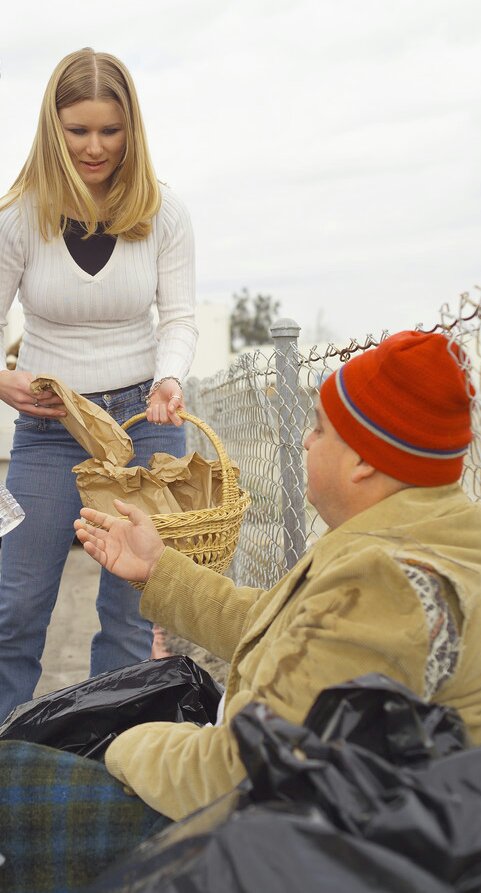
Maisy the Martyr- Whenever there’s a request for helpers at church, someone to pull overtime or fill in for a co-worker, volunteers at the soup kitchen, the fulfillment of the smallest need of her family, Maisy will be there, working tirelessly. She secretly gets angry when no one recognizes her for all her hard work or when people take advantage of her, but she’s afraid to say no because she’s afraid people will be upset with her, and what kind of person would she be then?

Woman Doing Sit-ups

Let’s Get Physical Phyllis- Whether she’s one to wear revealing clothes so all the men stare or she’s an organic, vegan workout queen, or she’s a clotheshorse, Phyllis is all about one thing: her body and how it looks. Did a construction worker whilstle at her today? A co-worker compliment her outfit? If not, maybe Phyllis had better lose a few more pounds or get that plastic surgery she’s been considering. After all, if people stop looking, she’s nothing.

man-315069_640

Man-datory Maude- Maude always has a man. Always. Preferably an awesome one, but even a mediocre or lousy man is better than no man at all. Why? It’s tangible proof somebody wants her. Otherwise, how will people be able to see she’s a worthwhile person?

MP900289528

Take Charge Tallulah- Follow? You must be joking, darling. Tallulah was born to lead and plays second fiddle to no one. She’s the chair of every committee she’s on, and always the one to round up the worker bees and start doling out orders. No points for second place. If you’re not first, you’re last. Tallulah needs the submission of others to feel self confident.

Are you one of these women? Or, if you’re as Sybil as I am, maybe you’re all of these women to one extent or another. Little women, all. Little, because Maisy, Helen, Sally, and all the rest are coveting and settling for crumbs of approval from others when God is offering them the whole bakery of His delight in them. Little, because they’re zeroing in on one tiny aspect of their lives to earn the praise of men instead of lifting their eyes to the broad expanse of Heaven and focusing on the Christ who loves them and has set them free to rest in His acceptance of them through His shed blood.

There’s nothing wrong with eating right or being friendly, or serving, singing, or teaching. Those are all good things. But just as God can take the most evil things and use them for good, we, because of our sinful nature, have a tendency to take good things and use them for evil. And evil isn’t too strong a word when we’re talking about taking the good gifts and talents God has given us and using them to pursue idolatry.

Just as God can take the most evil things and use them for good, we, because of our sinful nature, have a tendency to take good things and use them for evil.

So what can we do? Romans 12:21 tells us, “Do not be overcome by evil, but overcome evil with good.” When that evil coveting of praise and notoriety rears its ugly head:

  • Overcome it by confessing your coveting and idolatry and asking God to forgive you for it.
  • Overcome it by asking God to help you do everything for His glory, so that men will praise Him and make His name famous instead of yours.
  • Overcome it by letting go and saying no. If you’re Dina, it’s OK to let somebody else have the leading role. If you’re Maude, it’s OK to stay home on date night. If you’re Veronica and someone asks how you’re doing, it’s OK to smile and say, “Fine.”
  • Overcome it by preaching the gospel to yourself. Remember how big God is, how small and weak you are and the lengths of love that He went to to save you anyway. Not because of who you are, but because of who He is. Rest in that, and praise and thank God for it.

And let’s have no more of these little women.
Bible, Law- Old Testament, Old Testament, Sunday School

Loving God’s Word: Psalm 119 ~ Sunday School Lesson ~ 6-8-14

PicsArt_1402283595984

These are my notes from my ladies’ Sunday School class this morning. I’ll be posting the notes from my class here each week. Click here for last week’s lesson.

Through the Bible in 2014 ~ Week 23 ~ June 1-7
Psalm 119:89-176, Song of Solomon 1-8, Proverbs 1-15
Loving God’s Word: Psalm 119

Last week and this week, we read through Psalm 119, the longest psalm and the longest chapter in the Bible. Today, I thought we would go a little “old school” — “old” as in “Old Testament.” It was not uncommon at various times of worship in the temple or synagogue for the people to listen to lengthy portions of Scripture being read. (In fact, when we get to Nehemiah 8, you’ll have a completely new perspective on what constitutes a “lengthy” passage of Scripture or a “long” sermon!). But it’s an aspect of worship and teaching the church has lost as the years have gone by. So today, we’re going to start at verse 1 of Psalm 119 and see how far we can get. I have some brief notes on some of the verses/sections that I’ll share with you, and I encourage you to ask questions and comment as we read.

Note to blog readers: This is one of those “ya kinda had to be there” lessons. I’m happy to report that we ended up making it all the way through the chapter and even had some great discussion along the way! 


Psalm 119

1-8-The importance of obedience.

9-16- The importance of God’s word. We cannot be obedient to Him without His word, because His word tells us what He requires of us.

14, 16- The psalmist calls God’s word a “delight”. This was at a time when most of his “Bible” consisted of the Pentateuch, which was mostly law. He delighted in it, not primarily because of the do’s and dont’s, but because these were the words from the mouth of God. Also because the non-law portions reflected the greatness, power, mercy, and other attributes of God.

20 (John 1:1)- “My soul is consumed with longing for your rules at all times.” The psalmist has a genuine love for, and godly obsession with, God’s rules/statutes/ordinances/commands. It is not just a love for the rules themselves; a desire to obey them is inextricably interwoven throughout that love. The reason the Christian has a natural love for, and obsession with, God’s word is that Christ IS that word (John 1:1)

25-32- The psalmist realizes that only God’s word gives life, strengthens the sorrowing soul, and transforms the heart and behavior, therefore, he “clings” to them. He asks God to teach him His ways and give him understanding of His word.

32 (John 8:34-37)- “I will run in the way of your commandments when you enlarge my heart!” (for you set my heart free). Rather than seeing God’s law as confining or burdensome, the psalmist says they set his heart free. This is one of the core differences between the genuinely regenerated and those who are not. Christians, while we may struggle to understand and obey God’s word at times, know that it is His word that sets us free (if the Son sets you free, you are free indeed- John 8- This is, in fact, why we struggle to obey it instead of struggling against obeying it.). Lost people see God’s word as confining, enslaving, a prison. This is why, when coming face to face with God’s word, they rebel against it.

59- 60- “When I think on my ways, I turn my feet to Your testimonies.” The solution for sin is found in God’s word. Our shame over our sin should drive us TO His word, not away from it.

63- We make our friendships with those who keep His law.65-72- This passage extols God’s goodness even in times of hardship and attack. God’s word is the psalmist’s comfort and reassurance. Even in difficult times, he values God’s word more than great riches.

75- “In faithfulness You have afflicted me” The psalmist isn’t blaming God or accusing Him of wrong. He knows that what God does, He does for our best. He has already, in the preceding passage shown that affliction was valuable in teaching him to keep God’s commands. He goes on to say in v. 92 that he would have perished in his affliction if it had not been for his delight in God’s word.

81-88- Even when we know God is good and He afflicts us in faithfulness, it gets old and wearisome. The psalmist (88) asks God to ease up, not for his own personal comfort or gain, but so that he will be better able to keep God’s word.

97-104 (Proverbs 1:7)- This passage echoes what we studied in Proverbs this week about wisdom. “The fear of the Lord is the beginning of wisdom.” (Proverbs 1) The psalmist shows us that the knowledge of God’s word and the wisdom gained from it surpasses any other form of knowledge or wisdom: the craftiness of the enemy (98), academic knowledge (99), and the wisdom of age and experience (100).

129-136- The psalmist’s deep love for God and His word is palpable. It runs so deep he can scarcely convey it, even with so many descriptions in so many verses. He loves the Lord so much that it breaks his heart for others to continue in sin. This is the love that should fuel our evangelism. God’s testimonies are wonderful (129). They enlighten and give wisdom to even the simplest person (130), yet people throw them away in favor of their sin. It is incomprehensible to the psalmist.

137-144- God has laid down his precepts in righteousness. They are righteous and He is righteous.

158 (1 Corinthians 6:9-11)- We often look at “the faithless” (lost people) with disgust because they do not keep God’s commandments, but we must keep in mind that that’s what lost people do. (That’s what we did before we were saved!- 1 Corinthians 6) They are slaves to sin and need Jesus to set them free.

As we continue to study God’s word,
we will grow to love Christ more and love His word more.

Open my eyes that I may behold wondrous things out of your law. Psalm 119:18

Forgiveness, Hell, Justice, Old Testament, Salvation, Sin, Sunday School

Follow Up Week ~ Sunday School Lesson ~ 6-1-14

sunday school

These are my notes from my ladies’ Sunday School class this morning. I’ll be posting the notes from my class here each week. Click here for last week’s lesson.

Through the Bible in 2014 ~ Week 22 ~ May 25-31
Psalm 131, 138-139, 143-145, 127, 111-118, 37, 71-72, 94, 119:1-88; 1 Chronicles 26-29; 1 Kings 1-4; 2 Chronicles 1

Follow Up Week

Last week, we had a lot of great questions that I didn’t feel we had the opportunity to discuss thoroughly enough. This week we’re going to take an in depth look at three of those questions.

Follow Up: Zeruiah
Last week, we saw David repeatedly refer to Joab and Abishai as “sons of Zeruiah,” and a question arose as to what he meant by that. Was it an insult? An identifier? Here, briefly, is some clarifying information:

Zeruiah was David’s sister (1 Chronicles 2:15-16). Her sons were Abishai– one of the chiefs of David’s mighty men (1 Chronicles 11:20), Joab– commander of  David’s army, and Asahel (Asahel was murdered by Abner, commander of Saul’s army (2 Samuel 2:8), at the battle of Gibeon (2 Samuel 2:18-24). Abishai and Joab later took revenge on Abner for killing their brother (2 Samuel 3:24-30).)

images


Abishai, Joab, and Asahel were brothers and also David’s nephews. Therefore, calling them “sons of Zeruiah” may have had one of several meanings:

1. “Sons of Zeruiah” was just another way of saying “my nephews.” It is possible that this was to distinguish them from other men close to David who had the same names. (For example, in this week’s reading, we saw a man named Shimei (1 Kings 1:8, 4:18) who was a different person from the Shimei we studied about last week.) Adding such an identifier to someone’s name was common in biblical times before surnames were in general use (eg. Joshua son of Nun, Joseph of Arimathea, Jesus of Nazareth, etc.)

2. It is possible David had a close relationship with Zeruiah and had great respect for her. Perhaps when David called his nephews “sons of Zeruiah” he was reminding them to live up to their mother’s good character.

3. It is possible David had a contentious relationship with his sister and had little respect for her. Perhaps when David called his nephews “sonsof Zeruiah” when annoyed with them, he was implicitly saying, “What else can you expect when they had a mother like that?”

Since the Bible provides very little information on Zeruiah, we can’t definitively say why David would use this phrase; we can only speculate. Click here for more information on Zeruiah.


scales of justice

Follow Up: Shimei, David, and Solomon
Last week, we studied the story of Shemei cursing David, and David’s subsequent sparing of his life (2 Samuel 16, 19). This week, we saw the death of David and Solomon’s accession to the throne (1 Kings 1-2). We also saw David, from his deathbed, give instructions to Solomon regarding Shimei, and we saw how Solomon carried them out (1 Kings 2). Was David sinning by going back on his word to Shimei? Let’s take a look.

Two Different Justice Systems
In order to understand the dynamics of the situation between Shimei and David and Shimei and Solomon, we first have to step outside our 21st century United States understanding of “the justice system” and step back in time into the Old Testament monarchial justice system.

The American System:
In the American justice system, justice supersedes leadership and is a separate entity from leadership. We have the judicial branch of government (courts, judges, jails, lawyers, etc.) and the executive branch of government (the President, state governors, etc.). They each have their own powers and responsibilities, and, for the most part, are separate from, and not dependent on, one another. For example, if someone is acquitted of a crime during one person’s presidency, he cannot later be convicted of that same crime solely because someone else becomes President and thinks he should be convicted. (Obviously, there are exceptions and corruptions to this system, but, generally speaking, in a nutshell, this is how it is supposed to work.)

Old Testament Israel’s System: 
In Israel (and other monarchial or dictatorial nations), there was no separation of powers. Legislative (making the laws), judicial, and executive powers all resided in one man: the king. And, the rules could change every time a new king took over. Your verdict, conviction, and sentence lasted only as long as the reign of the king who handed them down unless the next king chose to honor those decisions. This is one of the reasons the death penalty and maiming (cutting off someone’s had for stealing, for example) were more prevalent during those times. If you were the king and wanted to make sure someone was punished long term and that your verdict would not be overturned, death or maiming were your main options.

Shimei’s Sentence (1 Kings 2:8-9, 2 Samuel 19:23, 1 Kings 2:36-46)
As we saw in this week’s reading in 1 Kings 2:8-9, David did not put Shimei to death himself or during his own reign. Additionally, because of the way Israel’s justice system worked, it would have been impossible for David to swear to Shimei that he would never be put to death, because David had no control over what the next king would do. David’s oath was only good for the duration of his own reign. Thus, he did not break the oath he made to Shimei in 2 Samuel 19:23.

David did, however, take full advantage of Israel’s system of justice, the fact that Solomon had made no such oath to Shimei and the fact that Solomon was his son and would be likely to do as he asked. In 1 Kings 2:8-9, David didn’t come right out and tell Solomon to execute Shimei, but he hinted pretty strongly at it.

Solomon, perhaps wishing to honor the spirit of David’s oath to Shimei in 2 Samuel 19, while still carrying out David’s desire in 1 Kings 2 that Shimei be punished, did not condemn Shimei to immediate death, but, rather, put him under “house arrest” (1 Kings 2:36-37). Shimei could not leave Jerusalem or he would be executed, but as long as he stayed in Jerusalem, he was free to live his life as he wished. Shimei agreed to this (2:38) and made an oath to the Lord that he would obey (2:43). Shimei could have lived out the rest of his life peacefully in Jerusalem if he had just abided by the rules of his sentence. He broke the rules; he knew the consequences (2:39-46).


deathbed-2

Follow Up: Can a Christian be forgiven for a sin he commits on his deathbed and doesn’t have the opportunity to repent for before dying? Will he go to hell for this? 
This question arose last week as we briefly touched on David’s deathbed instructions to Solomon regarding Shimei. Although it doesn’t appear that David was actually sinning in that particular case, this question is a very good one that I wanted to address more fully because it has application for all of us since we all sin and will all die one day. In order to answer this question, we need to take a look at several things regarding sin, forgiveness, and salvation.

The soteriology of the question (John 10:26-29, Romans 8:1-2, 33-39, 1 John 2:1-2) 
Soteriology is the field of theological study that deals with salvation: what it is, what it isn’t, and how it happens. We know that in order for a person to be saved and spend eternity in Heaven he must turn from his sin (repent), and place his faith in the death, burial, and resurrection of Christ on his behalf as payment for his sin.

John tells us that, for those who have truly been born again, no one is able to snatch them out of Christ’s or the Father’s hand. This includes Satan. Romans tells us (8:33-34) no one has the authority to condemn or to bring charges against God’s elect, because God is the one who has justified them and He has already said there is no condemnation for those who are in Christ Jesus (8:1-2). Satan no longer has the authority even if we sin, to drag us off to hell, and God has promised that he will not condemn us to hell if we are in Christ. And if/when we do sin, 1 John tells us that Christ has already stepped in between us and the wrath of God as our advocate, offering His righteousness on our behalf.

Bottom line: If you have truly been born again, God’s got you and there’s not anyone or anything that has the authority to change that.

The hamartiology of the question (Hebrews 10:11-14): 
Hamartiology is the study of sin. We sin before we’re Christians. We sin after we’re Christians. We will never be completely free from temptation and the effects of sin this side of Heaven. The truth is, unless you are capable of knowing every single sin in your life (Remember all those sins you committed when you were three? Neither do I.) and you die immediately after repenting of the last one, you’re going to die with unconfessed sin in your life. That’s pretty much every Christian. We sin so much that there are sins we don’t even realize or remember we’ve committed. How can you repent of something you’re not even aware of? So, no, a true Christian will not go to hell for failing to repent of an individual sin committed right before death.

As the old hymn says, “Jesus paid it ALL.” Hebrews tells us that Jesus died “once for all”– one time to pay for all sin, from the creation of the world until its destruction at the end of time. When we come to Christ for salvation, while we may repent of individual sins that are heavy on our hearts, what we are really doing is confessing that we are, and repenting for being, a sinner. If we had to repent of every individual sin no one could ever be saved because no one could remember all the sins he’s ever committed. For those who are in Christ, every sin in our entire lives, from birth to death, is forgiven.

Daily repentance and forgiveness:
So, if the sins we have forgotten about, and the sins we aren’t aware of, and the sins we don’t have a chance to repent for before dying are all forgiven anyway, why is any other sin any different? Why do we need to repent of our sin and ask for forgiveness every day when we pray?

Obedience (Matthew 6:12):
We do it out of obedience. Jesus tells us in the Lord’s Prayer to daily ask God to forgive us for sinning. So, we do.

Awareness and thankfulness (Psalm 32:1-2)
When we spend time in prayer daily repenting of our sin it reminds us of the greatness of God and His grace in forgiving our sin. It humbles us by reminding us of the great cost of our sin. It reassures us of God’s love and mercy towards us. It gives us an opportunity to give Him praise and thanks for forgiving us.

Restored relationship (1 John 1:6-9)
When we have unconfessed sin in our lives, it creates a rift (of our own making) between us and God. When we confess our sin to God and ask Him to cleanse us from it, that sin is no longer a hindrance to clean, unfettered communion with God.

If we say we have fellowship with him while we walk in darkness, we lie and do not practice the truth. But if we walk in the light, as he is in the light, we have fellowship with one another, and the blood of Jesus his Son cleanses us from all sin. If we say we have no sin, we deceive ourselves, and the truth is not in us. If we confess our sins, he is faithful and just to forgive us our sins and to cleanse us from all unrighteousness.