Colossians Bible Study

Colossians: Lesson 4

Previous Lessons: 1, 2, 3

Colossians 2

For I want you to know how great a struggle I have for you and for those at Laodicea and for all who have not seen me face to face, that their hearts may be encouraged, being knit together in love, to reach all the riches of full assurance of understanding and the knowledge of God’s mystery, which is Christ, in whom are hidden all the treasures of wisdom and knowledge. I say this in order that no one may delude you with plausible arguments. For though I am absent in body, yet I am with you in spirit, rejoicing to see your good order and the firmness of your faith in Christ.

Therefore, as you received Christ Jesus the Lord, so walk in him, rooted and built up in him and established in the faith, just as you were taught, abounding in thanksgiving.

See to it that no one takes you captive by philosophy and empty deceit, according to human tradition, according to the elemental spirits of the world, and not according to Christ. For in him the whole fullness of deity dwells bodily, 10 and you have been filled in him, who is the head of all rule and authority. 11 In him also you were circumcised with a circumcision made without hands, by putting off the body of the flesh, by the circumcision of Christ, 12 having been buried with him in baptism, in which you were also raised with him through faith in the powerful working of God, who raised him from the dead. 13 And you, who were dead in your trespasses and the uncircumcision of your flesh, God made alive together with him, having forgiven us all our trespasses, 14 by canceling the record of debt that stood against us with its legal demands. This he set aside, nailing it to the cross. 15 He disarmed the rulers and authorities and put them to open shame, by triumphing over them in him.

16 Therefore let no one pass judgment on you in questions of food and drink, or with regard to a festival or a new moon or a Sabbath. 17 These are a shadow of the things to come, but the substance belongs to Christ. 18 Let no one disqualify you, insisting on asceticism and worship of angels, going on in detail about visions, puffed up without reason by his sensuous mind, 19 and not holding fast to the Head, from whom the whole body, nourished and knit together through its joints and ligaments, grows with a growth that is from God.

20 If with Christ you died to the elemental spirits of the world, why, as if you were still alive in the world, do you submit to regulations— 21 “Do not handle, Do not taste, Do not touch” 22 (referring to things that all perish as they are used)—according to human precepts and teachings? 23 These have indeed an appearance of wisdom in promoting self-made religion and asceticism and severity to the body, but they are of no value in stopping the indulgence of the flesh.


The Holy Bible, English Standard Version Copyright © 2001 by Crossway Bibles, a publishing ministry of Good News Publishers.

Questions to Consider:

1. A great little heremeneutical rule of thumb is that when you see the word “therefore” in the text, you look at the previous verses to find out what it’s “there for”. The same could be said of the word “for” at the beginning of verse 1. Paul is continuing a thought here that started in the last verses of chapter 1. Read back a few verses and summarize his entire thought in your own words. What else do we know about the church at Laodicea? (1)

2. What are some things Paul hopes to accomplish, via this epistle, in the churches at Colossae, Laodicea, and others? (2-7) What is the main goal of Paul’s teaching in this epistle? (4) What is the “therefore” in verse 6 “there for”?

3. Recall that the Colossian church was made up of both Jews and Gentiles, and that the Colossian Heresy Paul was combating with this epistle contained both Jewish and Gentile false doctrine. Examine the terms “philosophy” and “human tradition” (8) Do these seem to describe Jewish or Gentile teachings? What about “circumcision” (11-13), “food and drink,” “festivals,” and “Sabbath”? (16) How can Christians and the church avoid being deceived by false doctrine regardless of its source? (6-7, 19)

4. The Judaizers taught that Christians had to follow the Old Testament Mosaic law. What were some of those laws? (11, 16, 21-22) What did Paul tell the Colossians about the Old Testament law and why Christians are not bound by it? (17, see these verses also) How does Paul describe the “circumcision” Christians now receive? Who performs this new “circumcision” and what is “cut away”? (11) On which “body part” of a Christian is it performed? Compare these verses to Deuteronomy 10:16, 30:6. How do all of these passages show that physical circumcision was only to be an outward sign of circumcision of the heart? What is the New Testament outward sign of circumcision of the heart? (12) How does Paul tell the Colossians to respond to the Judaizers’ pressure? (16)

5. Examine verses 20-22. What do believers die to in Christ? Are we to go back to worldly teachings and beliefs, as though we have not died to them, and continue to follow their unbiblical rules and regulations? If we are to be dead to these things, what are we to live to? Compare this passage to Galatians 3:1-9. How would these passages have demonstrated to Jewish believers that keeping Old Testament law was not required of them or of Gentile believers? Does your own church have any rules or teachings that Scripture does not require of Christians? What does following man made rules accomplish? (23)


Homework:

Do you see the similarities between the Judaizers’ teachings and the modern day teaching of the Hebrew Roots Movement? Has anyone ever asked you why you don’t keep Old Testament law? List three teachings from the first two chapters of Colossians that you could use to persuade a friend not to follow the Hebrew Roots Movement or to explain why you’re free to eat lobster and wear poly-cotton blends.
Colossians Bible Study

Colossians: Lesson 3

Previous Lessons: 1, 2

Colossians 1:15-29

He is the image of the invisible God, the firstborn of all creation. 16 For by him all things were created, in heaven and on earth, visible and invisible, whether thrones or dominions or rulers or authorities—all things were created through him and for him. 17 And he is before all things, and in him all things hold together. 18 And he is the head of the body, the church. He is the beginning, the firstborn from the dead, that in everything he might be preeminent. 19 For in him all the fullness of God was pleased to dwell, 20 and through him to reconcile to himself all things, whether on earth or in heaven, making peace by the blood of his cross.

21 And you, who once were alienated and hostile in mind, doing evil deeds, 22 he has now reconciled in his body of flesh by his death, in order to present you holy and blameless and above reproach before him, 23 if indeed you continue in the faith, stable and steadfast, not shifting from the hope of the gospel that you heard, which has been proclaimed in all creation under heaven, and of which I, Paul, became a minister.

24 Now I rejoice in my sufferings for your sake, and in my flesh I am filling up what is lacking in Christ’s afflictions for the sake of his body, that is, the church, 25 of which I became a minister according to the stewardship from God that was given to me for you, to make the word of God fully known, 26 the mystery hidden for ages and generations but now revealed to his saints. 27 To them God chose to make known how great among the Gentiles are the riches of the glory of this mystery, which is Christ in you,the hope of glory. 28 Him we proclaim, warning everyone and teaching everyone with all wisdom, that we may present everyone mature in Christ. 29 For this I toil, struggling with all his energy that he powerfully works within me.


The Holy Bible, English Standard Version Copyright © 2001 by Crossway Bibles, a publishing ministry of Good News Publishers.


Questions to Consider:

1. At the end of lesson 2 (link above), we saw that Paul gave a brief recap of the gospel (13-14). How was that a good introduction to the passage we’re looking at today? What is the overall theme of today’s passage?

2. Jehovah’s Witnesses use verse 15 to support their idea that Christ was a created (non-eternal) being. Is that what this verse means? What sort of ideas would the term “firstborn” have brought to the minds of first century Jews (and even gentiles)? Verse 15 says that Christ is the firstborn of all creation. Verse 18 says that He is the firstborn from the dead. How do these two positions of Christ “bookend” His supremacy over every aspect of the universe?

3. List the specific roles Christ plays in creation in verses 15-17. Why would it have been important for Paul to emphasize Christ’s role in creation? What did this (as well as verse 19) indicate to his audience about Christ’s deity and His relationship with God the Father?

4. As previous verses emphasized Christ’s deity, what are the references to His humanity in verses 19 and 22? Part of the heresy that was creeping into the Colossian church was elements of mysticism that would later morph into gnosticism. How would the proper Christology Paul was trying to teach them – including Christ being 100% God and 100% man simultaneously (the hypostatic union) – combat that heresy? Why is it important that we, as Christians, believe that Christ was both fully God and fully man? How would it affect Christ’s work on the cross if he had been less than God or less than human? How might understanding the hypostatic union better help you to love Christ more?

5. What do verses 24-29 tell us about Paul’s relationship with and care fo the Colossian church? What was his goal for this church? (28-29) Is this the goal of the leadership at your church? How can verse 28 guide us as we seek to make disciples today? Do we put the same effort and energy into discipleship that Paul did? (29)


Homework:

Read back through the tenets of gnosticism (link in #4). Are there any sort of gnostic beliefs in the church today? Write down some ways biblical Christology (the study of who Christ is, what He did, and why) could combat these false beliefs.

Christian women

Evangelical Misogyny and the Spiritual Oppression of Christian Women

woman-1246571_20160915144847652


background-1434679_1280Weak women- always learning and never able to arrive at a knowledge of the truth. Captives to false teachers. Led astray by their feelings. There is hardly a better way to describe a significant portion – dare I say, the majority – of evangelical women today.

There’s plenty of blame to go around. Satan dresses himself up like a Christian and deceives as many as he can. Women (and men, too) give in to the temptation to seek out false teachers who will tell them what they want to hear. Pastors fail to fight off, and in many cases, welcome with open arms, the false doctrine and false teachers creeping into their churches.  And the false teachers themselves are out to make a fast buck on false doctrine.

And the result of it all is a generation of evangelical women held prisoner by Satan in the gilded cage of biblical illiteracy and feel-good “Christianity.” And most of them don’t even know they’re inmates.

It’s bad enough that evangelical women are largely feeding their souls on the anti-biblical poison churned out by the smorgasbord of divangelistas lining the shelves of most “Christian” bookstores- poison that, at worst, will leave them doomed to an eternity in hell, and, at best, will stunt their growth in Christ. But there’s another insidious aspect of this issue: theololgical misogyny against evangelical women.

The Bible knows nothing of women as second class citizens. Throughout recorded history, God, and his obedient children, have been the ones to regard women as precious and valuable people with a crucial role to play in the Kingdom, the family, and society. God elevates women while the world degrades us.

Perhaps one of the best examples of this is in an often overlooked phrase in 1 Timothy 2:11: “Let a woman learn.” The pastors and elders of the first century church – in the midst of a culture that devalued and disregarded women – were to proactively make sure women learned the gospel and sound doctrine. The Holy Spirit goes on in that passage to explain how first century, as well as twenty-first century, women should conduct themselves in a godly way while we’re learning, but there’s no watered down, Barbie doll, “pink is for girls” version of theology that women are to be taught while the real thing – serious Bible study and theology – is reserved for men.

Yet that’s exactly what modern day evangelicalism and Christian retailing are doing. They’re establishing a subtle theological segregation in the name of marketing and meeting felt needs. How? Here’s just one example:

screenshot_2016-09-14-11-39-55_kindlephoto-22263756

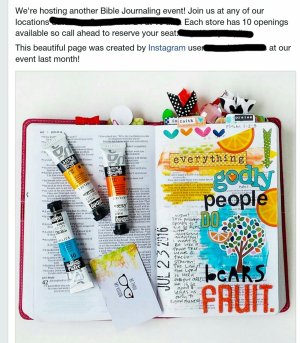
This post, from a major Christian retailer, appeared in my Facebook feed recently. They’re holding “Bible art journaling” workshops to teach women how to color in their Bibles- something we usually teach three year olds not to do.

When was the last time you heard of a Christian retailer or an average evangelical church holding a worshop – aimed at women – on biblical hermeneutics, Christology, pneumatology, church history, discernment, evangelism, or any other serious biblical topic?

Never mind how to properly handle and study God’s word, ladies, here’s a coloring book*! It’s insulting to the intelligence, capabilities, and quest for spiritual maturity of Christian women. And it’s sexist, too. Don’t believe me? Think about it:

How many Christian men do you see taking Bible art journaling classes or sharing about it on social media?

Have you ever seen a men’s ministry share a picture like this in order to reassure men of how special and wonderful they are?

woman-570883_1920_kindlephoto-22633156

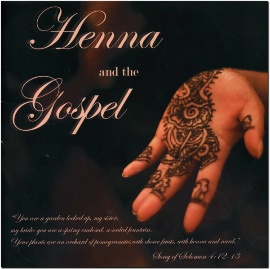
Over the summer, the hot fad aimed at women was using henna to tell Bible stories. How many men do you think participated in that?

sou-hennabklt-m

Contemporary Christian radio intentionally markets to a specific female demographic, resulting in a playlist that’s overwhelmingly comprised of ooey-gooey, salve my feelings, emasculated songs. That’s their perspective of us. That’s what they think we want and can handle.

And it doesn’t stop there. Walk into your local Christian retailer and compare the fluff and false doctrine in the women’s ghetto department to what’s offered in the general (or men’s) area of the store. Christian retailing has been so successful with their marketing plans that they have fairly brainwashed evangelical women into thinking that:

  • only what’s in the women’s section of the store is for them
  • serious theology isn’t for them (because it’s nowhere to be found in the women’s department)
  • women can’t just pick up the Bible and study it for themselves – they have to buy a “canned” study written by someone else
  • that “someone else” has to be a woman (nearly always a woman who teaches false doctrine)

Take all of that, throw it into your gumbo pot, stir it around a little, and what do you get?

Well…you get weak women who are captivated by false teachers and false doctrine, led astray from the truth of God’s word by their passions and emotions, flitting from study to study and event to event, always “learning” but ever biblically ignorant. And you get a church that not only views Christian women this way, but perpetuates this sexist spiritual oppression.

Christian women, you are better, more valuable, and more capable than that. God has more for you and expects more from you than sitting in a corner coloring in your Bible and playing with a theological Barbie Dream House. Like your first century sisters, He wants you to learn.

Strive for more than evangelicalism expects from you and thinks you’re capable of, ladies. Be a strong, healthy student of God’s word. There are women out there who desperately need you: lost women who need to hear the gospel properly presented so they might know Christ, saved women who need someone to teach them the truth of God’s word, women who need biblical hope, comfort, and answers about the trials they’re going through.

Buck the system. Challenge the assumptions. Cast off the shackles, and refuse to be that weak woman any more. Be the full grown, spiritually mature woman God has always wanted you to be.


*Some women are artistically talented and enjoy Bible art journaling as a hobby in their spare time. If that’s you, and you’re already a serious student of God’s word, knock yourself out. But if the majority of your Bible “study” time is spent painting or coloring in your Bible, then this might be a tight, uncomfortable shoe, but the shoe fits.

Colossians Bible Study

Colossians: Lesson 2

Previous Lessons: 1

Colossians 1:1-14

Paul, an apostle of Christ Jesus by the will of God, and Timothy our brother,

To the saints and faithful brothers in Christ at Colossae:

Grace to you and peace from God our Father.

We always thank God, the Father of our Lord Jesus Christ, when we pray for you, since we heard of your faith in Christ Jesus and of the love that you have for all the saints, because of the hope laid up for you in heaven. Of this you have heard before in the word of the truth, the gospel, which has come to you, as indeed in the whole world it is bearing fruit and increasing—as it also does among you, since the day you heard it and understood the grace of God in truth, just as you learned it from Epaphras our beloved fellow servant. He is a faithful minister of Christ on your behalf and has made known to us your love in the Spirit.

And so, from the day we heard, we have not ceased to pray for you, asking that you may be filled with the knowledge of his will in all spiritual wisdom and understanding, 10 so as to walk in a manner worthy of the Lord, fully pleasing to him, bearing fruit in every good work and increasing in the knowledge of God. 11 May you be strengthened with all power, according to his glorious might, for all endurance and patience with joy, 12 giving thanks to the Father, who has qualified you to share in the inheritance of the saints in light. 13 He has delivered us from the domain of darkness and transferred us to the kingdom of his beloved Son, 14 in whom we have redemption, the forgiveness of sins.


The Holy Bible, English Standard Version Copyright © 2001 by Crossway Bibles, a publishing ministry of Good News Publishers.


Questions to Consider:

1. Who wrote this epistle? (1) To whom was it written? (2) Who was Epaphras, and what was his connection to the church at Colossae? (7) You may wish to go back to lesson 1 (link above) and review just a bit.

2. How would you classify the first two verses of this chapter? (instruction, rebuke, greeting, worship, etc.?) List the characteristics of the Colossian church that have been reported to Paul. (4, 6, 8) Do these things describe your church? Does Paul seem to regard this church as one that is overtly rebellious, worldly, or sinful? Describe Paul’s overall tone in this passage.

3. In verse 3, what two things does Paul say “we” (he, Timothy, and possibly others) do regarding the Colossian church? List and define the five things Paul says they pray for the Colossian church. (9-10) Do you pray similar things for your own church and for yourself? Why was it important for Paul and Timothy to pray for the Colossian church? Why is it important for you to pray for your own church? Take a moment now to pray through these five requests for your church and yourself.

4. What did we learn in lesson 1 about the situation of the Colossian church that would lead Paul to wish the Holy Spirit to empower them (11) to endure, have patience, have joy, and give thanks? (11-12) How are these characteristics important to your church, and the church at large, today?

5. In verses 13-14, Paul gives a mini-recap of the gospel. Explain in your own words what Paul is saying in these two verses. What does it mean in verse 12 that God has “qualified” the Colossian Christians to “share in the inheritance of the saints”? What is that inheritance, and how did God qualify them? How does this apply to Christians today? Peeking ahead a few verses, why is this recap of the gospel a good precursor to the topic Paul is about to introduce?


Homework:

Think about your church’s unique needs in light of the five things Paul prayed for the Colossian church. Make a list of some specific ways you can pray that your church will be “filled with the knowledge of His will,” “walk in a manner worthy of the Lord,” etc., and include these during your daily prayer time this week.

Colossians Bible Study

Colossians: Lesson 1

Welcome to our brand new study of the book of Colossians.

Colossians is a great little New Testament book jam packed with both theology and practical instruction for the Christian’s daily life. One area of theology we’ll be learning more about as we study Colossians is Christology, the study of Jesus Christ- who He is, what He did, and why. If you look at the layout of Colossians, you’ll see that the Christological passages come first, followed by the life instruction passages, subtly teaching us that right living is informed by a right understanding of Christ.

Ready to dive in? Here we go!

Introduction to the book of Colossians:

Before we begin studying a book of the Bible, it’s very important that we understand some things about that book. We need to know…

Who the author was and anything we might be able to find out about him or his background.

Who the audience of the book was: Jews or Gentiles? Old Testament Israelites or New Testament Christians? This will help us understand the author’s purpose and approach to what he’s writing.

What kind of biblical literature we’re looking at. We approach books of history differently than books of wisdom, books of wisdom differently than books of prophecy, etc.

What the purpose of the book is. Was it written to encourage? Rebuke? Warn?

What the historical backdrop is for the book. Is Israel at war? At peace? In exile? Under a bad king? Good king? What was it like for Christians to live under Roman rule? Understanding the historical events surrounding a piece of writing help us understand what was written and why it was written.

When the book was written. Where does the book fall on the timeline of biblical history? This is especially important for Old Testament books which are not always arranged in chronological order.

So this week, before we start studying the actual text of the book of Colossians, we need to lay the foundation to understanding the book by finding the answers to these questions.

Read the following overviews of the book of Colossians, taking notes on anything that might aid your understanding of the book, and answer the questions below:

Colossians at Grace to You

Overview of the Book of Colossians at Reformed Answers

Book of Colossians at Got Questions

1. Who wrote the book of Colossians? What authority or position did he have to write this book? What was his relationship to the audience of this book?

2. Who is the intended audience of the book of Colossians? Was it written to the church or an individual? How should knowing Colossians was written to the church rather than an individual shape our reading of this book? Which two local churches was it written for?

3. Which genre of biblical literature is the book of Colossians: law, history, wisdom, poetry, narrative, epistles, or prophecy/apocalyptic? What does this this tell us about the approach we should take when studying this book versus our approach to books of other genres?

4. What is the theme or purpose of the book of Colossians? Describe the heresy Colossians combats.

5. Who are the key people mentioned in or connected to the book of Colossians? Who founded the church at Colossae?

6. What is the historical backdrop of the book of Colossians? In approximately which year was it written? Where was Paul residing when he wrote this epistle? Who was the political and governing authority at the time Colossians was written? What was the government’s attitude toward the church? Where was Colossae located, and what kind of economy, populace, and culture did it have?

7. What else did you learn about Paul, Colossae, or the setting of this book that might help you understand the text of the book better?