Favorite Finds

Favorite Finds ~ August 27, 2019

Oh my! We haven’t had a Favorite Finds article in far too long! Here are a few of my favorite recent online finds…

Image result for cbmwIt’s a frequent accusation about Scripture’s treatment of women. But is it really what the Bible says? Does the Old Testament actually sanction rape by mandating that a woman marry the man who forcibly raped her? CBMW examines this fascinating biblical conundrum (which isn’t really a conundrum at all once you study it carefully) in Did Old Testament Law Force a Woman to Marry Her Rapist?


Love broccoli or hate it, I think you’re really going to enjoy this little parable about salvation from our friend Allen Nelson over at the Things Above Us blog. Allen’s article, Brittany the Broccoli Hater, talks about the spiritual transformation that has to take place to turn us from “broccoli haters” to “broccoli lovers.” (And if you like this article, be sure to check out the reviews of his books, From Death to Life and Before the Throne.)


Image result for grace to youHere’s something fun and informative over at Grace to You– an article series: Frequently Abused Verses. What Is the Eye of a Needle? Can We Really Do All Things Through Christ? On Whose Door Is Christ Knocking? This series straightens out the confusion over commonly mishandled or perplexing passages. (To read the remainder of the articles in the series, you will need to enter “Frequently Abused Verses” in the GTY search bar.)


Autism, Awareness, Puzzle, Heart, Love, AutisticTry to imagine what it’s like to attend worship service and other church functions if you have Autism Spectrum Disorder. Helpfully explaining his own experiences, David Delgado gives practical tips to people with ASD on preparing for and navigating church events, as well as advice for Christians wishing to better serve those with ASD in their own churches in his article Doing Church with Autism Spectrum Disorder.


The aptly named David Wesley gives us a lovely medley of a capella hymns and worship songs down through the ages. Those of you who are around my age will have fond (or terrible) flashbacks of youth camp at David’s 1969 offering. :0) He lost me somewhere in the neighborhood of 2010, but I believe there’s at least one Hillsong song, and probably some other doctrinally unsound artists, around that time period. So, if you don’t already know that you and your church shouldn’t be using Hillsong, Bethel Music, Jesus Culture, Elevation Worship music or music by anybody else who’s doctrinally unsound, let me just take this opportunity to say, don’t.

Mailbag, Sin

The Mailbag: If someone follows false teachers or teaches false doctrine for a long time, is she saved?


I have heard pastors say that believers can sin for a ‘season’ without repentance. In regards to professing believers who follow false teachers, what is a ‘season’? Can they continue following them for months? Years?

Is it possible that someone who is a false teacher is actually saved? Could she truly believe the biblical gospel even though, for decades, she has been terribly mishandling God’s Word, and has been on an increasing trajectory of sin and false doctrine?

I’ve combined two questions for this edition of The Mailbag because they are very closely related, if not, in fact, the same basic question.

I’m glad you asked. This is such an important issue to think through because, unfortunately, we are surrounded by professing Christians walking down these paths.

When I hear people use the the term “season” when referring to the Christian life, it’s been my experience that they usually mean “an indeterminate period of time”. In my mind, a “season” is longer than a couple of weeks, but shorter than several decades. That really narrows it down, doesn’t it? :0) But if you asked a hundred Christians what a season is, you’d probably get a hundred different answers.

When Christians say that someone can sin “for a season” they are likely alluding to the King James translation of Hebrews 11:25:

By faith Moses, when he was come to years, refused to be called the son of Pharaoh’s daughter; Choosing rather to suffer affliction with the people of God, than to enjoy the pleasures of sin for a season;
Hebrews 11:24-25

You might want to take a look at some other reliable translations alongside the King James. The primary emphasis of the end of verse 25 is that the pleasure our flesh gets from sinning is fleeting, transitory, temporary. But the KJV looks at another petal on the same rosebud and helpfully explains that because that pleasure is temporary, the time spent happily wallowing in that sin should, consequently, also be temporary. The prodigal son is a good example of this. Once he found himself in the pigpen, sin wasn’t much fun any more, and that’s when his thoughts turned to repentance.¹

The next issues we need to tackle are sin and salvation. Here’s what we know:

🕇 Anybody who has a basic grasp of the biblical definition of sin knows that even the most Christlike Christians still sin and that sinless perfectionism is a bunch of hooey and hubris.

🕇 We also know that someone whom God has reached down and genuinely saved cannot lose her salvation due to sin. So the issue we’re grappling with in this particular instance is not whether or not a genuine Christian can lose her salvation by sinning, but whether or not a person who lives in sin for a long period of time is actually saved as she professes to be.

🕇 Finally, we know that there are false converts among us, who appear to be Christians for a “season,” and then walk away from the faith never to return, proving that they were never truly saved in the first place.

So how can we tell the difference between a genuine Christian who is temporarily walking in sin and a false convert who’s on her way out the door?

Most of the time, if she’s still claiming to be a Christian, we can’t know with certainty.

Often, the only way to know for sure that a person who seemed to be a Christian isn’t saved is if she either a) unequivocally renounces Christianity (i.e. “I no longer believe in God,” “I used to be a Christian,” etc.) or b) picks up a new belief system that clearly puts her outside the camp of Christianity, (i.e. “I don’t believe in the Trinity,” “I don’t believe Jesus was God,” “I’m now a Mormon,” etc.). In other words, if a person tells you she’s not a Christian, you can believe her.

But for the person who is sinning, following false teachers, or teaching false doctrine (that doesn’t conflict with biblical soteriology), and claims to be a Christian, it can be harder to tell. Why? Because we aren’t God.

When Samuel was trying to figure out which one of Jesse’s sons to anoint as the next king of Israel, God told him something that’s very instructive to this issue:

When they came, [Samuel] looked on Eliab and thought, “Surely the Lord’s anointed is before him.” But the Lord said to Samuel, “Do not look on his appearance or on the height of his stature, because I have rejected him. For the Lord sees not as man sees: man looks on the outward appearance, but the Lord looks on the heart.”
1 Samuel 16:6-7

Regardless of what someone appears or claims to be on the outside, only God knows the heart of each person. And that’s really good news for us, because it relieves us of the burden of having to read another person’s heart. That’s God’s job, not ours.

God judges hearts, we judge behavior.

God has given the church – Believers – the responsibility of seeing to the spiritual welfare of our fellow church members who are sinning. We handle the tangible, visible “action” part of the situation, and God works through our words and actions to handle the invisible, spiritual part of the situation in whatever way He may choose to handle it. And God has given us very clear instructions in Scripture about how to regard, evaluate, and handle these kinds of situations.

🕇 God clearly explains to us throughout Scripture exactly what constitutes sin and false doctrine. We compare what someone is teaching, believing, or doing with the applicable, rightly handled, in context Scriptures. If the person’s teaching, beliefs, or behavior isn’t in compliance with those Scriptures, the person is sinning.

🕇 God vests Christians with the responsibility of lovingly confronting sin in our brothers and sisters and urging them to repent and be reconciled to God, and He explains to us, in Scripture, how to do this.

🕇 God makes clear in John 10 that people He has genuinely saved – His sheep – will not listen to the voice of a stranger (false teacher). I have experienced the truth of this statement myself and seen it play out in the lives of dozens of women over the years: “I went to a women’s Bible study when I was a young Christian where they were using materials by [a false teacher]. I was really uncomfortable because I knew something was wrong, even though I wasn’t sure what it was. Years later, looking back and having learned my Bible, I now see I felt that way because I was being taught false doctrine.”

🕇 The overwhelming majority of the Scriptures dealing with false teachers seem to indicate that unrepentant false teachers are not saved. (I discussed these Scriptures in my article Can a False Teacher Be a Christian?.) But, again, with those who profess to believe the biblical gospel, we cannot know their hearts with certainty, and we do not have to. We evaluate their visible teaching and behavior according to Scripture and carry out the procedures for dealing with sin in the Body that God has prescribed in His Word.

How long of a “season” can someone walk in sin, follow a false teacher, or teach (non-soteriological) false doctrine before we know for certain she’s not saved? The farthest I will go is to say that the longer a person walks in increasing rebellion against God and His Word, the less likely it is that that person is genuinely saved. Saved people hate their sin. Saved people respond humbly and obediently to biblical correction. Saved people repent. But how long that takes varies from individual to individual. It’s impossible to put a number of days, weeks, months or years on it, and with many people who profess to be Christians while doing these things, we may never know this side of Glory.


¹THERE IS DISAGREEMENT AMONG SOME CHRISTIANS AS TO WHETHER THE PRODIGAL SON REPRESENTS A LOST PERSON WHO SUBSEQUENTLY GOT SAVED, OR WHETHER HE REPRESENTS SOMEONE WHO WAS SAVED, FELL INTO SIN FOR A SEASON, THEN CAME TO HIS SENSES AND REPENTED. I TEND TO BELIEVE THE FORMER DUE TO CONTEXT (SEE LUKE 15:1-2). JESUS WAS ADDRESSING PHARISEES (REPRESENTED BY THE OLDER SON) WHO WERE CRITICIZING HIM FOR RECEIVING AND EATING WITH SINNERS (GENTILES; THE LOST). AT ANY RATE, I’M ONLY USING THE PRODIGAL SON HERE TO DEMONSTRATE THE TRANSITORY NATURE OF THE PLEASURE OF SIN.

If you have a question about: a Bible passage, an aspect of theology, a current issue in Christianity, or how to biblically handle a family, life, or church situation, comment below (I’ll hold all questions in queue {unpublished} for a future edition of The Mailbag) or send me an e-mail or private message. If your question is chosen for publication, your anonymity will be protected.

Relationships, Sanctification

In Defense of Offense: Why Christians Need to Stop Worrying About Offending People

“You’re a liar,” he said dryly, the passion in his eyes gleaming through.

“What?!?! HOW DARE YOU call me a liar!” his fellow church member fumed.

“You’re a liar, Joe. You show up at church for an hour a week and claim to be a Christian, yet you’ve been living with your girlfriend for over a year, you’ve told me you use pornography, and I’ve talked to five different people with incontrovertible evidence that you’ve cheated in your business dealings with them. When you say you’re a Christian, you’re lying. Just admit it.”

Have you ever had a conversation like this with someone? Have you ever witnessed a conversation like this?

Most of us would never dream of calling someone a liar who claims to be a Christian yet walks in disobedience to Christ. Goodness, no! It might offend the person or cause her to question her salvation! She might leave the church or walk away from the faith!

You know who wouldn’t be afraid of offending such a person or causing her to doubt her salvation? Someone who would dream of calling a professed Christian walking in disobedience a liar?

The Holy Spirit – via the Apostle John – that’s who.

Whoever says “I know [Jesus]” but does not keep his commandments is a liar, and the truth is not in him, but whoever keeps his word, in him truly the love of God is perfected. By this we may know that we are in him: whoever says he abides in him ought to walk in the same way in which [Jesus] walked.

1 John 2:4-6

Take a moment and let that really sink in. People who claim to be Christians yet habitually and unrepentantly make a practice of sinning are not saved.

People who claim to be Christians yet habitually and unrepentantly make a practice of sinning are not saved.

To the Holy Spirit and John that’s as plain and simple and uncontroversial as saying, “The sky is blue, and water’s wet.” But to a false convert, them’s fightin’ words.

And we know it.

So we refrain from lovingly speaking hard, biblical truths to people who need to hear them, usually for one of a handful of reasons:

• We don’t want this person’s wrath aimed at us because it’s a hassle or because we don’t want to lose the relationship with her.

• We don’t actually believe the Bible and trust God’s sovereignty. We’d rather lean on our own understanding, desperately clinging to the irrational hope that this person is truly a Christian who’s hanging by a thread, and we don’t want to be the one responsible for saying anything that might clip that thread.

• We’re worried about how we’ll look to others and that they’ll accuse us of being unloving, unchristlike, and harming the unity of the church.

What do those reasons have in common?

Me. Me me me me me me me.

I want to keep my relationship with this person in tact. I don’t want others to blame me for this person’s reaction to biblical truth or call me unloving or divisive. I don’t want to deal with the aggravation of this person’s emotional blow up.

It’s not exactly the greater love of laying down one’s life for a friend, is it? We’re not even willing to lay down our comfort or our reputation in order to tell someone her walk doesn’t match her talk and call her to repentance. Is that love at all, or is it just plain, old fashioned selfishness? We bow and scrape at the idol of not hurting other people’s feelings while those people careen down the road paved with our good intentions straight toward the gates of Hell. How is that love? 

We bow and scrape at the idol of not hurting other people’s feelings while those people careen down the road paved with our good intentions straight toward the gates of Hell. How is that love?

Love is valuing, and acting on, what is best for another person over and above our own self interests. You know, kind of like Jesus did during His life, death, and resurrection:

By this we know love, that he laid down his life for us, and we ought to lay down our lives for the brothers.

1 John 3:16

You know, it’s interesting that the Holy Spirit speaks a lot of hard, “you’re not saved if…” truths in a book (1 John) whose purpose is to give true Christians assurance of their salvation. The Third Person of the Trinity – the embodiment of perfect love – doesn’t seem to think it’s unloving to tell false converts they aren’t saved, while at the same time reassuring young, shaky-kneed saints.

But us? We can’t seem to get our act together and do both from a heart of love the way the Holy Spirit does.

We’ve focused so much attention on reassuring anyone who claims the label “Christian” of their eternal security that we’ve lost sight of the fact that there are a great many false converts in our midst who should be questioning their salvation. The gate is wide that leads to destruction, Jesus said. It is the narrow gate that leads to life, and few are those who find it. Test yourself to see if you’re in the faith. How will they know these things if we don’t tell them?

The Bible has hard, sharp edges. It’s a sword, for crying out loud, not a feather duster. The primary purpose of a sword is to cut.

The gospel divides. Jesus – the creator of Christian unity – said, “I have not come to bring peace, but a sword. For I have come to set a man against his father, and a daughter against her mother, and a daughter-in-law against her mother-in-law.” Jesus – perfectly kind, perfectly loving Jesus – called those claiming to be God’s people yet walking in disobedience hypocrites, vipers, and sons of the Devil. Jesus – the Jesus who was more compassionately evangelistic than we could ever hope to be – didn’t beg, plead, or hand-wringingly water down Kingdom requirements so the rich young ruler would keep a toe in the door of God’s house. Jesus held high the standard of the gospel and let him walk away. Jesus wasn’t a nerdy little wimp offering people a cheap plastic heavenly trinket if they would only be His friend. This almighty King demanded perfection, the highest love, loyalty unto death. And, by the way, you’d better count the cost before deciding to follow Him. Jesus wasn’t worried about offending people with biblical truth.

We need to stop worrying that the Bible is going to offend people who need to be offended by its demands, requirements, and judgments so that they might repent and be reconciled to Christ. Whether it’s a sinner in need of a Savior or a saint in need of sanctification, the ministry of reconciliation Christ has called us to begins with confronting sin.

We need to stop worrying that the Bible is going to offend people who *need* to be offended by its demands, requirements, and judgments so that they might repent and be reconciled to Christ.

Every person we would potentially approach with biblical truth is either saved or lost.

If a person is genuinely one of Christ’s sheep, she will hear the voice of her Shepherd calling to her from the truths of His Word, turn from her sin, and follow Him. It may take time. It may take help. It may take teaching and many tears. But sheep love the Shepherd and follow Him. They grow toward Him, not away from Him.

If a person is lost, she isn’t going to get any “loster” when you biblically call her to repentance. Lost is lost, even if that lost person claims to be, or thinks she is, a Christian. There’s no such thing as a genuinely regenerated Christian who’s just barely hanging on to Jesus by her fingernails and you come along and push her out of the faith by confronting her sin with biblical truth. Uh uh. If she abandons Christ in favor of her sin, she was never saved in the first place, I don’t care what she claims to the contrary.

If a person is lost, she isn’t going to get any “loster” when you biblically call her to repentance.

All of this nonsense floating around these days about “de-converting” from Christianity, or “I used to be a real, genuine, bona fide Christian, but I’m not anymore.” Hogwash and poppycock. The Bible says if you leave the body of Christ, you were never a member of it to begin with. That God is greater than all (including you) and no one (not even yourself) is able to snatch you out of His hand if you belong to Him. That those who are saved will endure to the end. That Jesus will not lose a single one of those the Father has entrusted to Him. Dare we believe the words of sinners about themselves over what the Word of God says about them? No matter what you say or do, you don’t have the power to be responsible for someone leaving the faith. Whatever circumstance or person they might use as a scapegoat, people “leave” Christianity because they don’t know or love Christ and they’ve gotten tired of pretending like they do.

The people we love enough to lovingly, yet firmly, speak hard biblical truths to are either Christians who will come to love and embrace those truths (and love us for caring enough to speak them), or they’re lost or false converts who need to be confronted with the mirror of God’s Word so they can face up to the fact that they’re lost. Where the Bible speaks plainly and definitively, we must not be ashamed of the gospel and shrink from speaking plainly and definitively in agreement with it.

Stop being afraid of offending people by speaking hard, biblical truths. Sometimes the most loving thing you can do for someone is offend her.

Stop being afraid of offending people by speaking hard, biblical truths. Sometimes the most loving thing you can do for someone is offend her.

Trust

In God We Don’t Trust: 3 Ways Bible-Believing Christians Don’t Trust God

“This really is actuallyliterally true,” I found myself urging the ladies to whom I was teaching a Bible lesson.

It was a surreal moment. There wasn’t a woman in that room who would have denied the Bible’s inerrancy or trustworthiness. All of them wholeheartedly agreed with the passage we were discussing and, if asked by anyone, would have said unequivocally that they believed the truth of it.

But there was just this…this thing…nagging at the back of my heart. Why…why did I get the feeling I needed to dig down under their profession of belief in God’s Word and convince them of the gut-level truth of the passage?

I believe these ladies and I were a representative sample of average, genuinely regenerated, Bible-believing Christians. But when I look out across the landscape of denominations and churches and ministries made up of average, genuinely regenerated, Bible-believing Christians, there’s a disconnect between what we say we believe – even what we’re convinced in our hearts we believe – about God, and the way we do life and church.

We’re not living out what we say we believe.

We don’t truly trust who God is, how He works, or what He has told us to do (or not to do) enough to simply take Him at His word and do things His way. And most of the time, we don’t even realize it.

We trust profession over fruit

If someone has walked the church aisle, prayed a “sinner’s prayer”, been baptized, attends an organization that calls itself a church, or simply declares herself to be a Christian, we trust that she’s truly been born again – despite the fact that she follows a myriad of false teachers, gets angry at or argues against the plain reading of God’s Word, lives as a practicing homosexual, runs her life by her own feelings, opinions, and experiences rather than obedience to Scripture, or her behavior is otherwise completely indistinguishable from that of a non-Christian. When it’s our grown children or other deeply loved ones, we cling even more desperately to the belief that “she’s saved because _____”, and she’s safe from an eternity in Hell, regardless of everything we can see in her life to the contrary.

But that is not God’s way. God’s way is that if it walks like a lost duck and quacks like a lost duck, we are to treat it like a lost duck. Yet, we don’t do that. We hide behind “Only God knows the heart,” or “Maybe she’s just backslidden or a ‘carnal Christian’,” when the Bible teaches nothing of the sort. Yes, God is the judge of whether or not someone is ultimately saved, but God has not called us to be the final arbiter of salvation. He has called us to lovingly urge sinners to repent and believe the gospel regardless of their church pedigree or claims of being a Christian. Those who repent and pursue holiness, though imperfectly, are the ones who are genuinely saved.

You will recognize them by their fruits. Are grapes gathered from thorn bushes, or figs from thistles? So, every healthy tree bears good fruit, but the diseased tree bears bad fruit. A healthy tree cannot bear bad fruit, nor can a diseased tree bear good fruit. Every tree that does not bear good fruit is cut down and thrown into the fire. Thus you will recognize them by their fruits. “Not everyone who says to me, ‘Lord, Lord,’ will enter the kingdom of heaven, but the one who does the will of my Father who is in heaven. On that day many will say to me, ‘Lord, Lord, did we not prophesy in your name, and cast out demons in your name, and do many mighty works in your name?’ And then will I declare to them, ‘I never knew you; depart from me, you workers of lawlessness.’ Matthew 7:16-21

“If your brother sins against you, go and tell him his fault, between you and him alone. If he listens to you, you have gained your brother. But if he does not listen, take one or two others along with you, that every charge may be established by the evidence of two or three witnesses. If he refuses to listen to them, tell it to the church. And if he refuses to listen even to the church, let him be to you as a Gentile and a tax collector. Matthew 18:15-17

But now I am writing to you not to associate with anyone who bears the name of brother if he is guilty of sexual immorality or greed, or is an idolater, reviler, drunkard, or swindler—not even to eat with such a one. For what have I to do with judging outsiders? Is it not those inside the church whom you are to judge? God judges those outside. “Purge the evil person from among you.” 1 Corinthians 5:11-13

Do we trust the profession faith of someone whose life screams, “LOST!” over God’s Word that teaches us that saved people bear fruit in keeping with repentance and pursue holiness?

We trust man-made solutions over
God’s prescribed methods

Nowhere is this clearer at present than in the social justice movement. Even professing Christians are dreaming up all sorts of ways to right real and perceived wrongs against sexual perversion minorities, blacks (What about other ethnic minorities?), and women. It’s only natural that the world would come up with man-made solutions to these problems, but the church is embracing the ways of the world instead of applying the ways of God.

The world’s solution to the “problem” of sexual perversion not being embraced and celebrated is to socially and legally force dissenters to comply. Financial reparations from people who never owned slaves to people who have never been slaves is the solution to racism. Replacing men in power with women in power will end sexism. Many in evangelicalism are aping these humanistic ploys by accepting the idea of “gay Christianity,” insisting on fabricated “diversity” in congregations, ministries, and denominational leadership, and allowing women to serve as pastors and in other positions of teaching or authority over men in the church.

Again, coming up with our own solutions is not God’s way. God’s way is for us to understand what is sin and what is not, and how to biblically deal with sin.

We need to trust God’s word that there’s a difference between sinfully hurting someone and hurting someone who’s sinning. Just because someone’s feelings have been hurt doesn’t mean she has been sinned against. If I call someone names or treat her unkindly because she is a homosexual or a certain ethnicity or a woman, I am sinfully hurting her. If people are hurt when I humbly, lovingly, and kindly teach what the Bible says about homosexuality or repenting for the sins of my ancestors or the biblical role of women in the church, and call to repentance those who believe and act unbiblically in these areas, they are hurt because they are sinning.

Faithful are the wounds of a friend; profuse are the kisses of an enemy. Proverbs 27:6

We also need to stop viewing sin as systemic – as though racism, “homophobia”, and sexism were living, breathing beings we need to conquer – and start trusting God’s way of holding individuals responsible for their own sins. What is God’s way for us to deal with an individual who is, according to God’s Word, sinning?

Lost sinners: We share the gospel with that person. When God raises a sinner from death in her trespasses and sins to new life in Christ, He breaks the power sin has over her and enables her, through the indwelling of the Holy Spirit, to obey His commands. He changes her from a creature who loves sin into a new creature in Christ who hates sin. If you want someone to stop being racist, sexist, or unkind to sexual perversion minorities, plucking leaves off the weed isn’t going to do it. You need the Master Gardener to pull that pernicious plant up by the roots and plant a rose bush in its place. If we really trusted God to transform the heart of a sinner like He says He will, we’d be out there sharing the gospel with everyone we know and we would stop relying on man-made solutions to sin.

And you were dead in the trespasses and sins in which you once walked, following the course of this world, following the prince of the power of the air, the spirit that is now at work in the sons of disobedience— among whom we all once lived in the passions of our flesh, carrying out the desires of the body and the mind, and were by nature children of wrath, like the rest of mankind. But God, being rich in mercy, because of the great love with which he loved us, even when we were dead in our trespasses, made us alive together with Christ—by grace you have been saved…For we are his workmanship, created in Christ Jesus for good works, which God prepared beforehand, that we should walk in them. Ephesians 2:1-5,10

Therefore, if anyone is in Christ, he is a new creation. The old has passed away; behold, the new has come. 2 Corinthians 5:17

And I will give you a new heart, and a new spirit I will put within you. And I will remove the heart of stone from your flesh and give you a heart of flesh. And I will put my Spirit within you, and cause you to walk in my statutes and be careful to obey my rules. Ezekiel 36:26-27

✢ Saved Sinners: When a Christian sins, we go to her in love, humility, and kindness, and gently point out what God’s Word says about her sin and her need to repent. If she doesn’t immediately repent, we continue praying for her and calling her to repentance until she proves that she loves her sin more than she loves Christ. Then we regard her as a lost person in need of salvation and preach the gospel to her (see “Lost Sinners” above).

“If your brother sins against you, go and tell him his fault, between you and him alone. If he listens to you, you have gained your brother. But if he does not listen, take one or two others along with you, that every charge may be established by the evidence of two or three witnesses. If he refuses to listen to them, tell it to the church. And if he refuses to listen even to the church, let him be to you as a Gentile and a tax collector. Matthew 18:15-17

Brothers, if anyone is caught in any transgression, you who are spiritual should restore him in a spirit of gentleness. Keep watch on yourself, lest you too be tempted. Galatians 6:1

God has never asked us to brainstorm solutions to these issues. He has already laid out in the Bible how we’re to handle problems and hurt and wrongdoing. We often give lip-service to His instructions, but we don’t trust that they will “work”, because, fundamentally, we don’t trust God to do what He says He’ll do in the heart of a sinner or a Believer.

We trust our own efforts over the power of God

It’s a good thing – a godly and biblical thing – to want unsaved people to know Christ and avoid an eternity in Hell. All of us who claim the name of Christ should have this burden for the lost.

But we have to sit down and really come to grips with the fact that salvation is all of God. If a person gets saved, it ultimately does not matter what lengths you went to in order to “get her saved”. Your efforts didn’t save that person. God drew her to Himself and gave her the gift of repentance and faith in Christ. He saved her. He knows whom He will save and when and under what circumstances. We have to trust that God knows what He is doing when it comes to salvation.

It is the Spirit who gives life; the flesh is no help at all. The words that I have spoken to you are spirit and life. But there are some of you who do not believe.” (For Jesus knew from the beginning who those were who did not believe, and who it was who would betray him.) And he said, “This is why I told you that no one can come to me unless it is granted him by the Father.” John 6:63-65

For by grace you have been saved through faith. And this is not your own doing; it is the gift of God, not a result of works, so that no one may boast. Ephesians 2:8-9

The vehicle God has chosen to deliver the message of salvation to the lost is the preaching of the gospel.

How then will they call on him in whom they have not believed? And how are they to believe in him of whom they have never heard? And how are they to hear without someone preaching?…So faith comes from hearing, and hearing through the word of Christ. Romans 10:14,17

We have the joy and the duty to share the gospel with the lost, but our faith should not be in our ability to share, or our method of sharing, but in the power of God working through His Word that is shared.

Every Christian I know would agree with that statement. But do we really believe it? Instead of simply presenting the gospel to people as we go about our daily lives (as the Great Commission instructs us), pastors preaching the gospel, and elders and teachers teaching the gospel, we trust in our own efforts more than we trust God’s sovereignty in salvation.

We change our church services to be “seeker sensitive,” trusting in cool music and coffee bars and skinny jeans to make Jesus appealing to haters of God. We join cultural causes – like the aforementioned social justice movement – to get the world to like us, thinking, “If we can compromise with the world just enough, we can get them to like us, and then we can introduce them to Jesus, and they’ll like Jesus too.” Wives of unsaved husbands nag-vangelize – undoubtedly out of love and concern – thinking if they just keep trying, they’ll manage to come up with the exact right combination of words at the exact right time, and their husbands will get saved. We offer a dumbed-down gospel, simplistic sinner’s prayers, mood-altering music during the altar call, urgency, scare tactics, guilt – anything, anything, anything…as long as it’s the magic formula to get them through the gates of the Kingdom.

It is wonderful and godly to have that kind of zeal for people to know Christ, but zeal becomes the sin of presumption if it leads us to trust in our own efforts to save someone – especially if those efforts conflict with Scripture or alter the gospel – rather than presenting the biblical gospel, stepping back, and trusting God do His amazing work of salvation. Do we really trust God to be able to save someone through the simple proclamation of His Word?

And Jesus came and said to them, “All authority in heaven and on earth has been given to me. Go therefore and make disciples of all nations, baptizing them in the name of the Father and of the Son and of the Holy Spirit, teaching them to observe all that I have commanded you. And behold, I am with you always, to the end of the age.” Matthew 28:18-20

I charge you in the presence of God and of Christ Jesus, who is to judge the living and the dead, and by his appearing and his kingdom: preach the word; be ready in season and out of season; reprove, rebuke, and exhort, with complete patience and teaching. 2 Timothy 4:1-2


If we truly took God at His Word, the visible church would look very different today. We say we want to see God at work in our churches, families, and the world, but, somehow, we think we’ve got to push Him along to make that happen. We over-complicate things and get lost in the weeds of programs and movements and methods and efforts instead of opening our Bibles, believing what God says to believe, doing what God says to do, and trusting Him to do everything else – in His power, in His way, and in His time.


Share Your Testimony

Testimony Tuesday: Charla’s Story

Charla’s Story

As far back as I can remember, Christianity has always been a part of my life. I grew up in a small, traditional, Southern Baptist church, was active in youth group, and even attended a small Baptist college. Around the age of 7, I “accepted” Jesus as my Savior and was baptized. Looking back, I don’t remember much about this experience. I certainly didn’t understand the gravity of sin except that I knew I did not want to go to hell. Counting the cost and true repentance were not part of my childhood “decision,” but I also grew up in a tradition where people believed and taught that repeating “the sinner’s prayer” would most assuredly save someone, especially if one prayed sincerely.

Despite the fact that my life may have looked religious, my soul was far from God and I didn’t even know it. Nonetheless, I seldom doubted my salvation because I knew I had prayed to receive Jesus and I sincerely believed that that was the way to salvation. If I did experience doubts, I would just pray again. A “deceived deceiver,” that’s who I was: pretending to be something I wasn’t, living a double life, and under the delusion that all was well with my soul. I could play the part of the model Christian or delight in the evils of the world – it just depended on where I was and who I was with.

My habitual, heinous sins only really bothered me if they got me in trouble. Granted, I sometimes felt guilty about my behavior, but I would ignore the authority of my conscience and the written commands of God and would purposefully pursue sin ever while tightly clutching to my “sinner’s prayer” as my get-out-of-hell-free card. Sure, I prayed when I needed something and sometimes would even ask God to forgive me and help me to live better. But my sorrow over sin was worldly and not godly; I was distraught that my behavior didn’t line up with the Christian image I was trying to maintain, not that my grievous sins were a direct assault on God.

When I was 27 years old, I met my husband, Jeremy. Even though we both expressed a desire for a Christian home, I now know that you can have “Christian” desires without the desire for Christ Himself. But God, being rich in mercy, brought my husband under conviction and repentance in the tenth year of our marriage. Jeremy immediately and suddenly surrendered his life to God’s leading and call to preach.

As my husband began to submit to the Lord, he also began to lead our family spiritually. Our conversations started to change and I often thought the level of his commitment to Christ and Scripture was a bit too radical. The idea of complete surrender to God was a frightening thought. During this time, we found a more doctrinally-sound church and I began to listen to expository, biblical preaching centered around the truth of Scripture, the preeminence of Christ and the holiness of God. I began hearing words I’d never heard or understood before – words such as atonement, justification, propitiation, sanctification, and regeneration. Although I resisted at first, I slowly came to realize that my understanding of salvation and the gospel were shallow and even unbiblical.

At some point during the past six or seven years, God opened my eyes to the beauty of His gospel. He showed me how detestable my sin really was. God showed me that my behaviors and even my “good intentions” or “good works” were evil because the motives that produced them were evil and sinful (self-serving), and no matter how hard I would try to conform to the religious image of the “Model Christian,” my real problem was that on my own, I would never be able to conform to the image of Christ.

My attempts to be “good” flowed out of selfish and self-righteous motives, not out of a grateful heart that longed to please and obey my Father. God gave me a godly sorrow for all my sins, not only my past sins, but even the stubborn sins that still often plague my heart: pride, selfishness, and ingratitude. I came to understand the truth about salvation: That I am only saved because of Christ’s finished work on the cross and it is by His work alone.

I began to meditate on this truth: the entirety of my own, actual sins was placed on Christ as he voluntarily endured the wrath of God in my stead while he hung on the cross. The reality that God chose me for Himself before the foundations of the world and that He sent his Son to ransom me became a source of great joy and thanksgiving. When I came to understand that His act of grace and mercy was not because of anything I had done, nor was it because of his foreknowledge of any future actions or “decision” on my part and that I had done nothing to deserve or merit salvation, I stood in awe of my Redeemer! Salvation is completely, entirely and wholly a work of God. He shall receive ALL the glory for the salvation of his people!

“For by grace you have been saved through faith; and that not of yourselves, it is the gift of God; not as a result of works, so that no one may boast.”
Ephesians 2:8-9

Jesus Christ has ransomed and redeemed me – I BELONG to Him. I didn’t “decide” to be a Christian – Christ bought my life. There is nothing about my life that belongs to me, but ALL to Him I owe!

As I spend time with God in prayer and in His Word, He continues to show me the glorious beauty of the gospel. There was a specific instance during this past presidential election when I had been having discussions with several Christian friends who just didn’t see things the same way I did. I couldn’t understand how they could justify supporting the “lesser” of two evils when I believed that supporting neither candidate was obviously the “holier” choice. Didn’t they trust in the sovereignty of God? How can we have the same Holy Spirit guiding our lives and yet have such different convictions, I wondered? I even began to contemplate that perhaps they weren’t truly saved. Maybe they were just pretend Christians. As I thought about these things, a question popped into my mind: Well, Charla, how do you know YOU are saved?

So, I thought about it for a while. Well, I know I’m not saved by a prayer, of course. And then I began to go through all the reasons why I knew I was truly saved. I began to justify myself before God: “I am saved because I know it is a work you have done. I believe what your word says. I know I am a sinner. I know Jesus lived a sinless life. I know He was my substitute. I know He died for my sins. I believe He was raised on the third day. I even understand the doctrines of grace, such as total depravity, unconditional election, and limited atonement.”

And as I began to unload all my incredible theological wisdom before God, I felt an emptiness in my spirit as if all of these reasons were just not enough. There was simply – “No.” Immediately, I became desperate and undone. I thought to myself, “No? No? Then I have nothing. What can I say? How can I know for sure that I am saved?” And it was at that moment that I saw with my spiritual eyes – Christ crucified: Christ hanging on the cross for ME, Christ spilling out his blood for ME, Christ drinking the cup of God’s wrath for ME, Christ giving his life for ME. Christ. Only Christ. He is why I am saved. He is my assurance. My faith rests entirely on Christ and what He accomplished on the cross. In that moment, the gospel was so clear and so glorious that I literally covered my mouth with my hand and gasped.

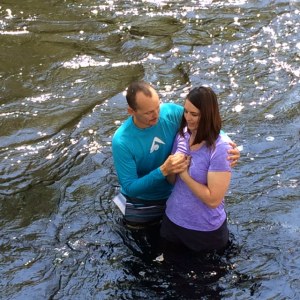
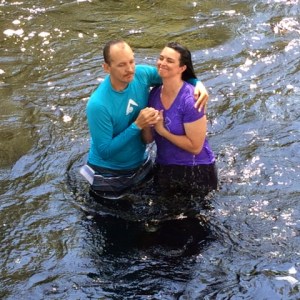
God has truly done a miraculous work in my life. He has given me a desire to know Him, a desire to follow Him, and a desire to love Him. I am not who I once was. I truly am a new creation! I am being sanctified as the Holy Spirit convicts me daily of that residual sin that is still at war in my flesh and by His grace, He helps me to crucify my flesh, pick up my cross and follow Him. Even though I’m not sure when the exact moment of regeneration took place in my spirit, I can always look to the finished work of Christ on the cross. That day is the most significant date of my salvation! Recently, I came under the conviction that I should follow Christ in believer’s baptism and so a few months ago, I was baptized by my pastor (who happens to also be my husband). God is so, so good. What a gracious, merciful Savior!


Ladies, God is still at work in the hearts and lives of His people, including yours! Would you like to share a testimony of how God saved you, how He has blessed you, convicted you, taught you something from His Word, brought you out from under false doctrine, placed you in a good church or done something otherwise awesome in your life? Private/direct message me on social media, e-mail me (MichelleLesley1@yahoo.com), or comment below. Your testimony can be as brief as a few sentences or as long as 1500 words. Let’s encourage one another with God’s work in our lives!