Forgiveness, New Testament, Sin, Sunday School

Sin-opsis ~ Sunday School Lesson ~ 10-26-14

Sinopsis

These are my notes from my ladies’ Sunday School class this morning. I’ll be posting the notes from my class here each week. Click here for last week’s lesson.

Through the Bible in 2014 ~ Week 43 ~ Oct. 19-25
Matthew 15-18, Mark 7-9, Luke 9:18-11:54, John 7-10
Sin-opsis

Sin. That word can cause us to think of a lot of different things, from our sin, to people who have sinned against us, to forgiveness. Today, we’re going to hear what Jesus has to say about five different aspects of sin.

Matthew 18

Causing Another Believer to Sin (1-5, Matthew 20:20-24)
Have you ever noticed that the disciples asked a lot of interesting questions? Why do you think they wanted to know who would be the greatest in the kingdom of heaven? Pride? A desire for clout or recognition? The disciples and Jesus lived in a society in which people were acutely aware of who had rank, recognition, and power (the Pharisees, scribes, Saducees, lawyers, priests, and Levites), and who did not (everybody else, including Jesus and them), when it came to the way Judaism was structured. We talked last week about what people, even the disciples, expected the Messiah to be: a conquering king who would overthrow Rome and restore Israel to prominence and prosperity. Here, as in the case of Mrs. Sons of Thunder asking if her boys could sit on either side of Jesus’ throne (Matt. 20), they were likely thinking of their offices in the new government they imagined Jesus would head up once He reestablished the kingdom.

Once again, Jesus had to set them straight. “It’s not about how high on the power ladder you can climb, Boys. It’s about how humble you can be, as humble as a little child.” And why did Jesus have to set them straight? Because they had been, skandalizo, “entrapped” or “tripped up” as verse 6 puts it, by faulty teaching from those who were responsible to rightly handle God’s word. The disciples would soon be in the position of teacher and preacher themselves. It was imperative they had a correct understanding of God’s word and God’s ways so they could accurately teach the new “little children” coming into the church.

When we share the gospel with others, teach the Bible, offer others advice or counsel, etc., we must make absolutely certain we have a correct understanding of what God’s word says. Otherwise, we might be tripping others up by leading them to believe things that are in conflict with the Bible. Jesus takes that very seriously saying (7) “it would be better for him to have a great millstone fastened around his neck and to be drowned in the depth of the sea.” Pretty strong words.

Recreation of a millstone used for pressing olives in Nazareth, Israel.

When I Am Tempted (7-9)
What about when someone else tempts me to sin? Again, Jesus has strong words for anyone who entices someone into any kind of sin: “woe.” What are some ways we can cause people to sin or be drawn into someone else’s sin, even in the church? Gossip, adultery, inciting other church members against the pastor or other leaders, playing “politics”, etc.

But whether tempted by a church member or the world, Jesus paints a serious picture of how we should respond to that temptation. Now, Jesus isn’t suggesting we literally maim ourselves, because, if you think about it, even a blind person can lust. Sin is an issue of the heart. Jesus is saying that we are to get away from temptation to guard our hearts, whatever the cost. Your relationship with Christ is worth it.

What might “gouging your eye out” or “cutting your hand off” look like for someone facing a certain temptation? For a person tempted to drunkenness, it might mean not drinking at all or not going to certain social events where they know the booze will be flowing freely. A person tempted to lust and adultery might need to make certain she is never alone with a man she’s not married to. She may even have to avoid spending any time with certain men she’s attracted to. Sin is serious, and we sometimes have to take big, inconvenient steps to stay out of it, but our relationship with Christ is completely worth it.

When Another Christian Sins (10-14, Romans 8:1)
Our brothers and sisters in Christ are going to sin. There’s just no way around it. How should we respond to a fellow Christian who has wandered off into sin? Ignore it and hope she’ll stop? Stop speaking to to her? Castigate her? No. We are to respond to her the same way Jesus does with the lost sheep:

10– We are not to treat any of our brothers or sisters unkindly; we are to treat all with kindness and love.

12– We remember that Christ came to save the lost from their sin. Of course, He does not want those He has saved to wander off back into their sin. Jesus goes after the wandering sheep to bring it back into the safety of the fold. We are to do the same. If someone wanders off, we don’t just let her go. We go after her in love and concern to bring her back to where she needs to be.

13-14– “If he finds it…” If is kind of an interesting word to use here, since Jesus is the shepherd in the story. Will there ever be a case in which Jesus can’t find someone who has wandered off? No. God is sovereign over all things. He knows where we are, what we’re doing, and the state of our hearts at all times. These verses are referring to the lost sheep who is willing to be found and return to the fold with Jesus. When a Christian repents and returns to Christ, Christ rejoices over her. While there may be consequences of the sin to face, “There is therefore now no condemnation for those who are in Christ Jesus.” (Rom.) Isn’t that awesome? When that repentant sheep comes back to the fold, we are to have the same loving, embracing, and forgiving attitude towards her that Christ has. Christ’s desire is always restoration and reconciliation, and that should be our desire as well.

When Another Christian Sins Against Me (15-20)
One of the most important things we can focus on in this passage is the word “sins”. In the church body, there are going to be times when things happen to us that we don’t like. That doesn’t necessarily mean these things are SIN. Maybe we don’t like the style of music, or a particular mannerism of the pastor. Maybe somebody tells us a truth we need to hear that stings a little, or someone is annoying or inadvertently hurts our feelings. Our feelings don’t determine what sin is, the Bible does. When deciding whether to confront the person, we first need to determine if what she did is sin according to the Bible (not according to our opinion), or if it’s a non-sinful offense, and we can overlook it and extend grace, realizing that people have probably done the same for us on many occasions.

On the other hand, if the person IS sinning, we can’t shy away from an awkward conversation with her about it. Remember the wandering sheep? We need to have the same love for that wandering brother or sister and try to restore and reconcile him/her. First, we go to the person privately -not in front of a group, not on Facebook- one on one, and, remembering the way we would want someone to approach us, kindly and lovingly, yet firmly, talk to her about her sin. If she repents and returns, let the rejoicing and forgiving commence! If she persists, we take a couple of other Believers with us to kindly, lovingly, and firmly approach her again. If she still persists in her sin, the next appropriate and required step is to take the matter before the church body for disciplinary action. If the person still refuses to repent, we are to treat her as “a Gentile and a tax collector.”

What does that mean? Are we supposed to shun her? Hate her? No. Look how Jesus treated Gentiles and tax collectors (like Matthew and Zacchaeus). He loved them, shared the gospel with them, and called them to repent and believe in Him. In other words, He treated them like the unbelievers they were. People who persist in unrepentant sin show us that they are not Believers. When we have exhausted all attempts at restoration, we agree with their behavior that they are not Believers and treat them that way. We remove their names from church membership and remove them from any positions of leadership or responsibility in the church, but we keep loving them, keep sharing the gospel with them, and keep praying for their salvation.

Why We Forgive (21-35, Ephesians 4:32)
This parable can be summed up in the words of Ephesians 4:32:

Be kind to one another, tenderhearted, forgiving one another, as God in Christ forgave you.

Who is the king in this parable? Jesus. Who is the first servant? Me. How big is our sin debt to Jesus? Verse 24 describes it as ten thousand talents. One talent was a unit of money equal to twenty years’ wages for a laborer. Therefore, ten thousand talents would have equaled 200,000 years’ worth of wages, an impossible amount to even begin to repay, just like our sin debt. But when we throw ourselves on the mercy of Christ and repent, He forgives us that enormous debt. Just wipes it right out. Any sin that anyone can commit against us, no matter how egregious, is peanuts (verse 28 calls it 100 denarii, or 100 days’ wages) compared to the grief and agony we put Christ through on the cross. How can we, knowing how hugely we have sinned against Christ, refuse to forgive others anything they might do to us?

The “Sin-Opsis”
There’s an old Carman song that contains the line

“Black is black, and white is white.
And Hell is hot, and sin ain’t right.”

It’s a pretty good “sin-opsis” of the what sin is. It is Christ’s desire that we stay out of sin ourselves, not lead others into sin, rescue others who have fallen into sin, and forgive those who have sinned against us.

Bible, Obedience, Old Testament, Sunday School, Worship

Worship, Grief, and Obedience: Three Responses to God’s Word ~ Sunday School Lesson ~ 9-28-14

worship grief obedience 1Through the Bible in 2014 ~ Week 39 ~ Sep. 21-27
Zechariah, Esther, Ezra 7-10, Nehemiah 1-8
Worship, Grief, and Obedience: Three Responses to God’s Word

These are my notes from my ladies’ Sunday School class this morning. I’ll be posting the notes from my class here each week. Click here for last week’s lesson.

Background/Time Line:
Judah had been in exile for 70 years. As there had been three waves of deportations (605 B.C., 597 B.C., and 586 B.C.) to Babylon, there were three waves of return from Babylon.

1. 539 B.C.- There’s a new sheriff in town as world domination changes hands. Babylon is out. Persia is in.

2. 538 B.C.- Zerubbabel (Jerusalem’s first post-exilic governor) leads the first return wave. Many of Israel’s feasts and ceremonies are reinstituted, and work on the rebuilding of the temple begins.

3. 536 B.C.- Work on the temple is abandoned shortly after it begins and is not resumed for another 16 years.

4. 516 B.C.- Temple completed.

5. 483-473 B.C.- The events of Esther take place. These events happen between Ezra 6 and 7.

6. 458 B.C.- Ezra leads the second return wave (Ezra 7ff).

7. 445 B.C.- Nehemiah leads the third and final return wave. The city wall is rebuilt.

Nehemiah 8
The exiles were all finally back after 70 long years in captivity, and the wall was finished. They were home and they were safe. It was time to re-establish the nation by ceremony and celebration.

8:1: The Feast of Booths (Ezra 7:10, Leviticus 23:33-44, Deuteronomy 16:13-17)
Ezra was a scribe and a teacher of Scripture. Ezra 7:10 tells us,

“For Ezra had set his heart to study the Law of the Lord, and to do it and to teach his statutes and rules in Israel.”

It would have been natural for Israel to look to Ezra for biblical instruction. It’s interesting to me to think back to Jeremiah at this point and recall how, before the exile, all the people came together against him to oppose the word of God. Now, after the exile, the people gather en masse and ask Ezra to teach them the word of God.

It’s a little unclear in verse 1 whether the people knew it was near time for the Feast of Booths (it was supposed to start on Tishri {7th month} 15, and this was the 1st) and that’s why they asked Ezra to read the Law (it was “required reading” at the Feast of Booths), or they just longed to hear the word of God, and the elders learned during the reading or their study time (8:13) that it was time for the Feast.

At any rate, the Feast was on. God had commanded that the Feast of Booths (or Tabernacles) be held every seven years, in the autumn after the harvest had been gathered in. The first and eighth days were days of rest, and sacrifices and offerings, as well as the reading of the Law were done on the remaining days. The Feast of Booths immediately followed the Day of Atonement, a solemn assembly in which the nation’s sins were atoned for. The Feast of Booths had not been held since the days of Joshua.

The Feast of Booths had been instituted as a reminder to Israel of how God had delivered them from “captivity” in Egypt and cared for them during their “exile” in the wilderness. The booths were lean tos or huts built from leafy branches, and the people were to live in these huts during the feast as a reminder of their temporary homes during the wilderness wandering. It is the only feast in which rejoicing is commanded.

What more appropriate feast could there have been on this day in Israel’s history? Their sin had been atoned, and God had “harvested” the apple of His eye from their temporary home in captivity and exile. It was certainly a time for rejoicing.

8:2-12: The Reading of God’s Word
2- God’s word is important for everyone: women, children, families, not just men. Not only did God want His word ministered to everyone, but “all who could understand” in verses 2 and 3 indicates that they would be held responsible for what they had heard. They were to know what God commanded, what He prohibited, and obey accordingly.

3-5- Ezra read from “the Law.” Often, the phrase “the law” or “the book of the law” can mean the entire Pentateuch (Genesis – Deuteronomy), but in this instance, it seems to mean the actual “law” portions of the Law. As he read, Ezra stood on a raised platform so that he could be seen and heard. The men standing with him to show their agreement and support were probably priests and/or elders.

“From early morning until midday” would have been about 6 hours, from dawn to noon. Outdoors (in the square). Standing. Yet, the people were still attentive. Compare this to our one or two hour worship services, indoors, sitting, where the pastor is not usually focusing on the finer aspects of how much you’ll be fined if your ox tramples your neighbor’s fence.

These people were starving for God’s word. Eager to get back to living as His people. How intense is our own hunger for God, His word, holy living?

Responding to God’s Word with Worship:
6- Ezra opened with a prayer, blessing the Lord. Joining together freely in their own land to worship and hearing God’s word taught in public by one of their own teachers was a new experience for the generation that had been born and raised in captivity. By this time, overwhelmed and overcome by all God had done for them, their only possible response was humble worship. Worship is one of the right responses to God revealing Himself in His word.

7-8- Because many of the people were hearing God’s law for the first time, they needed some help in understanding it. God had raised up godly men to teach the people. This is what godly teachers do. They read out God’s word and explain it to people (exegesis). They don’t come up with fanciful ideas of their own and bend God’s word to make it fit their ideas (eisegesis).

Responding to God’s Word with Grief:
9-12 (Romans 10:13-14, Ecclesiastes 3:1)- The Holy Spirit works primarily through the teaching and preaching of His word, and that’s just what He was doing here. The people heard the word and the Holy Spirit worked through it to convict them of their sin. They began to mourn over their sin and repent. Grieving over our sin is another right response to God revealing Himself in His word.

But grieving over sin was for the Day of Atonement, a form of which, this time, would follow the Feast of Booths instead of preceeding it (see chapter 9). This was a time of rejoicing for all God had done for them in spite of their sin. As we read in Ecclesiastes,

For everything there is a season, and a time for every matter under heaven:

Confession would have to wait.

And why did the people rejoice? Not because God performed a miracle or made their lives nice and comfy or gave them a bunch of stuff. They rejoiced because “they had understood the words that were declared to them.” How often do we rejoice in understanding God’s word or having it preached to us? It’s not often we see a Facebook status that says, “Praising God for understanding the Bible passage I read in my quiet time today!”

8:13-18: Studying God’s Word
13-14- For a Believer, one of the effects of hearing God’s word is the desire to hear more of God’s word. Hearing God’s word preached and taught led the elders, priests, and Levites to want to study the Word even further. As they studied, they discovered that there are things that God’s word actually tells us to do.

Responding to God’s Word with Obedience:
14-18- The leaders learned that there were some actual, tangible, behavioral things God had told Israel to do with regard to the Feast of Booths. They were obedient to God’s word by studying to understand these things, teaching them to the people, exhorting them to obey, and setting the example by obeying the instructions themselves.

The people responded in obedience to the word by heeding the instruction of their spiritual leaders, and by going out, gathering branches, constructing the booths, and living in them during the feast. As each individual obeyed, it encouraged others to obey, so that the whole assembly came together in obedience. And what was the result? “There was very great rejoicing.” (17)

Our response to God’s word should be no different than Israel’s. We should hunger for God’s word and desire more of it with each passing day. It should inspire us to worship the glorious King who sent His son to die for us. It should convict us of our sins and cause us to grieve over them and repent. And, we should obey God’s word, and through our obedience, encourage the rest of the body of Christ to do the same. Then, there will be “very great rejoicing.”

Idolatry, Old Testament, Sin, Sunday School

The Benefit of Israel’s Experience ~ Sunday School Lesson ~ 8-31-14

Benefit of Israel's Experience

These are my notes from my ladies’ Sunday School class this morning. I’ll be posting the notes from my class here each week. Click here for last week’s lesson.

Through the Bible in 2014 ~ Week 35 ~ Aug. 24-30
Jeremiah 51-52, Lamentations, Ezekiel 1-15
The Benefit of Israel’s Experience

For weeks now, we have watched Israel and Judah sink farther and farther into idolatry and other sin, and now they are facing God’s wrath for it. It’s easy to look back thousands of years later and think this is an ancient story that has no bearing on us today. But Israel was God’s people, like we are. They were prone to sin, like we are. Among the many things we can draw out of Israel’s story is that we as God’s people don’t want to go down the same road to sin that they did. What can we learn from what they did wrong, and how do we keep from becoming like them?

Ezekiel 14

It’s a slow fade (Exodus 14-17,32)
That’s the title of a Casting Crowns song. Another line of the song says, “People never crumble in a day,” and that is certainly true. In the same way that someone doesn’t just wake up one morning and decide to have an affair, Israel didn’t just wake up one morning with Asherah poles in their back yards and prostitutes in the temple. We’re in about 593 BC here in Ezekiel. The exodus occurred around 1445 BC, with the golden calf incident occurring not too long after that. Give or take, we’re talking about 800ish years that Israel has been involved with idolatry. This depth of depravity didn’t happen overnight.

But even back in Exodus, there were “smaller” sins leading up to idol worship: they didn’t trust God, and they weren’t satisfied with God. They coveted fleshly security. At the Red Sea, they doubted God and wailed and moaned that they were going to die. They didn’t trust God for water or bread. And, finally, they grew impatient and distrustful that God would ever bring Moses down from Mt. Sinai. All of that culminated in the making and worshiping of the golden calf.

What can we learn? (2 Timothy 2:22, 2 Corinthians 10:5, Matthew 5:27-30)
There is no such thing as a little sin, because little sins always lead to bigger sins. Ever watch the Animal Planet show, Fatal Attractions? It was all about these various crazy people who adopted baby tigers, chimps, bears, etc. into their homes and then were shocked when these animals grew up and ripped their faces off (sometimes literally).

That’s what a “little” sin will do to you. It starts off looking cute and cuddly and harmless and then you embrace it and nurture it and think you’ve got a handle on it, and it grows up to rip your face off or kill you.

“Small” sins have to be dealt with swiftly and decisively. We must immediately turn from them and ask God’s forgiveness. We can’t play around with them even a little bit. That’s why the Bible tells us to “flee” (2 Tim) from sin and to take even our thoughts captive to obey Christ (2 Cor.). Hey, poke out your eye or cut off your hand if you have to, is what Jesus said (Matt.).

Lip service is a lie
The elders in 14:1 were not genuinely seeking to worship or obey God. It had been a long time, if ever, since they had done that. They were making a pretense to make it look to the people of Judah like they were actually following God and that God was pleased with them. And God answered that fake inquiry with real judgment.

What can we learn? (Isaiah 29:13-14)
Merely going through the motions doesn’t cut it. Putting your body in church once a week, reciting memorized prayers, giving offerings out of habit, mindlessly singing the hymns does nothing to make you godly. In fact it can help lull you into thinking you’re good with God and have nothing to worry about with regard to falling into sin.

Isaiah said about the Israelites:

“…this people draw[s] near with their mouth and honor[s] me with their lips, while their hearts are far from me…” (Is.)

and look what happened to them.

The same can be true of us. We must ask the Lord to hold us close and help us cling to Him. We must daily run to God’s word and prayer, humble ourselves and remember our dependence on Him. We must celebrate the gospel every day, remembering the price Christ paid for our sin, His love for us, and our love for Him.

Repentance is always the answer
Even at the brink of destruction, God’s message to Israel (14:6) is repent. He had brought all these calamities upon them to bring about their repentance. But the people and their leaders would have none of it.

What can we learn?
We’re going to sin. There’s just no way around it. But when we do, the answer is always to turn to Christ in repentance. One of the verses we have talked about so many times in this class is 1 John 1:9:

If we confess our sins, he is faithful and just to forgive us our sins and to cleanse us from all unrighteousness.

While the idolatry the Israelites committed was a grave sin, what was even worse was that they refused to repent.

Sometimes, the cheese stands alone (Genesis 6:8, Daniel 6:4, Job 1:8)
Noah, Daniel, and Job- what do we remember about these guys? Each of them stood for righteousness surrounded by a sinful culture, and they all stood alone or nearly so. Noah found favor in the eyes of the Lord (Gen.). Daniel was “faithful, and no error or fault was found in him.” (Dan.) God Himself said Job was “a blameless and upright man, who fears God and turns away from evil” (Job)

And yet, God said that even if these three men had been present at Ezekiel’s time, their righteousness would have saved only themselves, no matter how hard they prayed or preached, because Israel refused to repent.

What can we learn?
Daniel, Job, and Noah were not righteous in and of themselves. They didn’t find favor with God because they were good deed doers, but because they believed God, walked in repentance, and were faithful to Him– some of the things we’ve already discussed today.
It seems simplistic to say that the lesson here is “Be like Daniel, Job, and Noah, not like the Israelites,” but sometimes it really is that simple. We must be faithful to God like they were even when no one else around us is.

I’ll take you back
If you could boil it down to one sentence, what would you say was God’s end goal in hitting Israel so hard? Check out verses 10-11:

And they shall bear their punishment—the punishment of the prophet and the punishment of the inquirer shall be alike— that the house of Israel may no more go astray from me, nor defile themselves anymore with all their transgressions, but that they may be my people and I may be their God, declares the Lord God.”

No matter how far they had strayed or what they had done, God still loved His people and wanted them back. His desire was never to destroy them but to reconcile them to Himself.

What can we learn? (Luke 15:11-32)
As the parable of the prodigal son so beautifully demonstrates, we may fall into all kinds of horrible sin, but when we come to God broken and sorrowful over that sin, He wraps His arms around us in love and welcomes us back. That’s what He wanted to do for Israel, and that’s what He wants to do for us. That’s the reason Jesus came. The reason for the cross. The reason for the empty tomb.

For some purpose, known only to Himself, God loves us and wants us back.

Forgiveness, Hell, Justice, Old Testament, Salvation, Sin, Sunday School

Follow Up Week ~ Sunday School Lesson ~ 6-1-14

sunday school

These are my notes from my ladies’ Sunday School class this morning. I’ll be posting the notes from my class here each week. Click here for last week’s lesson.

Through the Bible in 2014 ~ Week 22 ~ May 25-31
Psalm 131, 138-139, 143-145, 127, 111-118, 37, 71-72, 94, 119:1-88; 1 Chronicles 26-29; 1 Kings 1-4; 2 Chronicles 1

Follow Up Week

Last week, we had a lot of great questions that I didn’t feel we had the opportunity to discuss thoroughly enough. This week we’re going to take an in depth look at three of those questions.

Follow Up: Zeruiah
Last week, we saw David repeatedly refer to Joab and Abishai as “sons of Zeruiah,” and a question arose as to what he meant by that. Was it an insult? An identifier? Here, briefly, is some clarifying information:

Zeruiah was David’s sister (1 Chronicles 2:15-16). Her sons were Abishai– one of the chiefs of David’s mighty men (1 Chronicles 11:20), Joab– commander of  David’s army, and Asahel (Asahel was murdered by Abner, commander of Saul’s army (2 Samuel 2:8), at the battle of Gibeon (2 Samuel 2:18-24). Abishai and Joab later took revenge on Abner for killing their brother (2 Samuel 3:24-30).)

images


Abishai, Joab, and Asahel were brothers and also David’s nephews. Therefore, calling them “sons of Zeruiah” may have had one of several meanings:

1. “Sons of Zeruiah” was just another way of saying “my nephews.” It is possible that this was to distinguish them from other men close to David who had the same names. (For example, in this week’s reading, we saw a man named Shimei (1 Kings 1:8, 4:18) who was a different person from the Shimei we studied about last week.) Adding such an identifier to someone’s name was common in biblical times before surnames were in general use (eg. Joshua son of Nun, Joseph of Arimathea, Jesus of Nazareth, etc.)

2. It is possible David had a close relationship with Zeruiah and had great respect for her. Perhaps when David called his nephews “sons of Zeruiah” he was reminding them to live up to their mother’s good character.

3. It is possible David had a contentious relationship with his sister and had little respect for her. Perhaps when David called his nephews “sonsof Zeruiah” when annoyed with them, he was implicitly saying, “What else can you expect when they had a mother like that?”

Since the Bible provides very little information on Zeruiah, we can’t definitively say why David would use this phrase; we can only speculate. Click here for more information on Zeruiah.


scales of justice

Follow Up: Shimei, David, and Solomon
Last week, we studied the story of Shemei cursing David, and David’s subsequent sparing of his life (2 Samuel 16, 19). This week, we saw the death of David and Solomon’s accession to the throne (1 Kings 1-2). We also saw David, from his deathbed, give instructions to Solomon regarding Shimei, and we saw how Solomon carried them out (1 Kings 2). Was David sinning by going back on his word to Shimei? Let’s take a look.

Two Different Justice Systems
In order to understand the dynamics of the situation between Shimei and David and Shimei and Solomon, we first have to step outside our 21st century United States understanding of “the justice system” and step back in time into the Old Testament monarchial justice system.

The American System:
In the American justice system, justice supersedes leadership and is a separate entity from leadership. We have the judicial branch of government (courts, judges, jails, lawyers, etc.) and the executive branch of government (the President, state governors, etc.). They each have their own powers and responsibilities, and, for the most part, are separate from, and not dependent on, one another. For example, if someone is acquitted of a crime during one person’s presidency, he cannot later be convicted of that same crime solely because someone else becomes President and thinks he should be convicted. (Obviously, there are exceptions and corruptions to this system, but, generally speaking, in a nutshell, this is how it is supposed to work.)

Old Testament Israel’s System: 
In Israel (and other monarchial or dictatorial nations), there was no separation of powers. Legislative (making the laws), judicial, and executive powers all resided in one man: the king. And, the rules could change every time a new king took over. Your verdict, conviction, and sentence lasted only as long as the reign of the king who handed them down unless the next king chose to honor those decisions. This is one of the reasons the death penalty and maiming (cutting off someone’s had for stealing, for example) were more prevalent during those times. If you were the king and wanted to make sure someone was punished long term and that your verdict would not be overturned, death or maiming were your main options.

Shimei’s Sentence (1 Kings 2:8-9, 2 Samuel 19:23, 1 Kings 2:36-46)
As we saw in this week’s reading in 1 Kings 2:8-9, David did not put Shimei to death himself or during his own reign. Additionally, because of the way Israel’s justice system worked, it would have been impossible for David to swear to Shimei that he would never be put to death, because David had no control over what the next king would do. David’s oath was only good for the duration of his own reign. Thus, he did not break the oath he made to Shimei in 2 Samuel 19:23.

David did, however, take full advantage of Israel’s system of justice, the fact that Solomon had made no such oath to Shimei and the fact that Solomon was his son and would be likely to do as he asked. In 1 Kings 2:8-9, David didn’t come right out and tell Solomon to execute Shimei, but he hinted pretty strongly at it.

Solomon, perhaps wishing to honor the spirit of David’s oath to Shimei in 2 Samuel 19, while still carrying out David’s desire in 1 Kings 2 that Shimei be punished, did not condemn Shimei to immediate death, but, rather, put him under “house arrest” (1 Kings 2:36-37). Shimei could not leave Jerusalem or he would be executed, but as long as he stayed in Jerusalem, he was free to live his life as he wished. Shimei agreed to this (2:38) and made an oath to the Lord that he would obey (2:43). Shimei could have lived out the rest of his life peacefully in Jerusalem if he had just abided by the rules of his sentence. He broke the rules; he knew the consequences (2:39-46).


deathbed-2

Follow Up: Can a Christian be forgiven for a sin he commits on his deathbed and doesn’t have the opportunity to repent for before dying? Will he go to hell for this? 
This question arose last week as we briefly touched on David’s deathbed instructions to Solomon regarding Shimei. Although it doesn’t appear that David was actually sinning in that particular case, this question is a very good one that I wanted to address more fully because it has application for all of us since we all sin and will all die one day. In order to answer this question, we need to take a look at several things regarding sin, forgiveness, and salvation.

The soteriology of the question (John 10:26-29, Romans 8:1-2, 33-39, 1 John 2:1-2) 
Soteriology is the field of theological study that deals with salvation: what it is, what it isn’t, and how it happens. We know that in order for a person to be saved and spend eternity in Heaven he must turn from his sin (repent), and place his faith in the death, burial, and resurrection of Christ on his behalf as payment for his sin.

John tells us that, for those who have truly been born again, no one is able to snatch them out of Christ’s or the Father’s hand. This includes Satan. Romans tells us (8:33-34) no one has the authority to condemn or to bring charges against God’s elect, because God is the one who has justified them and He has already said there is no condemnation for those who are in Christ Jesus (8:1-2). Satan no longer has the authority even if we sin, to drag us off to hell, and God has promised that he will not condemn us to hell if we are in Christ. And if/when we do sin, 1 John tells us that Christ has already stepped in between us and the wrath of God as our advocate, offering His righteousness on our behalf.

Bottom line: If you have truly been born again, God’s got you and there’s not anyone or anything that has the authority to change that.

The hamartiology of the question (Hebrews 10:11-14): 
Hamartiology is the study of sin. We sin before we’re Christians. We sin after we’re Christians. We will never be completely free from temptation and the effects of sin this side of Heaven. The truth is, unless you are capable of knowing every single sin in your life (Remember all those sins you committed when you were three? Neither do I.) and you die immediately after repenting of the last one, you’re going to die with unconfessed sin in your life. That’s pretty much every Christian. We sin so much that there are sins we don’t even realize or remember we’ve committed. How can you repent of something you’re not even aware of? So, no, a true Christian will not go to hell for failing to repent of an individual sin committed right before death.

As the old hymn says, “Jesus paid it ALL.” Hebrews tells us that Jesus died “once for all”– one time to pay for all sin, from the creation of the world until its destruction at the end of time. When we come to Christ for salvation, while we may repent of individual sins that are heavy on our hearts, what we are really doing is confessing that we are, and repenting for being, a sinner. If we had to repent of every individual sin no one could ever be saved because no one could remember all the sins he’s ever committed. For those who are in Christ, every sin in our entire lives, from birth to death, is forgiven.

Daily repentance and forgiveness:
So, if the sins we have forgotten about, and the sins we aren’t aware of, and the sins we don’t have a chance to repent for before dying are all forgiven anyway, why is any other sin any different? Why do we need to repent of our sin and ask for forgiveness every day when we pray?

Obedience (Matthew 6:12):
We do it out of obedience. Jesus tells us in the Lord’s Prayer to daily ask God to forgive us for sinning. So, we do.

Awareness and thankfulness (Psalm 32:1-2)
When we spend time in prayer daily repenting of our sin it reminds us of the greatness of God and His grace in forgiving our sin. It humbles us by reminding us of the great cost of our sin. It reassures us of God’s love and mercy towards us. It gives us an opportunity to give Him praise and thanks for forgiving us.

Restored relationship (1 John 1:6-9)
When we have unconfessed sin in our lives, it creates a rift (of our own making) between us and God. When we confess our sin to God and ask Him to cleanse us from it, that sin is no longer a hindrance to clean, unfettered communion with God.

If we say we have fellowship with him while we walk in darkness, we lie and do not practice the truth. But if we walk in the light, as he is in the light, we have fellowship with one another, and the blood of Jesus his Son cleanses us from all sin. If we say we have no sin, we deceive ourselves, and the truth is not in us. If we confess our sins, he is faithful and just to forgive us our sins and to cleanse us from all unrighteousness.

Sanctification

Six Cliches Christians Could Can (Or at Least Re-think)

Have you ever noticed we use a lot of expressions without giving much thought to their origin or what they really mean? For example, why do we use the phrase, “in a (pretty) pickle” to mean “experiencing a difficult situation”?

Here are six cliches we often use as Christians that could stand to be replaced or at least re-thought:

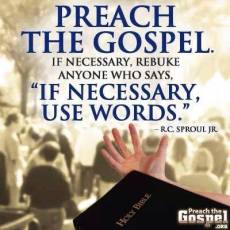
1795610_10153768796270386_733462403_n1. Preach the gospel. If necessary, use words.

It’s necessary. Use words. While our behavior should certainly prove out our testimony, nobody’s going to see us working at a soup kitchen or eschewing barhopping and somehow magically understand that he has broken God’s law and needs to repent and put His faith in Christ’s death, burial, and resurrection for the forgiveness of his sin unto eternal life. That has to be explained. Clearly. By us. From the Bible. With words.


tombstone-159792_6402. Rest in peace/God rest his soul
If the person who died was saved, he’s already resting in peace by the time you can get these words out. (2 Corinthians 5:6-8)

If the person who died wasn’t saved, unfortunately, he’s in a place of eternal torment and suffering, and no amount of asking God to rest his soul will give him a respite. Worse, when Christians say this about someone they know was not saved, they reinforce the false idea many lost people have that the dead are “resting” in some sort of spiritual coma, or that they simply cease to exist (annihilationism) , or that everybody automatically goes to Heaven (universalism).

Maybe “I’m praying for you,” or “I’m bringing you dinner,” would be better.

and speaking of which…


th3. Sending positive thoughts/energy your way.

Thoughts and energy are not things you can wrap up in brown paper, haul down to the post office, and mail to somebody. You can’t send them and the other person can’t receive them, and they can’t actually accomplish anything, and everybody knows this. But, commendably, atheists, New Agers, and other non-Christians wanted to have something compassionate to say to people who are hurting, and since they can’t say, “I’m praying for you,” this is the best they can do.

Christians, we’ve got something better. We can say, “I’m praying for you.” We have an open line to the almighty God of the universe who is listening to us and can actually do something about the situation. Pray for that hurting person. Put your arms around her. Listen to her. Do whatever you can to help. Show her Jesus, not empty words.


RNR084. Christianity isn’t a religion, it’s a relationship.

The only people running around today saying that Christianity is not a religion are Christians. Everybody else in the world considers Christianity a religion. And up until this little humdinger materialized, so did Christians.

Usually, what people mean by this is that true Christianity is not an institutionalized system of rote obedience to dead and meaningless rituals. It’s a reconciliation with the only true God by means of being redeemed by His Son, Jesus Christ, who propitiated and expiated God’s wrath against us in our sin through His death, burial, and bodily resurrection, and is, therefore, a dynamic and living interpersonal relationship.

But that’s too long to fit into a tweet or a hashtag.

Our relationship with God through Christ is our religion- the only true religion. And that’s not a bad thing.


ttgpt231112b5. Don’t judge someone just because he sins differently than you do.
I find this one confusing, but I think the sentiment behind this is something along the lines of, “I may be an adulterer, but you’re not any less of a sinner just because you only tell the occasional white lie.  Therefore, you have no right to call me to repentance.”

This is a lovely casserole of simultaneous truth and falsehood, and it all hinges on the word “judging,” which has been tossed around so much that even Christians scarcely know what it means anymore. No, we’re not to berate someone for his sin while pompously pretending we’re sin-free. All have sinned, after all, and if we say we have no sin, we lie. But does that mean we should never call anyone to repentance? Of course not! We’re to walk in repentance ourselves and seek to help the lost find forgiveness in Christ and help our Christian brothers and sisters who have fallen into sin to be reconciled to Christ. Scripture doesn’t say we can never call people out of sin because we have a log in our own eye. It says first remove the log and then help your brother.


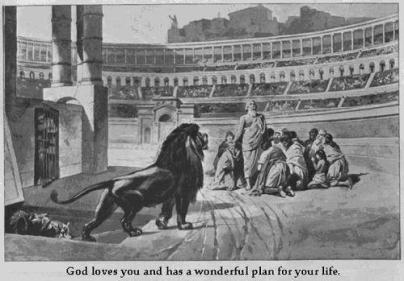
69475_10102578902186220_955102342_n6. God loves you and has a wonderful plan for your life.


This is actually true, it’s just that our idea of a “wonderful plan” doesn’t always match up with God’s idea of a “wonderful plan”.

Our desire is to be healthy, wealthy, and blissfully comfortable with never a family problem, fender bender, lost love, or bankruptcy. God’s desire is for us to be holy. He wants to root the sin out of our lives, show us how to be completely dependent on Him, lead us to trust Him more, build our character and endurance, give us boldness to share the gospel, make us kinder and more merciful, teach us what it means to extend grace and forgive. Most of those lessons are learned only through hardship and suffering. Just ask the apostles or the early church martyrs or our brothers and sisters being persecuted across the globe today.


What are some expressions Christians commonly use that you think we should replace or re-think?