Wednesday's Word

Wednesday’s Word ~ Genesis 1

For further study on the book of Genesis, try my study, The Women of Genesis.

genesis 1

Genesis 1

In the beginning, God created the heavens and the earth. The earth was without form and void, and darkness was over the face of the deep. And the Spirit of God was hovering over the face of the waters.

And God said, “Let there be light,” and there was light. And God saw that the light was good. And God separated the light from the darkness. God called the light Day, and the darkness he called Night. And there was evening and there was morning, the first day.

And God said, “Let there be an expanse in the midst of the waters, and let it separate the waters from the waters.” And God made the expanse and separated the waters that were under the expanse from the waters that were above the expanse. And it was so. And God called the expanse Heaven. And there was evening and there was morning, the second day.

And God said, “Let the waters under the heavens be gathered together into one place, and let the dry land appear.” And it was so. 10 God called the dry land Earth, and the waters that were gathered together he called Seas. And God saw that it was good.

11 And God said, “Let the earth sprout vegetation, plants yielding seed, and fruit trees bearing fruit in which is their seed, each according to its kind, on the earth.” And it was so. 12 The earth brought forth vegetation, plants yielding seed according to their own kinds, and trees bearing fruit in which is their seed, each according to its kind. And God saw that it was good. 13 And there was evening and there was morning, the third day.

14 And God said, “Let there be lights in the expanse of the heavens to separate the day from the night. And let them be for signs and for seasons, and for days and years, 15 and let them be lights in the expanse of the heavens to give light upon the earth.” And it was so. 16 And God made the two great lights—the greater light to rule the day and the lesser light to rule the night—and the stars. 17 And God set them in the expanse of the heavens to give light on the earth, 18 to rule over the day and over the night, and to separate the light from the darkness. And God saw that it was good. 19 And there was evening and there was morning, the fourth day.

20 And God said, “Let the waters swarm with swarms of living creatures, and let birds fly above the earth across the expanse of the heavens.” 21 So God created the great sea creatures and every living creature that moves, with which the waters swarm, according to their kinds, and every winged bird according to its kind. And God saw that it was good. 22 And God blessed them, saying, “Be fruitful and multiply and fill the waters in the seas, and let birds multiply on the earth.” 23 And there was evening and there was morning, the fifth day.

24 And God said, “Let the earth bring forth living creatures according to their kinds—livestock and creeping things and beasts of the earth according to their kinds.” And it was so. 25 And God made the beasts of the earth according to their kinds and the livestock according to their kinds, and everything that creeps on the ground according to its kind. And God saw that it was good.

26 Then God said, “Let us make man in our image, after our likeness. And let them have dominion over the fish of the sea and over the birds of the heavens and over the livestock and over all the earth and over every creeping thing that creeps on the earth.”

27 So God created man in his own image,
    in the image of God he created him;
    male and female he created them.

28 And God blessed them. And God said to them, “Be fruitful and multiply and fill the earth and subdue it, and have dominion over the fish of the sea and over the birds of the heavens and over every living thing that moves on the earth.” 29 And God said, “Behold, I have given you every plant yielding seed that is on the face of all the earth, and every tree with seed in its fruit. You shall have them for food. 30 And to every beast of the earth and to every bird of the heavens and to everything that creeps on the earth, everything that has the breath of life, I have given every green plant for food.” And it was so. 31 And God saw everything that he had made, and behold, it was very good. And there was evening and there was morning, the sixth day.

The Holy Bible, English Standard Version Copyright © 2001 by Crossway Bibles, a division of Good News Publishers.

Questions to Consider:

1. Who created the world?

2. How many times is the phrase “according to its/their kind(s)” used? What does this phrase mean?

3. What was different about the means by which God created man compared to the means by which He created everything else? (Hint: Check out the first three words of each day of Creation and compare to Genesis 2:7 & 22)

4. What is the significance of the words “us” and “our” in verse 26? (See also verse 2 and John 1:1-14.)

5. Why does it matter whether or not Christians believe the Genesis 1 account of Creation?

Forgiveness, Gospel, Salvation, Sunday School, Types and Shadows

Joe & Moe: Delivery Boys ~ Sunday School Lesson ~ 2-2-14

sunday schoolThese are my notes from my ladies’ Sunday School class this morning. I’ll be posting the notes from my class here each week.Click here for last week’s lesson.

 Through the Bible in 2014 ~ Week 5 ~ Jan. 26- Feb. 1
Genesis 41 – Exodus 9
Joe (Joseph) & Moe (Moses): Delivery Boys (Part 1)


→         ┼     ←→    II
Old Testament                     Gospels         Acts-Revelation    (Christ’s Return)

All of the Old Testament points to Christ. Throughout the OT, we see Israel, a people in need of deliverance, and throughout the OT, we see God use men as types and shadows of Christ, each pointing out a facet of the way He would deliver His people from their bondage to sin.

Let’s look back at some of the people we’ve studied so far and how they are types of (symbolize) Christ. Look at these people through the lenses of Jesus’ life.

Adam– One Man (Romans 5:17)
As sin entered the world through the first/only begotten son, so salvation entered the world through God’s only begotten Son.

Abel– Death of the innocent (Hebrews 12:22-24)
We see the good, obedient, innocent shepherd, betrayed by his brother and killed for no crime of his own.

Noah– The only righteous man (Genesis 6:9, 1 Peter 3:18)
We see salvation take place through the only righteous man on earth, scorned by sinners. We see the death of sin, the burial (at sea), and the resurrection to new life.

Job– The Suffering Servant (Isaiah 53:3,10)
In Job, we see Christ, the innocent, misunderstood and accused by those who should have been His friends, suffering, not for His own sin, but for God’s greater plan: that God might be glorified.

Abraham– The Obedient Son (Philippians 2:5-8)
Abraham left the comfort and position of his homeland in exchange for a life of sojourning in a land not his home. He was obedient to God whatever the cost to himself. So, Christ emptied Himself of His position and comfort in Heaven to sojourn on earth and live in obedience to God, whatever the cost.

Isaac– The Promised Son (Genesis 3:15) and The Lamb of God (Genesis 22:8,14, John 1:29)
God told Abraham He would send him a son, and after many years, the promise came true. The son of the Abrahamic Covenant was born in a miraculous way. In Genesis, God promised to send His Son, and after many years, and many reminders of God’s promise to Israel, the Son of the new covenant was born in a miraculous way.

Lamb of God- He was the only acceptable sacrifice. He took the wood for the sacrifice upon his back and walked up the hill to his place of death. “God will provide for himself the lamb for a burnt offering, my son.” “On the mount of the Lord it shall be provided.” That mountain, Mt. Moriah, turned out many years later to be Calvary. “Behold, the Lamb of God, who takes away the sin of the world!”

Jacob– Cornerstone (Matthew 19:28)
Jacob through his twelve sons/tribes, was the foundation of God’s people, Israel. Jesus, delegating through His twelve disciples, is the foundation of God’s people, the church.

Joseph– Deliverance Through Forgiveness (Genesis 50:20, Acts 5:31) (Genesis 45:5,7-8; 50:15-21, Luke 23:33-34, 1 John 1:5-9)
Joseph was a deliverer, as was Christ. His life shows us one aspect of Christ’s delivering us from our sin: forgiveness. I did a study on this a while back and wrote a blog article about it. It’s like one of those optical illusion pictures where if you look at it one way, it’s an old, ugly woman, but if you look at it another way, it’s a young, pretty woman. This is a “story optical illusion.” See if you can see Joseph and Jesus at the same time.

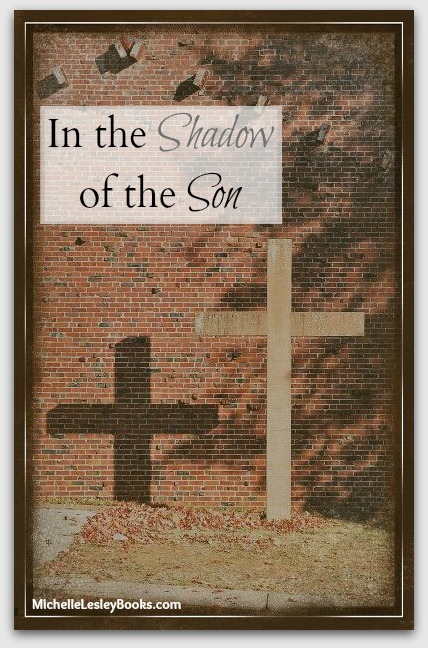
QueretaroCrossShadow1In the Shadow of the Son

And after all this: hating him, taking him away from his family and all he knew, selling him as a slave, working his way up only to lose everything again when he was falsely accused of rape and imprisoned for years for a crime he didn’t commit, forgotten by the cupbearer for two years, unsure how his brothers were treating Benjamin or his father, not even knowing if his father was still alive, Joseph forgave his brothers and gave them a new start, a new life.

When Joseph’s brothers saw that their father was dead, they said, “It may be that Joseph will hate us and pay us back for all the evil that we did to him.” So they sent a message to Joseph, saying, “Your father gave this command before he died: ‘Say to Joseph, “Please forgive the transgression of your brothers and their sin, because they did evil to you.”’ And now, please forgive the transgression of the servants of the God of your father.” Joseph wept when they spoke to him. His brothers also came and fell down before him and said, “Behold, we are your servants.” But Joseph said to them, “Do not fear, foram I in the place of God? As for you, you meant evil against me, but God meant it for good, to bring it about that many people should be kept alive, as they are today.So do not fear; I will provide for you and your little ones.” Thus he comforted them and spoke kindly to them.
Genesis 50:15-21

And when they came to the place that is called The Skull, there they crucified him, and the criminals, one on his right and one on his left.  And Jesus said, “Father, forgive them, for they know not what they do.” And they cast lots to divide his garments.
Luke 23:33-34

As Jacob forgave his brothers and Christ forgave his executioners, this is exactly what Christ does for us. We repent, and He forgives us for our sin. He gives us a new life.

This is the message we have heard from him and proclaim to you, that God is light, and in him is no darkness at all. If we say we have fellowship with him while we walk in darkness, we lie and do not practice the truth. But if we walk in the light, as he is in the light, we have fellowship with one another, and the blood of Jesus his Son cleanses us from all sin. If we say we have no sin, we deceive ourselves, and the truth is not in us. If we confess our sins, he is faithful and just to forgive us our sins and to cleanse us from all unrighteousness.
1 John 1:5-9

The story of Joseph is a beautiful story of a man rejected, betrayed, and done away with, only to live again victoriously, and forgive and save his betrayers. Just like Jesus.

Sanctification, Sovereignty of God, Sunday School

Ishmael and El Roi ~ Sunday School Lesson ~ 1-19-14

sunday school

These are my notes from my ladies’ Sunday School class this morning. I’ll be posting the notes from my class here each week. Click here for last week’s lesson.

Through the Bible in 2014 ~ Week 3 ~ Jan. 12-18
Job 32-42, Genesis 12-21
Ishmael and El Roi

What does “Ishmael” (Genesis 16:11) mean? El Roi (16:13)? Ishmael means “God hears.” El Roi means “the God who sees me.” Today, we’re looking at God’s sovereignty as displayed in the passages we read this week.

What do we mean when we say God is “sovereign”? Omnipotent? Omniscient? “Sovereignty” the way we use the word in the church today, means that God has authority and control over all things, people, and circumstances. He is omnipotent (all powerful) and omniscient (all knowing). Nothing in the universe happens without His knowledge, causation, or permission. We’ll see how God defines His sovereignty towards the end of today’s lesson. Because God is sovereign, we can TRUST Him.

Elihu (Job 32-34, Focal Passage- 33:29-30): God’s knowledge is perfect and complete. Ours is not. Elihu (as well as Job’s other three friends) thought he had God’s reasons for Job’s suffering all figured out: God brings suffering in order to lead men to repentance. Since Job was still suffering, he must still be in unrepentant sin. Elihu (and the others) were partly right. Sometimes, that is why God allows us to suffer. But not in Job’s situation. Each of them had a small piece of the puzzle, but none of them had the whole picture. Job wisely trusted God, who was the only one in this situation who knew the whole story, instead of his friends’ counsel.

42:7-9– Because our knowledge is incomplete, we must be extremely careful what we say about, or on behalf of, God. (Acts 20:26-27; Revelation 22:18-19, 2 Timothy 2:15) We are not to go farther than Scripture, nor stop short of declaring the full counsel of God. We are not to add to nor take away from God’s word. We are to handle God’s word rightly. We are to believe what God’s word says in context. Otherwise, we risk slandering the character of God.

Abram (Genesis 12-21): God isn’t just sovereign over the “big” things. He’s sovereign over the “small” things, too. He can be trusted in all things.

Abram trusted God’s sovereignty in the “big” things (Genesis 12:1-4; 15:1ff; 17:1-14)… Abram trusted God in a lot of “big” things. When God came to him and told him to leave his comfortable home and surroundings for a life of being a nomad, and didn’t even tell him where he was going, Abram went without question. When God told Abram He would give him innumerable descendants even though Sarai was barren, and that He would give Canaan to those descendants hundreds of years later, “he believed the Lord, and [God] counted it to him as righteousness.” (15:6) When God introduced the idea of circumcision to this 99 year old man, Abram didn’t try to talk God out of it or suggest a different way, he trusted God and obeyed.

…but sometimes he had trouble trusting God’s sovereignty in the “small” things (Genesis 12:11-13, 20:1-3; 16:1-2, 17:15-21; So did Lot’s daughters- 19:1ff; Genesis 2:24, Matthew 19:4-6) Abram trusted God when He rearranged and relocated his entire life. He trusted God to give him a myriad of descendants when he didn’t even have one child. He trusted that God would give thousands of square miles of land to his greatgreatgreatgreatgreat… grandchildren, yet when it came to protecting him and his wife, Abram gave in to fear and lied not once, but twice, about Sarai being his wife. Then, instead of trusting the God who had made all these great promises to him to cause Sarai to conceive on His timetable, he and Sarai took matters into their own hands with Hagar and violated God’s plan for marriage. Abram “listened to the voice of Sarai,” not the voice of God. (Just because bearing children “through” a handmaid was culturally acceptable at the time and Scripture doesn’t record God’s verbal disapproval of it doesn’t mean it was OK with Him.)

We see the same thing later with Lot’s daughters. Instead of trusting the God who sovereignly protected them from gang rape and the destruction of Sodom to give them husbands and children (or that it was OK with God for them to remain single and childless), they took matters into their own hands in a vile way. It is never God’s will for us to violate God’s word in order to bring about what we think are His purposes.

Hagar (Genesis 16:1ff, 21:8-21): God is sovereign over all circumstances, even the bad ones. His sovereignty brings comfort and shows He is trustworthy. Hagar was a slave. No one asked her if she wanted to sleep with Abram or bear his child. She had no choice. She was a victim of Sarai’s and Abram’s disobedience. But see how tender God is with her in these two passages! God comforts her personally and shows her she can trust Him by telling her a little about how He is going to use her circumstances in the future, and by His provision of the well. She can trust Him because He is sovereign over her situation. He has heard her cry (Ishmael) and is the God who sees her (El Roi).

Sodom and Gomorrah (Genesis 13:13, 18:22-19:29; Ezekiel 18:23; 2 Peter 3:9): God is gracious and patient, yet sovereign over sin, and sovereign in judgment. We learn as far back as chapter 13 that “the men of Sodom were wicked, great sinners against the Lord,” yet it isn’t until chapter 18 that we learn of God’s imminent plan to destroy the cities. We can’t be sure of the precise timing, but we do learn in chapter 12 (right before chapter 13 when God states that the men of Sodom were wicked) that Abram is 75 years old, and we find in chapter 17 (right before chapter 18 when Abram intercedes for Sodom) that Abraham is 99 years old. If the events are in chronological order, it appears (not knowing how long they had been “wicked” before chapter 13) that God mercifully spared his judgment against Sodom for at least 24 years. We see in other places, such as with Egypt (Exodus 12:40-41) and in our own day (since Christ’s ascension) that God waited hundreds or thousands of years before bringing judgment.

God is kind, gracious, and patient, because of His sovereignty over sin and judgment. He knows the kind of judgment that’s required and what it will be like. Over and over He provides ways for people and nations to repent, escape the penalty for their sin, and turn to Him. But when the time of His patience is fulfilled, He faithfully and righteously executes judgment.

God says, “ Have I any pleasure in the death of the wicked, declares the Lord God, and not rather that he should turn from his way and live?” and “The Lord is not slow to fulfill his promise as some count slowness, but is patient toward you, not wishing that any should perish, but that all should reach repentance.” He has provided a way for us to escape judgment- placing our faith in Christ’s death, burial, and resurrection to pay the penalty for our sin.

What does God have to say about His sovereignty? (Job 38-42; Focal Passages: 40:1-2,7-14; 42:1-6)

Where were you when I laid the foundation of the earth?
Or who shut in the sea with doors?
Have you comprehended the expanse of the earth?
Have you entered the storehouses of the snow?
Do you know the ordinances of the heavens?
Can you establish their rule on the earth?
Can you hunt the prey for the lion,
    or satisfy the appetite of the young lions,
Do you give the horse his might?

Shall a faultfinder contend with the Almighty?
He who argues with God, let him answer it.”

“Dress for action like a man;
I will question you, and you make it known to me.
Will you even put me in the wrong?
Will you condemn me that you may be in the right?
Have you an arm like God,
and can you thunder with a voice like his?

“Adorn yourself with majesty and dignity;
clothe yourself with glory and splendor.
Pour out the overflowings of your anger,
and look on everyone who is proud and abase him.
Look on everyone who is proud and bring him low
and tread down the wicked where they stand.
Hide them all in the dust together;
bind their faces in the world below.
Then will I also acknowledge to you
that your own right hand can save you.

Then Job answered the Lord and said:

“I know that you can do all things,
and that no purpose of yours can be thwarted.
‘Who is this that hides counsel without knowledge?’
Therefore I have uttered what I did not understand,
things too wonderful for me, which I did not know.
‘Hear, and I will speak;
I will question you, and you make it known to me.’
I had heard of you by the hearing of the ear,
but now my eye sees you;
therefore I despise myself,
and repent in dust and ashes.”

Creation, Evolution

Tru Dat

tru dat

“God is not man, that he should lie,” Numbers 23:19

“God, who never lies,” Titus 1:2

“It is impossible for God to lie,” Hebrews 6:18

God tells us in Genesis 1 (and reiterates it elsewhere in Scripture) that He created the world by speaking everything into existence. There’s nothing that exists that came into being apart from His creating it (John 1:3). He created all plant and animal life “according to their kind” on successive days of creation, and He created man separately and in His own image. This does not allow for the (macro) evolutionary idea that bacteria changed into an animal, which changed into another kind of animal, which changed into another kind of animal, which changed into man.

As Christians, we are called to believe God’s word simply by virtue of the fact that He said it. As Christians, we can also believe secular science and history insofar as it supports, or does not conflict with, God’s word. But there’s another good reason to believe God over man:

God doesn’t lie, and He’s never wrong.

Man does lie. Man is frequently wrong.

Which makes more sense, purely from a logical standpoint? To cast your lot with Someone who doesn’t lie and is never wrong, or to cast your lot with someone who does, and is?

God doesn’t lie. When He tells us something in His word, we can trust it, regardless of what man may say to the contrary.

Bible, Types and Shadows

In the Shadow of the Son

shadow son

Once, there was a father who sent his beloved son on a journey far away from home. The son was to seek out the father’s other children who had been separated from the father for quite some time. Quite willingly, the son went.

But when the son arrived at his destination, he found that his brothers had strayed away from where they were supposed to be, seeking greener pastures. So the son went after them and found them. He met them right where they were.

His brothers saw their father’s favored son coming for them. They hated him and everything he said and stood for because they knew he was to be in authority over them. It had been foretold. They conspired to kill him and bury him in a pit. Then, the prophecy of his authority over them would not come true.

The brothers stripped him of his robe and drenched it in the blood of an animal they had sacrificed for this purpose. They stripped him of his dignity, his favored status, and, if possible, his father’s love and approval. It was an attempted coup to knock the prince off his throne.

When they were finished, they threw him into a pit that had never held another man’s body. They sat down to eat, returning to life as usual.

But it wasn’t enough. Revenge is a meal that never satiates.

The brothers determined to turn the favored son over to a rough pack of wealthy heathens. They wouldn’t dirty their hands to kill him. Their brother’s life would rest in the hands of foreigners who had no part in their family line. And so the son’s fate was sealed.

By oppression and judgment he was taken away;
and as for his generation, who considered
that he was cut off out of the land of the living,
stricken for the transgression of my people?
And they made his grave with the wicked
and with a rich man in his death,
although he had done no violence,
and there was no deceit in his mouth.
Isaiah 53:8-9

His closest brother sold him out for pieces of silver, for the price of a slave. Life, as he knew it, was over.

Later, another brother would peer into the pit to see what had become of him. “He is gone!” the brother discovered to his great distress and sadness. Little did he know that the favored son had risen up out of the pit. He would rise in power to deliver the very brothers who had hated him and plotted his death, as well as myriads of others who didn’t even know him.

Who was this favored son? He is the One who has taken away our reproach and added us as sons and daughters into God’s family. He is Joseph, the forefather. He is Jesus, the Son.

Based on Genesis 37.