1&2 Peter Bible Study

Living Stones: A Study of 1 & 2 Peter ~ Lesson 12

Previous Lessons: 1, 2, 3, 4, 5, 6, 7, 8, 9, 10, 11

Read 2 Peter 3

Questions to Consider

1. Read verse 1, noticing the words “beloved” and “sincere mind”. What do these words tell you about how Peter regarded his audience as opposed to…say…how Paul regarded the Galatian Christians?

2. Compare verses 1-3 with Jude 17-19. What does it mean for someone to be a “scoffer”? Make a list of all the words and phrases Peter and Jude use to describe scoffers. Do these words and phrases sound like they are describing lost people or saved people? Examine 2 Peter 2 (or lesson 11, link above) and the remainder of Jude – which words and phrases indicate that some scoffers are false converts (people who claim to be and/or believe themselves to be saved, but aren’t)?

Describe a prototypical lost person (makes no claim to be a Christian) scoffer. Describe a prototypical false convert scoffer. (These might be people you know personally, celebrities, authors, etc.) What’s something you might say, or a question you might ask each of these people as a lead-in to a gospel conversation?

3. Verse 4- What are the scoffers scoffing about? Have you ever heard a lost person scoff at or ridicule this? Read verses 5-7. How does Peter address the argument the scoffers make? What does it mean that they “deliberately overlook” the facts Peter lays out in 5-7? Explain why, in order for a scoffer to hold an anti-biblical view (evolution, abortion, egalitarianism, sexual perversion, etc.), she must first “deliberately overlook” biblical facts or “suppress the truth in unrighteousness.”

4. Examine verses 5-13. What is the main topic this passage deals with? How does Peter compare and contrast God’s creation (and first destruction) of the earth with His final destruction of the earth? In what ways will the final destruction be like the first destruction (the Flood)? What does this have to do with the return of Christ (4)?

5. Have you ever been in a situation in which a scoffer made an argument that seemed plausible, or asked a question you couldn’t answer (ex: If God is so good and so powerful, why does He allow evil and suffering?), and you knew she was wrong, but you didn’t know what the biblical answer was? Did you feel confused and anxious? That’s kind of the situation Peter’s audience is in here. Explain each of the components of Peter’s answer to the scoffers’ argument:

5-7-

8-10-

11-13-

How would Peter’s answer to the scoffers’ argument have set the minds of his audience at ease, brought them comfort, and given them hope?

6. Read verses 8, 9, and 15a together. Compare and contrast our impatience for the Lord’s return with His patience toward the world. Why is the Lord taking so long – from our perspective – to come back?

7. Using your cross-references, what does verse 9 teach us about the heart of God toward the unregenerate?

8. Examine verses 11-18. “What sort of people ought you to be in lives of holiness and godliness” considering that Christ could return at any moment? Make a list of the instructions Peter gives us for the way we should live as we await the Lord’s return:

Be sure to…                                                  Be sure NOT to…


Homework

Second Peter 3:8 is often used by Old Earth Creationists and Theistic Evolutionists as a prooftext to explain how God could have taken millions of years to create the earth. Examining this verse in the entire context of chapter 3, is that what Peter, inspired by the Holy Spirit, intended when he wrote this verse? What was he intending to convey when he wrote this? Explain why it’s important to always use verses in their right context when building doctrine, claiming promises, supporting an argument, applying Scripture to our personal circumstances, etc.


Suggested Memory Verse

Be sure to come back next week as we wrap up
Living Stones: A Study of 1&2 Peter!


Answering a Fool, Mailbag

The Mailbag: Answering a Fool #4


Answer a fool according to his folly,
lest he be wise in his own eyes.
Proverbs 26:5

There’s a lot of foolishness masquerading as Christianity these days. Occasionally, I get e-mails and messages showcasing this type of foolishness. It needs to be biblically corrected so these folks can stop “being wise in their own eyes,” repent, and believe and practice the truth of Scripture. From time to time, I share those e-mails in The Mailbag with a biblical corrective, not only so the e-mail writer can be admonished by Scripture, but to provide you with Scriptures and reasoning you can use if you’re ever confronted with this kind of foolishness.

To answer a fool according to his folly (or in the case of most of the foolishness addressed to me – a professing Christian acting the fool by spouting unbiblical folly) is to stand toe to toe with him and firmly and biblically address his unbiblical foolishness without backing down or letting him run roughshod over you – sometimes even mirroring his own words back to him to help him see his hypocrisy. Some Christians think holding your ground, refusing to compromise on biblical truth, and offering correction in this way is unkind or unloving. It is not. Not if you’re going by the Bible’s definition of love rather than the world’s definition (“be nice” “accept everything” “don’t confront”), and not when you’re dealing with a pridefully stubborn person. One of the most unloving things a Christian can do is to see a professing brother or sister in biblical error and ignore it rather than trying to help that person see the truth of God’s Word. Jesus, Paul, Peter, Jude, John, Jeremiah, Isaiah, and many others, did this plenty of times in Scripture, and, often, much more stringently that I and other 21st century Christians do. Sometimes love – real, biblical love – has to be tough in order to reach someone’s heart.


(This reader’s blog comment {in blue},
responding to this article, is reprinted in full.)

Kay Arthur is a servant of the Lord and those of us who are Christians and love God and do her Bible studies can discern for ourselves. Who are you to bring up such things? Go study the Word of God yourself and take the log out of your own eye. Maybe you can go find somewhere to serve and stop trying to bring dissension among believers. I’m sure you can find better things to do then [sic] pick apart a woman who has devoted her entire life to teaching the Word of God. The woman is 86 yrs old, let’s all try to leave a legacy as she is doing.

All right, let’s break this down, shall we?

Kay Arthur is a servant of the Lord…

I never said she wasn’t. I’ve clearly stated on many occasions, including twice in the article you commented on (which I’m assuming you read) that I do not regard her as a false teacher, and I have never questioned her salvation, nor (unless she apostatizes) do I plan to.

By the way, did it ever cross your mind that I might be a servant of the Lord? Just because someone is serving in a way you don’t personally like, doesn’t mean she’s not serving the Lord. A lot of people didn’t care for…say…John the Baptist’s methods, or Jeremiah’s messages, or Paul’s teaching, but that doesn’t mean they weren’t servants of the Lord. When determining whether or not someone is a servant of the Lord, the question is not, “Do I like what this person has to say and the way in which she says it?” the question is, “Does this person’s teaching and behavior line up with Scripture? Is she bearing fruit in keeping with repentance? Is she teaching what is good? Is she following the principle of teaching sound doctrine and rebuking those who contradict it?”.

…and those of us who are Christians and love God and do her Bible studies can discern for ourselves.

So why haven’t you discerned for yourself the things I’ve mentioned in the article? Why are you arguing against the issues I’ve brought up instead of agreeing with them? And why are you accusing and slandering me for exercising biblical discernment? It doesn’t appear from your comment that you are “discerning for yourself” or you would have already noticed these issues and you’d agree with the biblical passages I’ve cited that these things conflict with Scripture.

But you’re right, some Christians who love God and do her Bible studies can discern for themselves. Which, in several cases, is what has led them to write to me and ask about the issues with Kay that I’ve cited in the article. They’ve been discerning. They’ve noticed that some of the things Kay teaches and does conflict with Scripture.

Who are you to bring up such things?

I am a Christian being obedient to the clear teaching of Scripture to contend for the faith.

What’s the problem with bringing up such things? You want to hide the fact that a Christian teacher is deviating from Scripture in certain areas? Can you cite any rightly handled, in context Scripture which supports that idea? Because the Bible never suggests we should hide sin or unbiblical teaching:

Take no part in the unfruitful works of darkness, but instead expose them. Ephesians 5:11

This is the message we have heard from him and proclaim to you, that God is light, and in him is no darkness at all. 1 John 1:5

Brothers, if anyone is caught in any transgression, you who are spiritual should restore him in a spirit of gentleness. Keep watch on yourself, lest you too be tempted. Galatians 6:1

Not many of you should become teachers, my brothers, for you know that we who teach will be judged with greater strictness. James 3:1

(I’m not suggesting, via these verses, that Kay is demonic or a false teacher or anything like that. But anything that you or I or Kay or anyone does that is sinful and/or contradicts Scripture is a work of darkness, and the Bible does not even hint that these things should be covered over, swept under the rug, or hidden. In fact, it says the opposite. God’s desire is always that sin and unbiblical teaching be dealt with and corrected in a biblical manner for His glory and our good.)

And what’s the problem with me or anyone else bringing up such things? In fact, why aren’t you bringing up such things? You’re a discerning Christian who loves God, and does Kay’s Bible studies – why haven’t you brought up the issues with Kay? The Bible clearly instructs us to hold to rightly handled Scripture and reject whatever contradicts it. Why aren’t you doing that? And why are you attacking me for following the Bible’s instructions? That’s not the fruit of a discerning Christian who loves God.

Either Kay is actually being obedient to Scripture in the issues I’ve cited in the article and you can prove that with evidence and Scripture (in which case, it’s actually to your advantage that I’ve brought these things up so you can publicly disprove what I’ve said and exonerate Kay), or she is being disobedient to Scripture in these issues (in which case, it’s also to your advantage, spiritually, that I’ve brought these things up so you can be aware and take Scripture’s side on these things rather than taking Kay’s side).

Go study the Word of God yourself and take the log out of your own eye.

What log? You’re wielding Scripture like a weapon and an insult against a sister in Christ who is obeying God’s Word, and you don’t even seem to understand what it means in context. (And neither of those things, if you’re a student of Kay’s, speaks very well of her teaching). And the reason I know that is because I’ve studied Scripture, as you’ve probably surmised from the copious amounts of it which I’ve cited in that article and this one.

If you’ll read the entirety of Matthew 7, you’ll notice that, in context, verses 1-5 (from which you’ve drawn your remark above) warn against judging others hypocritically. In other words, we’re not to judge a brother or sister for a slight fault (speck) when we’re guilty of that same fault to a much greater degree (log). Can you please explain precisely how I have done that in the article about Kay? Where have I taught unbiblically about spiritual warfare or endorsed someone else who does? When have I ever shared a stage with the likes of Beth Moore or Priscilla Shirer, much less co-authored books with them? When have I ever invited men to a conference I’m speaking at? How am I judging Kay hypocritically rather than judging her with right, biblical judgment?

Further along in Matthew 7, Jesus Himself not only judges false teachers (and, again, I’m not saying Kay is a false teacher) and false doctrine, but tells us to recognize them by their fruits (i.e. make judgments about what is and isn’t biblical). Obviously Jesus is not guilty of hypocritical judgment by warning against false teachers and telling us to do the same, and neither are those of us who obey His instructions.

What is hypocritical judgment is you casting aspersions at me  – like: I haven’t studied the Word, and I’m hypocritically judging someone – with no evidence or biblical support. You have no evidence or grounds for saying that I don’t study the Word. In fact, I think that the twelve years’ worth of material on this blog is sufficient evidence to refute that claim. You have also provided no evidence or biblical support to your claim that I have a “log in my eye.”

But the biggest hypocritical judgment you’re committing? You’re accusing me of being unbiblical based solely on your own personal opinions, not based on Scripture. You have cited no rightly handled Scripture whatsoever. You’re accusing me of judging while you’re judging me. Who’s got the log in her eye?

Maybe you can go find somewhere to serve…

Another unsubstantiated, unbiblically judgmental accusation. You know nothing about me. You have no idea whether I’m “serving” somewhere or not. I am a faithful, active as I’m able to be member of a local church and I serve it in any way I’m permitted to. Furthermore, I am serving the Lord with this ministry. At the moment, I’m doing so by rebuking your unbiblical judgments and ideas.

…and stop trying to bring dissension among believers.

And another Scripture you seem not to understand, which you’re wielding against a sister in Christ like a weapon and an insult. (And, again, your lack of understanding of the Scriptures does not speak well for Kay’s teaching. Jesus said we will know whether teachers are good or bad by the fruit of their ministry. You’re part of the fruit of Kay’s ministry. How do you think your misunderstanding and misusing Scripture reflects on her?)

I’m guessing (since you didn’t quote or reference it) the verse you’re alluding to is Romans 16:17. Let’s look at what it actually says:

I appeal to you, brothers, to watch out for those who cause divisions and create obstacles contrary to the doctrine that you have been taught; avoid them.

Where have I said anything contrary to sound biblical doctrine as taught in Scripture? This verse teaches that the people who cause divisions and create obstacles (“bring dissension”) among Believers are the people who teach things and act in ways that are contrary to the doctrine that you have been taught by Scripture. For example, the things Kay has taught and done (ex: teaching men, yoking with false teachers, etc.) that are contrary to Scripture. Had she not taught and done these things, there would be no “dissension” because I would have been able to happily and wholeheartedly recommend her and you wouldn’t have had anything to complain about. When there is dissension among Believers it is the fault of those who are contradicting Scripture, not those who are standing for Scripture.

I’m sure you can find better things to do then [sic] pick apart a woman who has devoted her entire life to teaching the Word of God.

Log, meet speck. Pot, meet kettle. Do you not see the hypocrisy of you saying this to me? My life is devoted to teaching the Word of God as well, even the parts you don’t personally like. And yet here you are picking me apart. I’m sure you can find better things to do.

And, again, twelve years’ worth of material on this blog. One article about Kay that was written four years ago. Over 1600 on other topics including Bible study, discipleship, encouragement, evangelism, apologetics, recommended Bible teachers, Biblical Counseling resources, and resources for helping people find solid churches all over the world, among a plethora of other topics. Although there’s nothing wrong with the article I wrote on Kay – so I don’t need to “find better things to do” – I’m sure any objective person would see a 1600+:1 ratio as evidence that I’ve certainly found other things to do.

Furthermore, writing a carefully annotated discernment article addressing and explaining multiple issues with a teacher is not “picking someone apart”. It’s called being ethical, biblical, and thorough. (And by the way, one of the reasons I have to be so thorough is because if I only briefly cited one or two issues, I would get critics like you saying, “That’s all you’ve got? That’s nothing!”. It’s a lot harder to dismiss multiple and well-documented incidents.) While some people may choose to write a paragraph casting unfounded aspersions and making unsubstantiated accusations against sisters in Christ (log), I prefer to be as fair, biblical, and extending of grace to the person I’m critiquing as I possibly (speck) can.

The woman is 86 yrs old, let’s all try to leave a legacy as she is doing.

I’m sorry, is there some sort of age limit beyond which we’re allowed to sin and teach unbiblical doctrine with impunity? I don’t recall seeing that in the Bible anywhere. Solomon was elderly when he started worshiping false gods, and yet God doesn’t shy away from pointing this out publicly. In writing. Unconcerned about how doing so might impact Solomon’s legacy. Age is no excuse for sin or unbiblical teaching. In fact, God specifically says quite the opposite:

Older women likewise are to be reverent in behavior, not slanderers or slaves to much wine. They are to teach what is good, and so train the young women to love their husbands and children, to be self-controlled, pure, working at home, kind, and submissive to their own husbands, that the word of God may not be reviled. Titus 2:3-5

The truth is, we’re each responsible for our own legacy. If Kay wants to leave a more godly legacy, the areas I addressed need to be biblically corrected. I am doing my best to leave a legacy of pointing women to Christ and His Word, teaching them to be discerning, and encouraging them to be faithful to their local churches. There are many areas in my life in which I need to be more obedient to God’s Word so that I can leave a more godly legacy.

Misunderstanding and misusing Scripture. Falsely accusing, slandering, and hypocritically judging a sister in Christ. How’s your legacy looking? It’s something to think about, because, as you rightly pointed out, we should all look to the legacy we’re leaving. And we should strive to make it a godly one.


If you have a question about: a Bible passage, an aspect of theology, a current issue in Christianity, or how to biblically handle a family, life, or church situation, comment below (I’ll hold all questions in queue {unpublished} for a future edition of The Mailbag) or send me an e-mail or private message. If your question is chosen for publication, your anonymity will be protected.


1&2 Peter Bible Study

Living Stones: A Study of 1 & 2 Peter ~ Lesson 11

Previous Lessons: 1, 2, 3, 4, 5, 6, 7, 8, 9,10

Read 2 Peter 2

Questions to Consider

1. Examine the first half of verse 1. Using your cross references and these passages, which “people” did false prophets arise among? Who were some of these false prophets? Were false prophets/teachers only an Old Testament problem? What are the similarities between Old Testament false prophets and New Testament false teachers? If false teachers were a problem in the New Testament church –  while the apostles were still around teaching the church in person and writing Holy Spirit inspired Scripture to them – do you think false teachers might still pose a problem in the church today?

2. Examine verses 1-3. Explain, in your own words…

a) what false teachers will do

b) how people will respond to false teachers

c) how people will be affected by false teachers

d) what will happen to false teachers.

Look closely at the phrase “denying the Master who bought them” (1b). Does this verse indicate that someone who is genuinely saved can lose her salvation, or does it indicate that this person is either a false convert or a fraud? Compare this phrase with “Their condemnation from long ago is not idle” (3b), and these passages. Explain what the Bible says about false converts and the spiritual condition of those who claim and appear to be Christians, yet teach a false gospel.

3. Examine verses 4-10a. This is a very long sentence. Take note of where the sentence begins and where it ends. This is also an “if/then” sentence: If X happens, then Y will happen. Chart out the “ifs” and the “then” in this sentence (it may also help to chart out the “buts” to distinguish them from the “ifs” and the “then”):

        If…                               (But…)                                Then…

(4a)-                              (4b)-                                      (9)-

(5a)-                              (5b)-

(6)-

(7)-

(If you have time, go back to the Old Testament stories of Noah and Lot to refresh your memory on the details of these events.) What are the examples Peter cites in 4-8 that “the Lord knows how to rescue the godly from trials” (9a)? What are the examples in 4-8 that the Lord knows how to “keep the unrighteous under punishment until the day of judgment” (9b)? In your own words summarize the point Peter is making in this passage.

4. Read 10b-11. Who are “the glorious ones”? (10b) (Don’t forget to use your footnotes and cross-references.) Explain the comparison Peter is making between false teachers and angels in terms of attitude, audacity, power, and position. Who exercises better “common sense” (for lack of a better term) and more fear of the Lord?

5. Examine verses 12-19. Think about the false teachers you’re familiar with (or explore some at the “Popular False Teachers & Unbiblical Trends” tab in the blue menu bar at the top of this page) and explain the metaphors Peter uses for false teachers in this passage- how are false teachers like “irrational animals” (12), “blots and blemishes” (13), “waterless springs” and “mists driven by a storm” (17)?

In this passage, list all of the…

a) false teacher’s motives

b) false teacher’s sins

c) false teacher’s actions

d) consequences for false teachers

e) ways false teachers impact their followers

Read the story of Balaam and explain what Peter means in verses 15-16.

6. Read verses 20-22 in light of what you studied in question 1 about losing one’s salvation versus being a false convert:

Look closely at 20-22, and look at the phrase “denying the Master who bought them” (1b). Do these verses indicate that someone who is genuinely saved can lose her salvation, or does it indicate that this person is either a false convert or a fraud? Compare this phrase with “Their condemnation from long ago is not idle” (3b), and these passages. Explain what the Bible says about false converts and the spiritual condition of those who claim and appear to be Christians, yet teach a false gospel.

Why is it better for someone “never to have known the way of righteousness than after knowing it to turn back”? (21) Compare with these Scriptures. Have you ever known someone who lived life as a “Christian” for a while and then “left the faith” altogether? How often does someone like that later get genuinely saved?

7. Briefly review from lesson 10 (link above), Peter’s emphasis on the supremacy of the written Word over and above personal experiences, and answer this question: Why do you think Peter referred back to the Old Testament so many times in this chapter instead of telling his audience anecdotes about a false teachers he knew of at various New Testament churches?

8. In this chapter, does Peter make it sound like false teachers are rare or no big deal? Imagine you’re Peter and a reporter is interviewing you. She says, “Peter, tell me about the problem of false teachers in the church.” How would you answer?


Homework

a) Read 2 Peter 2 and the book of Jude side by side. What similarities do you notice? What differences? Why was it so important to warn the early church about false teachers?

b) You may wish to read my article Can a False Teacher Be a Christian?


Suggested Memory Verse

Favorite Finds

Favorite Finds ~ ALL THE FREEBIES! ~ April 14, 2020


Here are a few of my favorite online finds…and this time, they’re all FREE!

Scripture TypeHave you worked all the jigsaw puzzles in the house and watched all the movies and listened to all the podcasts? How do you feel about coloring or painting? Scripture Type is offering lots of their beautiful Bible verses and Christian quotes in coloring page format (you can also download the full color originals as wallpaper/lock screen for your computer, tablet, or phone). Great for keeping the kids busy too!

Tell you what – let’s make this even more fun. You download one of the coloring pages and get crafty with it – color it, paint it, embroider it on a pillow, paint it on your car…whatever…and send me a decent quality picture of it, and I’ll feature it on my social media pages (let me know if it’s OK to include your name in the post). I can’t wait to see your creativity!


  But if you still have a hankering to watch a movie, you might consider giving RedeemTV a try. It is basically a “Christian” and family friendly Netflix (and yes, it’s really free!). I say “Christian” because, just having done a brief scroll through, I can already see that some of their offerings aren’t going to meet the biblical definition of Christianity. But I did notice several movies that look promising (I’ve watched some of the biographies of the Reformers, which were good, and I’ve heard nothing but rave reviews of the animated Pilgrim’s Progress movie.). You’ll need to have your discernment radar on high alert and ditch anything that doesn’t match up with rightly handled Scripture.
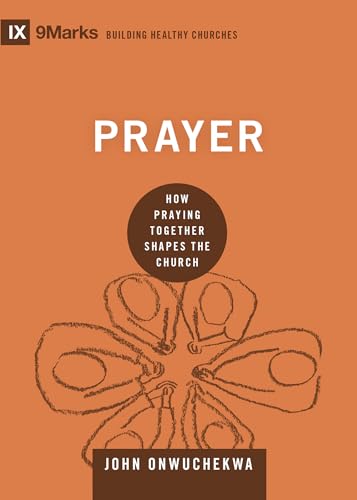
 

Prayer: How Praying Together Shapes the Church (9Marks: Building Healthy Churches): Onwuchekwa, John

Or how about a good book to read? Check out John Onwuchekwa’s contribution to 9Marks’ Building Healthy Churches series: Prayer: How Praying Together Shapes the Church.

And if you’d like to write a review of this book (or another one) as a guest post for the blog, drop me an e-mail, and let’s chat about it.


Trustworthy Bible Teaching and Discipleship Resources

Ligonier is going all out with the freebies! They are offering their entire library of teaching series available to stream and the study guides that accompany many of these series free “until at least June 30”. Dig in and get what’s probably the content equivalent of a seminary degree during quarantine!


How were people saved in the Old Testament? Ever wondered about that?


The resources listed above are not to be understood as a blanket endorsement for the websites on which they appear, or of everything the author or subject of the resource says or does. I do not endorse any person, website, or resource that conflicts with Scripture or the theology outlined in the Statement of Faith and Welcome tabs at the top of this page.
1&2 Peter Bible Study

Living Stones: A Study of 1 & 2 Peter ~ Lesson 10

Previous Lessons: 1, 2, 3, 4, 5, 6, 7, 8, 9

Read 2 Peter 1:12-21

Questions to Consider

1. Briefly review lesson 9 (link above) and/or re-read verses 1-11 for context for today’s passage. Notice that the first word of verse 12 is “therefore”. What is the “therefore” there for?

2. Examine verses 12-15. What “qualities” (12) is Peter referring to? Contemplate the statement Peter makes in verse 12. Why do we, as Christians, need, so often, to be reminded of what we already know? Take a look at some of the many passages of Scripture that describe God’s people as a forgetful people. What are the dangers of being forgetful of biblical truth?

What does Peter mean by the phrases, “as long as I am in this body,” (13) “the putting off of my body will be soon,” (14) and “after my departure” (15)?

How many times, and where, do you see the words “remind” and “recall”? What methods did Peter use to remind his audience, then and now, of what he was teaching, to make sure they, and we, would be able to recall it? What does this tell you about the significance of the written Word of God and how important it is for pastors to preach the Word?

3. Study verses 16-21.

Which event during Jesus’ earthly ministry is Peter talking about in verses 16-18? (Use your cross-references, and read the entire gospel account of this event.) Who is “we” in verses 16 and 18? What did they see and hear with their own eyes and ears during this event? Put yourself in Peter’s sandals and try to imagine the weightiness of meeting two of the pillars of your current faith (Judaism), witnessing the glorified Christ, who is to be the pillar of your current/future faith, and entering into the earthly manifestation of the presence of God and hearing His voice. Let the profundity of this experience be the foundation of your understanding for what Peter is going to say about the written Word in 19-21.

What word does verse 16 start with? What does “for” refer back to? Review your answers to the final question of #2 and to question 3 from lesson 9 (link above), and view verses 16-21 through the lens and context of Peter’s emphasis on the written Word. What is Peter saying about personal experiences versus the written Word? Compare all three of these passages to 2 Timothy 3:16-17 and explain how and why Scripture – not personal experiences, feelings, opinions, dreams and visions, “God told me,” etc. – is preferable to subjective experiences and sufficient for the Christian for “all things that pertain to life and godliness.”

Personal experiences, feelings, etc. come from __________, who are sinful and fallible, but Scripture comes from __________, who is perfect and holy.

Outline the major concepts in 16-21 that Peter is trying to get across about his (and the other apostles’) teaching:

Our teaching is not based on __________ (16a) but on our own __________ (16b, 18). And even weightier and more reliable than our own eyewitness testimony is the __________ (19a)- which does not come from __________ (20-21a), but from __________ (21b).

Compare the idea in verse 19 to these verses. Explain how Jesus is the living Word that gives light to us in a dark world. We will need to commune with Jesus through the written Word until what happens (19b)? Why will we not need to depend on the written Word when Christ returns?

How do these concepts about God’s written Word give you a greater confidence in, and love for Scripture?


Homework

Re-read verses 12-15. Peter knew he was not going to live much longer. How might that knowledge have helped him focus his energies on what was most important for his children in the faith to know? Imagine your doctor told you that you only had three months to live. Write a letter to your church, your children, or someone you’re discipling emphasizing the spiritual truths you think will be most important for them to remember “after your departure”. (I really mean this only as an exercise, not that you should necessarily deliver this letter to your church, children, or disciplee, but you may choose to deliver it using biblical wisdom and discretion.)


Suggested Memory Verse