Bible Study, Mailbag

The Mailbag: Can you recommend a good Bible study for women/teens/kids?

Can you recommend a good women’s Bible study? 

Can you recommend a Bible study we can do with our teens/children?

Next to being asked whether or not a particular teacher is doctrinally sound, this question, or some variation of it, is the one I’m most often asked. And, to be honest, it’s a question I have a love-hate relationship with.

I love (LOVELOVELOVELOVE) that women ask me this question because it means two things: they want to study, or teach their children, the Bible and they want to be sure what they’re learning or teaching is doctrinally sound and in line with Scripture. That’s the central reason my ministry even exists- I want Christian women to be grounded in the Bible and sound doctrine, and it brings me unbelievable joy and encouragement when I see women seek that out.

The hate part has nothing to do with the people asking the question, but with the prevailing line of thought in evangelicalism that has led them to ask the question. Namely, that the people in the pew aren’t capable of studying and understanding the Bible for themselves- they need some Christian celebrity to tell them what it means.

This is scarily reminiscent of the pre-Protestant Reformation ideology that ruled Roman Catholic “Christianity.” The pope and the priests, not the Scriptures themselves, told Christians what to believe. Catholic rulers prohibited the people from having copies of the Bible in their own language and martyred many Bible translators and Reformers. Only the elite, those in leadership, were supposedly able to comprehend the Scriptures and dispense doctrine to the common Christian.

Twentieth and twenty-first century evangelicalism hasn’t taken that direct and violent route, but rather, has gradually brainwashed – whether intentionally or unintentionally – Christians into thinking that if they’re going to study or teach the Bible, they have to have a curriculum, book, or DVD study in order to do so. Teach straight from the Bible with no leader’s guide or student books? It’s practically unheard of in the average church, and hardly anyone is equipped to do so. Why? Because for the past several decades, that’s how Bible study has been presented to church members. You walk into Sunday School and you’re handed a quarterly. Somebody wants to teach a women’s Bible study? She’s sent to peruse the shelves of LifeWay for a popular author, not to her prayer closet and her Bible. Using teaching materials written by somebody else is just assumed.

Well in my opinion, it’s time for another reformation. A Bible study reformation. And, so, with hammer in hand, I have one resolution I want to nail to the door of Church As Usual:

I will no longer help perpetuate the stranglehold the pre-packaged Bible study industry has on Christians. If you are a 21st century believer with access to a Bible in your native language and doctrinally sound preaching and teaching I will not recommend a Bible study book or program to you. You need to pick up the actual Bible and begin studying the God-breathed text for yourself, and teach it to your children. 

“…my conscience is captive to the Word of God. I cannot and will not recant anything, for to go against conscience is neither right nor safe. Here I stand, I can do no other, so help me God. Amen.”1

Ladies, I know you may feel inadequate, but don’t give in to those feelings. Try. Pick a book of the Bible, start at the beginning, and read it through to the end, taking as much time as you need. You might just be pleasantly surprised at how well you grasp it. That’s because, if you’re a believer, the Holy Spirit resides within you and will help you to understand the Word He authored.

Read directly from the Bible to your children. Ask them simple questions about the passage: How was this Bible character obedient or disobedient to God? What can we learn about what God is like from this chapter? What does this passage teach us about prayer, forgiveness, loving each other, kindness, etc.? Explain any big words they might not understand, or look them up together.

Afraid you might get something wrong? Confused by a particular verse? That may happen from time to time, and that’s OK. Bible study is a skill just like everything else. Nobody ever tried a new task and was perfect at it the very first time. But God has not only given you the Holy Spirit who will never lead you into doctrinal error, He has given you a pastor, elders, teachers, and brothers and sisters in the Lord to help disciple you. Ask questions, trust God to illumine your understanding, and keep right on practicing.

There are also a myriad of reference materials that can hone your skills and help as you study your Bible (see the “Additional Resources” section below). And there are some fantastic, easy to read books on theology by trustworthy authors that can give you greater clarity on various points of doctrine. By all means, read as many as you can get your hands on.

But when it’s time for Bible study, study your Bible. When it’s time to teach your children, teach them the Bible. You can do this, ladies. Women with less education and fewer resources than you have access to have done it for centuries and have flourished in their walk with the Lord.

Trust God. Study hard. You can do this.


Additional Resources:

The Mailbag: We Want Bible Study Answers

Bible Study resource articles

Bible Studies by Michelle Lesley

10 Simple Steps to Plain Vanilla Bible Study

Youโ€™re Not as Dumb as You Think You Are: Five Reasons to Put Down that Devotional and Pick Up the Actual Bible

10 Bookmarkable Biblical Resources for Christian Women

Rightly Dividing: 12 Doโ€™s and Donโ€™ts for Effective Bible Study


ยนJust a little tribute to Martin Luther at the Diet of Worms


If you have a question about: a Bible passage, an aspect of theology, a current issue in Christianity, or how to biblically handle a family, life, or church situation, comment below (Iโ€™ll hold all questions in queue {unpublished} for a future edition of The Mailbag) or send me an e-mail. If your question is chosen for publication, your anonymity will be protected.

Mark Bible Study

Mark: Lesson 3

Previous Lessons: 1, 2

Mark 1:21-45

And they went into Capernaum, and immediately on the Sabbath he entered the synagogue and was teaching. 22ย And they were astonished at his teaching, for he taught them as one who had authority, and not as the scribes. 23ย And immediately there was in their synagogue a man with an unclean spirit. And he cried out, 24ย โ€œWhat have you to do with us, Jesus of Nazareth? Have you come to destroy us? I know who you areโ€”the Holy One of God.โ€ 25ย But Jesus rebuked him, saying, โ€œBe silent, and come out of him!โ€ 26ย And the unclean spirit, convulsing him and crying out with a loud voice, came out of him. 27ย And they were all amazed, so that they questioned among themselves, saying, โ€œWhat is this? A new teaching with authority! He commands even the unclean spirits, and they obey him.โ€ 28ย And at once his fame spread everywhere throughout all the surrounding region of Galilee.

29ย And immediately he left the synagogue and entered the house of Simon and Andrew, with James and John. 30ย Now Simon’s mother-in-law lay ill with a fever, and immediately they told him about her. 31ย And he came and took her by the hand and lifted her up, and the fever left her, and she began to serve them.

32ย That evening at sundown they brought to him all who were sick or oppressed by demons. 33ย And the whole city was gathered together at the door. 34ย And he healed many who were sick with various diseases, and cast out many demons. And he would not permit the demons to speak, because they knew him.

35ย And rising very early in the morning, while it was still dark, he departed and went out to a desolate place, and there he prayed. 36ย And Simon and those who were with him searched for him, 37ย and they found him and said to him, โ€œEveryone is looking for you.โ€ 38ย And he said to them, โ€œLet us go on to the next towns, that I may preach there also, for that is why I came out.โ€ 39ย And he went throughout all Galilee, preaching in their synagogues and casting out demons.

40ย And a leper came to him, imploring him, and kneeling said to him, โ€œIf you will, you can make me clean.โ€ 41ย Moved with pity, he stretched out his hand and touched him and said to him, โ€œI will; be clean.โ€42ย And immediately the leprosy left him, and he was made clean. 43ย And Jesus sternly charged him and sent him away at once, 44ย and said to him, โ€œSee that you say nothing to anyone, but go, show yourself to the priest and offer for your cleansing what Moses commanded, for a proof to them.โ€ 45ย But he went out and began to talk freely about it, and to spread the news, so that Jesus could no longer openly enter a town, but was out in desolate places, and people were coming to him from every quarter.


The Holy Bible, English Standard Version. ESVยฎ Permanent Text Editionยฎ (2016). Copyright ยฉ 2001 by Crossway Bibles, a publishing ministry of Good News Publishers.


Questions to Consider

1. In Lesson 2 (link above) we saw that Mark 1:1 introduces Jesus as theย “Christ” and the “Son of God.” How do verses 21-45 demonstrate that Jesus is, indeed, the promised Messiah, and that He is divine? How does Mark 1:1-20ย “credentialize” Jesus and lay the foundation for what he does in verses 21-45?

2. In Mark 1:1-20, Jesus is baptized, successfully endures the “trial by fire” of temptation, calls His first disciples, and begins His ministry. Where, and on which day, according to verse 21, does Jesus’ ministry begin? Is there any significance to the fact that Jesus began His ministry in aย synagogue on the Sabbath? What is a synagogue? Why would this have been a natural and appropriate place for Rabbi Jesus’ ministry to begin? Why did Jesus begin His teaching ministry by seeking out a Jewish audience? According to Mark 1:15, what was the central message of Jesus’ teaching that day?

As we study Mark, watch for the word “Sabbath,” the events that happen on the Sabbath, and their connection to Jesus’ deity, lordship, and authority.

3.ย What are the three main categories of ministry Jesus engages in in 21-45?

4. Examine Jesus’ preaching/teaching ministry in 21-22, 38-39, 45. Where did Jesus teach/preach, primarily? What was the people’s reaction to Jesus’ teaching? What does verse 22 mean when it says, “He taught them as one who had authority, and not as the scribes”? How does verse 38 indicate Jesus’ preaching/teaching was His primary focus in ministry?

5. Examine Jesus’ exorcising of demons in 23-27, 32-34, 39. What was the demon in 23-27 responding to? (21-22) How did this distract people from listening to Jesus teach? How did both Jesus’ teaching (21-22) and the first exorcism (23-27) demonstrate Jesus’ authority and divinity? When the demons testified about who Jesus was (24, 34), what was His response to them? (25, 34) Why wouldn’t Jesus allow them to speak even though what they were saying about Him was true? How did the people react to this miracle? (27-28)

6. Examine the healings Jesus performed in 30-31, 32-34, 40-45. Did Jesus heal Simon’s mother-in-law just so she would get up and serve them? (31) What do you think was her attitude of heart as she “began to serve them?” How did so many people (33-34) know to come to Jesus for healing? (28, 45)

What was the ceremonial statusย of a person with leprosy? How did being ceremonially unclean separate a person from the people of God and from the worship of God? Normally, a priest would be made unclean by touching a leper. But when Jesus, our great high priest, touched lepers, was He made unclean, or the leper made clean? (41-42) How does this healing point to Jesus’ mission to reconcile unclean sinners to a holy God? Compare Jesus’ obedience and submission to God’s word (44) with the former leper’s disobedience to Jesus’ word (45). How might his disobedience have caused difficulty for others who wanted to get to Jesus? (45)

7. Why was Jesus famous? (28, 33, 45) Returning to the last question in #4, do you think Jesus would have preferred to be known more for His teaching or for His miracles? Why?

8. What do verses 35-37 indicate about the importance of prayer to Jesus? Why do you think (28, 33, 45) He got up so early to pray?


Homework

Verses 35-37 give us an idea of how important prayer was to Jesus- so important that, even though He must have been exhausted from the hard work of ministry, He made sacrifices (like sleep) and cordoned off uninterrupted time for it.

Talking with the Lord as you go about the activities of your day is a wonderful way to “pray without ceasing,” but do you also follow Jesus’ example of cordoning off a regular, uninterrupted block of time specifically devoted to prayer, even if you have to make sacrifices to do so? If not, sit down this week, make a plan for your prayer time – when, where, what you’ll need to sacrifice – and implement it daily.


Suggested Memory Verse

Now after John was arrested, Jesusย came into Galilee, proclaiming the gospel of God,ย and saying,ย โ€œThe time is fulfilled, andย the kingdom of God is at hand;ย repent and believe in the gospel.โ€
Mark 1:14-15

Mark Bible Study

Mark: Lesson 2

Previous Lessons: 1

Mark 1:1-20

The beginning of the gospel of Jesus Christ, the Son of God.

2ย As it is written in Isaiah the prophet,

โ€œBehold, I send my messenger before your face,
ย ย ย ย who will prepare your way,
3ย the voice of one crying in the wilderness:
ย ย ย ย โ€˜Prepare the way of the Lord,
ย ย ย ย make his paths straight,โ€™โ€

4ย John appeared, baptizing in the wilderness and proclaiming a baptism of repentance for the forgiveness of sins. 5ย And all the country of Judea and all Jerusalem were going out to him and were being baptized by him in the river Jordan, confessing their sins. 6ย Now John was clothed with camel’s hair and wore a leather belt around his waist and ate locusts and wild honey. 7ย And he preached, saying, โ€œAfter me comes he who is mightier than I, the strap of whose sandals I am not worthy to stoop down and untie. 8ย I have baptized you with water, but he will baptize you with the Holy Spirit.โ€

9ย In those days Jesus came from Nazareth of Galilee and was baptized by John in the Jordan. 10ย And when he came up out of the water, immediately he saw the heavens being torn open and the Spirit descending on him like a dove. 11ย And a voice came from heaven, โ€œYou are my beloved Son; with you I am well pleased.โ€

12ย The Spirit immediately drove him out into the wilderness. 13ย And he was in the wilderness forty days, being tempted by Satan. And he was with the wild animals, and the angels were ministering to him.

14ย Now after John was arrested, Jesus came into Galilee, proclaiming the gospel of God, 15ย and saying, โ€œThe time is fulfilled, and the kingdom of God is at hand; repent and believe in the gospel.โ€

16ย Passing alongside the Sea of Galilee, he saw Simon and Andrew the brother of Simon casting a net into the sea, for they were fishermen. 17ย And Jesus said to them, โ€œFollow me, and I will make you become fishers of men.โ€ 18ย And immediately they left their nets and followed him. 19ย And going on a little farther, he saw James the son of Zebedee and John his brother, who were in their boat mending the nets. 20ย And immediately he called them, and they left their father Zebedee in the boat with the hired servants and followed him.


The Holy Bible, English Standard Version. ESVยฎ Permanent Text Editionยฎ (2016). Copyright ยฉ 2001 by Crossway Bibles, a publishing ministry of Good News Publishers.


Questions to Consider

1.ย Briefly review the background and setting of the book of Mark from lesson 1 (link above).

2. What two titles does Mark ascribe to Jesus in verse 1? What does the word “Christ” mean, and why is it an important title for Jesus? What does it mean that Jesus is the “Son of God“?

3. How many times does Mark use the word “immediately” in chapter 1? How might the repeated use of this word have given Mark’s audience – first century Gentiles – a sense of urgency about Jesus’ mission and their need for salvation? Does it give you a sense of urgency about these things as you read?

4. What was John the Baptist’s mission as prophesied by Isaiah? (2-3) How did John “flesh out” that mission? (4) How did John’s message of repentance and the baptism of repentance help “prepare the way of the Lord” – “prime the pump” or get people’s hearts ready – for the gospel Jesus would preach? (5, 7-8) What can we learn about John’s character from this passage?

5. How does John’s message of repentance preceding Jesus’ message of the gospel demonstrate that repentance is a crucial aspect of saving faith in Christ? (1-15) Would God have sent John to preach the message of repentance if He did not consider it a vital part of salvation? What does Mark indicate was the theme of the message Jesus preached? (15) Some people say repentance is not necessary for salvation- that only belief in Jesus is necessary. Did Jesus consider repentance to be part of the gospel? (15)

6. Examine verses 9-11. Since Jesus was without sin, why did He take part in a baptism of repentance? How does Jesus’ baptism set an example for believers to follow Him in being baptized? How does this passage reveal the Trinity (God the Father, God the Son, God the Holy Spirit) to us? How does this passage refute the false teaching of modalism/Sabellianismย and show us that God is one God in three Persons?

7. Who led Jesus to the place where He would be tempted by Satan? (12) Can we surmise from this that it was God’s plan for Jesus to undergo temptation? Why?

8. What two main characteristics did Simon and Andrew, and James and John, have in common? (16,19) Today, we might call them “blue collar” or “rednecks”- why do you think Jesus chose simple, uneducated fishermen as His first followers? (16-20) What message might this have sent first century Gentiles hearing, for the first time, about Jesus and His disciples? What did Jesus mean when He said He would make them “fishers of men”? (17) Considering what you know about them from the rest of the New Testament, did Simon, Andrew, James, and John become fishers of men?

9. What is the overall theme, purpose, or main idea of Mark 1:1-20?


Homework

Imagine yourself as a first century Gentile in a polytheistic society. You have little, if any, knowledge of the God of the Jews or the Old Testament, but you’re curious about this Jesus and why some of your Jewish and Gentile neighbors have begun to worship Him. Make a list of five to ten questions you’re going to want answered about Jesus so you can decide whether or not you want to worship Him, too.

Keep your list of questions handy as we study Mark. As you discover the answers to each question, write them down. Be reminded of who Jesus is and why He is worthy of your faith, worship, and obedience. Share what you’ve discovered with an unbelieving friend who needs to know Jesus.


Suggested Memory Verse

Now after John was arrested, Jesusย came into Galilee, proclaiming the gospel of God,ย and saying,ย โ€œThe time is fulfilled, andย the kingdom of God is at hand;ย repent and believe in the gospel.โ€
Mark 1:14-15

Mark Bible Study

Mark: Lesson 1

Welcome to our new study- Mark: God’s Good News for the Gentiles. “Tell me the story of Jesus,” Fanny Crosby wrote in her timeless hymn, and that’s just what the Gospel of Mark does. From John the Baptist’s preparing the way of the Lord to Jesus’ triumph over the grave, we’ll be examining the story of Jesus, up close and personal, over the next few months.

Let’s get started!

Introduction to the book of Mark:

Before we begin studying a book of the Bible, it’s very important that we understand some things about that book. We need to know…

Who the author was and anything we might be able to find out about him or his background.

Who the audience of the book is: Jews or Gentiles? Old Testament Israelites or New Testament Christians? This will help us understand the author’s purpose and approach to what he’s writing.

What kind of biblical literature we’re looking at. We approach books of history differently than books of wisdom, books of wisdom differently than books of prophecy, etc.

What the purpose of the book is. Was it written to encourage? Rebuke? Warn?

What the historical backdrop is for the book. Is Israel at war? At peace? In exile? Under a bad king? Good king? Understanding the historical events surrounding a piece of writing help us understand what was written and why it was written.

When the book was written. Where does the book fall on the timeline of biblical history? This is especially important for Old Testament books which are not always arranged in chronological order.

So this week, before we start studying the actual text of the book of Mark, we need to lay the foundation to understanding the book by finding the answers to these questions.

Read the following overviews of the book of Mark, taking notes on anything that might aid your understanding of the book, and answer the questions below:

Bible Introductions: Markย at Grace to You

Overview of the Book of Markย at Reformed Answers

Gospel of Mark – Bible Survey at Got Questions

1. Who wrote the book of Mark? What was his relationship to Paul? Peter? What is an amanuensis? Does this term describe Mark?

2. What is the approximate date Mark was written? About how long after Jesus’ ascension was this?

3. Who is the intended audience of the book of Mark? What evidence is there that this was the case?

4. Which genre of biblical literature is the book of Mark: law, history, wisdom, poetry, narrative, epistles, or prophecy/apocalyptic? What does this this tell us about the approach we should take when studying this book versus our approach to books of other genres?

5. What is the theme or purpose of the book of Mark?

6.ย Who are the main characters in the book of Mark? Was Mark one of the twelve apostles? Does Mark make an appearance in his own book?

7. Where do the events in the book of Mark take place? Where was Mark when he wrote this book? (Sometimes, a good Bible map like this oneย and this oneย can be helpful.) What was the political situation in this area at the time Mark was writing his gospel?

8. What else did you learn about Mark or the setting of this book that might help you understand the text of the book better?

Bible Study

Bible Book Backgrounds: Why You Need Them and Where to Find Them

It’s time for your daily Bible study. You’ve decided to study Habakkuk or Philippians or Lamentations.

When you pick up a random book of the Bible to study it, how do you know…

…what’s going on in biblical history at the time the book was written
…when the book was written and by whom
…who the intended audience was
…where, geographically, the action takes place
…cultural aspects of the period that will help you better understand allusions and customs?

Unless you’ve done a considerable amount of study in the field of biblical history and the ancient Middle East, the answer is: you probably don’t know all of those things. And, as a result, your study of the book you’ve chosen probably isn’t going to be as fully-orbed as it could be.

Not having done any advanced study in those areas myself, I learned a while back to rely on those who have, and who have taken the time to share their knowledge with the rest of us. When I study, teach, or write a study on a book of the Bible, I always start out by delving into the “story behind the story.” How?

Macro Bible Study 

Reading every book of the Bible is the best way to get a good grip on the meta-narrative of Scripture. Because the books of the Bible aren’t always arranged in order of the events they contain and because many books overlap in their events and timing, I highly recommend a chronological read-through of the Bible at least every few years.

Pay Attention to the Text

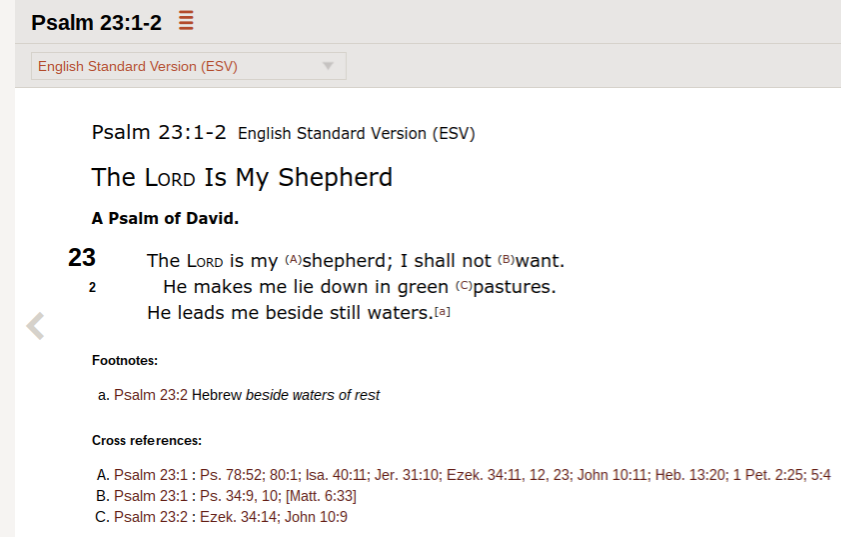
Sometimes the details you’re looking for are in the text itself. Perhaps a certain month and day are mentioned, or “during the reign of King ____.” If the text specifies a certain city or country, look it up on a good Bible map to get your bearings. Sometimes a particular custom or expression is explained as an aside, such as in 1 Samuel 9:9. Some books specify who they’re written to in the first few verses. Also be sure to use your Bible’s footnotes and cross reference notations, and look up any related verses that can bring clarity.

Footnotes explain wording.
Cross references suggest related passages.
(BibleGateway.com)

Study Bibles

There are some fantastic study Bibles out there (and also some duds you’ll want to avoid). Here are a few I highly recommend:

  • The MacArthur Study Bible Great theology, clear explanations. The only thing I would improve if I could is that I wish there were more notes on the Old Testament. (Also see “Bible Introductions” below.)
  • The Faithlife Study Bible app It’s free! Lots of great notes, articles, and diagrams, and because itโ€™s an app, itโ€™s got links, videos, and other great features.
  • The ESV Study Bible Super comprehensive. Itโ€™s like having a set of commentaries and the entire text of Scripture in one book.
  • The ESV Archaeology Study Bible This one is really good for getting a feel for what life, culture, and customs were like in biblical times – food, family, work, neighboring pagan nations, etc. It’s also very helpful with biblical geography.

“Bible Book Backgrounds”

This would be an overview, or survey, to read before you begin the book of Scripture you’ll be studying. I’ve found it’s helpful to use a survey of the book as a foundation and framework for subsequent study of the text.

While some commentaries contain an introduction to each book of the Bible, many do not. But I’ve found several online sites that provide helpful Bible Book Backgrounds:

Bible Introductions at Grace to You- A thorough overview of every book of the Bible, written by John MacArthur. These are the same introductions you’ll find in the MacArthur Study Bible.

Bible Book Overviews at Reformed Answers- Just put the name of the book you’re looking for in the search bar, followed by the word “overview.” You’ll also find overviews of the literary divisions of the Bible, such as an overview of the epistles, wisdom literature, etc.

Bible Surveys at Got Questions- Use the search bar to find the book survey you’re looking for. All surveys except the four gospels are entitled, “Book of ____ – Bible Survey.” You’ll find Matthew, Mark, Luke, and John as, “Gospel of ____.”

Helpful and (mostly) free Greek and Hebrew resources you might not know about at The Cripplegate- Sometimes getting some help with the original languages can also aid in your understanding of the book’s background and setting.

Dig in. Study. Search it out. Doing a “background check” on the book you’re studying is a great way to gain a deeper understanding and appreciation of God’s word.