1&2 Peter Bible Study

Living Stones: A Study of 1 & 2 Peter ~ Lesson 12

Previous Lessons: 1, 2, 3, 4, 5, 6, 7, 8, 9, 10, 11

Read 2 Peter 3

Questions to Consider

1. Read verse 1, noticing the words “beloved” and “sincere mind”. What do these words tell you about how Peter regarded his audience as opposed to…say…how Paul regarded the Galatian Christians?

2. Compare verses 1-3 with Jude 17-19. What does it mean for someone to be a “scoffer”? Make a list of all the words and phrases Peter and Jude use to describe scoffers. Do these words and phrases sound like they are describing lost people or saved people? Examine 2 Peter 2 (or lesson 11, link above) and the remainder of Jude – which words and phrases indicate that some scoffers are false converts (people who claim to be and/or believe themselves to be saved, but aren’t)?

Describe a prototypical lost person (makes no claim to be a Christian) scoffer. Describe a prototypical false convert scoffer. (These might be people you know personally, celebrities, authors, etc.) What’s something you might say, or a question you might ask each of these people as a lead-in to a gospel conversation?

3. Verse 4- What are the scoffers scoffing about? Have you ever heard a lost person scoff at or ridicule this? Read verses 5-7. How does Peter address the argument the scoffers make? What does it mean that they “deliberately overlook” the facts Peter lays out in 5-7? Explain why, in order for a scoffer to hold an anti-biblical view (evolution, abortion, egalitarianism, sexual perversion, etc.), she must first “deliberately overlook” biblical facts or “suppress the truth in unrighteousness.”

4. Examine verses 5-13. What is the main topic this passage deals with? How does Peter compare and contrast God’s creation (and first destruction) of the earth with His final destruction of the earth? In what ways will the final destruction be like the first destruction (the Flood)? What does this have to do with the return of Christ (4)?

5. Have you ever been in a situation in which a scoffer made an argument that seemed plausible, or asked a question you couldn’t answer (ex: If God is so good and so powerful, why does He allow evil and suffering?), and you knew she was wrong, but you didn’t know what the biblical answer was? Did you feel confused and anxious? That’s kind of the situation Peter’s audience is in here. Explain each of the components of Peter’s answer to the scoffers’ argument:

5-7-

8-10-

11-13-

How would Peter’s answer to the scoffers’ argument have set the minds of his audience at ease, brought them comfort, and given them hope?

6. Read verses 8, 9, and 15a together. Compare and contrast our impatience for the Lord’s return with His patience toward the world. Why is the Lord taking so long – from our perspective – to come back?

7. Using your cross-references, what does verse 9 teach us about the heart of God toward the unregenerate?

8. Examine verses 11-18. “What sort of people ought you to be in lives of holiness and godliness” considering that Christ could return at any moment? Make a list of the instructions Peter gives us for the way we should live as we await the Lord’s return:

Be sure to…                                                  Be sure NOT to…


Homework

Second Peter 3:8 is often used by Old Earth Creationists and Theistic Evolutionists as a prooftext to explain how God could have taken millions of years to create the earth. Examining this verse in the entire context of chapter 3, is that what Peter, inspired by the Holy Spirit, intended when he wrote this verse? What was he intending to convey when he wrote this? Explain why it’s important to always use verses in their right context when building doctrine, claiming promises, supporting an argument, applying Scripture to our personal circumstances, etc.


Suggested Memory Verse

Be sure to come back next week as we wrap up
Living Stones: A Study of 1&2 Peter!


Book Reviews, Guest Posts

Guest Post: A Review of Jackie Hill-Perry’s “Jude: Contending for the Faith in Today’s Culture”

If your theology pretty much matches up with mine (as outlined in my “Welcome” and “Statement of Faith” tabs in the blue menu bar at the top of this page) and you’d like to contribute a guest post, drop me an e-mail at MichelleLesley1@yahoo.com, and let’s chat about it.


For more information on Jackie Hill-Perry, please click here.

A Review of Jackie Hill-Perry’s
“Jude: Contending for the Faith in Today’s Culture”

by: Thomas Coutouzis

There is an old adage that says, “You can’t judge a book by its cover”. The implication is that the outward appearance of a book is not a reliable indicator of the content. This can be true at times, however, I have found more often than not that you actually can judge a book by its cover, probably more today than ever. In the case of Jackie Hill-Perry’s study on Jude, you can indeed judge a book by its cover. I will tell you why shortly.

I was asked if I would read the Jackie Hill-Perry study on Jude and write a review since I have written a commentary on Jude. I have studied extensively in Jude and have a passion for defending the faith which was once for all handed down to the saints. Our Lord doesn’t need us to defend His truth or His name, but He chooses to use us and charges us to contend against false teaching.

I don’t know much about Ms. Perry. I saw her in the excellent documentary made by Brandon Kimber called, American Gospel: Christ Alone. In this documentary she and a multitude of other saints presented the tenets of the prosperity gospel and began to dismantle them piece by piece with Scripture until you could see the man-made anti-Christ teaching it really was. What was surprising is when she posted pictures on social media of her with a variety of false teachers. The first thought that immediately popped into my mind was, “How can you teach a study on Jude and then go and befriend those who preach a false gospel?” These two things cannot coexist together. After all, the apostle Paul said, “Do not be bound together with unbelievers; for what partnership have righteousness and lawlessness, or what fellowship has light with darkness?” 2 Corinthians 6:14. Not to mention that we should not even give a false teacher a greeting (2 John 10-11). My suspicion was that Ms. Perry didn’t fully understand the text and as I read and listened to our dear sister’s messages I found that this is most likely the case.

I started with looking over the cover first. As a person with an Ad Agency background I found that the cover missed the entire theme of Jude. Jude is a polemic epistle. Polemic comes from the Greek word πόλεμος (polemos), which means “war/battle/fight”. Thus Jude is a call to arms for the church to stand up and go to war with false teachers. In verse 3, Jude challenges the believer to contend for the faith earnestly (ἐπαγωνίζομαι – epagonizomai). It gives us our English word, “agonize”. The word denotes a struggle against a competitor or enemy. In this case, Jude is using the word figuratively to describe going to battle against an enemy. It is combat against a foe. The word is used in the present tense denoting that the believer is to constantly combat false teachers. False teachers will never rest spreading heresy, neither should we stop opposing them with the truth. With this said, the cover (image at the top of this article) was an intersection on a city street with three cross walks and various people making their way to and fro. This cover in no way encapsulates the theme of Jude. It is a misrepresentation of the message of this epistle. The theme of Jude is a fight against those wolves in sheep’s clothing who have sneaked into the church with the purpose of turning it away from God. My commentary has a shield with two swords on the cover. This sets the tone for what you are about to read. Unfortunately, the creative team at LifeWay and Ms. Perry missed the mark on the cover for this study.

In this study Ms. Perry did six teaching segments and one summary segment. That said, Her teaching segments skipped over verses 12-13 and 16-19 which are very significant to understanding the text. However, the book does cover these, but not in any depth. Ms. Perry is a godly woman who has a passion for her King. The Lord has saved her, like all of us, from a life of great rebellion. You can see the love and passion she has for Him as she presents each of her messages.

In listening to the first segment (Jude 1-2) Ms. Perry understands that Jude is starting off his letter gently for a reason. The words that follow are going to be strong so he wants to make sure that the elect understand that their faith is secure before he drops some hard words regarding apostates. She makes this point very clear. She also speaks to Jude reminding them that the elect’s faith is secure for all time.

What I believe was missing in her teaching and the book was the historical context for Jude. What ancient heresies were around when Jude wrote the book that would give insight to his remarks? How do we know Jude was Jesus’ brother and not Judas son of James? There are Scriptures that prove Jude was Jesus’ brother, but why were they not cited as proof to whom this was (Mark 6:3)? There are also Scriptures that point to Jude’s unbelief in Christ like John 7:5. These are all important not only in pointing to lineage and authorship, but that God redeemed him (Acts 1:14) from his unbelief and why he is so passionate to contend for the faith. How can we understand the book if we don’t understand the man’s roots?

In the section of the book that covered Jude 1-2 I was perplexed as to why there was teaching about how the ancients wrote letters. The book displayed a letter from a Roman soldier named Apion and wanted the reader to compare them to Paul’s greetings in Ephesians 1:1-2, 1 Corinthians 1:1-3, and John’s greeting in Revelation 1:4-5. It struck me more as a filler to take up space rather than to help the reader to understand what this letter means.

In verse 3, Ms. Perry does not define the Greek word for “contend earnestly” (ἐπαγωνίζομαι – epagonizomai), but she does speak to one aspect of its usage which was regarding a struggle in athletic contests. Fighting to win the wreath. Indeed, the people of this time would be familiar with the Olympic games and the struggle to win, but that is not how Jude is using this word. Epagonizomai” combines the preposition “epi” meaning, “focused on” and “agon” which means “a contest”. In Greek, a preposition intensifies the meaning of the word to show the ferocity of the fight. In this case, Jude is using it figuratively for military combat. A fight in which your very life hangs in the balance and you must fight until the last breath. This is your enemy, not a competitor. You shake hands after a contest with a competitor. In battle, your enemy will gloat over your dead body because he seeks your destruction. Such are false teachers. They seek your destruction. The term is in the present tense which indicates that challenging false teachers is a constant. The Christian is to do this until he breathes his last.

Jude 3 is the cornerstone of the epistle. If you incorrectly interpret this verse, then the meaning of the rest of the book will crumble to the ground. Ms. Perry misses the militaristic intent. This term would indeed be recognized by the hearer in the context of Rome and its gladiators who would “epagonizomai”. This misunderstanding might be why Ms. Perry has associated with apostates like Jenn Johnson. She doesn’t see them as a threat to her or Christ. If you don’t see your enemy as a threat he is going to lure you in and destroy you.

To further show where Ms. Perry misses the mark on this verse, she rightly posits in the accompanying teaching video (#2) that those who contend with hatred in their hearts are wrong. There are infamous discernment blogs out there that excoriate both apostate and brethren alike, attacking their character more than the error. There is no civility. She gives an example of people holding up picket signs “outside”. It struck me as a reference to the infamous Westboro Baptist Church. They certainly are filled with hatred, thus in need of redemption. Ms. Perry states, “It might be that these people have contended for the faith wrong because they have taken the imagery of contending and divorced it from love.” I believe she is referring to these people with picket signs who have hatred in their hearts and not to the church to which Jude wrote his epistle. It was hard to tell. Right after saying this she posits that because Jude called these Christians “beloved” and said “may love be multiplied to you” that Jude is telling them that they are to contend for the faith in love. She further explains, “So when he (Jude) tells them to contend for the faith, love is to be assumed as an active participant in how they do it.”

First, she is reading something into the text that is not there. This is eisegesis (reading one’s own bias into the text that is not the author’s original intent). There is no connection with Jude’s greeting regarding his love for them and love being multiplied to them that would imply that he is exhorting them to contend for the faith in love, especially with his gut punch to them in verse 3. When I first heard this it almost sounded as if she was suggesting that the recipients of this epistle were not contending for the faith in love, but as I listened to it for context a few more times I don’t believe that she was drawing this conclusion.

Regardless, the aforementioned eisegesis of Jude exhorting the church to contend for the faith in love stands. The believers in Jerusalem were passive toward sin. These Christians were allowing false teachers to be a part of the church, thereby allowing in heresy, and turning believers away to a different Christ. Jude is emphatically calling believers to arms to fight against these heretics who have sneaked in. They are going to need to start church discipline immediately because when Jude’s letter is read, they will recognize these wolves. Some of these apostates might be their friends with whom they must now have hard conversations. Relationships will be severed and hearts will be broken.

Ms. Perry didn’t really explain in depth what contending for the faith in love looks like. We certainly should contend for the faith without maligning the character of others or abusive speech. Ms. Perry didn’t distinguish the line other than hatred, cynicism, and cruelty. I was under the impression that there is no room for stern reproofs for apostates. I believe Titus 1:13 and some of Paul’s stern reproofs (See 1 Corinthians 5, 2 Corinthians 12-13, and Galatians) would not side with her. You can be loving and stern in a rebuke, especially when someone is extremely hard-hearted. Ultimately, we should care so much about others’ well being that they see our kindness and care for them, but this doesn’t negate that there might be a time when words need to be stronger in order to penetrate a heart hardened by sin.

This leads me to my next point. In terms of the depth of the study and application, I found this study to be severely lacking. The book’s subtitle is, “Contending for the Faith in Today’s Culture”, but there are no examples of modern day apostasy. Jude clearly points out the attributes of apostates. These were not taught in the teaching video, but the book did scratch the surface of some of these attributes. Many of the study questions asked, “What do you think…?” instead of “What does the text mean?” The “What do you think?” questions lead to subjective answers rather than objective. The line between truth and error is blurred with subjective questioning. When we read a text we want to discern what God actually means.

Here are more examples:

Regarding Jude 6 and the angels that were having sex with women and spawning a super race: “Do you think God should have judged them? Why or Why not?”

Why would you ask that question? Of course they should have been judged!

What was so surprising is that there was no application as to how this relates to identifying an apostate. The study showed the demons in the abyss as a clear judgment from God, but did not relate it to the coming judgment of apostates who are like these demons. The book and teaching didn’t make the correlation that these demons went outside of God’s sexual boundaries that he established in Genesis 2:24. One of the easiest things to discern is that apostates live to go outside the boundaries that God sets with His Law. In this case, and in the case of Sodom, Jude is showing that apostates are the foremost of the sexually immoral. Where there is a sex scandal in the church, you will find an apostate. They will break every one of God’s sexual boundaries, whether heterosexual sex outside of marriage, homosexuality, polyamory, pedophilia, incest, rape, etc. Sexual sin is a judgment from God, but that is never discussed, nor pointing out that men and women in the church venturing outside of God’s sexual boundaries are most likely unregenerate.

Regarding Jude 8 when Jude refers to apostates as dreamers, Ms. Perry gives the transliterated word “enupniazomai”, but doesn’t define it. Why would you give the Greek word that Jude uses and no definition? It means “in a dream state/in a dream while asleep.” Jude is obviously using this term figuratively to denote that apostates are daydreamers. They daydream about sex, money, fame, luxury, and even revenge. Daydreams are a form of self-exaltation. Apostates will go to whatever end to get these things that they lust after; thus they defile their flesh. False teachers do declare divine revelation through dreams, but that is not what they are doing here because these dreams that Jude speaks of lead them to defile their flesh.

Regarding Jude 12-13, questions were asked like:

“What four elements of nature did Jude use to describe the ungodly teachers?” Questions like this will not aid the reader in understanding what Jude means when he says apostates are “autumn trees without fruit, doubly dead, uprooted;”.

There are many more examples that I could give, but it is not necessary. I don’t believe this study will thoroughly equip you for battle against apostates, not all of which are infamous false teachers like Steven Furtick or TD Jakes. Many are small town church pastors or congregants in our own churches that are either dormant or actively working to lead people away from God. They are regular church attenders like you and me.

With this study we can judge a book by its cover. It is not that the study is heresy, rather it barely scratches the surface of a potent book. I can only speculate as to why Ms. Perry after teaching a study on Jude would associate with those who meet all the criteria Jude gives for apostasy. This epistle should aid in our discernment of counterfeit Christians. If it doesn’t, then we are not heeding the necessity with which Jude wrote this book and commands us to contend earnestly for the faith until we are called home.


Thomas Coutouzis is the author of Agonizing For The Faith: A Biblical Exposition of Jude as well as an epic fantasy series that is partial allegory called Athanasia (The Great Insurrection (part 1) and The Unknown Lands (part 2)). Thomas resides in North Carolina with his wife and two children, is an expositional Bible teacher at his church. He welcomes you to follow him on Twitter.
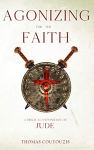

Book Giveaway: Thomas would like to bless two readers with a copy of his book Agonizing For The Faith: A Biblical Exposition of Jude. To enter the giveaway, drop Thomas an e-mail at thomascoutouzis@gmail.com before 11:59 p.m., Friday, April 24 and let him know something you liked or learned from his review of Jackie Hill-Perry’s book. Thomas will choose the winners and notify them by e-mail.


1&2 Peter Bible Study

Living Stones: A Study of 1 & 2 Peter ~ Lesson 11

Previous Lessons: 1, 2, 3, 4, 5, 6, 7, 8, 9,10

Read 2 Peter 2

Questions to Consider

1. Examine the first half of verse 1. Using your cross references and these passages, which “people” did false prophets arise among? Who were some of these false prophets? Were false prophets/teachers only an Old Testament problem? What are the similarities between Old Testament false prophets and New Testament false teachers? If false teachers were a problem in the New Testament church –  while the apostles were still around teaching the church in person and writing Holy Spirit inspired Scripture to them – do you think false teachers might still pose a problem in the church today?

2. Examine verses 1-3. Explain, in your own words…

a) what false teachers will do

b) how people will respond to false teachers

c) how people will be affected by false teachers

d) what will happen to false teachers.

Look closely at the phrase “denying the Master who bought them” (1b). Does this verse indicate that someone who is genuinely saved can lose her salvation, or does it indicate that this person is either a false convert or a fraud? Compare this phrase with “Their condemnation from long ago is not idle” (3b), and these passages. Explain what the Bible says about false converts and the spiritual condition of those who claim and appear to be Christians, yet teach a false gospel.

3. Examine verses 4-10a. This is a very long sentence. Take note of where the sentence begins and where it ends. This is also an “if/then” sentence: If X happens, then Y will happen. Chart out the “ifs” and the “then” in this sentence (it may also help to chart out the “buts” to distinguish them from the “ifs” and the “then”):

        If…                               (But…)                                Then…

(4a)-                              (4b)-                                      (9)-

(5a)-                              (5b)-

(6)-

(7)-

(If you have time, go back to the Old Testament stories of Noah and Lot to refresh your memory on the details of these events.) What are the examples Peter cites in 4-8 that “the Lord knows how to rescue the godly from trials” (9a)? What are the examples in 4-8 that the Lord knows how to “keep the unrighteous under punishment until the day of judgment” (9b)? In your own words summarize the point Peter is making in this passage.

4. Read 10b-11. Who are “the glorious ones”? (10b) (Don’t forget to use your footnotes and cross-references.) Explain the comparison Peter is making between false teachers and angels in terms of attitude, audacity, power, and position. Who exercises better “common sense” (for lack of a better term) and more fear of the Lord?

5. Examine verses 12-19. Think about the false teachers you’re familiar with (or explore some at the “Popular False Teachers & Unbiblical Trends” tab in the blue menu bar at the top of this page) and explain the metaphors Peter uses for false teachers in this passage- how are false teachers like “irrational animals” (12), “blots and blemishes” (13), “waterless springs” and “mists driven by a storm” (17)?

In this passage, list all of the…

a) false teacher’s motives

b) false teacher’s sins

c) false teacher’s actions

d) consequences for false teachers

e) ways false teachers impact their followers

Read the story of Balaam and explain what Peter means in verses 15-16.

6. Read verses 20-22 in light of what you studied in question 1 about losing one’s salvation versus being a false convert:

Look closely at 20-22, and look at the phrase “denying the Master who bought them” (1b). Do these verses indicate that someone who is genuinely saved can lose her salvation, or does it indicate that this person is either a false convert or a fraud? Compare this phrase with “Their condemnation from long ago is not idle” (3b), and these passages. Explain what the Bible says about false converts and the spiritual condition of those who claim and appear to be Christians, yet teach a false gospel.

Why is it better for someone “never to have known the way of righteousness than after knowing it to turn back”? (21) Compare with these Scriptures. Have you ever known someone who lived life as a “Christian” for a while and then “left the faith” altogether? How often does someone like that later get genuinely saved?

7. Briefly review from lesson 10 (link above), Peter’s emphasis on the supremacy of the written Word over and above personal experiences, and answer this question: Why do you think Peter referred back to the Old Testament so many times in this chapter instead of telling his audience anecdotes about a false teachers he knew of at various New Testament churches?

8. In this chapter, does Peter make it sound like false teachers are rare or no big deal? Imagine you’re Peter and a reporter is interviewing you. She says, “Peter, tell me about the problem of false teachers in the church.” How would you answer?


Homework

a) Read 2 Peter 2 and the book of Jude side by side. What similarities do you notice? What differences? Why was it so important to warn the early church about false teachers?

b) You may wish to read my article Can a False Teacher Be a Christian?


Suggested Memory Verse

1&2 Peter Bible Study

Living Stones: A Study of 1 & 2 Peter ~ Lesson 10

Previous Lessons: 1, 2, 3, 4, 5, 6, 7, 8, 9

Read 2 Peter 1:12-21

Questions to Consider

1. Briefly review lesson 9 (link above) and/or re-read verses 1-11 for context for today’s passage. Notice that the first word of verse 12 is “therefore”. What is the “therefore” there for?

2. Examine verses 12-15. What “qualities” (12) is Peter referring to? Contemplate the statement Peter makes in verse 12. Why do we, as Christians, need, so often, to be reminded of what we already know? Take a look at some of the many passages of Scripture that describe God’s people as a forgetful people. What are the dangers of being forgetful of biblical truth?

What does Peter mean by the phrases, “as long as I am in this body,” (13) “the putting off of my body will be soon,” (14) and “after my departure” (15)?

How many times, and where, do you see the words “remind” and “recall”? What methods did Peter use to remind his audience, then and now, of what he was teaching, to make sure they, and we, would be able to recall it? What does this tell you about the significance of the written Word of God and how important it is for pastors to preach the Word?

3. Study verses 16-21.

Which event during Jesus’ earthly ministry is Peter talking about in verses 16-18? (Use your cross-references, and read the entire gospel account of this event.) Who is “we” in verses 16 and 18? What did they see and hear with their own eyes and ears during this event? Put yourself in Peter’s sandals and try to imagine the weightiness of meeting two of the pillars of your current faith (Judaism), witnessing the glorified Christ, who is to be the pillar of your current/future faith, and entering into the earthly manifestation of the presence of God and hearing His voice. Let the profundity of this experience be the foundation of your understanding for what Peter is going to say about the written Word in 19-21.

What word does verse 16 start with? What does “for” refer back to? Review your answers to the final question of #2 and to question 3 from lesson 9 (link above), and view verses 16-21 through the lens and context of Peter’s emphasis on the written Word. What is Peter saying about personal experiences versus the written Word? Compare all three of these passages to 2 Timothy 3:16-17 and explain how and why Scripture – not personal experiences, feelings, opinions, dreams and visions, “God told me,” etc. – is preferable to subjective experiences and sufficient for the Christian for “all things that pertain to life and godliness.”

Personal experiences, feelings, etc. come from __________, who are sinful and fallible, but Scripture comes from __________, who is perfect and holy.

Outline the major concepts in 16-21 that Peter is trying to get across about his (and the other apostles’) teaching:

Our teaching is not based on __________ (16a) but on our own __________ (16b, 18). And even weightier and more reliable than our own eyewitness testimony is the __________ (19a)- which does not come from __________ (20-21a), but from __________ (21b).

Compare the idea in verse 19 to these verses. Explain how Jesus is the living Word that gives light to us in a dark world. We will need to commune with Jesus through the written Word until what happens (19b)? Why will we not need to depend on the written Word when Christ returns?

How do these concepts about God’s written Word give you a greater confidence in, and love for Scripture?


Homework

Re-read verses 12-15. Peter knew he was not going to live much longer. How might that knowledge have helped him focus his energies on what was most important for his children in the faith to know? Imagine your doctor told you that you only had three months to live. Write a letter to your church, your children, or someone you’re discipling emphasizing the spiritual truths you think will be most important for them to remember “after your departure”. (I really mean this only as an exercise, not that you should necessarily deliver this letter to your church, children, or disciplee, but you may choose to deliver it using biblical wisdom and discretion.)


Suggested Memory Verse

1&2 Peter Bible Study

Living Stones: A Study of 1 & 2 Peter ~ Lesson 9

Previous Lessons: 1, 2, 3, 4, 5, 6, 7, 8

Read 2 Peter 1:1-11

Questions to Consider

1. Briefly review your notes from the introduction to 2 Peter in lesson 8 (link above). What is the main theme or purpose of 2 Peter?

2. Examine verses 1-2. How does Peter credential himself? (1) How does he characterize the audience of his letter? (2) Compare the greeting of 2 Peter to the greetings of several other epistles (ex: 2 Thessalonians, 1 Timothy, Jude, Ephesians, etc.). What similarities do you notice? Differences? What is the significance of Peter’s characterization of his audience as: “those who have obtained a faith of equal standing with ours” (2)? What does this statement demonstrate about Peter’s view of himself? What would it have said to the Christians of his day who might have viewed him as a “celebrity”?

3. Study verses 3-4. What has God given us? (3a) Through what (in what way, by what means)? (3b) How do we obtain “knowledge of Him”? Is the following a fair statement based on concepts in verse 3 (and 19-21): “God gives us everything we need for godly living as we gain knowledge of Him. And the way we gain knowledge of Him is through the study of His Word.”? Why or why not? Read 3-4 alongside 2 Timothy 3:16-17. What similar concepts do both passages express about the primacy and sufficiency of God’s Word for living the Christian life?

How do we know what God’s “precious and very great promises” (4) to us are? What does it mean that we are “partakers of the divine nature”? (4) (Hint: Use your cross-references.)

4. Study verses 5-11. Verse 5 begins with, “For this very reason…”. For what reason (3-4) is Peter about to give the instructions in 5-11?

What does it mean to “supplement” something with something else? (Maybe think about taking a vitamin supplement.) Give a brief definition for each of the qualities Peter mentions in 5-7. Then, explain why each quality needs to be supplemented with its partner. (Ex: Why does faith need to be supplemented with virtue? Why does knowledge need to be supplemented with self-control? etc.) What is the difference between “brotherly affection” and “love”?

Peter states 8b in the negative (keep you from being ineffective…unfruitful). Restate this part of the verse in the positive (ex: help you to be…), to explain the reason Peter gives for increasing in the qualities in verses 5-7. What is the effect when a Christian lacks these qualities? (9) Therefore, because of 8 and because of 9, do _____ (10), and ______ (11) will be the result.

Compare verse 10 with 2 Corinthians 13:5. What does verse 10 mean when it says to “make your calling and election sure”? Is verse 11 saying that we are saved (entrance into the Kingdom) by our good works or by trying to be people of good character? How do you know?

5. How are verses 1-11 foundational to the theme of 2 Peter: “Avoiding false doctrine and false teachers”? Why is it important to be well grounded in sound doctrine and sound Christian character qualities if we want to be able to identify, avoid, and warn others away from false doctrine and false teachers?


Homework

How would you explain to a Mormon friend that “partakers of the divine nature” (4) does not mean that we become gods when we die? Or to a New Apostolic Reformation friend that this verse does not mean that we can speak things into existence like God can? Get a Christian friend to role play the discussion with you, and don’t forget to use your cross-references.


Suggested Memory Verse