Happy Wednesday, Ladies! It’s time to kick off our next Bible study:
…..with a fun title pic contest!
What does God’s Word teach us about…itself? As we make our way through this lovely psalm, you’ll learn about loving God’s Word, the various ways Scripture helps us in our daily lives, and the reliability of God’s Word. But most importantly, you’ll learn about and increase in your love for the God of the Word.
Weighing in at a hefty 176 verses, Psalm 119 is well known as the longest chapter in the Bible, and is similar in length to Philippians and James. Think you can memorize it? I challenge you to try!
Psalm 119 will be an “expositorially topical” (an expository deep dive into a short segment of Scripture) study, similar to The Sermon on the Mount and The Ten. Over roughly 14 to 18 lessons, we will examine, along with the psalmist, the attributes of the God who breathed out Scripture, and the way He uses Scripture to grow, strengthen, comfort, reassure, and equip us.
But before we get started studying next Wednesday, how about a little fun?
You’ve probably noticed that I design a title picture for each Bible study I write. Here are a few past title pics:
You can see the rest of them at the Bible Studies tab in the blue menu bar at the top of this page, if you like, to get a feel for my style and the general appearance I like my title pics to portray.
Y’all have sent in some beautiful and creative entries in our past title pic contests – indeed, the title pics for The Sermon on the Mount, The Women of Genesis, Living Stones, and Imperishable Beauty were all designed by readers – so, once again, I wanted to get some of you involved in the design process for our new study.
Do you enjoy and have a knack for photo editing? Know someone who does? If so, I’m accepting submissions for title pictures for the Psalm 119 study. If your submission is chosen it will be used each week of the study, and you’ll be credited (name or website) by watermark. I’d love to be able to offer a huge cash prize, but, hey, we’re small potatoes here. This is just for fun and maybe a little publicity for your site, if you have one.
Contest Guidelines
☙You must use images that don’t require attribution. Pictures you’ve taken yourself are fine, as are images from sources such as Pixabay, Pexels, Freely, Unsplash, StockSnap, or other free stock photo web sites. Please include the image source web sites you use along with your submission. (You cannot just grab and use any old picture off the internet. Photographers own their images and usually require permission, attribution, and often a fee, for their use.)
☙Title pics should be landscape (a horizontal rectangle) with a width of 1000-2000 pixels and proportionate height. I prefer JPG images, but PNG is fine, too, if necessary.
☙Your title pic must contain the full title of the study: Psalm 119: The Glory of God’s Word (Be sure to double check your spelling and punctuation. You can leave the colon after 119 out if “Psalm 119” and “The Glory of God’s Word” are not on the same line. See my image above.).
☙If your submission is selected, I’ll be glad to watermark it with your website address (please submit your picture without any watermarks) if you have one, as long as your web site doesn’t conflict with my statement of faith or my beliefs outlined in the Welcome tab.
☙Deadline for submissions is 11:59 p.m., Monday, January 31, 2022.
☙ E-mail your title pic submission along with your full name, web site address (if any), and the source(s) you used for your image(s) to MichelleLesley1@yahoo.com. You are welcome to submit as many images as you like.
☙Please don’t be offended if your submission isn’t selected. If I peruse all the submissions and I’m just not “feeling it,” I may still elect to design one of my own.
☙☙☙☙☙
Feel free to share this around with friends who have an interest in photo editing. If you want to take a whack at it for fun but don’t know where to start, play around with Be Funky, PicMonkey, or Canva and see which one works best for you.
Think about – maybe even read – Psalm 119 and try to capture in your image the theme of the chapter or a key truth expressed by a certain verse.
In your articles about false teachers you state as one of your reasons for recommending against a teacher: “The pastor or teacher cannot currently and unrepentantly be partnering with or frequently appearing with false teachers. This is a violation of Scripture.”
You seem to be advocating what our church calls, ‘Second Degree Separation’. An example would be, “We separate from Joel Osteen because he is a false teacher and we separate from Bob because Bob often appears with Joel Osteen.” Are you advocating Second Degree Separation?
I’ve never received this question before, but I thought it was a really good one, not just for those who might be wondering the same thing, but to explain a doctrine the average Christian probably isn’t familiar with.
If you’re not familiar with “Secondary” or “Second Degree” separation, the person who asked the question gave a very clear example of the gist of it. Got Questions provides a similar example, goes into a little more detail, and makes some very good points. (We’re going to circle back to that article in just a minute.)
The short answer to the reader’s question is “No.” I neither subscribe to, nor apply, the law of secondary separation when considering whether or not to recommend a teacher. I do exactly what I’ve always encouraged all of you to do: compare a teacher’s teaching and behavior to rightly handled Scripture.
Here is why I recommend that you not follow “Bob” (teachers who yoke in ministry with false teachers like “Joel Osteen”):
1. When “Bob” yokes with people he knows or has been biblically warned are false teachers, he is willfully and unrepentantly disobeying Scripture. I would warn women not to follow any teacher who’s willfully and unrepentantly, despite biblical warning and correction from others, participating in any sin. If, for example, Joyce Meyer were 100% doctrinally sound and yoked with no other false teachers, but were living in unrepentant adultery or embezzling, I would still warn women away from her.
And, I’d like to emphasize regarding all the “Bobs” I recommend against:
Yoking with false teachers is not a one time “oopsie” for “Bob”. All of these “Bobs” frequently yoke with false teachers. (Alistair Begg spoke at a 2019 conference that Beth Moore also spoke at, either because he didn’t realize the depths of the issues with her, or he didn’t know she was going to be asked to speak at the time he agreed to speak, or because once he found out she was going to speak, he considered it too late to cancel. To my knowledge, he hasn’t done so since, and he’s on my list of recommended Bible teachers1.) Doctrinally sound teachers make the occasional honest mistake. That’s not what we’re dealing with here. “Bob” doesn’t think yoking with these teachers is a mistake or a sin, and he keeps on doing it.
Even if “Bob” didn’t initially know “Joel Osteen” was a false teacher when he yoked with him the first time (which, as a responsible Bible teacher and Christian, he should have), he’s been informed, warned, and rebuked by multiple people. (When Alistair Begg1 decided to go through with speaking at the aforementioned conference, his followers came absolutely unglued, and he heard about it. I personally witnessed many people telling him he shouldn’t be appearing with her and why.)
2. On top of directly disobeying Scripture, habitually and unrepentantly yoking with false teachers demonstrates that “Bob” either does not understand Scripture and doctrine well enough, or does not care about Scripture and doctrine enough to be teaching it to anybody. Why? Because he either does not know or is ignoring the Scriptures that the false teachers he’s yoking with are violating. He is not doing his best to “present himself as one approved, a worker who has no need to be ashamed, rightly handling the word of truth” (2 Timothy 2:15), and he’s one of the “many” who should not become teachers because he can’t stand up to the stricter judgment James 3:1 talks about.
3. Particularly for pastors (but I see no biblical reason not to apply the same standard to other male and female Bible teachers), yoking with false teachers disqualifies him from the pastorate / eldership, and that’s not somebody I’m going to recommend that anyone follow. Titus 1:9, part of the biblical qualifications for pastors / elders, says: “He must hold firm to the trustworthy word as taught, so that he may be able to give instruction in sound doctrine and also to rebuke those who contradict it.” When “Bob” partners with false teachers, he’s not rebuking those who contradict sound doctrine, he’s giving approval to them and their false teaching. He is committing pastoral malpractice and betraying the God-given duty of his office. That’s not the kind of person anybody should be looking up to, following, or receiving teaching from.
4. False teachers influence those who keep company with them. When “Bob” yokes with “Joel Osteen”, “Joel’s” false doctrine is influencing “Bob”: Do not be deceived: “Bad company ruins good morals.” 1 Corinthians 15:33 Birds of a feather flock together. When you lie down with the dogs, you get up with the fleas. I haven’t run across a single “Bob” who is doctrinally sound in all areas except for yoking with false teachers. All the “Bobs” I recommend against are biblically problematic in other areas of their theology as well.
And just to be clear, the “Bobs” I recommend against are not appearing at a conference with “Joel Osteen” or preaching at his “church” and rebuking him or correcting his false doctrine (see #3 above). “Bob” is either preaching basically the same thing as “Joel,” or his preaching is flying enough under the radar that “Joel” doesn’t think “Bob” is disagreeing with him. If “Joel” thought “Bob” was rebuking him, that would be the last time “Bob” was ever invited to speak at “Joel’s” conference or “church”.
And that’s what I want to circle back to in the Got Questions article linked above. The example of secondary separation they give is this:
Secondary separation works like this: a) Mr. False is a heretic, teaching a false gospel. b) We refuse to associate with Mr. False (and rightly so). c) Mr. True, who is a sound, biblical teacher, speaks at a conference where Mr. False is also speaking. d) We now refuse to associate with Mr. True, because of his association with Mr. False.
Point “c” is a false premise, because Secondary Separation assumes “Mr. True” is doctrinally sound. First of all, if “Mr. True” is known to be a doctrinally sound, Titus 1:9 preacher, he doesn’t get invited to speak at conferences that also invite heretics. Outside of debates (which are different from conferences), it just doesn’t happen. Second, I would challenge anyone to show me a “sound, biblical teacher” (“Mr. True”) who would knowingly (see #1 above) agree to speak at a conference with a heretic. Part of being a “sound, biblical teacher” is being discerning and obeying Titus 1:9 and all the other Scriptures that command us to rebuke, expose, and stay away from false teachers. In other words, if “Mr. True” is knowingly and non-rebukingly yoking with false teachers, he is, by definition, not a “sound, biblical teacher”.
5. Yoking with false teachers introduces “Bob’s” followers to those false teachers. When “Bob” yokes with “Joel Osteen,” his followers understand him to be saying, “I approve of Joel and agree (or at least don’t disagree much) with his teaching.”. “Bob” has just introduced his followers to a false teacher, and many of them will start following “Joel” and being deceived by him. This is one of the foundational reasons why Scripture tells us to stay away from false teachers – it’s confusing to others and can lead them astray.
So when I warn against “Bob” for yoking in ministry with “Joel,” I’m not making the statement, “I believe in and apply the law of Second Degree Separation.” It’s much more an issue of, “Is the type of person who habitually and unrepentantly yokes with false teachers really the type of person you should receive teaching from and be influenced by?”. I think the Bible’s answer to that question is a clear and resounding “No.”.
1UPDATE: Since the original publication of this article, I have removed Alistair Begg from my list of recommended teachers, not because of this incident, but because it has come to my attention that he believes it’s OK for women to preach to / teach men as long as they’re doing so “under the authority” of the pastor / elders. Although he still seems to be a generally doctrinally sound teacher, this idea is unbiblical, and I cannot proactively recommend someone who holds to it.
If you have a question about: a Bible passage, an aspect of theology, a current issue in Christianity, or how to biblically handle a family, life, or church situation, comment below (I’ll hold all questions in queue {unpublished} for a future edition of The Mailbag) or send me an e-mail or private message. If your question is chosen for publication, your anonymity will be protected.
Sometimes we ladies fall for the mindset that if we’re going to pick up a Bible study book, read a blog, or listen to Bible teaching, it has to be from a female author or teacher. Not so! There are a lot of fantastic, doctrinally sound, male Bible teachers, pastors, and writers out there – far more males than females, actually – and you’ll really be missing out if you limit yourself to women teachers and writers.
I’ve recommended lots of my favorite doctrinally sound teachers at the Recommended Bible Teachers tab in the blue menu bar at the top of this page. Here are some more; and these lists are by no means exhaustive!
IMPORTANT REMINDER: Don’t take my (or anyone else’s) word for it that any ministry, podcast, book, or blog is biblical in its doctrine. You MUST do the work of comparing with Scripture everything you read and hear. If it doesn’t match up with God’s word (in context), chuck it.
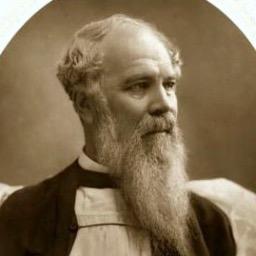
J.C. Ryle – One of my beloved, “old dead guys,” John Charles Ryle (1816-1900) was the first bishop of Liverpool and a 19th century English pastor, known for his solid preaching and defense of the faith. He was a prolific author of tracts and books, often based on his sermons, and he frequently taught on contemporary issues from a biblical worldview. Two of his better known books are Holiness and Practical Religion. My favorite book of Ryle’s, however, is The Duties of Parents. Many of Ryle’s works are available online for free. Download nearly 200 of Ryle’s tracts (booklets), read one of his books or sermons online, or add a volume or two to your library. FacebookTwitter
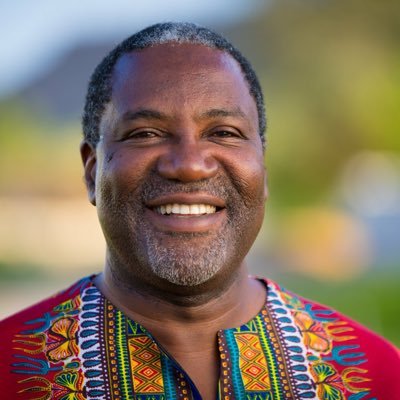
Conrad Mbewe – A man who wears many hats, Conrad is, first and foremost, pastor of Kabwata Baptist Church in Lusaka, Zambia. Conrad is also editor of Reformation Zambia magazine, Director of International Advancement and lecturer at African Christian University in Zambia (where Voddie Baucham serves as Dean of Theology), writes and preaches extensively, and is a sought after conference speaker. I first became familiar with Conrad when I heard his phenomenal teaching sessions at John MacArthur’s Strange Fire conference. Read Conrad’s blog, A Letter from Kabwata, listen to one of his sermons, or purchase one of his books. FacebookTwitter
Justin Peters – “Justin Peters Ministries is committed to communicating biblical truth through expository preaching and teaching resources designed to deepen the believer’s knowledge of God and, in turn, his love for God.” Justin is a beloved and popular conference speaker, most often on the topic of discernment. He is best known for Clouds Without Water, a seminar designed to educate the church on the history, growth, and danger of the Word of Faith and New Apostolic Reformation heresies. Watch a presentation of Clouds Without Water, order some of Justin’s materials, listen to his sermons, or subscribe to Justin’s podcast on YouTube or your favorite podcast platform. Facebook
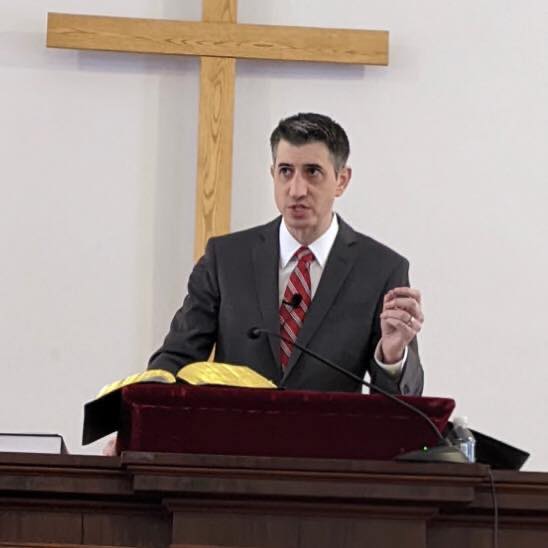
Gabriel Hughes– Gabe serves as Associate Pastor of First Baptist Church, Lindale, Texas. An excellent writer, Gabe blogs on discernment and contemporary issues, but he is probably best known for his 90 second WWUTT (When We Understand the Text) videos which address a variety of biblical topics. Gabe also hosts the WWUTT podcast, a helpful daily study in the Word of God. You can watch WWUTT videos, download WWUTT podcasts, purchase Gabe’s books, and more, at the WWUTT website. FacebookTwitter
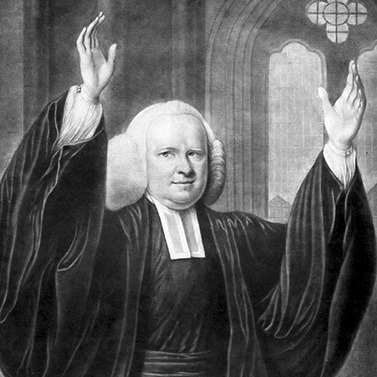
George Whitefield– George Whitefield (1714-1770) was a minister in the Church of England and, along with the Wesley brothers, was one of the founders and leaders of Methodism. Whitefield’s zeal for evangelism led him outside the four walls of the church, and it was not unusual to find him preaching to thousands and even tens of thousands in fields along the English countryside. Whitefield was also a well-known itinerant preacher and evangelist in the United States, and was an integral part of the Great Awakening. Many of Whitefield’s works are available on line including his sermons and tracts. I thoroughly enjoyed this brief biography of Whitefield by the aforementioned J.C. Ryle, and you’ll definitely want to get a hold of Steve Lawson’s book on Whitefield. FacebookTwitter
Nate Pickowicz – A heart for New England and a mind for the Puritans, Nate is the pastor of Harvest Bible Church in Gilmanton Iron Works, New Hampshire. He has authored and edited several books, including R.C. Sproul: Defender of the Reformed Faith,Reviving New England, Why We’re Protestant, and How to Eat Your Bible, an introduction to studying God’s Word, complete with a Bible reading plan Nate designed. Check out Nate’s books and articles, and give his sermons a listen. FacebookTwitterInstagram
Owen Strachan – Owen is Provost and Research Professor of Theology at Grace Bible Theological Seminary in Conway, Arkansas, and former president of the Council on Biblical Manhood & Womanhood (CBMW). Owen has authored and contributed to a truckload of books and journals on subjects as varied as biblical sexuality, Jonathan Edwards, and social justice. He also writes about theological issues and events at To Reenchant the World. Not just a sharp writer, Owen is also an articulate speaker, hosting his own podcast, The Antithesis, and speaking often at conferences. Listen in to the podcast, and check out Owen’s books. FacebookTwitterInstagram
Scott Aniol– Scott is “Executive Vice President and Editor-in-chief of G3 Ministries and Professor of Pastoral Theology at Grace Bible Theological Seminary. He is a teacher of culture, worship, aesthetics, and church ministry philosophy, he lectures around the country in churches, conferences, colleges, and seminaries, and he has authored several books and dozens of articles.” Scott’s heart for biblical worship -in the church and in the family – is clear in all of his ministry endeavors. Check out his podcast, By the Waters of Babylon, his books and other media, Religious Affections Ministries, and his G3 blog, By the Waters of Babylon. FacebookTwitterInstagram
You can always find these – and more great Christian men and women to follow – at the Recommended Bible Teachers tab in the blue menu bar at the top of this page.
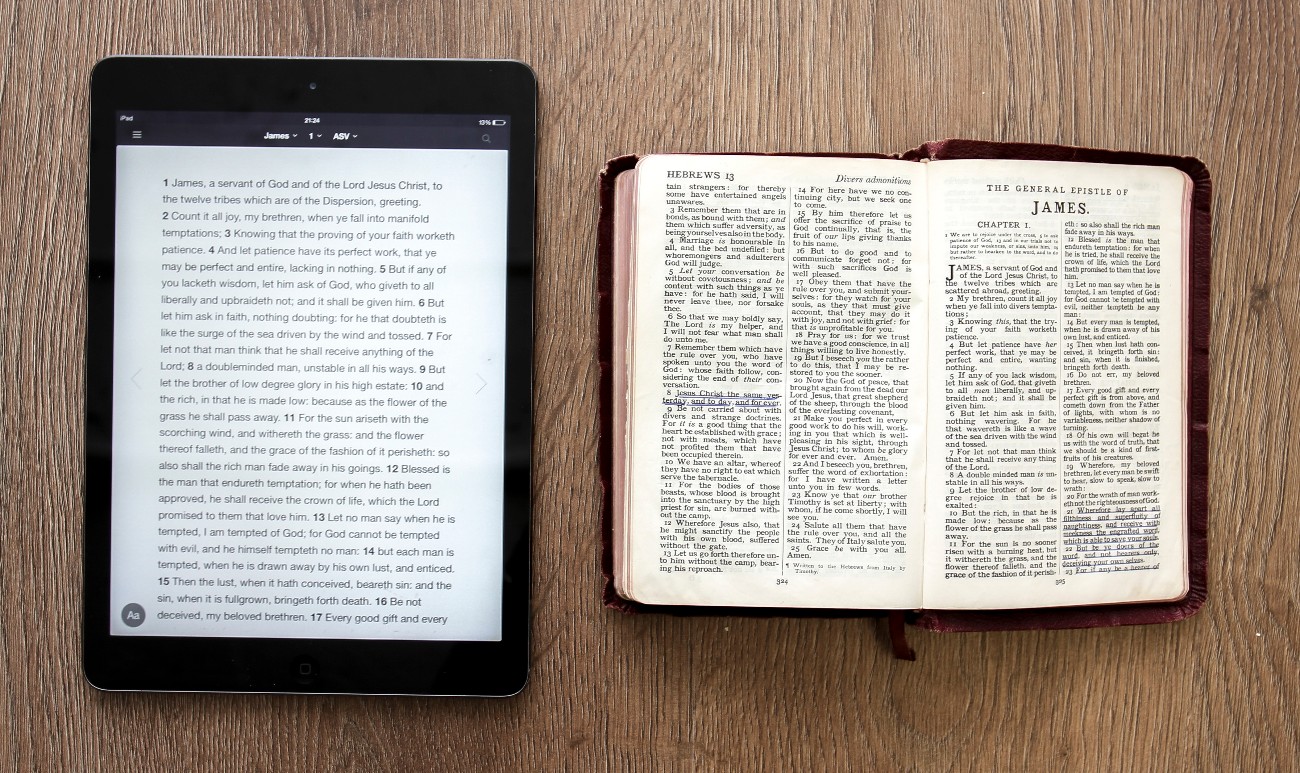
Hi ladies! I hope you’re looking forward to our next new Bible study as much as I am. I’m in the middle of my second time through the text we’ll be studying, and I can hardly wait to introduce it to you! I think you’ll enjoy it and that it will edify you as you seek to grow in Christ and His Word. (The picture above does not mean we will be studying James. :0) Stay tuned to start soon, and keep an eye on the blog on Wednesdays.
In the meantime, I’ll be posting some Bible study articles and lessons from the archives that I think you’ll find helpful as we make our way toward our next study. (This week’s lesson is actually not from the archives, it’s new, but the Wednesday’s Word study {see below} it’s now part of is from the archives. Apparently, when I originally wrote the WW series, I took a break somewhere in the middle to write my Bible study on the book of 1 John, and I never went back and wrote a stand alone lesson from 1 John for the WW series. So I’ve remedied that with the lesson published today. Clear as mud, right? :0)
Here is this week’s lesson:
Wednesday’s Word
Wednesday is Bible study day here on the blog. In my Wednesday’s Word Bible study series you’ll find miscellaneous, one lesson Bible studies from each book of the Bible. One chapter of Scripture followed by study questions. This sampler series demonstrates that there’s nothing to be afraid of when approaching those “lesser known” books and that every book of the Bible is valuable and worth studying.
Beloved, do not believe every spirit, but test the spirits to see whether they are from God, for many false prophets have gone out into the world. 2 By this you know the Spirit of God: every spirit that confesses that Jesus Christ has come in the flesh is from God, 3 and every spirit that does not confess Jesus is not from God. This is the spirit of the antichrist, which you heard was coming and now is in the world already…Continue reading..
Beloved, do not believe every spirit, but test the spirits to see whether they are from God, for many false prophets have gone out into the world. 2 By this you know the Spirit of God: every spirit that confesses that Jesus Christ has come in the flesh is from God, 3 and every spirit that does not confess Jesus is not from God. This is the spirit of the antichrist, which you heard was coming and now is in the world already. 4 Little children, you are from God and have overcome them, for he who is in you is greater than he who is in the world. 5 They are from the world; therefore they speak from the world, and the world listens to them. 6 We are from God. Whoever knows God listens to us; whoever is not from God does not listen to us. By this we know the Spirit of truth and the spirit of error.
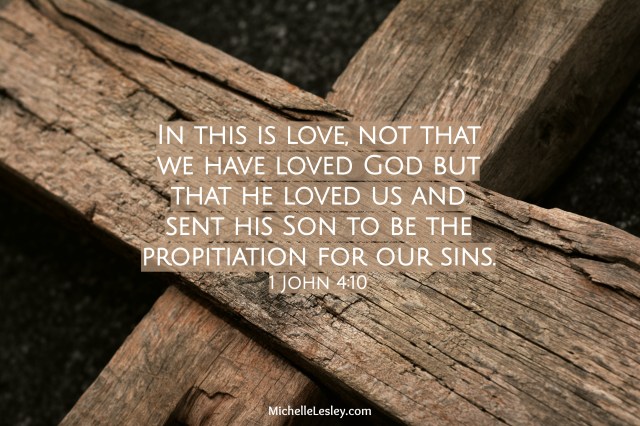
7 Beloved, let us love one another, for love is from God, and whoever loves has been born of God and knows God. 8 Anyone who does not love does not know God, because God is love. 9 In this the love of God was made manifest among us, that God sent his only Son into the world, so that we might live through him. 10 In this is love, not that we have loved God but that he loved us and sent his Son to be the propitiation for our sins. 11 Beloved, if God so loved us, we also ought to love one another. 12 No one has ever seen God; if we love one another, God abides in us and his love is perfected in us.
13 By this we know that we abide in him and he in us, because he has given us of his Spirit. 14 And we have seen and testify that the Father has sent his Son to be the Savior of the world. 15 Whoever confesses that Jesus is the Son of God, God abides in him, and he in God. 16 So we have come to know and to believe the love that God has for us. God is love, and whoever abides in love abides in God, and God abides in him. 17 By this is love perfected with us, so that we may have confidence for the day of judgment, because as he is so also are we in this world. 18 There is no fear in love, but perfect love casts out fear. For fear has to do with punishment, and whoever fears has not been perfected in love. 19 We love because he first loved us. 20 If anyone says, “I love God,” and hates his brother, he is a liar; for he who does not love his brother whom he has seen cannot love God whom he has not seen. 21 And this commandment we have from him: whoever loves God must also love his brother.
1. What is the theme or purpose of the book of 1 John? What is the historical backdrop for the book of 1 John?
2. Which Spirit is controlling true Christian teachers? What spirit is controlling false teachers according to verse 3? True or false: If you’re following a false teacher, you’re following a demonic spirit. What does it mean to “test the spirits”? (v1) How did the noble Bereans test the spirits?
3. According to verses 7-8, who defines, originates, and is the embodiment of, love? How does this tell Christians Who and what is to motivate any love that we might feel or show to others? Is the “love” that non-Christians feel or show to others motivated by God or by other factors such as affection, selfishness, lust, etc.? Can you truly love others if you do not know God? In verses 9-10, what is the ultimate definition and demonstration (what action did God take) of the phrase “God is love”?
4. How do we know, according to verse 13, that we belong to Christ? How can we tell if we have the Spirit? In what ways do our actions show that we have the Holy Spirit?
5. What does our love (or lack of love) for others say about whether or not we truly know God? (20) What does verse 20 call people who claim to love God but do not love others? Are such people saved?