Idolatry, Sunday School, Worship

Worship Gone Wrong, Worship Gone Right ~ Sunday School Lesson ~ 2-16-14

sunday school

These are my notes from my ladies’ Sunday School class this morning. I’ll be posting the notes from my class here each week. Click here for last week’s lesson.

Through the Bible in 2014 ~ Week 7 ~ Feb. 9-15
Exodus 30-Leviticus 10
Worship Gone Wrong ~ Worship Gone Right

Think about the last time you were invited over to someone’s house for dinner or a visit. Even if it was your closest friend’s house, did you go into her kitchen and start rearranging her cabinets so the dishes would be the way you like them? Refold her towels into thirds instead of halves? Insist on fried chicken when she had planned baked? Would you like it if your closest friend came to your house and started doing things like that?

What’s your favorite flower? Mine is pink roses, and my husband knows this very well. Would it have been loving for my husband to give me a cactus for Valentine’s Day—even though he knows I can’t stand them –because that’s the plant he likes best?

We all have a certain way we like things done at our own homes for certain reasons. We have all been given gifts that make us feel loved and cherished (and some gifts that haven’t). God is no different. When we come into His house to worship Him, we abide by His “house rules” out of love and respect for Him. We are to offer Him the worship He desires, not because it makes us happy or comfortable, but because that’s what makes Him “feel loved.”

This week’s reading was all about worship. Worship done the right way – God’s way, and worship done the wrong way – man’s way.

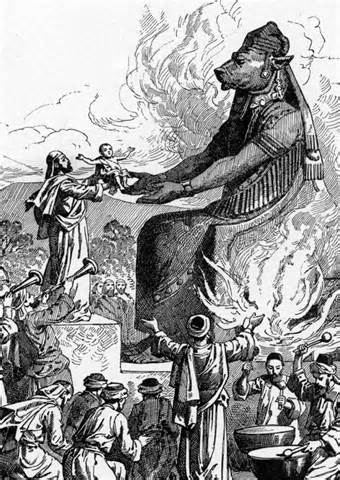
Worship Gone Wrong: Man’s Way (Exodus 32)

32:1-2: Worship goes wrong when we take our focus off God.
Moses didn’t bring them out of Egypt, God did. But the people’s focus was only on the temporal and tangible. They hounded Aaron to give them a god they could see and worship their own way rather than an invisible God whose ways were holy and different from theirs. They were not thinking about what God wanted but what they wanted.

32:2-14: Worship goes wrong when the pastor is more interested in pleasing the people (or himself) than pleasing God.
Rather than leading the people and holding up God’s standard for them, Aaron gave in to their base desires. Contrast this with Moses who was more interested in God’s glory, His name being honored among the heathens, and His covenant promises, than Moses’ own self interest of being made a “great nation”.

32:4-6: Worship goes wrong when we paste God’s name on man made rituals.
Notice that they essentially called the golden calf “God” and claimed that worshiping it was actually worshiping God. This was not a situation in which they were inventing a new god to worship.

32:15-19: Worship goes wrong when we break God’s law (Exodus 19-20:21).
The people had heard from the very mouth of God himself, “You shall have no other gods before me. You shall not make for yourself a carved image, or any likeness of anything that is in heaven above, or that is in the earth beneath, or that is in the water under the earth. You shall not bow down to them or serve them…” Those are the first and second Commandments! They knew God’s Law and intentionally broke it. Our worship is unacceptable to God (indeed, it isn’t worship at all) when we do it while knowingly disobeying Him. (Naked church, homosexuality affirming “churches”, female pastors.)

32:25: Worship goes wrong when we give unbelievers the opportunity to mock God.
When the people “break loose” from doing things biblically with the pastor leading the way (as in the New Apostolic Reformation movement, for example), the world rightly mocks them. As a result, many unbelievers understandably take the position, “If that’s what Christianity is, I don’t want any part of it.” This is to our shame. (This is different, however, from being mocked for upholding biblical standards, such as standing against abortion or homosexuality.)

32:26-28: Worship goes wrong when people refuse to repent of their sin (Matthew 18:15-17, 1 Corinthians 5:11-13).
The three thousand men who refused to repent of their idol worship were the problem here, not the Levites. They were given every opportunity to repent and refused. This compounded their sin by forcing their brothers into a horrific situation of having to kill them.

Today, when church members refuse to repent of their sin, God has instructed us to put them outside the fellowship (after due process). This is painful for all involved, and puts brothers and sisters who are trying to faithfully follow God’s word in the awful position of having to confront and discipline people they may dearly love. It often causes a deep wound that necessarily hinders worship.


Worship Gone Right: God’s Way

God cares about the smallest details of how we approach Him in worship. (Exodus 30, 39)
He’s not an “anything goes” God. We see this in the detailed instructions about the construction of the ark, the tabernacle, and all its accessories, right down to the recipe for the anointing oil (30) and the little pomegranates on the hems of the priestly garments (39). (We’ll also see His instructions about worship to the church in the New Testament.) If God cares this much about the little details of worship, what are some things in our worship services and other church activities that we need to think about as to whether or not they’re pleasing to God?

God takes worship seriously, and so should His people (Exodus 32, Leviticus 10, Acts 5:1-11, 1 Corinthians 11:29-30).
The results of the golden calf incident (32), the strange fire incident (10), as well as situations in the New Testament show us that the way we worship and conduct activities in the church is no trivial matter to God. When He gives instructions about worship, He means what He says. It is just as wrong for us in the New Testament church to disregard God’s instructions about the Lord’s supper, giving offerings, qualifications for pastors/teachers, etc., as it was for Nadab and Abihu to offer “strange fire” before the Lord.

This doesn’t mean we can’t experience and express joy during worship—God wants us to! But there are also times to weep over our sin, listen intently to God’s word, and pray fervently. What are some things that show that a church/church members take worship seriously?

The men who lead God’s people have a grave responsibility to lead biblically, and God’s people have the responsibility to follow them biblically. (Exodus 32, Leviticus 10, 2 Timothy 4:1-5)
Pastors are to be faithful to God and His requirements for worship regardless of what the people clamor for. When pastors give in to the sinful desires of their people, they both endorse and give their people the opportunity to sin. So long as the pastor is standing by Scripture, we are to follow his leadership and support him.

The results of worship gone right (Leviticus 9:22-24)
When worship is done biblically, the pastor is in right relationship with God. He’s in the right position spiritually to be a blessing to God’s people. God blesses the people, they see His glory, He is pleased with their worship, His presence is with them, and it generates more worship.

Uncategorized

Six Thoughts on History’s “The Bible” ~ Part 1

With the movie Son of God releasing in theaters on February 28, for the next three Thursdays I’ll be rerunning a three part series I wrote on last year’s History Channel miniseries, The Bible. Son of God is Roma Downey’s and Mark Burnett’s movie about Jesus that is drawn from The Bible’s scenes pertaining to His life and ministry, as well as deleted scenes that did not make it into the miniseries.

Also see: “Should Christians Boycott ‘Son of God’? Three Things to Consider”
https://michellelesley.com/2014/02/10/should-christians-boycott-son-of-god-three-things-to-consider/

Michelle Lesley's avatarMichelle Lesley

If you’ve been keeping up with the History Channel’s The Bible miniseries, you’ve probably noticed that everybody seems to have an opinion about it. I’ve been watching the series, live chatting it on my Facebook page, and reading reviews and comments about it from viewers, bloggers, and Christian leaders. At the risk of over-saturating the blogosphere, here are a few of my thoughts on what people are saying about The Bible*. (You can find Part 2 of this series here, and Part 3 here.)

0bc90ac98e8e3d20a24be1f335b5966a1. “The Bible” will get people to read their Bibles.

I hope so. I really do, but I’m concerned.

Have you ever watched the movie Braveheart? The Patriot? Gone with the Wind? (Ha. You thought I had a little Mel Gibson thing going there, didn’t you?) Upon finishing any of those movies, did you pick up a thick tome on William Wallace…

View original post 359 more words

Discernment, Entertainment, Evangelism, Gospel, Movies

Should Christians Boycott “Son of God”? Three Things to Consider ~ UPDATED

thWith the movie Son of God releasing in theaters on February 28, for the next three Thursdays I’ll be rerunning a three part series I wrote on last year’s History Channel miniseries, The Bible. Son of God is Roma Downey’s and Mark Burnett’s movie about Jesus that is drawn from The Bible’s scenes pertaining to His life and ministry, as well as deleted scenes that did not make it into the miniseries.

UPDATE: Click here to read Part 1, Part 2, and Part 3, of my article “Six Thoughts on History’s ‘The Bible'”.

During and after The Bible’s run last year, Downey and 0bc90ac98e8e3d20a24be1f335b5966aBurnett received quite a bit of criticism for the show’s inaccuracies and copious amounts of artistic license taken. It would give me great joy to discover that they took those critical reviews to heart and fixed in Son of God the rampant errors and faulty theology of The Bible, but since they are using scenes and deleted scenes pulled directly from the miniseries, it doesn’t sound like they’ve re-shot and corrected anything.

Since I have not seen Son of God, I’m not comfortable suggesting Christians boycott it, but I would like to throw a few things out there for your consideration as you make your decision about whether or not to see this movie:

1. Do you boycott products, organizations, restaurants, stores, actors, or political candidates who support abortion, the homosexual agenda, or any other sin?

Well, taking God’s name in vain, the third Commandment, is still a sin. A big one. And it’s not limited to saying “OMG” or boycottusing God’s name in an expletive. Far worse than those is attributing to God things that He has not said or that are not true of His nature and character. This happened a myriad of times in The Bible, and, unfortunately, I anticipate that the same will be true of Son of God.

Are you being consistent if you boycott Girl Scout cookies and Starbucks yet give your money to people who claim to be presenting the Jesus of Scripture but put words into His mouth that He did not say and philosophies into His teachings that He did not espouse and which conflict with God’s word?

2. If you do choose to see Son of God, or if you have friends stock-footage-african-american-friends-having-conversation-at-caf-x-ewho see the movie, make the most of the opportunity to start conversations for sharing the gospel and pointing people to the true Jesus of Scripture. God can use anything to draw people to Himself, but they can only be genuinely born again if someone tells them the truth of the gospel and they put their faith in the Jesus of the Bible.

3. Do your homework. If you choose to see the movie, read one or more of the gospels (Matthew, Mark, Luke, and John) before and afterwards. Did Jesus really say to Peter, “We’re going to bible-studychange the world,” as He does in the movie? If so, which verse says that? If not, what did Jesus actually say, and why? If you choose to see the movie, don’t just take for granted that what you see on the screen is true. Get your Bible out, dig through it, and sharpen your discernment skills. Be one of those Bereans Luke praised so much for comparing what Paul preached to what Scripture said.

~~~~~~~~~~

UPDATE: After the original publication of this article, Downey and Burnett announced that they would be removing all of the scenes from Son of God that contained the actor portraying Satan due to last year’s controversy over his striking resemblance to President Obama. 

A reader asked for my reaction to this announcement. My remarks to him were as follows:

Since I haven’t seen the movie, it’s hard for me to give a really fair comment on this, but I’ll take a stab at it. I am much more concerned about the theology of leaving out Satan than I am about the politics. 

When I read a statement like this (and granted, these are the reporter’s words, not Roma Downey’s words): 

Eager to avoid rehashing the drama, producers Roma Downey and Mark Burnett decided to leave the character out of their film…” 

it tells me they are more concerned with political fallout and controversy than they are with adhering to Scripture. (In my opinion, the bulk of The Bible miniseries bears out that they were not overly interested in adhering as strictly as possible to Scripture.)

When I read a quote like this from Roma Downey: 

“‘It gives me great pleasure to tell you that the devil is on the cutting-room floor,’ …’This is now a movie about Jesus, the son of God, and the devil gets no more screen time.” and, “For our movie, Son of God, I wanted all of the focus to be on Jesus. I want his name to be on the lips of everyone who sees this movie, so we cast Satan out.”

it tells me that she and Mark Burnett don’t have a full understanding of the meaning and implications of Christ’s life, ministry, death, and resurrection. The story of Jesus goes much deeper than just words on a page. Everything He said and did had eternal, omnipotent, prophetic, God-magnifying, salvific, miraculous foundations, impact, and effects. We’re not talking about an entertaining little story like The Three Bears or Gone With the Wind, here. The story of Jesus turns the universe inside out for every atom of everything that’s ever existed, including every single human being who has ever walked the planet. You can’t just cut a little here and cut a little there and sew the edges back together without the crippling the impact of the gospel.

To say that now that they have cut out the scene with Jesus being tempted in the wilderness (I’m assuming this is the main scene they’re referring to. I can’t remember which other scenes may have had Satan in them.), NOW this movie is all about Jesus just further demonstrates their lack of biblical understanding. Are they saying the wilderness temptation was not “about Jesus”?

That incident was not about Satan. It was about Jesus. It is one of the major incidents in which we see that Jesus is both fully God and fully man. It also encapsulates the main point of the entire Old Testament sacrificial system– that Jesus is the perfect Lamb of God without blemish or spot, the only sacrifice that could permanently take away our sin. He could not have been our sacrifice for sin had He given in to Satan’s temptations even once. Finally, it is a demonstration to us that Jesus understands the struggle with sin that we go through because He went through it Himself, personally (Hebrews 4:15).

To sum up, I think leaving Satan out has worse theological consequences than the political fallout for leaving him in.

~~~~~~~~~~

Should you see (and financially support) this movie? That’s between you and God. But whether or not you choose to see it, as with anything else in life, use it as a springboard for sharing the gospel and studying God’s word more deeply.

What do you think? Should Christians boycott Son of God?

Gospel, Old Testament, Salvation, Sunday School, Types and Shadows

Joe & Moe: Delivery Boys (Part 2) ~ Sunday School Lesson ~ 2-9-14

 sunday school

These are my notes from my ladies’ Sunday School class this morning. I’ll be posting the notes from my class here each week. Click here for last week’s lesson.

Through the Bible in 2014 ~ Week 6 ~ Feb. 2-8
Exodus 10-29
Joe & Moe: Delivery Boys (Part 2)

Moses: Deliverance from Bondage  Last week we took a look at how Joseph was a type (symbol) of Christ: deliverance through forgiveness of sin. Just as Joseph was able to deliver his family from the famine to a new, abundant life through forgiving their sin, so Christ delivers us from the “famine” of the old life of sin by forgiving us of that sin and giving us a new and abundant life.

Today, we’re taking a look at another “delivery boy,” Moses, and examining how the events in his life demonstrate Christ’s delivering us from the bondage of sin, just as Moses delivered the Israelites from their bondage to slavery.

As Moses delivered Israel from the bondage of slavery, so Christ delivers us from the bondage of sin. Deliverance/redemption from bondage is not easy or lighthearted. It is a battle for the freedom of another person, and that freedom must be purchased with blood and struggle.

Exodus 11-12
Bondage: Before God sets us free.

11:7– God sets His people apart for His glory and His purposes. (Deuteronomy 7:6-8, Romans 8:29-30, 2 Corinthians 6:14-18)
This “setting apart” is called “consecration.” It wasn’t because there was anything special about Israel itself, but because God was keeping His covenant promise and working out His plan. God made a distinction between Israel and Egypt, and called them out of Egypt, and separated them from Egypt. So, God makes a distinction between unbelievers and those who will be saved, calls us out of the world’s system and ways, and separates us from the world in our identity and being.

11:9-10– Satan doesn’t willingly give up his slaves. (2 Timothy 2:24-26, 1 Corinthians 2:14) 
Look at everything that happened to Pharaoh, and yet he still, at this point, wouldn’t let go of the Israelites. In the same way, Satan holds people in bondage as slaves to himself, to sin. As a slave cannot resist his master, a slave to sin cannot resist his master- sin. Satan will not give his slaves up to Christ without a fight.

2 Timothy 2:24-26: The Lord’s bond-servant must not be quarrelsome, but be kind to all, able to teach, patient when wronged, with gentleness correcting those who are in opposition, if perhaps God may grant them repentance leading to the knowledge of the truth, and they may come to their senses and escape from the snare of the devil, having been held captive by him to do his will.

This is why we can’t expect lost people to act like Christians or tell them to clean themselves up. They can’t. They’re slaves. Only Christ can raise them from the “living death” of sin and set them free.

12:1– When God institutes a new covenant, He makes all things new.
God changed everything about Israel’s life, right down to their calendar. This was a completely fresh start: a new time, a new place (the Promised Land), and a new celebration (Passover) for a new covenant and way of life.

When Christ delivers us, we also get a new time (our new life starts at the moment of conversion, and we receive a fresh new future), a new place (Heaven instead of hell) and a new celebration (baptism and the Lord’s Supper) to mark the new covenant and way of life. Those celebrations were a reminder for Israel of how the Lord delivered them from bondage and slavery, and a reminder to us of how God delivers us from the bondage and slavery of sin.

The Key to the Shackles: How God sets us free: The Passover Lamb
Christ in the Passover:

12:5– A lamb without blemish (1 Corinthians 5:7, 1 Peter 1:18-19, James 2:10)
Jesus was to be the sacrifice for our sin. All sacrifices offered to God had to be perfect, pointing to Jesus’ sinlessness. Had he ever sinned, even once, He would not have been an acceptable sacrifice for our sin.

1 Corinthians 5:7b: Christ, our Passover lamb, has been sacrificed. 

1 Peter 1:18-19: you were ransomed …with the precious blood of Christ, like that of a lamb without blemish or spot. 

12:6– The lamb sacrificed at twilight (Luke 23:44-46)
The Passover lamb was sacrificed as the sun was setting. When Jesus died there was darkness over the whole land. Additionally, at the time of Jesus’ crucifixion the lamb was customarily slaughtered at 3 p.m., the same time Jesus died.

12:7,13– Blood on the doorposts and lintel (John 10:7, Romans 5:9,8:1)
Picture a vertical beam perpendicularly meeting a horizontal beam. Now picture the blood of a spotless lamb running down those beams. What comes to mind? The cross.

Jesus said, “I am the door. If anyone enters by me, He will be saved…” How do we enter in to and through Christ? We pass under and through the blood He shed on the cross. Anyone who has passed through the blood and is in Christ is not under the judgment of God.

Romans 5:9 “Since, therefore, we have now been justified by his blood, much more shall we be saved by him from the wrath of God.” 

12:8– Eating the flesh (John 6:53-55)
John 6:53-55: So Jesus said to them, “Truly, truly, I say to you, unless you eat the flesh of the Son of Man and drink his blood, you have no life in you. Whoever feeds on my flesh and drinks my blood has eternal life, and I will raise him up on the last day. For my flesh is true food, and my blood is true drink.

12:10, 46– Do not leave the remains until morning. Do not break any of the lamb’s bones. (John 19:31-36)
John 19:31-33,36: Since it was the day of Preparation, and so that the bodies would not remain on the cross on the Sabbath (for that Sabbath was a high day), the Jews asked Pilate that their legs might be broken and that they might be taken away. So the soldiers came and broke the legs of the first, and of the other who had been crucified with him. But when they came to Jesus and saw that he was already dead, they did not break his legs. For these things took place that the Scripture might be fulfilled: “Not one of his bones will be broken.”

11:5, 12:12-13, 29-31– Death of the firstborn son of the king. (Colossians 1:15,18; Romans 5:10)
Just as the firstborn son of the king had to die in order for Israel to be set free from bondage, so, Jesus, the firstborn Son of our King, the firstborn of Creation, and the firstborn from the dead, had to die to set us free from the bondage of sin.

Freedom
Now that Christ has set us free, we remember his sacrifice through the Lord’s Supper and celebrate our freedom from sin through baptism. The crossing of the Red Sea hints at baptism.

Exodus 14
The “Baptismal Waters” of the Red Sea (Romans 6:4)

God set the Israelites free from the bondage to Egypt and brought them out of Egypt into a new place. With their bondage and slave masters behind them, God brought them to the water and they passed through it. The old slave masters tried to follow them to recapture them, but God washed them away to their death. The Israelites started a brand new life on the other side of the water. It was a testimony of God’s glory to the Egyptians (14:4) and to the Israelites themselves that God is the Lord.

Christ passed through the waters of death- defeating the enemy and breaking his chains that keep us captive- and rose up out of those waters to life on the other side. So, “We were buried therefore with him by baptism into death, in order that, just as Christ was raised from the dead by the glory of the Father, we too might walk in newness of life.”

Our baptism is a testimony of God’s glory to Satan- that he is defeated, to ourselves- that we have passed from death unto life, and to others- that Jesus Christ is Lord.

Additional Resource:
What Does It Mean to Be a Slave to Sin? by GotQuestions.org

Prayer, Sanctification, Worship

Great Expectations

expectgreatthings-necklace (1)

Do we expect too much from God? Is that even possible?

No.

Yes.

Well, kinda.

You see, I’m not talking about expecting something and God being unable to deliver it. That’s just plain silly when talking about our omnipotent God. No, what I’m talking about is whether or not the expectations we come up with are grounded in biblical reality.

What do we mean when we talk about “praying expectantly” or coming to a time of corporate worship, study, or prayer, and “expecting God to do something”? Just what is it we are expecting God to do?

Could it be that He’s already doing something and we’re just not seeing it?

Sometimes, when we read God’s word, we expect God to do something just as “big” as He did in Moses’, Paul’s, or some other Bible hero’s life. We forget that the Bible is sort of like a “highlight reel” of the events in the lives of a handful of people that God drafted to be part of His visible activity at that moment in history.

We focus on the moments Moses had at the burning bush or walking through the Red Sea, and that’s what we want, too. r643167_4468740But we forget that Moses’ life wasn’t like that every day. We forget about the eighty years he spent wandering around the desert, half in the day to day monotony of shepherding on the back side of Midian, the other half, wandering around the wilderness with the people of Israel.

Eighty years of nothing special. Day after day of ordinary. Week after week of God not “showing up” and doing something amazing. Eighty years. That’s a lifetime for most of us.

Was God any less at work in Moses’ eighty years of desert thwandering than He was when He gave Moses the Law or spoke to him face to face or sent manna? Of course not. During those days, God was protecting Moses from the heat and wild animals, providing food and shelter for him, blessing him with a wife and children, directing his steps, teaching him obedience and trust.

Just like He does for us.

Have you read a Bible passage this week that allowed you to see more of God’s glory? God is doing something. He’s revealing Himself to you.

Are you praying for someone’s salvation? God is doing something. He’s working on the heart of that person.

Did you have a place to sleep last night and food on your table today? God is doing something. He’s providing for your needs.

Do you leave church on Sundays having been fed the truth of God’s word by your pastor? God is doing something. He’s growing you to spiritual maturity.

Is it possible that we’re expecting God to do something in our lives that isn’t in His particular plan for us? You aren’t Moses, and neither am I. Neither were the million or so other Israelites Moses led out of Egypt, and neither have the billions of other people been who have inhabited earth since Creation. Moses was Moses. You are you. God doesn’t have the same plan for your life He had for Moses’ life.

And, by the way, have you ever noticed that most of the people in the Bible through whom God did something “big” were not expecting it or asking for it? Moses wasn’t expecting God to show up in that burning bush. David wasn’t asking God to do great things in his life when Samuel dropped by to anoint him as the next king. Both of them were hanging out with the sheep when God called them. Paul thought he was already an awesome servant of God when he got knocked off his high horse. Mary wasn’t expecting to be expecting. She was just a teenage girl growing up and learning how to run a household.

1 Thessalonians 4:10b-12 says:

But we urge you, brothers to do this more and more, and to aspire to live quietly, and to mind your own affairs, and to work with your hands, as we instructed you, so that you may walk properly before outsiders and be dependent on no one.

That’s what all of those Bible characters were doing when God chose them. Just regular people living regular lives doing regular work. Just like billions of other people through whom God has not chosen to do anything big and spectacular.

keep-calm-god-is-at-workBut that doesn’t mean God hasn’t been “doing something” in all of our lives. In fact, the vast majority of the work God does in our lives every single day goes unnoticed and unappreciated.

So, instead of setting our expectations on those very rare “wow factor” works of God that seem so appealing, maybe we should be asking Him to open our eyes to, and make us thankful for, all of the things He’s already doing in our lives. Instead of having great expectations of things that God has never promised us, maybe we should ask Him for, and expect Him to, do what He has promised:

Forgiveness for our sin

Christ-likeness

Provision for our needs

Endurance

The ability and opportunity to help others

Faithfulness

Humility

Patience

The opportunity to share the gospel

Because “all the promises of God find their Yes in him.” You can expect it.