Old Testament, Sunday School

Hezekiah: Who Are You Going to Believe? ~ Sunday School Lesson ~ 8-3-14


Hezekiah
Photos courtesy of: Stickerish.com, WUTT on YouTube.com, and Amazon.com

These are my notes from my ladies’ Sunday School class this morning. I’ll be posting the notes from my class here each week. Click here for last week’s lesson.

Through the Bible in 2014 ~ Week 31 ~ July 27- Aug. 2
Isaiah 44-66, 2 Kings 18:9-21:26, Psalm 46, 80, 135
Hezekiah: Who Are You Going to Believe?

2 Kings 18:1-8
This first part of the chapter sets the stage for everything we subsequently learn about and from Hezekiah. Even though he had a despicable, idolatrous example for a father (King Ahaz), Hezekiah somehow turned out to be a godly man and king. Could it have been the way his mother raised and taught him? Possibly. (The Zechariah mentioned in v. 2, is not the prophet in the book of the same name.) It could also have been one of the priests or Levites brought in to train him as part of his childhood education. Scripture doesn’t tell us specifically, but we should never discount the importance of a godly mother or teachers, and we should strive to take hold of every opportunity we have to impact children’s lives for Christ.

At any rate, Hezekiah was off to a good start. Notice that this passage talks much more about Hezekiah’s relationship with the Lord than his actions for the Lord. It says, “he did what was right in the eyes of the Lord” (3), “he trusted in the Lord,” (5). He held fast to the Lord, did not depart from the Lord, and kept the Lord’s commandments (6). “And the Lord was with him.” (7)

His actions followed his faith: he tore down idol worship paraphernalia, rebelled against the king of Assyria, and struck down the Philistines.

9-12
This passage continues to set the stage by reminding us that during the first few years of Hezekiah’s reign in Judah, the king of Assyria captured Samaria (capital of Israel) and carried Israel away to Assyria because they had rebelled against God.

13-16 (2 Chronicles 20:12)
Sennacherib (king of Assyria after Shalmaneser, who had captured Israel) wasn’t wild about Hezkiah rebelling against him, so he attacked Judah and captured all the stronghold cities except Jerusalem (the capital), which was next on the hit list.

What was godly, faithful Hezekiah’s response. Did he pray? Seek out Isaiah or another prophet or priest for godly counsel? No. Here, Hezekiah showed us an example of what we are not to do. Before, we read that Hezekiah did what was right in God’s eyes. Here, he simply reacted to his circumstances in the way that was right in his own eyes, the way that was most expedient and practical. It was exactly what his father and others before him had done when they became vassals of Assyria or other kings. Instead of following in their footsteps, he would have done better to pray as his predecessor Jehoshaphat did:

“O our God, will you not execute judgment on them? For we are powerless against this great horde that is coming against us. We do not know what to do, but our eyes are on you.” (2 Chron.)

What determines our response?
When we face an impossible situation like Hezekiah did, we have two options: we can let our circumstances dictate our response, or we can let God’s word dictate our response. Hezekiah didn’t consult God’s word. So, since he didn’t know what God would have him do in this situation, his only remaining option was to let circumstances dictate his response.

17- 37 (Isaiah 30:7, 10:5-6)
What happened? The 11 tons of silver and 1 ton of gold that Hezekiah sent Sennacherib, king of Assyria weren’t good enough for him. So Senaccherib sent his goon squad over to make Judah an offer it couldn’t refuse.

The Rabshakeh (commander) did his best to demoralize and talk Hezekiah’s men into surrendering. Notice that he didn’t really have to lie to them very much. Much of what he said was actually true:

Egypt was weak and would be of no help in fighting off Assyria (21,24). In fact, Isaiah had already told them this (Is. 30).

Even if Assyria herself supplied Judah with horses for battle, Judah was still too weak to defeat even the weakest of Assyria’s troops, so Egypt certainly wouldn’t be of any help. (23-24)

Whether the Rabshakeh knew it, or was just boasting and stumbled on the truth, Assyria was to be God’s arm of wrath against his people (25). Judah knew this because Isaiah had already told them (Is. 10)

From man’s point of view, and in his own flesh, Hezekiah would lose this battle and the people would be carried off to captivity in Assyria (29-32).

The false gods of the other nations had not been able to save them from Assyria (33-35).

But the truth was mixed with falsehood and fallible human wisdom:

The Rabshakeh didn’t know that the places of idol worship that Hezekiah had torn down were to false gods, not the true God. (22)

God might have been against Judah, but he wasn’t with Assyria (25).

The Lord is trustworthy and able to defeat any enemy (30, 32b, 35).

Hezekiah’s officials delivered the message to him. Would he believe the Rabshakeh? Would he react the way he did last time?

19:1-7
Hooray for Hezekiah! This time, he responded the right way. The first thing he did was to grieve before God and head to His house to pray (1). The second thing he did was to send his staff to Isaiah to seek God’s word. (2-4).

And what was God’s word? Do not be afraid; this dude’s going down. (6-7)

8-13
The Rabshakeh left and went back home only to find Sennacherib fighting with one kingdom and under impending attack from another. So, just to let Hezekiah know he hadn’t forgotten about him, Sennacherib sent another threatening message: “I may be busy right now, but I’m still coming for you. And don’t forget– none of the gods of these other countries saved them and your God isn’t going to save you.”

Hezekiah had a choice to make. Who was he going to believe, the Rabshakeh or God? The Rabshakeh had said a lot of stuff that was true. He even said that God had sent him. It would have made sense to listen to him, do what he said, and surrender.

14-34
But that’s not what Hezekiah did. He again turned to the Lord in prayer. While he was praying, Isaiah heard from the Lord, who reiterated and expanded on his earlier promise: God would defeat Assyria in this battle, and would even give Hezekiah a sign that confirmed His word.

35-37 Even though it seemed reasonable to believe Sennacherib, and even though he had talked about God sending him, Hezekiah chose to believe God’s word. He believed God’s word even though the situation seemed impossible. Even though he was scared. Even though it didn’t make sense.

Who are we going to believe?
God calls us to do the same thing as believers. We encounter a lot of situations these days in which people say things that seem to be reasonable, might even be true, and tell us they come to us in the name of the Lord:

“Pastors” and “theologians” who tell us that evolution or homosexuality or abortion or female pastors/teachers (of men) are OK with God, or that the Bible isn’t infallible.

Christians who tell us about trips to Heaven they have taken or “God told me ______” even when it conflicts with Scripture.

But no matter how strong the evidence might appear to be or how convincing the argument, it all comes down to this question:

Who are we going to believe?

Are we going to believe fallible, sinful human beings, or are we going to believe God’s word, even when it’s hard, even when we don’t fully understand it?

For Christians, SCRIPTURE ALONE is our final authority for what to believe, think, and do. It doesn’t matter what we (or someone else) have personally experienced, what our feelings or opinions are, what science says, what conventional wisdom says, or what political correctness says. God’s word stands, and let the chips fall where they may.

Sanctify them in the truth; your word is truth. John 17:17

This God—his way is perfect; the word of the Lord proves true; he is a shield for all those who take refuge in him. Psalm 18:30


 

Idolatry, Old Testament, Sunday School

An Overview of Hosea ~ Sunday School Lesson ~ 7-27-14

Overview of Hosea


These are my notes from my ladies’ Sunday School class this morning. I’ll be posting the notes from my class here each week. Click here for last week’s lesson.

Through the Bible in 2014 ~ Week 30 ~ July 20-26
Hosea, Isaiah 28-43, Psalm 76
An Overview of Hosea

Hosea 1
Hosea was a prophet to the northern kingdom of Israel. God used his family life as a picture of what he was prophesying. Hosea married a woman, Gomer, who would later prove unfaithful to him. God also had Hosea give his children names that reflected God’s message to Israel: Jezreel, No Mercy, and Not My People. But the real story of the book of Hosea is not Hosea or his family, but the love, reluctant wrath, and forgiveness of God towards His unfaithful people.

2:8
Everything Israel gave away -as sacrifices to idols, as tribute to foreign potentates, as bribes for foreign armies to come to her aid- everything had been given to her by God.

4:17
When sinners persist in their sin long enough, God finally gives them over to what they want. (Rom. 1:18ff). Often sinners think the harshest thing God could do would be to try to stop them from participating in the sin that they love, but His wrath is most poured out when He gives them exactly what they want.

5:6, 15; 7:13-14
Seek the Lord while He may be found (Isaiah 55:6). God was calling Israel to seek Him before He gave them over to a hard heart and a reprobate mind. The Lord is always found by those with a soft heart whose desire is to repent and love Him, but He turns a deaf ear to those who continue in rebellion until it starts raining, only to beat on the door of the ark because they don’t want to die in the flood.

God is not interested in the worldly sorrow that is only grieved over the consequences of sin. That soul still has its eyes firmly fixed on self and how self is affected. The truly repentant heart has her eyes fixed on God and how her sin affects Him.

6:4,6
God doesn’t desire empty rituals, lip service, or going through the motions. He wants worship from the heart.

8:2, 5-6
God will not allow syncretism (the melding of unbiblical worship with biblical worship). He requires, not that He be first in our affections, but that He be ONLY in our affections.
It did no good for Israel to claim that she knew the Lord (2) because she was a) worshiping other gods besides the Lord, b) calling an idol (the golden calves) “God,” and c) not worshiping God in the way He had commanded. None of these were acceptable in God’s sight then, and because He is the same “yesterday, today, and forever” (Hebrews 13:8), it is still not acceptable to Him today.

That’s why false teachers are so dangerous. People like Joyce Meyer, Joel Osteen, and TD Jakes may not be fashioning golden calves and calling them “Jesus,” but they are fashioning false gods with unbiblical words and ideas and calling them “Jesus.” This is what Matthew 7:21-23 is talking about when it says:

Not everyone who says to me, ‘Lord, Lord,’ will enter the kingdom of heaven, but the one who does the will of my Father who is in heaven. On that day many will say to me, ‘Lord, Lord, did we not prophesy in your name, and cast out demons in your name, and do many mighty works in your name?’ And then will I declare to them, ‘I never knew you; depart from me, you workers of lawlessness.’

9:1
Just as Gomer has betrayed and forsaken Hosea, Israel has betrayed the Lord. She has loved adultery and the fleeting pleasures (Hebrews 11:25) that go with it instead of the true and lasting treasure that comes from loyalty to the Lord (Revelation 11:18).

10:5-6
The golden calf Israel worshiped would be used to pay off Assyria in tribute. God is sovereign. He will ultimately destroy everything that is raised up against Him. Idols, ideas, individuals.

11:1-4
God is not a cruel taskmaster. He led and cared for Israel with “cords of kindness” and “bands of love” as a parent leads a toddler. They didn’t have to live in fear of Him if they were walking with Him. Not so with other gods. With other gods, they could never be certain where they stood. Had they offered enough? Pleased it enough? Would it bless them with fertility or rain for their crops?

With God, on the other hand, His love for Israel came first. It wasn’t a reaction to whether or not their actions pleased Him. His love for them was there even before they knew Him (1 John 4:15-19). It was because He loved them that He lovingly spelled out everything He wanted Israel to do in worship, in daily life, and in their hearts. He also went into great detail about the things they could expect from Him, and He kept His promises time and again. They didn’t have to wonder how He felt towards them or what He required of them or whether He would come through for them. They could know.

11:8-9
It grieved God to destroy Israel as he had destroyed Admah and Zeboiim with Sodom and Gomorrah. God is not a God who delights in executing His wrath, but, rather, does so with a broken heart and only as a last resort.

“Have I any pleasure in the death of the wicked, declares the Lord God, and not rather that he should turn from his way and live?” Ezekiel 18:23

“The Lord is not slow to fulfill his promise as some count slowness, but is patient toward you, not wishing that any should perish, but that all should reach repentance.” 2 Peter 3:9

13:4-6
When Israel was in Egypt and in the wilderness where she had nothing to depend on but God, she was loyal to Him, but once prosperity came, she left Him, just as Gomer left Hosea for something she thought was better.

It is often only when people have no other choice but to turn to Christ that they do so, but when they don’t “need” anything, they turn away from Him. This is why Jesus said “it is easier for a camel to go through the eye of a needle than for a rich person to enter the kingdom of God.” (Matthew 19:24).

By stripping away everything Israel had and sending her into exile, God was bringing Israel full circle to the neediness she had started out with in Egypt in order to bring her back to Himself.

14:1-9
God’s desire is, and always has been, for His people to repent and be reconciled to Him, and enjoy a loving, father-child relationship with Him. We see this in His post-Eden relationship with Adam and Eve, in His blessing of the earth after the Flood, in His bringing Israel out of Egypt, in bringing Israel out of exile, and in the most important way of all, in saving us out of our sin that we might be permanently reconciled to Him through the precious blood of Christ, to love Him and serve Him forever.

I will heal their apostasy;
I will love them freely, for my anger has turned from them.

Idolatry, Old Testament, Sunday School, Worship

Israel Is Exiled ~ Sunday School Lesson ~ 7-20-14

PicsArt_1405907394797

These are my notes from my ladies’ Sunday School class this morning. I’ll be posting the notes from my class here each week. Click here for last week’s lesson.

Through the Bible in 2014 ~ Week 29 ~ July 13-19
2 Chronicles 27-31, Isaiah 9-27, Micah, 2 Kings 16-18:8, Psalm 48
Israel is Exiled

2 Kings 17:1-20
Second Kings 17 is sort of the “Cliff Notes” version of Israel’s era of the kings. We have read about each king of Israel, all of whom “did what was evil in the sight of the Lord.” Second Kings 17 sums up the effect these evil kings had on Israel’s relationship with God and the consequences for their idolatry.

Israel’s Sin
The sin that brought God’s judgment upon Israel was idolatry. Israel participated in idolatry in two different ways, usually at the same time:

They worshiped false gods instead of the true God. (12,16-17)
As Israel got to know her pagan neighbors, she began to worship some of their false gods such as Ashera, Baal, Molech, and the stars and planets. This was expressly forbidden by God in the 10 Commandments and throughout the Old Testament. While other nations often worshiped many gods, Israel was to be holy and set apart to the one true God and serve only Him.

They worshiped the true God in false ways. (16, 1 Corinthians 14:40, 2 Corinthians 9:7, 1 Corinthians 5, 1 Timothy 2:12-14, 1 Timothy 3, Titus 1, 1 Corinthians 11:17-33)
You will recall the two golden calves Jeroboam had set up in the north and south for the people to worship. He wanted to keep the Israelites from traveling out of Israel into Judah to worship at the temple because he did not want the people to turn their loyalty back to the throne of David. So he took the worship and festivals God had set up for Himself and transferred them to these two calves. The calves were basically a stand in for God.

God was very specific about how, when, and where He was to be worshiped. When we studied Exodus and Leviticus, we saw hundreds of instructions about God’s house, the utensils, the men who served as priests and Levites, the offerings and sacrifices, cleansing rituals, and on and on. God requires that He be worshiped in certain ways. His ways. He did not leave it up to His people to worship Him freestyle.

Even today, God has given us specific instructions about worship that we are to obey. For example, He tells us that, in the church, all things are to be done decently and in order (1 Cor. 14), that we are to give our offerings cheerfully and not reluctantly or under compulsion (2 Cor. 9), that we are to discipline, not tolerate, unrepentant sin in the church (1 Cor. 5), that women are not to instruct or hold authority over men in the church (1 Tim. 2), the qualifications for pastors and elders (1 Tim. 3, Tit. 1), instructions about the Lord’s Supper (1 Cor. 11), and so many more things. Although God has given us freedom in some areas of worship, as long as they do not violate any specific instructions He has given us (music style, order of service, what we wear to church, etc.), He has not turned us loose to worship Him in any way we please. We must be careful not to do this as the Israelites did.

God’s Patience (1 Peter 3:20, 2 Timothy 4:1, 2 Peter 3:9, Romans 2:4, 2 Corinthians 6:2)
After Solomon died, Israel and Judah split into two separate kingdoms. In the 209 years between Solomon and the exile (931-722 B.C.), Israel had twenty kings, all of whom participated in and promoted idol worship among the people of Israel. During that time period, God sent at least seven prophets (Ahijah, Jehu, Elijah, Micaiah, Elisha, Amos, and Hosea) to warn Israel to turn back from her idolatry and the consequences if she would not. Two hundred and nine years. That’s a lot of chances God gave His people to repent and turn back to Him.

God has a track record of patience. First Peter 3:20 tells us “God’s patience waited in the days of Noah, while the ark was being prepared.” God stayed His hand of judgment for 120 years while Noah was building the ark, preaching repentance with every swing of the hammer. In His mercy, God was giving the people of Noah’s day a chance to repent and turn to Him before the flood, but none did, except Noah’s family.

In the same way, God has been patient with mankind for the last 2000+ years since He provided the way of salvation for us through Jesus.

Second Timothy 4:1 tells us that Christ will return to judge the living and the dead, but what’s taking Him so long?

Second Peter 3:9 says: “The Lord is not slow to fulfill his promise as some count slowness, but is patient toward you, not wishing that any should perish, but that all should reach repentance.”

He wants everyone to turn to Him in repentance, but we are not to take advantage of His patience and continue in sin. Romans 2:4 says, “Or do you presume on the riches of his kindness and forbearance and patience, not knowing that God’s kindness is meant to lead you to repentance?”

“For he says, ‘In a favorable time I listened to you, and in a day of salvation I have helped you.’ Behold, now is the favorable time; behold, now is the day of salvation.” (2 Corinthians 6:2). In the same way that Israel should have repented immediately because they didn’t know how long God’s patience with them would last, we must turn to Him now instead of later because we do not know when He is coming back. And once He does, it will be too late for those who have not put their trust in Christ.

God’s Judgment (18-20)
God’s time of patience with the ungodly always comes to an end. It happened with Noah, and here we see it happening with Israel. God’s judgment fell upon Israel. He allowed them to be torn apart by enemy nations, and, finally, exiled from the Promised Land to Assyria. Judah held out for a while with a few good kings, but eventually, she followed in Israel’s footsteps and was exiled to Babylon in 605 B.C.

But even in exile, there were those few faithful Israelites and Judahites whom God saved: Daniel, Nehemiah, Esther, Ezra, and many others whose names we don’t know. Today, despite persecution and rampant sin in the visible church, God is still preserving a remnant of Christians who are faithful, whom He will preserve when He brings the final judgment upon the earth. Until that time, the words of Jesus are just as relevant today as when He said them 2000 years ago:

“The time is fulfilled, and the kingdom of God is at hand; repent and believe in the gospel.” Mark 1:15

Discernment, False Teachers, Idolatry, Old Testament, Sunday School

Micaiah: True Prophet vs. False Prophets ~ Sunday School Lesson ~ 7-6-14

Photos courtesy of cristoraul.com, Joyce Meyer Ministries, TD Jakes Ministries, and TBN
Photos courtesy of cristoraul.com, TBN, Joyce Meyer Ministries, and TD Jakes Ministries

These are my notes from my ladies’ Sunday School class this morning. I’ll be posting the notes from my class here each week. Click here for last week’s lesson.

Through the Bible in 2014 ~ Week 27 ~ June 29- July 5
1 Kings 22-2 Kings 13, 2 Chronicles 18-24, Obadiah, Psalm 82-83
Michaiah: True Prophet vs. False Prophets

1 Kings 22:1-40

Setting the Stage
Ahab was one of the most wicked kings ever to sit on the throne of Israel. The previous chapter (21:25) says “There was none who sold himself to do what was evil in the sight of the Lord like Ahab”. He has just been confronted by Elijah for his numerous abominations, and has humbled himself and repented.

Getting back what’s mine (1-4, 20:34)
Israel had had peace for three years, but it was bothering Ahab that Syria still had control of the city of Ramoth-gilead, when Ben-hadad (Syria’s king) had promised to return all of the cities Syria had captured during his father’s reign as part of his terms of surrender (20:34). Ahab asked Judah’s king, Jehoshaphat, to join him in recapturing the city, and Jehoshaphat agreed.

Not just any prophet will do (5-12, 18:1ff, 20:26)
Jehoshaphat was a godly man and knew that the right thing to do would be to inquire of the Lord before going into battle. Why do you think Ahab didn’t suggest this? What do we know about Ahab’s walk with the Lord? We know from 20:26 that he was an idolator, from chapter 18 that he was a Baal worshiper and had led Israel into Baal worship, and that he also supported the golden calf worship centers that Jeroboam had set up. So, when Ahab summoned 400 of his favorite prophets in order to appease Jehoshaphat, do you think they were true prophets of the Lord, or false prophets of idolatry? They were false prophets.

Tell him what he wants to hear
Was Ahab’s desire to hear and obey the word of the Lord? Was it the desire of the 400 prophets to truly hear and accurately report the word of the Lord? We can answer a resounding “no” to both questions. Ahab’s desires were, a) to hear what would make him happy, b) to make Jehoshaphat happy by granting his request and calling up so called “prophets of the Lord” and c) for Jehoshaphat to hear that they wold be successful so that Jehoshaphat would agree to go into battle with him. The “prophets'” desire was to keep the king happy and thus stay alive and prosper in their positions.

How do you spot a false prophet?
The 400 prophets certainly seemed to be prophets of the Lord. They brought a positive, encouraging message and made Ahab happy. Zedekiah (11) even prefaced his message with “Thus says the Lord,” the same words all true prophets of the Lord used. And all the prophets predicted triumph and that the Lord would give the battle into the king’s hand, words spoken on many previous occasions to other kings by true prophets of the Lord. So, why would Jehoshaphat think these were not true prophets of the Lord?

1. Where they were coming from (Deuteronomy 13:1-5)
Jehoshaphat knew that these guys were coming from a temple to a false god, even if they called those golden calves “God”. They were idolators so they were breaking God’s law in word and in practice. Deuteronomy 13:1-3a, 5a says:

If a prophet or a dreamer of dreams arises among you and gives you a sign or a wonder, and the sign or wonder that he tells you comes to pass, and if he says, ‘Let us go after other gods,’ which you have not known, ‘and let us serve them,’ you shall not listen to the words of that prophet or that dreamer of dreams…. But that prophet or that dreamer of dreams shall be put to death, because he has taught rebellion against the Lord your God,

When it came to the office of prophet, true prophets stayed true to the one true God of the Bible, and His word, in what they proclaimed as well as what they practiced in their daily lives and in their jobs as prophets (Isaiah and Jeremiah are good examples of true prophets). It did not matter how many times a person claimed to speak for God or used godly sounding terminology. If he led people to worship idols, he was a false prophet.

2. Whom they were prophesying for
Sometimes (but not always) the person the being prophesied for was an indication of whether or not the prophet was a true prophet. In this case we have Ahab, who we know was not genuinely seeking the Lord. Ahab was about Ahab, and nobody else. We can look at his life and see that he would not be seeking out the type of prophet who would be telling him the truth of God’s word. He was merely using the appearance of seeking the Lord to get what he wanted. False prophets are always happy to oblige such people.

3. Did the message come true? (Deuteronomy 18:21-22)
Deuteronomy 18:21-22 tells us:

And if you say in your heart, ‘How may we know the word that the Lord has not spoken?’— when a prophet speaks in the name of the Lord, if the word does not come to pass or come true, that is a word that the Lord has not spoken; the prophet has spoken it presumptuously. You need not be afraid of him.

If a prophet’s message did not come true, he was not to be believed, because he was a false prophet. He was also to be put to death. As we see later in this chapter, these prophets’ predictions of victory for Ahab did not come true.

Today’s false prophets
False prophets are not relegated to the Old Testament. We also find them in the New Testament and throughout history. We have many false prophets today. While some actually claim the title of “prophet,” most go by the title of “pastor,” “Bible teacher,” or “Christian author.” False prophets such as Joyce Meyer, Joel and Victoria Osteen, and TD Jakes, to name some of the most popular ones, preach encouraging messages to make people happy, use Bible verses (usually twisted and/or out of context) and other Christian sounding terminology, and tell you that you’ll be victorious over life’s problems, or that you’ll be successful or wealthy or healed. But how do they measure up against the false prophet test, above?

1. Where are they coming from?
Meyer, Jakes, and the Osteens (and numerous others) all preach the prosperity gospel in one form or another. They teach that it is never God’s will for you to be sick or poor, that if you are experiencing suffering it’s because of your lack of faith, and that because we are little gods, we have the same power God has to speak things (like health and wealth) into existence.

Additionally, TD Jakes is a modalist (a false view of the Trinity), Joyce Meyer has a number of false soteriological beliefs, and all of them, because they are teaching people to believe in a golden calf of their own making that they call Jesus, are leading people into idolatry.

2. Who are they prophesying for?
In most cases, people who follow false teachers today are not like Ahab. They think what they’re getting from these false teachers is biblical Christianity. Sometimes, however, what they’re really looking for isn’t Christ, but the “stuff” (happiness, encouragement, healing, a better life, money) they think Christ will give them. And when you look to Christ for stuff instead of looking to Christ for Christ, you’re probably going to end up following a false teacher, because that’s what they promise. 2 Timothy 4:3-4 says:

For the time is coming when people will not endure sound teaching, but having itching ears they will accumulate for themselves teachers to suit their own passions, and will turn away from listening to the truth and wander off into myths.

3. Does the message come true?
People like Meyer, Jakes, and the Osteens have millions of followers whom they promise health, wealth, and the realization of all their dreams and goals on a weekly basis. Out of all those millions of listeners, how many do you think are always healthy? How many get terminal diseases and aren’t healed? How many send in their “seed offering” and still can’t pay their bills? How many have failed businesses or never see their dreams come true? If one of these preachers promises anyone, even once, that “God says…” and it doesn’t come true, he is a false prophet.

Just because someone says what we want to hear (as the 400 prophets did for Ahab) doesn’t mean he is telling us the truth of God’s word.

Micaiah: True Prophet of the Lord (13-28)
A number of things tell us that Micaiah was a true prophet of the Lord:

True prophets don’t bow to what’s popular (13-14)
Do you find it interesting that Ahab didn’t want to summon Micaiah because he knew Micaiah’s message would be against him (8)? The messenger (13) also seemed to know this. Perhaps it was because Ahab (and the messenger) already knew he was living in constant sin and that the Lord’s hand was against him. The messenger, already sensing what Micaiah’s prophecy would be, tried to get him to go along with the crowd, but Micaiah would have none of it. He would only speak the truth of God’s word.

Today it’s popular to go along with the crowd that preaches that God wants everybody to be happy and successful, that you can have God and still hang on to your sin, etc. But today’s true prophet will only speak the truth of God’s word, even if it isn’t the popular thing to do.

True prophets speak the truth even when the truth is unpleasant (15-18)
It would have been much easier for Micaiah to just parrot what the other prophets had said. He knew that what he had to tell Ahab was not going to be what Ahab wanted to hear and that he was risking his life by upsetting him, but Micaiah still boldly gave God’s entire message.

Today’s true prophets can be heard saying unpleasant things such as “Jesus is the only way of salvation,” “Homosexuality is a sin,” and “God uses suffering to make you more like Christ.” They might be risking their jobs, but they don’t leave out of their sermons the parts of the Bible that are uncomfortable for people.

True prophets warn people about, and confront, false prophets (19-25)
It wasn’t enough for Micaiah just to speak the word of the Lord concerning the outcome of the battle. God, in yet another act of mercy towards Ahab, wanted Ahab to know that he was being lied to by these false prophets so that he could repent and believe the true word of the Lord.

Today’s true prophets don’t just proclaim God’s word, they warn fellow Christians about false doctrine and false teachers so that they can repent of their false belief and believe the true word of the Lord.

True prophets will risk everything for the truth of God’s word (26-28)
Micaiah knew his life was on the line, but he knew something even more important. God’s word is true, and he was willing to stake his life on it. He would not compromise the truth or attempt to soften his message just to save his own skin.

True prophets of today, especially those who live in countries hostile to the gospel, stake their lives and their families’ lives on the gospel. Often, they are martyred for their faith, but they refuse to compromise the truth or soften God’s word just to save their own skin, their jobs, or anything else.

God will accomplish His word (29-40, 21:19)
Ahab arrogantly tried to subvert God’s word by disguising himself, hoping that if a king were to die that day, it would be Jehoshaphat. But in the end, we see that God’s word always prevails. Not only did Micaiah’s prophecy come true, so did Elijah’s (21:19).

We can trust that God’s word — both the unpleasant parts and His glorious promises– will always be accomplished.

Additional Resources:
Joyce Meyer at carm.org
The False Teachers: TD Jakes at challies.com
TD Jakes at carm.org
Joel Osteen and “Joel-likeness” at challies.com
Lessons I’ve Learned from False Teachers at challies.com

Discernment, Old Testament, Sunday School

A Non-Prophet Organization ~ Sunday School Lesson ~ 6-29-14

A Non-Prophet Organization


These are my notes from my ladies’ Sunday School class this morning. I’ll be posting the notes from my class here each week. Click here for last week’s lesson.

Through the Bible in 2014 ~ Week 26 ~ June 22-28
Proverbs 30-31, 1 Kings 12-21, 2 Chronicles 10-17
A Non-Prophet Organization

1 Kings 12:32-13:34

Setting the Scene (12:32-33)
Solomon has died, and Israel has been divided into two parts: the Southern Kingdom, consisting only of the tribe of Judah, and the Northern Kingdom, Israel, consisting of the other ten tribes. Solomon’s son, Rehoboam, is king of Judah. Solomon’s former servant, Jeroboam, is king of Israel.

Jerusalem, where the temple is located, is in Judah. Jeroboam (king of Israel) figures that if his people continue traveling to Jerusalem for feasts and sacrifices, they will eventually turn their loyalty back to the the kingly lineage of David (12:26-27) and he’ll lose both his kingdom and his head. So, in order to keep the people inside the borders of Israel and control them, he makes a couple of golden calves (which somebody should have remembered turned out bad the last time that was tried {Exodus 32}) for them to worship at either of two convenient locations, Bethel, in the south, and Dan in the north. Jeroboam, leading the way, had the Israelites simply transfer their feasts and sacrifices that they would have offered to God to these golden calves.

Prophet #1 (13:1-10)
Since we aren’t told the names of either of the prophets in this chapter, we’ll just call them Prophet #1 and Prophet #2. This section is about Prophet #1.

948px-Jean-Honoré_Fragonard_-_Jeroboam_Offering_Sacrifice_for_the_Idol_-_WGA08049

In Flagrante Delicto (1-3) 
The Latin phrase, in flagrante delicto, literally means “in blazing offense.” In the American justice system, it means that someone was caught in the act of committing a crime. And, there’s no better way to describe Jeroboam here, standing by the altar, the offensive sacrifice blazing away, when God confronts him about his sin through the prophet.

Normally, when a prophet has a word from the Lord for someone, we see him speaking directly to that person, but here, we actually see Prophet #1 speaking to an altar. Why? Scripture doesn’t say. But, since Jeroboam was standing right there, he got the message.
Prophet #1 prophesied that a new king, Josiah, would come out of David’s line, and slaughter the pagan priests on their own altars. Since Josiah was not to come for about 300 more years, God gave a miraculous sign that He had spoken. The altar was torn down and the ashes “desecrated” (if it’s possible to further desecrate ashes of an idolatrous sacrifice) by pouring them on the ground.

Hypocrisy (4-7)
As soon as Prophet #1 had finished speaking, Jeroboam reached out to kill him, and God protected the prophet by shriveling up Jeroboam’s hand. But, when Jeroboam saw God’s word fulfilled in the altar being torn down and the ashes scattered, he quickly changed his tune. He stopped trying to kill the prophet. And whom did he entreat to heal him? Not the golden calves, but God. Next, he invited the prophet back home for supper and a reward. It sort of looks like he repented. Did he? As we’ll see later in the chapter, he did not.

Jeroboam changed his actions, but so did God. God went from an expression of wrath to an expression of mercy in a heartbeat. When man changes his actions, but not his heart, it’s called hypocrisy. When God changes His actions because of His heart, it’s called grace. Common grace for the sinner, saving grace for the penitent. He did it at the cross, and He does it for each person who will repent and put his faith in Christ.

So, one minute Jeroboam is trying to kill the prophet and the next, he’s being hospitable and wants to reward him. With such a quick turnaround, you have to wonder if he was trying to lure the prophet back home to kill him. We can’t know for sure, but even if God hadn’t forbade him from accepting, it would seem he was wise to decline.

Thanks, but no thanks (8-10)
Contrast the lengths of self denial the prophet went to (“if you give me half your house, I will not…) in order to stay true and obedient to God, and the lengths of disobedience and betrayal of God that Jeroboam went to (12:25ff) to indulge his desire to stay in power. Prophet #1 could have had it made, but his love for the Lord was greater than his love for stuff. It was time to hit the road.

Dueling Prophets (13:11-32)

Prophet #2 and his false prophecy (11-19)
We don’t really know anything about Prophet #2 either, except that he lived in Bethel near one of the golden calf altars. We don’t know why he went out so urgently after Prophet #1 or why he wanted Prophet #1 to come back home with him, and we certainly don’t know why he lied to Prophet #1 to get him to disobey the Lord. It’s ok to try to guess what might have motivated Prophet #2, but we have to remember that anything we come up with will be just that, a guess. Where God’s word does not speak definitively, we cannot speak definitively.

The discernment factor (14-19, Numbers 23:19, Proverbs 30:6, 2 Corinthians 11:14-15, Galatians 1:6-9) 
Prophet #1 gives us a valuable lesson in the importance of comparing to God’s word everyone and everything that claims to be to speaking for God. Prophet #1 certainly knew that

“God is not man, that he should lie,
or a son of man, that he should change his mind.
Has he said, and will he not do it?
Or has he spoken, and will he not fulfill it?” Numbers 23:19

God does not contradict His word. If we “hear” from the Lord, or someone gives us a “word from the Lord” or says “God says/wants/thinks…,” it must be in line with Scripture, or it is not truly from the Lord. Whenever we hear preachers, teachers, friends, etc., saying things like that, we need to ask ourselves, “Where does God’s word say that (in context)?” If God’s word doesn’t say it, we need to throw it out. We must be careful not to add to God’s word or believe those who do. Another verse in this week’s reading says:

Do not add to [God’s] words,
lest he rebuke you and you be found a liar. Proverbs 30:6

How quickly Prophet #1 turned from obedience (8-9) to disobedience (19). It can be easy to discern between good and evil in a worldly situation (such as the one Prophet #1 faced when dealing with Jeroboam). It’s easy to discern that it’s wrong to do worldly things: get drunk, use a prostitute, steal, etc. It can be much more difficult when we’re in a Christian or church situation (such as the Prophet #1’s situation with Prophet #2). Evil is there, but Paul tells us:

Satan disguises himself as an angel of light. So it is no surprise if his servants, also, disguise themselves as servants of righteousness. 2 Corinthians 11:14b-15a

We can’t take at face value (as Prophet #1 did) that a book or a pastor or a speaker is doctrinally sound just because it bears the label “Christian.” There are servants of Satan inside the church and they look like, and call themselves, “Christians.” We must compare what they say and teach to the word of God and get rid of them if they contradict it. Galatians 1 tells us people who preach a different gospel are “accursed,” damned. We are to rebuke and (if they don’t repent) remove these people from the church and have nothing to do with them. Don’t buy their books, don’t follow them on Facebook or watch them on TV. Have nothing to do with them.

1 kings 13 - 28 he found his carcase in the way
Prophet #2 and his true prophecy (20-25) 
Why would God speak through Prophet #2 when he had just blasphemed Him? God also spoke through Balaam’s donkey and through Saul. God chose many vessels to speak for Him, some clean, and some dirty. His way is to get His message across despite the vessel.

Both prophets sinned. But why did God seem more concerned with Prophet #1’s eating and drinking disobedience than with Prophet #2’s lie attributed to God? Why didn’t God also punish Prophet #2? Most likely because the part about not eating/drinking/stopping, and going home a different way (9) was part of his prophecy, a behavioral picture of the way God had rejected Jeroboam. Prophet #1’s prophecy was also very public, and had large scale, national implications. With great power comes great responsibility. Prophet #2’s sin was on a very small, one on one scale, not that that makes it any less a sin. Also, we don’t know that God didn’t punish him at some later, unrecorded time.

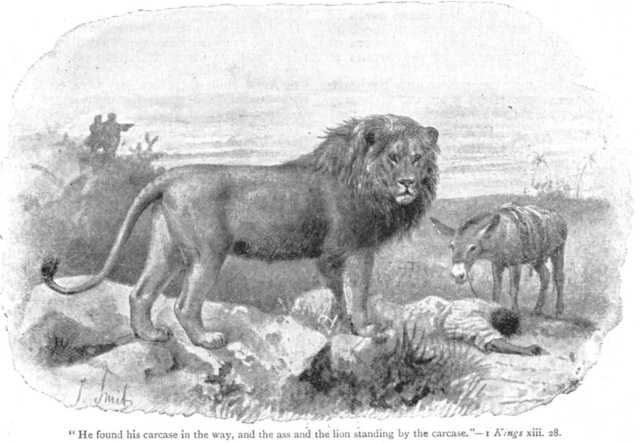
This time, Prophet #2 was truly speaking for the Lord, and his prophecy came true. Prophet #1 was attacked by a lion and died without honor, a disgrace.

A change of heart? (26-32)
Did Prophet #2 regret and repent of what he had done when he saw what happened to Prophet #1 and realized God’s word had come true? Had it not been for Prophet #2’s lies, Prophet #1 would have gotten safely home. Prophet #2 certainly seemed sorrowful, mourning Prophet #1’s death and requesting to be buried with him. He also supported and admitted the truth of God’s word that Prophet #1 had spoken to the altar.

Unhappily ever after (33-34, 2 Corinthians 7:10)
Second Corinthians 7:10 tells us:

For godly grief produces a repentance that leads to salvation without regret, whereas worldly grief produces death.

Think about Prophet #2’s remorse. Think about the remorse of Jeroboam earlier in the chapter, and consider these two verses. Which one do you think was experiencing “godly grief”? “Worldly grief?” While it certainly seems that Prophet #2 was exhibiting the “godly grief” this verse speaks of, we know from verses 33-34 that Jeroboam exhibited “worldly grief” back in the first part of the chapter with Prophet #1. He momentarily changed his behavior, but his heart did not change. He continued in sin and was ultimately destroyed.