Discernment, Old Testament, Prayer, Sunday School

Properly Praying the Promises ~ Sunday School Lesson ~ 6-15-14

PicsArt_1402888803113

These are my notes from my ladies’ Sunday School class this morning. I’ll be posting the notes from my class here each week. Click here for last week’s lesson.

Through the Bible in 2014 ~ Week 24 ~ June 8-14
Proverbs 16-24, 1 Kings 5-8, 2 Chronicles 2-7, Psalm 136
Properly Praying the Promises

There are lots of different ways of praying, and Solomon’s prayer at the dedication of the completed temple shows us several. Today, we’re going to take a look at the way Solomon addressed God’s promises in his prayer, and how we can do the same.

2 Chronicles 6:12-7:17

Humility (12-15) Solomon begins his prayer by humbling himself before the Lord. His physical posture is an outward, visible-to-the-people indication of his inward attitude of the heart and sets an example for the people, that they should humble themselves before God as well. When we pray, we are to approach God in humility.

As Solomon did, we:

  • confess God’s uniqueness, magnitude, and supremacy above all else, (14- “there is no God like you in heaven or on earth”).
  • confess God’s faithfulness and fulfillment of promises to His people (14-15- “keeping covenant and showing steadfast love to your servants…You spoke with your mouth, and with your hand have fulfilled it this day.”) What are some promises God has made to Christians that you have seen fulfilled?
  • ask God to keep His promises not yet fulfilled (16- “keep for your servant David my father what you have promised him,” 17- “Now…let your word be confirmed, which you have spoken”), not because there is any doubt that He will, but:
  1. as a way to call to mind and confess God’s faithfulness to keep His promises in the past. Seeing God’s track record of keeping His promises builds our faith and trust that He will continue to do so.
  2. as another way of acknowledging God’s attributes. He is faithful, sovereign, trustworthy, and a promise keeper.
  3. as a reminder to us to give God thanks, praise, and glory for His faithfulness and promise keeping.
  4. as a way of declaring our trust in Him. We ask Him to keep His promises, not hoping that He might, but knowing that He will.
  5. as a way of submitting ourselves to God, agreeing with Him about what He has spoken, rather than asking Him to agree with us about what we have spoken.
  6. as a way of praying in God’s will and in Jesus’ name. Often, when we pray, we’re not certain precisely what God wants to do (His will) in a given situation. When we ask Him to fulfill His promises, we can be certain we are praying for His will to be done and that He will do it.

cross-106416_640-1


What’s a promise, anyway?

When thanking God for fulfilling His past promises, or asking Him to fulfill as yet unfulfilled promises, we need to make sure we understand what constitutes a promise (and what does not) and which promises are for us as Christians (and which are not).

Not a Promise (Proverbs 22:6):
For example, we are in the middle of reading Proverbs. The proverbs aren’t promises (to us or anyone else). They are general rules of thumb. We can think of exceptions to many of them. “Raise up a child in the way he should go and when he is old he will not depart from it,” is generally true, but we have all certainly known of godly parents here and there who did their best to raise their child biblically, and then the child rebelled as a teenager or young adult and never came back to the faith.

Just because something is stated in the Bible doesn’t mean it is a promise that God is bound to. We have to discern between promises and other types of statements.

I Never Promised YOU a Rose Garden:
We also have to discern between promises that are meant for us as Christians and promises that were meant for another individual or group of people by studying God’s word in context.

Hi, my name is not David:
It’s easy to see, for example, in v. 16, that God’s promise, “You shall not lack a man to sit before me on the throne of Israel…” was made specifically to David, and not to us. First of all, Solomon clearly says, “keep for your servant David my father what you have promised him.” But even if it didn’t say that, it’s clear in other ways: Israel no longer has a king, you and I are not citizens of Israel, and there are no other Scriptures which indicate that God promises every Christian a line of heirs who will be kings of Israel.

“If my people…” Which people? (2 Chronicles 7:11-18)
tumblr_mo0ykqaNjr1ron0poo1_500


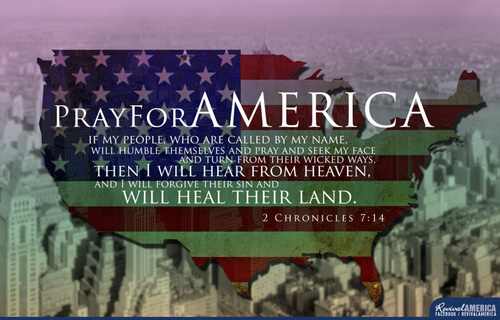
However, just one chapter over, is a verse that is often misunderstood to be a direct promise for Christians. 2 Chronicles 7:14 says:

if my people who are called by my name humble themselves, and pray and seek my face and turn from their wicked ways, then I will hear from heaven and will forgive their sin and heal their land.

Now, you’ve seen this verse on memes and bumper stickers and coffee cups. What do you think people usually mean when quoting this verse today? This verse is often quoted as a call to prayer and revival for American Christians, with the promise that if we pray, repent, and humble ourselves, God will turn America around and make it “one nation under God” again. We’ll have a Christian president and legislators who make moral laws. Abortion and homosexual “marriage” will be made illegal, and Christian prayer will be reinstituted in public schools. But is that really what this verse is promising, and is it promised to us as 21st century American Christians? Let’s take a look.

The first thing to notice about this verse is the very first letter. What kind of letter does it start with? A lowercase one. What does that indicate? It’s not the first word of a sentence. Verse 14 starts in the middle of a sentence.

If I gave you a recipe that consisted only of, “whip until frothy, adding the sugar gradually,” and told you to make the dish, you’d have a lot of questions. What am I making? Whip what? How much sugar? What else goes in the dish? What do I do before and after whipping and adding the sugar? In the same way that we can’t fully understand a recipe by just seeing one line of it, we don’t just rip one line or verse of Scripture out of the Bible without looking at the whole “recipe,” or context, or we won’t have an accurate picture of what it’s saying.

Let’s back up just one verse to the beginning of this sentence. Verse 13 says:

When I shut up the heavens so that there is no rain, or command the locust to devour the land, or send pestilence among my people, 14- if my people who are called by my name humble themselves, and pray and seek my face and turn from their wicked ways, then I will hear from heaven and will forgive their sin and heal their land.

This gives us a little better picture of what’s going on. Who is “I” and “my” here? Obviously God, because He’s the only one with the power to shut up the heavens, etc. But who is “my people” in both of these verses? Israel? All Christians for the past 2000 years? 21st century American Christians? Well let me ask you a couple of questions:

Supporting Scriptures:
Are there any other verses of Scripture that would support that this is a direct promise to all Christians for the past 2000 years or to 21st century American Christians? I don’t know of any other supporting passages that imply that if Christians humble themselves and repent that God will give them a nation governed by biblical laws and leaders and that we will have a society that behaves itself, morally.

In fact, in the New Testament, in the early church, we see the exact opposite. The more the church prayed, humbled itself, and spread the gospel, the more Rome persecuted Christians. Thousands were crucified, burned alive, thrown to the lions, and otherwise tortured and martyred. And yet, we never hear of them claiming 2 Chronicles 7:14 as God’s promise to them that He would turn things around if they would only humble themselves and seek His face more.

We have Jesus Himself saying, “If they persecuted me, they will also persecute you” (John 15:20) and, “you will be hated by all for my name’s sake.” (Matthew 10:22). In 2 Timothy 3:12-13, Paul says: “Indeed, all who desire to live a godly life in Christ Jesus will be persecuted, while evil people and impostors will go on from bad to worse, deceiving and being deceived.”

We can see the same thing today in countries like North Korea, Pakistan, and others that persecute Christians. Things are getting worse for Christians in those countries, not better (as 2 Timothy said), and none of those governments are turning around and embracing Christian ways.

Pestilence, anyone? (2 Chronicles 6:26-30)
When was the last time America experienced widespread drought, locust infestation, or pestilence? Verse 13 specifies that these agricultural hardships are the ones that God promises to heal. It is a promise of literal healing of the land so that crops will grow unharmed, game will be plentiful, and people will be able to eat, not a promise of a metaphorical “healing” of a nation’s immorality.

Now, if we claim that this “healing of the land” applies to us today, then we also have to claim that God will punish our disobedience with those very things He promises to heal (drought, locusts, and pestilence), because that’s what these verses are talking about. The people would disobey, God would punish them with these things, they would repent, and God would heal the land.

We can’t claim the promise without claiming the punishment.

And that’s not the way God disciplines Christians, as a whole, today. If it were, we’d see a lot more agricultural problems in our country. So, if we give it a little thought and a little context, we can see that verse 14 does not apply to Christians. Who does it apply to? Who is the “my people” God is talking about? Let’s read verses 11-18 and 6:26-30.

Now, it’s very clear that these are specific instructions to Solomon by God after the dedication of the temple, and a specific answer to Solomon’s prayer, and that the people that both Solomon and God are referring to is the people of Israel.

But it just sounds like it’s for us!
It may sound like this passage is a promise to us, but it isn’t. Just because something sounds good to us doesn’t mean it applies to us.

The reason this passage sounds like it applies to us is because there are some principles in this verse that do apply to us. How do we know? Because they are supported by other clear and direct Scriptures that we know apply to us.

Are we God’s people who are called by His name”? Yes (Acts 11:26)

Should we humble ourselves? Yes (1 Peter 5:6)

Should we pray and seek God’s face? Yes (1 Thessalonians 5:17)

Should we turn from any wicked ways we practice? Yes (Acts 3:19)

Will God hear from Heaven if we do these things? Yes (1 John 5:14-15)

Does God promise to heal our land of the agricultural problems He has punished our disobedience with if we do these things? No. He hasn’t. They don’t exist. He won’t. And there are no other supporting Scriptures that say He will.

Asking, as Solomon did, for God to fulfill His promises and thanking Him for those already fulfilled is a wonderful and worshipful way to pray. But, if we truly want to pray “in the name of Jesus” and pray rightly for God’s will to be done, we must use wisdom, discernment, and the tools God has given us to discover exactly what He has promised us.

And this is the confidence that we have toward him, that if we ask anything according to his will he hears us. And if we know that he hears us in whatever we ask, we know that we have the requests that we have asked of him.
1 John 5:14-15

Faith, Old Testament, Parenting, Prayer, Sunday School, Trust

Meet the Parents (of Samson) ~ Sunday School Lesson ~ 4-6-14

sunday school

These are my notes from my ladies’ Sunday School class this morning. I’ll be posting the notes from my class here each week. Click here for last week’s lesson.

Through the Bible in 2014 ~ Week 14 ~ Mar. 30-Apr. 6
Judges 1-18
Meet the Parents (of Samson)

In this week’s reading, we said goodbye to Joshua and met up with a variety of Israel’s lesser known judges. We also read about three better known characters in Israel’s history, judges Deborah, Gideon, and Samson. Often, when we come to passages like this, it’s like a treasure hunt. We focus on the valuables that are in plain sight. But, if we dig just a little, we can find more gems just beneath the surface. Today, we’re taking a look at two godly people who had a profound impact on Samson’s life: his parents.

Judges 13-14

Mr. and Mrs. Manoah
It’s always interesting to me that, just as we saw last week with the two spies, some of the most faithful of God’s servants are ordinary people like you and me serving God as they go about their daily tasks. And, just as with the two spies, in many cases, we never find out their names.  Samson’s mother was just this kind of nameless, faithful servant. Though we know little about her husband, Manoah, the most important thing about him—his faith—comes through loud and clear.

Barrenness (13:2-3)
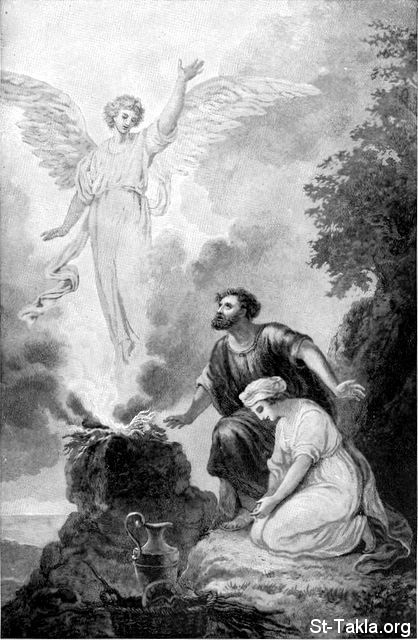
Mrs. Manoah was barren. Have you ever noticed how many “big names” in the Bible had mothers who were previously barren or who conceived miraculously? Joseph (Rachel), Samuel (Hannah), John the Baptist (Elizabeth), even Jesus (Mary), just to name a few. Things are different today, but, in manoah-wife-angel-offering the Bible, a miraculous conception was often a sign that the child would grow up to be a mighty man of God.

Barrenness was usually seen by others in the community as a curse by God or a punishment for sin (and sometimes it was: 2 Samuel 6:23). During that time in history, the only way for women to achieve status and be considered successful was by marrying and having children- particularly sons. A woman’s entire self-worth—in her own eyes, her husband’s eyes, and the eyes of her community—was at stake. So it’s easy to see why women and their husbands would have spent a great deal of time crying out to the Lord in prayer and seeking to be obedient to Him in hopes that He would grant their request for a child. We see this most clearly in the case of Hannah (1 Samuel 1), and it’s reasonable to surmise that this was likely also the case for Manoah and his wife.

Belief, Not Doubt (13:3-8)
It’s interesting that both times the angel of the Lord appeared to deliver His message, He initially appeared, not to the man, Manoah, but to the woman, his wife. Was it because she was praying at the time, or because her faith was stronger than her husband’s? This passage doesn’t tell us, so we don’t know. But, notice Mrs. Manoah’s reaction to the news that she would conceive. Did she laugh in disbelief like Sarah and Abraham did (Genesis 17:17,18:12)? Did she doubt like Zechariah (father of John the Baptist: Luke 1:18)? No, Mrs. Manoah believed. And, as a godly wife should, the first person she shared the news with and sought direction from was her husband.

Now let’s consider the reaction of Manoah to his wife’s news. Did he think her desire for a child had sent her over the edge or that she was making this up? No. He believed her without question. What does this tell us about the character, faith, and influence on her husband of Mrs. Manoah? “The heart of her husband trusted in her” (Proverbs 31:11) because she was a godly, trustworthy woman.

A Household of Faith (13)
In addition to spending time praying for a child, Mr. and Mrs. Manoah probably prayed regularly, like many other faithful Israelites, for deliverance from the Philistine oppressors, and here, we find them in prayer again.

Manoah not only trusted his wife, he had faith that the Lord would fulfill His promise. His first reaction was to believe and ask God the best way to obey Him. “And God listened to the voice of Manoah…” and answered his prayer of faith. He came back—to Manoah’s wife. Again, Manoah believed her without question and followed her out to meet the angel of the Lord.

When they met up with the angel, we see further evidence of this couple’s godliness. Though the angel had appeared and spoken twice with Mrs. Manoah, she, as a godly wife, does not take control of the situation or assert superiority over her husband. She takes a step back and, as a godly husband and leader of his home, Manoah steps up to the plate to assume the responsibility for his family and receive God’s instructions.

Manoah’s conversation with the Lord is fraught with faith. He doesn’t ask how or why they’re suddenly being blessed with a miracle child even though they’re just ordinary people. He simply accepts that it will happen. Manoah is confident that God is telling the truth and will keep His promise when he says, “When [not if] your words come true…” (12, 17). He believes God’s word that Samson will “begin to save Israel from the hand of the Philistines,” (5) when he asks about “the child’s manner of life, and…his mission” (12) so that he and Mrs. Manoah could prepare him to do so. He trusted in the www-St-Takla-org--12-Angel-Visits-Manoah-and-His-Wifecharacter of God, “the one who works wonders,” (19) and worshiped Him as such. He and Mrs. Manoah feared and trusted in God’s holiness as they fell on their faces at His departure (20).

Without a total grasp of the situation (22), Manoah believed God’s word that, “no man can see Me and live” (Exodus 33:20). Only later (21) did Manoah understand that He had been speaking with the angel of the Lord (Jesus – theophany: an appearance of the pre-incarnate Christ – {“My name…is wonderful” (18)- see Isaiah 9:6}—this is how people could “see God and live” even though God had said, “you cannot see Me and live.” They could not live through seeing God the Father, but they could live through seeing God the Son. Also a piece of supporting evidence for the Trinity). Jesus, the true deliverer and judge came personally to announce the birth of this temporal deliverer and judge who would point ahead to Christ.

Finally, we come full circle to Mrs. Manoah’s quiet trust in the Lord. Even with a strong faith like Manoah had, there can be moments of confusion. How could God say to Moses –the greatest leader Israel had ever known, the friend of God!—“you cannot see My face, for man shall not see me and live,”—yet here he and his wife were, having seen Him, but somehow still unscathed? How could anyone understand this?

But Mrs. Manoah shows us that faith means trusting God’s word even when we don’t fully understand His actions. Yes, it was true that God had said that people couldn’t live through seeing Him, but it was also true that He had visited them and told them they were going to have a son who would be a deliverer for Israel. How could both of those things be true at the same time? She probably couldn’t understand it either, but she encouraged her husband to trust God even in their confusion (23). And God kept His promise (24-25)

Trusting Despite the Circumstances (14:1-10)
Kids grow up, and as broken, sinful human beings, they sometimes make foolish decisions despite being raised in a godly home. That’s what Samson seems to have done here. While the Philistines were not one of the seven nations the Israelites were specifically forbidden to intermarry with, the principle behind God’s forbidding of intermarriage with those other nations was the same for the Philistines: they were idolaters and enemies of God and His people.

As godly parents, Mr. and Mrs. Manoah tried to steer their adult son to a godly choice of a wife. They reminded him that he was one of God’s people, and surely wanted him, as a leader in Israel, to set a good example for the people. Once again, they were seeking to be faithful to God.

thInstead of honoring his parents, Samson chose poorly. Or so it seemed. Either Samson was operating solely on lust and God sovereignly used the situation to His own advantage, or Samson, moved by God, was intentionally trying to infiltrate the Philistines by marrying in. The passage doesn’t make this precisely clear to us.

And, it wasn’t clear to Samson’s parents, either. So, perhaps thinking that they could influence the girl’s family or hoping Samson would change his mind, they went along with his decision and accompanied him to meet the new in laws. Once again, though the circumstances were worrisome and hard to understand, Mr. and Mrs. Manoah trusted that the God who had already worked so many wonders in their lives could handle this situation. They had faithfully obeyed what God had asked them to do and raised Samson in a godly home. Now, they had to sit back and watch God take care of the rest. And He did. Again, God kept His promises.

And we know that for those who love God all things work together for good,
 for those who are called according to his purpose. Romans 8:28

Prayer, Sanctification, Worship

Great Expectations

expectgreatthings-necklace (1)

Do we expect too much from God? Is that even possible?

No.

Yes.

Well, kinda.

You see, I’m not talking about expecting something and God being unable to deliver it. That’s just plain silly when talking about our omnipotent God. No, what I’m talking about is whether or not the expectations we come up with are grounded in biblical reality.

What do we mean when we talk about “praying expectantly” or coming to a time of corporate worship, study, or prayer, and “expecting God to do something”? Just what is it we are expecting God to do?

Could it be that He’s already doing something and we’re just not seeing it?

Sometimes, when we read God’s word, we expect God to do something just as “big” as He did in Moses’, Paul’s, or some other Bible hero’s life. We forget that the Bible is sort of like a “highlight reel” of the events in the lives of a handful of people that God drafted to be part of His visible activity at that moment in history.

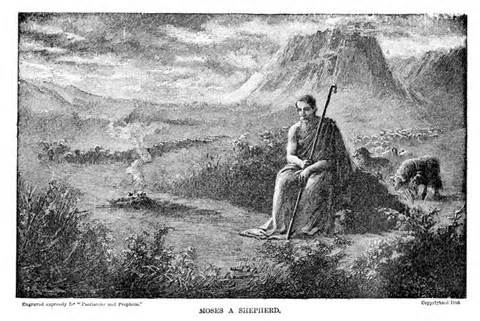
We focus on the moments Moses had at the burning bush or walking through the Red Sea, and that’s what we want, too. r643167_4468740But we forget that Moses’ life wasn’t like that every day. We forget about the eighty years he spent wandering around the desert, half in the day to day monotony of shepherding on the back side of Midian, the other half, wandering around the wilderness with the people of Israel.

Eighty years of nothing special. Day after day of ordinary. Week after week of God not “showing up” and doing something amazing. Eighty years. That’s a lifetime for most of us.

Was God any less at work in Moses’ eighty years of desert thwandering than He was when He gave Moses the Law or spoke to him face to face or sent manna? Of course not. During those days, God was protecting Moses from the heat and wild animals, providing food and shelter for him, blessing him with a wife and children, directing his steps, teaching him obedience and trust.

Just like He does for us.

Have you read a Bible passage this week that allowed you to see more of God’s glory? God is doing something. He’s revealing Himself to you.

Are you praying for someone’s salvation? God is doing something. He’s working on the heart of that person.

Did you have a place to sleep last night and food on your table today? God is doing something. He’s providing for your needs.

Do you leave church on Sundays having been fed the truth of God’s word by your pastor? God is doing something. He’s growing you to spiritual maturity.

Is it possible that we’re expecting God to do something in our lives that isn’t in His particular plan for us? You aren’t Moses, and neither am I. Neither were the million or so other Israelites Moses led out of Egypt, and neither have the billions of other people been who have inhabited earth since Creation. Moses was Moses. You are you. God doesn’t have the same plan for your life He had for Moses’ life.

And, by the way, have you ever noticed that most of the people in the Bible through whom God did something “big” were not expecting it or asking for it? Moses wasn’t expecting God to show up in that burning bush. David wasn’t asking God to do great things in his life when Samuel dropped by to anoint him as the next king. Both of them were hanging out with the sheep when God called them. Paul thought he was already an awesome servant of God when he got knocked off his high horse. Mary wasn’t expecting to be expecting. She was just a teenage girl growing up and learning how to run a household.

1 Thessalonians 4:10b-12 says:

But we urge you, brothers to do this more and more, and to aspire to live quietly, and to mind your own affairs, and to work with your hands, as we instructed you, so that you may walk properly before outsiders and be dependent on no one.

That’s what all of those Bible characters were doing when God chose them. Just regular people living regular lives doing regular work. Just like billions of other people through whom God has not chosen to do anything big and spectacular.

keep-calm-god-is-at-workBut that doesn’t mean God hasn’t been “doing something” in all of our lives. In fact, the vast majority of the work God does in our lives every single day goes unnoticed and unappreciated.

So, instead of setting our expectations on those very rare “wow factor” works of God that seem so appealing, maybe we should be asking Him to open our eyes to, and make us thankful for, all of the things He’s already doing in our lives. Instead of having great expectations of things that God has never promised us, maybe we should ask Him for, and expect Him to, do what He has promised:

Forgiveness for our sin

Christ-likeness

Provision for our needs

Endurance

The ability and opportunity to help others

Faithfulness

Humility

Patience

The opportunity to share the gospel

Because “all the promises of God find their Yes in him.” You can expect it.

Bible, Church, Creation, Discernment, Evolution, False Teachers, New Apostolic Reformation, Prayer, Word of Faith Movement, Worship

Keep On Keeping Up: 6 More Issues Christians Need Guidance About From Our Pastors ~ Part 2

14333562683841

Recently, I read a great article by Justin Peters entitled “Ignorance Is Not An Option.” I would call this article a response to that one, but it’s really more of a…well, I guess you could call it a “ricochet”. Last week, in Part 1 of this article, I discussed five current issues in evangelicalism that we folks in the pew need some guidance on from our pastors. Following are six more issues we all, pastors and church members alike, need to learn about and and keep a biblical perspective on.

Creation vs. Evolution:  Sorely missing from some pulpits these days is the exhortation to Christians that the Bible is our final authority on every issue in life and that we are called to believe God’s word- believe it intelligently, yes, but believe it, even in the face of worldly opposition. This admonition does not begin with Genesis 3, it begins with Genesis 1.  We are called to believe that God created the world and that He created it the way the Bible says He created it.

*Resources:
Answers in Genesis– From Creation apologetics to scholarly scientific articles to colleges that teach Creation to VBS curricula, you would be hard put to find a more comprehensive, gospel-centered Creation resource.
The Case for a Creator by Lee Strobel

Denominational Differences: Do you know the basics of what the major Christian denominations teach (salvation, baptism, communion, membership, etc.) and the differences between their doctrine and the doctrine of your own denomination? Are you aware that some denominations which are considered by many to be “Christian” hold to doctrines- including soteriology- that conflicts with God’s word? Are you fairly well acquainted with the doctrines of the denomination or religion that is predominant (or secondary if your own denomination predominates) in your area? Pastoral instruction on the basics of other denominational beliefs (as well as their own!) can be quite helpful as we church members relate to friends and family members or help new church members who come from a different denominational background.

Resources: 
GotQuestions.org For a brief overview of most of the major religions and denominations, type “Methodist,” “Mormon,” etc., in the search box.

For more detailed information, find the denomination’s main web site and click on their “statement of faith” or “what we believe” page (Keep in mind that there are several different “flavors” of Baptist, Presbyterian, Lutheran, etc., whose doctrines and practices may vary significantly from each other.), or get to know local pastors of other denominations and just ask what they teach.

The Word of Faith Movement:  Used almost interchangeably with the term “prosperity gospel,” anti-biblical Word of Faith concepts such as the “little gods” doctrine (we have a divine nature), health and wealth prosperity (it is never God’s will for you to be sick or poor, and if you are, it’s because of your lack of faith), positive confession (Our words have the power to create reality or speak things into existence. Conversely, negative words create negative circumstances.), and twisted teachings about tithing (“sow your seed so God will multiply it back to you”), among others, are infiltrating unsuspecting churches at an alarming rate, and many are being deceived.

Because church members are often introduced to these doctrines by seemingly innocuous, popular speakers and leaders such as Joel Osteen, Joyce Meyer, Christine Caine, Hillsong personnel, Robert Morris, John and Lisa Bevere, John Hagee, Kari Jobe, and Judah Smith, whose materials are sold at Christian stores, conferences, and web sites, church members, and even some pastors, have no way of knowing they’re encountering false teaching unless they understand sound biblical doctrine and have a modicum of discernment skills.  It is now more necessary than ever for Christians to be trained in the basics of hermeneutics and discernment. 

Resources:
A Call for Discernment by Justin Peters
Word Faith Movement at Stand Up For the Truth
Sound the Alarm: The Dangers of the Word of Faith Movement by Emmanuel Davis
A Softer Prosperity Gospel: More Common Than You Think at 9Marks

The New Apostolic ReformationHopefully, your church members have never encountered NAR leaders, doctrines, or manifestations, or, if they have, were immediately turned off by its weirdness and because it is so blatantly anti-biblical. NAR takes the Word of Faith movement, and –BAM!– kicks it up a notch. But, as a gateway drug can lead to addiction and addiction can lead to a fatal overdose, so exposure to Joel Osteen can lead to T.D. Jakes to Benny Hinn to holy laughterstrange “anointings,” glory clouds of gold dust, tremoring, false prophecy, and being “drunk in the Spirit.” This is signs and wonders on steroids.

The NAR is also largely responsible for many of the corrupt teachings on prayer (mainly through Bethel Church in Redding, California) that have become popular in recent years, such as: contemplative/centering prayer, lectio divina, the International House of Prayer, Sozo prayer, healing rooms, and soaking prayer, as well as the false teaching of dominionism.

Resources:
False Spirits Invade the Church: Part 1, Part 2, Part 3  A Documentary by Andrew Strom
Love and Death in the House of Prayer by Jeff Tietz of Rolling Stone

The Emergent/Emerging Church MovementEver heard the old joke, “The only rule is…there are no rules!” Well, replace the word “rule” with “doctrine” and you’ve got a somewhat loose definition of the emergent church. It’s a post-modern mix of ethereal non-traditionalism, feelings, experiences, and mysticism as a means of worship, anti-absolute truth, ideological inclusivism, and anything goes universalism, topped off with a heaping helping of “did God really say…?“. Everything in the Bible, from moral absolutes to the divinity of Christ to the atonement to every other jot and tittle of the Word is questioned, if not outright denied. The only doctrine is…there is no doctrine. And, unfortunately, we church members can find any number of emergent books and materials on the shelves at our local Christian bookstores.

Resources:
What is the Emerging Church? by CARM.org
Exposing the Emergent Movement by Stand Up For the Truth

Bible Translations and Paraphrases, Study Bibles, and Theme BiblesIf the members of your church are carrying the LOLCat Bible or the KLV (yes, folks, that’s the Klingon Language Version of the Bible {Thanks a lot, Aaron. I’ll never be able to unsee that.}) into the sanctuary every week, you probably need more doctrinal intervention than I’m qualified to offer. But, while there are a number of theologically sound study Bibles and theme Bibles out there, there are some that may be just as theologically off base as the gospel according to kitty cats and Star Trek. Joyce Meyer’s Everyday Life Bible, Joel Osteen’s Hope for Today Bible, Sarah Young’s Jesus Calling Devotional Bible, and T.D. Jakes’ Woman Thou Art Loosed Bible are a few that come to mind. (Notice that these are all sold on a Christian web site right alongside materials that teach sound doctrine.)

Are you somewhat familiar with the most common Bible translations being used today, and which ones are the most accurate? Do your church members understand the difference between a translation and a paraphrase? What about gender neutral Bibles? There is such a variety of Bible options available today that the members of your congregation could likely use some guidance in selecting an accurate translation for studying God’s word.

Resources: 
BibleGateway.com– Just about every Bible translation and paraphrase you can imagine, all on line, all free. Compare a few versions side by side, and, if you’re thinking of buying a new version, try it out at BG before you buy.
Comparison of English Bible Translations
Translation Comparison Charts
How the Use of Some Bible Versions Can Twist God’s Truth at The Sacred Sandwich

*The resources given are obviously not an exhaustive list. For the most part, they are resources I have used myself, found to be helpful, and trust to be generally doctrinally sound. There are many other wonderful resources out there, but our most important resource is to compare all things and people to God’s word in context.

Homosexuality, Legislation, Prayer

SCOTUS to Rule on Same Sex “Marriage”: A Call to Prayer and Godly Response

Tomorrow, Wednesday, June 26, the Supreme Court is expected to rule on two cases related to same sex “marriage” (SSM): Hollingsworth v. Perry, which seeks to overturn Proposition 8, California’s current ban on same sex “marriage,” and United States v. Windsor, which challenges the constitutionality of the Defense of Marriage Act (DOMA).

I’d like to ask you, my readers, to pray for God’s mercy as the United States faces these decisions tomorrow. May He be merciful by allowing all bans on same sex “marriage” to stand:

For His people:
Ever since same sex “marriage” became a hot button issue, and despite the claims of the homosexual lobby that legalizing it won’t harm Bible-believing Christians, there have been numerous cases of Christian bakers, photographers, florists, and even churches who have been sued because they cannot, in good conscience, tacitly endorse same sex “marriage” by providing their services at such weddings.

If the Supreme Court rules in favor of SSM, these cases will increase and expand in scope and will affect far more individuals, churches, and Christian-owned businesses.  Please pray that God will show mercy to His people and protect their businesses and churches.

For homosexuals:
God established the concept and practice of government for our own good (Romans 13:1). Without law and order, anarchy would reign. Any current local, state, or federal law against same sex “marriage” is a gift from God to those caught in the sin of homosexuality. Just as a fence around a yard is designed to keep children from wandering away, the boundary of the laws against SSM is one of God’s ways of protecting people from their own sin. If they won’t listen to Him, perhaps they will bounce off the brick wall of the law and turn back to Him.

But if SSM is ruled in favor of  tomorrow, that boundary will be removed, and, as Christians, that should grieve us for our homosexual friends and loved ones. Although God has always done so on an individual basis, we will begin to see what it looks like for God to “give them up” to their sin on a corporate level.

Claiming to be wise, they became fools, and exchanged the glory of the immortal God for images resembling mortal man and birds and animals and creeping things.

Therefore God gave them up in the lusts of their hearts to impurity, to the dishonoring of their bodies among themselves, because they exchanged the truth about God for a lie and worshiped and served the creature rather than the Creator, who is blessed forever! Amen.

For this reason God gave them up to dishonorable passions. For their women exchanged natural relations for those that are contrary to nature; and the men likewise gave up natural relations with women and were consumed with passion for one another, men committing shameless acts with men and receiving in themselves the due penalty for their error.

And since they did not see fit to acknowledge God, God gave them up to a debased mind to do what ought not to be done. They were filled with all manner of unrighteousness, evil, covetousness, malice. They are full of envy, murder, strife, deceit, maliciousness. They are gossips, slanderers, haters of God, insolent, haughty, boastful, inventors of evil, disobedient to parents, foolish, faithless, heartless, ruthless. Though they know God’s righteous decree that those who practice such things deserve to die, they not only do them but give approval to those who practice them.

Romans 1:22-32

The legalization of SSM will be tragic for homosexuals because it will bolster their rebellion against God and separate them from Him even further by encouraging them to stay in, celebrate, and flaunt their sin. I can’t tell you how many times I have thanked God for protecting me from myself and my own sinful desires. I am praying that God will protect the homosexual community in the same way, and I ask you to join me.

What if God says “no”?
What if, in His wisdom and timing, God chooses to allow the Supreme Court to legalize SSM tomorrow? What is to be the Christian response?

Will we grieve for our homosexual friends and loved ones? Our country? Ourselves? Yes.

Should we act out and speak out in vitriolic anger and bitterness? ABSOLUTELY NOT.

Our battle is not against people whom God loves and desires to rescue. Our battle is against Satan, who is holding those precious people as his captives and slaves to sin.

And how do we battle him?

With the gospel.

The good news of Jesus Christ –that He took the punishment ALL of us deserve for ALL of our sin– still has the power to save anyone, homosexual, heterosexual, or otherwise, who will repent and trust in His death, burial, and resurrection to save him.

What if God says “yes”?
What if, in His wisdom and timing, God chooses to protect the bans on same sex “marriage”? How should Christians respond?

In humility and gratitude in our hearts to God, and with the gospel.

There could hardly be a less Christlike response on the part of those who claim to be His than to boast and gloat in a snotty “We won! We won!” sort of attitude. Are you kidding me? We didn’t “win” anything. A court decision doesn’t change anybody’s heart. The same people who were lost and on their way to hell today will still be lost and on their way to hell tomorrow unless we share the gospel with them and God saves them.

At the end of the day, it’s not about rights or legislation or which side won or lost. It’s about a King who hung on a cross so that His subjects, held as prisoners of war, could be set free.

Remember that with me, and let’s pray.