Mailbag, Prayer

The Mailbag: What is Contemplative Prayer?

mailbag

What is contemplative prayer, and is it biblical?

Contemplative prayer, often called centering prayer, (and connected to sozo prayer and soaking prayer) is very much like a “Christianized” transcendental meditation (similar to New Age or Buddhist meditation). You are supposed to sit quietly, empty your mind, and repeat a biblical word or phrase over and over until you begin “hearing from God.”

Is this a biblical form of prayer? No, and it is also very dangerous. Many who have come out of this practice and churches or organizations which promote it (the International House of Prayer, or IHOP, and Bethel “Church” in Redding, California, are major proponents) report that contemplative prayer is much like being hypnotized and that it was an open door for demonic opression and even possession.

Our beliefs and worship practices are to be drawn from Scripture, and nowhere in Scripture are we told to pray like this. When the disciples asked Jesus how to pray, He did not tell them to empty their minds and repeat a mantra. He said,

“And when you pray, do not heap up empty phrases as the Gentiles do, for they think that they will be heard for their many words. Do not be like them, for your Father knows what you need before you ask him. Pray then like this:

“Our Father in heaven,
hallowed be your name.
Your kingdom come,
your will be done,
on earth as it is in heaven.
Give us this day our daily bread,
and forgive us our debts,
as we also have forgiven our debtors.
And lead us not into temptation,
but deliver us from evil.”
Matthew 6:7-13

Jesus taught us to talk to God using intelligible words, worshiping Him, repenting and seeking His forgiveness, and asking Him to provide for our needs. It is not His desire that we mimic a pagan form of meditation.


Additional Resources:

What is Contemplative Prayer? at Got Questions

What is Centering Prayer? at Got Questions

Contemplative Prayer at Berean Research

IHOP is Dangerous: Stephanie’s Testimony


If you have a question about: a well known Christian author/leader, a Bible passage, an aspect of theology, a current issue in Christianity, or how to biblically handle a family, life, or church situation, comment below (I’ll hold all questions in queue {unpublished} for a future edition of The Mailbag) or send me an e-mail or private message. If your question is chosen for publication, your anonymity will be protected.

Prayer, Throwback Thursday

After This Manner Therefore Pray

Prayer. It seems so simple- just talk to God. But when it’s time to actually do it, there can be a million questions. What should I pray about? How long should I pray? Do I have to say “Thee” and “Thou”? Eyes opened or closed? Do I have to be on my knees? Should I speak aloud or pray silently?

It’s nothing to be ashamed of. The disciples lived with Jesus. Heard Him pray. Watched Him pray. And they still had to ask Him, “Lord, teach us to pray.” Jesus graciously answered their request with what we now call “The Lord’s Prayer” or “The Model Prayer.” There’s one version of it in Luke where Jesus teaches the disciples personally, and another, expanded version in Matthew 6:9-13 in the Sermon on the Mount, the version we’ll be looking at today.

Even after all these years, and after hundreds of books and sermons on prayer, Jesus’ simple teaching is still the best way to make sure we’re “doing prayer right.” When we submit the way we pray to His instruction, we can be sure we’re praying the way He wants us to pray. So how can we follow the Lord’s Prayer in our own prayer lives? Let’s take a look.

Pray then like this:

This may not seem like a very important phrase – after all, it’s not even in the body of the Lord’s Prayer – but it’s actually vital to our understanding of modeling our prayers after the Lord’s Prayer. Notice Jesus didn’t say, “repeat after Me” or “recite these exact words.” He said “pray like this.” The NASB renders this phrase as, “Pray, then, in this way.” KJV says, “After this manner therefore pray.” And the NIV has, “This, then, is how you should pray.”

The point? Jesus gave the Lord’s Prayer as an outline for prayer or as a sample prayer, not a specific set of words to recite every time you pray. While it’s fine to sincerely pray – and mean – the exact words of the Lord’s Prayer, we must guard against the “vain repetition” of “empty phrases” Jesus had warned the disciples about just two verses earlier. Mindlessly rattling off the words of the Lord’s Prayer out of habit or so you can check prayer off your daily “to do” list is not prayer. Instead, try using each phrase of the Lord’s Prayer as a guide to how you should approach Him in prayer.

“Our Father in heaven, hallowed be your name.

Take some time to worship God and praise Him just for being Him. Contemplate how high and holy He is and how lowly you are in comparison. Think about, and thank Him for some of His attributes that we find in Scripture- His goodness, justice, compassion, omnipotence, wrath, mercy, and grace. You might even want to sing a hymn or song – like “Holy, Holy, Holy” or “God Is So Good” –  that focuses on God’s holiness or other attributes.

Your kingdom come,

Do you long for Christ to return? It’s OK to tell Him that and to take some time to focus on the joy that will be ours in eternity. Christ is coming back (hopefully today!) to gather His people, weary of this sin sick world, to Himself. But remember, He will ONLY be taking people who know Him as Savior and Lord. Is there someone you need to share the gospel with? Someone you desperately desire to see saved? This is a great time to pray for that person and ask God to give you the opportunity, and the right words, to share with her.

Your will be done, on earth as it is in heaven.

In Heaven, God is always glorified, always praised, and always obeyed. Wouldn’t it be great if that were the case on earth? Well, it’s not, because of sin. Is there an area of obedience you’re struggling with? Ask God to help you with it. Pray that God will help your children to be obedient to you and your husband. Pray that God will strengthen your husband’s obedience to Him in his areas of weakness. Pray that your loved ones, boss, and elected officials will make the decisions God wants them to make. Ask God to guide your pastor, elders, and church members, and pray that they will be obedient to His word and His leading.

Give us this day our daily bread,

Here, we recognize and thank God that He is our provider. Even the smallest things in life, like a simple loaf of bread, only come to us because God provides them. He wants us to put our trust in Him, not a paycheck, for our needs. A great passage to go along with this verse is Philippians 4:6-7:

do not be anxious about anything, but in everything by prayer and supplication with thanksgiving let your requests be made known to God. And the peace of God, which surpasses all understanding, will guard your hearts and your minds in Christ Jesus.

God doesn’t want us to worry about the things we need. He wants us to trust Him. When we take our needs to Him in prayer, we are declaring our trust in Him to take care of us – in His way and in His time – and that is where our peace comes from.

Notice, too, the words “this day” and “daily” in this verse. They show us that prayer is an all day, every day affair. God wants us to keep coming back to Him in prayer again and again. It helps us recognize our dependence on Him.

These words also help us to focus our prayers on what we need today. It’s OK to pray about future events, but sometimes focusing on future “what ifs” can tempt us to worry, and, as Jesus says later in Matthew 6, “do not be anxious about tomorrow, for tomorrow will be anxious for itself. Sufficient for the day is its own trouble.” (34)

And forgive us our debts, as we also have forgiven our debtors.

Repentance time. Did you notice that this verse (12) is the culmination of a sentence that began in the previous verse (11)?  “Give us this day our daily bread, and forgive us…” Repentance for our sin and asking God to forgive us is also also an all day, every day affair. But, praise God, so is His mercy to forgive! Lamentations 3:22-23 reminds us:

The steadfast love of the Lord never ceases;
    his mercies never come to an end;
they are new every morning;
    great is your faithfulness.

Take this time to confess your sin and ask God to cleanse you and forgive you. And be sure to ask Him to show you any bitterness you may be harboring in your heart against someone. Forgive that person and ask God to help you make things right with her. Consider the magnitude of your sin against God. If God has forgiven you of your sin against Him, who are you to hold a grudge against someone who has sinned against you?

And lead us not into temptation, but deliver us from evil.

Sin. It’s always lurking around just waiting to ensnare us again, isn’t it? Think about the sins you struggle with. Ask God to show if there are any changes you can make in your life to stay away from temptation to those sins. Pray that He will strengthen you to be obedient to Him when you can’t avoid tempting circumstances, and ask Him to show you the godly way out of every situation, which He has promised to provide. Pray for God’s protection from evil people or circumstances and ask Him to protect your family and  church.

For thine is the kingdom, and the power, and the glory, for ever. Amen.

The KJV includes this phrase at the end of the Lord’s prayer, but it isn’t in the earliest and most reliable biblical manuscripts (from which modern versions such as the ESV are translated). But since its meaning and intent is thoroughly supported by other Scriptures, there’s certainly no harm in including it as part of the model for your prayer time.

Acknowledge and thank God for His sovereignty over all things, His power, His glory, and His eternality. Ask Him to help you live in such a way that others will see these attributes of His. Submit yourself to Christ and pray that God will help you to follow Him humbly and honorably.

Eyes open or closed? On our knees or not? Jesus didn’t address those kinds of things, so we have a certain amount of liberty in those secondary issues. Jesus’ desire is that we stay in constant communion with Him in prayer, humbly honoring Him, praising Him, thanking Him, repenting of sin, and depending on Him for our every need. So, let’s pray then, like this.


Additional Resources:

Articles on Prayer

Sweet Hour of Prayer Bible Study

Episodes about Prayer at A Word Fitly Spoken

Prayer

Throwback Thursday ~ “Can We Talk?”

Originally published, February 9, 2012

“Thanks for meeting with me, today, Dad,” said the tow-headed six year old as he strode across the study, arm extended for a firm handshake.

Smiling, the father grasped the child’s hand, assuming a hug would follow. When none did, he stood, somewhat dismayed, as his son took the chair opposite the imposing mahogany desk and motioned for him to take his accustomed place behind it.

Oh. This was going to be one of those conversations.

“I only have about five minutes,” said the boy, briskly, as he clicked open the latches on his caramel brown leather brief case and withdrew two copies of a neatly typed agenda, “so let’s get down to business.”

“First, as I’ve mentioned numerous times, I’d like you to get me that big shiny motorcycle I’ve been wanting. And would you please hurry up about it? I’ve been asking for that bike for a long time, and I don’t understand why you haven’t given it to me yet.”

Again with the motorcycle? Doesn’t this kid get that he’s six? There’s no way he could handle a bike that large and powerful, and I love him too much to see his guts splattered all over the pavement. Yeah, that’s gonna be a big, fat “no.”

“Next,” the boy hurried on, “I’m kinda in a jam. You see, there’s this big spelling test tomorrow, and I haven’t had time to study for it. Could you sit by me in class tomorrow and give me all the answers?”

Haven’t had time? Yesterday he played video games for two hours, and the day before that I heard him throwing a tennis ball up against the side of the house all afternoon!

“And finally, Sparky seems to be limping around lately. Could you take a look at his paw and fix it up with some of that special cream?”

Well…sure. You know I’m always glad to help, but…

“Thanks for everything, Dad,” the boy chirped as he hopped off his chair and headed for the door, “I’ve got to run. See you later!”

Bye…Son.


I can just see that Dad standing there, forlorn, missing his son. The son who lives under the same roof with him. The son he watches play ball, play with his friends, and achieve the great feats of six year olds. The son who never really talks to him.

The father longs to have an intimate, “Daddy’s home!” relationship with his child. To have his son run up, give him a hug, and jump in his lap to tell Dad all about his day. He wants to share his child’s joys and sorrows. He wants to hear his heart.

And if the child really thought about it—or even knew such a relationship could exist—he’d want the same thing.

We can have that kind of joyous relationship with our Heavenly Father. It really is possible.

But how?

Well, think about how you relate to the person you love the most in the world. Because you love that person, you want to spend time with him. You’re relaxed around each other. You enjoy being together. You share everything—your deepest secrets, your regrets, your hopes for the future, your concerns for others, your frustrations, your joys, your sorrows, even the mundane, day to day happenings of life.

You’ve probably never read a book, taken a class, or attended a lecture on how to talk to that special someone. And you’ve probably never made a list of conversation topics for your next get-together with him. This is a friendship, not a business meeting.

Now think about how our connection to God is illustrated in Scripture. He’s called our Father (Matthew 6:9); Jesus is our brother (Matthew 12:50) and our friend (John 15:14); the church is the bride of Christ (Revelation 19:7). These are the most intimate relationships we know, and they’re used to describe a bond of love and friendship with God.

So, why do we have so much trouble talking to Him? Why is it that, so often, what’s supposed to be a heartfelt conversation with God feels like a one-sided recitation of a laundry list of prayer requests?

In some ways, we’ve done it to ourselves. There are thousands of books, Bible studies, and other materials on how to pray. Preachers preach on it. Teachers teach on it. There are acronyms you can follow, lists you can make, prayer calendars, even apps and on-line prayer organizers. None of these things are inherently bad, in fact, some are excellent—I’ve used and recommended some of them, myself.

But, I think that, sometimes, when faced with all of these resources and methodologies, one of two things can happen. First, you can become paralyzed by all the choices, not know which one to choose, and give up on prayer because you think it’s too complicated. Or, you might try to use too many prayer resources and become overwhelmed because they don’t work for you or you can’t keep up with all of them. Second, you can fall into the trap of thinking you have to use some sort of prayer resource or methodology. You can become enslaved to the structure, and that stands between you and intimacy with God like a brick wall.

May I make a suggestion here?

Throw out the lists. Put away the prayer calendar. Turn off the app.

Just talk to your Father. Talk to Him like He’s the person you love most in the world. Pour out what’s on your heart to Him.

If you’re not sure how to do that or what to say or whether you might be doing it wrong, tell Him about that, and ask Him to help you. It’s OK to ask God to show you how to talk to Him. The disciples did, and Jesus gladly obliged (Luke 11:1-13).

Don’t become paralyzed by the number of prayer requests you think you have to keep up with, either. I know that some churches have prayer lists a mile long, plus prayer calendars for missionaries, and you have friends and relatives asking you to pray for certain things. Sometimes, our prayer time can feel like we’re the office flunky armed with a long list of orders being sent out to pick up lunch for everybody. “Get those orders right! Don’t forget anything!” But prayer is not about completing a checklist of everyone else’s concerns. It’s about you and God, and it should be governed by God, not ruled by a list.

Wait a minute. This is starting to sound selfish. Aren’t we supposed to pray for others? Well, yes…and, no. What we’re supposed to do is to submit ourselves and our prayer time to God’s word and the leadership of the Holy Spirit.

That sounds great, but what does it mean in practical terms?

  • Study God’s word before you pray. As you do, He’ll begin leading you to the things He wants you to pray about.
  • Ask God what to pray about. Often, I’ll open a prayer meeting by praying that God will lead our prayer time and that He will put all the things on our hearts that He wants us to pray about.
  • Resist the list. Trust God to lead you to the things He wants you to pray about, and let your conversation with Him flow freely from your heart. Don’t worry about forgetting something on your prayer list.
  • Prayer time isn’t self-contained. Usually, my praying for others is done throughout the day rather than during my set prayer time. When someone asks me to pray for something, I’ll stop right then and do it. There are certain missionaries and other Christian ministries that I pray for when I receive an e-mail or Facebook update from them. Most of the time, unless God lays something on my heart during my personal prayer time, I only pray for requests on the church prayer list during the prayer meeting in which I receive them.

Relax. Just talk to Him.

“…the prayer of the upright is His delight.” Proverbs 15:8

Politics, Prayer, Throwback Thursday

Throwback Thursday ~ Not Gonna Bow: 5 Reasons Prayer in School Isn’t the Magic Bullet Christians Think It Is

Originally published August 29, 2014Prayer In School

“We need to put prayer back in school!” It’s a well worn mantra that many Christians have been shouting from pulpits, in PTA meetings, and now on social media since the early 1960’s when it was outlawed. No, we don’t need to put prayer back in public schools, and I think if Christians who think that the United States would revert to some idyllic 1950’s utopia by re-instituting classroom prayer would give it five minutes of serious thought, they would run as far as they could from the idea of prayer in public schools.

Now, just so there are no misunderstandings, when I say “prayer in public schools,” I’m not talking about things like a child saying the blessing over his own lunch, or a group of kids who want to pray together during free time, or an after school club that wants to include prayer. Those are all voluntary, private things that should, by all means, be allowed. When I say “prayer in public schools,” I’m talking about a teacher or a student or someone over the loudspeaker leading the entire class in prayer during class time. And we definitely do not want that. Why?

1. What’s good for the Christian goose is good for the Muslim/Mormon/Atheist gander.
There is no way in the current cultural climate –none whatsoever- that any court in this land will re-institute Christian prayer, and only Christian prayer, in the classroom. And even if some well meaning judge did manage to do so, his decision would be overturned faster than you could say “amen.” You want prayer in the public school classroom? You might get Christian prayer, but you’re also going to get Muslim prayer, Mormon prayer, atheist prayer, Hindu prayer, Satanist prayer, and any other sect that comes along and wants to do prayer in the classroom. Do you really want your six year old faced with the choice of participating in a Satanic prayer or trying to get permission to abstain? Neither do I.

2. Why is it so important that we have prayer in schools?
Assuming you don’t work at a church or ministry, does your workplace gather all the employees at the beginning of the day and start with prayer? No? Has that been deeply detrimental to you personally or to your workplace? No? Then why is it so important that schools have prayer?

3. Post hoc ergo propter hoc.
This nifty little Latin phrase means “after this, therefore, because of this.” It refers to the faulty reasoning people sometimes use by assuming that because two events occurred near the same time or seem to be related, one of them must have caused the other.

Time and time again, I have heard Christians bemoan the moral state of this country and wail, “It all started when they took prayer out of schools!”

Post hoc ergo poppycock

If the moral state of this country was so perfect before 1962, then how in the world did prayer ever get taken out of schools in the first place? No, things started going downhill in this country long before prayer was removed from schools. It was as a result of that moral decay that prayer was taken out of schools.

Saying that the removal of prayer from public schools created the mess our country is in today would be like someone sixty years from now saying, “When the Supreme Court legalized gay marriage nationwide, that’s when things started going bad for America.”

Because things are just so morally peachy right now.

4. It isn’t biblical.
It is not the job of a secular governmental institution or employee to monitor or lead our children in prayer, and no one could make the case from God’s word that it is. Scripture tells us that leading in prayer is the job of Christian parents and the church.

Neither would it be biblical for the sake of unsaved children in your child’s class that you’re hoping will somehow get saved by someone leading a prayer every morning. That’s not how people get saved. If you’re concerned about lost children, teach your child how to share the gospel. Befriend the children’s parents and share the gospel with the parents yourself. It’s free, it can be done immediately, without waiting for court decisions (that won’t be coming anyway) and it’s biblical.

5. It’s hypocritical.
It is often Christians who exclaim the loudest, and rightly so, that the government should back off and stop trying to control, regulate, and meddle in every square inch of our lives. Yet with regard to prayer in schools, Christians talk out of the other side of their mouths and practically beg the government to insinuate itself into an issue it has no business touching. (Not to mention that the government does such a bang up job of handling things like this.)

Will those very Christians complain if the government re-institutes prayer and then tries to regulate it just like they do everything else? And what about depending on the government for a handout of prayer when we are the ones who should be doing the work of teaching prayer and sharing the gospel? Isn’t that a sort of prayer “welfare” system? Putting prayer back in public schools would be a nightmare of false religions and government regulations.

We don’t need prayer in schools. We need prayer in homes and in churches. We need people sharing the gospel with their friends, fellow students, neighbors, and co-workers. We need Christians to be the salt and light Jesus called us to be in the world we actually live in rather than pining away for an imaginary ideal that will never come to fruition.


¹I only wish I were clever enough to have come up with this. Kudos to CHRIS ROSEBROUGH’S wife who coined the Phrase.
Prayer, Sanctification, Throwback Thursday, Worship

Throwback Thursday ~ Great Expectations

Originally published February 6, 2014expectgreatthings-necklace (1)

Do we expect too much from God? Is that even possible?

No.

Yes.

Well, kinda.

You see, I’m not talking about expecting something and God being unable to deliver it. That’s just plain silly when talking about our omnipotent God. No, what I’m talking about is whether or not the expectations we come up with are grounded in biblical reality.

What do we mean when we talk about “praying expectantly” or coming to a time of corporate worship, study, or prayer, and “expecting God to do something”? Just what is it we are expecting God to do?

Could it be that He’s already doing something and we’re just not seeing it?

Sometimes, when we read God’s word, we expect God to do something just as “big” as He did in Moses’, Paul’s, or some other Bible hero’s life. We forget that the Bible is sort of like a “highlight reel” of the events in the lives of a handful of people that God drafted to be part of His visible activity at that moment in history.

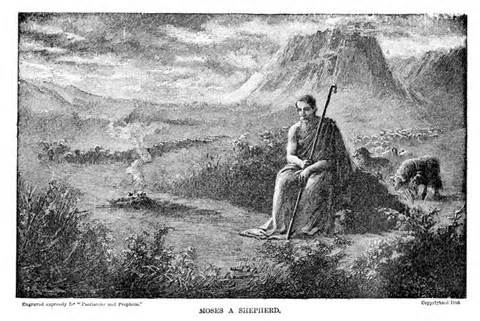
We focus on the moments Moses had at the burning bush or walking through the Red Sea, and that’s what we want, too. r643167_4468740But we forget that Moses’ life wasn’t like that every day. We forget about the eighty years he spent wandering around the desert, half in the day to day monotony of shepherding on the back side of Midian, the other half, wandering around the wilderness with the people of Israel.

Eighty years of nothing special. Day after day of ordinary. Week after week of God not “showing up” and doing something amazing. Eighty years. That’s a lifetime for most of us.

Was God any less at work in Moses’ eighty years of desert thwandering than He was when He gave Moses the Law or spoke to him face to face or sent manna? Of course not. During those days, God was protecting Moses from the heat and wild animals, providing food and shelter for him, blessing him with a wife and children, directing his steps, teaching him obedience and trust.

Just like He does for us.

Have you read a Bible passage this week that allowed you to see more of God’s glory? God is doing something. He’s revealing Himself to you.

Are you praying for someone’s salvation? God is doing something. He’s working on the heart of that person.

Did you have a place to sleep last night and food on your table today? God is doing something. He’s providing for your needs.

Do you leave church on Sundays having been fed the truth of God’s word by your pastor? God is doing something. He’s growing you to spiritual maturity.

Is it possible that we’re expecting God to do something in our lives that isn’t in His particular plan for us? You aren’t Moses, and neither am I. Neither were the million or so other Israelites Moses led out of Egypt, and neither have the billions of other people been who have inhabited earth since Creation. Moses was Moses. You are you. God doesn’t have the same plan for your life He had for Moses’ life.

And, by the way, have you ever noticed that most of the people in the Bible through whom God did something “big” were not expecting it or asking for it? Moses wasn’t expecting God to show up in that burning bush. David wasn’t asking God to do great things in his life when Samuel dropped by to anoint him as the next king. Both of them were hanging out with the sheep when God called them. Paul thought he was already an awesome servant of God when he got knocked off his high horse. Mary wasn’t expecting to be expecting. She was just a teenage girl growing up and learning how to run a household.

1 Thessalonians 4:10b-12 says:

But we urge you, brothers to do this more and more, and to aspire to live quietly, and to mind your own affairs, and to work with your hands, as we instructed you, so that you may walk properly before outsiders and be dependent on no one.

That’s what all of those Bible characters were doing when God chose them. Just regular people living regular lives doing regular work. Just like billions of other people through whom God has not chosen to do anything big and spectacular.

keep-calm-god-is-at-workBut that doesn’t mean God hasn’t been “doing something” in all of our lives. In fact, the vast majority of the work God does in our lives every single day goes unnoticed and unappreciated.

So, instead of setting our expectations on those very rare “wow factor” works of God that seem so appealing, maybe we should be asking Him to open our eyes to, and make us thankful for, all of the things He’s already doing in our lives. Instead of having great expectations of things that God has never promised us, maybe we should ask Him for, and expect Him to, do what He has promised:

Forgiveness for our sin

Christ-likeness

Provision for our needs

Endurance

The ability and opportunity to help others

Faithfulness

Humility

Patience

The opportunity to share the gospel

Because “all the promises of God find their Yes in him.” You can expect it.