Holidays (Other), Obedience, Sanctification

40 Things to Give Up for Lent

Originally published March 3, 2017

Although, as a Louisiana girl, I’ve had a decades long love affair with king cake, and I totally support the increased availability of fish entrรฉes at local restaurants and getting a few days off school or work, I’m not a big fan of Mardi Gras and Lent.

The intrinsic philosophy behind Mardi Gras – a day of revelry, indulgence, and debauchery to get it all out of your system before you have to start “being good” for Lent – is patently unbiblical.

The practice of Lent often is, as well. Lent is the forty day period, beginning with Ash Wednesday and ending with Easter Sunday, observed by Catholics and some Protestants. Originally, it was simply a time of fasting, prayer, and worship in anticipation of Easter, and for Christians who continue to observe it this way, it can be a valuable and meaningful time of respite and renewal with the Lord.

For many, however, Lent – particularly the aspect of giving something up for Lent in an act of self-denial – is nothing more than an empty religious ritual, or worse, works righteousness. Giving something up for Lent because, “I’m Catholic and that’s what good Catholics do,” or to atone for your sins, or to curry favor with God, or to flaunt your self-righteousness flies in the face of grace alone, faith alone, Christ alone biblical Christianity.

If you give something up for Lent, why do you do so? If it’s for one of the aforementioned unbiblical reasons (or others), or even if you don’t observe Lent at all, I’d like to challenge us all to give up the things below for Lent:

1. Give up Lent for Lent.

2. Give up attending any church that requires the observance of Lent in a sacramental way and find a doctrinally sound one.

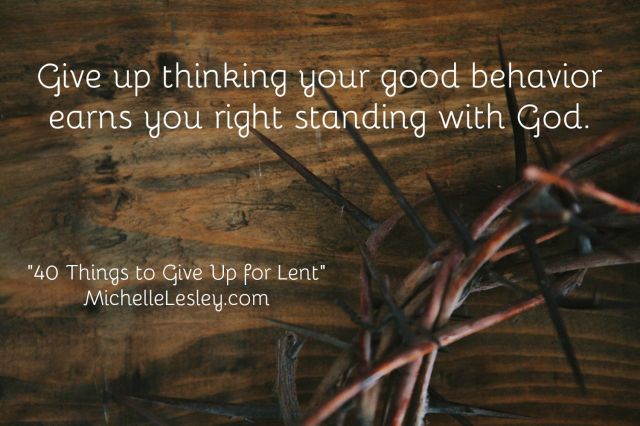
3. Give up thinking your good behavior earns you right standing with God.

4. Give up the idea that there’s any such thing as truly good behavior.

5. Give up thinking your good deeds could ever outweigh your sins.

6. Give up willfully indulging in sin as long as you “make up for it” later.

7. Give up the notion that penance or self-denial can pay for your sins.

8. Give up thinking that penance or self-denial curries favor with God.

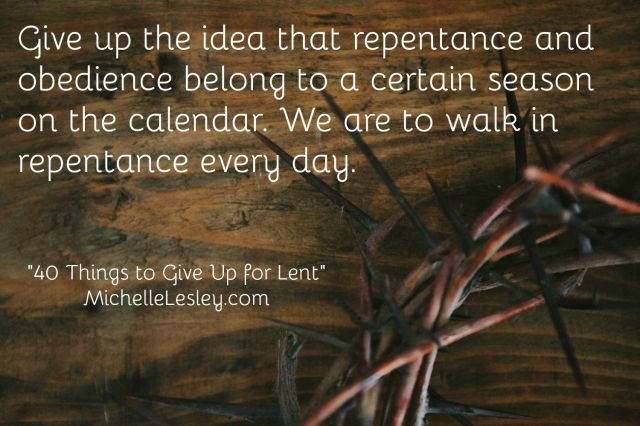
9. Give up the idea that repentance and obedience belong to a certain season on the calendar. We are to walk in repentance every day.

10. Give up the concept that Christmas and Easter are Christian “high holy days.” We celebrate Christ’s incarnation and resurrection every Sunday, and should prepare ourselves all during the week. Every Sunday is a high holy day for the Christian.

11. Give up rote participation in church rituals. Search the Scriptures and see if they’re biblical first.

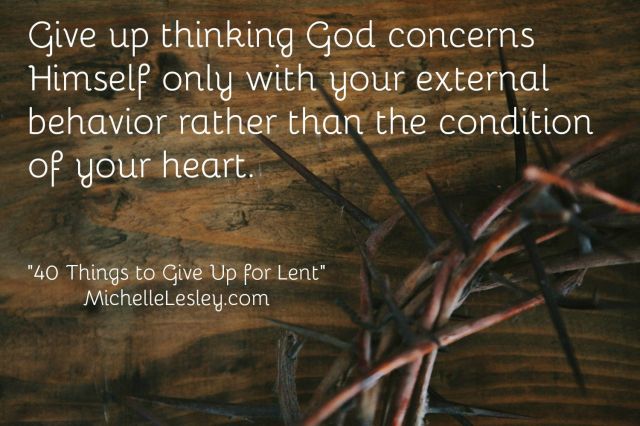
12. Give up thinking God concerns Himself strictly with your external behavior rather than the condition of your heart.

13. Give up “sounding a trumpet before you” with humblebrags on social media and in real life about giving things up for Lent, fasting, giving offerings, or any other good works you might do. You just lost your reward, baby.

14. Give up approaching church attendance as punching the time clock for God. The Christian’s entire life, our very beings, belong to Christ, not just a couple of hours on Sunday.

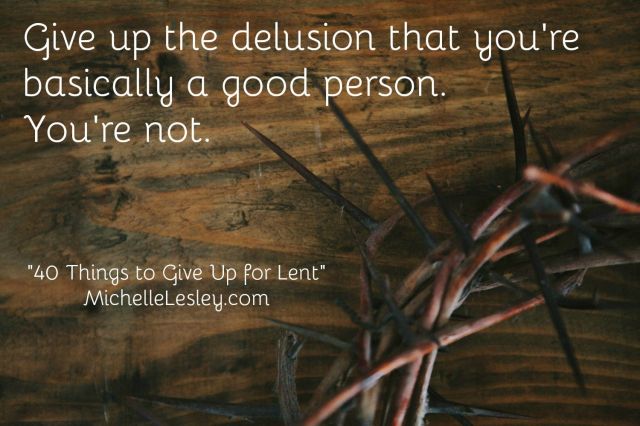
15. Give up the delusion that you’re basically a good person. You’re not.

16. Give up biblical ignorance and become a good student of God’s word.

17. Give up forsaking the assembly and become a faithful, serving member of your local church.

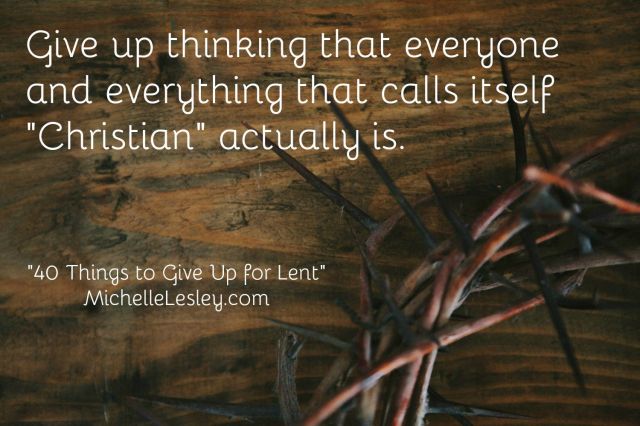
18. Give up thinking that everyone and everything that calls itself “Christian” actually is.

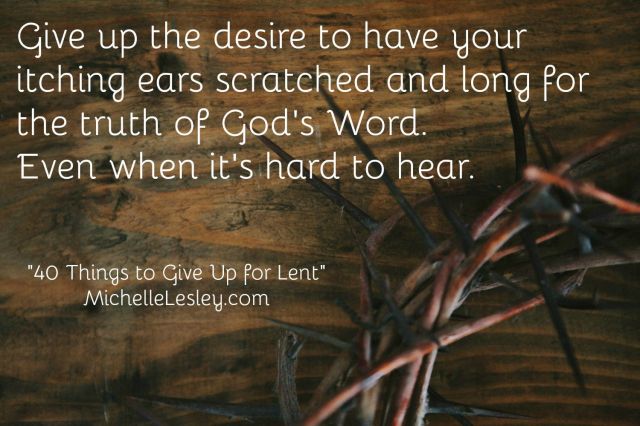
19. Give up the desire to have your itching ears scratched and long for the truth of God’s word. Even when it’s hard to hear.

20. Give up neglecting the daily study of God’s word.

21. Give up rejecting parts of the Bible you don’t agree with. We don’t sit in judgment over Scripture. Scripture sits in judgment over us.

22. Give up neglecting your prayer life.

23. Give up making excuses for failing to memorize Scripture. You can do it!

24. Give up being a non-serving member of your church.

25. Give up being a non-giving member of your church.

26. Give up thinking you’re hearing God speak to you. If you want to hear God speak to you, open your Bible and study it. God has spoken in His word and many are largely ignoring what He has already said.

27. Give up following false teachers and be a good Berean.

28. Give up being afraid to share the gospel and just do it.

29. Give up thinking you can please God apart from faith in Christ.

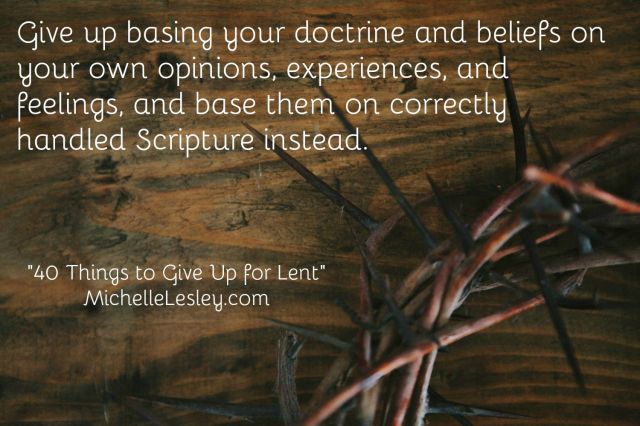
30. Give up basing your doctrine and beliefs on your own (or anyone else’s) opinions, experiences, and feelings, and base them on correctly handled Scripture instead.

31. Give up following your wicked and deceitful heart, take up your cross daily, and follow Christ.

32. Give up thinking you have to do big things for God in order for Him to be pleased with you and “aspire to live quietly, and to mind your own affairs, and to work with your hands.”

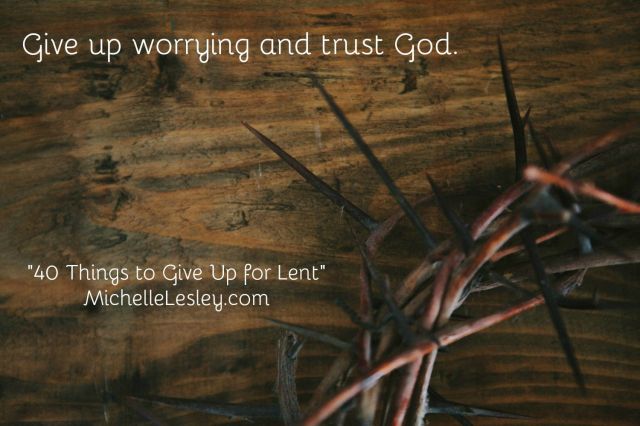
33. Give up worrying and trust God.

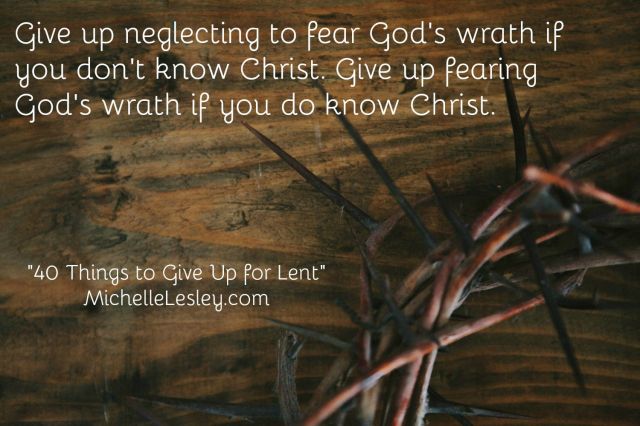
34. Give up neglecting to fear God’s wrath if you don’t know Christ.

35. Give up fearing God’s wrath if you do know Christ.

36. Give up the idea that “God is love” means God is a pushover who won’t judge you.

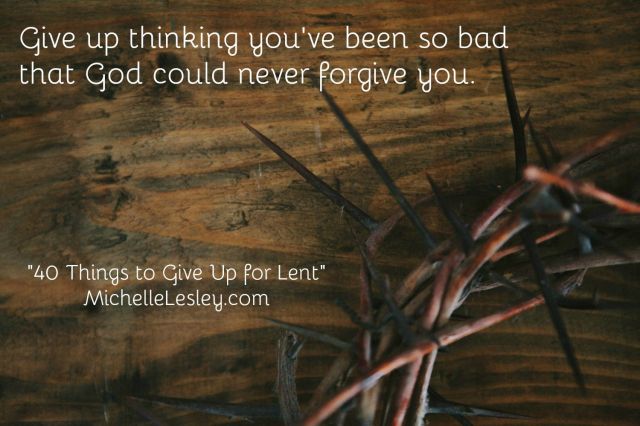
37. Give up thinking you’ve been so bad that God could never forgive you.

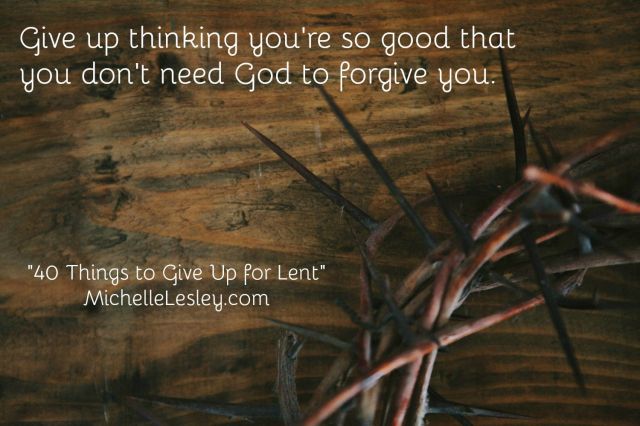
38. Give up thinking you’re so good that you don’t need God to forgive you.

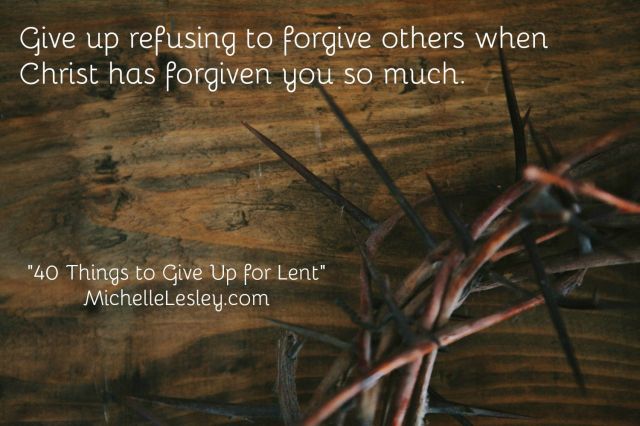
39. Give up refusing to forgive others when Christ has forgiven you so much.

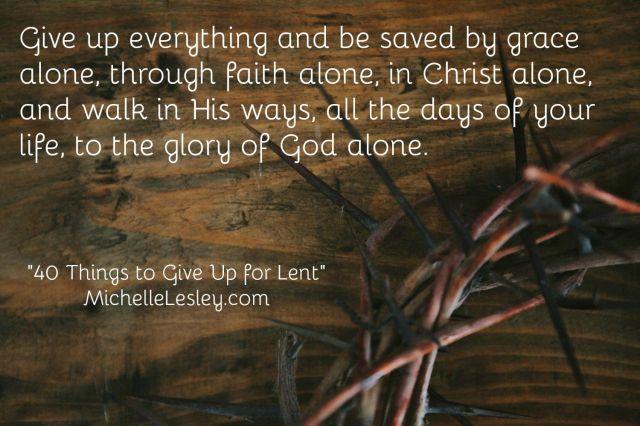
40. Give up everything and be saved by grace alone, through faith alone, in Christ alone, and walk in His ways, all the days of your life, to the glory of God alone.

Evangelism, Obedience

6 Unworldly Ways to Make the World Wonder Why You’re Weird

Originally published November 9, 2018

A dark, hazy room, colored lights flashing, filled with people swaying to chart-topping music, their drink of choice in hand, just there to have a good time with friends.

Is it a club? A concert? A party?

Or church?

With our coffee bars, cutting edge music from the latest and greatest Christian bands, and come hither atmosphere of smoke machines, light shows, and fun, fun, fun, sometimes it’s hard to tell.

And just as we import worldliness into the church, we’re exporting worldly Christians to our local communities. “Christians” who lie, cheat, carouse, defy authority, use profanity, angrily explode, and are sexually immoral. It’s getting more and more difficult to distinguish God’s people from worldlings, and the worldlings are growing disillusioned. Not just with us, but with God.

It’s getting more and more difficult to distinguish God’s people from worldlings, and the worldlings are growing disillusioned. Not just with us, but with God.

“What’s the point of believing in a God who produces people who look exactly like I do?” the world wonders. “What kind of impotent God is this, anyway?”

God gets that. He has gotten that from time immemorial.

He is different. He is other. He is in a class by Himself.

And as His people, we’re supposed to reflect that otherly set apart-ness by being otherly and set apart ourselves.

God didn’t command His people not to wear garments of mixed fibers because He was trying to support the Egyptian cotton market, and He didn’t forbid His people to eat crustaceans to ruin date night at the Red Lobster. He wanted His people to be unique among the pagan nations as He was unique among the pagan gods. He wanted those pagan people to point their fingers at the Israelites and say, “Those people are different, and I want to know why.”

God wants pagan people to point their fingers at God’s people and say, “Those people are different, and I want to know *why*.”

As God’s people living among pagans today, we have the same unique opportunity to point them to the one, true God. How? By unhitching from the Old Testament, as some would have us believe? No. I tell you, we need to look back to our forefathers in the faith and take a page out of their Book. Not by wearing dietary laws on our sleeves of 100% cotton, because we’re not Jews. But by simply obeying God’s commands to His people today.

It ain’t rocket surgery, folks. We don’t need to take surveys to find out what pagan people want. We don’t need gimmicks and tricks. We don’t need to scour Christian industry catalogs hoping against hope that we can find some thing to order that will attract lost people to Jesus.

The most jaw-dropping, astounding, attention-grabbing thing in this world is simple Christians living in simple obedience to God’s simple commands. Isn’t it amazing that something so simple is simply amazing to the world?

The most jaw-dropping, astounding, attention-grabbing thing in this world is simple Christians living in simple obedience to God’s simple commands. Isn’t it amazing that something so simple is simply amazing to the world?

Want to be wonderfully, wildly weird to the world so they’ll wonder why? Try these six things.

1.
Submit to your husband

There’s nothing more “against the grain” right now than God’s design for marriage. Feminists have brainwashed many women (and men) into thinking there’s a better way, but we have only to look back across the last several decades to see a landscape littered with unhappy marriages, divorce, abuse, abortion, cohabitation, and single parenting (or…you know…we could look in our Bibles) to know that’s not true.

Ephesians 5:22-33 explains that obeying God’s instructions for being godly wives and husbands isn’t just good for our marriage and home life. It’s a picture of Christ and His church that we get to act out before a watching world.

So when your friend from work catches a glimpse of your “backwards” marriage that seems to be working a lot better than hers and asks you about it, walk through that open door, talk to her, listen to her, and introduce her to the Bridegroom who came to redeem His bride.

2.
Discipline your children

Hardly a week goes by that someone doesn’t compliment me or my husband on how well-behaved our children are. I’m always appreciative of their kindness, and God has truly blessed us with wonderful children, but there’s nothing exceptional about them in the behavioral department, and there’s nothing exceptional about us as parents. My kids are normal. When I was a kid, the majority of kids acted the way my kids act – respectful and obedient – because the majority of parents raised and disciplined their children.

Now, it’s practically an aberration to encounter normal, well-behaved children (even in church – Christian parents, I’m looking at you.). Yes, everybody’s kid acts up from time to time. Yes, some children are naturally more stubborn than others. I know all the “but’s” and exceptions. But if you obediently bring your children up in the nurture and admonition of the Lord, they’re going to be reasonably well-behaved most of the time, and you’re going to have people stop you at the store, the library, their school, and marvel about it. What are you doing as a parent that makes your kid different? And that’s when you get to tell them about your heavenly Father and His one and only Son.

3.
Be kind

It seems like everyone you run into these days is hurting. Even the people who mistreat you in a rude, angry way are probably acting that way because they’re hurting inside. They don’t know how to handle it, they have no peace, and they’re without hope. All because they’re without Christ.

I used to watch the TV show Undercover Boss fairly regularly. The head of a major company dons a disguise and goes to work among his employees to see how his company is really running and what he can do to improve it. In every episode, the boss gets to know good employees who are going through a difficult time – his mother is dying, her child is sick, he can’t afford a car, she’s trying to work her way through school. And at the end of every episode, the boss reveals himself to the employees and gives each of them thousands of dollars to help with their problems. And at the end of every episode, the employees (and I) are in tears. Yes, the money was helpful and a relief to these folks, but I could see in most of their eyes that it wasn’t just about the money. They were overcome that someone actually cared enough about them to be kind to them.

We live in a cruel, heartless, impatient, unforgiving world. When you take a moment to speak a kind word to someone, provide for a person who’s in need, help a total  stranger, offer cheerful encouragement, just to take a moment to obey Scripture’s admonition to care for someone, it knocks people completely off guard. “Why? Why would you be so kind to me?” a young lady once tearfully asked me after I had done a very small thing for her. It was such a joy to wrap my arms around her and explain, “Because Jesus has been so kind to me.”

“Why would you be so kind to me?” a young lady once tearfully asked me after I had done a very small thing for her. It was such a joy to wrap my arms around her and explain, “Because Jesus has been so kind to me.”

4.
Turn the other cheek

If someone steals “your” parking place and you stomp over to her and bless her out, is that going to open a door for you to share the gospel with her? Would she even listen to you if you tried?

In the same way that hurt people expect others to hurt them, people who lash out in anger or do something they know is unfair or unkind expect an angry response from others.

Don’t give it to them. Just don’t. You don’t have to, if you’re a Believer. You have the Fruit of the Spirit of self control.

Obey Jesus’ teaching to turn the other cheek and go the extra mile, and watch as a gentle answer turns away wrath, and, hopefully, leads to a conversation about the Prince of Peace.

5.
Say, “I was wrong.”

The heaviest artillery in a lost person’s arsenal is to accuse or prove someone of being wrong. The reason that even exists as a weapon is because everyone’s natural instinct is to dig our heels in, make excuses, and insist we were actually right.

It can be almost comical to watch someone process from self-righteous victory to “What just happened here?” confusion when you unabashedly admit you were wrong, graciously apologize, and offer to make things right. And, of course, if you realize you were wrong about something before anyone else does, you don’t have to wait to be confronted. You can march in and throw yourself on the “I was wrong,” grenade before anybody realizes what’s going on.

It’s hard to admit we were wrong about something, because, even as Christians, we struggle with pride. Pride is all lost people have to hold on to, so it doesn’t compute when Christians willingly lay down their pride and take up humility by admitting and apologizing for wrongdoing. “It took guts to own up to that,” your neighbor thinks, “I wonder what motivated her to do that?”. Because, dear friend, I have a Savior who, in humility, laid everything down for me. How could I not lay down something so small in obedience to Him?

6.
Forgive

What is a worldly person’s response when someone wrongs her? Anger. Bitterness. A grudge as high and long and thick as a brick wall. “I will never forgive you!” screamed as she slams out the door and out of that person’s life forever.

The kind of response Christ has every right to extend to us for our sin…but chooses not to.

Think back to when Christ saved you. Do you remember how heavy your sin was and how hopeless you felt? And then, that glorious moment that took your breath away when, for no other reason but grace and mercy, He cleansed you of all your rebellion and wrongdoing and pronounced you forgiven?

When we forgive someone who has sinned against us, we have the honor of pulling back the veil and giving a sinner a peek at the forgiveness Christ offers. It might be the kind of forgiveness He asked for the unrepentant who were crucifying Him. Or it might be the forgiveness He extended to a repentant woman whose sins were many.

“Why would you forgive me? I would never forgive someone who hurt me like that.” It’s the perfect moment to tell her about the One we have all sinned against, who delights to extend forgiveness to each of us.

The people around us, watching us every day, need Jesus. As His servants and ambassadors, we have the privilege, the honor, and the responsibility to represent Him well to them by simply obeying His Word. The world doesn’t need “Christians” who look just like them. The world needs Christians who look just like Jesus.

Church, Obedience

Throwback Thursday ~ Neo-Pharisaism

Originally published May 3, 2019

Has anyone ever called you a Pharisee? I’ve lost count of the number of times I’ve been called that name by professing Christians from all walks of life. And let’s not try to sugar coat it, when somebody uses that term, it’s not meant as a compliment. It can be anything from rage-fueled “Christian profanity” to a well-intentioned but biblically misinformed attempt to quash perfectly scriptural words or actions  – but it’s a pejorative term, whatever the motive behind this name-calling might be.

The Bible first introduces us to the Pharisees in the gospels, during the ministry of John the Baptist, and right away, it’s clear that anybody who’s truly on God’s side of the aisle is going to have a problem with these dudes. “You brood of vipers!” is the first sentence spoken to or about the Pharisees.

But why? Why was this group of respected Jewish leaders and Bible scholars consistently painted in such a negative light by John, Jesus, and the Apostles?

Because the Pharisees were the false teachers of Jesus’ day. They were teaching the false doctrine of legalism – the idea that Jews could earn right standing with God by obeying His laws. And because they didn’t want to even come close to disobeying God’s law, they came up with their own man-made laws that were way more restrictive than God’s laws. The Pharisees required the people to obey those man-made laws and said people who broke them were sinning.

It was kind of like having a pool in your back yard with a fence around it. The pool was sin. The fence around it was God’s law. The Pharisees came along and put an additional fence around the perimeter of the property, keeping people out of the back yard altogether. Only God didn’t say we couldn’t use and enjoy the yard, He just said, “Stay out of the pool.”ยน

And then Jesus arrived on the scene and put His foot down – God’s law reigns supreme, not man’s law. For those who follow God from the heart, His commands are not burdensomenot a yoke of slavery. And by burdening the people with laws God had not commanded, and setting those laws on equal footing with God’s laws, the Pharisees were the ones in sin.

But this just didn’t compute to the prideful, hypocritical, self-righteous Pharisees. They were so set in their ways and ensconced in their power and position that they doubled down on their false doctrine to the point that their self-deception led them to view simply obeying God’s law as written – nothing added, nothing taken away – as sin.

This is why we see the Pharisees losing their cotton-pickin’ minds over Jesus and the disciples plucking and eating (harvesting and threshing to the Pharisees) kernels of grain on the Sabbath, and Jesus healing (“working”) on the Sabbath, both of which – eating and doing acts of charity – were lawful.

The legalist Pharisees saw Jesus and His followers as antinomians – those who were a threat to the people of God by preaching license, disobedience, and “everybody can do what’s right in his own eyes.”

My, how the pendulum has swung in the other direction.

Today what we have is antinomians calling some of Jesus’ followers Pharisees because these modern-day antinomians believe that striving to obey God’s Word as written – nothing added, nothing taken away – is legalism.

Is it wrong to label everyone an antinomian who has called a brother or sister in Christ a Pharisee? After all, antinomianism is heresy. It’s a pretty serious charge – not one that should be casually and superficially flung around. Well, so is the charge of legalism, which these folks are leveling every time they call someone a Pharisee. If they’re going to dish out charges of heresy, they ought to be man or woman enough not to cry foul when that same charge is leveled against them.

But the truth is, among average Christians, there are very few actual full-blown legalists or full-blown antinomians. As with nearly every other aspect of Christianity, there’s a spectrum of antinomianism and legalism with heresy on either end, and the majority of Christians falling somewhere in the middle. Most genuinely born again Christians hover somewhere around that sweet spot in the middle that we would call obedience to Scripture, but we all have a general fleshly tendency toward legalism or antinomianism. And furthermore, we can tend toward one or the other in various issues in our lives. There are issues in my life in which I tend toward antinomianism out of fear of man, or because I want to give in to the desires of my flesh. And, there are issues in my life in which I tend toward legalism out of pride or a lack of trust in God. We can all fall into the ditch of antinomianism or legalism depending on the circumstances and our personal weaknesses and sins.

So when I say that Christians today who call their brothers and sisters in Christ Pharisees are antinomians, I don’t mean that the vast majority of them are full-on heretics who think Christians can go out and sin as much as they want and nobody has to obey Scripture. Honestly, I’ve never even met anybody like that. I’m talking about Christians who tend toward antinomianism when it comes to the specific area of ecclesiology. What does that look like in the life of the church? Often, it takes the shape of overlooking sin instead of dealing with it biblically in order not to make waves or hurt someone’s feelings. It can also find itself in those who get on the bandwagon of the latest Christian – or worldly – fad, method, celebrity, or worldview, and chiding those who rightly deem it unbiblical. A few examples I’ve experienced or been told of:

Do you expect Christians to be at church every week unless Providentially hindered? That’s legalism. You’re a Pharisee.

Dare to speak up against false teachers? That’s legalism. You’re a Pharisee.

Think worship should be reverent and orderly rather than evangeltainment hoopla? That’s legalism. You’re a Pharisee.

Do you believe it’s sin when women preach/teach the Scriptures to men or hold unbiblical authority over men in the gathered body of Believers? That’s legalism. You’re a Pharisee.

Have you ever asked why your church doesn’t practice church discipline? That’s legalism. You’re a Pharisee.

Do you warn your friends in apostate churches of the false doctrine they’re being taught? That’s legalism. You’re a Pharisee.

But who’s really the Pharisee today? Well, just like in Jesus’ day, it’s people who might (or might not) know Scripture, but they’re not handling it correctly. Sometimes, it’s well-known Christian leaders protecting their position and power. Sometimes it’s the people in the pew who like the status quo in evangelicalism, their church, or their family just fine, thank you very much, and they don’t want you bringing the Bible in and messing everything up.

Who’s today’s Pharisee? It’s often the person calling other Christians Pharisees.

As you might expect, the legalist Pharisees of Jesus’ day had hundreds of very specific, clearly defined laws you had to obey: You could only walk so many steps on the Sabbath. You had to wash your hands in a certain manner. You probably even had to fold your underwear a specific way.

Our modern-day antinomian-leaning “neo-Pharisees” have just a few nebulous, loosely defined rules of which they, not Scripture, are the final arbiters:

  • You can’t be unloving.
  • You can’t hurt people’s feelings.
  • You can’t rock the boat.
  • Why can’t we all just get along?

And though it was relatively easy to count the number of steps you took on the Sabbath or make sure your underwear stacked up at a 90ยฐ angle so you could stay on the right side of the legalistic Pharisees’ rules and regulations, it’s much harder to tell whether or not you’re obeying the neo-Pharisees’ laws.

Their laws, though few in number, are subjective, broadly interpreted and applied, and constantly changing. Charges of being “unloving,” for example, are not supported by Scripture passages in their proper context clearly defining biblical love, but are based on the personal feelings and opinions of the person leveling the charge. A “peace, love, and harmony” definition of “unity” is frequently prized over fidelity to Scripture. What was right last month could suddenly be wrong next week because it has upset someone.

It’s not easy to hit such a fast-moving target, and practically anything you say or do (even if it’s straight from Scripture) that rubs the neo-Pharisee the wrong way is going to break one of these rules – man-made rules that they insist other Christians keep or those other Christians either aren’t saved or are sinning. So while the quality of their rules is antinomian-ish, the application of their rules is legalistic. This is fleshing itself out in dozens of different ways in evangelicalism.

Case in point: progressive Christians who have taken up the social justice cause, particularly as it relates to race. One recent example – if you don’t see whiteness (whatever that means) as wicked and something you need to renounce, you’re not being loving to people who have darker skin than yours, and you’re hurting their feelings, and you’re refusing to get along with them. So because you’re breaking these laws the neo-Pharisees have made, you’re sinning at best and not saved at worst. But what is whiteness, precisely? How can I tell whether or not I’ve fully renounced it? What if I’ve fully renounced it in the eyes of one person but not another? Who is supposed to pronounce me absolved of this so-called sin? And daring to ask any of these questions or push back against these ideas can earn you the label of Pharisee.

Another example I’m hearing more and more people say they’ve been taken to task about is tone. For some neo-Pharisees, it doesn’t matter how gently, kindly, and patiently you state a difficult biblical truth, if it hurts someone’s feelings or rocks the boat, you’ve been unloving and said it in a harsh tone. And you’ll probably get called a Pharisee.

But who is the judge of my tone or yours? One person’s “harsh tone” is another person’s “matter of fact tone”. One person’s “loving tone” is another person’s “spineless tone”. I once wrote an article about a certain false teacher about which I was told my tone was too harsh by some and too nice by others – about the same article! We all have different personal, subjective opinions about tone. The problem is that the neo-Pharisee is elevating her opinion about what constitutes an acceptable tone to the level of Scripture. Because if you use what she thinks is the wrong tone, you’re sinning.

So what is the solution to this messy morass of legalism, antinomianism, and neo-Pharisaism we suddenly find ourselves in in evangelicalism?

The Bible.

We must become good students of the Bible so we know exactly what it says – and doesn’t say. The Bible doesn’t condemn anyone as wicked based on the shade of her skin. But it does tell me I’m to love my brothers and sisters in Christ. It tells me that God shows no partiality and I shouldn’t either. The Bible doesn’t qualify which tones of voice are harsh and which are acceptable. When it talks about speaking the truth in love, it’s talking about motivation of heart – which only I can know and only God can judge – not tone of voice. Am I motivated by love? Does the Bible say we need to be faithful to the gathering of Believers or not? Does it really say women can’t preach to men or not? Is that person actually a false teacher according to Scripture or not? We need to know Scripture, so we can rightly obey Scripture, so that no one will actually be a Pharisee.

We’ve all got to do our best to present ourselves to God “as one approved, a worker who has no need to be ashamed, rightly handling the word of truth.” (2 Timothy 2:15) When I lean too far toward legalism, I need Scripture to pull me back to that sweet spot of simple biblical obedience. When you lean too far toward antinomianism, you need the Bible to bring you back to center on diligent biblical obedience. We need to help each other, iron sharpening iron, not call each other names.

Let’s get rid of Pharisaism once and for all and simply spur one another on toward holiness and obedience to God’s Word.


Additional Resources:

Sacrificing Truth on the Altar ofย Tone

What Does it Mean to “Play the Pharisee Card”?

Basic Training: Obedience: 8 Ways To Stop Making Excuses and Start Obeying Scripture


ยนPool photo courtesy of Protect-A-Child Pool Fence Company
Obedience, Prayer, Sanctification, Sin

Throwback Thursday ~ When God Answers the “Wrong” Prayer

Originally published July 27, 2018

“Lord, I’m just so frustrated!” I fussed, as I approached the time I had set aside for prayer this morning. Once again, the “I don’t want to” of my flesh was pulling against the “I know I need to” of my spirit like a heavy duty tow truck tugging on a kitten.

So I just ditched it. Well…sort of.

Prayer is pouring out your heart to God, right? Well, I turned on the water cannon. Reverently, of course…but with passion.

I told God how sick I was of this all-too-frequent stumbling block my flesh presented when it was time to pray, especially when I knew from experience that the feeling was fleeting and would go away after I had been praying for a few minutes. I told Him I was tired of a million other things I’d rather be doing, that I needed to do, coming to mind and further crowding out my desire to pray. I told Him I was sorry for all the times I had given in to the flesh and skipped my prayer time. I told Him I wanted Him to make this feeling go away and never come back.

As I poured out my complaint before Him, the Holy Spirit began leading me to examine theย whyย of this whole situation. What was bringing about this pull of the flesh against prayer?

And that’s when it happened. God answered the “wrongยน” prayer.

You see, one of the things I pray every day is that God will reveal to me any sins I’m unaware I’m committing and lead me to repent of and forsake them.

And in that moment,ย that’s the prayer He chose to answer.

Not the prayer for the provision of an item my family needs. Not the prayer for healing of a loved one. Not the prayer that He would save all the lost people on my list.

Not the prayerย I really wanted Him to answer.

God chose to reveal my sin to me.

You know why my flesh so often balks at prayer? Because in the dark, unsanctified recesses of my heart, I’m frustrated with God for not doing what I ask Him to do –ย now. I come to Him day after day, month after month, sometimes year after year, confessing the same sins, asking for the same provisions, and presenting the same requests, andย I don’t see Him doing whatย I want Him to do whenย I want Him to do it.

Never mind that I could list hundreds of my prayers that He actually has answered, many of them in amazing ways. Never mind that Iย know what the Bible says about prayer well enough to teach on it and write articles about it. Never mind that I really do believeย that God will answer my prayers for His glory and my good.

Uh uh. My flesh throws all of that right out the window and wants God to be my cosmic errand boy, delivering the goods on my timetable. I am selfish. I want everything to go my way immediately.

So that was pretty humiliating…but God didn’t stop there. No, there was more.

He opened my eyes to the fact that this sin problem I have relating to Him vertically is basically the same sin problem I have relating to people horizontally.

I yell at people in traffic to get out of my way. I get annoyed with my husband, irritated with my children, and impatient with fellow church members because I want them to do whatย I want, and I want them to do itย now.ย I am selfish. I want everything to go my way immediately.

Oh, wretched man that I am! Who will deliver me from this body of death?ย 

Paul was really onto something there.ย Fortunately, he answers his own question in his very next sentence:

Thanks be to God through Jesus Christ our Lord!
Romans 7:25a

Jesus. Jesus can help me to mortify this sin. And I can obey Him as He does His good work in me. How?

assuming that you have heard about [Jesus] and were taught in him, as the truth is in Jesus, to put off your old self, which belongs to your former manner of life and is corrupt through deceitful desires, and to be renewed in the spirit of your minds, and to put on the new self, created after the likeness of God in true righteousness and holiness.
Ephesians 4:21-24

I stop doing the sin (put off the old self). I remember what God’s Word says about that sin and about the righteousness I’m supposed to do instead (be renewed in mind). I do the righteous thing instead of the sin (put on the new self).

Ephesians 4 goes on to give some examples of what this looks like when dealing with real life sin:

Therefore, having put away falsehood, let each one of you speak the truth with his neighbor, for we are members one of another. Be angry and do not sin; do not let the sun go down on your anger, and give no opportunity to the devil. Let the thief no longer steal, but rather let him labor, doing honest work with his own hands, so that he may have something to share with anyone in need. Let no corrupting talk come out of your mouths, but only such as is good for building up, as fits the occasion, that it may give grace to those who hear. And do not grieve the Holy Spirit of God, by whom you were sealed for the day of redemption. Let all bitterness and wrath and anger and clamor and slander be put away from you, along with all malice. Be kind to one another, tenderhearted, forgiving one another, as God in Christ forgave you.
Ephesians 4:25-32

See how that works?

Stop lying. Remember what God’s Word says about lying and truth. Speak truth instead of lying.

Stop stealing. Remember what God’s Word says about stealing and the godly way to acquire and steward material things. Work an honest job and share with others instead of stealing.

Seems pretty simple and logical, right? It’s pretty clear cut when we’re talking about sinfulย actions. I can keep my mouth shut so lies and corrupting talk don’t come out and choose kind and truthful words to speak instead. I can keep my hands in my pockets or avoid that tempting store so I won’t steal, and get a job and share with others instead. But how in the world do I “put off” a sinfulย attitudeย likeย bitterness, wrath, anger and malice (and in my case, selfishness) when it’s just a feeling that pops up in my heart unbidden?

The world will tell you that you can’t control your feelings. And for the world, that’s true. It’s part of the sin nature of a lost person, the “old self”, to live your life by your feelings, even to be controlled by them. But that’s not the case for someone who has been genuinely born again and is indwelt by the Holy Spirit.

Part of the Fruit of the Spiritย (the evidence that the Spirit is indwelling you) isย self-control. That doesn’t just mean saying no to that second piece of cake. It’s the idea that sin is not our master anymore. We do not have to listen to and be controlled by sin, we can say no to itย because we want to say yes to our new Master – Christ – and be controlled by Him.

Let not sin therefore reign in your mortal body, to make you obey its passions. Do not present your members to sin as instruments for unrighteousness, but present yourselves to God as those who have been brought from death to life, and your members to God as instruments for righteousness. For sin will have no dominion over you, since you are not under law but under grace.
Romans 6:12-14

Notice the wording here. It’s not “do your best” or “try” not to let your old master control you. It’s an authoritative, weighty, no-nonsense command: “Let not sin reign…sin will have no dominion”. God would not command us to do something that we’re incapable of doing, or that the Holy Spirit will not empower us to do. Weย can control and put off sinful thoughts, feelings, and attitudes.

Martin Luther once helpfully said:

“You cannot keep birds from flying over your head, but you can keep them from building a nest in your hair.”

I think about that quote often when it comes to putting off ungodly thoughts that pop into my brain. Here’s how it works:

First, preemptively pray the “wrong” prayer – the one your flesh won’t want God to answer – that He will make you aware of and convict you of sinful thoughts, feelings, and attitudes.

Next, when one of those thoughts rears its ugly head, stop what you’re doing, repent, and kick that rotten vulture right out of your hair. Make a definitive, proactive, Holy Spirit empowered decision of the will that you areย not going to think that way. It helps me to say it out loud: “No. That thought is wrong. The Bible says ____ about that. I amย not going to think that.” You might get some weird looks if you’re in public, but, hey, mortifying sin is worth it, right?

I tend to combine the “put off” (stop it) and “renew your mind” (What does the Bible say?) steps because pulling the Sword out of its sheath is a good way to kill sin. It’s the way Jesus modeled for us.

But how can I “put on” a right thought, feeling, or attitude? I mean, you can’t just conjure up godly feelings, can you? No. But what youย canย do is gather up nest-building materials for that “sweet Heavenly doveยฒ”, the Holy Spirit, so He can shape your thoughts, feelings, and attitudes in a godly way:

Finally, brothers, whatever is true, whatever is honorable, whatever is just, whatever is pure, whatever is lovely, whatever is commendable, if there is any excellence, if there is anything worthy of praise, think about these things. What you have learned and received and heard and seen in meโ€”practice these things, and the God of peace will be with you.
Philippians 4:8-9

There are godly things we canย think about and godly things we canย do (“practice”) that cooperate with the work the Holy Spirit is doing in our hearts.

Instead of thinking about that prayer that God isn’t answering right now, I can think about the prayers Heย has answered. And I canย do something too. I can thank Him for those answered prayers and all of His good attributes in answering prayer.

Instead ofย thinking aboutย how and whenย I want God to do things, I can think about His sovereignty and how good that is for me and everyone else. I can alsoย do something: I can recite Bible verses I’ve memorized about the situation and sing songs of praise to Him.

Instead ofย thinking about how someone else is frustrating me by not doing whatย I want her to do, I canย think about how she is made in the image of God, valuable to Him, and precious in His sight. What can I do? I can stop and pray for her. I can speak a word of encouragement to her. I can bless her with a gift or by serving her.

Thinking and practicing ungodly things feeds and grows your ungodly thoughts, feelings, and attitudes. But thinking and practicing godly things feeds and develops your godly thoughts, feelings, and attitudes.

Back in the Stone Age when dinosaurs roamed the earth and computers were brand new, programmers used to have a saying: “Garbage in, garbage out.” In other words, if you fed faulty commands into the computer, the performance you got out of the computer was going to be faulty, too.

The Christian heart is very much the same. “Godly in, godly out.” If you feed godliness into your heart, godliness will start coming out in your thoughts, words, and actions.

We don’t have to be mastered by sinful thoughts, feelings, and attitudes. Through the power of the Holy Spirit and by putting off the old self, renewing our minds through God’s Word, and putting on the new self by thinking and practicing godly things, we can grow more and more obedient to our Lord and Master, Jesus Christ, in our thoughts, words, and actions.

I don’t know about you, but I’m going to try to remember that the next time God answers the “wrong” prayer.


ยนPlease note that the word “wrong” as it refers to God answering prayer refers toย myย having the wrong attitude or perspective. God is perfect and has never, and will never, do anything wrong.
ยฒFrom the hymnย Sweet, Sweet Spirit by Doris Akers
Church, Obedience

Neo-Pharisaism

Has anyone ever called you a Pharisee? I’ve lost count of the number of times I’ve been called that name by professing Christians from all walks of life. And let’s not try to sugar coat it, when somebody uses that term, it’s not meant as a compliment. It can be anything from rage-fueled “Christian profanity” to a well-intentioned but biblically misinformed attempt to quash perfectly scriptural words or actionsย  – but it’s a pejorative term, whatever the motive behind this name-calling might be.

The Bible first introduces us to the Pharisees in the gospels, during the ministry of John the Baptist, and right away, it’s clear that anybody who’s truly on God’s side of the aisle is going to have a problem with these dudes. “You brood of vipers!”ย is the first sentence spoken to or about the Pharisees.

But why? Why was this group of respected Jewish leaders and Bible scholars consistently painted in such a negative light by John, Jesus, and the Apostles?

Because the Pharisees were the false teachers of Jesus’ day. They were teaching the false doctrine of legalism – the idea that Jews could earn right standing with God by obeying His laws. And because they didn’t want to even come close to disobeying God’s law, they came up with their own man-made laws that were way more restrictive than God’s laws. The Pharisees required the people to obey those man-made laws and said people who broke them were sinning.

It was kind of like having a pool in your back yard with a fence around it. The pool was sin. The fence around it was God’s law. The Pharisees came along and put an additional fence around the perimeter of the property, keeping people out of the back yard altogether. Only God didn’t say we couldn’t use and enjoy the yard, He just said, “Stay out of the pool.”ยน

And then Jesus arrived on the scene and put His foot down – God’s law reigns supreme, not man’s law. For those who follow God from the heart, His commands areย not burdensome,ย not a yoke of slavery. And by burdening the people with laws God had not commanded, and setting those laws on equal footing with God’s laws, the Pharisees were the ones in sin.

But this just didn’t compute to the prideful, hypocritical, self-righteous Pharisees. They were so set in their ways and ensconced in their power and position that they doubled down on their false doctrine to the point that their self-deception led them to view simply obeying God’s law as written – nothing added, nothing taken away – as sin.

This is why we see the Pharisees losing their cotton-pickin’ minds over Jesus and the disciples plucking and eating (harvesting and threshing to the Pharisees) kernels of grain on the Sabbath, and Jesus healing (“working”) on the Sabbath, both of which – eating and doing acts of charity – were lawful.

The legalist Pharisees saw Jesus and His followers as antinomians – those who were a threat to the people of God by preaching license, disobedience, and “everybody can do what’s right in his own eyes.”

My how the pendulum has swung in the other direction.

Today what we have is antinomians calling some of Jesus’ followers Pharisees because these modern-day antinomians believe that striving to obey God’s Word as written – nothing added, nothing taken away – is legalism.

Is it wrong to label everyone an antinomian who has called a brother or sister in Christ a Pharisee? After all, antinomianism is heresy. It’s a pretty serious charge – not one that should be casually and superficially flung around. Well, so is the charge of legalism, which these folks are leveling every time they call someone a Pharisee. If they’re going to dish out charges of heresy, they ought to be man or woman enough not to cry foul when that same charge is leveled against them.

But the truth is, among average Christians, there are very few actual full-blown legalists or full-blown antinomians. As with nearly every other aspect of Christianity, there’s a spectrum of antinomianism and legalism with heresy on either end, and the majority of Christians falling somewhere in the middle. Most genuinely born again Christians hover somewhere around that sweet spot in the middle that we would call obedience to Scripture, but we all have a general fleshly tendency toward legalism or antinomianism. And furthermore, we can tend toward one or the other in various issues in our lives. There are issues in my life in which I tend toward antinomianism out of fear of man, or because I want to give in to the desires of my flesh. And, there are issues in my life in which I tend toward legalism out of pride or a lack of trust in God. We canย all fall into the ditch of antinomianismย orย legalism depending on the circumstances and our personal weaknesses and sins.

So when I say that Christians today who call their brothers and sisters in Christ Pharisees are antinomians, I don’t mean that the vast majority of them are full-on heretics who think Christians can go out and sin as much as they want and nobody has to obey Scripture. Honestly, I’ve never even met anybody like that. I’m talking about Christians who tend toward antinomianism when it comes to the specific area of ecclesiology. What does that look like in the life of the church? Often, it takes the shape of overlooking sin instead of dealing with it biblically in order not to make waves or hurt someone’s feelings. It can also find itself in those who get on the bandwagon of the latest Christian – or worldly – fad, method, celebrity, or worldview, and chiding those who rightly deem it unbiblical. A few examples I’ve experienced or been told of:

Do you expect Christians to be at church every week unless Providentially hindered? That’s legalism. You’re a Pharisee.

Dare to speak up against false teachers? That’s legalism. You’re a Pharisee.

Think worship should be reverent and orderly rather than evangeltainment hoopla? That’s legalism. You’re a Pharisee.

Do you believe it’s sin when women preach/teach the Scriptures to men or hold unbiblical authority over men in the gathered body of Believers? That’s legalism. You’re a Pharisee.

Have you ever asked why your church doesn’t practice church discipline? That’s legalism. You’re a Pharisee.

Do you warn your friends in apostate churches of the false doctrine they’re being taught? That’s legalism. You’re a Pharisee.

But who’s really the Pharisee today? Well, just like in Jesus’ day, it’s people who might (or might not) know Scripture, but they’re not handling it correctly. Sometimes, it’s well-known Christian leaders protecting their position and power. Sometimes it’s the people in the pew who like the status quo in evangelicalism, their church, or their family just fine, thank you very much, and they don’t want you bringing the Bible in and messing everything up.

Who’s today’s Pharisee? It’s often the person calling other Christians Pharisees.

As you might expect, the legalist Pharisees of Jesus’ day had hundreds of very specific, clearly defined laws you had to obey: You could only walk so many steps on the Sabbath. You had to wash your hands in a certain manner. You probably even had to fold your underwear a specific way.

Our modern-day antinomian-leaning “neo-Pharisees” have just a few nebulous, loosely defined rules of which they, not Scripture, are the final arbiters:

  • You can’t be unloving.
  • You can’t hurt people’s feelings.
  • You can’t rock the boat.
  • Why can’t we all just get along?

And though it was relatively easy to count the number of steps you took on the Sabbath or make sure your underwear stacked up at a 90ยฐ angle so you could stay on the right side of the legalistic Pharisees’ rules and regulations, it’s much harder to tell whether or not you’re obeying the neo-Pharisees’ laws.

Their laws, though few in number, are subjective, broadly interpreted and applied, and constantly changing. Charges of being “unloving,” for example, are not supported by Scripture passages in their proper context clearly defining biblical love, but are based on the personal feelings and opinions of the person leveling the charge. A “peace, love, and harmony” definition of “unity” is frequently prized over fidelity to Scripture. What was right last month could suddenly be wrong next week because it has upset someone.

It’s not easy to hit such a fast-moving target, and practically anything you say or do (even if it’s straight from Scripture) that rubs the neo-Pharisee the wrong way is going to break one of these rules – man-made rules that they insist other Christians keep or those other Christians either aren’t saved or are sinning. So while the quality of their rules is antinomian-ish, the application of their rules is legalistic. This is fleshing itself out in dozens of different ways in evangelicalism.

Case in point: progressive Christians who have taken up the social justice cause, particularly as it relates to race. One recent example – if you don’t see whiteness (whatever that means) as wicked and something you need to renounce, you’re not being loving to people who have darker skin than yours,ย and you’re hurting their feelings,ย and you’re refusing to get along with them. So because you’re breaking these laws the neo-Pharisees have made, you’re sinning at best and not saved at worst. But what is whiteness, precisely? How can I tell whether or not I’ve fully renounced it? What if I’ve fully renounced it in the eyes of one person but not another? Who is supposed to pronounce me absolved of this so-called sin? And daring to ask any of these questions or push back against these ideas can earn you the label of Pharisee.

Another example I’m hearing more and more people say they’ve been taken to task about is tone. For some neo-Pharisees, it doesn’t matter how gently, kindly, and patiently you state a difficult biblical truth, if it hurts someone’s feelings or rocks the boat, you’ve been unloving and said it in a harsh tone. And you’ll probably get called a Pharisee.

But who is the judge of my tone or yours? One person’s “harsh tone” is another person’s “matter of fact tone”. One person’s “loving tone” is another person’s “spineless tone”. I once wrote an article about a certain false teacher about which I was told my tone was too harsh by some and too nice by others – about the same article! We all have different personal, subjective opinions about tone. The problem is that the neo-Pharisee is elevating her opinion about what constitutes an acceptable tone to the level of Scripture. Because if you use what she thinks is the wrong tone, you’re sinning.

So what is the solution to this messy morass of legalism, antinomianism, and neo-Pharisaism we suddenly find ourselves in in evangelicalism?

The Bible.

We must become good students of the Bible so we know exactly what it says – and doesn’t say. The Bible doesn’t condemn anyone as wicked based on the shade of her skin. But it does tell me I’m to love my brothers and sisters in Christ. It tells me that God shows no partiality and I shouldn’t either. The Bible doesn’t qualify which tones of voice are harsh and which are acceptable. When it talks about speaking the truth in love, it’s talking about motivation of heart – which only I can know and only God can judge – not tone of voice. Am I motivated by love? Does the Bible say we need to be faithful to the gathering of Believers or not? Does it really say women can’t preach to men or not? Is that person actually a false teacher according to Scripture or not? We need toย know Scripture, so we can rightly obey Scripture, so that no one will actuallyย be a Pharisee.

We’veย allย got to do our best to present ourselves to God “as one approved, a worker who has no need to be ashamed, rightly handling the word of truth.” (2 Timothy 2:15) When I lean too far toward legalism, I need Scripture to pull me back to that sweet spot of simple biblical obedience. When you lean too far toward antinomianism, you need the Bible to bring you back to center on diligent biblical obedience. We need to help each other, iron sharpening iron, not call each other names.

Let’s get rid of Pharisaism once and for all and simply spur one another on toward holiness and obedience to God’s Word.


Additional Resources:

Sacrificing Truth on the Altar ofย Tone

What Does it Mean to “Play the Pharisee Card”?

Basic Training: Obedience: 8 Ways To Stop Making Excuses and Start Obeyingย Scripture


ยนPool photo courtesy of Protect-A-Child Pool Fence Company