
Mailbag, Southern Baptist/SBC

The Mailbag: SBC Resolution 9- On Critical Race Theory and Intersectionality


What are your thoughts on Resolution 9 that recently passed at the 2019 annual meeting of the Southern Baptist Convention?

It seems like every year there’s that one controversial resolution that everybody’s talking about. This year, it’s Resolution 9: On Critical Race Theory And Intersectionality.ย 

If you don’t know what CRT and intersectionality are, you’re not alone. Far from it, in fact. There’s no way I can fully explain each of them, so I would encourage you to Google the terms and get ready for some heavy duty academic reading, some of which is going to conflict with itself depending on who and what you read. Also, see the “Additional Resources” section below.

Briefly and uber-broadly, what you see playing out in race relations in the U.S. right now is basically the end result of CRT: Privilege. Reparations. Oppression. Repent of and renounce your whiteness. White people’s racism is so deep seated we’re not even conscious of it. White power and privilege are inextricably embedded in politics, education, religion, economics- every single system in existence. It is a paradigm through which social justice issues are viewed and addressed.

Intersectionality is almost like saying: “On a scale of 1-10, how oppressed are you?” The fewer minority groups you fit into, the less oppressed you are, and vice versa. A white, male, heterosexual, educated, middle class, Christian would be on the “privileged” end of the scale. A poor, black, female, homosexual, transgender, Muslim would be on the “oppressed” end of the scale. The more oppressed you are, the more you are to be heard and taken seriously on the social issues of the day.

(People are going to say those are over-generalizations. I agree. Like I said, Google it and study the issue more thoroughly.)

In the Southern Baptist Convention, any messenger (a church member representing her church at the convention) can propose a resolution about almost anything (It’s actually pretty interesting to go back as far as 1845 and read past resolutions.). If her resolution is approved by the Committee on Resolutions, it’s voted on by everybody else in attendance (why, in 2019, we haven’t come up with some method of distance voting online is beyond me, but that’s for another article). Because of SBC polity and the autonomy of each local church, resolutions are non-binding. Generally speaking, no SBC church or church member is required to abide by a resolution that passes, and resolutions are often a merely an encouragement for SBC churches/members to affirm something biblical or to repudiate something that’s unbiblical anyway.

Such was the case with Resolution 9, which called on Southern Baptists to – in a nutshell – recognize that CRT and intersectionality are unbiblical ways of addressing “social justice” issues and that they are creeping in to SBC churches and entities, repudiate CRT/intersectionality, and affirm that the Bible is authoritative and sufficient for dealing with these and all other issues.

At least, that’s what the original resolution authored by Pastor Stephen Feinstein of Sovereign Way Christian Church called on Southern Baptists to do. But that’s not the resolution SBC messengers got to vote on.

You see, when a messenger submits a resolution to the Committee on Resolutions for approval, “The SBC Committee on Resolutions is vested with the authority to…reword submitted resolutions…”. And reword, they did. Not just the format, but the content. So much so that the revised resolution bears so little resemblance to the original that hadย I authored any resolution altered to this extent, I would have ended up voting against my own resolution. The committee’s rewording changed the meaning of the resolution from “The CRT/intersectionality paradigm is sinful at its foundation. We need to repudiate it altogether, keep it out of our churches and entities, and address these issues biblically,” to “Some people have used the CRT/intersectionality paradigm unwisely, but we can learn some things by using it, so as long as it doesn’t override Scripture, it’s fine,” and the revised version of the resolution passed.

So that’s the quick recap of the issues at play (as I have read about them – I was not able to attend the convention this year). What are my thoughts?

โ€ขMy first reaction to both versions of the resolution and the passage of the revised version was that most of the messengers likely did not understand what they were voting on for two reasons:

First, the format and wording of SBC resolutions tends to be somewhat formal and stilted. That’s not a bad thing in and of itself, and I’m certainly not saying any of my SBC brethren are unintelligent (I struggle to slog through them myself sometimes), but I look at the wording and format of both resolutions and I compare them to simply worded and formatted social media posts, blog articles, etc., that many people seem to have trouble understanding, and I have to think it would be helpful to begin each resolution with a simply worded four or five sentence summary of its main points so people have a better shot at knowing what they’re voting about.

Second, the vast majority of Southern Baptists (and probably Christians in general) do not keep up with current events in evangelicalism and probably have never heard of CRT or intersectionality – which are relatively new terms and concepts anyway – much less know what those terms mean well enough to make an informed decision on which way to vote. (I don’t blame them. It’s impossible to keep up with everything going on in the world of evangelicalism.) Neither version of the resolution offered much of an explanation as to what CRT and intersectionality are. They both seemed to carry the assumption that those reading the resolution would already know. My guess is that most did not.

I later discovered that my friend, Pastor Tom Buck had a similar takeaway. I thoroughly agree with him.

โ€ขTom also spoke against the revised resolution from the floor, and Tom Ascol, president of Founders Ministries, offered some clarifying amendments (which, unfortunately did not pass) to the revised resolution. I thought both were very helpful, and I wish the messengers had taken their remarks to heart.

โ€ขI am shocked and appalled at the changes the Committee on Resolutions made to Pastor Feinstein’s resolution. I realize that the committee has the right to “reword” resolutions, but I don’t think they ought to have the right to water down or change the meaning of the content of a resolution. Grammar, format, correcting objectively incorrect facts, eliminating redundancies – all fine. But for a revised version of a resolution to be so dramatically different from the original – no.

โ€ขI can only speculate as to why the revised version of the resolution differed so greatly – mainly in that the language seemed softened and the urgency and danger of the issue seemed watered down. Either the members of the Committee on Resolutions aren’t very familiar with CRT and intersectionality and the dangers they pose and watered down the language in order not to offend or alarm anyone, or the members of the committee are knowledgeable of, and at least somewhat favorably disposed to, CRT and intersectionality and are trying to fly them into the SBC under the radar.

As I said, this is only speculation and I am not making any accusations or casting aspersions. With the exception of Trevin Wax, I am not familiar with any of the members of the committee, but I will say this: I would be very surprised to encounter anyone on faculty or staff at an institution of higher learning (such as a seminary) that isn’t at least acquainted with the basics of CRT and intersectionality. I suppose it’s not impossible, but it would be very surprising to me.

โ€ขBig picture short term: Very few of the millions of Southern Baptists in the U.S. and around the globe will even know about this resolution since, proportionally, very few Southern Baptists attend the convention or keep up with convention business. Even most of those who were present and voted to approve the resolution will probably have forgotten about it within a month or so since it has no enforceability at the church or individual level and since many voters likely did not fully understand what they were voting about in the first place. While the adoption of the resolution is not a good sign, I don’t expect there to be an en masse mad rush of Southern Baptists into full blown CRT and intersectionality tomorrow.

โ€ขBig picture long term: Barring direct intervention from God Himself in the form of revival, the SBC will eventually go down the same path of theological liberalism as all the other major denominations. Doctrinally sound churches will split off and either form their own denomination or remain independent, autonomous churches. This resolution is only one of the the first steps down that road.

โ€ขIt is my hope that some good will come from this resolution in the form of awareness. That average people in the pew will hear the words “Critical Race Theory” and “intersectionality” and wonder what they mean and how they connect to the SBC. That they will study and research and be moved by a holy zeal, not only cry out to God to keep these and other unbiblical ideas out of the SBC, but to stand up and act – to contend for the faith once for all delivered to the saints.

Additional Resources

Overview of Critical Race Theory & Intersectionality at The Cripplegate

SBC19 – Resolution 9, Women in Mission, Mature Manhood & Critical Race Theory on The Sword and the Trowel

The Woke Tools of the SBC: A Review of Resolution 9 on Critical Race Theory and Intersectionalityย by Josh Buice

The Briefing (6-14-19) with Albert Mohler (Click on, or scroll down to, “Part III”)

Resolution 9 and the Southern Baptist Convention 2019ย at Founders Ministries

Tom Buck on SBC 2019ย on The Dividing Line (start at 32:30ish for Resolution 9 info.)

Gabriel Hughes on Resolution 9ย (start at 20:47 for Resolution 9 info.)

What’s Up with Critical Theory at Sheologians

Whitenessย at Just Thinking

Critical Theoryย at Alpha and Omega Ministries

By What Standard from Founders Ministries


If you have a question about: a Bible passage, an aspect of theology, a current issue in Christianity, or how to biblically handle a family, life, or church situation, comment below (Iโ€™ll hold all questions in queue {unpublished} for a future edition ofย The Mailbag) or send me anย e-mail or private message. If your question is chosen for publication, your anonymity will be protected.


Family, Mailbag

The Mailbag: Stay at Home Dads?


What is the Biblical view of men fulfilling womenโ€™s roles? I.e. staying home and managing the household, caring for small children, etc. while the woman works outside the home to provide for the family?

Super question! It’s not a cut-and-dried easy answer, though. There are a lot of things to take into consideration.

The first thing we need to consider is, of course, what the Bible says about this issue. And when we look at what the Bible says about human behavior, we need to look at two things: the heart and the actions. The Bible does forbid and command a lot of actions, but God is also clear that He judges the heart. It is possible to do the right thing with the wrong motives and the wrong thing with the right motives. We want to make sure we have right motives that lead us to do the right thing.

And Samuel said, โ€œHas the Lord as great delight in burnt offerings and sacrifices, as in obeying the voice of the Lord? Behold, to obey is better than sacrifice, and to listen than the fat of rams. For rebellion is as the sin of divination, and presumption is as iniquity and idolatry. 1 Samuel 15:22-23a

For the Lord sees not as man sees: man looks on the outward appearance, but the Lord looks on the heart.โ€ 1 Samuel 16:7b

The first question we need to ask ourselves is, “Is there an explicit command that the husband must leave the house and go to work every day to financially support the family, a command that he absolutely cannot stay at home and manage the household and raise the children, or a command that a wife may not work outside the home or support her family financially?”

I have not found any specific, in context, “thou shalt/thou shalt not” commands along those lines. And there’s a reason for that. God beautifully designed the Bible to be applicable and relevant to all people, across all cultures, in all time periods. So there are some universal commands in the Bible that apply to everybody, everywhere, in every time. For example: It is a sin to murder whether you’re young or old, male or female, smart or dumb, ugly or pretty, rich or poor, living in the Middle East or Polynesia or Antarctica, in 3271 B.C., A.D. 0, or A.D. 2019. Murder is always a sin, no matter what.

But God has not chosen to make that same pronouncement about the financial support of the family and who should work inside or outside the home. If we examine all of the Scriptures that mention men and women working, we can see a general overall pattern that points to the wisdom, in most cases, of wives doing most of the household management and child-rearing, leaving husbands free to concentrate primarily on bringing home the bacon, but God has not chosen to make this a universal command.

(I’m sure many readers are thinking, “But what about Titus 2:5, saying women are to be ‘workers at home’?” First, this is not a command that women are never to work outside the home (keep reading for more Scripture about women working and contributing to the support of their families). Second, if you’ll examine that verse in context (2:2-10), you’ll notice that this passage deals with people’s character, not careers. This can be easier to see if you compare Titus 2:3-5 with 1 Timothy 5:3-16, especially v.6, 13-14. Women are not to be lazy, idlers, and busybodies, they are to be hard workers, glorifying God in their work. In first century culture, this nearly always meant marrying, raising children, and managing their households, because this was virtually the only culturally appropriate venue available to them in which to work. Titus 2:5 is primarily about working hard to the glory of God, not primarily about where that work is performed. Does this mean all Christian women are free to abandon their children and homes in favor of working outside the home just because they feel like it? Of course not. As we’re about to see, that goes back to having a godly motive, going with the grain of the way God generally created women if at all possible, and discerning what is pleasing to the Lord in the circumstances in which He has placed your family. Which is exactly the type of character Titus 2 and 1 Timothy 5 teach that Christian women are to have.)

Why did God not make this a command? Because in His sovereignty, over time, God has allowed or created different types of cultures to develop at the macro level, and different sorts of circumstances to occur in the lives of various individuals at the micro level.

In our culture, with regard to supporting a family, it is typical for a husband to get up Monday through Friday, leave the house, work for someone else for eight hours, receive a paycheck, and return home.

Although that was true for some families, particularly city-dwellers, during Bible times, it was far less the norm than it is today. Think about the types of work most often mentioned in the Bible. It was a much more agrarian society. Dads usually worked their land and livestock as an extension of their home, and moms and any children who were old enough had their chores around the “farm” as well. The whole family worked together to provide necessary sustenance, and dads had much more direct oversight over their children on a day to day basis than a 21st century dad who leaves home and goes to the office every day.

But even in situations in which there was a family business (such as Joseph being a carpenter) the sons usually grew up learning the business under the direct tutelage of their fathers. And though the daughters were being trained at home to learn how to be good wives, it is reasonable to assume that they and their mothers helped out with the business as needed in a culturally appropriate way.ยน There was much more integration of work and family in that culture, giving fathers more contact with their children during the day.

There are also passages in the Bible that help us to see that bringing in income was not strictly relegated to men and child-rearing was not strictly relegated to women. In Proverbs 31, we see a wife and mother conducting business and contributing to the support of her family. We see Deborah “working outside the home”. We find that Lydia was, in some way, a merchant. And we do not see the Bible condemning these women as ungodly for contributing to the support of their families or performing some kind of work outside the home. Quite the opposite, in fact – the “Proverbs 31 woman” is, to this day, held up as the ideal wife and mother for godly women to emulate.

Furthermore, we often see passages in Scripture that lay the ultimate responsibility for instructing, disciplining, and properly bringing up children at Dad’s feet, not Mom’s. Read the first nine chapters of Proverbs. This is a father, not a mother, training up his son. And take a look at Ephesians 6:4 (Fathers…bring [your children] up) and Colossians 3:21 (Fathers, do not provoke your children…).

So there is no explicit biblical command about only husbands supporting the family financially and only wives managing the household and raising the children. We need to make sure we separate out what is biblical and what is cultural when it comes to the roles of husbands and wives.

As I mentioned, in addition to God sovereignly creating/allowing different cultures on the macro level, He has also created/allowed, on the micro level, varying life situations for various families. Dads who are disabled or have medical conditions that are more conducive to staying home with the children than having a job outside the home. Men who have had very limited educational and job opportunities who fall in love with and marry women already established in lucrative careers. And, especially in these modern times, Dads who are able to work from home while caring for the children. These and other scenarios can be contributing factors when it comes to which spouse works outside the home (If, indeed, working outside the home as someone else’s employee is necessary for either spouse; working from home or starting your own home-based business is an option many families overlook).

So there are a lot of external, and sometimes unavoidable, cultural and personal circumstances at play in each family’s decision-making process. But what about the internal factors at play? This brings us back to the motive of the heart.

What is the husband’s motive for wanting to stay home with the children? Is it because he’s lazy (lemme just take a moment to say this: if you’re lazy, raising children and managing a household isn’t the job for you) and just wants to shirk responsibility? Because he’s so arrogant or headstrong that he refuses to submit to a boss’s authority? Because he wants to live in luxury on his wife’s salary rather than cutting expenses and living more modestly on what he is able to earn so she can stay at home?

What is the wife’s motive for wanting to work outside the home while her husband manages the household and raises the children? Is she a feminist out to make a statement or further an agenda? Does she pridefully feel that the day to day job of wife and mom is beneath her? Is she finding her identity in her position, her income, or the praise of men instead of finding her identity in Christ?

These are wrong reasons for doing what might, financially, actually be the right thing. But as I said, as Christians, we need to make sure we have right motives leading us to do the right thing. And what is the right motive in this, or any other, decision-making process?

Walk as children of light (for the fruit of light is found in all that is good and right and true), and try to discern what is pleasing to the Lord. Ephesians 5:8b-9

Husbands and wives each need to repent of any wrong motives they may have harbored in their hearts, walk in Christ as children of light, sit down together, pray for God to give them wisdom, examine all the factors at play in their situation, and try to discern what is pleasing to the Lord in the situation He has sovereignly placed them in.

For most families in our culture, what this typically ends up looking like is that the husband is the main breadwinner and the wife is the main manager of the household and children. And part of the reason for this is that God has generally wired men to desire to go out and conquer the world, and He has generally wired women to desire to keep the home fires burning. So if there aren’t any circumstances that force a couple to go against that grain, it’s usually wisest for Dad to be the primary financial supporter of the family and Mom to be the primary manager of the family. But there are going to be godly exceptions to the rule, and we need to be sure we’re not assuming people are in sin just because they don’t fit what’s usually the norm.


ยนCertainly there were other types of work/employment in Bible times, I’m just using these primary two to demonstrate my point.

If you have a question about: a Bible passage, an aspect of theology, a current issue in Christianity, or how to biblically handle a family, life, or church situation, comment below (Iโ€™ll hold all questions in queue {unpublished} for a future edition ofย The Mailbag) or send me anย e-mail or private message. If your question is chosen for publication, your anonymity will be protected.

Mailbag

The Mailbag: Potpourri (Breast cancer resources, What does “cruciform” mean?, Yoga-ta find a new church?…)

Welcome to another โ€œpotpourriโ€ edition of The Mailbag, where I give short(er) answers to several questions rather than a long answer to one question. I also like to take the opportunity in these potpourri editions to let new readers know about my comments/e-mail/messages policy. Iโ€™m not able to respond individually to most e-mails and messages, so here are some helpful hints for getting your questions answered more quickly. Remember, the search bar can be a helpful tool!

In these potpourri editions of The Mailbag, I’d also like to address the three questions I’m most commonly asked:

“Do you know anything about [Christian pastor/teacher/author] or his/her materials? Is he/she doctrinally sound?”

Try these links: 
Popular False Teachers /
 Recommended Bible Teachers / search bar
Is She a False Teacher? 7 Steps to Figuring It Out on Your Own
(Do keep bringing me names, though. If I get enough questions about a particular teacher, I’ll probably write an article on her.)

“Can you recommend a good women’s Bible study?”

No. Here’s why:
The Mailbag: Can you recommend a good Bible study for women/teens/kids?
The Mailbag: โ€œWe need to stop relying on canned studies,โ€ doesnโ€™t mean, โ€œWe need to rely on doctrinally sound canned studies.โ€.

“You shouldn’t be warning against [popular false teacher] for [X,Y,Z] reason!”

Answering the Opposition- Responses to the Most Frequently Raised Discernment Objections


Should women serve as the worship leader/minister of music of a church?

No.

If I answer a question in a co-ed Bible study/Sunday School class, am I “teaching” men in violation of Scripture?

No.

Is it biblical for a woman to lead a prayer during the worship service?

It is not technically a violation of the letter of 1 Timothy 2:12, but I would discourage it for other reasons.

Iโ€™ve heard people say itโ€™s OK for women to preach or teach the Bible to co-ed groups as long as they are doing so under their pastorโ€™s and/or husbandโ€™s authority. Is this true?

No.

I’ve received the first three of these questions again recently, so I thought it would be a perfect time to take the opportunity to remind everyone of a little resource I think might be helpful for you: my article Rock Your Role FAQs. The first question is answered in #16, the second in #4, and the third in #15. I just added the fourth question to the article. It is #20. And don’t forget to read the other articles in my Rock Your Role series, too!


Do you have any book recommendations for a woman just diagnosed with breast cancer?

Let me just start my answer by saying two things. First, I’ve taken a moment to pray for you (or whoever the woman is), that God will help you through this difficult journey and bring you comfort and peace. (Readers, will you also please take a moment to pray?)

Second, it drives me absolutely batty when I ask for a recommendation on social media for a Christian book on a particular topic and people answer in a joking, or smart aleck, or holier than thou way: “the Bible.” Obviously, the Bible is our first “go to” for every issue in the Christian life, but sometimes we need a book that can also teach us about the Scriptures that pertain to our issue.

So please understand that the first part of my answer is not meant to sound flippant or self-righteous, but to assist you in finding a good place in Scripture to park yourself. And my recommendation is going to be to get into Psalms and stay there for a while. You might also find that praying the Psalms back to God is very helpful. There is a great deal of comfort, peace, and strength for trying times in that book.

As for books outside the Bible, I have not read it myself, but I have heard trustworthy people say that John Piper’sยน booklet Don’t Waste Your Cancer is very good. You may wish to check out Joni Eareckson Tada’sยฒ Diagnosed with Breast Cancer: Life After Shock. Joni is a breast cancer survivor and has written a number of books on suffering that you might also find helpful, though most are related to disability, not cancer. Additionally, I would recommend anything John MacArthur has written on the topic of suffering, such as The Power of Suffering, as well as anything at Ligonier. If you’d like something short and free, I’ve written several articles on suffering that will point you to a variety of Scriptures you may find helpful.

You may wish to keep an eye on the comments section of this article, as other readers will probably also have some good recommendations.

(Note to readers recommending resources: I believe the lady who sent in the question is looking for theological resources on how to cope with breast cancer biblically, not medical/holistic/other treatment resources. I’m not qualified to dispense health advice, so those types of recommendations will not be posted.)

ยนJohn Piper is not someone I normally proactively recommend. I’ve explained why HERE.
ยฒOver the years I have received three or four questions about Joni’s actions and theology, but she is generally regarded as doctrinally sound. As with any Christian author, read discerningly.

I have a question regarding the Cruciform Conference that you’ll be speaking at. There is only one person Iโ€™ve heard use that term โ€œcruciformโ€ before and it was Ann Voskamp. What does it mean exactly? Also curious what youโ€™ll be addressing there?

I actually had a couple of ladies ask me this question after I announced that I would be speaking at the Cruciform Conference this fall. I am so glad you asked rather than wondering if it had something to do with false doctrine!

The word “cruciform” simply means “cross-shaped“. I’m really excited to be speaking at a “cross-shaped” conference, where all of the teaching will center around the cross – we can’t let false teachers have all the good words! :0)

Also, lest anyone mistakenly think I will be teaching men at this co-ed conference, I will not. I will not be teaching any of the main sessions. I will be teaching two breakout sessions for women:

Faithfully Fighting Feminism:
Fighting the Good Fight by Walking Out Biblical Womanhood
and
Hooked on a Feeling: Living by God’s Word Instead of Our Emotions

Get your tickets quickly since space is already filling up! (This would make a great Father’s Day present!)


My church recently started having yoga classes. I spoke to my pastor about it and he didnโ€™t see a problem with it because they use Bible verses and don’t use the lingo typically used in yoga. But they use the word yoga to promote their classes. Do I find a new church?

For those unfamiliar with the theological issues related to yoga, or “Christianized” yoga, as this reader’s church seems to be using, please see my article The Mailbag: Should Christians do yoga?

Since I don’t know all of the issues and circumstances at your church, I can’t definitively tell you whether or not you should leave this church.

If this is the only theologically problematic issue at your church and there are no other doctrinally sound churches within reasonable driving distance of your home, I would lean towards recommending that you stay where you are and wait out this class (it probably won’t last forever), praying your kneecaps off in the meantime, and kindly and gently explaining your biblical reasons for not attending the class to anyone who asks.

If there are multiple theological problems at your church (and I suspect there might be if your pastor sees nothing wrong with yoga) and there are other doctrinally sound churches in your area, I would lean more towards exploring those other options for a church. The Searching for a new church? tab at the top of this page may be helpful for you.

This is something you will need to pray for wisdom about, and possibly seek counsel on from a mature Christian friend. Of course, if you are married, you and your husband will need to discuss and pray about it together, and you will need to respect his final decision on the issue.


If you have a question about: a Bible passage, an aspect of theology, a current issue in Christianity, or how to biblically handle a family, life, or church situation, comment below (Iโ€™ll hold all questions in queue {unpublished} for a future edition of The Mailbag) or send me an e-mail or private message. If your question is chosen for publication, your anonymity will be protected.
Mailbag, Sin

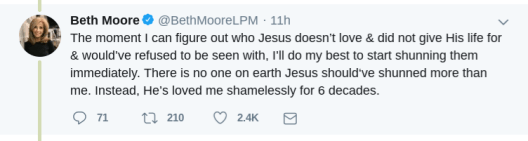
The Mailbag: If someone follows false teachers or teaches false doctrine for a long time, is she saved?


I have heard pastors say that believers can sin for a โ€˜seasonโ€™ without repentance. In regards to professing believers who follow false teachers, what is a โ€˜seasonโ€™? Can they continue following them for months? Years?

Is it possible that someone who is a false teacher is actually saved? Could she truly believe the biblical gospel even though, for decades, she has been terribly mishandling Godโ€™s Word, and has been on an increasing trajectory of sin and false doctrine?

Iโ€™ve combined two questions for this edition ofย The Mailbagย because they are very closely related, if not, in fact, the same basic question.

Iโ€™m glad you asked. This is such an important issue to think through because, unfortunately, we are surrounded by professing Christians walking down these paths.

When I hear people use the the term โ€œseasonโ€ when referring to the Christian life, itโ€™s been my experience that they usually mean โ€œan indeterminate period of timeโ€. In my mind, a โ€œseasonโ€ is longer than a couple of weeks, but shorter than several decades. That really narrows it down, doesnโ€™t it? :0) But if you asked a hundred Christians what a season is, youโ€™d probably get a hundred different answers.

When Christians say that someone can sin โ€œfor a seasonโ€ they are likely alluding to the King James translation of Hebrews 11:25:

By faith Moses, when he was come to years, refused to be called the son of Pharaohโ€™s daughter;ย Choosing rather to suffer affliction with the people of God, than to enjoy the pleasures ofย sin for a season;
Hebrews 11:24-25

You might want to take a look at someย other reliable translationsย alongside the King James. The primary emphasis of the end of verse 25 is that theย pleasureย our flesh gets from sinning is fleeting, transitory, temporary. But the KJV looks at another petal on the same rosebud and helpfully explains thatย becauseย that pleasure is temporary, the time spent happily wallowing in that sin should, consequently, also be temporary. Theย prodigal sonย is a good example of this. Once he found himself in the pigpen, sin wasnโ€™t much fun any more, andย thatโ€™sย when his thoughts turned to repentance.ยน

The next issues we need to tackle are sin and salvation. Hereโ€™s what we know:

๐Ÿ•‡ย Anybody who has a basic grasp of the biblical definition of sin knows that even the most Christlike Christians still sin and thatย sinless perfectionismย is a bunch of hooey and hubris.

๐Ÿ•‡ We also know that someone whom God has reached down and genuinely savedย cannot lose her salvationย due to sin. So the issue weโ€™re grappling with in this particular instance is not whether or not a genuine Christian canย loseย her salvation by sinning, but whether or not a person who lives in sin for a long period of time is actually saved as she professes to be.

๐Ÿ•‡ Finally, we know that there are false converts among us, whoย appear to be Christiansย for a โ€œseason,โ€ and then walk away from the faith never to return, proving that they wereย never truly savedย in the first place.

So how can we tell the difference between a genuine Christian who is temporarily walking in sin and a false convert whoโ€™s on her way out the door?

Most of the time, if sheโ€™s still claiming to be a Christian, we canโ€™t know with certainty.

Often, the only way to know for sure that a person who seemed to be a Christian isnโ€™t saved is if she either a) unequivocally renounces Christianity (i.e. โ€œI no longer believe in God,โ€ โ€œI used to be a Christian,โ€ etc.) or b) picks up a new belief system that clearly puts her outside the camp of Christianity, (i.e. โ€œI donโ€™t believe in the Trinity,โ€ โ€œI donโ€™t believe Jesus was God,โ€ โ€œIโ€™m now a Mormon,โ€ etc.). In other words, if a personย tellsย you sheโ€™s not a Christian, you can believe her.

But for the person who is sinning, following false teachers, or teaching false doctrine (that doesnโ€™t conflict withย biblical soteriology), and claims to be a Christian, it can be harder to tell. Why? Because we arenโ€™t God.

When Samuel was trying to figure out which one of Jesseโ€™s sons to anoint as the next king of Israel, God told him something thatโ€™s very instructive to this issue:

When they came, [Samuel] looked on Eliab and thought, โ€œSurely the Lordโ€™s anointed is before him.โ€ But the Lord said to Samuel, โ€œDo not look on his appearance or on the height of his stature, because I have rejected him. For the Lord sees not as man sees:ย man looks on the outward appearance, but the Lord looks on the heart.โ€
1 Samuel 16:6-7

Regardless of what someone appears or claims to be on the outside, only God knows the heart of each person. And thatโ€™s really good news for us, because it relieves us of the burden of having to read another personโ€™s heart. Thatโ€™s Godโ€™s job, not ours.

God judges hearts, we judge behavior.

God has given the church โ€“ Believers โ€“ the responsibility of seeing to the spiritual welfare of our fellow church members who are sinning. We handle the tangible, visible โ€œactionโ€ part of the situation, and God works through our words and actions to handle the invisible, spiritual part of the situation in whatever way He may choose to handle it. And God has given us very clear instructions in Scripture about how to regard, evaluate, and handle these kinds of situations.

๐Ÿ•‡ God clearly explains to us throughout Scripture exactly what constitutes sin and false doctrine. We compare what someone is teaching, believing, or doing with the applicable, rightly handled, in context Scriptures. If the personโ€™s teaching, beliefs, or behavior isnโ€™t in compliance with those Scriptures, the person is sinning.

๐Ÿ•‡ God vests Christians with theย responsibilityย of lovingly confronting sin in our brothers and sisters and urging them to repent and be reconciled to God, and He explains to us, in Scripture, how to do this.

๐Ÿ•‡ God makes clear inย John 10ย that people He has genuinely saved โ€“ His sheep โ€“ย will notย listen to the voice of a stranger (false teacher). I have experienced the truth of this statement myself and seen it play out in the lives of dozens of women over the years: โ€œI went to a womenโ€™s Bible study when I was a young Christian where they were using materials by [a false teacher]. I was really uncomfortable because I knew something was wrong, even though I wasnโ€™t sure what it was. Years later, looking back and having learned my Bible, I now see I felt that way because I was being taught false doctrine.โ€

๐Ÿ•‡ The overwhelming majority of the Scriptures dealing with false teachers seem to indicate that unrepentant false teachers are not saved. (I discussed these Scriptures in my articleย Can a False Teacher Be a Christian?.) But, again, with those who profess to believe the biblical gospel, we cannot know their hearts with certainty, and we do not have to. We evaluate their visible teaching and behavior according to Scripture and carry out the procedures for dealing with sin in the Body that God has prescribed in His Word.

How long of a โ€œseasonโ€ can someone walk in sin, follow a false teacher, or teach (non-soteriological) false doctrine before we know for certain sheโ€™s not saved? The farthest I will go is to say that the longer a person walks in increasing rebellion against God and His Word, the lessย likelyย it is that that person is genuinely saved. Saved peopleย hateย their sin. Saved people respond humbly and obediently to biblicalย correction. Saved peopleย repent. But how long that takes varies from individual to individual. Itโ€™s impossible to put a number of days, weeks, months or years on it, and with many people who profess to be Christians while doing these things, we may never know this side of Glory.


ยนTHERE IS DISAGREEMENT AMONG SOME CHRISTIANS AS TO WHETHER THE PRODIGAL SON REPRESENTS A LOST PERSON WHO SUBSEQUENTLY GOT SAVED, OR WHETHER HE REPRESENTS SOMEONE WHO WAS SAVED, FELL INTO SIN FOR A SEASON, THEN CAME TO HIS SENSES AND REPENTED. I TEND TO BELIEVE THE FORMER DUE TO CONTEXT (SEE LUKE 15:1-2). JESUS WAS ADDRESSING PHARISEES (REPRESENTED BY THE OLDER SON) WHO WERE CRITICIZING HIM FOR RECEIVING AND EATING WITH SINNERS (GENTILES; THE LOST). AT ANY RATE, Iโ€™M ONLY USING THE PRODIGAL SON HERE TO DEMONSTRATE THE TRANSITORY NATURE OF THE PLEASURE OF SIN.

If you have a question about: a Bible passage, an aspect of theology, a current issue in Christianity, or how to biblically handle a family, life, or church situation, comment below (Iโ€™ll hold all questions in queue {unpublished} for a future edition ofย The Mailbag) or send me anย e-mail or private message. If your question is chosen for publication, your anonymity will be protected.
Mailbag

The Mailbag: Potpourri (Pianist leading worship, hosting a women’s event, re-baptism…)

Welcome to another โ€œpotpourriโ€ edition ofย The Mailbag, where I give short(er) answers to several questions rather than a long answer to one question. I also like to take the opportunity in these potpourri editions to let new readers know about my comments/e-mail/messages policy. Iโ€™m not able to respond individually to most e-mails and messages, so here are someย helpful hintsย for getting your questions answered more quickly.ย Remember, the search bar can be a helpful tool!

In these potpourri editions of The Mailbag, I’d also like to address the three questions I’m most commonly asked:

“Do you know anything about [Christian pastor/teacher/author] or his/her materials? Is he/she doctrinally sound?”

Try these links:ย 
Popular False Teachersย /
ย Recommended Bible Teachersย /ย search bar
Is She a False Teacher? 7 Steps to Figuring It Out on Your Own
(Do keep bringing me names, though. If I get enough questions about a particular teacher, I’ll probably write an article on her.)

“Can you recommend a good women’s Bible study?”

No. Here’s why:
The Mailbag: Can you recommend a good Bible study for women/teens/kids?
The Mailbag: โ€œWe need to stop relying on canned studies,โ€ doesnโ€™t mean, โ€œWe need to rely on doctrinally sound canned studies.โ€.

“You shouldn’t be warning against [popular false teacher] for [X,Y,Z] reason!”

Answering the Opposition- Responses to the Most Frequently Raised Discernment Objections


Usuallyย The Mailbag is all about mail I’ve received from readers, but today, I want to start by sending a thank you note to you!

Thank you from the depths of my heart to each and every one of you who donated so graciously and made it possible for me to speak at the Cruciform Conference in Indianapolis this October. I was floored by your generosity and it was a great way to celebrate my birthday. I’m so honored that you would partner with me in ministry to the ladies at the conference. Thank you and God bless you.

(I tried to make sure I sent an individual thank you message/e-mail to each donor, but if you donated anonymously or I somehow missed being notified of your donation, I apologize and hope you’ll accept my thanks here.)

If you’re going to be in the area, come on out toย Cruciform. It will be a blessing to you, and I’d love to meet you!


I’m the pianist at my church, and my pastor has asked me to select the hymns for our worship services because it takes a lot off him and helps him out. I select the songs from a certain hymnal and two other doctrinally sound sources. Am I in an unbiblical position of “leading” the worship service when I select these songs?

This is a great question. It’s so encouraging when Christian women want to be godly in every aspect of their ministry at church!

No, that’s not leading, that’s serving your pastor and your church. Basically what you’ve got here is a body of songs your pastor already approves of, and he has asked you to whittle it down to four or five songs each week from this pre-approved “list”.

If you choose a song he doesn’t like for some reason or that doesn’t fit with what he’s preaching that week, he always has the prerogative to say, “This song isn’t a fit this week. Could you please choose a different one?” In essence, you’re presenting him with suggestions and he makes the final decision, so he’s still the one in the position of authority. I used to do the same thing for my husband when he was a minister of music at one of our former churches.

Thank you for serving your pastor and your church!


I loved your article Women’s Events on a Shoestring Budget. The funding tips encouraged me to put on an event for our ladies, but our small church has never done anything like this before. What kind of event should we have and how should we get started?

I was so encouraged to get a couple of questions like this in response to my article. Even at a small church (and sometimesย especially at a small church) a women’s event can really help refresh and build up the ladies of your church. It can be a great outreach to the ladies of your community, too.

I would recommend starting small and then growing year by year. For example, if I were in a church with an attendance of 50-150, I would start with an in-house (only ladies from your own church) mini-conference. A Saturday morning simple breakfast (coffee, doughnuts, fruit – food that’s easy to get, serve, and handle), followed by a local speaker (maybe the pastor’s wife at a sister church, or even one of the ladies in your own church) and a couple of songs. You could end there, or possibly have a time of discussion around the tables afterward, or just allow the ladies to hang around and fellowship with each other.

The next year, you could build on that. Maybe the speaker does two sessions with a break between, and you invite/publicize to other local churches. The following year, you could do an overnight retreat or you could expand the conference to an all day thing and have more than one speaker. If you start small and grow your event each year, you’ll learn things you should and shouldn’t do differently along the way, and you won’t be biting off more than you can chew the first time out.

Another thing that might be a good idea is to have a meeting with all of your ladies and ask them what kind of event they’d like. You might be thinking “conference” and they might be thinking “movie night”. It’s good to brainstorm and take the pulse of your ladies on what they’d prefer.

You could also get the men of your church involved in putting together and serving at your conference or event. I spoke at one conference where the men of the church actually put on the conference for their ladies – to honor and thank them. That was one happy bunch of ladies!

Just remember what I said in the article: Donโ€™t try to compete with the expensive glitz, glam, and giveaways of mega-conferences. You do you, your church or host organization…And remember, itโ€™s the caring and hospitality of the hosts that will make the greatest impact on your attendees, not the swanky food, decorations and swag bags.


I wanted to let you know I saw an inappropriate advertisement on your blog.

Thank you so much for letting me know. Rest assured, I don’t choose those ads, nor do I have any control over them. I can’t even see them from my end. I’m in the process of considering some formatting changes to the blog that may (or may not) put an end to the ads.

In the meantime, my articleย Advertising Reduxย explains what you can do to avoid those inappropriate and annoying ads on my site and on other sites as well.


I have a friend who was baptized as an infant, but since she was baptized in the name of the Trinity, she feels as though she can not be re-baptized as an adult believer. How would you speak to her?

I’ll bet that’s kind of a challenging road to navigate as her friend, isn’t it? Without a great deal more information I’m hesitant to give a definitive answer, but hopefully I can point both of you in a helpful direction.

I’m assuming if your friend is considering being baptized, she’s either a member of a local church or a candidate for membership at a local church. The first thing I would want to make sure of is that she’s in a doctrinally sound local church, because the second thing I’m going to advise is that she set up an appointment with her pastor to discuss this issue of baptism. (If the church she’s in isn’t doctrinally sound, getting her into one that is is job one, not baptism. Check out the Searching for a new church? tab at the top of this page.)

Different churches and denominations have different understandings of baptism. Her pastor can explain to her how her church views baptism, why it is requiring(?) her to be re-baptized for membership, and how it understands Trinitarian paedo (infant) baptism versus credo (Believer’s) baptism.

Once she has sat down with the pastor and had all of her questions answered, she will need to search the Scriptures, pray for wisdom, and make sure her understanding of baptism lines up with that of the church she’s considering being baptized into. If it does not, she will need to further study the Scriptures to determine whether or not her personal view of baptism is indeed biblical. If it is but does not align with her current church, she will probably need to find a new church whose view on baptism she agrees with.


If you have a question about: a Bible passage, an aspect of theology, a current issue in Christianity, or how to biblically handle a family, life, or church situation, comment below (Iโ€™ll hold all questions in queue {unpublished} for a future edition ofย The Mailbag) or send me anย e-mail or private message. If your question is chosen for publication, your anonymity will be protected.