Evangelism, Homosexuality, Throwback Thursday

Throwback Thursday ~ There’s Mor Than Just Chikin at Steak* Here

Originally Published July 26, 2012Image

*Yes, I know I spelled it wrong in the title. That was on purpose. See the cows? :0)

If, this far into the game, you don’t know about “Chick-fil-A-gate” –as I’m calling it– you must have been living in a cave over the past few weeks. Without internet access, newspapers, cable TV, or, especially, social media.

In a counter response to the homosexual community’s response to Dan Cathy’s response (you’re following this, right?) to an interviewer’s questions, former governor/presidential candidate, Mike Huckabee created a Facebook event called “Chick-fil-A Appreciation Day”. Basically, he’s encouraging all who agree with Mr. Cathy’s position on traditional marriage to support him and the restaurant chain (and make up for any business he has lost from the pro-homosexual community) by showing up at their local Chick-fil-A next Wednesday (Aug. 1) and buying some chicken.

In the broad scope of things, this day of appreciation is a nice idea, but one that will quickly be over when Chick-fil-A employees mop up and lock up at close of business. For better or worse, the whole brouhaha will soon blow over and people will go back to their lives.

Or will they?

You see, I’m betting that in a counter-counter response to the Chick-fil-A supporters, there will be some pro-homosexual groups of protesters who also show up. (Don’t hate on that. As long as they aren’t breaking any trespassing, traffic, etc., laws, they are well within their Constitutional rights to do so.)

That’s why I say there’s more at stake here than just chicken.

What if you had a chance to impact one of those people for eternity? What if you could play a part in making next Wednesday the turning point in someone’s life? What if you could be the first person ever to show someone what real Christianity looks like?

As nice of an idea as it is to throw Chick-fil-A some love, Jesus didn’t command us to support businesses we agree with. He commanded us to carry the gospel.

“Go therefore and make disciples of all the nations, baptizing them in the name of the Father and the Son and the Holy Spirit, teaching them to observe all that I commanded you;” Matthew 28:19-20a

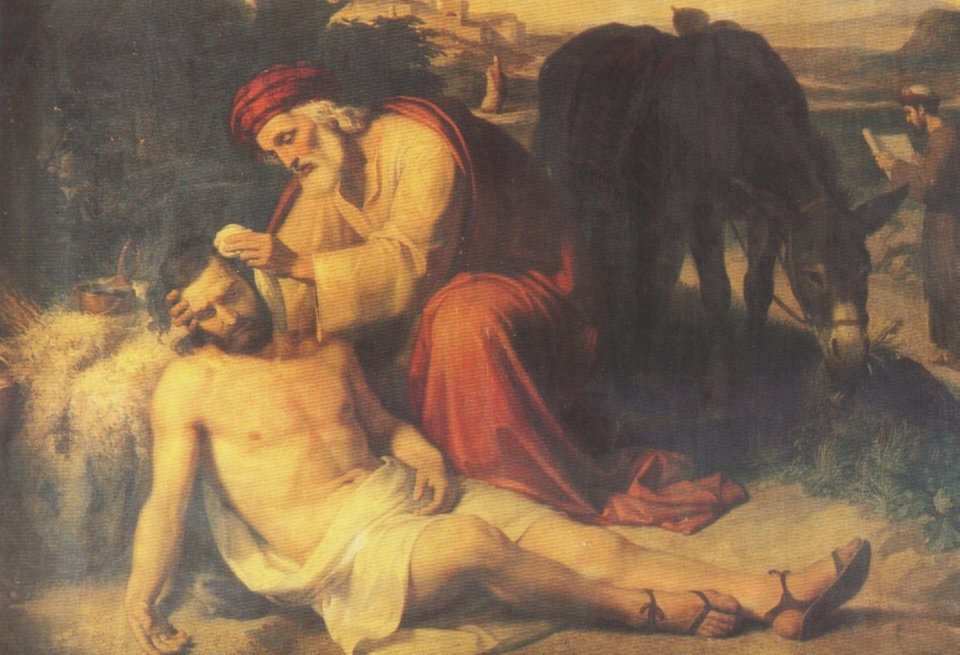
If we walk into a Chick-fil-A next week, past a group of people who are dying in their sins, and ignore them, are we any better than the priest and the Levite who left a beaten and bloody man to die in the road rather than rescuing him? Even if they aren’t conscious of it themselves, these people have been battered, bloodied, and enslaved by Satan.

And we’re going to “pass by on the other side” to buy a chicken sandwich?

“Go and do the same” as the one who showed mercy, said Jesus.

Take them a cooler of iced down cokes. Tell them you love them. Ask them if there’s anything they need.  Show them you love them by taking the time to take an interest in them, personally. (Nobody feels loved if they think they’re just a notch on your spiritual belt.)

And share the gospel.

You might get laughed at or cursed at or mocked, but there’s no greater way to show mercy than to show someone the Savior.

Your chicken sandwich could change somebody’s life.

Forever.

Evangelism, Old Testament, Sunday School, Types and Shadows

Dem Bones ~ Sunday School Lesson ~ 9-14-14

Dem BonesThese are my notes from my ladies’ Sunday School class this morning. I’ll be posting the notes from my class here each week. Click here for last week’s lesson.

Through the Bible in 2014 ~ Week 37 ~ Sep. 7-13
Ezekiel 35-48, Joel
Dem Bones

And beginning with Moses and all the Prophets, [Jesus] interpreted to them in all the Scriptures the things concerning himself. Luke 24:27

The most beautiful thing about the Old Testament is that Jesus’ fingerprints are all over it. The imagery and symbolism displaying His life and the gospel pop out from the least expected places to surprise and delight us. And at the same time we see the “far,” New Testament application, of Old Testament passages, we can also see the “near,” or immediate application the passage has for the Bible characters the story is literally happening to. It’s like getting two lessons in one.

Ezekiel 37:1-14

Something Old
God sent this vision to Ezekiel the night before the messenger came with word of the fall of Jerusalem. The people of Israel were devastated and fearful, and this vision was meant to comfort and reassure them.

The valley (1) represented the areas of the world to which Israel and Judah had been (or would shortly be) exiled. As the skeletons were scattered all over the valley, so God’s people were scattered in various parts of the world.

The bones (2-3, 11) are a picture of death. With exile impending, Israel felt that all hope was dead and gone. The fact that the bones in the valley were “very dry” means that they had been there for quite a while, just as Israel would be in exile for seventy long years. It was the death of life as they knew it.

The prophecy (4-10, 12-14, Jeremiah 3:12, Isaiah 54:8, Psalm 30:5) this time, after so many prophecies of God’s coming wrath, was a prophecy of hope and restoration. God would breathe the breath of life and hope back into Israel. He would raise them up out of the grave of those pagan lands and resurrect them to a new life back in the Promised Land.

Go, and proclaim these words toward the north, and say, “‘Return, faithless Israel, declares the Lord. I will not look on you in anger, for I am merciful, declares the Lord; I will not be angry forever. (Jer.)

In overflowing anger for a moment I hid my face from you, but with everlasting love I will have compassion on you,” says the Lord, your Redeemer. (Is.)

For his anger is but for a moment, and his favor is for a lifetime. Weeping may tarry for the night, but joy comes with the morning. (Ps.)

What a kind and compassionate God! He justly executes judgment, but graciously forgives sin when His people repent.

Something New
The first layer of our lesson today was the “near” application– the literal, immediate application to Israel. From that, we’ve learned that God will not tolerate idolatry, that He is patient with His children, but does discipline them, and that He is merciful and forgiving towards Israel.

The second layer of the story is the “far,” or New Testament layer. It takes those attributes of God and redemption that we’ve just learned about in Israel’s story and shows us how Jesus “fleshed them out.”

The valley (1) could be anywhere. People are scattered over the whole earth just the way the bones were scattered across the valley.

The bones (2-3, 11, Ephesians 2:1-2a, John 15:16; 6:44, Hebrews 11:6, Romans 6:23) are people who are still dead in sin and have never come to repentant faith in Jesus Christ.

Let’s take a look at Ephesians 2:

And you were dead in the trespasses and sins in which you once walked.

Prior to salvation, we are spiritually dead. Just like a corpse can’t move, act, think, or decide, we can’t do anything to choose God (Jn. 15), or please Him (Heb.), or decide on our own to get saved (Jn. 6).

And not only are we spiritually dead during our time on earth, but eternal death awaits us when our earthly lives are over (Rom.). Without Christ, we are born dead, live dead, and die unto eternal death.

Gives you kind of a hopeless feeling (like the Israelites had) doesn’t it?

The prophecy (4-10, 12-14, Matthew 13:57, John 11:25-26; 3:6-7; 16:7; 20:22, 2 Timothy 3:16, Romans 6:4, Ephesians 2:4-7, 2 Corinthians 1:22)
Just like God sent the prophet Ezekiel -“Son of Man” (God calls him this 93 times)- to his people with the good news of the hope of new life, He sent His Son -also called the “Son of Man” (87 times in the New Testament)- the greatest prophet (Matt.), not just to proclaim the good news of new life, but to become that good news by giving His life on the cross so that we might not die, but live.

Verse 6 says: And I will lay sinews upon you, and will cause flesh to come upon you, and cover you with skin, and put breath in you, and you shall live, and you shall know that I am the Lord.”

At Lazarus’ tomb, “Jesus said to her, “I am the resurrection and the life. Whoever believes in me, though he die, yet shall he live, and everyone who lives and believes in me shall never die. Do you believe this?” (Jn. 11)

Just as Ezekiel prophesied to the bones (7-10) and they were born again from the dead, Jesus preached, “You must be born again.” (Jn. 3:7). And just as the bodies in verse 8 were fully fleshed out but had no spirit in them, Jesus said, “That which is born of the flesh is flesh, and that which is born of the Spirit is spirit.” (Jn. 3:6)

Ezekiel prophesied to the breath and it entered the dead bodies and brought them to life. You may have a footnote in your Bible on the word “breath” in verse 5, 6, 9, or 10 that says “or spirit.” The Hebrew (the Old Testament was written in Hebrew) word ruah is the same for “breath” or “spirit.”

In John 16, Jesus prophesied to His disciples that the Holy Spirit would come and fill them: “Nevertheless, I tell you the truth: it is to your advantage that I go away, for if I do not go away, the Helper will not come to you. But if I go, I will send him to you.”

And in John 20: “…he [Jesus] breathed on them [the disciples] and said to them, “Receive the Holy Spirit.”

Interestingly, the Greek (the New Testament was written in Greek) word pneuma means both “spirit” and “breath.” You probably recognize this Greek word as the root of our English word “pneumonia,” a disease of the lungs, or “breath.” The branch of theology that deals with the study of the Holy Spirit is called pneumatology. When 2 Timothy 3:16 says, “All Scripture is inspired by God…” the word translated “inspired” is theopneustos, or God (theo) breathed (pneustos). It is not until the Holy Spirit, the breath of life, enters us that we are “raised to walk in newness of life.” (Rom.)

As God said to Israel in verses 13-14, “And you shall know that I am the Lord, when I open your graves, and raise you from your graves, O my people. And I will put my Spirit within you, and you shall live, and I will place you in your own land. Then you shall know that I am the Lord; I have spoken, and I will do it, declares the Lord.”

so He says to us in Ephesians 2, “But God, being rich in mercy, because of the great love with which he loved us, even when we were dead in our trespasses, made us alive together with Christ—by grace you have been saved— and raised us up with him and seated us with him in the heavenly places in Christ Jesus, so that in the coming ages he might show the immeasurable riches of his grace in kindness toward us in Christ Jesus.”

“and who has also put his seal on us and given us his Spirit in our hearts as a guarantee.” (2 Cor.)

Something Borrowed, Just for You
We have seen the “near” application to the Israelites, and the “far” application to the gospel, so what is the “now” application for us? What can we “borrow” from this passage to do in our own walk with the Lord?

We are to follow in the footsteps of Ezekiel and Jesus and preach (share) the gospel of the resurrection to new life to dry, dead bones, and pray God to do His mighty work of raising sinners from the dead.

Can these bones live? Oh, Lord God, You know.

Evangelism, Gospel, Old Testament, Sunday School

Watching and Warning with Ezekiel ~ Sunday School Lesson ~ 9-7-14

EzekielThese are my notes from my ladies’ Sunday School class this morning. I’ll be posting the notes from my class here each week. Click here for last week’s lesson.

Through the Bible in 2014 ~ Week 36 ~ Aug. 31- Sep. 6
Ezekiel 16-34
Watching and Warning with Ezekiel

Well, Ezekiel is still prophesying (and he’ll still be prophesying until Saturday :0) God is still sending out the same message through him. Again and again, God chastises His people, trying to shake some sense into them so they will repent and turn back to Him. Not because He wants to exercise judgment on them but so “they will know that I am the Lord.” (That phrase is used 74 times in the book of Ezekiel.) No one could say God was unfair because He didn’t warn them of His coming judgment or that He hadn’t given them enough time or that he hadn’t been clear.

Ezekiel 33:1-16

What’s a Watchman?
As we’ve talked about in the past, large or important cities normally fortified themselves against their enemies by constructing a tall, thick wall (sometimes an inner and an outer wall as we saw with Jericho) around the perimeter. These are great for keeping the enemy out once they get there, but not so great for being able to see whether or not the enemy is coming in the first place. We’re talking low visibility. So they would often build high watchtowers at various intervals around the city wall (sometimes outside the wall in a field or on a hill, but fairly close to the city). A watchman would be stationed in the watchtower, and it was his job to alert the higher ups that the enemy was approaching, a messenger was arriving, etc. To be good at his job, he needed good eyes. He needed to be able to discern a messenger from an enemy. He needed to stay alert and vigilant. He needed to act quickly and decisively. He needed to be able to rapidly and clearly convey an urgent message to the right person at the right time. And if he failed even once in any of these duties, he could likely kiss his life goodbye.

33:1-9- Ezekiel: Israel’s Spiritual Watchman (Matthew 23:37a)

If we’ve learned anything from studying these prophetic books, we’ve learned that being a prophet was not some cushy job. Most of the time, God did not have good news for His people, and most of the time, the people did not want to hear it. Jesus even said,

“O Jerusalem, Jerusalem, the city that kills the prophets and stones those who are sent to it!” (Matt.)

But Israel needed a watchman, and God said, “Ezekiel, you’re it.” (7)

Every time God had a message of warning for the people, Ezekiel was to faithfully proclaim it without delay. He was not to hold back from speaking harsh truths to scary people just because he was afraid. If the person Ezekiel was speaking to chose to reject God’s message, that was on that person’s head (9). But if Ezekiel kept his mouth shut, he was being just like that watchman on the wall who didn’t do his job right, and God would hold him accountable for the death of the intended hearers, who would still die in their sin (8).

33:10- What Was the Warning? (Ezekiel 18:4)
What was the warning? It was the warning to repent before God’s coming judgment. Verse 10 gives us a small glimmer of hope that maybe, just maybe God’s message was getting through to a few people:

“Surely our transgressions and our sins are upon us, and we rot away because of them.”

EXACTLY. Israel’s sin and transgressions are bringing God’s wrath upon her. That is what has caused all this calamity and the continuing sermons of doom from His prophets. As God had already told the people back in chapter 18, “The soul that sins shall die.” (18:4). But the story doesn’t end there.

33:10-16- Good News!
Look at the people’s hopelessness in verse 10:

How then can we live?

Their sin has done them in, and now they’re coming to grips with a horrifying reality: they have transgressed a holy God. They recognize that they deserve any punishment God wants to dole out and that He will be justified in pouring out His wrath upon them. What hope could they possibly have?

They have the hope of a God who is not only perfectly just, but rich in mercy and forgiveness and grace. A God who has “no pleasure in the death of the wicked, but that the wicked turn from his way and live.” (11)

“Turn back, turn back from your evil ways, for why will you die, O house of Israel?” (11) He pleads with them. This God who pleads with them now, and has been for nearly 800 years, is not the cruel, selfish, and vindictive god some portray Him as, but the tender, compassionate Father who will move heaven and earth to keep His children from destroying themselves.

Turn away from your evil ways and turn to My mercy and forgiveness, and you will live, He says. “None of the sins that he has committed shall be remembered against him.”

But remember, it’s your repentance and reliance on my mercy that saves you, God tells them. Don’t think you can get by on your past good deeds. “…if he trusts in his righteousness and does injustice, none of his righteous deeds shall be remembered, but in his injustice that he has done he shall die.”

None of the people are so bad that God won’t save them and none of them are so good that they don’t need God to save them.

Following in Ezekiel’s Footsteps
Although we’re not prophets, God has given us a similar charge to the one he gave Ezekiel. We, too, who have the good news of the gospel are to be spiritual watchmen for all those in our circle of influence. We have God’s word, we know what it says, and He has commissioned us to carry that message to people. Like the watchman, we need to stay alert and vigilant for opportunities to share the gospel. We often need to act quickly and decisively to share the gospel before the moment slips away. We need to be able to clearly convey the urgent message of salvation to the right person at the right time. And we need to take this duty deadly seriously.

What? A Warning?
Sometimes when people present the gospel, they do it by using what salesmen call a “hook,” a promise of what the product will do for the person or how it will make his life better. “Want to go to Heaven when you die?” “Jesus will make your life awesome!” But that’s not our message. Jesus isn’t a product we’re trying to convince people to buy.

Like Ezekiel, our first job is to warn people that they have broken God’s law, and that the penalty for breaking His law is God’s wrath, an eternity in hell. God doesn’t just automatically forgive everybody when they die (that’s a false teaching called Universalism). And, just like Ezekiel told the people, you can’t get by on your own good deeds. The warning always has to come first. People don’t know they need to flee to safety if they don’t know they’re in danger.

Our Good News
But as soon as the person we’re sharing with begins to feel like the Israelites– Surely our transgressions and our sins are upon us, and we rot away because of them. How then can we live? (10) –we have the unbelievable privilege of telling them the beautiful news of God’s mercy and grace for sinners like you and me:

As I live, declares the Lord God, I have no pleasure in the death of the wicked, but that the wicked turn from his way and live; turn back, turn back from your evil ways, for why will you die? (11)

None of the sins that he has committed shall be remembered against him. He has done what is just and right; he shall surely live. (16)

How could we ever keep such wonderful news to ourselves?

Discernment, Entertainment, Evangelism, Gospel, Movies

Should Christians Boycott “Son of God”? Three Things to Consider ~ UPDATED

thWith the movie Son of God releasing in theaters on February 28, for the next three Thursdays I’ll be rerunning a three part series I wrote on last year’s History Channel miniseries, The Bible. Son of God is Roma Downey’s and Mark Burnett’s movie about Jesus that is drawn from The Bible’s scenes pertaining to His life and ministry, as well as deleted scenes that did not make it into the miniseries.

UPDATE: Click here to read Part 1, Part 2, and Part 3, of my article “Six Thoughts on History’s ‘The Bible'”.

During and after The Bible’s run last year, Downey and 0bc90ac98e8e3d20a24be1f335b5966aBurnett received quite a bit of criticism for the show’s inaccuracies and copious amounts of artistic license taken. It would give me great joy to discover that they took those critical reviews to heart and fixed in Son of God the rampant errors and faulty theology of The Bible, but since they are using scenes and deleted scenes pulled directly from the miniseries, it doesn’t sound like they’ve re-shot and corrected anything.

Since I have not seen Son of God, I’m not comfortable suggesting Christians boycott it, but I would like to throw a few things out there for your consideration as you make your decision about whether or not to see this movie:

1. Do you boycott products, organizations, restaurants, stores, actors, or political candidates who support abortion, the homosexual agenda, or any other sin?

Well, taking God’s name in vain, the third Commandment, is still a sin. A big one. And it’s not limited to saying “OMG” or boycottusing God’s name in an expletive. Far worse than those is attributing to God things that He has not said or that are not true of His nature and character. This happened a myriad of times in The Bible, and, unfortunately, I anticipate that the same will be true of Son of God.

Are you being consistent if you boycott Girl Scout cookies and Starbucks yet give your money to people who claim to be presenting the Jesus of Scripture but put words into His mouth that He did not say and philosophies into His teachings that He did not espouse and which conflict with God’s word?

2. If you do choose to see Son of God, or if you have friends stock-footage-african-american-friends-having-conversation-at-caf-x-ewho see the movie, make the most of the opportunity to start conversations for sharing the gospel and pointing people to the true Jesus of Scripture. God can use anything to draw people to Himself, but they can only be genuinely born again if someone tells them the truth of the gospel and they put their faith in the Jesus of the Bible.

3. Do your homework. If you choose to see the movie, read one or more of the gospels (Matthew, Mark, Luke, and John) before and afterwards. Did Jesus really say to Peter, “We’re going to bible-studychange the world,” as He does in the movie? If so, which verse says that? If not, what did Jesus actually say, and why? If you choose to see the movie, don’t just take for granted that what you see on the screen is true. Get your Bible out, dig through it, and sharpen your discernment skills. Be one of those Bereans Luke praised so much for comparing what Paul preached to what Scripture said.

~~~~~~~~~~

UPDATE: After the original publication of this article, Downey and Burnett announced that they would be removing all of the scenes from Son of God that contained the actor portraying Satan due to last year’s controversy over his striking resemblance to President Obama. 

A reader asked for my reaction to this announcement. My remarks to him were as follows:

Since I haven’t seen the movie, it’s hard for me to give a really fair comment on this, but I’ll take a stab at it. I am much more concerned about the theology of leaving out Satan than I am about the politics. 

When I read a statement like this (and granted, these are the reporter’s words, not Roma Downey’s words): 

Eager to avoid rehashing the drama, producers Roma Downey and Mark Burnett decided to leave the character out of their film…” 

it tells me they are more concerned with political fallout and controversy than they are with adhering to Scripture. (In my opinion, the bulk of The Bible miniseries bears out that they were not overly interested in adhering as strictly as possible to Scripture.)

When I read a quote like this from Roma Downey: 

“‘It gives me great pleasure to tell you that the devil is on the cutting-room floor,’ …’This is now a movie about Jesus, the son of God, and the devil gets no more screen time.” and, “For our movie, Son of God, I wanted all of the focus to be on Jesus. I want his name to be on the lips of everyone who sees this movie, so we cast Satan out.”

it tells me that she and Mark Burnett don’t have a full understanding of the meaning and implications of Christ’s life, ministry, death, and resurrection. The story of Jesus goes much deeper than just words on a page. Everything He said and did had eternal, omnipotent, prophetic, God-magnifying, salvific, miraculous foundations, impact, and effects. We’re not talking about an entertaining little story like The Three Bears or Gone With the Wind, here. The story of Jesus turns the universe inside out for every atom of everything that’s ever existed, including every single human being who has ever walked the planet. You can’t just cut a little here and cut a little there and sew the edges back together without the crippling the impact of the gospel.

To say that now that they have cut out the scene with Jesus being tempted in the wilderness (I’m assuming this is the main scene they’re referring to. I can’t remember which other scenes may have had Satan in them.), NOW this movie is all about Jesus just further demonstrates their lack of biblical understanding. Are they saying the wilderness temptation was not “about Jesus”?

That incident was not about Satan. It was about Jesus. It is one of the major incidents in which we see that Jesus is both fully God and fully man. It also encapsulates the main point of the entire Old Testament sacrificial system– that Jesus is the perfect Lamb of God without blemish or spot, the only sacrifice that could permanently take away our sin. He could not have been our sacrifice for sin had He given in to Satan’s temptations even once. Finally, it is a demonstration to us that Jesus understands the struggle with sin that we go through because He went through it Himself, personally (Hebrews 4:15).

To sum up, I think leaving Satan out has worse theological consequences than the political fallout for leaving him in.

~~~~~~~~~~

Should you see (and financially support) this movie? That’s between you and God. But whether or not you choose to see it, as with anything else in life, use it as a springboard for sharing the gospel and studying God’s word more deeply.

What do you think? Should Christians boycott Son of God?

Evangelism, Faith, Forgiveness, Gospel, Heaven, Hell, Homosexuality, Legislation, Marriage, Salvation, Sin

From the ERLC: “Your Church and the Same Sex Marriage Decisions”

erlc_logo0501


The ERLC has come out with a helpful fact sheet on the recent Supreme Court decisions on same sex “marriage.” It can be distributed or even used as a bulletin insert at your church, (it’s a free PDF download available in both English and Spanish). Anyone is free to use it– it’s not just for Southern Baptists. It’s really a great resource, so I wanted to share it with you.

I think there’s one point of clarification that needs to be made, though. Under the heading “What Hasn’t Changed,” we find this statement:

“Jesus Christ is still alive, and ultimately will bend history toward His kingdom.”

I read that, then read it again, then turned it over in my mind several times, then tried to recall a verse of Scripture that says anything about Jesus ultimately “bending history towards” His kingdom. Nada. Bupkis. Zilch.

I’m still not exactly sure what the fact sheet writer meant by this phrase. All I can figure (and perhaps I’m misunderstanding his intent) is that he’s referencing Christ’s return and the coming judgment.  When I read Scriptures referencing Christ’s return, I see things like Revelation 19:15:

“From his mouth comes a sharp sword with which to strike down the nations, and he will rule them with a rod of iron. He will tread the winepress of the fury of the wrath of God the Almighty.”

and Matthew 21:44:

“And the one who falls on this stone will be broken to pieces; and when it falls on anyone, it will crush him.”

Not exactly a soft summer breeze gently bending a stalk of golden grain, is it? At least that’s the mental picture I get when I read a phrase like “bending history toward His kingdom.”

Judgment is coming for all of us, lost and saved, regardless of sexual preference. It’s going to be fast and furious and without any second chances to change your mind. The wheat is going to be gathered into the barn and the tares burned up. The sheep are going to be placed on the right, and the goats on the left. Period. End of story. That’s all she wrote.

Sounds scary, doesn’t it?

It should. And that’s a good thing.

As Christians, it should scare us enough for ourselves that we do what 2 Corinthians 13:5 says to do: examine ourselves– our hearts and the fruit of our lives –against Scripture and make certain we are, indeed, saved. (If you’re not sure where to start with that, here’s an excellent tool that I’ve found very helpful.)

It should also scare us for our lost friends and loved ones. It’s a hard, cold, frightening fact, but anyone who does not repent of his sin and place His faith in Christ’s atoning sacrifice for his sin is going to spend eternity in hell when he dies. There’s no Purgatory. There’s no god who just forgives everybody and lets everybody into heaven.

Does that scare you for your children, your parents, your siblings, your spouse, your best friend?

Yeah, me too. And it makes me want to plead with them to repent and believe the gospel so they can escape that terrible fate and we can all spend eternity together with the Lord.

So use these fact sheets at church and share them with your friends. They’re good! They’re informative! But forget the “bending” and remember the sword, the fury, the wrath, and the crushing that are coming, and let them ignite a passion within you to love your lost neighbors enough to plead with them to flee to the cross for cleansing, forgiveness, and eternal life.