Mailbag

The Mailbag: What’s In a Name?

Originally published July 22, 2019

How should my child and I refer to a child who is transitioning (girl to boy)? This is not a child with whom we are close. She is the granddaughter of a neighbor and visits them once or twice a year. Because she and my daughter are near the same age (tweens), they spend time together while she is visiting. 

She recently arrived for a visit and informed my daughter that she is transitioning and wants to be called Brandon* instead of Shannon from now on. She now dresses like a boy and has a male-looking haircut.

I have already talked to my daughter about the biblical issues at play and have explained that we need to be loving and kind to her friend, but also not cooperate with her delusion of becoming a boy.

I don’t want to use the pronoun “he” to refer to this child because it is not biologically possible and it is sinful to try to change the gender God gave you. But what about her transition name (Brandon)? People change their names and I don’t think that’s sinful. But to change it for the purpose of denying your God-given gender would be.

Would you call her by her given name or her new name?
*Names changed

This is such a heartbreaking situation, and it’s happening way too often. So called “gender reassignment” is physically, psychologically, and spiritually abusive. Children in sexual identity sin need loving, kind, supportive, biblical help, not for someone, especially their parents who are supposed to protect them and do what’s best for them, to enable them in their dysfunction.

You didn’t ask about this, and you might already be doing it, but could I suggest two things before we get into the names and pronouns? Pray fervently for this child. Pray by yourself, with your daughter, with your whole family. Pray for her parents and grandparents. Pray for opportunities to share the gospel with all of them. This child is in for a very painful life, physically, emotionally, and spiritually.

In addition to loving her and sharing the gospel with her, try to do little things that will subtly continue to keep Jesus in front of her eyes whenever she’s with your family: say the blessing before meals, invite her to go with you to the church picnic or youth activities at church, do a mother-daughter Bible study every morning and ask her if she’d like to join you and your daughter. Don’t beat her over the head with these things or stop doing things with her that she would consider “normal” (going for a swim or out to get hamburgers), but try little avenues like this for introducing her to Christ.

Now as far as calling this little girl “Brandon” and using male pronouns for her, I would probably land very close to where you are on the issue. The way we use and understand language as human beings is very impactful, which is precisely why we’re starting to see people getting fired from their jobs for refusing to use male pronouns for women who think they’re men, and vice versa. Changing the language changes the tide of the movement. Once the people pushing this agenda get the language changed, changing laws, hearts, and attitudes is much easier for them. They even think it can change reality – that a woman can actually become a man and a man can actually become a woman.

As Christians, we should recognize better than anyone how integral someone’s name can be to her identity. God’s name is I AM. It’s not just an arbitrary label chosen for its mellifluous lilt. That is the essence of who He is. Matthew gives us two names for God’s Son – Jesus, “Yahweh saves,” and Immanuel, “God with us” – these names tell us His true identity and purpose. And all over the Bible, we see the importance of a person’s name to his or her identity. People’s names often had ontological meaning. And sometimes God changed a Bible character’s name at a milestone moment to indicate that that he was moving into a new phase of life. Abram to Abraham. Sarai to Sarah. Jacob to Israel.

Interestingly, there’s even an incident in the Bible that parallels the name-changing issue today. When Nebuchadnezzar took the people of Judah captive and changed the names of Daniel, Hananiah, Mishael, and Azariah to Belteshazzar, Shadrach, Meshach, and Abednego, he did so as a method of forcibly assimilating them into their new identity as Babylonian slaves in Babylonian culture. He was attempting to change their entire identity – the way they thought about themselves – from sons of God to conquered slaves of Babylon and make that new identity a reality. And that’s what’s going on with Shannon as well as the sexual identity agenda “pronoun police.” The change of name and pronouns is an attempt to change the new identity of the person into a reality. But every time someone uses the biologically correct name and pronouns for someone in sexual identity sin, that person is jolted out of her delusion of being the opposite sex and right back into the inescapable reality of the sex God created her to be. (It’s the sexual identity sin version of the positive confession aspect of Word of Faith theology: If you just believe hard enough and say all the right things and never the wrong things, you can speak your desires into existence. Scary, huh?)

So when someone in sexual identity sin asks you to call her by an opposite sex name and pronouns, it’s not some “no big deal” kind of thing. Whether that person realizes it or not, she is asking you to help perpetuate her delusion and protect her from being confronted by the reality of the way God created her, so that she can continue believing that what she wants to be true actually is true.

I have said on previous occasions that Christians shouldn’t use opposite sex names or pronouns (or made up/incorrect pronouns like “ze,” “fae,” or “them/their”- referring to an individual) for all of the aforementioned reasons and more. I do understand that for various reasons of employment, family peace, and so on, there are godly people out there who may decide in their own circumstances to use opposite sex names and pronouns for people in sexual identity sin, and I want to make clear that, while I almost certainly would not agree with those decisions, I don’t necessarily think those godly people are, across the board, sinning by doing so. This is a tough issue to navigate because the Bible doesn’t explicitly tell us what to do in this situation. We need to prayerfully examine the issue and the Scriptures and follow our biblically informed consciences in our particular situations. So please hear me clearly: this reader asked what I would do in her particular situation (which doesn’t involve the possibility of losing a job, being arrested, etc.) so that’s how I’m going to answer.

I could not, without violating my biblically informed conscience, call Shannon Brandon and start using male pronouns for her. However, I would also realize that she is going to feel hurt by not being called Brandon, which could cause her to distance herself from my family and the gospel influence we could have upon her.

The way you worded your e-mail, it sounds like Shannon came in and sort of announced or told your daughter that her name is Brandon now or that’s what she’d like to be called. Shannon announcing this is not the same thing as you and your daughter agreeing to comply with it.

Personally, what I would do, is just skip using formal names and not worry about the pronouns. The pronouns will be easier to dispense with because he/him/his and she/her/hers are third person pronouns. In other words, you use them when talking about someone (to another person), not when you’re talking to someone. When you’re talking to someone, you use second person pronouns (you/your/yours) which are already gender neutral.

Avoiding using Shannon’s formal name may also be easier than you realize, especially since you don’t see her very frequently. Think about how often you actually use your husband’s, children’s, or friends’ names when speaking directly to them in conversation. Usually, we don’t start a conversation with someone we’re sitting across from by saying, “Bob, let me tell you about my day,” we just start talking. We also use pet names (sweetie, kiddo, my friend) and nicknames (Green Eyes, Tiger, Boss). Some people are in the habit of calling others by their last names, military style. If Shannon’s “boy name” and “girl name” started with the same letter (ex: going from Shannon Johnson to Steve Johnson) you could call her by her initials.

One of the main reasons people in my house call each other by name is if we’re trying to get that person’s attention or call them from another room. Instead of your daughter calling to Shannon from another room or through a closed door, “Shannon, would you like a drink?”, teach your daughter to walk up to Shannon, tap her on the shoulder, or wait until she comes into the room, and ask her the question once the two have made eye contact. (She’s probably already good at this since most kids that age have earbuds in all the time!) Among kids, “Hey!” “Yoo hoo!” or a yoo hoo-type whistle to get her attention can also work. Keep all of these kinds of things lighthearted and casual, and Shannon might not even notice. Meanwhile, you can keep on loving her and sharing the gospel with her.

Anyway, that’s the kind of thing I would do unless Shannon point blank says something like, “I want to be called Brandon. Will you please call me that?” or “Why aren’t you calling me Brandon?”. At that point, you or your daughter will need to lovingly and briefly explain that in the same way Shannon feels uncomfortable being called a girl name, your daughter feels uncomfortable calling her a boy name. Ask Shannon if there’s some kind of compromise she and your daughter could make (initials, nickname, “secret code names” they can have fun making up, etc.) that would make both of them feel comfortable.

If she wants to know why you/your daughter feel uncomfortable, lovingly tell her the truth. “We love God. God made you a girl. If we call you by a boy’s name, we feel like we would be saying He did something wrong or made a mistake, or that we would be lying about how He made you. But we do still love you and still want to be friends.” If you feel like it would be appropriate or helpful, you might want the grandparents to be present while you have this conversation. You and your daughter might also want to role play this scenario ahead of time so that she will feel prepared when it’s time to have this conversation.

When you have this conversation with Shannon, you need to understand that it most likely won’t be well-received and that it could very well be the last conversation you have with her. Her grandparents may be angry with you. Her parents may be angry with you. As Christians who stand firmly and lovingly on Scripture, we should expect the world to hate us.

If the world hates you, know that it has hated me before it hated you. If you were of the world, the world would love you as its own; but because you are not of the world, but I chose you out of the world, therefore the world hates you. Remember the word that I said to you: โ€˜A servant is not greater than his master.โ€™ If they persecuted me, they will also persecute you. If they kept my word, they will also keep yours. But all these things they will do to you on account of my name, because they do not know Him who sent me. John 15:18-21

Do not be surprised, brothers, that the world hates you. 1 John 3:13

But Christ calls us to separate ourselves from the world and be loyal to Him even if it costs us everything- including those we love the most:

Whoever loves father or mother more than me is not worthy of me, and whoever loves son or daughter more than me is not worthy of me.
Matthew 10:37

The gospel divides. And Christians are always called to stand on Christโ€™s side of the divide.

Yet, we should also remember Christ’s promises to us:

Blessed are you when others revile you and persecute you and utter all kinds of evil against you falsely on my account. Rejoice and be glad, for your reward is great in heaven, for so they persecuted the prophets who were before you. Matthew 5:11-12

But rejoice insofar as you share Christ’s sufferings, that you may also rejoice and be glad when his glory is revealed. If you are insulted for the name of Christ, you are blessed, because the Spirit of glory and of God rests upon you. But let none of you suffer as a murderer or a thief or an evildoer or as a meddler. Yet if anyone suffers as a Christian, let him not be ashamed, but let him glorify God in that name. 1 Peter 4:13-16


If you have a question about: a Bible passage, an aspect of theology, a current issue in Christianity, or how to biblically handle a family, life, or church situation, comment below (Iโ€™ll hold all questions in queue {unpublished} for a future edition of The Mailbag) or send me an e-mail or private message. If your question is chosen for publication, your anonymity will be protected.


Easter, Holidays (Other), Second Coming

He’s Coming Back

Originally published March 25, 2016

Theyโ€™re words cooed by a mother to dry the tears of her frightened child.

Words murmured bedside by a nurse calming her anxious patient.

Theyโ€™re comforting words, imparted by someone in charge, someone taking care of us, someone weโ€™re depending on. Words that God has spoken to His people from the beginning.

Iโ€™m coming back.

From walking with God Himself in the cool of the day to banishment from the Garden.

The anguish of giving birth.

The toil of tilling the ground.

The sting of physical death.

Could anything compare to man’s ache of losing tangible communion with God? And, yet, even in the curse of the Fall, His bold declaration rang out:

Iโ€™m coming back.

In base splendor.

In humble glory.

Emmanuel – God with us – came back.

He tabernacled for a time among us, but all too quickly, the days of His visitation drew to an end.

Time and again, though they would not yet understand,

Though the cross was unfathomable,

And the empty tomb, unimaginable,

He gathered His disciples close and taught, with unassailable authority:

Iโ€™m coming back.

They saw the stone rolled away. The nail prints. His riven side. They ate with Him, walked with Him, talked with Him. They followed Him out to a hillside and watched as He was taken up into the clouds.

And with them, we wait. We set our gaze upon the heavens. We long for His blessed return. And we hear the same words they heardโ€ฆ

Words which should drive terror-stricken sinners to their knees in repentance and faithโ€ฆ

Words which warm the hearts of believers with glorious hope, comfort, and joyโ€ฆ

Words which, one dazzling and magnificent day, will never need be heard againโ€ฆ

HE’S COMING BACK.

He’s coming back.

Speaking Engagements

Report Back: Belmor Baptist Women’s Conference


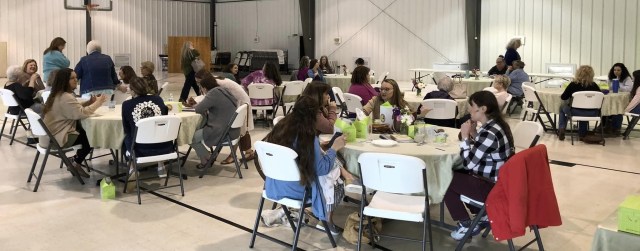
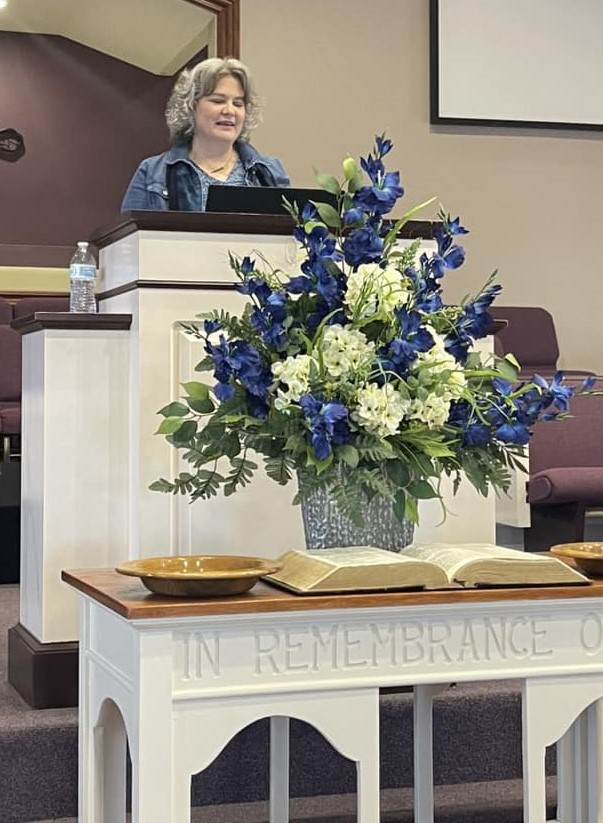
It was such a joy to fellowship with the lovely ladies of Tanner, Alabama, and the surrounding area at Belmor Baptist Church’s women’s conference last weekend. Pastor Keith and his wife Kim, conference coordinator, Haley, her husband, Blocker, and all of the ladies warmly extended their hospitality and made us feel so welcome.

When an event is close enough to home, my husband, Scott, usually drives me. He always takes such good care of me, and this trip was no exception. On the way up to Tanner, we got a flat tire in the pouring rain on an interstate packed with traffic due to a car accident. My beloved fixed that tire in no time, and we were back on our way. I am blessed to be married to Mr. Roadside Assistance!

After that eventful trip, it was a treat to meet Keith, Kim, Haley, and Blocker at the Main St. Cafe for dinner where we shared a wonderful meal and even more wonderful fellowship.

A good night’s sleep later, and it was go time for the conference.

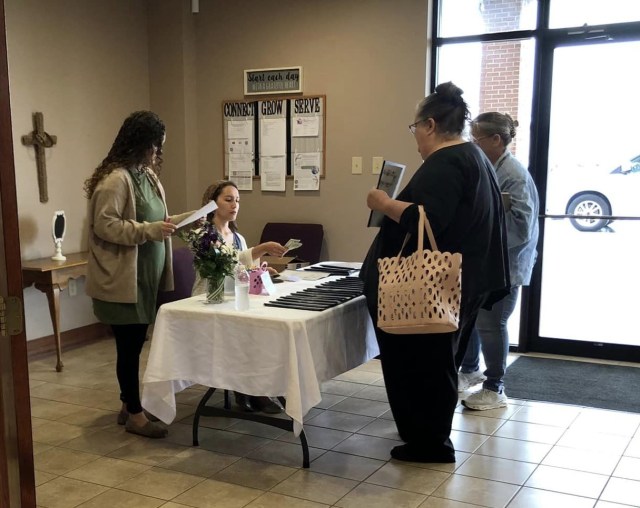
The ladies were greeted by Haley’s friendly smile…

… and a delicious breakfast!

We opened up with some lovely hymn singing, led by Haley, and then went straight into our first session, Godโ€™s Design for Biblical Womanhood.ย Womanhood is special and unique. Womanhood โ€“ not a cheap knockoff of manhood โ€“ is something God values andย wantsย women to display in the world, the church, and the family.

The ladies enjoyed discussing the material in small groups…

Our second session on biblical womanhood wasย Walking in Biblical Womanhood.ย Everybody wants to change the world, but nobody wants to change the diapers. Godโ€™s plan for most of us is to change the diapers, get the groceries, make the meals. We fight back against feminism byย standingย โ€“ right where God has placed us โ€“ and living each day faithfully.

Lunch time! We were treated to a delicious box lunch of Chicken Salad Chick croissant sandwiches and engaged in spirited discussion of the day’s topics along with heartwarming fellowship.

When we reassembled, we switched gears from biblical womanhood to discernment for session 3: Discernment 101: Learn to Discern. We talked about what discernment is โ€“ identifying false teachers and false doctrine โ€“ and how to use it to the glory of God.

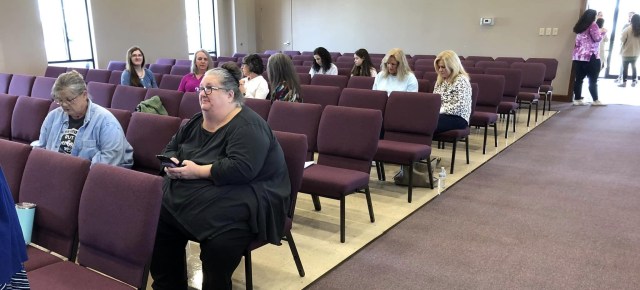
Finally, we rounded out the day with more discussion groups, and a rousing Q&Aย session. These ladies asked some challenging questions!

It was such a wonderful weekend with the ladies of Belmor Baptist. Thanks so much to our charming hosts and all the other brothers and sisters of BBC for making us feel right at home. Thanks also to all the men and women who worked so hard to host a fantastic conference and extended such warm hospitality to us. If you’re ever in the area and need a good church to visit, make plans to spend the Lord’s Day with these wonderful brothers and sisters.


If your church or organization is ever in need of a speaker for a womenโ€™s event, Iโ€™d love to come share with your ladies as well. Click here for more information, or to find an upcoming event near you!


Photo Credits

Women’s conference graphics courtesy of Belmor Baptist Church.

Photo of Main St. Cafe courtesy of Main St. Cafe.

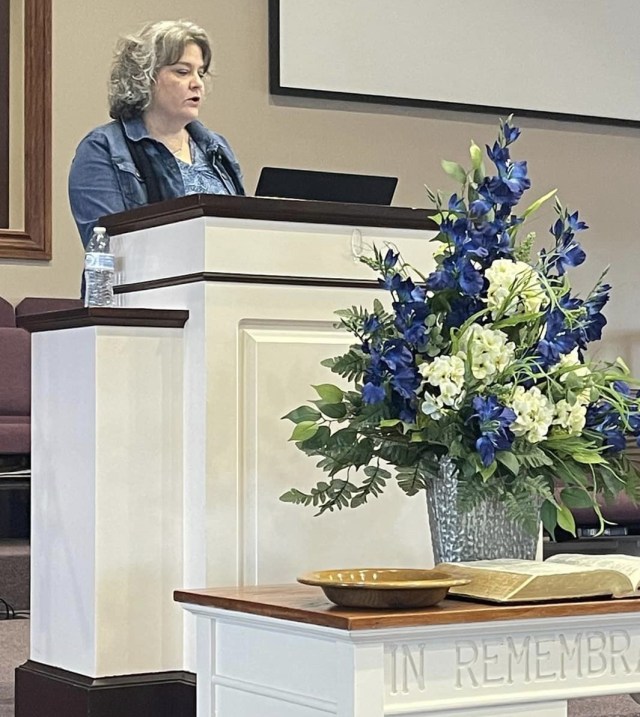
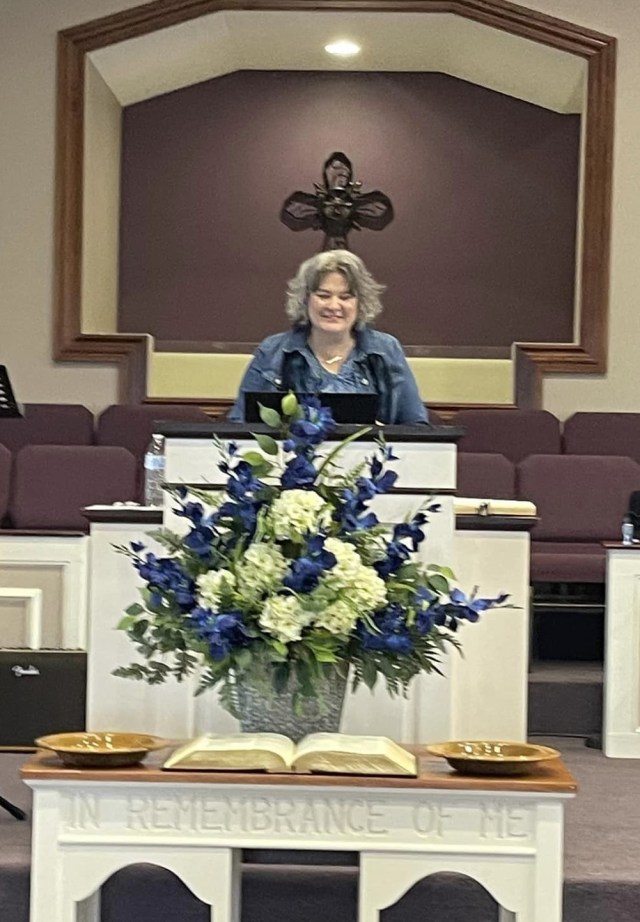
Photos of Michelle speaking, courtesy of Kim Crouch.

All other photos by Michelle Lesley.

Church, Faith

Cleaning House

Originally published May 5, 2010

Hezekiah became king when he was twenty-five years old;…

He did right in the sight of the LORD, according to all that his father David had done.

In the first year of his reign, in the first month, he opened the doors of the house of the LORD and repaired them.

He brought in the priests and the Levites and gathered them into the square on the east.

Then he said to them, “Listen to me, O Levites. Consecrate yourselves now, and consecrate the house of the LORD, the God of your fathers, and carry the uncleanness out from the holy place.

“For our fathers have been unfaithful and have done evil in the sight of the LORD our God, and have forsaken Him and turned their faces away from the dwelling place of the LORD, and have turned their backs.

“They have also shut the doors of the porch and put out the lamps, and have not burned incense or offered burnt offerings in the holy place to the God of Israel.

“Therefore the wrath of the LORD was against Judah and Jerusalem, and He has made them an object of terror, of horror, and of hissing, as you see with your own eyes.

“For behold, our fathers have fallen by the sword, and our sons and our daughters and our wives are in captivity for this.

“Now it is in my heart to make a covenant with the LORD God of Israel, that His burning anger may turn away from us.

“My sons, do not be negligent now, for the LORD has chosen you to stand before Him, to minister to Him, and to be His ministers and burn incense.”

Then the Levites arose…
They assembled their brothers, consecrated themselves, and went in to cleanse the house of the LORD, according to the commandment of the king by the words of the LORD.

So the priests went in to the inner part of the house of the LORD to cleanse it, and every unclean thing which they found in the temple of the LORD they brought out to the court of the house of the LORD. Then the Levites received it to carry out to the Kidron valley…

Then they went in to King Hezekiah and said, “We have cleansed the whole house of the LORD, the altar of burnt offering with all of its utensils, and the table of showbread with all of its utensils.

“Moreover, all the utensils which King Ahaz had discarded during his reign in his unfaithfulness, we have prepared and consecrated; and behold, they are before the altar of the LORD.”

Then King Hezekiah arose early and assembled the princes of the city and went up to the house of the LORD.

They brought seven bulls, seven rams, seven lambs and seven male goats for a sin offering for the kingdom, the sanctuary, and Judah. And he ordered the priests, the sons of Aaron, to offer them on the altar of the LORD…
The priests slaughtered them and purged the altar with their blood to atone for all Israel, for the king ordered the burnt offering and the sin offering for all Israel.

He then stationed the Levites in the house of the LORD with cymbals, with harps and with lyres,…

The Levites stood with the musical instruments of David, and the priests with the trumpets.

Then Hezekiah gave the order to offer the burnt offering on the altar. When the burnt offering began, the song to the LORD also began with the trumpets, accompanied by the instruments of David, king of Israel.

While the whole assembly worshiped, the singers also sang and the trumpets sounded; all this continued until the burnt offering was finished.

Now at the completion of the burnt offerings, the king and all who were present with him bowed down and worshiped.

Moreover, King Hezekiah and the officials ordered the Levites to sing praises to the LORD with the words of David and Asaph the seer. So they sang praises with joy, and bowed down and worshiped.

Then Hezekiah said, “Now that you have consecrated yourselves to the LORD, come near and bring sacrifices and thank offerings to the house of the LORD ” And the assembly brought sacrifices and thank offerings, and all those who were willing brought burnt offerings…

But the priests were too few, so that they were unable to skin all the burnt offerings;

There were also many burnt offerings with the fat of the peace offerings and with the libations for the burnt offerings. Thus the service of the house of the LORD was established again.

Then Hezekiah and all the people rejoiced over what God had prepared for the people…

Excerpted from 2 Chronicles 29

You know the history of Israel: bad king, good king, bad king, good king (actually, there were a lot more bad kings than good kings). The bad kings would come in and establish idol worship. They set up altars and made sacrifices to false gods, introduced cult prostitution, and even desecrated God’s house with idol worship and paraphernalia.

Ahaz was one of those bad kings. Second Kings 16 and 2 Chronicles 28 tell us he not only burned incense and made sacrifices to his gods, he “even made his sons pass through the fire” in worship of these idols. He took the gold and silver from God’s house and used it to try to bribe another king to come help him fight against an enemy. He desecrated God’s altar and tore down parts of the temple. He cut to pieces all of the temple utensils used for making sacrifices to the Lord. He had altars to his own gods placed in the temple, “in every corner of Jerusalem”, and “in every city in Judah”.

Ahaz was one bad dude. In fact, he was such a pustule of a human being that when he died they didn’t even bury him with all the other kings of Israel. That’s pretty bad.

And Hezekiah, Ahaz’s son, became king in his place.

Hezekiah was one of the most godly kings in Israel’s history. He had seen with his own eyes the evil perpetrated by his father, which had infested God’s holy house and spread throughout the land, and God put it in his heart to turn things around and lead his people back to God.

See any similarities between God’s house then and God’s house now? Between God’s people then and God’s people now? Is it time for us to grieve over the holy things that have been destroyed or taken out of God’s house, and the filth that has been brought into His house?

We’ve got to sweep around our own front door.

Notice that Hezekiah didn’t just go out and get a bunch of guys together and say, “All right, boys, we need to clean house. Let’s get to work.” He went specifically to the priests and Levites – the church leadership, if you will – and said, “consecrate yourselves”.

Consecration was a process of ritual cleansing. As the priests and Levites went through each step of the outward, physical cleansing, they were also setting themselves apart from worldliness and seeking God’s hand of purification in their hearts.

Notice also that the priests and Levites had to consecrate themselves before they would be able to consecrate the temple. Just as Ahaz’s own personal evildoing had trickled down and infected the people, so the temple leadership would have to cleanse themselves personally before God in order for a pursuit of holiness to pervade God’s house and His people.

Those who study revival have noted that the majority of churches which experience revival do so under the leadership of a pastor who has experienced personal revival. If a pastor senses it’s time to clean house at his church, step one is to make sure he has consecrated himself and is walking blamelessly before God. Step two is to get his leadership together for times of cleansing and much prayer, that they may consecrate themselves before leading the people.

Once their personal cleansing was complete, the priests and Levites began to “carry the uncleanness out from the holy place”. The evil done in the temple in Ahaz’s day had harmed families, stirred God to anger, and made His people “an object of terror, of horror, and of hissing” in the eyes of the world around them. Likewise, the worldliness and sin – from gossip and jealousy all the way up to pedophile clergy – we have allowed into the church has brought tremendous harm to countless families and has made the body of Christ an object of ridicule and hatred in the eyes of many of the people we seek to reach for Him. Can we expect that His anger towards us would be any less than his anger towards the Israelites?

When the priests and Levites began to cleanse the temple, they did so completely and permanently. In the same spirit of Jesus’ own remarks that if your very hand or eye causes you to sin, you should remove it from your body, the priests and Levites removed everything – no matter how small, no matter how valuable it may have seemed, or how much its removal might have offended someone – that didn’t belong in God’s house.

Verse 16 tells us they carried all these unclean things out to the Kidron valley. The Kidron valley (or brook, as it was sometimes called when water was running through the valley due to heavy rains) was an area outside Jerusalem where, under Kings Asa, Josiah, and Hezekiah, all manner of unclean items used in idol worship were disposed of, usually by burning. That’s permanent. They weren’t taking any chances that someone might come across these items and bring them back into the temple.

Not only did the priests and Levites take all the unclean items out of God’s house, they purified and brought back all of the sacred items used for worshiping God that never should have been removed.

Is it time to carry the unclean things out of your church and down to the Kidron valley? Maybe it’s an unbiblical doctrinal tenet of your denomination. A program that brings glory only to the church members involved and not to God. A person in a position of church leadership who intentionally lives in sin and rebellion. An attitude of your own heart.

What about the holy items of worship that have been taken out of your church? Have sound, Biblical sermons been replaced by ear tickling pep talks and skits? Have Scriptural and doctrinal worship songs been replaced by the vain repetition of fluffy, feel-good jingles? Has prayer become simply a way to bookend your worship services or even disappeared altogether?

Our churches are in captivity to worldliness due to our disobedience. God has chosen our pastors to minister before Him; to lead His people to be consecrated to Him and worship Him. Dear pastor, please do not be negligent about cleansing His house. For the sake of us, the sheep God has entrusted to you, won’t you go into the innermost part of the house of God – your heart, your family, your staff – and through humility, prayer, study of the Word, and sound biblical action, remove every unclean thing, and bring back the sacred things with the help of your church leadership?

Only when God’s house is clean will we be able to offer Him the sacrifices He truly desires:

Thus the service of the house of the Lord will established again, and the people will rejoice over what God has prepared for them.

Faith

Throwback Thursday ~ Obedience Matters

Originally published April 7, 2010

He who turns away his ear from listening to the law,
Even his prayer is an abomination.

Proverbs 28:9

Can you believe God would ever call prayer an abomination?

Imagine you have a teenage son or daughter (not such a stretch for some of us!) who always says the right thing (OK, that’s a stretch):

“I’ll be glad to clean up my room, Mom.”

“All right! Liver and onions for supper again! Mom, you’re such a great cook!”

“I love you, Mom.”

“I’m so thankful to have you and Dad as parents!”

“Mom and Dad, I appreciate you. Keep up the great work!”

“My parents always make the best and wisest decisions!”

Granted, that’s not going to happen in this lifetime, but wouldn’t you receive such praise gratefully if it were offered? Would you be more inclined to extend curfew? Lend out the car keys more often? Buy that new outfit she’s been begging for?

Now what if you found out that, while your child was saying all these wonderful things to and about you, she was cheating on tests at school, lying to you about where she had been, using drugs, or sneaking around with a boy you didn’t want her to see? How much would all that praise mean to you then? Would any of it matter if your child were living in willful disobedience?

How much more are our prayers, our praise, our worship, an affront to a holy God if they are drawn from the well of a rebellious heart?

Our prayers, our praise, our worship, are an affront to a holy God if they are drawn from the well of a rebellious heart.

The call to take up our crosses daily and follow Him is a call to complete surrender and obedience. It’s not:

“I’ll obey if I feel like it.”

“I’ll obey if it doesn’t conflict with what I want to do.”

“I’ll obey if it’s convenient.”

“I’ll obey if it’s fun.”

“I’ll obey if people will praise me for it.”

It’s doing what God tells us to do when and how He tells us to do it. Trust me, Jesus didn’t feel like dying on the cross. It wasn’t convenient, it wasn’t fun, and, in that moment, nobody praised Him for it.

But He did it anyway.

Because He was obedient.

How can we who bear His name expect that He would call us to less?

Has the LORD as much delight in burnt offerings and sacrifices As in obeying the voice of the LORD? Behold, to obey is better than sacrifice, And to heed than the fat of rams. For rebellion is as the sin of divination, And insubordination is as iniquity and idolatry…

1 Samuel 15:22-23a

May our prayers, praise, and worship spring from a consecrated lifestyle, in full submission to the Savior, so the Lord will not say of us:

…this people draw near with their words and honor Me with their lip service, but they remove their hearts far from Me…

Isaiah 29:13

Go ahead and get your praise on…but get your obedience on first.

Go ahead and get your praise onโ€ฆbut get your obedience on first.