Last week I finished teaching a brief summer Bible study on the book of Jonah. It was based on an on line study I wrote a few years ago. I enjoyed Jonah so much I thought you might enjoy it too, so for the next few weeks, I’ll be re-running a lesson on Wednesdays and Fridays until we complete all twelve lessons. Please feel free to share this around on social media and get a gospel discussion going with your friends. It’s also a great study for your small group or the break room at work. Hope you enjoy Jonah!
Some of the principles of good hermeneutics (interpreting Scripture) are to know who the author of the book was, when he wrote/when the action took place, where he lived, and the historical/cultural context in which he wrote. So let’s start off with a little background:
Jonah was a prophet of the Northern Kingdom of Israel (as opposed to the Southern Kingdom of Judah). The events described in the book of Jonah took place in approximately 760 B.C., during the reign of King Jeroboam II. This would mean Jonah prophesied after Elisha and before Hosea and Amos, despite the fact that the book of Jonah actually comes after both of these books in the Old Testament.
During Jonah’s tenure, Israel was experiencing greater prosperity than at any other time in its history. Though previously attacked and oppressed by the Assyrians (of which Nineveh was the capital), the power of this enemy kingdom had weakened…
Photos courtesy of cristoraul.com, TBN, Joyce Meyer Ministries, and TD Jakes Ministries
These are my notes from my ladies’ Sunday School class this morning. I’ll be posting the notes from my class here each week. Click here for last week’s lesson.
Through the Bible in 2014 ~ Week 27 ~ June 29- July 5 1 Kings 22-2 Kings 13, 2 Chronicles 18-24, Obadiah, Psalm 82-83 Michaiah: True Prophet vs. False Prophets
1 Kings 22:1-40
Setting the Stage
Ahab was one of the most wicked kings ever to sit on the throne of Israel. The previous chapter (21:25) says “There was none who sold himself to do what was evil in the sight of the Lord like Ahab”. He has just been confronted by Elijah for his numerous abominations, and has humbled himself and repented.
Getting back what’s mine (1-4, 20:34)
Israel had had peace for three years, but it was bothering Ahab that Syria still had control of the city of Ramoth-gilead, when Ben-hadad (Syria’s king) had promised to return all of the cities Syria had captured during his father’s reign as part of his terms of surrender (20:34). Ahab asked Judah’s king, Jehoshaphat, to join him in recapturing the city, and Jehoshaphat agreed.
Not just any prophet will do (5-12, 18:1ff, 20:26)
Jehoshaphat was a godly man and knew that the right thing to do would be to inquire of the Lord before going into battle. Why do you think Ahab didn’t suggest this? What do we know about Ahab’s walk with the Lord? We know from 20:26 that he was an idolator, from chapter 18 that he was a Baal worshiper and had led Israel into Baal worship, and that he also supported the golden calf worship centers that Jeroboam had set up. So, when Ahab summoned 400 of his favorite prophets in order to appease Jehoshaphat, do you think they were true prophets of the Lord, or false prophets of idolatry? They were false prophets.
Tell him what he wants to hear
Was Ahab’s desire to hear and obey the word of the Lord? Was it the desire of the 400 prophets to truly hear and accurately report the word of the Lord? We can answer a resounding “no” to both questions. Ahab’s desires were, a) to hear what would make him happy, b) to make Jehoshaphat happy by granting his request and calling up so called “prophets of the Lord” and c) for Jehoshaphat to hear that they wold be successful so that Jehoshaphat would agree to go into battle with him. The “prophets'” desire was to keep the king happy and thus stay alive and prosper in their positions.
How do you spot a false prophet?
The 400 prophets certainly seemed to be prophets of the Lord. They brought a positive, encouraging message and made Ahab happy. Zedekiah (11) even prefaced his message with “Thus says the Lord,” the same words all true prophets of the Lord used. And all the prophets predicted triumph and that the Lord would give the battle into the king’s hand, words spoken on many previous occasions to other kings by true prophets of the Lord. So, why would Jehoshaphat think these were not true prophets of the Lord?
1. Where they were coming from (Deuteronomy 13:1-5) Jehoshaphat knew that these guys were coming from a temple to a false god, even if they called those golden calves “God”. They were idolators so they were breaking God’s law in word and in practice. Deuteronomy 13:1-3a, 5a says:
If a prophet or a dreamer of dreams arises among you and gives you a sign or a wonder, and the sign or wonder that he tells you comes to pass, and if he says, ‘Let us go after other gods,’ which you have not known, ‘and let us serve them,’ you shall not listen to the words of that prophet or that dreamer of dreams…. But that prophet or that dreamer of dreams shall be put to death, because he has taught rebellion against the Lord your God,
When it came to the office of prophet, true prophets stayed true to the one true God of the Bible, and His word, in what they proclaimed as well as what they practiced in their daily lives and in their jobs as prophets (Isaiah and Jeremiah are good examples of true prophets). It did not matter how many times a person claimed to speak for God or used godly sounding terminology. If he led people to worship idols, he was a false prophet.
2. Whom they were prophesying for
Sometimes (but not always) the person the being prophesied for was an indication of whether or not the prophet was a true prophet. In this case we have Ahab, who we know was not genuinely seeking the Lord. Ahab was about Ahab, and nobody else. We can look at his life and see that he would not be seeking out the type of prophet who would be telling him the truth of God’s word. He was merely using the appearance of seeking the Lord to get what he wanted. False prophets are always happy to oblige such people.
3. Did the message come true? (Deuteronomy 18:21-22)
Deuteronomy 18:21-22 tells us:
And if you say in your heart, ‘How may we know the word that the Lord has not spoken?’— when a prophet speaks in the name of the Lord, if the word does not come to pass or come true, that is a word that the Lord has not spoken; the prophet has spoken it presumptuously. You need not be afraid of him.
If a prophet’s message did not come true, he was not to be believed, because he was a false prophet. He was also to be put to death. As we see later in this chapter, these prophets’ predictions of victory for Ahab did not come true.
Today’s false prophets
False prophets are not relegated to the Old Testament. We also find them in the New Testament and throughout history. We have many false prophets today. While some actually claim the title of “prophet,” most go by the title of “pastor,” “Bible teacher,” or “Christian author.” False prophets such as Joyce Meyer, Joel and Victoria Osteen, and TD Jakes, to name some of the most popular ones, preach encouraging messages to make people happy, use Bible verses (usually twisted and/or out of context) and other Christian sounding terminology, and tell you that you’ll be victorious over life’s problems, or that you’ll be successful or wealthy or healed. But how do they measure up against the false prophet test, above?
1. Where are they coming from?
Meyer, Jakes, and the Osteens (and numerous others) all preach the prosperity gospel in one form or another. They teach that it is never God’s will for you to be sick or poor, that if you are experiencing suffering it’s because of your lack of faith, and that because we are little gods, we have the same power God has to speak things (like health and wealth) into existence.
Additionally, TD Jakes is a modalist (a false view of the Trinity), Joyce Meyer has a number of false soteriological beliefs, and all of them, because they are teaching people to believe in a golden calf of their own making that they call Jesus, are leading people into idolatry.
2. Who are they prophesying for?
In most cases, people who follow false teachers today are not like Ahab. They think what they’re getting from these false teachers is biblical Christianity. Sometimes, however, what they’re really looking for isn’t Christ, but the “stuff” (happiness, encouragement, healing, a better life, money) they think Christ will give them. And when you look to Christ for stuff instead of looking to Christ for Christ, you’re probably going to end up following a false teacher, because that’s what they promise. 2 Timothy 4:3-4 says:
For the time is coming when people will not endure sound teaching, but having itching ears they will accumulate for themselves teachers to suit their own passions, and will turn away from listening to the truth and wander off into myths.
3. Does the message come true?
People like Meyer, Jakes, and the Osteens have millions of followers whom they promise health, wealth, and the realization of all their dreams and goals on a weekly basis. Out of all those millions of listeners, how many do you think are always healthy? How many get terminal diseases and aren’t healed? How many send in their “seed offering” and still can’t pay their bills? How many have failed businesses or never see their dreams come true? If one of these preachers promises anyone, even once, that “God says…” and it doesn’t come true, he is a false prophet.
Just because someone says what we want to hear (as the 400 prophets did for Ahab) doesn’t mean he is telling us the truth of God’s word.
Micaiah: True Prophet of the Lord (13-28)
A number of things tell us that Micaiah was a true prophet of the Lord:
True prophets don’t bow to what’s popular (13-14)
Do you find it interesting that Ahab didn’t want to summon Micaiah because he knew Micaiah’s message would be against him (8)? The messenger (13) also seemed to know this. Perhaps it was because Ahab (and the messenger) already knew he was living in constant sin and that the Lord’s hand was against him. The messenger, already sensing what Micaiah’s prophecy would be, tried to get him to go along with the crowd, but Micaiah would have none of it. He would only speak the truth of God’s word.
Today it’s popular to go along with the crowd that preaches that God wants everybody to be happy and successful, that you can have God and still hang on to your sin, etc. But today’s true prophet will only speak the truth of God’s word, even if it isn’t the popular thing to do.
True prophets speak the truth even when the truth is unpleasant (15-18) It would have been much easier for Micaiah to just parrot what the other prophets had said. He knew that what he had to tell Ahab was not going to be what Ahab wanted to hear and that he was risking his life by upsetting him, but Micaiah still boldly gave God’s entire message.
Today’s true prophets can be heard saying unpleasant things such as “Jesus is the only way of salvation,” “Homosexuality is a sin,” and “God uses suffering to make you more like Christ.” They might be risking their jobs, but they don’t leave out of their sermons the parts of the Bible that are uncomfortable for people.
True prophets warn people about, and confront, false prophets (19-25) It wasn’t enough for Micaiah just to speak the word of the Lord concerning the outcome of the battle. God, in yet another act of mercy towards Ahab, wanted Ahab to know that he was being lied to by these false prophets so that he could repent and believe the true word of the Lord.
Today’s true prophets don’t just proclaim God’s word, they warn fellow Christians about false doctrine and false teachers so that they can repent of their false belief and believe the true word of the Lord.
True prophets will risk everything for the truth of God’s word (26-28) Micaiah knew his life was on the line, but he knew something even more important. God’s word is true, and he was willing to stake his life on it. He would not compromise the truth or attempt to soften his message just to save his own skin.
True prophets of today, especially those who live in countries hostile to the gospel, stake their lives and their families’ lives on the gospel. Often, they are martyred for their faith, but they refuse to compromise the truth or soften God’s word just to save their own skin, their jobs, or anything else.
God will accomplish His word (29-40, 21:19) Ahab arrogantly tried to subvert God’s word by disguising himself, hoping that if a king were to die that day, it would be Jehoshaphat. But in the end, we see that God’s word always prevails. Not only did Micaiah’s prophecy come true, so did Elijah’s (21:19).
We can trust that God’s word — both the unpleasant parts and His glorious promises– will always be accomplished.
Now through Sunday, July 6, the Kindle and Nook versions of Jacob are just 99 cents! (Click the hyperlinks here, or click on the “Books” tab above.)
This would be a great opportunity to order a summer Bible study for your women’s small group or Sunday school class. It’s a much less expensive way (especially for small churches on a limited budget) to do a women’s Bible study than ordering a $15 workbook for everybody. And, with the free Kindle Reading App, you don’t even have to have a Kindle. Jacob can be downloaded to your smart phone, computer, or tablet.
Please consider ordering through Amazon Smile and selecting “International Mission Board of the Southern Baptist Convention” as your charitable organizaion. When you do, a portion of your purchase will be donated to the IMB to help carry the gospel around the world!
Order your copies today– this is a limited time offer!
These are my notes from my ladies’ Sunday School class this morning. I’ll be posting the notes from my class here each week. Click here for last week’s lesson.
Through the Bible in 2014 ~ Week 26 ~ June 22-28
Proverbs 30-31, 1 Kings 12-21, 2 Chronicles 10-17
A Non-Prophet Organization
1 Kings 12:32-13:34
Setting the Scene (12:32-33)
Solomon has died, and Israel has been divided into two parts: the Southern Kingdom, consisting only of the tribe of Judah, and the Northern Kingdom, Israel, consisting of the other ten tribes. Solomon’s son, Rehoboam, is king of Judah. Solomon’s former servant, Jeroboam, is king of Israel.
Jerusalem, where the temple is located, is in Judah. Jeroboam (king of Israel) figures that if his people continue traveling to Jerusalem for feasts and sacrifices, they will eventually turn their loyalty back to the the kingly lineage of David (12:26-27) and he’ll lose both his kingdom and his head. So, in order to keep the people inside the borders of Israel and control them, he makes a couple of golden calves (which somebody should have remembered turned out bad the last time that was tried {Exodus 32}) for them to worship at either of two convenient locations, Bethel, in the south, and Dan in the north. Jeroboam, leading the way, had the Israelites simply transfer their feasts and sacrifices that they would have offered to God to these golden calves.
Prophet #1 (13:1-10)
Since we aren’t told the names of either of the prophets in this chapter, we’ll just call them Prophet #1 and Prophet #2. This section is about Prophet #1.
In Flagrante Delicto (1-3)
The Latin phrase, in flagrante delicto, literally means “in blazing offense.” In the American justice system, it means that someone was caught in the act of committing a crime. And, there’s no better way to describe Jeroboam here, standing by the altar, the offensive sacrifice blazing away, when God confronts him about his sin through the prophet.
Normally, when a prophet has a word from the Lord for someone, we see him speaking directly to that person, but here, we actually see Prophet #1 speaking to an altar. Why? Scripture doesn’t say. But, since Jeroboam was standing right there, he got the message.
Prophet #1 prophesied that a new king, Josiah, would come out of David’s line, and slaughter the pagan priests on their own altars. Since Josiah was not to come for about 300 more years, God gave a miraculous sign that He had spoken. The altar was torn down and the ashes “desecrated” (if it’s possible to further desecrate ashes of an idolatrous sacrifice) by pouring them on the ground.
Hypocrisy (4-7)
As soon as Prophet #1 had finished speaking, Jeroboam reached out to kill him, and God protected the prophet by shriveling up Jeroboam’s hand. But, when Jeroboam saw God’s word fulfilled in the altar being torn down and the ashes scattered, he quickly changed his tune. He stopped trying to kill the prophet. And whom did he entreat to heal him? Not the golden calves, but God. Next, he invited the prophet back home for supper and a reward. It sort of looks like he repented. Did he? As we’ll see later in the chapter, he did not.
Jeroboam changed his actions, but so did God. God went from an expression of wrath to an expression of mercy in a heartbeat. When man changes his actions, but not his heart, it’s called hypocrisy. When God changes His actions because of His heart, it’s called grace. Common grace for the sinner, saving grace for the penitent. He did it at the cross, and He does it for each person who will repent and put his faith in Christ.
So, one minute Jeroboam is trying to kill the prophet and the next, he’s being hospitable and wants to reward him. With such a quick turnaround, you have to wonder if he was trying to lure the prophet back home to kill him. We can’t know for sure, but even if God hadn’t forbade him from accepting, it would seem he was wise to decline.
Thanks, but no thanks (8-10)
Contrast the lengths of self denial the prophet went to (“if you give me half your house, I will not…) in order to stay true and obedient to God, and the lengths of disobedience and betrayal of God that Jeroboam went to (12:25ff) to indulge his desire to stay in power. Prophet #1 could have had it made, but his love for the Lord was greater than his love for stuff. It was time to hit the road.
Dueling Prophets (13:11-32)
Prophet #2 and his false prophecy (11-19)
We don’t really know anything about Prophet #2 either, except that he lived in Bethel near one of the golden calf altars. We don’t know why he went out so urgently after Prophet #1 or why he wanted Prophet #1 to come back home with him, and we certainly don’t know why he lied to Prophet #1 to get him to disobey the Lord. It’s ok to try to guess what might have motivated Prophet #2, but we have to remember that anything we come up with will be just that, a guess. Where God’s word does not speak definitively, we cannot speak definitively.
The discernment factor (14-19, Numbers 23:19, Proverbs 30:6, 2 Corinthians 11:14-15, Galatians 1:6-9)
Prophet #1 gives us a valuable lesson in the importance of comparing to God’s word everyone and everything that claims to be to speaking for God. Prophet #1 certainly knew that
“God is not man, that he should lie,
or a son of man, that he should change his mind.
Has he said, and will he not do it?
Or has he spoken, and will he not fulfill it?” Numbers 23:19
God does not contradict His word. If we “hear” from the Lord, or someone gives us a “word from the Lord” or says “God says/wants/thinks…,” it must be in line with Scripture, or it is not truly from the Lord. Whenever we hear preachers, teachers, friends, etc., saying things like that, we need to ask ourselves, “Where does God’s word say that (in context)?” If God’s word doesn’t say it, we need to throw it out. We must be careful not to add to God’s word or believe those who do. Another verse in this week’s reading says:
Do not add to [God’s] words,
lest he rebuke you and you be found a liar. Proverbs 30:6
How quickly Prophet #1 turned from obedience (8-9) to disobedience (19). It can be easy to discern between good and evil in a worldly situation (such as the one Prophet #1 faced when dealing with Jeroboam). It’s easy to discern that it’s wrong to do worldly things: get drunk, use a prostitute, steal, etc. It can be much more difficult when we’re in a Christian or church situation (such as the Prophet #1’s situation with Prophet #2). Evil is there, but Paul tells us:
Satan disguises himself as an angel of light. So it is no surprise if his servants, also, disguise themselves as servants of righteousness. 2 Corinthians 11:14b-15a
We can’t take at face value (as Prophet #1 did) that a book or a pastor or a speaker is doctrinally sound just because it bears the label “Christian.” There are servants of Satan inside the church and they look like, and call themselves, “Christians.” We must compare what they say and teach to the word of God and get rid of them if they contradict it. Galatians 1 tells us people who preach a different gospel are “accursed,” damned. We are to rebuke and (if they don’t repent) remove these people from the church and have nothing to do with them. Don’t buy their books, don’t follow them on Facebook or watch them on TV. Have nothing to do with them.
Prophet #2 and his true prophecy (20-25)
Why would God speak through Prophet #2 when he had just blasphemed Him? God also spoke through Balaam’s donkey and through Saul. God chose many vessels to speak for Him, some clean, and some dirty. His way is to get His message across despite the vessel.
Both prophets sinned. But why did God seem more concerned with Prophet #1’s eating and drinking disobedience than with Prophet #2’s lie attributed to God? Why didn’t God also punish Prophet #2? Most likely because the part about not eating/drinking/stopping, and going home a different way (9) was part of his prophecy, a behavioral picture of the way God had rejected Jeroboam. Prophet #1’s prophecy was also very public, and had large scale, national implications. With great power comes great responsibility. Prophet #2’s sin was on a very small, one on one scale, not that that makes it any less a sin. Also, we don’t know that God didn’t punish him at some later, unrecorded time.
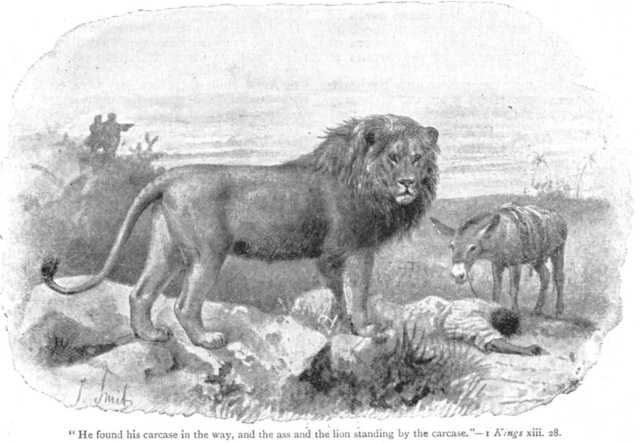
This time, Prophet #2 was truly speaking for the Lord, and his prophecy came true. Prophet #1 was attacked by a lion and died without honor, a disgrace.
A change of heart? (26-32)
Did Prophet #2 regret and repent of what he had done when he saw what happened to Prophet #1 and realized God’s word had come true? Had it not been for Prophet #2’s lies, Prophet #1 would have gotten safely home. Prophet #2 certainly seemed sorrowful, mourning Prophet #1’s death and requesting to be buried with him. He also supported and admitted the truth of God’s word that Prophet #1 had spoken to the altar.
Unhappily ever after (33-34, 2 Corinthians 7:10)
Second Corinthians 7:10 tells us:
For godly grief produces a repentance that leads to salvation without regret, whereas worldly grief produces death.
Think about Prophet #2’s remorse. Think about the remorse of Jeroboam earlier in the chapter, and consider these two verses. Which one do you think was experiencing “godly grief”? “Worldly grief?” While it certainly seems that Prophet #2 was exhibiting the “godly grief” this verse speaks of, we know from verses 33-34 that Jeroboam exhibited “worldly grief” back in the first part of the chapter with Prophet #1. He momentarily changed his behavior, but his heart did not change. He continued in sin and was ultimately destroyed.
I do not permit a woman to teach or to exercise authority over a man; rather, she is to remain quiet. For Adam was formed first, then Eve; and Adam was not deceived, but the woman was deceived and became a transgressor.
1 Timothy 2:12-14
Because it’s my passion to see Christian women become holy, passionate, obedient disciples of Jesus Christ, I’ve dealt with this passage a lot and done a lot of research on it. Scripture is crystal clear that women are not to instruct men in the Scriptures in the church in the capacity of pastor or teacher, nor are they to hold authority over men in other positions in the church. (I’ve outlined Scripture’s case for this here if you’d like to do some further study.) And, unfortunately, there are many women in the church who are disobeying this Scripture (I used to be one of them)– some out of rebellion, and some out of ignorance. But until recently, I –and every other piece of information I’ve studied on the subject– have dealt with the issue of women stepping outside their God-ordained role in the church strictly as a women’s issue.
A few days ago, a friend of mine asked for my opinion on a Q&A video produced by a well known pastor. The pastor was asked, “Is it a sin for men to listen to women speakers [female Christian conference speakers, pastors, teachers, etc.]?”
And that’s when it hit me. I’d never heard this question addressed, or even asked, before. First Timothy 2:12ff is always dealt with from the perspective of women and towards women – that this is a women’s sin issue.
But to treat this role rebellion strictly as the sin of women is to pour gasoline on the fire. If it’s a singularly women’s problem, then it naturally falls on women with a right understanding of God’s Word on the issue to deal with it, right? And if these women are the ones who have to confront and deal with this sin, even at the local church level, they’re being placed smack dab in the misappropriated role they’re trying to fight because they’re being asked to do the job of elders and pastors whose responsibility it is to maintain order and discipline in the church.
In other words, when it’s time to deal with the sin of role busting, don’t send a woman in to do a man’s job.
When it’s time to deal with the sin of role busting, don’t send a woman in to do a man’s job.
The fact that there’s even a need for an article like this, never mind that a woman is writing it, is indicative of the pervasiveness of the problem. Why do we so rarely hear pastors or other Christian men exhorting men in the church to stand on God’s Word, properly fill out their own role in the church, and also deal with the problem of female disobedience to this Scripture? Why are Christian men becoming accomplices to women’s sin by seeking out female pastors and teachers to be their spiritual leaders? I believe there are three reasons:
The fact that there’s even a need for an article like this, never mind that a woman is writing it, is indicative of the pervasiveness of the problem.
Give Genesis 3–the story of the Fall–a read through the lenses of 1 Timothy 2:12. See any similarities between what happened in the Garden and what’s happening in the church?
The man is off somewhere, not fulfilling his role of spiritual guardian, leader, and protector, leaving the woman alone and vulnerable to Satan’s attack. Satan tempts the woman to sin and she succumbs. The woman then entices the man to sin, and instead of standing on God’s Word, refusing to sin, and correcting her, he actually joins her in her sin. And when God calls the man to account for this whole scenario, what does the man do? He blames the woman.
Was Eve responsible for her decision to sin? Of course. That’s why we even have 1 Timothy 2:12-14 in the Bible. But God gave the man the authority and God held the man ultimately responsible. That’s why we see passages like Romans 5:12-14 (and others) attributing the sin in the Garden to Adam rather than Eve.
While there are many faithful pastors and Christian men out there diligently laboring to be godly teachers and leaders in the church–and praise God for those men!–there is a large and increasing number of men in our churches, both pastors and laymen, who are failing to fulfill the role God has called men to in the church. Pastors who will only preach what tickles people’s ears. Men who sit in the pews refusing to teach or serve or lead or even attend faithfully.
As it was in the Garden, these Christian men are nowhere to be found as Satan creeps into the church and attacks women with this temptation. And, as God called out then, could He be calling out now, “אָדָם, – Adam- Man, where are you“?
As God called out then, could He be calling out now, “אָדָם, – Adam- Man, where are you”?
I know that sounds harsh, but before all the brothers get their boxers in a bunch, please hear what I’m not saying. I’m not saying that all men are lazy or that women are never lazy or that men are lazy in every aspect of their lives. What I’m saying is that, in this particular instance of women stepping outside God’s role for them in the church, too many men are sitting back with the attitude that, hey, if somebody else is willing to do the work why not let her? Instead, women (not to mention boys and younger men) should be seeing men in the church step up and say, “I’ll study hard so I’ll be equipped to teach that class.” “I’ll preach the sermon, not my wife.” “I’ll be willing to shoulder the load God has given me instead of pushing it off on a woman.”
Women (not to mention boys and younger men) need to see men in the church step up and say, “I’ll be willing to shoulder the load God has given me instead of pushing it off on a woman.”.
Not afraid of them physically, but afraid of the ones who will make a scene, cause strife, split churches, get pastors fired, and generally make life hell on earth for anyone who dares to put his foot down firmly on the Word of God and say, “You’re in disobedience. You need to repent and step down.” I know these women (and, of course, there are men who do this, too). I have had plenty of them come after me, and, having a husband who’s been in ministry for over 20 years, I’ve seen plenty of them attack pastors, staff, deacons, etc., and I don’t blame men for feeling scared. But Jesus has called men to defend His Bride from all enemies, both foreign and domestic, and feeling scared doesn’t excuse them from doing what’s right and biblical. Would that godly men would look to the courage Jesus exhibited on His way to the cross. That they would look at Peter, Paul, James, and the other apostles as their example of valor, as these forebears in the faith chose flogging, hardship, jail, and martyrdom over compromising the Word of God.
Would that godly men would look to the courage Jesus exhibited at the cross. That they would look at Peter, Paul, James, and the other apostles who chose flogging, hardship, jail, and martyrdom over compromising the Word of God.
Churches don’t need pastors who are afraid to rock the boat, even if that’s what the church seems to want. Churches need a man who will stand for Christ and His Word, no matter the cost to him personally or vocationally. A pastor can’t call his people to do that in their own lives if he isn’t willing to do it in his, knowing that the God who was strong enough to save him out of the pit of Hell is strong enough to find him another job and provide for his family if it comes to that. We need pastors who are faithful to preach and carry out the Word in season and out of season, trusting Almighty God to have their backs.
Churches don’t need pastors who are afraid to rock the boat, even if that’s what the church seems to want.
God has given women a phenomenal, and much needed, role in the church. He has given men a different, yet equally phenomenal and much needed role in the church. For the local church to function in a healthy way, both men and women have to fill out our own roles correctly. And women can’t and shouldn’t have to do the job of godly men in addition to our own.
Women can’t and shouldn’t have to do the job of godly men in addition to our own.
Some might regard my tone here as stringent. Peter, Paul and the other apostles probably raised some eyebrows when they used a stringent tone, too. But when a house is burning down, the fireman doesn’t tiptoe in, hand you flowers, and politely request that you, pretty please, come with him. And that’s where we are in the church. The house is burning down around us. And, in the end, this article is not meant to be a castigation of pastors or other Christian men, but an impassioned plea from a church lady who wants to see her sisters make it out alive.
Help us. Please. Despite what some professing Christian women might say, we, and the body of Christ, desperately need our brothers to be the heroic men of God that they have the right, the calling, and the responsibility to be.
Women, and the body of Christ, desperately need our brothers to be the heroic men of God that they have the right, the calling, and the responsibility to be.