

I’m on spring break this week, so I’m modifying my regular blogging schedule. Hope you’ll enjoy the articles that will be coming your way!

I’m on spring break this week, so I’m modifying my regular blogging schedule. Hope you’ll enjoy the articles that will be coming your way!

There are so many great Easter hymns and worship songs out there. After all, how can a songwriter go wrong proclaiming the glorious truth of Christ’s death, burial, and resurrection? It was hard to narrow it down to my ten favorites, but I gave it a shot.
(Please note- I am not familiar with all of these musicians. Their presence here is not an endorsement of any unbiblical theology any of them may hold to. Please thoroughly vet the doctrine of any Christian musician you choose to follow and make sure it matches up with Scripture.)
1. Jesus Paid it All– Nominated by my 11 year old son, who said in the car on the way home from church, “They need to do ‘Jesus Paid it All’ next week, because it is a very appropriate Easter song.”
2. Arise My Love– The grave could not hold the King!
3. Low in the Grave He Lay– You’re not really a Southern Baptist unless your church does this one every Easter. Bonus- I’ve never heard this song in Korean(?), but this choir does a lovely job.
4. The Old Rugged Cross– What a precious song this is and what a beautiful job this sweet couple does on it.
5. Sunday’s On the Way– The resurrection is not an allegory for your personal problems coming to an end. Other than that, this is pure 80’s “in your face, Devil!” CCM awesomeness.
6. Easter Song– By popular demand, another oldie but goodie!
7. Man of Sorrows, What a Name– Hallelujah, what a Savior!
8. He’s Alive– The resurrection through the eyes of Peter. Oh how sweet it must have been for him to see Jesus alive again.
9. I’ve Just Seen Jesus– I love singing this one with my husband.
10. Christ the Lord is Risen Today– He is not dead. He is alive. We have this hope in Jesus Christ! This arrangement is such a nice blend of the traditional and the contemporary.
He is risen! He is risen, indeed!
Happy Easter everyone!
Yesterday was my one year anniversary of being a contributing writer at Satisfaction Through Christ. This article was originally published at STC on April 1, 2014.

“What should I preach about on Easter Sunday? Help me out, here.”
That’s the gist of a tweet I saw recently from a pastor. It caught me quite off guard, and it must have had the same effect on many others who punctuated their excellent advice –“preach the death, burial, and resurrection of Christ for our sins”- with lots of “duh’s” and other indications that this should be a no-brainer for a Christian pastor.
Traditionally, the prevailing line of thought about Easter (and Christmas) services has always been, “This is one of the two times a year that a lot of lost people go to church. It might be our only chance to reach some of them. Let’s make sure we give them the gospel.” Maybe after so many years of that, some pastors feel that their church members have heard it all before and they need to move on to something else in order to keep people’s attention. Sometimes, as a pastor, it’s tough to know just what to do to best reach people for Christ.

But, see, the thing is, Christians never move past our need for hearing the gospel again and again. Young or old. Newly saved or seasoned saint.
We need the gospel.
We need it because we forget. We forget that we are great sinners in need of a great Savior. We forget to slow down and pour out our gratitude and worship for the sacrifice of our beautiful Savior. We forget to bask in our wonder, our amazement, at His glorious and triumphant resurrection.
As Christians, every day our sin sick souls need to bow at the cross and be washed afresh in the precious, atoning blood of Christ. What can wash away my sin? Nothing –nothing– but the blood of Jesus. Daily, we must approach the tomb, see the massive stone rolled away and shout with joy over its emptiness. Hallelujah! Death has lost its victory and the grave has been denied! The very reason we worship on Sunday instead of Saturday is the celebration of an empty tomb. Every Sunday is Easter Sunday.
Remember, and rejoice!
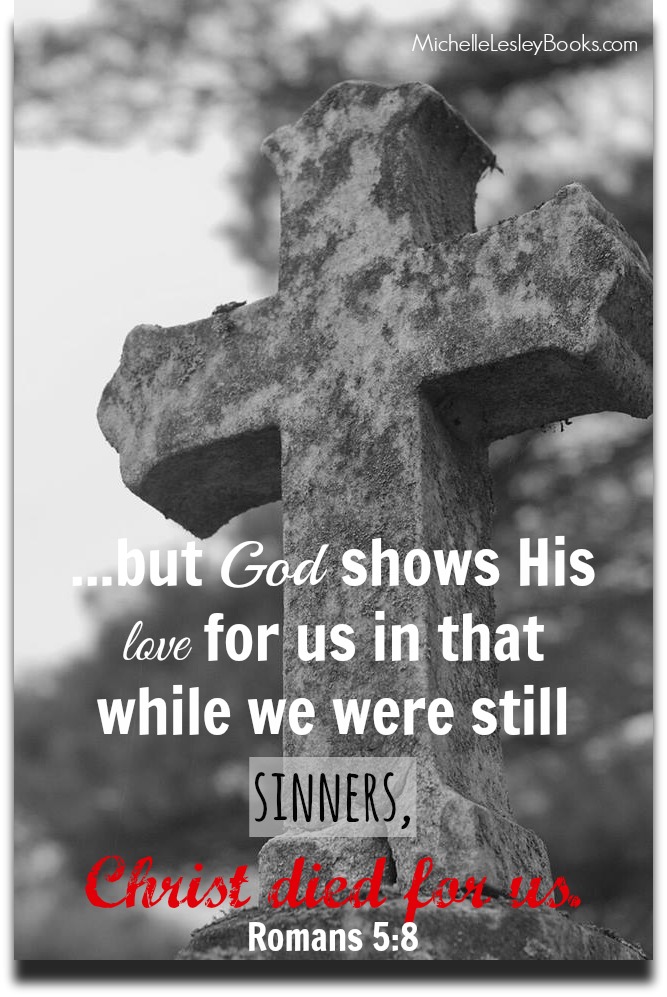
Therefore, since we have been justified by faith, we have peace with God through our Lord Jesus Christ. 2 Through him we have also obtained access by faith into this grace in which we stand, and we rejoice in hope of the glory of God. 3 Not only that, but we rejoice in our sufferings, knowing that suffering produces endurance, 4 and endurance produces character, and character produces hope, 5 and hope does not put us to shame, because God’s love has been poured into our hearts through the Holy Spirit who has been given to us.
6 For while we were still weak, at the right time Christ died for the ungodly. 7 For one will scarcely die for a righteous person—though perhaps for a good person one would dare even to die— 8 but God shows his love for us in that while we were still sinners, Christ died for us. 9 Since, therefore, we have now been justified by his blood, much more shall we be saved by him from the wrath of God. 10 For if while we were enemies we were reconciled to God by the death of his Son, much more, now that we are reconciled, shall we be saved by his life. 11 More than that, we also rejoice in God through our Lord Jesus Christ, through whom we have now received reconciliation.
12 Therefore, just as sin came into the world through one man, and death through sin, and so death spread to all men because all sinned— 13 for sin indeed was in the world before the law was given, but sin is not counted where there is no law. 14 Yet death reigned from Adam to Moses, even over those whose sinning was not like the transgression of Adam, who was a type of the one who was to come.
15 But the free gift is not like the trespass. For if many died through one man’s trespass, much more have the grace of God and the free gift by the grace of that one man Jesus Christ abounded for many.16 And the free gift is not like the result of that one man’s sin. For the judgment following one trespass brought condemnation, but the free gift following many trespasses brought justification. 17 For if, because of one man’s trespass, death reigned through that one man, much more will those who receive the abundance of grace and the free gift of righteousness reign in life through the one man Jesus Christ.
18 Therefore, as one trespass led to condemnation for all men, so one act of righteousness leads to justification and life for all men. 19 For as by the one man’s disobedience the many were made sinners, so by the one man’s obedience the many will be made righteous. 20 Now the law came in to increase the trespass, but where sin increased, grace abounded all the more, 21 so that, as sin reigned in death, grace also might reign through righteousness leading to eternal life through Jesus Christ our Lord.
The Holy Bible, English Standard Version Copyright © 2001 by Crossway Bibles, a division of Good News Publishers.
1. To whom is Paul speaking in this chapter? Christians? Non-Christians?
2. According to verses 3-5, for what reasons should we rejoice in times of suffering?
3. What kind of people did Christ die for? (6-8) What do these verses say to the person who thinks she has to get her life cleaned up before coming to Christ? Would you be willing to die for a good person? What about someone who has sinned against you as much as you have sinned against Christ?
4. Verse 12 says that sin entered into the world through one man. Who was that one man, and how did he cause sin to enter the world?
5. This chapter talks a lot about justification and reconciliation. Re-read the verses that mention these words. What does it mean to be justified before God? What does it mean to be reconciled to God? Whose actions justify and reconcile us, and what were those actions?
Have you ever had to look for a new church? Even with recommendations from godly friends, it can be hard to know which churches and pastors are doctrinally sound, and, of those doctrinally sound churches (because you certainly don’t want to go to one that isn’t doctrinally sound), which ones would be a good fit for your family.
There are lots of great articles out there with good, probing questions you should ask about the theology and doctrine of a church you’re considering. (I would recommend this one, this one, and this one. Also, make sure you understand these doctrinal issues and that the church you’re considering lines up with Scripture on these issues.) However, there are times when the answers to these types of questions don’t give you the whole picture of what is actually going on in a church on a day to day basis. In other words, sorry to say, a church can give you all the right answers on paper (or on their web site), but their practices don’t mirror those answers. Additionally, there are some non-doctrinal issues that are important to know about that questions about soteriology, baptism, biblical inerrancy, etc., won’t give you the answers to.
My husband and I are currently looking for a new church for our family. Since we are Southern Baptist and somewhat familiar with the handful of Southern Baptist churches we’re looking at, we already know the answers to the most important questions (the inspiration of Scripture, the divinity of Christ, the way of salvation, etc.) But I want to zoom in a little more on the finer points of belief and practices of these churches, so here are some questions I might ask the pastor of the church we would potentially join.
When I ask this question (and look over the pastor’s shoulder at the titles on his bookshelf), I’m listening for the names of authors and pastors, living or dead, that I know are committed to sound biblical doctrine. If I hear a name like Joyce Meyer, TD Jakes, Andy Stanley, Steven Furtick, Perry Noble, Rick Warren, Beth Moore, or any Word of Faith or New Apostolic Reformation personality, I’m going back to ask more probing doctrinal questions. If I hear multiple names like those, I’m outta there.
Now you may not be familiar with those terms but any Christian pastor should be. It is a current issue in evangelicalism, and it’s part of his job to stay abreast of such things. I’m not looking for a pastor to be an expert on this topic, but he should be familiar with the terms and have a working understanding of the issues at play as well as the applicable Scriptures, and he should embrace and practice complementarianism as the biblical position.
Because I have been given the right “on paper” answer to this question in the past only to find out later that the church’s practices didn’t match up with its profession, I will probably ask the follow up question: “In what positions of leadership are women currently serving? Do any of them hold authority over men or instruct men in the Scriptures?” If I hear that women are (or would be allowed to in the future) teaching co-ed adult Sunday School classes, giving instruction during the worship service, serving on committees in which they hold biblically inappropriate authority over men, etc., that’s problematic.
I’m looking for three things here. First, what does this pastor think constitutes a church discipline issue? If he thinks it’s necessary to discipline a female church member for wearing pants instead of a skirt, that’s an issue, because he’s disciplining someone who’s not sinning. If he doesn’t think it’s necessary to discipline church members who are unmarried yet cohabiting, that’s an issue because he’s not disciplining people who are sinning. Church discipline should only be exercised over unrepentant sinful behavior.
Second, is he afraid to exercise church discipline? Generally speaking, someone who has been a pastor for many years and has never handled a church discipline issue is either woefully ignorant of the biblical requirement of a pastor to rebuke those in sin, or he is afraid to rock the boat because he might get fired. Both of these are huge red flags.
Third, how does he exercise church discipline? Does he follow the steps outlined in Matthew 18 and other Scriptures with a heart to see the church member repent and be reconciled to Christ and the church body? Is he harsh and condemning? Is he firm enough in his resolve to carry all the way through to disfellowshipping a church member if necessary?
With this question, I’m trying to find out how much the pastor knows about what’s actually going on inside the women’s ministry (if they have one) and how much responsibility he takes to make sure all teaching and activities are in line with Scripture. Does he research and approve all teaching materials before a women’s Bible study commences? Does a women’s ministry director have complete autonomy over all materials and activities? Are all of the women in leadership positions in the women’s ministry godly and spiritually mature? Would any of the women’s ministry leadership raise a stink if someone showed them from Scripture that a Bible teacher whose materials they use or a women’s ministry activity they enjoy is unbiblical?
There’s nothing wrong with Christian concerts per se, but my husband and I feel strongly (notice, I did not say “the Bible says”) that the worship service is not the place for one. We believe that a minister of music, preferably one who is ordained to the ministry, should lead and take responsibility for the church’s worship in a pastoral role. He should be trained in the Scriptures, preferably at seminary, in order to rightly handle and apply them to the music portion of the worship service and other music programs. He should also be trained in music theory and conducting so that he is able to lead in the practical aspects of music.
By contrast, we do not believe that making the music portion of the service like a concert, in which a band gets up and plays in a dark room with a laser light show and a smoke machine and the congregation can sing along if they want to, if they happen to know the songs, and if they are able to follow the ad libbing of the lead singer, is conducive to worship. We believe this tends to make the worship band into entertainers and the congregation into spectators, whereas the minister of music model fosters an atmosphere of “we’re all pulling together to do the work of worship as a unified body.”
This is not about contemporary music versus hymns, it is about one worship model versus another. It is our conviction (again, not a biblical mandate, but our strongly held conviction) after more than two decades in music ministry ourselves, that the minister of music model – regardless of the genre of worship music used – is the one most conducive to strong, biblical congregational worship. So this is something we’re going to want to know about, even though it is not necessarily a doctrinal issue.
Topical preaching is when the pastor selects a topic to preach on (parenting, money, etc.) and uses biblical passages that apply to that topic to form his sermon. Pastors who preach expositorily usually preach through a book of the Bible from beginning to end before moving on to the next book.
Both are valid forms of preaching as long as God’s word is rightly handled and applied. However, it has been my experience that pastors who preach exclusively topically have more of a tendency to lift Bible verses out of their context in order to make them fit the topic they’re preaching. This is usually not as much of an issue for pastors who preach expositorily because they are simply preaching the Word, verse by verse, in its context.
Additionally, expository preaching gives church members a better understanding of Scripture and how it fits together, and exposes them more thoroughly to a wider range of biblical truth than exclusively topical preaching does. Therefore, I am looking for a pastor whose preaching style leans mostly towards expository, but who isn’t afraid to preach topically if he believes the church needs instruction on a certain topic.
So, those are some of the questions I’m thinking about asking. What questions would you ask when considering a new church?
For more resources on finding a new church, or what to look for in a church, click the Searching for a new church? tab in the blue menu bar at the top of this page.
