Discernment

Jennie Allen and IF:Gathering

If you are considering commenting or sending me an e-mail objecting to the fact that I warn against certain teachers, please click here and read this article first. Your objection is most likely answered here. I won’t be publishing comments or answering emails that are answered by this article.


This article is kept continuously updated as needed.
I get lots of questions about particular authors, pastors, and Bible teachers, and whether or not I recommend them. Some of the best known can be found above at my Popular False Teachers tab. The teacher below is someone I’ve been asked about recently, so I’ve done a quick check (this is brief research, not exhaustive) on her.

Generally speaking, in order for me to recommend a teacher, speaker, or author, he or she has to meet three criteria:

a) A female teacher cannot currently and unrepentantly preach to or teach men in violation of 1 Timothy 2:12. A male teacher or pastor cannot allow women to carry out this violation of Scripture in his ministry. The pastor or teacher cannot currently and unrepentantly be living in any other sin (for example, cohabiting with her boyfriend or living as a homosexual).

b) The pastor or teacher cannot currently and unrepentantly be partnering with or frequently appearing with false teachers. This is a violation of Scripture.

c) The pastor or teacher cannot currently and unrepentantly be teaching false doctrine.

I am not very familiar with most of the teachers I’m asked about (there are so many out there!) and have not had the opportunity to examine their writings or hear them speak, so most of the “quick checking” I do involves items a and b (although in order to partner with false teachers (b) it is reasonable to assume their doctrine is acceptable to the false teacher and that they are not teaching anything that would conflict with the false teacher’s doctrine). Partnering with false teachers and women preaching to men are each sufficient biblical reasons not to follow a pastor, teacher, or author, or use his/her materials.

Just to be clear, “not recommended” is a spectrum. On one end of this spectrum are people like Nancy Leigh DeMoss Wolgemuth and Kay Arthur. These are people I would not label as false teachers because their doctrine is generally sound, but because of some red flags I’m seeing with them, you won’t find me proactively endorsing them or suggesting them as a good resource, either. There are better people you could be listening to. On the other end of the spectrum are people like Joyce Meyer and Rachel Held Evans- complete heretics whose teachings, if believed, might lead you to an eternity in Hell. Most of the teachers I review fall somewhere in the middle of this spectrum (leaning toward the latter).

If you’d like to check out some pastors and teachers I heartily recommend, click the Recommended Bible Teachers tab at the top of this page.


Jennie Allen is “a Bible teacher, author, and the founder and visionary of IF:Gathering,” an annual conference for women. She also blogs, hosts the Made for This podcast, and speaks at IF:Gathering and other events.

(This article is still extremely relevant, but in February 2025, after ten years of annual conferences, Jennie replaced the IF: Gathering conference for women with Gather25, a co-ed international online event. Learn more about Gather25 here.)

The IF:Gathering conference organization (now including Gather25, IF:One Night, IF:Pray, IF:Lead, IF:Equip, IF:Table, IF:Local, IF:TV, and Discipleship Collective), around which most of Jennie’s ministry centers, was “inspired by the question, ‘If God is real…then what?‘.” If God is real– is a troubling premise for an ostensibly Christian ministry. The Christian existence does not center around the pablum possibility that God is real, but on the rock-solid, stake your life and your eternity on it certainty that He is not only real but the Creator of, and Sovereign over, the universe, and the only hope of salvation for sinners. If God is real…then what?ย as the foundation of a Christian ministry is somewhat akin toย If 1+1=2, then what?ย as the foundational concept of a Mensa-esque organization for the top mathematical minds in the world.

As to the “…then what?” part of the equation, Jennie’s and IF’s solution is woefully unbiblical. Jennie has an established history of embracing and partnering in ministry with false teachers, female “pastors,” and women who preach to men. Just a few of the many available examples:

Some of the guests on Jennie’s podcast have included Priscilla Shirer and Chrystal Evans Hurst (ep. 08), Beth Moore (ep. 04), Christine Caine (ep. 02), and “diversity expert” and Black Lives Matter supporter, LaTasha Morrison (multiple episodes).

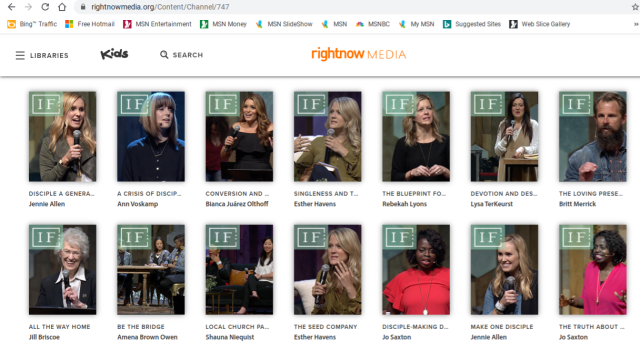
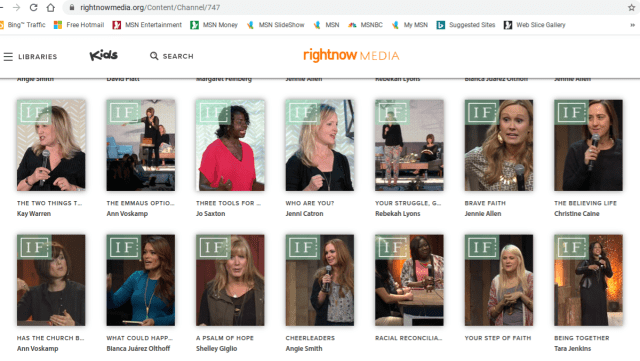
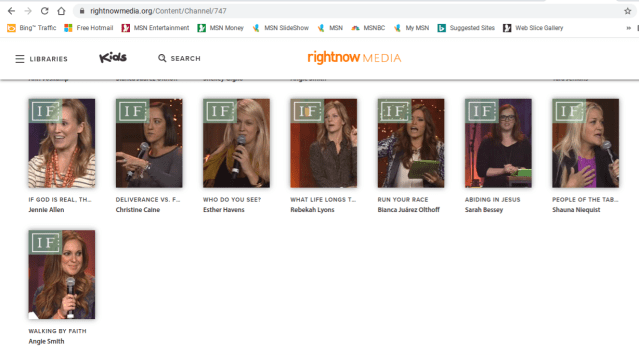
Since the launch of IF:Gathering in 2014, Jennie has habitually featured false and biblically problematic teachers and female preachers/pastors as speakers and as part of IF’s leadership team:
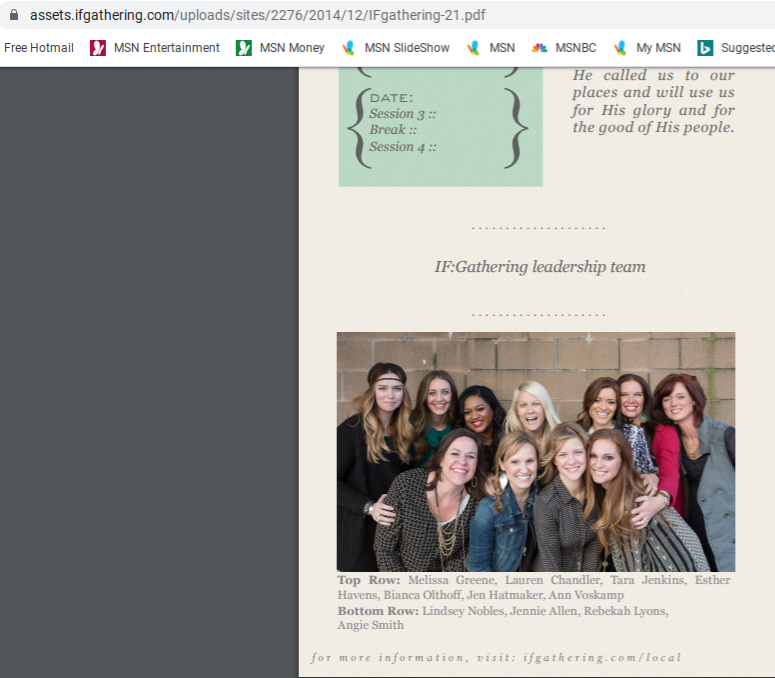
Top Row: Melissa Greene, Lauren Chandler, Tara Jenkins, Esther Havens, Bianca Olthoff, Jen Hatmaker, Ann Voskamp Bottom Row: Lindsey Nobles, Jennie Allen, Rebekah Lyons, Angie Smith

Speakers featured at IF:Gathering over the years (many of them appearing multiple times) have included: Jen Hatmaker (here, in 2015), female “pastor” and homosexuality advocate Melissa Greene,ย  Ann Voskamp, Bianca Olthoff, Rebekah Lyons, Lysa TerKeurst, Jill Briscoe, Shauna Niequist, Angie Smith, Kay Warren (Rick Warren‘s wife), female “pastor” Jenni Catron, Christine Caine, female “preacher” and author ofย Jesus Feminist, Sarah Bessey

…(then) female “co-pastor” Keisha Polonio, female “pastor” Jeanne Stevens…

Lauren Chandler, female “pastor” Layla de la Garza, Beth Moore, and others. (2020)

IF 2022 included a similar tableau of false teachers, female preachers/pastors, and racialists (some are returning speakers, some are new):


And, once again, IF 2023 features many of the same speakers, plus a few new faces who mostly (though not all) fall into the same categories of female “pastor,” women who preach to men, false teachers, and racialists.


In addition to Beth Moore speaking at IF:Gathering 2020 and IF:Lead 2020, Jennie’s partnerships and displays of affinity with her are far too numerous to list (just Google Jennie Allen Beth Moore, and you’ll see what I mean) and have been going on for years. A couple of recent examples:

A webinar with Beth Moore:

An IF:Gathering video with Beth Moore:

Mutual admiration on Twitter: 

And here’s Jennie at a meeting “with twenty women leaders [including Bianca Olthoff] under the wisdom of Christine Caine and Joyce Meyer.” (Annie F. Downs)

Jennie has worked with and has been a featured speaker several times (including 2012, 2014, 2017, 2018, 2020) at the Catalyst conference, which is not only co-ed (so Jennie is teaching/preaching to men) but is also plagued by doctrinal problems and has featured a plethora of false teachers including founder Andy Stanley, Brian Houston, female โ€œpastorโ€ Charlotte Gambill, Brandon and Jen Hatmaker, and Rebekah Lyons among many others.

Just a few further examples of Jennie preaching to men herself:

Jennie preaching the chapel service at Dallas Theological Seminary (Stopping The Spiral – Mrs. Jennie Allen | February 15, 2022 – Men clearly visible in the audience at 1:47)

Jennie preaching at The Porch (United Together | Jennie Allen, September 15, 2021 – Men clearly visible in the audience at 4:52)

Jennie preaching the chapel service at Oklahoma Baptist University (Jennie Allen – March 10, 2021 – OBU Chapel Message, Streamed live on March 10, 2021 – All students are required to attend chapel.)

Jennie preaching at Liberty University’s convocation (chapel) (LU Convocation – Mar.6, 10:30 AM, Streamed Live on March 6, 2020 – Jennie begins preaching at 40:59) Starting at 38:40 the man introducing Jennie says, “…I believe Jennie has a message for every single one of us…I’m so excited to sit under her teaching because I don’t believe…the principles that she has for us are just for women…I want you to know, especially the men in this room, that I believe that what God has brought through this messenger at this very moment is not just for the ladies in the room. It would be very closed minded for us to think that…every time a man shows up here that’s just for the men in the room and every time a woman comes, that’s just for the other [women]…”

I can’t seem to locate a statement of faith for Jennie or what church she currently attends, so you’ll have to infer what she believes by reading her books and blog, but I have learned a few specifics about her theology. Jennie is a proponent of the unbiblical Enneagram. Jennie believes in extra-biblical revelation, and started IF:Gathering because “a voice from the sky” told her to:

Jennie often focuses on “dreaming” (in the sense of future goals or creative aspirations), a concept foreign to Scripture. I downloaded her “Dream Guide” for 2019 and found some of her statements troubling:

 It really is as simple as this. Do the best you can in this world and as youโ€™re going, love God and give Him away to people.

“Do the best you can in this world”? Where does the Bible say that? “And as you’re going, love God”? Like it’s an afterthought or an accessory to your life of “doing the best you can”? No. It really is as simple as this: Repent and believe the gospel, and walk in a manner worthy of the Lord, fully pleasing to him: bearing fruit in every good work and increasing in the knowledge of God.

When we create and thrive for the good of others, youโ€™re participating in Godโ€™s redemptive work of making the world better. 

Again, the Bible doesn’t teach this anywhere. “God’s redemptive work” is not “making the world better.” The Bible clearly says that “the Lord will empty the earth and make it desolate, and he will twist its surface and scatter its inhabitants,” and, “the world is passing away along with its desires.” Furthermore, “God’s redemptive work” is to save people. That’s the entire point of the whole Bible. His redemptive work was completed in the life, death, burial, and resurrection of Christ to save sinners. And if you want to “participate in God’s redemptive work,” you don’t “create and thrive” (whatever that means) “for the good of others,” you share the gospel with them and disciple them as we’re commanded to in the Great Commission.

..this is our goal, to create beauty out of chaos and thrive.

Also not in the Bible anywhere. Also not our goal. As Christians, our goal is to grow in the grace and knowledge of Christ, pursue holiness, and carry out the Great Commission. All of which are in the Bible.

Dreaming is an incredible privilege. It is a stewardship of the opportunities God has put in front of us.

Not to sound like a broken record, but, again, none of this is in the Bible, and the second sentence doesn’t even make logical sense. To “steward” something is to use it wisely and for a godly purpose. To do something with it to the glory of God. Sitting around “dreaming” isn’t doing anything. In fact, since “dreaming” isn’t something we’re instructed to do in Scripture, it’s actually squandering the “opportunities God has put in front of us” – opportunities like sharing the gospel, serving others, studying our Bibles, prayer, worship, etc. – which are things Scripture instructs us to do, in favor of sitting around relying on our dreams.

At the end of the “Dream Guide” are several “conversation card” questions about how you can improve yourself in the coming year. One of them is pretty good: “How could you better plug into and serve the local church?”. The rest are fairly narcissistic, and there’s nothing about studying Scripture, growing in holiness, prayer, or repenting of sin. Additionally Jennie quotes only one passage of Scripture in the entire booklet, and she quotes it from The Message, one of the worst versions (it’s a paraphrase, not a translation) of the Bible out there.

And regarding “being a strong woman in the church,” while Jennie mostly stays vague and neutral, she does touch on a few biblical concepts:

18:35- “What my husband heard from me was: My wife has strong gifts and a strong passion for God, and she wants to serve Him, and she’s not because of me.” As if she couldn’t passionately serve God with her gifts by being a godly wife and serving and submitting to her husband.

22:31- “I know that the obvious question that everybody wants to know the answer of is ‘What about roles and positions in the church?’…But I think we oftentimes get so distracted by that…that we are missing all the work that God has for us. And, you know, my view on that is every local church is going to have a different opinion about that…So wherever you go, Scripture just says, ‘Don’t be divisive,’…but the bigger issue to me is the way we view each other, the way we value each other…” Notice Jennie uses no Scripture to answer the “obvious question” everybody wants to know the answer to, she only gives her personal opinion that we are getting “distracted” by this legitimate, biblical question, and that the bigger issue – to her – is not what the Bible says about the role of women in the church, but “the way we value each other”. It’s a problem that “every local church is going to have a different opinion” about the role of women in the church because there is only one position on that issue that’s biblical. The local church doesn’t get to have an opinion on that issue, the issue is decided by Scripture and the church is to submit to and uphold Scripture’s teaching on it. Furthermore, Scripture does not just say, “Don’t be divisive.” Scripture is abundantly clear what the role of women in the church is to be, and both individual women and church leaders are to obey it.

The fact that Jennie consistently and unrepentantly platforms female “pastors” and women who preach to men at IF speaks much more clearly about her personal (and unbiblical) opinion on the role of women in the church than her finessing answer here.

27:21- The interviewer asks Jennie, “What does submission mean?” Her response is much too long to quote, so I’ll summarize. The first words out of Jennie’s mouth are, “That word? To me?” She then proceeds to give a not altogether unbiblical answer about how she loves submission, but it is mainly her opinion and personal experience with her own husband, not Scripture, and primarily centers around the fact that if she brings something to her husband for a decision and he decides unbiblically, he will have to answer to God for it, not her, and that she will have no accountability to God for any sin she might commit in the process. “It’s gonna be awesome!” she chortles, as the audience laughs along, as though there’s something funny about her husband standing before God and giving an account for his decision, and her blaming him for it. Jennie then pivots to describing how “that word [submit] has been used like a pistol to [many women’s] heads” and says “so the fact that that word has a bad rap makes sense to me…Here’s the problem, guys, we’re divided, but there’s reasons on it for both sides.” She seems to be saying that submitting or not submitting is not based on Scripture’s commands, but on personal experiences and situations, and that both submitting and refusing to submit are equally valid choices depending on our own experiences, feelings, and opinions. (And, no, I am not saying women should “submit” to being abused. That’s not the biblical definition of submission.)

Jennie seems like a lovely, genuinely caring person, and earnest when she speaks and writes, but none of those things qualify someone to teach Scripture. And in this case, Jennie is disqualified by her errant theology and unbiblical practices. I regret that I’m forced to recommend that you not receive teaching from Jennie Allen, her materials and conferences, or anyone connected to the IF organization.


Additional Resources:

Talk Back: Jennie Allen & Gather25– at A Word Fitly Spoken

IF:Gathering:

What’s Wrong with the IF:Gathering– at Tulips & Honey

Why You should just say โ€œNOโ€ to IF:Gathering at A Worthy Walk

Important questions for church leaders at Berean Research

Almost: Our Encouragement and Concern with the IF:Gathering and
Almost: an addendum since releasing this episode at Sheologians

She Reads Truth, IF:Gathering, and women bible teachers. Part 3, the IF:Gathering at The End Time

If:Gathering: more information, including video claiming direct revelation at The End Time

IF:Gathering โ€“ updated review four years later at The End Time

If:Gathering: more information at The End Time

Thinking of attending an If:Gathering? Please read this, itโ€™s eye-opening at The End Time

Gather25:

Talk Back: Jennie Allen & Gather25 at A Word Fitly Spoken

Book Reviews:

A Review of Jennie Allenโ€™s โ€œAnything: The Prayer that Unlocked My God and My Soulโ€

Other:

Review of Jennie Allen/Beth Moore webinar, and the โ€˜big announcementโ€™ revealed at The End Time

Ezekiel Bible Study

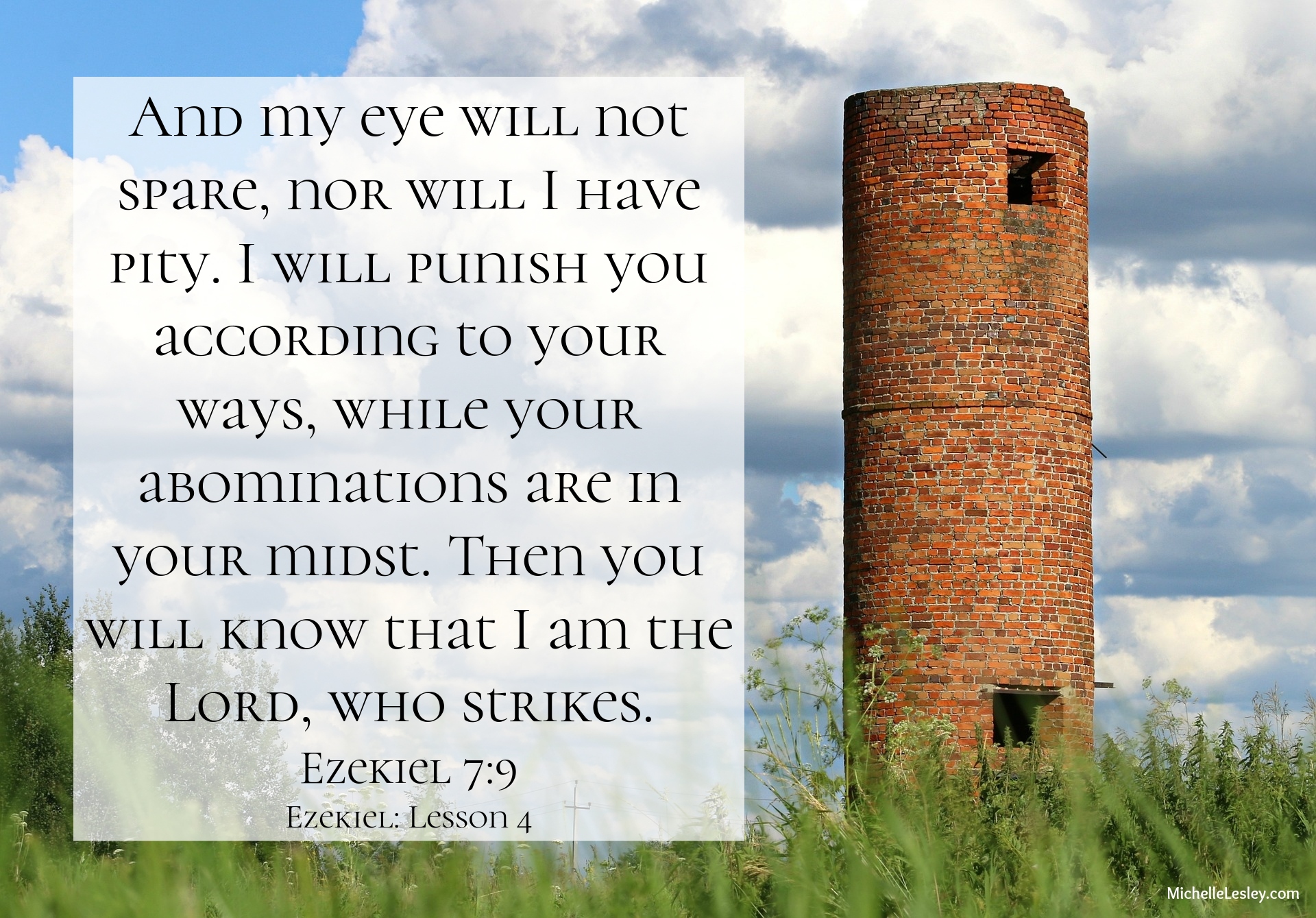
Ezekiel ~ Lesson 4


Previous Lessons: 1, 2, 3

Read Ezekiel 6-7

Reminder: I know we’re handling a lot of Scripture each week, and if you’re deep diving into the passages, it’s easy to get behind. Don’t worry! Remember, this study is self-paced. Take your time and take as long as you need. Also, I always build “catch up weeks” into my studies, so, scattered throughout the course of the study, there will be a few weeks with no new lesson which you can use for catching up.

Questions to Consider

1. Review your notes from last week’s lesson and be reminded of the things that lead into, and set the stage for, this week’s passage.

2. Read 6:1-7.

“Who” does God have Ezekiel preaching to? (6:2,3) Did these inanimate objects need to “hear” the word of the Lord? Who did? What was God telling the people about what would happen on the mountains, hills, ravines, and valleys in 6:1-7?

What is the sin God is judging in 6:1-7? Find the words “altars,” “incense altars,” and “high places” in this passage. Were these used for worshiping God?

How would you characterize Israel’s sin of idolatry? Were most of the people faithful to the Lord, while a few briefly gave in to the temptation to worship idols, then repented and showed contrition when rebuked? Or, were most of the people rebellious, hard-hearted, and stubbornly unrepentant of their idolatry over an extended period of time? Does God respond to repentant sinners with the ferocity of wrath we have seen so far in Ezekiel, or does He reserve that wrath for unrepentant sinners?

3. Read 6:8-14

What was God’s purpose in keeping “some of you alive”? (8)

4. Read chapter 7.

Examine 7:6-7,12, and explain the difference between God’s eternal and immutable (unchanging) attribute of patience, and the exercise of His patience for a finite amount of time with particular people in certain circumstances. In Ezekiel, we are seeing the exercise of God’s patience with Israel nearing the end of its finite time. When is the next time in human history that we will see God’s exercise of patience with people come to an end?

What is the “beautiful ornament” of verse 20? What does God say will happen to it? (20-22)

5. List all of the specific ways in chapters 6-7 that God says He will kill people. Why does God repeat Himself about this? (If you have, or teach, children, think about how many times you have to repeat yourself to them, and why.)

Are there any phrases in chapters 6-7 that sound like they might refer to Israel repenting? What are they? As you look closely at these phrases and consider them within the broader context of chapters 6-7 and the theme of the book of Ezekiel, compare them to the godly grief and worldly grief over sin described in 2 Corinthians 7:10. Which type of grief, if any, over sin is Israel displaying?

How can a loving God express this kind of wrath against His own people? Explain how God’s wrath is an expression of, or complementary to, His love. How was the cross a simultaneous expression of God’s perfect wrath and perfect love?

6. Think about chapters 6-7 through the lens of 2 Timothy 3:16-17:

All Scripture is breathed out by God and profitable for teaching, for reproof, for correction, and for training in righteousness, that the man of God may be complete, equipped for every good work.

How is this passage profitable for us as 21st century Christians under the covenant of grace? How can God use it for teaching, reproof, etc., in your life? How does it help complete and equip you?


Homework

โ€ข Did you make your “And you/they shall know that I am the Lord” list from last week’s homework? Add the incidences of this phrase from this week’s lesson (6:7, 10, 13, 14 and 7:4, 9, 27), and write down who will know that He is the Lord, what will cause them to know He is the Lord, and why God wants them to know He is the Lord.

โ€ข Do some research on altars and high places, including an image (pictures) search. Consider the amount of work it would have taken the Israelites – with hand tools – to build multiple (note the plurals in 6:1-7) structures like this. Describe how all of this work was making provision for the flesh, to gratify its desires.

An idol doesn’t have to be a statue we physically bow down to, or build an altar to, and worship. We can idolize a person, money, a certain lifestyle, popularity, a favorite pastor or teacher, false teaching, our children, the perfect marriage, etc. An idol is anything you love, value, or lavish time, money, and effort on, more than the God of the Bible. Are there any idols in your life? In what ways do you “make provision for the flesh” (purposefully make room in your heart and life) for that idol? Over the next week, pray that God will reveal any sin of idolatry you are participating in and that He will help you repent and get rid of those idols.


Suggested Memory Verse

Speaking Engagements

Open Hearts in a Closed World Online Women’s Conference

Have you been enjoying all of the awesome conferences that have been offered online over the past few months? Me too! And here comes another one that I think you’ll really enjoy and be edified by:

Open Hearts in a Closed World
July 13-17 ~ 9:30 a.m. daily
Cost: FREE


Worship with City Alight starts at 9:30 a.m. (Central).


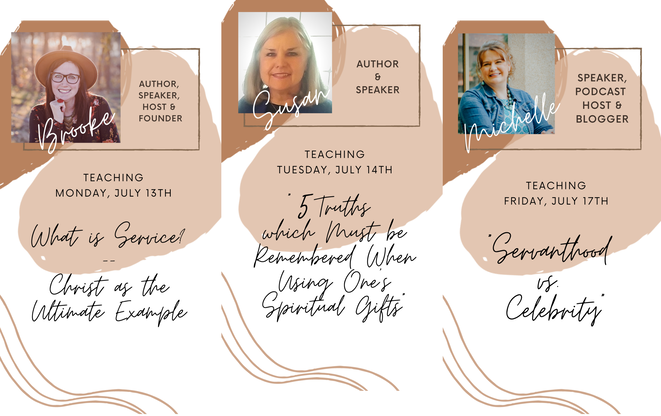
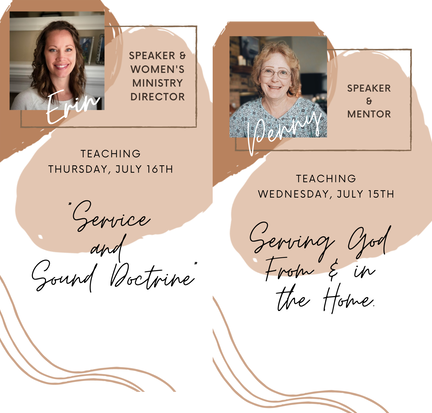
After worship, join me, Susan Heck, and these other lovely ladies for five days of teaching about servanthood.

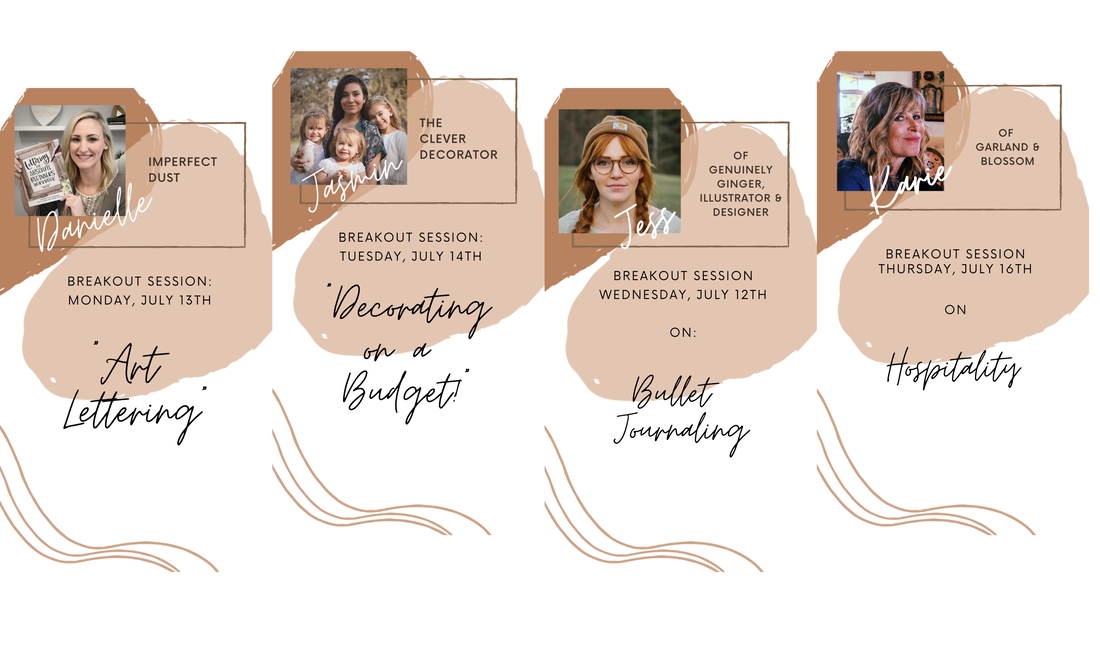
Following each teaching session will be a fun breakout session.

To attend,

simply log on to the conference’s

Facebook

Instagram

or

YouTube

page and watch!
(No registration necessary.)

The conference livestream will begin at 9:30 a.m. (Central) each day, Monday, July 13 – Friday, July 17. Can’t attend in real time? The recordings of each session will remain available on these platforms so you can watch later.

Any Questions?

***** Please contact the conference organizers here.ย *****

Mailbag

The Mailbag: Guess who’s coming to (the women’s ministry) dinner?


(In the interest of full disclosure, this question was not sent to me by a reader, but was asked in an online Christian women’s forum I’m a member of. I have altered and condensed the question somewhat while retaining the main idea.

You may also notice that when addressing this topic my phraseology will be somewhat euphemistic {ex: “perversion-affirming”}. This is out of an abundance of caution due to the limits many online platforms are now placing on free speech.)


My husband pastors our church, which is situated in a very liberal (perversion-affirming) area. I help lead the women’s ministry. Recently a man, who is in the process of having his body surgically altered to appear female, and who has visited the church a few times, approached me and asked if she could attend an upcoming women’s ministry event. How should I handle this? What should I tell her?

I get that this is an uncomfortable situation, I really do. I would feel uncomfortable if this happened to me, too. But it is not nearly as complicated or agonizing as many would like to make it if we have our doctrine and theology straight and have the faith to commit to it unwaveringly.

One of the reasons this situation can seem insurmountable is an issue I addressed in my recent article Guilt and Shame: Burden or Blessing?. Our culture has made people’s feelings into an untouchable idol, and Christians and the church have followed suit. There is hardly a greater crime in the church these days than hurting someone’s feelings. In fact, we have so idolized people’s feelings that God’s Word, and actually providing biblical help and truth to the person whose feelings we’re trying not to hurt, are often not even a consideration.

Another challenge in this situation is fear of man and fear of suffering. We’ve all seen the news. We know the legal implications for Christians who refuse to toe society’s line on sexual mores. Christians who say no to celebrating sin get arrested. They lose their jobs, their positions of prestige, their reputations, their leases, their businesses, and sometimes even custody of their children. Churches that stand on Scripture in a perversion-affirming area could be publicly slandered, picketed and protested, even vandalized or burned down. This is our reality, and I fully admit, it’s a terrifying one.

But no more terrifying than being crucified upside down, thrown to the lions, or burned at the stake.

This isn’t hyperbole. This is what is coming for us. And now – right now, before it gets here – we get to prepare and practice for persecution by making some hard decisions.

Do we so love the lost and ache to see them rescued from sin that we’re willing to risk hurting their feelings, being reported, arrested, and someday even executed for lovingly telling them the truth of the gospel? That they are sinners with the wrath of God abiding upon them who desperately need to repent and trust the Savior?

We need to count the cost and prayerfully set our faces toward Jerusalem. Christianity isn’t a call to self-preservation, it’s a call to die.

With that perspective firmly in place, here are a few thoughts I hope will be helpful to you as you navigate this situation…

โ™‚โ™€This is an issue for your pastor and elders handle, not you. Let your husband know what happened. The pastor and/or elders need to take this man aside very kindly, share the gospel with him, and then disciple him, long term, in repentance and his biblical role as a man. In conjunction with that, they should help him get whatever medical help he needs to transition back (as far as possible) to physical manhood.

โ™‚โ™€ If he rejects the gospel, he should be regarded and treated as any other lost man who comes to your church. He should be welcomed to attend worship service, a male-only Sunday School class, and any church-wide or men’s ministry functions he’d like to attend. Because he is lost, he is not eligible for church membership, and therefore not eligible to hold any position of leadership or service – from teaching a class to helping with the youth bake sale to folding the bulletins – in the church. 

โ™‚โ™€ If he chooses to continue attending services and classes, the pastor and elders should make clear to him that he is to dress as a man, no makeup, no feminine hairdos or accessories. Dressing as a member of the opposite sex in order to deny one’s God-determined sex is a sin, and your pastor should not allow this sin to be committed at church any more than he would allow any other sin to be committed at church. 

If, after being informed of this, the man shows up for church dressed as a woman, the pastor and elders should remind him he was told not to do this and firmly ask him to leave.

โ™‚โ™€ It would probably be a good idea for the church to address this issue in some sort of codified/legal way, similar to the way many churches have developed a written policy prohibiting their facilities from being used for same sex “weddings”. The pastor or appropriate elder should contact a lawyer with experience working with churches, or possibly a Christian legal organization such as the ACLJ or the ADF, to find out the wisest course of action.

โ™‚โ™€ You need to have a biblical perspective on God’s creative design for this man. God created him male. You need to submit to that in your thoughts, speech, and behavior toward him. You should not be referring to him as “she” to others, to him, personally, or even in your thoughts. He is a man, not a woman. To call him “she,” treat him like “one of the girls,” or allow him to take part in women’s activities would be to affirm him in his sin. It would also perpetuate the world’s lie that men can become women, and vice versa. 

โ™‚โ™€ Doing anything to accommodate or affirm this man’s sin is cruel and unloving. Christians rescue people out of slavery to sin, we don’t encourage them to embrace their chains.

As I said, when we have our doctrine and theology straight and have the faith to commit to it unwaveringly, situations like this become much less complicated. Scary and risky to the glory of God, maybe, but simpler. Are we of the world, or of Christ?

For am I now seeking the approval of man, or of God? Or am I trying to please man? If I were still trying to please man, I would not be a servant of Christ. Galatians 1:10
You adulterous people! Do you not know that friendship with the world is enmity with God? Therefore whoever wishes to be a friend of the world makes himself an enemy of God. James 4:4

If you have a question about: a Bible passage, an aspect of theology, a current issue in Christianity, or how to biblically handle a family, life, or church situation, comment below (Iโ€™ll hold all questions in queue {unpublished} for a future edition of The Mailbag) or send me an e-mail or private message. If your question is chosen for publication, your anonymity will be protected.

Ezekiel Bible Study

Ezekiel ~ Lesson 3


Previous Lessons: 1, 2

Read Ezekiel 3:16-5:17

Questions to Consider

1. Review your notes from last week’s lesson and be reminded of the things that transpired in 1:1-3:15 that lead into, and set the stage for, this week’s passage. According to 3:16, how long after the events of 1:1-3:15 do the events of 3:16ff take place?

2. Read 3:16-21. What was the purpose of a (literal) watchman in Ezekiel’s day? Explain God’s charge to Ezekiel in this passage. Who was he to warn, and what was he to warn them about? What would be the consequences for Ezekiel for not warning the people as God commanded? What would be the result for him if he did obey God’s command to warn them?

Are there any general principles we can draw from this passage about our responsibility to share the gospel with the lost? What about confronting sin in a fellow Christian or warning the church against false teachers? Are the consequences Ezekiel faced for warning/not warning the same for Christians warning/not warning against sin and unbelief? Which New Testament Scriptures can you think of that would seem to be in line with, or would indicate a difference from, 3:16-21 for Christians?

What does this passage teach us about God’s perspective on sin and repentance?

3. Read 3:22-27.

What does 3:23 refer back to (hint- use your cross-references)? How did it benefit Ezekiel (in ch.1 and ch.3) to experience God’s glory right before God called him to do something difficult? How does immersing ourselves in the glory of God through His Word, prayer, and worship prepare us to do the difficult things He calls us to do?

What did God do to Ezekiel in 3:26-27? If Ezekiel was supposed to speak God’s word to the people, why would God make him mute? Why might God withhold His word or His truths from people? (3:26-27)

4. Read Ezekiel 4:1-5:17*.

If you’re unfamiliar with the Old Testament battle concept of siege and what siegeworks would have looked like, do some research as you consider chapter 4 (especially 4:1-3). It will give you a better understanding of the illustrations God was asking Ezekiel to set up and carry out in this passage. Sketch out or visualize what Ezekiel’s little diorama in 4:1-3 would have looked like. What did the iron wall and Ezekiel turning his face toward it represent?

Explain the message God is conveying to His people in 4:4-8. Using cross-references, commentaries, your Bible’s study notes, etc., what do the 390 years and 40 years represent? How does Ezekiel symbolically “bearing the punishment” and “laying down” his life for his people’s sin point toward Christ literally bearing the punishment and laying down His life for His people’s sin?

What part of the siege was God warning about in 4:9-17? What did the illustration of the bread mean? (4:16-17) Explain the concept of “uncleanness” for the Israelites and how horrifying and humiliating this part of God’s judgment should have been to them. Compare Ezekiel’s aversion to uncleanness to Peter’s. How is the concept of uncleanness an illustration of the holiness of God and His aversion to sin?

What was God’s message to the people in 5:1-4? (5:10b,12)

How did Israel’s sin compare to the sin of the pagan nations around them? (5:5-7) Make a list of the words and phrases in 5:5-17 that impress upon you just how deadly serious God is about sin and how intense is His wrath against sinners. When you finish making your list, read back through it and consider this wrath that God poured out on Christ on the cross as well as His mercy and grace in salvation toward you, a sinner.

As we continue on in Ezekiel, we will see other instances of God instructing Ezekiel to communicate His message through illustrations, dioramas, or a dramatic presentation rather than through a sermon or other direct verbalization. Why might this be God’s preferred method of communication with His people in these instances?


Homework

โ€ข *(Homework is usually optional, but I’d really like you to do this one.) Ezekiel 5:13 is the first of 72 times in the book of Ezekiel that we will see the phrase (or some variant of it), “And they shall know that I am the Lord.” As we study through Ezekiel, keep a running list of each time you see this phrase, and write down who will know that He is the Lord, what will cause them to know He is the Lord, andย whyย God wants them to know He is the Lord.

โ€ข Are you familiar with Ezekiel 4:9 Bread? Explain why their use of this Scripture is out of context for marketing their bread. Did God tell Ezekiel to make his bread from a combination of grains “to ensure unrivaled honest nutrition and pure, delicious flavors”? Think about the context of chapter 4 as you answer. Are you sinning if you eat this bread just because you happen to like it?


Suggested Memory Verse