Wednesday's Word

Wednesday’s Word ~ Mark 1

For further study on the book of Mark, try my study, Mark: Godโ€™s Good News for the Gentiles, from which this lesson is excerpted.
Mark 1

1 The beginning of the gospel of Jesus Christ, the Son of God.

2 As it is written in Isaiah the prophet,

โ€œBehold, I send my messenger before your face,
    who will prepare your way,
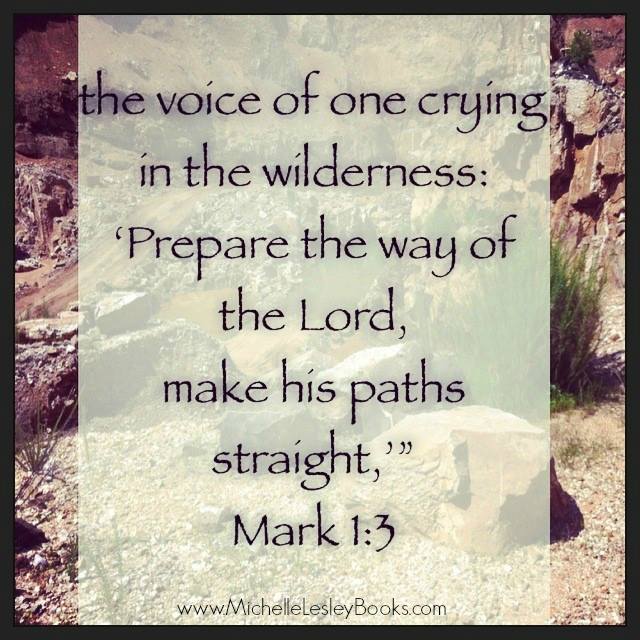
3 the voice of one crying in the wilderness:
    โ€˜Prepare the way of the Lord,
    make his paths straight,โ€™โ€

4 John appeared, baptizing in the wilderness and proclaiming a baptism of repentance for the forgiveness of sins. 5 And all the country of Judea and all Jerusalem were going out to him and were being baptized by him in the river Jordan, confessing their sins. 6 Now John was clothed with camel’s hair and wore a leather belt around his waist and ate locusts and wild honey. 7 And he preached, saying, โ€œAfter me comes he who is mightier than I, the strap of whose sandals I am not worthy to stoop down and untie. 8 I have baptized you with water, but he will baptize you with the Holy Spirit.โ€

9 In those days Jesus came from Nazareth of Galilee and was baptized by John in the Jordan. 10 And when he came up out of the water, immediately he saw the heavens being torn open and the Spirit descending on him like a dove. 11 And a voice came from heaven, โ€œYou are my beloved Son; with you I am well pleased.โ€

12 The Spirit immediately drove him out into the wilderness. 13 And he was in the wilderness forty days, being tempted by Satan. And he was with the wild animals, and the angels were ministering to him.

14 Now after John was arrested, Jesus came into Galilee, proclaiming the gospel of God, 15 and saying,โ€œThe time is fulfilled, and the kingdom of God is at hand; repent and believe in the gospel.โ€

16 Passing alongside the Sea of Galilee, he saw Simon and Andrew the brother of Simon casting a net into the sea, for they were fishermen. 17 And Jesus said to them, โ€œFollow me, and I will make you become fishers of men.โ€ 18 And immediately they left their nets and followed him. 19 And going on a little farther, he saw James the son of Zebedee and John his brother, who were in their boat mending the nets. 20 And immediately he called them, and they left their father Zebedee in the boat with the hired servants and followed him.

21 And they went into Capernaum, and immediately on the Sabbath he entered the synagogue and was teaching. 22 And they were astonished at his teaching, for he taught them as one who had authority, and not as the scribes. 23 And immediately there was in their synagogue a man with an unclean spirit. And he cried out, 24 โ€œWhat have you to do with us, Jesus of Nazareth? Have you come to destroy us? I know who you areโ€”the Holy One of God.โ€ 25 But Jesus rebuked him, saying, โ€œBe silent, and come out of him!โ€ 26 And the unclean spirit, convulsing him and crying out with a loud voice, came out of him. 27 And they were all amazed, so that they questioned among themselves, saying, โ€œWhat is this? A new teaching with authority! He commands even the unclean spirits, and they obey him.โ€ 28 And at once his fame spread everywhere throughout all the surrounding region of Galilee.

29 And immediately he left the synagogue and entered the house of Simon and Andrew, with James and John. 30 Now Simon’s mother-in-law lay ill with a fever, and immediately they told him about her. 31 And he came and took her by the hand and lifted her up, and the fever left her, and she began to serve them.

32 That evening at sundown they brought to him all who were sick or oppressed by demons. 33 And the whole city was gathered together at the door. 34 And he healed many who were sick with various diseases, and cast out many demons. And he would not permit the demons to speak, because they knew him.

35 And rising very early in the morning, while it was still dark, he departed and went out to a desolate place, and there he prayed. 36 And Simon and those who were with him searched for him, 37 and they found him and said to him, โ€œEveryone is looking for you.โ€ 38 And he said to them, โ€œLet us go on to the next towns, that I may preach there also, for that is why I came out.โ€ 39 And he went throughout all Galilee, preaching in their synagogues and casting out demons.

40 And a leper came to him, imploring him, and kneeling said to him, โ€œIf you will, you can make me clean.โ€ 41 Moved with pity, he stretched out his hand and touched him and said to him, โ€œI will; be clean.โ€ 42 And immediately the leprosy left him, and he was made clean. 43 And Jesus sternly charged him and sent him away at once, 44 and said to him, โ€œSee that you say nothing to anyone, but go, show yourself to the priest and offer for your cleansing what Moses commanded, for a proof to them.โ€ 45 But he went out and began to talk freely about it, and to spread the news, so that Jesus could no longer openly enter a town, but was out in desolate places, and people were coming to him from every quarter.


The Holy Bible, English Standard Version Copyright ยฉ 2001 by Crossway Bibles, a division of Good News Publishers.


Questions to Consider:

1. What is the theme or purpose of the book of Mark? What is the historical backdrop for the book of Mark?

2. What two titles does Mark ascribe to Jesus in verse 1? What does the word โ€œChristโ€ mean, and why is it an important title for Jesus? What does it mean that Jesus is the โ€œSon of Godโ€œ? How do verses 21-45 demonstrate that Jesus is, indeed, the promised Messiah, and that He is divine? How does Mark 1:1-20 โ€œcredentializeโ€ Jesus and lay the foundation for what he does in verses 21-45?

3. How does Johnโ€™s message of repentance preceding Jesusโ€™ message of the gospel demonstrate that repentance is a crucial aspect of saving faith in Christ? (1-15) Would God have sent John to preach the message of repentance if He did not consider it a vital part of salvation? What does Mark indicate was the theme of the message Jesus preached? (15) Some people say repentance is not necessary for salvation- that only belief in Jesus is necessary. Did Jesus consider repentance to be part of the gospel? (15)

4. Examine verses 9-11. Since Jesus was without sin, why did He take part in a baptism of repentance? How does Jesusโ€™ baptism set an example for believers to follow Him in being baptized? How does this passage reveal the Trinity (God the Father, God the Son, God the Holy Spirit) to us? How does this passage refute the false teaching of modalism/Sabellianism and show us that God is one God in three Persons?

5. What are the three main categories of ministry Jesus engages in in 21-45? Do you think Jesus would have preferred to be known more for His teaching or for His miracles? Why?

Forgiveness, Obedience, Old Testament, Sin, Sunday School

Davidโ€™s Sin: You da Man! ~ Sunday School Lesson ~ 5-18-14

sunday school

These are my notes from my ladiesโ€™ Sunday School class this morning. Iโ€™ll be posting the notes from my class here each week. Click here for last week’s lesson.

Through the Bible in 2014 ~ Week 20 ~ May 11-17
1 Chronicles 19-20, 2 Samuel 10-18, Psalm 20, 65-67, 69-70, 32, 51, 86, 122, 3-4, 12-13, 28, 55
Davidโ€™s Sin: You da Man!


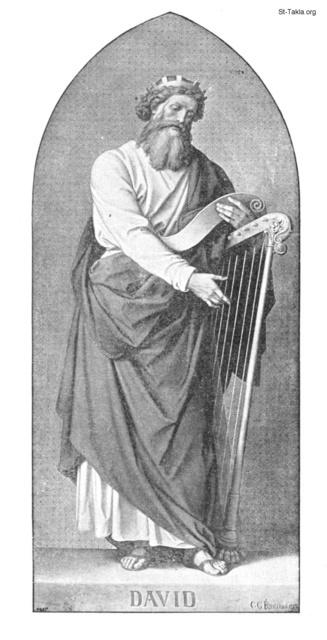
www-St-Takla-org--david

How could David, a man after Godโ€™s own heart (1 Samuel 13:14), sink to the level of committing adultery and murder? What was he thinking? How did he respond to being confronted by Nathan? What can we learn about how to deal with our own sin?

2 Samuel 11, 12:1-15, Psalm 51

2 Samuel 11- Setting the Stage for Sin

v. 1- โ€œBut David remained at Jerusalem.โ€
As weโ€™ve read about Davidโ€™s previous battles, where did we always find David when the fighting was going on? Back at the palace? No. He was out there with his men, leading things. This time, he was somewhere he wasnโ€™t supposed to be. Can you think of a time when you were somewhere you knew you shouldnโ€™t have been, which led to temptation?

v. 3- Eliam and Uriah: Mighty Men (2 Samuel 23:34, 39)
Both Eliam and Uriah were part of Davidโ€™s mighty men. These werenโ€™t just nameless, faceless Joe Blows in his army, but part of his inner circle who had been with him through thick and thin with fierce loyalty.

v. 4- The paternity test
Lest there be any question that maybe this was Uriahโ€™s baby after all, verse 4 makes clear that the reason David saw Bathsheba bathing was that she was cleansing herself after โ€œthat time of the month.โ€ David took her afterwards and Uriah was miles away at the battle, so only David could have been the father.

v. 8- Making Whoopee
(If you donโ€™t know what that means, youโ€™re not old enough to remember โ€œThe Newlywed Gameโ€ from the 1960s-70s. YouTube it.) โ€œGo down to your house and wash your feet.โ€ Since washing was done right before bed, this idiom meant for Uriah to go home and enjoy โ€œknowingโ€ his wife in the biblical sense.

thv. 9-13- A man of valor
Uriah, possibly inspired by Davidโ€™s past honorable leadership, acted more valiantly and loyally here than his king did.

v. 4, 26- A willing participant?
Notice that this passage doesnโ€™t tell us anything about what Bathsheba was thinking or feeling about all this. Remember, David was the king. You didnโ€™t say no to the king if you wanted to live, especially if you were a woman. And furthermore, she knew he was โ€œGodโ€™s anointed.โ€ Surely such a man wouldnโ€™t lead her to do anything wrong, would he? So, even if Bathsheba had been attracted to David, there was some level of coercion and advantage taking going on here on Davidโ€™s part. Verse 26 makes a special point of telling us that she lamented over her husband. She loved him. David didnโ€™t just sin with Bathsheba, he also sinned against her.

v. 27- Evil
I think in this case, the HCSB captures this verse better than the ESV (my preferred/usual translation): โ€œThe Lord considered what David had done to be evil.โ€ That pretty much sums up what David had done, and it sums up our sin in Godโ€™s eyes as well. Evil.


2 Samuel 12:1-15- A Guilty Verdict

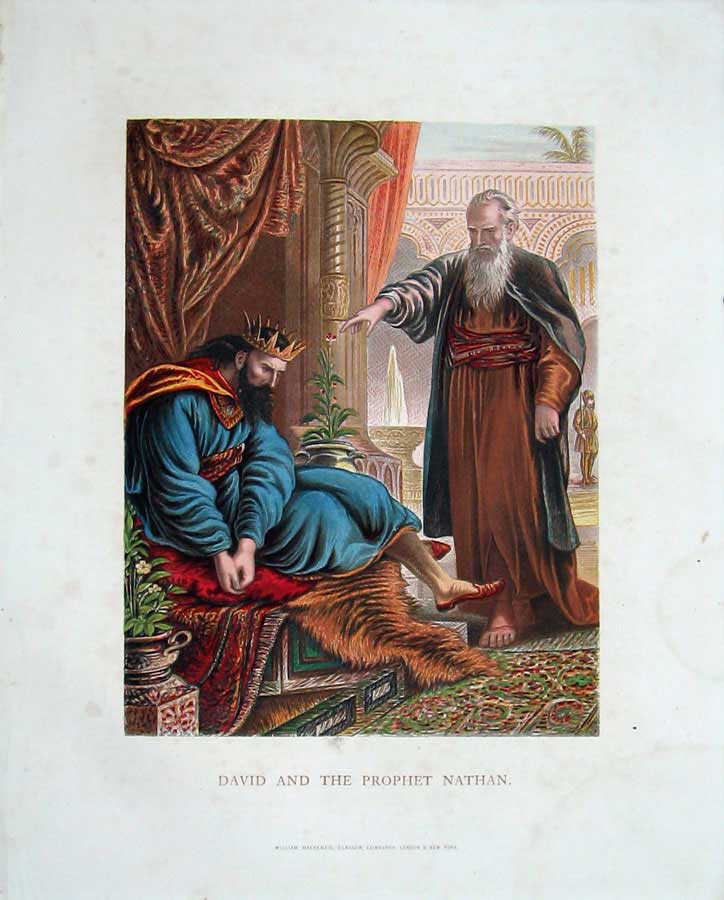
v. 1- Confronathan
Nathan wasnโ€™t just a prophet; he was Davidโ€™s friend and adviser. God sent him to confront David about his sin, and gave him the wisdom and the words to do it in exactly the right way.

v.1-4- The cast of characters
The rich man represented David. The poor man represented Uriah. The lamb represented Bathsheba. What do you think the traveler represented?

v. 4- Leaving out the welcome mat for temptation (1 Corinthians 10:13)
The traveler represented Davidโ€™s temptation. Temptation is a lot like a visit from a traveling salesman. It comes and goes, it shows up unexpectedly, and it always tries to get you to spend more than you want to on something that seems fabulous but never lives up to the hype. When temptation rang Davidโ€™s doorbell, he flung open the door and welcomed it in as an invited guest. As new creatures in Christ, we donโ€™t have to do that. 1 Corinthians 10 says God will always provide a way for us to escape temptation.

One of those ways of escape is to not be home to answer the door. As I mentioned earlier, David wasnโ€™t even supposed to be home when that temptation came around. He was supposed to be out on the battlefield with his troops. One way to avoid temptation is to be where youโ€™re supposed to be and not be where youโ€™re not supposed to be.

v. 4- Offering sacrifices to the idol of self
We also see in verse 4 that the rich man not only refused to send the traveler away and welcomed him in, but he also slaughtered a lamb to feed the traveler. The Israelites did slaughter lambs for food, but what else did they slaughter lambs for? Sacrifices.

David didnโ€™t just welcome temptation in, he sacrificed for it. He was no longer sacrificing to honor God, but to gratify his own selfish desires. He sacrificed things that belonged to himโ€”his integrity, his morals, his reputation, his example to his people, and his relationship with God. But he also sacrificed Bathsheba and Uriah who did NOT belong to him.

What are some ways we might sacrifice things, or others, for sin?

v. 5-6- The log in his eye (Matthew 7:3-5)
Isnโ€™t it interesting how we can so clearly see the sin of others while simultaneously being blind to our own sin? โ€œWhy do you see the speck that is in your brother’s eye, but do not notice theย logย that is in your own eye?โ€ (Matt. 7:3)

โ€œHe had no pity.โ€ David never considered how his actions would affect Uriah and Bathsheba. He only thought about himself. Temptation and sin blind us to what weโ€™re doing to ourselves, others, and God.

v. 7ff- Faithful are the wounds of a friend (Proverbs 27:6, Galatians 6:1-2, John 15:13)
Nathan was acting in three roles here. He was Davidโ€™s friend, his brother in the Lord, and the man of God, and he loved David in all three capacities by showing him his sin. In the same way, we are to love our friends, our sisters in Christ, E1221909136and those under our spiritual leadership or influence. We care enough about them to help them out of sin, even at the risk of the relationship (Gal. 6)

Nathan confronted David wisely. Remember, David was the kingโ€”he could do (and had done) whatever he wanted to do, and he had already killed one man. Nathan knew this going in. Nathan also acted lovingly, boldly, and firmly. His commitment to what God had told him to do was greater than the love of his own life (John 15) or the love of his relationship with David. How often do we look the other way to keep the peace or preserve a relationship with someone instead of obeying what God has told us to do?

v. 7-9- Against Thee, Thee onlyโ€ฆ
I, I, I, Iโ€ฆ Notice how many times God refers to Himself in these three verses? He is making it clearโ€”and David gets the message as we will see in Psalm 51:4โ€”that it is primarily God against whom David has sinned. Though others may be casualties or collateral damage (as Uriah and Bathsheba were), when we sin, we set ourselves up as enemies of God and wage war against Him.

v. 8- Gimme, gimme (Hebrews 13:5)
If all God had blessed him with had not been enough, God would have given him more. The fact that God had not given him more shows us that God had given David exactly what He wanted him to have. But David was not content with all the blessings God had given him. He selfishly wanted things God didnโ€™t want him to have.

v. 9-10- Hatred for Godโ€™s word = Hatred for God
“Despised” and “evil”- When we sin, no matter how “small” it is, we are showing hatred for God’s word. Hating God’s word is evil. Notice in v. 9, โ€œyou have despised the word of the Lord,โ€ and in v. 10, โ€œyou have despised me.โ€ To despise God’s word is to despise God Himself.

v. 11-12- Public discipline for private sin? (Numbers 32:23)
Why did God discipline David publicly when he had sinned privately?

First, David had not sinned completely privately. Many people knew at least part of what he had done: the servants he sent to take Bathsheba in the first place (4), the servants who were in the house at the time(s) of the affair, Joab, likely several of the soldiers serving directly under Joab and with Uriah, probably the messenger who brought word of Uriah’s death, Nathan, and of course, Bathsheba herself. And you can bet that a lot of those people didn’t keep what they knew to themselves. “Your sin will find you out,” (Num. 32) is certainly true, especially for sins of this magnitude.

With all those people knowing what David had done, how would it reflect on God if He disciplined David privately? It would look as though God had given him a pass, that certain, special people were above God’s law. That’s how things were for kings of pagan nations. Israel and Israel’s God were different, not like the other nations. Furthermore, it would have diminished God’s justice in the eyes of Israel if God disciplined David privately and Israel couldn’t see it. How could they trust His justice if it looked like His justice was inconsistent?

Second, David was famous, highly visible. Like it or not, he set an example for the people. When he did right, it was a good example. Here, he did wrong and it was a bad example. Through his actions and God’s visible discipline, the people learned what not to do in their own lives.

v. 13- Admission of guilt
David didnโ€™t try to justify his sin or retaliate against Nathan. It is precisely because he was a man after Godโ€™s own heart that he simply and humbly confessed, โ€œI have sinned.โ€

v. 13-14- Godโ€™s merciful forgiveness
Because David confessed his sin and repented of it, God mercifully forgave him. While David had said the โ€œrich manโ€ should die for his sin (5), and David was guilty of crimes deserving the death penalty, God removed that penalty from him. The consequences of his sin would remain (the death of the baby), but the punishment was taken away.

1176199_570889419639205_1633472194_n

Psalm 51- Repentance and Restoration

Have mercy on me,ย O God,
ย ย ย ย according to your steadfast love;
according to yourย abundant mercy
ย ย ย ย blot out my transgressions.
Wash me thoroughly from my iniquity,
ย ย ย ย andย cleanse me from my sin!

For I know my transgressions,
ย ย ย ย and my sin is ever before me.
Against you, you only, have I sinned
ย ย ย ย and done what is evilย in your sight,
so that you may be justified in your words
ย ย ย ย and blameless in your judgment.
Behold,ย I was brought forth in iniquity,
ย ย ย ย and in sin did my mother conceive me.
Behold, you delight in truth inย the inward being,
ย ย ย ย and you teach me wisdom in the secret heart.

Purge meย with hyssop, and I shall be clean;
ย ย ย ย wash me, and I shall beย whiter than snow.
Let me hear joy and gladness;
ย ย ย ย let the bonesย that you have broken rejoice.
Hide your face from my sins,
ย ย ย ย andย blot out all my iniquities.
Create in me aย clean heart, O God,
ย ย ย ย andย renew a rightย spirit within me.
Cast me not away from your presence,
ย ย ย ย and take notย your Holy Spirit from me.
Restore to me the joy of your salvation,
ย ย ย ย and uphold me with a willing spirit.

Then I will teach transgressors your ways,
ย ย ย ย and sinners willย return to you.
Deliver me fromย bloodguiltiness, O God,
ย ย ย ย Oย God of my salvation,
ย ย ย ย and my tongue will sing aloud of your righteousness.
O Lord, open my lips,
ย ย ย ย and my mouth will declare your praise.
For you will not delight in sacrifice, or I would give it;
ย ย ย ย you will not be pleased with a burnt offering.
The sacrifices of God areย a broken spirit;
ย ย ย ย a broken and contrite heart, O God, you will not despise.

Do good to Zion in your good pleasure;
ย ย ย ย build up the walls of Jerusalem;
then will you delight inย right sacrifices,
ย ย ย ย in burnt offerings andย whole burnt offerings;
ย ย ย ย then bulls will be offered on your altar.