*Yes, I know I spelled it wrong in the title. That was on purpose. See the cows? :0)
If, this far into the game, you don’t know about “Chick-fil-A-gate” –as I’m calling it– you must have been living in a cave over the past few weeks. Without internet access, newspapers, cable TV, or, especially, social media.
In a counter response to the homosexual community’s response to Dan Cathy’s response (you’re following this, right?) to an interviewer’s questions, former governor/presidential candidate, Mike Huckabee created a Facebook event called “Chick-fil-A Appreciation Day”. Basically, he’s encouraging all who agree with Mr. Cathy’s position on traditional marriage to support him and the restaurant chain (and make up for any business he has lost from the pro-homosexual community) by showing up at their local Chick-fil-A next Wednesday (Aug. 1) and buying some chicken.
In the broad scope of things, this day of appreciation is a nice idea, but one that will quickly be over when Chick-fil-A employees mop up and lock up at close of business. For better or worse, the whole brouhaha will soon blow over and people will go back to their lives.
Or will they?
You see, I’m betting that in a counter-counter response to the Chick-fil-A supporters, there will be some pro-homosexual groups of protesters who also show up. (Don’t hate on that. As long as they aren’t breaking any trespassing, traffic, etc., laws, they are well within their Constitutional rights to do so.)
That’s why I say there’s more at stake here than just chicken.
What if you had a chance to impact one of those people for eternity? What if you could play a part in making next Wednesday the turning point in someone’s life? What if you could be the first person ever to show someone what real Christianity looks like?
As nice of an idea as it is to throw Chick-fil-A some love, Jesus didn’t command us to support businesses we agree with. He commanded us to carry the gospel.
“Go therefore and make disciples of all the nations, baptizing them in the name of the Father and the Son and the Holy Spirit, teaching them to observe all that I commanded you;” Matthew 28:19-20a
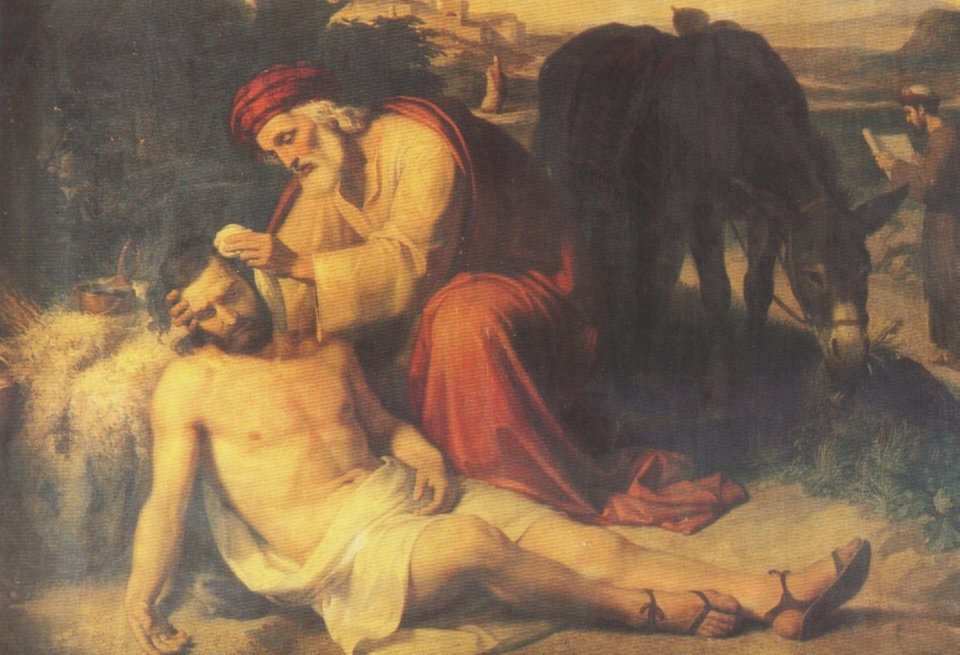
If we walk into a Chick-fil-A next week, past a group of people who are dying in their sins, and ignore them, are we any better than the priest and the Levite who left a beaten and bloody man to die in the road rather than rescuing him? Even if they aren’t conscious of it themselves, these people have been battered, bloodied, and enslaved by Satan.
“Go and do the same” as the one who showed mercy, said Jesus.
Take them a cooler of iced down cokes. Tell them you love them. Ask them if there’s anything they need. Show them you love them by taking the time to take an interest in them, personally. (Nobody feels loved if they think they’re just a notch on your spiritual belt.)
And share the gospel.
You might get laughed at or cursed at or mocked, but there’s no greater way to show mercy than to show someone the Savior.
Your chicken sandwich could change somebody’s life.
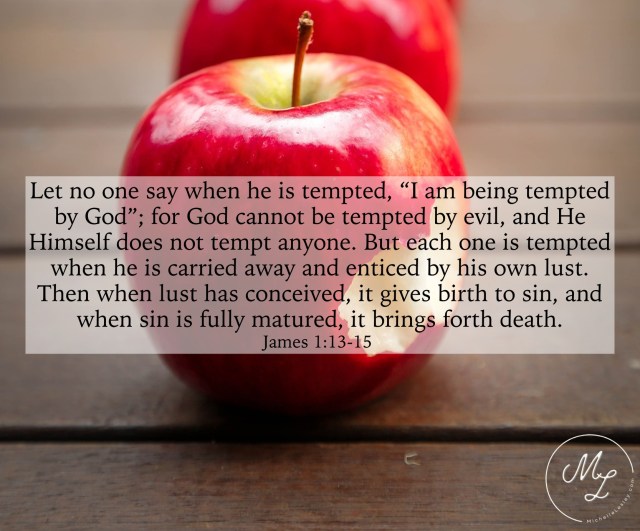
You’ve heard the old adage: “forbidden fruit is sweeter.” When people use this phrase, what they mean is that if you tell someone he can’t have or do something, he’s going to want to have or do it all the more just because it’s forbidden.
I heard this little cliché several times last week on blogs, on Facebook, in discussion groups, etc., in reference to the deluge (yes, I contributed to it) of Christian blog and press articles decrying the movie Fifty Shades of Grey, and discouraging Christians from attending. Apparently – and I can see where they’re coming from, a little, I guess – some folks felt that the strong, repetitive, and biblical stand against Fifty Shades turned it into a piece of forbidden fruit that a) actually informed Christians (who would have been otherwise oblivious) that this movie even existed (Really? People are tech savvy enough to be on Facebook, Twitter, and blogs, but they were completely unaware of this movie? Ok, I suppose it’s possible.) and b) made Christians want to go see the movie because of its verboten status. The implication was that, if Christians went to see this movie, it was the fault – at least in part – of Christian writers who had warned against it.
Seems reasonable, right?
Until, that is, you start looking at this line of thinking a little more closely through the lens of Scripture.
Pop quiz: What does the phrase “forbidden fruit” allude to? a) prunes b) Snow White’s poisoned apple c) the fruit of the tree of the knowledge of good and evil in Eden
Please tell me you answered “c,” because, if you didn’t, I might have to sit down and cry. When God put Adam in the Garden way back in Genesis 2, He said, “You may surely eat of every tree of the garden, but of the tree of the knowledge of good and evil you shall not eat, for in the day that you eat of it you shall surely die.” (2:16-17) Fruit. Forbidden. Boom.
Notice that God is the One who forbade Adam from eating this fruit. God’s way, throughout the entirety of Scripture, is to warn the people He loves of the dangers and consequences of sin, not to remain silent and keep His fingers crossed that they don’t stumble into a pit. God didn’t stick the tree in the middle of the Garden and say to Himself, “Gee I hope Adam doesn’t notice this tree and eat from it, but I’m not going to mention it to him because I’m scared that I’ll make him aware that it exists, and that he’ll want to eat from it just because I said he can’t.” Uh uh. God pointed it out and said, “No.”
God’s way, throughout the entirety of Scripture, is to warn the people He loves of the dangers and consequences of sin, not to remain silent and keep His fingers crossed that they don’t stumble into a pit.
And let’s take a gander at something else in this story. What caused Adam and Eve to eat from the tree? Was it God telling Adam not to eat from it? No. If that was all it took, why don’t we find Adam eating the fruit immediately after God told him not to? Why didn’t Eve immediately eat from the tree upon learning from Adam of God’s prohibition against it?
Because the warning is not what led them to sin.
We don’t see Eve lay a finger on that fruit until Satan enters the picture. He tempted her, and she gave in to sin.
It wasn’t God’s fault for putting the tree there. It wasn’t God’s fault for warning them. It was Adam’s fault and Eve’s fault for being disobedient.
And giving in to sin is still our fault today. If you went to see Fifty Shades of Grey, it’s not God’s fault for allowing the movie to exist. It’s not some Christian blogger’s fault for making you aware of the movie or warning you not to see it. It’s your fault. You were tempted. You gave in to sin. (The good news is that if you will repent, God will graciously forgive you.)
As Christians we are to be imitators of God. “Whoever says he abides in him ought to walk in the same way in which he walked.” (1 John 2:6) That means that when we see sin that could easily ensnare our brothers and sisters, we don’t turn our heads. We don’t mind our own business. We don’t keep our mouths shut to be polite. We do the same thing God did time after time in the Bible. We run into the fray to rescue those we love.
When we see sin that could easily ensnare our brothers and sisters, we don’t turn our heads. We don’t mind our own business. We don’t keep our mouths shut to be polite. We run into the fray to rescue those we love.
I received a hilarious e-mail today. Was it a video of a cute and bumbling puppy? No. A clever joke or anecdote? No. A funny political cartoon? No.
It was actually a piece of spam from an up and coming …shall we say… “adult” products company.
Normally, I would just roll my eyes that my spam filter didn’t catch it and simultaneously click delete, but due to the fact that there were no pictures in it nor a subject line that would raise a red flag, I didn’t realize what it was until I started reading it.
This company wasn’t trying to sell me one of their products, they wanted me to review one of their products.
On my blog.
Which sent me into hysterical fits of laughter.
The company wants to provide me “with the opportunity to write interesting content for [my] site.” And, “If this project goes smoothly, there are probably other ways we could work together as well.”
Do tell.
No, on second thought, don’t.
Sorry, my friend, I’ve already got the most interesting content on the planet for my site.
I’ve got a God-man who came to earth, lived for three decades without ever committing a single sin in thought, word, or behavior, turned water into wine, healed blind eyes, deaf ears, crippled limbs, and broken minds, fed tens of thousands of people from one plate of food, and spoke the wisest words that have ever been uttered.
And to top that all off, He willingly let His own community butcher him. Why? For billions of rebellious people who hate Him. So that He might set them free and rescue them from an excruciating eternity.
Oh, and then there’s that bit about Him coming back to life.
My reply to the spam e-mail I received was this:
I’m just curious, have you actually read my blog? Take a look and let me know whether you still think it’s a fit for your product: (web address)
I truly hope my e-mail makes it through and is actually read by someone. Because it turns out that “Brian” at the adult product company was right. They did give me the opportunity to write interesting content for my site: the Gospel.
And, Brian, if you want to discuss this interesting content more, get in touch and we’ll chat. I believe you have my e-mail address :0) “If this project goes smoothly, there are probably other ways we could work together as well.”
Osama Bin Laden is dead. Across the globe, people are celebrating. There’s a general sentiment, even among non-Christians, that he is in hell, because that’s what he deserves.
I’m guessing that, some of those people, if you had shared the Gospel with them two days ago, would have said they didn’t believe in hell. Or that a loving God wouldn’t send people to hell. Or that God just forgives everybody when they die, and everybody goes to heaven.
If you hold any of those beliefs, the law of non-contradiction requires that they be applied across the board to everybody. In other words, you can’t say you don’t believe in hell and at the same time believe that Bin Laden is in hell. If it doesn’t exist, he can’t be there.
So I’d like to pose two questions to people who hold the aforementioned beliefs:
1. If God decided not to send Bin Laden to hell, but rather allowed him into heaven, has justice been done?
2. Do you think it’s fair that you will have to spend your own eternity in heaven with Bin Laden? And Hitler, and Nero, and Mussolini, and Caligula, and Jack the Ripper?
As broken and messed up as we are, even we humans demand that there be justice –punishment– for people who have committed such heinous crimes. If God doesn’t punish these awful people, what does that make Him? How could He be perfect in every way and let such people off scot free?
I can tell you how. Because I used to be Bin Laden. And Hitler, and all of those other people rolled into one. Me. A good little Sunday School girl. Guilty. James 2:10 tells us:
For whoever keeps the whole law and yet stumbles in one point, he has become guilty of all.
In God’s eyes, when I broke curfew to stay at Bible study just a little bit longer, I was as guilty as a serial murderer. When I said, “Oh my G-d!” I was on par with a child molester. When I refused to forgive someone, I might as well have flown one of those planes into the Twin Towers myself. And I deserved the same punishment as all of those horrible people. Hell.
God is perfect. He’s perfectly holy and perfectly just. And that’s why He can’t let any sin slide, no matter how small. But He’s also perfectly loving and compassionate. He knew none of us would measure up to his standard for us –perfection, no sin whatsoever– so He made a way for us to escape punishment, yet still serve justice: Jesus.
God Himself came here and lived out His perfection as a human being. And when it was time, on the cross, He took the punishment for our crimes against God. He got our sin and our punishment, and because of His death and resurrection, we can get His sinless perfection.
We can get it, but it’s not an automatic thing that just happens to everybody when they die. As I said in a previous post, you can’t have it both ways. If you decide to get married, you give up the single life. If you decide to become a star athlete, you give up being a couch potato. And when God enables you to turn from your sin to faith in Christ, He empowers you to give up a life of embracing sin, and, instead, embrace Christ and the new life He has for you. Here. Now.
Is Bin Laden in hell? I can tell you with certainty that if he did not, in the last moments of his life, sorrowfully turn from his sin and bow his knee to the Lordship of Jesus Christ, yes, he is indeed in hell.
And there, but for the grace of God, go I. And you.
These are my notes from my ladies’ Sunday School class this morning. I’ll be posting the notes from my class here each week. Click here for last week’s lesson.
Through the Bible in 2014 ~ Week 43 ~ Oct. 19-25 Matthew 15-18, Mark 7-9, Luke 9:18-11:54, John 7-10 Sin-opsis
Sin. That word can cause us to think of a lot of different things, from our sin, to people who have sinned against us, to forgiveness. Today, we’re going to hear what Jesus has to say about five different aspects of sin.
Matthew 18
Causing Another Believer to Sin (1-5, Matthew 20:20-24)
Have you ever noticed that the disciples asked a lot of interesting questions? Why do you think they wanted to know who would be the greatest in the kingdom of heaven? Pride? A desire for clout or recognition? The disciples and Jesus lived in a society in which people were acutely aware of who had rank, recognition, and power (the Pharisees, scribes, Saducees, lawyers, priests, and Levites), and who did not (everybody else, including Jesus and them), when it came to the way Judaism was structured. We talked last week about what people, even the disciples, expected the Messiah to be: a conquering king who would overthrow Rome and restore Israel to prominence and prosperity. Here, as in the case of Mrs. Sons of Thunder asking if her boys could sit on either side of Jesus’ throne (Matt. 20), they were likely thinking of their offices in the new government they imagined Jesus would head up once He reestablished the kingdom.
Once again, Jesus had to set them straight. “It’s not about how high on the power ladder you can climb, Boys. It’s about how humble you can be, as humble as a little child.” And why did Jesus have to set them straight? Because they had been, skandalizo, “entrapped” or “tripped up” as verse 6 puts it, by faulty teaching from those who were responsible to rightly handle God’s word. The disciples would soon be in the position of teacher and preacher themselves. It was imperative they had a correct understanding of God’s word and God’s ways so they could accurately teach the new “little children” coming into the church.
When we share the gospel with others, teach the Bible, offer others advice or counsel, etc., we must make absolutely certain we have a correct understanding of what God’s word says. Otherwise, we might be tripping others up by leading them to believe things that are in conflict with the Bible. Jesus takes that very seriously saying (7) “it would be better for him to have a great millstone fastened around his neck and to be drowned in the depth of the sea.” Pretty strong words.
Recreation of a millstone used for pressing olives in Nazareth, Israel.
When I Am Tempted (7-9) What about when someone else tempts me to sin? Again, Jesus has strong words for anyone who entices someone into any kind of sin: “woe.” What are some ways we can cause people to sin or be drawn into someone else’s sin, even in the church? Gossip, adultery, inciting other church members against the pastor or other leaders, playing “politics”, etc.
But whether tempted by a church member or the world, Jesus paints a serious picture of how we should respond to that temptation. Now, Jesus isn’t suggesting we literally maim ourselves, because, if you think about it, even a blind person can lust. Sin is an issue of the heart. Jesus is saying that we are to get away from temptation to guard our hearts, whatever the cost. Your relationship with Christ is worth it.
What might “gouging your eye out” or “cutting your hand off” look like for someone facing a certain temptation? For a person tempted to drunkenness, it might mean not drinking at all or not going to certain social events where they know the booze will be flowing freely. A person tempted to lust and adultery might need to make certain she is never alone with a man she’s not married to. She may even have to avoid spending any time with certain men she’s attracted to. Sin is serious, and we sometimes have to take big, inconvenient steps to stay out of it, but our relationship with Christ is completely worth it.
When Another Christian Sins (10-14, Romans 8:1) Our brothers and sisters in Christ are going to sin. There’s just no way around it. How should we respond to a fellow Christian who has wandered off into sin? Ignore it and hope she’ll stop? Stop speaking to to her? Castigate her? No. We are to respond to her the same way Jesus does with the lost sheep:
10– We are not to treat any of our brothers or sisters unkindly; we are to treat all with kindness and love.
12– We remember that Christ came to save the lost from their sin. Of course, He does not want those He has saved to wander off back into their sin. Jesus goes after the wandering sheep to bring it back into the safety of the fold. We are to do the same. If someone wanders off, we don’t just let her go. We go after her in love and concern to bring her back to where she needs to be.
13-14– “If he finds it…” If is kind of an interesting word to use here, since Jesus is the shepherd in the story. Will there ever be a case in which Jesus can’t find someone who has wandered off? No. God is sovereign over all things. He knows where we are, what we’re doing, and the state of our hearts at all times. These verses are referring to the lost sheep who is willing to be found and return to the fold with Jesus. When a Christian repents and returns to Christ, Christ rejoices over her. While there may be consequences of the sin to face, “There is therefore now no condemnation for those who are in Christ Jesus.” (Rom.) Isn’t that awesome? When that repentant sheep comes back to the fold, we are to have the same loving, embracing, and forgiving attitude towards her that Christ has. Christ’s desire is always restoration and reconciliation, and that should be our desire as well.
When Another Christian Sins Against Me (15-20) One of the most important things we can focus on in this passage is the word “sins”. In the church body, there are going to be times when things happen to us that we don’t like. That doesn’t necessarily mean these things are SIN. Maybe we don’t like the style of music, or a particular mannerism of the pastor. Maybe somebody tells us a truth we need to hear that stings a little, or someone is annoying or inadvertently hurts our feelings. Our feelings don’t determine what sin is, the Bible does. When deciding whether to confront the person, we first need to determine if what she did is sin according to the Bible (not according to our opinion), or if it’s a non-sinful offense, and we can overlook it and extend grace, realizing that people have probably done the same for us on many occasions.
On the other hand, if the person IS sinning, we can’t shy away from an awkward conversation with her about it. Remember the wandering sheep? We need to have the same love for that wandering brother or sister and try to restore and reconcile him/her. First, we go to the person privately -not in front of a group, not on Facebook- one on one, and, remembering the way we would want someone to approach us, kindly and lovingly, yet firmly, talk to her about her sin. If she repents and returns, let the rejoicing and forgiving commence! If she persists, we take a couple of other Believers with us to kindly, lovingly, and firmly approach her again. If she still persists in her sin, the next appropriate and required step is to take the matter before the church body for disciplinary action. If the person still refuses to repent, we are to treat her as “a Gentile and a tax collector.”
What does that mean? Are we supposed to shun her? Hate her? No. Look how Jesus treated Gentiles and tax collectors (like Matthew and Zacchaeus). He loved them, shared the gospel with them, and called them to repent and believe in Him. In other words, He treated them like the unbelievers they were. People who persist in unrepentant sin show us that they are not Believers. When we have exhausted all attempts at restoration, we agree with their behavior that they are not Believers and treat them that way. We remove their names from church membership and remove them from any positions of leadership or responsibility in the church, but we keep loving them, keep sharing the gospel with them, and keep praying for their salvation.
Why We Forgive (21-35, Ephesians 4:32) This parable can be summed up in the words of Ephesians 4:32:
Be kind to one another, tenderhearted, forgiving one another, as God in Christ forgave you.
Who is the king in this parable? Jesus. Who is the first servant? Me. How big is our sin debt to Jesus? Verse 24 describes it as ten thousand talents. One talent was a unit of money equal to twenty years’ wages for a laborer. Therefore, ten thousand talents would have equaled 200,000 years’ worth of wages, an impossible amount to even begin to repay, just like our sin debt. But when we throw ourselves on the mercy of Christ and repent, He forgives us that enormous debt. Just wipes it right out. Any sin that anyone can commit against us, no matter how egregious, is peanuts (verse 28 calls it 100 denarii, or 100 days’ wages) compared to the grief and agony we put Christ through on the cross. How can we, knowing how hugely we have sinned against Christ, refuse to forgive others anything they might do to us?
The “Sin-Opsis” There’s an old Carman song that contains the line
“Black is black, and white is white.
And Hell is hot, and sin ain’t right.”
It’s a pretty good “sin-opsis” of the what sin is. It is Christ’s desire that we stay out of sin ourselves, not lead others into sin, rescue others who have fallen into sin, and forgive those who have sinned against us.




 In the broad scope of things, this day of appreciation is a nice idea, but one that will quickly be over when Chick-fil-A employees mop up and lock up at close of business. For better or worse, the whole brouhaha will soon blow over and people will go back to their lives.