Prayer, Throwback Thursday

After This Manner Therefore Pray

Prayer. It seems so simple- just talk to God. But when it’s time to actually do it, there can be a million questions. What should I pray about? How long should I pray? Do I have to say “Thee” and “Thou”? Eyes opened or closed? Do I have to be on my knees? Should I speak aloud or pray silently?

It’s nothing to be ashamed of. The disciples lived with Jesus. Heard Him pray. Watched Him pray. And they still had to ask Him, “Lord, teach us to pray.” Jesus graciously answered their request with what we now call “The Lord’s Prayer” or “The Model Prayer.” There’s one version of it in Luke where Jesus teaches the disciples personally, and another, expanded version in Matthew 6:9-13 in the Sermon on the Mount, the version we’ll be looking at today.

Even after all these years, and after hundreds of books and sermons on prayer, Jesus’ simple teaching is still the best way to make sure we’re “doing prayer right.” When we submit the way we pray to His instruction, we can be sure we’re praying the way He wants us to pray. So how can we follow the Lord’s Prayer in our own prayer lives? Let’s take a look.

Pray then like this:

This may not seem like a very important phrase – after all, it’s not even in the body of the Lord’s Prayer – but it’s actually vital to our understanding of modeling our prayers after the Lord’s Prayer. Notice Jesus didn’t say, “repeat after Me” or “recite these exact words.” He said “pray like this.” The NASB renders this phrase as, “Pray, then, in this way.” KJV says, “After this manner therefore pray.” And the NIV has, “This, then, is how you should pray.”

The point? Jesus gave the Lord’s Prayer as an outline for prayer or as a sample prayer, not a specific set of words to recite every time you pray. While it’s fine to sincerely pray – and mean – the exact words of the Lord’s Prayer, we must guard against the “vain repetition” of “empty phrases” Jesus had warned the disciples about just two verses earlier. Mindlessly rattling off the words of the Lord’s Prayer out of habit or so you can check prayer off your daily “to do” list is not prayer. Instead, try using each phrase of the Lord’s Prayer as a guide to how you should approach Him in prayer.

“Our Father in heaven, hallowed be your name.

Take some time to worship God and praise Him just for being Him. Contemplate how high and holy He is and how lowly you are in comparison. Think about, and thank Him for some of His attributes that we find in Scripture- His goodness, justice, compassion, omnipotence, wrath, mercy, and grace. You might even want to sing a hymn or song – like “Holy, Holy, Holy” or “God Is So Good” –  that focuses on God’s holiness or other attributes.

Your kingdom come,

Do you long for Christ to return? It’s OK to tell Him that and to take some time to focus on the joy that will be ours in eternity. Christ is coming back (hopefully today!) to gather His people, weary of this sin sick world, to Himself. But remember, He will ONLY be taking people who know Him as Savior and Lord. Is there someone you need to share the gospel with? Someone you desperately desire to see saved? This is a great time to pray for that person and ask God to give you the opportunity, and the right words, to share with her.

Your will be done, on earth as it is in heaven.

In Heaven, God is always glorified, always praised, and always obeyed. Wouldn’t it be great if that were the case on earth? Well, it’s not, because of sin. Is there an area of obedience you’re struggling with? Ask God to help you with it. Pray that God will help your children to be obedient to you and your husband. Pray that God will strengthen your husband’s obedience to Him in his areas of weakness. Pray that your loved ones, boss, and elected officials will make the decisions God wants them to make. Ask God to guide your pastor, elders, and church members, and pray that they will be obedient to His word and His leading.

Give us this day our daily bread,

Here, we recognize and thank God that He is our provider. Even the smallest things in life, like a simple loaf of bread, only come to us because God provides them. He wants us to put our trust in Him, not a paycheck, for our needs. A great passage to go along with this verse is Philippians 4:6-7:

do not be anxious about anything, but in everything by prayer and supplication with thanksgiving let your requests be made known to God. And the peace of God, which surpasses all understanding, will guard your hearts and your minds in Christ Jesus.

God doesn’t want us to worry about the things we need. He wants us to trust Him. When we take our needs to Him in prayer, we are declaring our trust in Him to take care of us – in His way and in His time – and that is where our peace comes from.

Notice, too, the words “this day” and “daily” in this verse. They show us that prayer is an all day, every day affair. God wants us to keep coming back to Him in prayer again and again. It helps us recognize our dependence on Him.

These words also help us to focus our prayers on what we need today. It’s OK to pray about future events, but sometimes focusing on future “what ifs” can tempt us to worry, and, as Jesus says later in Matthew 6, “do not be anxious about tomorrow, for tomorrow will be anxious for itself. Sufficient for the day is its own trouble.” (34)

And forgive us our debts, as we also have forgiven our debtors.

Repentance time. Did you notice that this verse (12) is the culmination of a sentence that began in the previous verse (11)?  “Give us this day our daily bread, and forgive us…” Repentance for our sin and asking God to forgive us is also also an all day, every day affair. But, praise God, so is His mercy to forgive! Lamentations 3:22-23 reminds us:

The steadfast love of the Lord never ceases;
    his mercies never come to an end;
they are new every morning;
    great is your faithfulness.

Take this time to confess your sin and ask God to cleanse you and forgive you. And be sure to ask Him to show you any bitterness you may be harboring in your heart against someone. Forgive that person and ask God to help you make things right with her. Consider the magnitude of your sin against God. If God has forgiven you of your sin against Him, who are you to hold a grudge against someone who has sinned against you?

And lead us not into temptation, but deliver us from evil.

Sin. It’s always lurking around just waiting to ensnare us again, isn’t it? Think about the sins you struggle with. Ask God to show if there are any changes you can make in your life to stay away from temptation to those sins. Pray that He will strengthen you to be obedient to Him when you can’t avoid tempting circumstances, and ask Him to show you the godly way out of every situation, which He has promised to provide. Pray for God’s protection from evil people or circumstances and ask Him to protect your family and  church.

For thine is the kingdom, and the power, and the glory, for ever. Amen.

The KJV includes this phrase at the end of the Lord’s prayer, but it isn’t in the earliest and most reliable biblical manuscripts (from which modern versions such as the ESV are translated). But since its meaning and intent is thoroughly supported by other Scriptures, there’s certainly no harm in including it as part of the model for your prayer time.

Acknowledge and thank God for His sovereignty over all things, His power, His glory, and His eternality. Ask Him to help you live in such a way that others will see these attributes of His. Submit yourself to Christ and pray that God will help you to follow Him humbly and honorably.

Eyes open or closed? On our knees or not? Jesus didn’t address those kinds of things, so we have a certain amount of liberty in those secondary issues. Jesus’ desire is that we stay in constant communion with Him in prayer, humbly honoring Him, praising Him, thanking Him, repenting of sin, and depending on Him for our every need. So, let’s pray then, like this.


Additional Resources:

Articles on Prayer

Sweet Hour of Prayer Bible Study

Episodes about Prayer at A Word Fitly Spoken

Bible Study, Book Reviews

Blog Swap ~ “Women of the Word”- A Book Review

blog swap

It’s time for another awesome blog swap! Blog swaps give me the opportunity to share other talented bloggers with you, plus offer you fresh content that’s a great supplement to our regular fare here. If you’d like to do a swap, click on the link above for more information.

Today, I’m excited to be swapping with a new blogger, Michele, of Living Our Days. Michele is a wife, mom, and grandmother. When she’s not home schooling or working in her garden, she is reading tons – and I mean tons – of books, which she writes helpful reviews of. Living Our Days also includes a great variety of Michele’s poetry, Christian Living articles, and helpful material for her ladies’ Sunday School class, which is currently studying the book of Nehemiah.

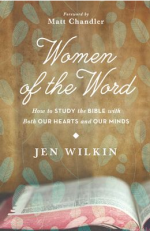
I was so glad to read Michele’s insightful review of Jen Wilkins’ excellent book, Women of the WordI have recommended it many times to women who long to rightly divide God’s word but aren’t quite sure how to do so.

capture3-1

“I can’t recall the last time I devoured a book in one evening, but that’s what happened with Women of the Word. I’m sure the reason is Jen Wilkin’s laser focus on the topics that (after my family) are most important to me — knowing the Bible and teaching the Bible. I found the book to be immediately relevant and useful, not only in my teaching ministry, but also in my personal study.”

Want to learn how to be a better student of God’s word? Hop on over to Living Our Days and check out Michele’s article, Women of the Word by Jen Wilkin: A Book Review, and then head over to Amazon and get yourself a copy!

Have you read Women of the Word?
What did you think of it?

Blog Swap Disclaimer: Christian bloggers who participate in Blog Swaps have submitted an acceptable statement of faith to me. Although I do my best to thoroughly vet the theology of the bloggers I swap with, it is always possible for things to slip through the cracks. Please make sure any blogger you follow, including me, rightly and faithfully handles God’s word and holds to sound biblical doctrine.
Bible Study

Blog Swap ~ When Learning Styles Affect Relationships with God

blog swap

It’s time for another awesome blog swap! Blog swaps give me the opportunity to share other talented bloggers with you, plus offer you fresh content that’s a great supplement to our regular fare here. If you’d like to do a swap, click on the link above for more information.

Today, I’m excited to be swapping with a new blogger, Candice, of Momma’s Wonderings. Momma’s Wonderings has all kinds of great information for mommies of little ones, from cloth diapers to home schooling to fun learning activities. One thing that sets Momma’s Wonderings apart from typical “mommy blogs” is that Candice not only blogs as the mom of a child with physical challenges, but as someone who has a learning disability herself.

With the new year right around the corner, I know many of us will be making resolutions to read the Bible more often or study it more effectively. Candice has found a method that helps her work around her learning disability to study God’s word in an organized yet meaningful way. Whether you have a learning disability or not, this is a method that might be a fit for you.

0001-24930728

Once upon a time not to long ago there was a young girl who thought the reason why she did not fit in with a crowd was because she was not christian enough. She could not memorize a memory verse if her life depended on it…Prayer was something she just did not get…Oh and don’t even mention Bible reading.

Do you relate to this girl/women? Do you struggle with personal time with God?

Head on over to Momma’s Wonderings and check out Candice’s article When Learning Styles Affect Relationships With Godand don’t forget to follow her on social media.

Have you tried Candice’s method of Bible study?
What are some Bible study techniques you’ve found helpful?

Bible, Bible Study, Christian women, Women

You’re Not as Dumb as You Think You Are: Five Reasons to Put Down that Devotional and Pick Up the Actual Bible

Bible Five Reasons

As a women’s Bible study author and teacher, I have the unique privilege of talking to women from all kinds of backgrounds about their spiritual lives. I can’t tell you how many times I’ve had women share with me that they didn’t grow up in church, or they grew up in a church that “didn’t allow” them to read the Bible, and now they have to use a Bible study or devotional book in their quiet time or they’re afraid they won’t be able to understand the Bible. My heart goes out to these ladies because they desperately want to learn from God’s word, but somewhere along the way, someone or something has convinced these perfectly intelligent women–I haven’t met a dumb one, yet– that they’re not good enough or smart enough for God’s word.

As Colonel Potter used to say:

ColPotter MM

Ladies, you are not dumb. God created you smart enough to understand the Bible, and He created the Bible to be understandable. He loves you and wants you to read, embrace, and apply His word to your life. So don’t be afraid to throw that Daily Bread out the Open Windows of your Upper Room and read a chapter out of your Bible instead. Why?

1. Because you need spiritual nutrition, not mind candy.
The other day I was asked my opinion of a popular women’s daily devotional web site. I read a few of the devotions, and the basic format of what I found was a Bible verse (or worse, part of a Bible verse) followed by an inspiring or poignant personal story. Frequently, the Bible verse had little or nothing to do with the story. There’s nothing wrong with reading a good story, but that’s not the same thing as studying God’s word. Other “Bible” studies are built largely on the author’s opinions. You’ll find that I think… or I believe… far outnumber God’s word says… (quoted verbatim, in context, and with a chapter/verse reference). Still others are basically advice or “life tips” books.

Don’t let the fact that a book, magazine, or website bills itself as a “Bible study” or a “devotional” fool you. If all you’re reading is the author’s unsubstantiated opinions, advice, or anecdotes from her (or someone else’s) life, you are studying her story, not God’s story.

There are many good, doctrinally sound studies out there that can be a fine supplement to your regular study of God’s word, and there are many more “Bible studies” and devotionals that are merely feel-good stories, or worse, contain teaching that actually conflicts with the Bible. But how will you know the difference if you don’t know what God’s word says by reading it?

If you don’t know enough of what God’s word says to use it as your measuring stick for other books, you’ll end up doing the same thing a child would do when offered anything in the world that he wants to eat. He’ll choose what looks and tastes good (which might be candy or it might be poison) instead of what’s good for him. When you pick up a Bible study or devotional, you might not know what you’re getting, but when you pick up your Bible, you can be sure you’re getting the very words of God, and that’s what your spirit needs to feed on to grow up healthy.

2. Because King James has been dethroned.
No disrespect intended. The King James Version of the Bible is a good translation, and the language is beautiful, but if you have trouble with 1611 English, it’s not the only game in town anymore. Some of our modern translations (please note: that’s translations not paraphrases) are actually more accurate than the KJV because thousands more biblical manuscripts have been discovered since it was first published, allowing translators to be more precise. Two of these, which I highly recommend, are the New American Standard Bible (NASB) and the English Standard Version (ESV).

If you can read books, recipes, magazines, instructions, and Facebook (good heavens– if you can decipher certain Facebook posts, you can comprehend anything), and understand them, there is a Bible translation out there that you can understand. You can even check most of them out for free at BibleGateway.com.

3. Becase the Holy Spirit promised to help you.
I always find it heartwarming to hear someone say, “Before I was saved, I read the Bible, but it didn’t make any sense to me. But now when I read it, I get it!” What changed? The Holy Spirit now lives inside that person. He convicts us of sin, leads us to love the things of God, and shapes us to be more like Christ. One of the ways He does that, according to 1 Corinthians 2:14-15, John 14:26, and 1 John 2:27 and other passages, is that He helps us understand and apply God’s word to our lives.

Before you start reading your Bible, take a moment to pray, confess and repent of your sin, and ask the Holy Spirit to help you understand and obey His word. He’ll do it, because He keeps His promises.

4. Because you can get by with a little help from your friends.
 
While the Holy Spirit illumines our understanding of the Scripture, it’s both immediate and a process, so sometimes, you’ll run across a verse that stumps you, a word you don’t understand, or passages that seem to conflict with each other. Fortunately, the Holy Spirit is/was at work helping other godly men and women to understand the Scriptures, too, and one of the ways He can help you is through their study and hard work.

Cross References:
Take a look at your Bible. See any little superscript numbers or letters in the text? Find the corresponding letter/number, and you’re likely to see the reference for another related Bible verse. Look it up. Clear passages of Scripture interpret unclear passages, and it will probably shed some light on what you’re finding confusing.

Study Bibles:
I almost hesitate to recommend study Bibles because there are so many shoddy ones out there, but if you can find a good one they are extremely helpful. Good study Bibles contain the entire text of the Bible plus notes and explanations on most of the verses. They also often contain historical, cultural, and background information on each book and author, maps, charts, glossaries, etc. As to the shoddy ones, generally speaking, stay away from “theme” Bibles (the Bible for teachers, for athletes, for petroleum engineers who eat waffles for breakfast–yes, I’m kidding– the environmental Bible, the NASCAR Bible, the Duck Dynasty Bible– no, I’m not kiding), and from any Bible whose title contains a televangelist’s name (such as the Bibles T.D. Jakes, Joyce Meyer, and Joel Osteen have put out).

For my “hard copy” Bible, I use and strongly recommend the MacArthur Study Bible. It is my understanding that the Lutheran Study Bible and the ESV Study Bible are also very good, although I have not personally had a chance to check them out myself. And there are some phenomenal (and free!) study Bible apps out there. I absolutely LOVE the Faithlife Study Bible and the Bible study app from Olive Tree. And check out this article from Tim Challies: What Makes a Really Good Study Bible?.

Commentaries, Dictionaries, and Bible Study Helps
Commentaries are a Bible scholar’s written explanation of Scripture. Bible dictionaries will help you with definitions of certain words and phrases. And there are many other notes, outlines, and other Bible study helps you can use to better your understanding of Scripture. The resources page at BibleGateway.com contains several of these, including Matthew Henry’s commentary (my favorite). The Christian Classics Ethereal Library (CCEL) has a treasure trove of thousands of resources to help you study. And Logos Bible Software has a great free app that has dozens of resources.

5. How badly do you really want this, anyway?
Nobody ever won a medal at the Olympics by practicing her sport for five minutes a day. Edison didn’t invent the light bulb by messing around in his garage for a few hours on the weekend. And, despite the titles of some Christian books, nobody ever grew to spiritual maturity by spending five minutes a day reading a devotional.

Think about the things you spend your time on. Work, cooking, cleaning, TV, social media, novels… If asked, we would probably all say that our relationship with Christ is more important than any of these things, but do our day planners reflect that?

Anything worth having is worth investing time and effort into. It’s worth working at it and sharpening your skills. And nothing–nothing–is more worthwhile than growing closer to Christ. Is Christ worth some time and effort to you?

So, ladies, this is probably going to sound strange coming from a women’s Bible study author, but you don’t need my book, or anybody else’s, to study the Bible. Just pick up the Scriptures, pick a book, start reading at the beginning, and keep going until you get to the end. People did that for thousands of years before Bible studies hit the scene. They did just fine, and you can too.