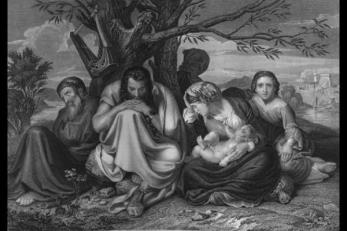
Bible, Obedience, Old Testament, Sunday School, Worship

Worship, Grief, and Obedience: Three Responses to God’s Word ~ Sunday School Lesson ~ 9-28-14

worship grief obedience 1Through the Bible in 2014 ~ Week 39 ~ Sep. 21-27
Zechariah, Esther, Ezra 7-10, Nehemiah 1-8
Worship, Grief, and Obedience: Three Responses to God’s Word

These are my notes from my ladies’ Sunday School class this morning. I’ll be posting the notes from my class here each week. Click here for last week’s lesson.

Background/Time Line:
Judah had been in exile for 70 years. As there had been three waves of deportations (605 B.C., 597 B.C., and 586 B.C.) to Babylon, there were three waves of return from Babylon.

1. 539 B.C.- There’s a new sheriff in town as world domination changes hands. Babylon is out. Persia is in.

2. 538 B.C.- Zerubbabel (Jerusalem’s first post-exilic governor) leads the first return wave. Many of Israel’s feasts and ceremonies are reinstituted, and work on the rebuilding of the temple begins.

3. 536 B.C.- Work on the temple is abandoned shortly after it begins and is not resumed for another 16 years.

4. 516 B.C.- Temple completed.

5. 483-473 B.C.- The events of Esther take place. These events happen between Ezra 6 and 7.

6. 458 B.C.- Ezra leads the second return wave (Ezra 7ff).

7. 445 B.C.- Nehemiah leads the third and final return wave. The city wall is rebuilt.

Nehemiah 8
The exiles were all finally back after 70 long years in captivity, and the wall was finished. They were home and they were safe. It was time to re-establish the nation by ceremony and celebration.

8:1: The Feast of Booths (Ezra 7:10, Leviticus 23:33-44, Deuteronomy 16:13-17)
Ezra was a scribe and a teacher of Scripture. Ezra 7:10 tells us,

“For Ezra had set his heart to study the Law of the Lord, and to do it and to teach his statutes and rules in Israel.”

It would have been natural for Israel to look to Ezra for biblical instruction. It’s interesting to me to think back to Jeremiah at this point and recall how, before the exile, all the people came together against him to oppose the word of God. Now, after the exile, the people gather en masse and ask Ezra to teach them the word of God.

It’s a little unclear in verse 1 whether the people knew it was near time for the Feast of Booths (it was supposed to start on Tishri {7th month} 15, and this was the 1st) and that’s why they asked Ezra to read the Law (it was “required reading” at the Feast of Booths), or they just longed to hear the word of God, and the elders learned during the reading or their study time (8:13) that it was time for the Feast.

At any rate, the Feast was on. God had commanded that the Feast of Booths (or Tabernacles) be held every seven years, in the autumn after the harvest had been gathered in. The first and eighth days were days of rest, and sacrifices and offerings, as well as the reading of the Law were done on the remaining days. The Feast of Booths immediately followed the Day of Atonement, a solemn assembly in which the nation’s sins were atoned for. The Feast of Booths had not been held since the days of Joshua.

The Feast of Booths had been instituted as a reminder to Israel of how God had delivered them from “captivity” in Egypt and cared for them during their “exile” in the wilderness. The booths were lean tos or huts built from leafy branches, and the people were to live in these huts during the feast as a reminder of their temporary homes during the wilderness wandering. It is the only feast in which rejoicing is commanded.

What more appropriate feast could there have been on this day in Israel’s history? Their sin had been atoned, and God had “harvested” the apple of His eye from their temporary home in captivity and exile. It was certainly a time for rejoicing.

8:2-12: The Reading of God’s Word
2- God’s word is important for everyone: women, children, families, not just men. Not only did God want His word ministered to everyone, but “all who could understand” in verses 2 and 3 indicates that they would be held responsible for what they had heard. They were to know what God commanded, what He prohibited, and obey accordingly.

3-5- Ezra read from “the Law.” Often, the phrase “the law” or “the book of the law” can mean the entire Pentateuch (Genesis – Deuteronomy), but in this instance, it seems to mean the actual “law” portions of the Law. As he read, Ezra stood on a raised platform so that he could be seen and heard. The men standing with him to show their agreement and support were probably priests and/or elders.

“From early morning until midday” would have been about 6 hours, from dawn to noon. Outdoors (in the square). Standing. Yet, the people were still attentive. Compare this to our one or two hour worship services, indoors, sitting, where the pastor is not usually focusing on the finer aspects of how much you’ll be fined if your ox tramples your neighbor’s fence.

These people were starving for God’s word. Eager to get back to living as His people. How intense is our own hunger for God, His word, holy living?

Responding to God’s Word with Worship:
6- Ezra opened with a prayer, blessing the Lord. Joining together freely in their own land to worship and hearing God’s word taught in public by one of their own teachers was a new experience for the generation that had been born and raised in captivity. By this time, overwhelmed and overcome by all God had done for them, their only possible response was humble worship. Worship is one of the right responses to God revealing Himself in His word.

7-8- Because many of the people were hearing God’s law for the first time, they needed some help in understanding it. God had raised up godly men to teach the people. This is what godly teachers do. They read out God’s word and explain it to people (exegesis). They don’t come up with fanciful ideas of their own and bend God’s word to make it fit their ideas (eisegesis).

Responding to God’s Word with Grief:
9-12 (Romans 10:13-14, Ecclesiastes 3:1)- The Holy Spirit works primarily through the teaching and preaching of His word, and that’s just what He was doing here. The people heard the word and the Holy Spirit worked through it to convict them of their sin. They began to mourn over their sin and repent. Grieving over our sin is another right response to God revealing Himself in His word.

But grieving over sin was for the Day of Atonement, a form of which, this time, would follow the Feast of Booths instead of preceeding it (see chapter 9). This was a time of rejoicing for all God had done for them in spite of their sin. As we read in Ecclesiastes,

For everything there is a season, and a time for every matter under heaven:

Confession would have to wait.

And why did the people rejoice? Not because God performed a miracle or made their lives nice and comfy or gave them a bunch of stuff. They rejoiced because “they had understood the words that were declared to them.” How often do we rejoice in understanding God’s word or having it preached to us? It’s not often we see a Facebook status that says, “Praising God for understanding the Bible passage I read in my quiet time today!”

8:13-18: Studying God’s Word
13-14- For a Believer, one of the effects of hearing God’s word is the desire to hear more of God’s word. Hearing God’s word preached and taught led the elders, priests, and Levites to want to study the Word even further. As they studied, they discovered that there are things that God’s word actually tells us to do.

Responding to God’s Word with Obedience:
14-18- The leaders learned that there were some actual, tangible, behavioral things God had told Israel to do with regard to the Feast of Booths. They were obedient to God’s word by studying to understand these things, teaching them to the people, exhorting them to obey, and setting the example by obeying the instructions themselves.

The people responded in obedience to the word by heeding the instruction of their spiritual leaders, and by going out, gathering branches, constructing the booths, and living in them during the feast. As each individual obeyed, it encouraged others to obey, so that the whole assembly came together in obedience. And what was the result? “There was very great rejoicing.” (17)

Our response to God’s word should be no different than Israel’s. We should hunger for God’s word and desire more of it with each passing day. It should inspire us to worship the glorious King who sent His son to die for us. It should convict us of our sins and cause us to grieve over them and repent. And, we should obey God’s word, and through our obedience, encourage the rest of the body of Christ to do the same. Then, there will be “very great rejoicing.”

Forgiveness, Obedience, Old Testament, Sin, Sunday School

David’s Sin: You da Man! ~ Sunday School Lesson ~ 5-18-14

sunday school

These are my notes from my ladies’ Sunday School class this morning. I’ll be posting the notes from my class here each week. Click here for last week’s lesson.

Through the Bible in 2014 ~ Week 20 ~ May 11-17
1 Chronicles 19-20, 2 Samuel 10-18, Psalm 20, 65-67, 69-70, 32, 51, 86, 122, 3-4, 12-13, 28, 55
David’s Sin: You da Man!


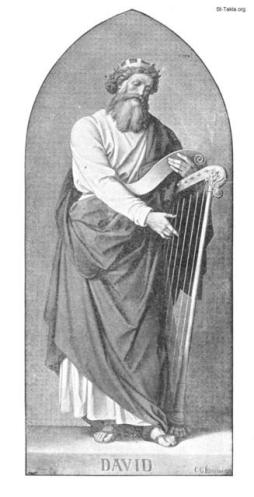
www-St-Takla-org--david

How could David, a man after God’s own heart (1 Samuel 13:14), sink to the level of committing adultery and murder? What was he thinking? How did he respond to being confronted by Nathan? What can we learn about how to deal with our own sin?

2 Samuel 11, 12:1-15, Psalm 51

2 Samuel 11- Setting the Stage for Sin

v. 1- “But David remained at Jerusalem.”
As we’ve read about David’s previous battles, where did we always find David when the fighting was going on? Back at the palace? No. He was out there with his men, leading things. This time, he was somewhere he wasn’t supposed to be. Can you think of a time when you were somewhere you knew you shouldn’t have been, which led to temptation?

v. 3- Eliam and Uriah: Mighty Men (2 Samuel 23:34, 39)
Both Eliam and Uriah were part of David’s mighty men. These weren’t just nameless, faceless Joe Blows in his army, but part of his inner circle who had been with him through thick and thin with fierce loyalty.

v. 4- The paternity test
Lest there be any question that maybe this was Uriah’s baby after all, verse 4 makes clear that the reason David saw Bathsheba bathing was that she was cleansing herself after “that time of the month.” David took her afterwards and Uriah was miles away at the battle, so only David could have been the father.

v. 8- Making Whoopee
(If you don’t know what that means, you’re not old enough to remember “The Newlywed Game” from the 1960s-70s. YouTube it.) “Go down to your house and wash your feet.” Since washing was done right before bed, this idiom meant for Uriah to go home and enjoy “knowing” his wife in the biblical sense.

thv. 9-13- A man of valor
Uriah, possibly inspired by David’s past honorable leadership, acted more valiantly and loyally here than his king did.

v. 4, 26- A willing participant?
Notice that this passage doesn’t tell us anything about what Bathsheba was thinking or feeling about all this. Remember, David was the king. You didn’t say no to the king if you wanted to live, especially if you were a woman. And furthermore, she knew he was “God’s anointed.” Surely such a man wouldn’t lead her to do anything wrong, would he? So, even if Bathsheba had been attracted to David, there was some level of coercion and advantage taking going on here on David’s part. Verse 26 makes a special point of telling us that she lamented over her husband. She loved him. David didn’t just sin with Bathsheba, he also sinned against her.

v. 27- Evil
I think in this case, the HCSB captures this verse better than the ESV (my preferred/usual translation): “The Lord considered what David had done to be evil.” That pretty much sums up what David had done, and it sums up our sin in God’s eyes as well. Evil.


2 Samuel 12:1-15- A Guilty Verdict

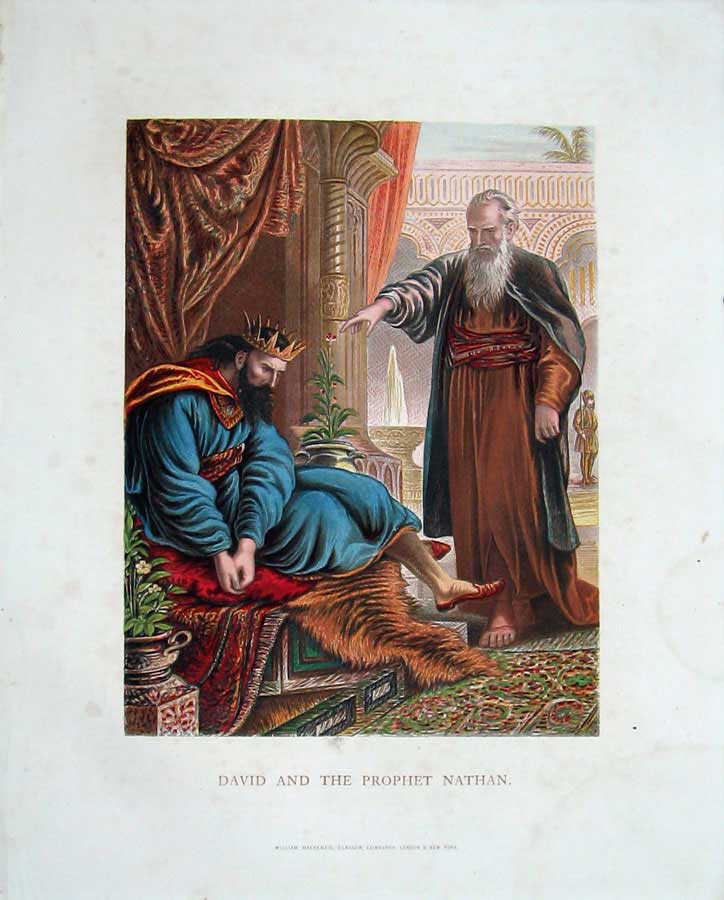
v. 1- Confronathan
Nathan wasn’t just a prophet; he was David’s friend and adviser. God sent him to confront David about his sin, and gave him the wisdom and the words to do it in exactly the right way.

v.1-4- The cast of characters
The rich man represented David. The poor man represented Uriah. The lamb represented Bathsheba. What do you think the traveler represented?

v. 4- Leaving out the welcome mat for temptation (1 Corinthians 10:13)
The traveler represented David’s temptation. Temptation is a lot like a visit from a traveling salesman. It comes and goes, it shows up unexpectedly, and it always tries to get you to spend more than you want to on something that seems fabulous but never lives up to the hype. When temptation rang David’s doorbell, he flung open the door and welcomed it in as an invited guest. As new creatures in Christ, we don’t have to do that. 1 Corinthians 10 says God will always provide a way for us to escape temptation.

One of those ways of escape is to not be home to answer the door. As I mentioned earlier, David wasn’t even supposed to be home when that temptation came around. He was supposed to be out on the battlefield with his troops. One way to avoid temptation is to be where you’re supposed to be and not be where you’re not supposed to be.

v. 4- Offering sacrifices to the idol of self
We also see in verse 4 that the rich man not only refused to send the traveler away and welcomed him in, but he also slaughtered a lamb to feed the traveler. The Israelites did slaughter lambs for food, but what else did they slaughter lambs for? Sacrifices.

David didn’t just welcome temptation in, he sacrificed for it. He was no longer sacrificing to honor God, but to gratify his own selfish desires. He sacrificed things that belonged to him—his integrity, his morals, his reputation, his example to his people, and his relationship with God. But he also sacrificed Bathsheba and Uriah who did NOT belong to him.

What are some ways we might sacrifice things, or others, for sin?

v. 5-6- The log in his eye (Matthew 7:3-5)
Isn’t it interesting how we can so clearly see the sin of others while simultaneously being blind to our own sin? “Why do you see the speck that is in your brother’s eye, but do not notice the log that is in your own eye?” (Matt. 7:3)

“He had no pity.” David never considered how his actions would affect Uriah and Bathsheba. He only thought about himself. Temptation and sin blind us to what we’re doing to ourselves, others, and God.

v. 7ff- Faithful are the wounds of a friend (Proverbs 27:6, Galatians 6:1-2, John 15:13)
Nathan was acting in three roles here. He was David’s friend, his brother in the Lord, and the man of God, and he loved David in all three capacities by showing him his sin. In the same way, we are to love our friends, our sisters in Christ, E1221909136and those under our spiritual leadership or influence. We care enough about them to help them out of sin, even at the risk of the relationship (Gal. 6)

Nathan confronted David wisely. Remember, David was the king—he could do (and had done) whatever he wanted to do, and he had already killed one man. Nathan knew this going in. Nathan also acted lovingly, boldly, and firmly. His commitment to what God had told him to do was greater than the love of his own life (John 15) or the love of his relationship with David. How often do we look the other way to keep the peace or preserve a relationship with someone instead of obeying what God has told us to do?

v. 7-9- Against Thee, Thee only…
I, I, I, I… Notice how many times God refers to Himself in these three verses? He is making it clear—and David gets the message as we will see in Psalm 51:4—that it is primarily God against whom David has sinned. Though others may be casualties or collateral damage (as Uriah and Bathsheba were), when we sin, we set ourselves up as enemies of God and wage war against Him.

v. 8- Gimme, gimme (Hebrews 13:5)
If all God had blessed him with had not been enough, God would have given him more. The fact that God had not given him more shows us that God had given David exactly what He wanted him to have. But David was not content with all the blessings God had given him. He selfishly wanted things God didn’t want him to have.

v. 9-10- Hatred for God’s word = Hatred for God
“Despised” and “evil”- When we sin, no matter how “small” it is, we are showing hatred for God’s word. Hating God’s word is evil. Notice in v. 9, “you have despised the word of the Lord,” and in v. 10, “you have despised me.” To despise God’s word is to despise God Himself.

v. 11-12- Public discipline for private sin? (Numbers 32:23)
Why did God discipline David publicly when he had sinned privately?

First, David had not sinned completely privately. Many people knew at least part of what he had done: the servants he sent to take Bathsheba in the first place (4), the servants who were in the house at the time(s) of the affair, Joab, likely several of the soldiers serving directly under Joab and with Uriah, probably the messenger who brought word of Uriah’s death, Nathan, and of course, Bathsheba herself. And you can bet that a lot of those people didn’t keep what they knew to themselves. “Your sin will find you out,” (Num. 32) is certainly true, especially for sins of this magnitude.

With all those people knowing what David had done, how would it reflect on God if He disciplined David privately? It would look as though God had given him a pass, that certain, special people were above God’s law. That’s how things were for kings of pagan nations. Israel and Israel’s God were different, not like the other nations. Furthermore, it would have diminished God’s justice in the eyes of Israel if God disciplined David privately and Israel couldn’t see it. How could they trust His justice if it looked like His justice was inconsistent?

Second, David was famous, highly visible. Like it or not, he set an example for the people. When he did right, it was a good example. Here, he did wrong and it was a bad example. Through his actions and God’s visible discipline, the people learned what not to do in their own lives.

v. 13- Admission of guilt
David didn’t try to justify his sin or retaliate against Nathan. It is precisely because he was a man after God’s own heart that he simply and humbly confessed, “I have sinned.”

v. 13-14- God’s merciful forgiveness
Because David confessed his sin and repented of it, God mercifully forgave him. While David had said the “rich man” should die for his sin (5), and David was guilty of crimes deserving the death penalty, God removed that penalty from him. The consequences of his sin would remain (the death of the baby), but the punishment was taken away.

1176199_570889419639205_1633472194_n

Psalm 51- Repentance and Restoration

Have mercy on me, O God,
    according to your steadfast love;
according to your abundant mercy
    blot out my transgressions.
Wash me thoroughly from my iniquity,
    and cleanse me from my sin!

For I know my transgressions,
    and my sin is ever before me.
Against you, you only, have I sinned
    and done what is evil in your sight,
so that you may be justified in your words
    and blameless in your judgment.
Behold, I was brought forth in iniquity,
    and in sin did my mother conceive me.
Behold, you delight in truth in the inward being,
    and you teach me wisdom in the secret heart.

Purge me with hyssop, and I shall be clean;
    wash me, and I shall be whiter than snow.
Let me hear joy and gladness;
    let the bones that you have broken rejoice.
Hide your face from my sins,
    and blot out all my iniquities.
Create in me a clean heart, O God,
    and renew a right spirit within me.
Cast me not away from your presence,
    and take not your Holy Spirit from me.
Restore to me the joy of your salvation,
    and uphold me with a willing spirit.

Then I will teach transgressors your ways,
    and sinners will return to you.
Deliver me from bloodguiltiness, O God,
    O God of my salvation,
    and my tongue will sing aloud of your righteousness.
O Lord, open my lips,
    and my mouth will declare your praise.
For you will not delight in sacrifice, or I would give it;
    you will not be pleased with a burnt offering.
The sacrifices of God are a broken spirit;
    a broken and contrite heart, O God, you will not despise.

Do good to Zion in your good pleasure;
    build up the walls of Jerusalem;
then will you delight in right sacrifices,
    in burnt offerings and whole burnt offerings;
    then bulls will be offered on your altar.

Obedience, Old Testament, Sovereignty of God, Sunday School

David and God’s Big Picture ~ Sunday School Lesson ~ 5-11-14

sunday school

These are my notes from my ladies’ Sunday School class this morning. I’ll be posting the notes from my class here each week. Click here for last week’s lesson.

Through the Bible in 2014 ~ Week 19 ~ May 4-10
1 Chronicles 13-18, 2 Samuel 5:11-9, Psalm 1-2, 15, 22-25, 47, 68, 89, 96, 100-101, 105, 132, 29, 33, 36, 39, 50, 53, 60, 75
David and God’s Big Picture

2 Samuel 7/1 Chronicles 17
This passage is the institution of the Davidic covenant: God’s promise to establish the throne of David forever through the eventual birth and reign of Jesus. God, in His sovereignty, had a plan that David was part of. A plan with farther reaching impact than just David’s life. But God’s call on David’s life was the same as His call on our lives: to love and serve Him faithfully wherever He has put us.

crown-and-thorns

2 Samuel 5:12
Right from the beginning of David’s reign, he recognized two very important things about his life that we should also recognize:

1. God is sovereign (1 Samuel 16:1-13, 1 Peter 2:9).
It was God who had made David king over Israel, not anything intrinsically worthy in David himself. Remember that when God chose David to be king back in 1 Samuel 16, David was just a shepherd in his late teens or early 20s. Nothing special. Just an average guy. In fact, God told Samuel not to pay attention to outward signs of “specialness” in David’s older brothers. He had his own reasons for choosing David.

In the same way, when God calls us out of darkness and into His marvelous light (1 Pet.) for salvation, it’s not because there’s anything intrinsically good in us. In fact, everything’s bad about us because we are drenched in sin. But for His own reasons, whatever they are, God has called us out to save us.

2. David’s life was not his own (1 Corinthians 6:19-20, Matthew 20:28)
The second half of this verse does not say that “David knew… that the Lord had…exalted his kingdom” so David would be happy or comfortable or have a life of purpose. God established David’s kingdom “for the sake of His people Israel.” While God certainly blessed David along the way, God is about God. His main objective is His plans, His purposes, and His glory, not our happiness and contentment. This, of course, doesn’t mean He doesn’t care about us individually—far from it!

blurry-sky-cross1 Corinthians tells us our lives are not our own because we were bought with a price (the blood of Christ). We no longer belong to Satan, slaves of our sinful natures, living to gratify our own desires, pawns in his plan of trying to thwart God’s will. We belong to God to use as He sees fit for His plans and purposes.

One of the pitfalls of the American mindset is that it has taught us to focus on ourselves as individuals, often to the exclusion of what is good for our neighbors, our community, our state, nation, and world. We think in terms of “my rights,” “my enjoyment,” and “How will this affect me?” (Just so you know, I’m not a communist or a socialist when it comes to government. I’m just talking about this “me-centered” mentality.) This crosses over into our Christian lives. We often get so focused on our own lives, what we think God is or isn’t doing in them or with them, and how whatever He is doing is affecting us personally, that we forget that God has a huge plan for the entirety of human history and the universe. Whatever He’s up to right now may be about someone else, not you or me. We need to be more aware of God’s “big picture.”

As with David, God gives us our authority and circles of influence for the good of others, to bless them and serve them, even as Jesus came, not to be served but to serve, and to give His life for others (Matt. 20). The good news is that when we are on board with this, we get something much better than fleeting things like earthly happiness and comfort. We get eternal joy, peace, and a glimpse of the glory of God as we obey and cooperate with His plan.

You can’t always get what you want (2 Samuel 7:1- 7, 1 Samuel 13:14)
Because our lives are not our own, cooperating with God’s big picture plans sometimes means that we don’t get to do what we want to do, even if what we want to do is good and godly.

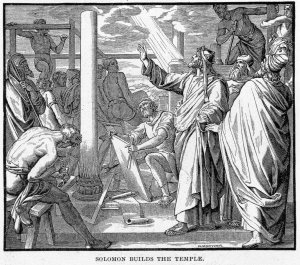
www-St-Takla-org--110--Solomon-Builds-the-Temple-3David was a “man after God’s own heart.” He loved the Lord and wanted to thank and honor Him by building Him a temple. What he wanted to do was an honorable and worshipful thing, and the motives of his heart were pure. But that was not the role God wanted David to play in the unfolding of His plan, nor was it the right time. The person God wanted to fulfill that part of His plan, at a later time, was Solomon.

As we discussed last week, seeking godly counsel is an important part of making godly decisions. David did this by consulting Nathan, the prophet. However, praying and asking for God’s guidance and wisdom is also essential before taking on something like building a temple, and both David and Nathan neglected to do so.

Graciously, even though they hadn’t come to God, God came to Nathan and explained things. God pointed out that in all this time, He had never asked anyone to build Him a permanent house. God had been just fine in a tent up to this point, and would be just fine until He decided it was time for Solomon to build the temple.

Sometimes, even if something is godly and part of God’s plan, He wants someone else to do it.

But you can always get what you need (2 Samuel 7:8-17, Luke 2: 26-33)
What David needed and what we need, is to be faithful and obedient to God wherever He has placed us. This doesn’t mean God will necessarily have us in the same place all our lives (though He might). After all, He took David from shepherd to warrior to king. But David served God faithfully in each of those positions for as long as God had him in those positions.

Ultimately, the role God wanted David to play in His plan was to be the king through whom God initiated the Davidic Covenant. Though David sought to build God a house, it was God who would build David a house (11, Luke 2). It would be an eternal house, first through his descendants who would be temporal kings, and, finally, through the Messiah, Jesus, who would reign forever and whose kingdom would know no end.

David’s Response (2 Samuel 7:18-29)

Humility (18-20)
David was overwhelmed by the fact that, though he wanted to do something big for God, God was going to do something big through him.

Exaltation (21-24)
David again recognized that it was God’s sovereignty that brought all this about, not his own awesomeness (21). He praised God’s greatness, holiness, and superiority to all else (22). He recounted God’s mighty deeds of the past and how He glorified Himself through His chosen people, Israel (23-24)

I’m in! (25-29)
David didn’t express doubt or hesitate to jump in with both feet. He didn’t whine that what he really wanted to do was build the temple. He embraced God’s plan obediently and joined in thankfully and wholeheartedly.

David glorified God for His “macro” plan (25-26) – the coming of the Messiah and everything leading up to it – and also for His “micro” plan (27-29) – realizing that if he cooperated with God’s plan, he and his family would be blessed along the way. Notice that David (29) did ask for God to bless his house and descendants, but not for personal/family gain. He asked that God would bless his family to fulfill and cooperate with God’s plan.

When God places us in any situation, whether blessing or hardship, our response should mirror David’s. We should be obedient to God, never stepping outside of His word to pursue things He doesn’t want for us, even if they seem godly. And, with humility and praise, we should embrace God’s plan, cooperating with Him joyfully.

What about all the non-Davids? (Exodus 12:37, Mark 7:37, 1 Thessalonians 4:9-12)
Sometimes when we read the Bible, we come to stories like David, Moses, Joshua, Noah, and Paul, and we can get the impression that God calls everyone to do great big things for Him as part of his plan. We tend to forget that when the Israelites left Egypt, there were likely 1.5 to 2 million of them. And only one Moses. By David’s time, there were likely several million Israelites. And only one David. What about the millions of Israelites who were born, grew up, got married, went to blue collar jobs every day, and died, having the-israelites-withoutlived lives of quiet faithfulness to God but never having had God make a covenant with them or being called to kill a giant or part a sea? Did God love them less? Value their love for Him less?

Why does God use some people in big, visible, fame-creating ways, and some in invisible ways? The answer, as is often the case when we’re dealing with God is, “I don’t know.” That’s one of the things that makes Him God and us not God. It’s his business, not ours. We trust that He does all things well (Mark 7) and that when He says that we are to “live quietly, and to mind your own affairs, and to work with your hands” (1 Thess. 4), He means it, and that lives of quiet faithfulness are precious in His eyes.


God has a plan. All of us who are His children have a part to play in that plan. Our part, whether big and visible or quiet and invisible, is to love and trust Him more each day and live obediently and faithfully wherever He places us.

Obedience, Old Testament, Sanctification, Sovereignty of God, Sunday School, Trust

Decisions, Decisions ~ Sunday School Lesson ~ 5-4-14

sunday school

These are my notes from my ladies’ Sunday School class this morning. I’ll be posting the notes from my class here each week. Click here for last week’s lesson.

Through the Bible in 2014 ~ Week 18 ~ Apr. 27-May 3
1 Chronicles 6-12, 2 Samuel 5:1-10, Psalm 81, 88, 92-93, 102-104, 133, 106-107
Decisions, Decisions

We all face difficult and confusing times of decision in our lives. Should I marry this guy or not? Which job should I take? What’s the best plan of action in X situation? How can we know for sure which decision God wants us to make?

1 Samuel 8:4-7, 2 Samuel 5:1-10
In these two passages, we see Israel’s decision to have a king to rule over them. In the first passage, which we studied a few weeks ago, the leaders wanted Saul (they didn’t know his name yet, but they sure had his résumé!). In the second, they wanted David. Two times when the government of Israel was at a crossroads. Two times when Israel’s leadership wanted a king. Two kings coronated. Similar circumstances, the same desire, similar outcomes. But even though the situations were so similar, were both decisions made the right and godly way?

Let’s take a look at some principles for godly decision-making and see how these principles worked themselves out in the Israelites’ situations with Saul and David.

MH900390083

Principles for Godly Decision-Making:
One thing we need to be careful about with the following principles is that we are not using them to manipulate God into making us make the right decision. Any time we modify our behavior in order to try to make God do what we want, we’re guilty of idolatry, even if what we want seems to be godly. The principles listed below are all things we should be doing or believing on a daily/regular basis because they are part of the obedient Christian walk, not just because we have a big decision to make. Godly decisions are a side effect of this kind of walk, not the end goal.

1. In order to make godly decisions, you must be saved (1 Corinthians 2:14-16, 2 Corinthians 5:17).
People who are unsaved aren’t capable of making godly decisions, because the motivation behind making godly decisions is the desire, from the heart, to please and be obedient to God. God, in His grace, may lead an unsaved person via his circumstances to make a certain decision, but the motive of his heart will still not be to please God. We are not capable of that motive unless we are saved.

2. Delight yourself in the Lord (Psalm 37:3-4).
Because Christians are new creatures with the mind of Christ, we have an inborn desire to love God, His word, and the things of God (godly preaching, books, music, friends, etc.). But this desire must be cultivated (3- New American Standard Bible translation) through a daily walk with the Lord, spending time in His word and prayer, and intentionally seeking out godly influences.

It’s like one of those “miraculous” weight loss stories we often hear. An extremely obese person decides he’s going to lose weight. The desire of his heart is there—he’s fed up with his looks and poor health, and he wants to tackle the problem and get healthy. But if he doesn’t intentionally do something, the weight isn’t going to come off, despite the desire. He starts off slowly. Maybe he cuts out cokes and walks around the block three times a week. As he progresses, his desire to cut bad things from his diet, add good things, and exercise more, builds. Not only does he see results, but he begins to enjoy the healthier diet and exercise more and more, and becomes even more committed to them. Eventually, he loses the weight and maintains a healthy lifestyle.

That’s how it is with delighting in the Lord. Through the power of the indwelling Holy Spirit, Christ helps us to intentionally cultivate faithfulness, and we grow in our love and affection for the Lord. As a result, He gives us the desires of our heart—to be more Christlike.

With Saul, were the Israelites delighting in the Lord? Definitely not. In fact, it was their lack of delighting in the Lord that led them to demand a king against God’s wishes. With David? Israel had just been through the consequences of having Saul as king and they knew God had ordained that David be the next king, plus he was a great military leader. Which of these motivated them the most? It’s hard to tell, but it feels like they were acquiescing to the inevitable, and the practical desire for military strength rather than repenting and taking an affirmative step towards godliness.

3. God’s word is sufficient for our every need (Hebrews 1:1-3a, 2 Timothy 3:16-17).
Often, when we read the Bible, it’s easy to long for God to speak to us one on one, through a burning bush, a fleece, a prophet, or some other form of direct revelation. But now that we have God’s complete written Word, we no longer need direct revelation, nor does God want us to seek that. Hebrews and Timothy tell us that God no longer speaks that MH900410128way and that His word is sufficient for our every need. Additionally, we now have access to God’s word any time we need it. We don’t have to wait for Him to miraculously show up. Finally, if we were to rely on signs or “hearing God’s voice,” how could we be sure we’re really hearing from God and not our own sinful inner voice, or worse, Satan? God’s word is absolutely trustworthy. When we read it, we can be 100% certain we’re hearing from God. And remember, Israel (and others in the Bible) did hear directly from God, and they still often disobeyed.

4. Know God’s word and study God’s word in context as it applies to your situation (Psalm 119:11, Deuteronomy 17:14-15).
We must study God’s word daily; even memorize it, so that we can apply it to every aspect of our lives. As we do, it’s very important to study it in context so we can be sure we’re applying the correct biblical principles.

Did Israel know God’s word as it applied to the situation with Saul? Yes. They certainly knew Deuteronomy 17, which predicted they would demand a king, and outlined the regulations for a king of God’s choosing. They also knew that God was, and always had been, the only king they needed, and that He did not want them to demand a king.

With David? Yes. Through Samuel’s prophecy, Israel already knew David was to be the next king and that he had already been anointed.

5. Obey God’s word (1 Samuel 15:22).
As we can see with Israel’s demand for a king (Saul), knowing God’s word isn’t enough. We also have to obey it. Sometimes it can seem like sin is the most practical way out of a situation, but it is only a temporary fix. Even when we try to put a godly spin on our disobedience, as Saul did in 1 Samuel 15, it is still disobedience. As Saul learned the hard way, God wants us to be obedient to Him regardless of our circumstances. With David, Israel, whatever her motivations were, obeyed God and made David king.

6. Know your “bent” (Psalm 139:13-14).
God has created each of us uniquely. We are all “bent” Bent_eye_cranked_bolt_profiletoward certain things and away from others. One of the ways God may show us the things He wants us to do and not do is through the talents, tastes, and abilities He has given us. If you can’t carry a tune in a bucket, that’s a pretty good indication God doesn’t want you to sing for a living. If you love numbers, that may be God’s way of leading you into a math-related field. Other times, we may be thrust into a situation in which we have to learn a new skill. We might just discover a talent we didn’t know we had!

7. Pray, and ask others to pray with you about the situation, especially for wisdom and guidance (James 1:5-6).
Some things we don’t need to pray about because they are clearly taught in God’s word. We don’t need to pray about whether we should attend church regularly, be faithful to our spouses, help those in need, etc. But, some situations aren’t as clear. James tells us that if we lack wisdom, all we have to do is ask God for it in faith, and He will give it to us. It’s a promise. We may not feel very wise, but we don’t operate on feelings. We take God at His word and trust Him as we continue to take the next step and the next.

With Saul, did Israel pray about the situation or ask God for wisdom in selecting a king? No. And even though God tried to provide them with wisdom- spelling out the consequences of their demand- they insisted on disobeying Him. They did not need to pray about making David king. God had already made it clear that he was the next to take the throne.

8. God has given you (and others) a brain for a reason (Proverbs 11:14, 24:5-6, 18:15)
Seek counsel from godly people you trust. Take what they say, make sure it matches up with Scripture, and pray about it. In other situations, such as a medical diagnosis, you may need to do some research and gather information so you can make an educated decision. Finally, trust that God, our wonderful Creator has hard wired you with the ability to process information and make the best decision you can with His help and guidance.

With Saul, God directly gave Israel godly counsel and information through Samuel. They chose to reject it and disobey, and suffered the consequences. With David, Israel also had all the information they needed to make the right decision. This time, they obeyed.

9. Trust in God’s sovereignty to direct your steps and work things out for your good (Proverbs 3:5-6; 16:9, Psalm 37:23-24, Romans 8:28).
Sometimes our desire to do what God wants us to do is so strong that we become paralyzed by the fear that we’re going MH900448357to do the wrong thing. When we do that, our trust is no longer in God’s sovereignty over the situation. We have shifted our trust from God—where it should be—to ourselves—where it should not be.

God’s sovereignty over situations does not rest on our actions. We can clearly see this in Israel’s situation with Saul. Even though they didn’t desire to please God, He had complete control of the situation and worked it out for His will to be done in the long run. How much more can we trust God to take care of our situations, if it is our desire to please Him, since He promises to do so?

10. Trust that God understands and has compassion on the frailty of His children (Psalm 103:14).
You aren’t God. You aren’t omniscient, knowing all the ins and outs of your situation. In most cases there is at least some aspect of the situation in which you are powerless. Every time you make a decision, you do it with only partial knowledge and partial control (at best). God knows all of this better than we do. That’s why He tells us to love Him, seek to honor Him, ask Him for wisdom, and trust Him.


One of the natural outgrowths of walking with the Lord is making more godly decisions. We must use the resources He has given us: His word, godly counsel, information, prayer, and wisdom, and trust Him to work everything out for our good.


Additional Resources:
The Problem with Seeking God’s Will by Matt Papa

Faith, Obedience, Old Testament, Sunday School, Trust

Trust and Obey ~ Sunday School Lesson ~ 3-2-14

sunday school

These are my notes from my ladies’ Sunday School class this morning. I’ll be posting the notes from my class here each week. Click here for last week’s lesson.

Through the Bible in 2014 ~ Week 9 ~ Feb. 23-Mar. 1
Numbers 1-15, Psalm 90
Trust and Obey

Not a grief or a loss, not a frown or a cross, but is blest if we trust and obey.

Trust and obey, for there’s no other way to be happy in Jesus, but to trust and obey.

Dilemma → The People’s Response → Moses/Leadership’s Response ←→ God’s Response

Today, we’re taking a look at four incidents from this week’s reading which follow the paradigm above. All start out with a problem. We’ll look at how the people responded to that problem, how Moses and the other leaders responded, and how God responded, which will show us how we should respond to the dilemmas we face: with trust in, and obedience to, God.

 A Generic Gripe (Numbers 11:1-3)

The Dilemma (11:1):
This seems to have been a general discontent with the aggravations that come with marching around the desert. Various translations mention “hardships,” “adversity,” and “misfortunes.” We can’t tell from this verse whether these were hardships of their own making (as two of the subsequent problems were) or they were just things that came up outside their control.

Israel’s Response (11:1-2, Psalm 142:1-2):
Israel’s response was to gripe. How was this different from Psalm 142:2, where David said, “I pour out my complaint before him; I tell my trouble before him.”? Check out verse 1: David said, “I cry out to the Lord…I plead for mercy to the Lord.” David was crying out to the Lord. Israel was crying out against the Lord (“in the hearing of the Lord”).

God’s Response (11:1):
God’s anger was literally kindled. Why such a harsh response to a little complaining? We’ll see more clearly in the next incident.

Moses’ Response/God’s Response (11:2):
Moses intercedes in a picture of the way Christ intercedes for us. He gets between the sinful people and God’s wrath and pleads their case before Him. God’s wrath abates, not because there’s anything righteous in the people, but because of the righteousness of the one interceding.

 Where’s The Beef? (Numbers 11:4-35)

 The Dilemma (11:4-9):
“Waaah…we’re tired of the same old food day after day!” Notice, it wasn’t that they didn’t have food and were crying out to God to help them and keep them from starving. God had provided plenty of the food He thought best for them. He even delivered it right to their doorsteps—they didn’t have to go out and hunt! But that wasn’t good enough.

Israel’s Response (11:4-6,10, Philippians 3:19, Romans 1:25):
Israel’s response to this dilemma (which wasn’t really a dilemma at all—this was about what they preferred—it was a problem of their own making) was to turn their noses up at what God had provided for them and cry out against Him.

Their complaint was a disdain for all God had done for them in delivering them from Egypt. They didn’t want to do things God’s way anymore. They actually preferred going back to (and thought they had it better under) slavery! And for what? Food. The kind of food they missed and preferred. The food of their old way of life. The fruit of slavery.

Their complaint was essentially a contempt for and rejection of God’s salvation because they were willing to toss it all aside for something as paltry as a different kind of food. “They worshiped and served the creation rather than the creator.”

What are some ways we do the same thing? (Thinking we had it better when we were lost and longing for the things we had back then.)

Moses’ Response (11:10-15, Philippians 4:13, Matthew 11:28):
Moses had had it with these rebellious, childish people, and he cried out passionately to the Lord about it. This “friend of God” was not rejecting God or His ways. He was saying, “You’ve asked me to lead and care for this people, and I want to comply, but I can’t. It’s too hard. I need Your help!” His response was not to reject God (as was the case with the Israelites’ complaint), but to trust God and ask for His help in obeying Him.

When it is our desire to take up our cross daily, God has promised to either give us the strength to carry it (Phil. 4:13) or lift it off our backs permanently (Matt. 11:28).

God’s Response (11:16-35, Psalm 37:4):
Two different complaints. Two different motives. Two different responses: God showed kindness to Moses, but anger towards the Israelites.

Yet, in a way, the same response. God gave both Moses and the people what they asked for. (Actually, He gave the people much more than they asked for!) When Moses got what he wanted, it was a blessing because He was asking according to God’s will and out of a desire to obey Him. This is what Ps. 37:4 is talking about when it says, “Delight yourself in the Lord, and He will give you the desires of your heart.” When the people got what they wanted, it was a curse because God gave them what they never should have wanted in the first place.

Power Play (Numbers 12)

The Dilemma (12:1-2):
Miriam and Aaron were annoyed with Moses for some unclear-to-us reason having to do with Moses’ new wife. Whether they were opposed to her because she was a Cushite or because she had done something to tick them off, we don’t know.

Miriam and Aaron’s Response (12:1-2):
Their annoyance led Miriam and Aaron to grumble against Moses. And once they started grumbling against him- which was really grumbling against God, because God had called Moses, placed him in authority, and spoke through him- it was easy enough to convince themselves that they should be in charge, or at least equal to Moses. “And the Lord heard it,” indicates that they were implicating God in their complaint. Here is another incident that’s a problem of the complainant’s own making.

God’s Response (12:4-10, 14-15):
Again, God’s anger is “kindled.” He comes down personally, since they are denouncing Him personally by way of Moses, and sets them straight. “Yes, there is a difference between y’all and Moses. No, you’re not equal to him. Moses is the one I’ve put in this position, not either of you.” Miriam’s name being mentioned first (v.1) and the fact that God gave her leprosy but not Aaron, probably indicate that she was the instigator in this situation.

Moses’ Response (12:11-13):
Again, Moses intercedes between the sinner and the wrath of God and asks, trusting in God’s grace, for Miriam’s healing. God grants his petition, but not right away. God wants Miriam to understand how serious her disobedience is, so He allows her to experience His chastening for a week. But after her time of discipline is over, God’s grace allowed her back into the camp to be reconciled to Moses and the people.

Ten Were Bad, Two Were Good (Numbers 13:25-14:35)


The Dilemma (13:25-33):
The spies came back and gave an accurate report of what they saw. The land itself was awesome, but the people were strong, militarily, and the cities were strongly fortified. All of the spies and the people who heard their report were understandably afraid. This was not a problem of their own making.

Israel’s Response (14:1-4, Exodus 3:8):
Again, the people’s immediate response to fear was not to trust in the Lord and obey Him, but to rebel. Again, their response was to quickly abandon and disdain all God had done for them. They tossed aside His salvation in favor of slavery and what they thought would be safety. They knew what God had promised (Ex. 3:8- compare to 13:29) and called Him a liar (14:3- compare to Ex. 3:8). Again, they cried out against the Lord instead of crying out to Him.

Joshua and Caleb’s Response (14:5-9, 13:30):
Nowhere do we see Caleb and Joshua {13:30, 14:6-9} denying or minimizing the difficulty and scariness of the situation, but confirming it. They knew what people like the Hittites, et al, were capable of doing to their enemies. They were well aware of Israel’s military weakness and disadvantage.

Yet, instead of letting what they could see and experience determine reality, they trusted God’s word and promises to them to determine reality. They had seen what God was capable of doing to His enemies. They saw what He had done to Pharaoh’s army without their even having to fight, and trusted that, if He had promised them this land, He could do something like that again.

Moses’ Response (14:13-19):
Again, Moses stands between the sinful people and God’s wrath- just like Jesus does for us- pleading with God to forgive them so that God’s name will be glorified. He calls God to act in accordance with His own character: slow to anger, steadfast love, forgiving.

God’s Response (14:20-35):
Again, God grants the request of the intercessor (Moses), not because of the sinful people, but because of the righteousness of the one interceding, and because of His own character. Though they will still suffer the consequences of their sin, God pardons sinners.


What Can We Learn?

1. When we have a problem, need, or desire, God wants us to bring it to Him in prayer with a heart submissive to His will. He desires for us to cry out to him, not against Him.

2. Sometimes, we’re the problem. Sometimes we’re in anguish over a problem that’s not really a problem, but a selfish or ungodly desire we’re not even supposed to have.

3. When we face difficult situations, God wants us to calm down, trust His word and His promises, and obey Him, not reject Him in order to do things our own way. Like the song says, “there’s no other way to be happy in Jesus, but to trust and obey.”