The Ten (10 Commandments Bible Study)

The Ten: Lesson 2

Previous Lessons: 1

Exodus 19:

On the third new moon after the people of Israel had gone out of the land of Egypt, on that day they came into the wilderness of Sinai. They set out from Rephidim and came into the wilderness of Sinai, and they encamped in the wilderness. There Israel encamped before the mountain, while Moses went up to God. The Lord called to him out of the mountain, saying, “Thus you shall say to the house of Jacob, and tell the people of Israel: ‘You yourselves have seen what I did to the Egyptians, and how I bore you on eagles’ wings and brought you to myself. Now therefore, if you will indeed obey my voice and keep my covenant, you shall be my treasured possession among all peoples, for all the earth is mine; and you shall be to me a kingdom of priests and a holy nation.’ These are the words that you shall speak to the people of Israel.”

So Moses came and called the elders of the people and set before them all these words that the Lord had commanded him. All the people answered together and said, “All that the Lord has spoken we will do.” And Moses reported the words of the people to the Lord. And the Lord said to Moses, “Behold, I am coming to you in a thick cloud, that the people may hear when I speak with you, and may also believe you forever.”

When Moses told the words of the people to the Lord, 10 the Lord said to Moses, “Go to the people and consecrate them today and tomorrow, and let them wash their garments 11 and be ready for the third day. For on the third day the Lord will come down on Mount Sinai in the sight of all the people. 12 And you shall set limits for the people all around, saying, ‘Take care not to go up into the mountain or touch the edge of it. Whoever touches the mountain shall be put to death. 13 No hand shall touch him, but he shall be stoned or shot; whether beast or man, he shall not live.’ When the trumpet sounds a long blast, they shall come up to the mountain.” 14 So Moses went down from the mountain to the people and consecrated the people; and they washed their garments. 15 And he said to the people, “Be ready for the third day; do not go near a woman.”

16 On the morning of the third day there were thunders and lightnings and a thick cloud on the mountain and a very loud trumpet blast, so that all the people in the camp trembled. 17 Then Moses brought the people out of the camp to meet God, and they took their stand at the foot of the mountain. 18 Now Mount Sinai was wrapped in smoke because the Lord had descended on it in fire. The smoke of it went up like the smoke of a kiln, and the whole mountain trembled greatly. 19 And as the sound of the trumpet grew louder and louder, Moses spoke, and God answered him in thunder. 20 The Lord came down on Mount Sinai, to the top of the mountain. And the Lord called Moses to the top of the mountain, and Moses went up.

21 And the Lord said to Moses, “Go down and warn the people, lest they break through to the Lord to look and many of them perish. 22 Also let the priests who come near to the Lord consecrate themselves, lest the Lord break out against them.” 23 And Moses said to the Lord, “The people cannot come up to Mount Sinai, for you yourself warned us, saying, ‘Set limits around the mountain and consecrate it.’” 24 And the Lord said to him, “Go down, and come up bringing Aaron with you. But do not let the priests and the people break through to come up to the Lord, lest he break out against them.” 25 So Moses went down to the people and told them.


The Holy Bible, English Standard Version. ESV® Permanent Text Edition® (2016). Copyright © 2001 by Crossway Bibles, a publishing ministry of Good News Publishers.


Questions to Consider:

1. Refresh your memory on the answers to the bullet point questions from Lesson 1 (link above). What are the major events that led Moses and Israel up to the point where they are now in chapter 19? Do you see the steps God has taken to call Israel out of slavery and begin establishing them as a nation? In what ways has God demonstrated that He has a right to rule over Israel? How does God’s right to rule Israel lay the foundation for God giving the 10 Commandments?

2. Briefly review Exodus 18:13-26. How would having a codified set of laws (i.e. the 10 Commandments) have helped the people as well as Moses and the elders as they judged cases? Do you see how this passage helps show the need for the 10 Commandments to be laid down?

3. In chapter 19, verses 3-6, which words and phrases show God’s goodness, kindness, tenderness, love, and care for His people? How do these verses indicate God’s authority over His people? Verses 5-6 outline what we now call the Mosaic Covenant. In this “if/then” pronouncement, what are the “ifs” required of the people and the “thens” God promises them in return? Is this a unilateral or bilateral covenant? What was the people’s response to the covenant? (7-8)

4. Did the Mosaic Covenant promise people right standing with God as long as they simply obeyed His laws with their outward behavior? How did faith and the attitude of the heart factor into Old Testament obedience and righteousness? How is this similar to God’s expectations of obedience for Christians today?

5. What actions were the people to take in preparation for God’s appearance on Mount Sinai? (10,14,15) How do verses 9-25 demonstrate God’s power and holiness? The seriousness and solemnity with which the people should treat His presence and His words? How did the people respond? Do you think the church today reveres God and His word as deeply as Israel did that day? Should we? Why or why not?

6. What does the word consecrate mean? How should physically consecrating themselves (10,14,15) have been an object lesson to Israel that they were to be spiritually consecrated to God as well? What does it mean for Christians to consecrate ourselves to the Lord?

7. How do verses 11, 16-17 give us a mini-foreshadowing of the resurrection of Christ?


Homework:

Ask God to reveal any areas of your life or worship in which…

…you do not treat Him or His word reverently and solemnly
or
…you need to consecrate yourself, or set yourself apart from worldliness, more for Him.

Repent where you have fallen short. Is there any tangible action you can take to help you revere God more or pursue holiness to a greater degree?

The Ten (10 Commandments Bible Study)

The Ten: Lesson 1

If you grew up in church, you probably learned them by heart in Sunday School. There are even little songs (here’s my favorite) and mnemonics to help you memorize them.

The Decalogue. The two tables of the Law. The Ten Commandments.

Sure, you can recite them forward and backward, and, if you can’t, you can probably name most of them even if you don’t get the order right. But have you ever slowed down and really studied them? What would all these “thou shalts” and “thou shalt nots” have meant to Moses and the people of Israel? How are they relevant to Christians today? And how do these ten laws demonstrate God’s goodness? We’ll be taking a look at these questions and others over the course of this study.

Background

We never parachute into a book or passage we’re going to study without first setting the stage. God didn’t give the Ten Commandments in a vacuum. What was going on at the time? To whom were the Commandments given? When? Why? Who were the main characters in the story? It’s time to do some homework.

If you’ve never read the book of Exodus from beginning to end before (or if it’s been a while), take as long as you need and read the first eighteen chapters of the book word for word. If you’re already fairly well versed in the storyline of Exodus, skim back over the first eighteen chapters to refresh your memory. As you read or skim, bullet-point the major events and information.

  • Who is this book about? Who are the main characters in the storyline?
  • When did these events occur relative to other major biblical events?
  • What was God’s “big picture” plan for the people of Israel during this time frame? What were the steps He took to carry out that plan?
  • Where, geographically, did these events take place?
  • Why was there a need for God to give codified laws to His people at this point in their history?
  • How does this story point us to Christ?

Read and listen through these additional resources to help set a good foundation for our study of the Ten Commandments:

Do the Ten Commandments apply to Christians today? at Grace to You

What are the Ten Commandments? What is the Decalogue? at Got Questions

The Preeminence of God’s Moral Law by Phil Johnson

Guest Posts

Guest Post: Two Faithful Women

If your theology pretty much matches up with mine (as outlined in the “Welcome” and “Statement of Faith” tabs) and you’d like to contribute a guest post, drop me an e-mail at MichelleLesley1@yahoo.com,
and let’s chat about it.
gail slawson two faithful women

Two Faithful Women
by Gail Slawson

Exodus 1:17 “But the midwives feared God.”

A few years ago I embarked on a two year journey to read through the Bible again. Traveling from Genesis into Exodus, two names suddenly appeared on the printed page—two names recorded nowhere else in the Bible, two obscure names, two names of women. How important are these two women who have their names written in God’s Word?

Further study reveals Shiphrah and Puah were midwives, women who assisted in the birth of the babies of the Hebrew women. Most likely they were older women and the representatives of their profession. During their time in Egypt, the Children of Israel grew greatly in number and strength and Pharaoh felt threatened and became fearful. In an attempt to curtail their growth he ordered the midwives to kill all Hebrew boys at birth. Instead of being the ones who were looked up to for their skill and were trusted to take great care in seeing that the lives of these babies were preserved, they were suddenly thrust into the position of being executioners, deceitful and untrustworthy. But these two women who “feared God,” refused to obey such a law. They reverenced God and obeyed Him rather than man (Exodus 1:17). “They obviously understood that children were a gift from God and that murder was wrong.” (John MacArthur) Like the apostles in Acts 5:29 who said, “We must obey God rather than men,” these midwives had the courage to stand alone and do what was right.

Shiphrah and Puah were ordinary women who devoutly did their humble job, and yet they were used of God to preserve and save a nation that the King of Egypt desired to suppress. Do you have a desire to serve God? Whatever role God has given you to perform in this life, do it faithfully and obediently with love and care and God will bless. In fact, as we read on in the story, we see where it says that God looked favorably on the midwives. Exodus 1:20 says, “Therefore, God dealt well with the midwives,” and verse 21 says, “Because the midwives feared God, He established households for them.” God built them up into families, blessed their children, and prospered them in what they did.

What a wonderful example these two midwives are to us to be obedient. God’s Word tells us in Ecclesiastes 9:10:

“Whatever your hand finds to do, do it with all your might…”

Again God’s Word says,

“Whatever you do in word or deed, do all in the name of the Lord Jesus, giving thanks through Him to God the Father.” Colossians 3:17

Enjoy your work, finding pleasure in it as you honor God and are used for His purpose.


Gail is a 68 year old wife, mother and grandmother. She attended church all her life, but never saw herself as a lost sinner in need of a Savior until she was 28 years old. She has praised Him ever since. Gail’s daily prayer is: “But God forbid that I should glory, save in the cross of our Lord Jesus Christ.” (Galatians 6:14) Follow Gail’s blog, BibleEncouragement.org.


ALTHOUGH I DO MY BEST TO THOROUGHLY VET THE THEOLOGY OF THE BLOGGERS WHO SUBMIT GUEST POSTS, IT IS ALWAYS POSSIBLE FOR THINGS TO SLIP THROUGH THE CRACKS. PLEASE MAKE SURE ANY BLOGGER YOU FOLLOW, INCLUDING ME, RIGHTLY AND FAITHFULLY HANDLES GOD’S WORD AND HOLDS TO SOUND BIBLICAL DOCTRINE.
Prayer, Sanctification, Throwback Thursday, Worship

Throwback Thursday ~ Great Expectations

Originally published February 6, 2014expectgreatthings-necklace (1)

Do we expect too much from God? Is that even possible?

No.

Yes.

Well, kinda.

You see, I’m not talking about expecting something and God being unable to deliver it. That’s just plain silly when talking about our omnipotent God. No, what I’m talking about is whether or not the expectations we come up with are grounded in biblical reality.

What do we mean when we talk about “praying expectantly” or coming to a time of corporate worship, study, or prayer, and “expecting God to do something”? Just what is it we are expecting God to do?

Could it be that He’s already doing something and we’re just not seeing it?

Sometimes, when we read God’s word, we expect God to do something just as “big” as He did in Moses’, Paul’s, or some other Bible hero’s life. We forget that the Bible is sort of like a “highlight reel” of the events in the lives of a handful of people that God drafted to be part of His visible activity at that moment in history.

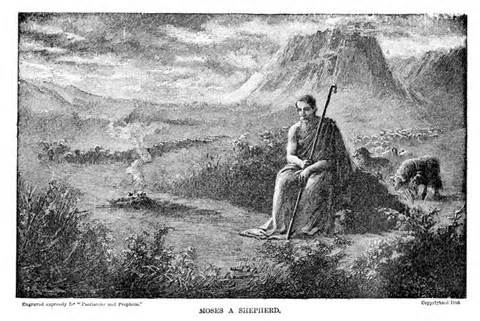
We focus on the moments Moses had at the burning bush or walking through the Red Sea, and that’s what we want, too. r643167_4468740But we forget that Moses’ life wasn’t like that every day. We forget about the eighty years he spent wandering around the desert, half in the day to day monotony of shepherding on the back side of Midian, the other half, wandering around the wilderness with the people of Israel.

Eighty years of nothing special. Day after day of ordinary. Week after week of God not “showing up” and doing something amazing. Eighty years. That’s a lifetime for most of us.

Was God any less at work in Moses’ eighty years of desert thwandering than He was when He gave Moses the Law or spoke to him face to face or sent manna? Of course not. During those days, God was protecting Moses from the heat and wild animals, providing food and shelter for him, blessing him with a wife and children, directing his steps, teaching him obedience and trust.

Just like He does for us.

Have you read a Bible passage this week that allowed you to see more of God’s glory? God is doing something. He’s revealing Himself to you.

Are you praying for someone’s salvation? God is doing something. He’s working on the heart of that person.

Did you have a place to sleep last night and food on your table today? God is doing something. He’s providing for your needs.

Do you leave church on Sundays having been fed the truth of God’s word by your pastor? God is doing something. He’s growing you to spiritual maturity.

Is it possible that we’re expecting God to do something in our lives that isn’t in His particular plan for us? You aren’t Moses, and neither am I. Neither were the million or so other Israelites Moses led out of Egypt, and neither have the billions of other people been who have inhabited earth since Creation. Moses was Moses. You are you. God doesn’t have the same plan for your life He had for Moses’ life.

And, by the way, have you ever noticed that most of the people in the Bible through whom God did something “big” were not expecting it or asking for it? Moses wasn’t expecting God to show up in that burning bush. David wasn’t asking God to do great things in his life when Samuel dropped by to anoint him as the next king. Both of them were hanging out with the sheep when God called them. Paul thought he was already an awesome servant of God when he got knocked off his high horse. Mary wasn’t expecting to be expecting. She was just a teenage girl growing up and learning how to run a household.

1 Thessalonians 4:10b-12 says:

But we urge you, brothers to do this more and more, and to aspire to live quietly, and to mind your own affairs, and to work with your hands, as we instructed you, so that you may walk properly before outsiders and be dependent on no one.

That’s what all of those Bible characters were doing when God chose them. Just regular people living regular lives doing regular work. Just like billions of other people through whom God has not chosen to do anything big and spectacular.

keep-calm-god-is-at-workBut that doesn’t mean God hasn’t been “doing something” in all of our lives. In fact, the vast majority of the work God does in our lives every single day goes unnoticed and unappreciated.

So, instead of setting our expectations on those very rare “wow factor” works of God that seem so appealing, maybe we should be asking Him to open our eyes to, and make us thankful for, all of the things He’s already doing in our lives. Instead of having great expectations of things that God has never promised us, maybe we should ask Him for, and expect Him to, do what He has promised:

Forgiveness for our sin

Christ-likeness

Provision for our needs

Endurance

The ability and opportunity to help others

Faithfulness

Humility

Patience

The opportunity to share the gospel

Because “all the promises of God find their Yes in him.” You can expect it.

Wednesday's Word

Wednesday’s Word ~ Numbers 25

num 25 3


Numbers 25

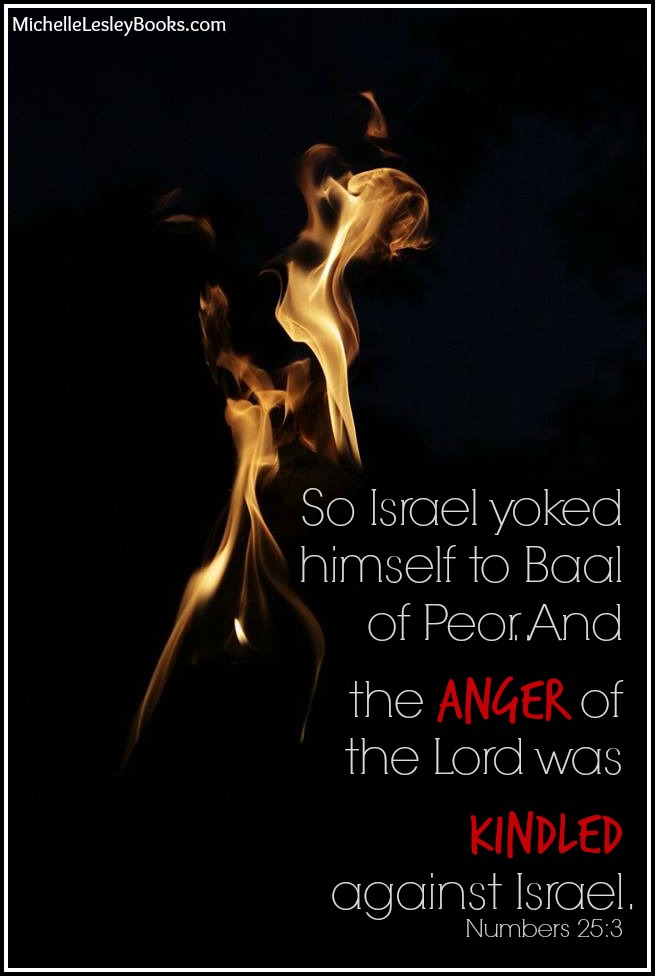
While Israel lived in Shittim, the people began to whore with the daughters of Moab. These invited the people to the sacrifices of their gods, and the people ate and bowed down to their gods. So Israel yoked himself to Baal of Peor. And the anger of the Lord was kindled against Israel. And the Lord said to Moses, “Take all the chiefs of the people and hang them in the sun before the Lord, that the fierce anger of the Lord may turn away from Israel.” And Moses said to the judges of Israel, “Each of you kill those of his men who have yoked themselves to Baal of Peor.”

And behold, one of the people of Israel came and brought a Midianite woman to his family, in the sight of Moses and in the sight of the whole congregation of the people of Israel, while they were weeping in the entrance of the tent of meeting. When Phinehas the son of Eleazar, son of Aaron the priest, saw it, he rose and left the congregation and took a spear in his hand and went after the man of Israel into the chamber and pierced both of them, the man of Israel and the woman through her belly. Thus the plague on the people of Israel was stopped. Nevertheless, those who died by the plague were twenty-four thousand.

10 And the Lord said to Moses, 11 “Phinehas the son of Eleazar, son of Aaron the priest, has turned back my wrath from the people of Israel, in that he was jealous with my jealousy among them, so that I did not consume the people of Israel in my jealousy. 12 Therefore say, ‘Behold, I give to him my covenant of peace, 13 and it shall be to him and to his descendants after him the covenant of a perpetual priesthood, because he was jealous for his God and made atonement for the people of Israel.’”

14 The name of the slain man of Israel, who was killed with the Midianite woman, was Zimri the son of Salu, chief of a father’s house belonging to the Simeonites. 15 And the name of the Midianite woman who was killed was Cozbi the daughter of Zur, who was the tribal head of a father’s house in Midian.

16 And the Lord spoke to Moses, saying, 17 “Harass the Midianites and strike them down, 18 for they have harassed you with their wiles, with which they beguiled you in the matter of Peor, and in the matter of Cozbi, the daughter of the chief of Midian, their sister, who was killed on the day of the plague on account of Peor.”


The Holy Bible, English Standard Version Copyright © 2001 by Crossway Bibles, a division of Good News Publishers.


Questions to Consider:

1. What verse 1 mean when it says, “the people began to whore with the daughters of Moab”?

2. Why was God angry with Israel (v.3)?

3. How does 2 Corinthians 6:14-18 relate to Numbers 25:1-5?

4. Why does God not want His people to fraternize with unbelievers?

5. Is this chapter a descriptive or a prescriptive passage? How can we know that this passsage is not telling us it is all right for Christians to kill idol worshipers today?