Faith, Salvation

Making a U-turn on the Road to Emmaus

That very day two of them were going to a village named Emmaus, about seven miles from Jerusalem, 14 and they were talking with each other about all these things that had happened. 15 While they were talking and discussing together, Jesus himself drew near and went with them. 16 But their eyes were kept from recognizing him. 17 And he said to them, “What is this conversation that you are holding with each other as you walk?” And they stood still, looking sad. 18 Then one of them, named Cleopas, answered him, “Are you the only visitor to Jerusalem who does not know the things that have happened there in these days?” 19 And he said to them, “What things?” And they said to him, “Concerning Jesus of Nazareth, a man who was a prophet mighty in deed and word before God and all the people, 20 and how our chief priests and rulers delivered him up to be condemned to death, and crucified him. 21 But we had hoped that he was the one to redeem Israel. Yes, and besides all this, it is now the third day since these things happened. 22 Moreover, some women of our company amazed us. They were at the tomb early in the morning, 23 and when they did not find his body, they came back saying that they had even seen a vision of angels, who said that he was alive. 24 Some of those who were with us went to the tomb and found it just as the women had said, but him they did not see.” 25 And he said to them, “O foolish ones, and slow of heart to believe all that the prophets have spoken! 26 Was it not necessary that the Christ should suffer these things and enter into his glory?” 27 And beginning with Moses and all the Prophets, he interpreted to them in all the Scriptures the things concerning himself.

28 So they drew near to the village to which they were going. He acted as if he were going farther, 29 but they urged him strongly, saying, “Stay with us, for it is toward evening and the day is now far spent.” So he went in to stay with them. 30 When he was at table with them, he took the bread and blessed and broke it and gave it to them. 31 And their eyes were opened, and they recognized him. And he vanished from their sight. 32 They said to each other, “Did not our hearts burn within us while he talked to us on the road, while he opened to us the Scriptures?” 33 And they rose that same hour and returned to Jerusalem. And they found the eleven and those who were with them gathered together, 34 saying, “The Lord has risen indeed, and has appeared to Simon!” 35 Then they told what had happened on the road, and how he was known to them in the breaking of the bread.
Luke 24:13-35

It had been a long, confusing, emotional couple of days. Eventful? The word could hardly capture all that had taken place. As they made their way from Jerusalem to Emmaus, Cleopas and his friend rehearsed the trials, the scourging, the crucifixion, and the reports of the empty tomb, trying to make sense of it all.

As they made their way from Jerusalem to Emmaus, Cleopas and his friend rehearsed the trials, the scourging, the crucifixion, and the reports of the empty tomb, trying to make sense of it all.

How could this have happened? It just didn’t add up. Everything their beloved Jesus had done, taught, and said fairly screamed, “This is it! This is the Messiah!” Jesus was the one they had been waiting for. The one who would throw off the iron-heeled boot of Roman oppression, take the throne of His father, David, and reestablish Israel as a sovereign nation, restoring her former glory.

But…a crucifixion? His body missing? It didn’t fit the narrative they’d been weaned on. Maybe Jesus wasn’t the Messiah after all. Their hopes for the future, so recently a roaring flame, waned at the cross and dwindled to an ember at the tomb.

Their hopes for the future, so recently a roaring flame, waned at the cross and dwindled to an ember at the tomb.

Try to put yourself in the sandals of Cleopas and his companion. Every day of your life has been lived shivering in the shadow of the evil Roman empire. Unclean Gentiles, pagans, haters of God and His people, who ruled with impunity and maintained pax romana by any means necessary. Crosses laden with the corpses of criminals and insurrectionists lined the road leading into town, lest there be any question as to the fate of those who dared rebel. There was no real right of redress. No true due process. And since Rome ruled the known world, virtually no way of escape.

“Someday,” Jewish boys and girls learned for hundreds of years at their mother’s knee, “Someday God’s promised Messiah will come and deliver us. This will all be over. We’ll be free.”

This was the Christ – the Messiah, or “anointed one” – most of God’s people hoped in. A Christ who would save them from earthly suffering. A Christ who would set things right and make their temporal circumstances better. No thought to their need for atonement. No concerns about eternity. Never mind the Bread of Life, just give us bread.

And Cleopas and his fellow disciple had found him. Maybe they were afraid to believe it at first. Could Jesus really be the one? But as they followed him for days, or months, or years, they began to believe. Finally, He was here. Finally, things would turn around for them. Everything was going great.

Until.

And just like that, in a matter of a few days, all hope was lost.

They stood still, looking sad.

Was it because Jesus had, in reality, failed to fulfill His mission? No. It was because they had poured every drop of their faith into a false Christ. A christ of their own imagination and design. An unbiblical christ who had been passed down to them over the years by false or misinformed teachers.

And, to this day, people are still placing their faith in that same false christ of their own imagination, promulgated by false or misinformed teachers. A christ who will solve all their earthly problems. A christ who will heal their diseases, fix their broken relationships, grant them power, imbue them with influence, and shower them with wealth.

To this day, people are still placing their faith in that same false christ of their own imagination, promulgated by false or misinformed teachers.

Sure, their hope in this christ will burn brightly for a while, but just like that, in a matter of a few moments, hours, or days, that hope can be extinguished forever. A car accident. A house fire. An affair. A child gone prodigal. Wasn’t Christ supposed to make my life better?

But – thanks be to God – that’s not the end of the story. There’s a true Christ. The true Christ of Scripture. The Christ that Jesus showed the two disciples from Moses and the Prophets on the road to Emmaus. The Christ that God reveals to us today in the New Testament. The Christ that all of Scripture points to – not as a life enhancement genie – but as the spotless Lamb of God who came to take away the sin of the world.

This is the Christ in whom we find the hope of sin forgiven. The peace of being made right with God. The joy of knowing He will never leave us nor forsake us.

Are you foolish and slow of heart to believe all that the Bible says about Christ, or does your heart burn within you as the true Christ of Scripture reveals Himself to you in God’s word?

A false christ promises hope, but brings only despair and discouragement when hard times come and his promises go unfulfilled. But all the promises of God find their fulfillment in the Christ of Scripture. He will never fail you nor disappoint you.

A false christ promises hope, but brings only despair when hard times come and his promises go unfulfilled. But all the promises of God find their fulfillment in the Christ of Scripture. He will never fail you nor disappoint you.

The road to Emmaus is a two-way street. Cleopas and his friend started their journey going the wrong direction, but they repented of their unbelief, turned around, and walked the other way. If you’ve been following a false christ, you can repent and trust the true Christ of Scripture today. He’s only a you-turn away.

If you’ve been following a false christ, you can repent and trust the true Christ of Scripture today. He’s only a you-turn away.

Servanthood, Throwback Thursday

Throwback Thursday ~ Homemaking Through Servanthood

Originally published April 22, 2014homemaking-through-servanthood

Usually, when I think of the word “homemaking,” I think of Better Homes and Gardens. You know, having a spotless showplace with the most beautiful designer furniture, a lovely table set with fresh flowers, fine china, and cloth napkins, cuisine containing ingredients you have to special order at a froo froo food market. Oh, and candles. Lots of candles.

Listen, if you’re gifted in making spaces beautiful in that way, my hat is off to you. Way off. You are my heroine. And by the way, can I come over for dinner?

I’m not gifted in that area. My husband and I have five sons and one daughter, four of whom still live at home, two of whom I home school. My goal is to keep noticeable filth to a minimum while still maintaining some semblance of a life. Unexpected visitors who come to my door often hear the Lesley family motto, “Please excuse the mess, but we live here.”

That’s my homemaking.

I’m busy, I’m tired, and the boys keep using the candles as light sabers.

But, it’s a home. Our home.

And, since it’s ours, we all share in making it a home. Every member of our family has a stake in making our home a haven where each of us can relax, take a break from the outside world, and enjoy each other. From the youngest child all the way up to Dad, we each own part of the responsibility for making our house a home.

And the way we’re to do that is by serving each other.

Once upon a time, Jesus set the ultimate homemaking example. During supper one night—the last supper He would share with the disciples—Jesus summarized everything He had been teaching them for the last three years in one final lesson. Did he preach a sermon? Teach a Bible study? Lecture them?

No. He picked up a towel and did a common household chore. He washed their feet.

It was one of the lowliest chores, normally done by one of the lowliest servants. Certainly not one any of the disciples would deign to perform, and definitely beneath the dignity of their sovereign King.

But He did it anyway. He served His brothers.

Because it was something that needed to be done.

Yes, because their feet were dirty, but mainly because it taught them humility, servanthood, and love. I’m laying my life down for you, My friends. Now you lay down your lives for one another.

When he had washed their feet and put on his outer garments and resumed his place, he said to them,“Do you understand what I have done to you? You call me Teacher and Lord, and you are right, for so I am. If I then, your Lord and Teacher, have washed your feet, you also ought to wash one another’s feet. For I have given you an example, that you also should do just as I have done to you.
John 13:12-15

I have given you an example, that you also should do just as I have done to you. As Jesus put His dignity, His rights, and His own self interests aside, so, we lay these things aside in service to one another. And it starts with our families.

In our family, it’s the simple things: my husband putting gas in the car so I don’t have to, my putting his clean clothes away, my son getting a drink for his sister, my daughter picking up trash that she didn’t put down.

We follow Jesus’ example of washing another’s feet when we die to self, pick up a towel and serve our family members. Yes, because things need to be done, but mainly because it teaches all of us humility, servanthood, and love.

Candles or no candles, that’s how you make a home.


THIS ARTICLE WAS ORIGINALLY PUBLISHED AT SATISFACTION THROUGH CHRIST.
Church

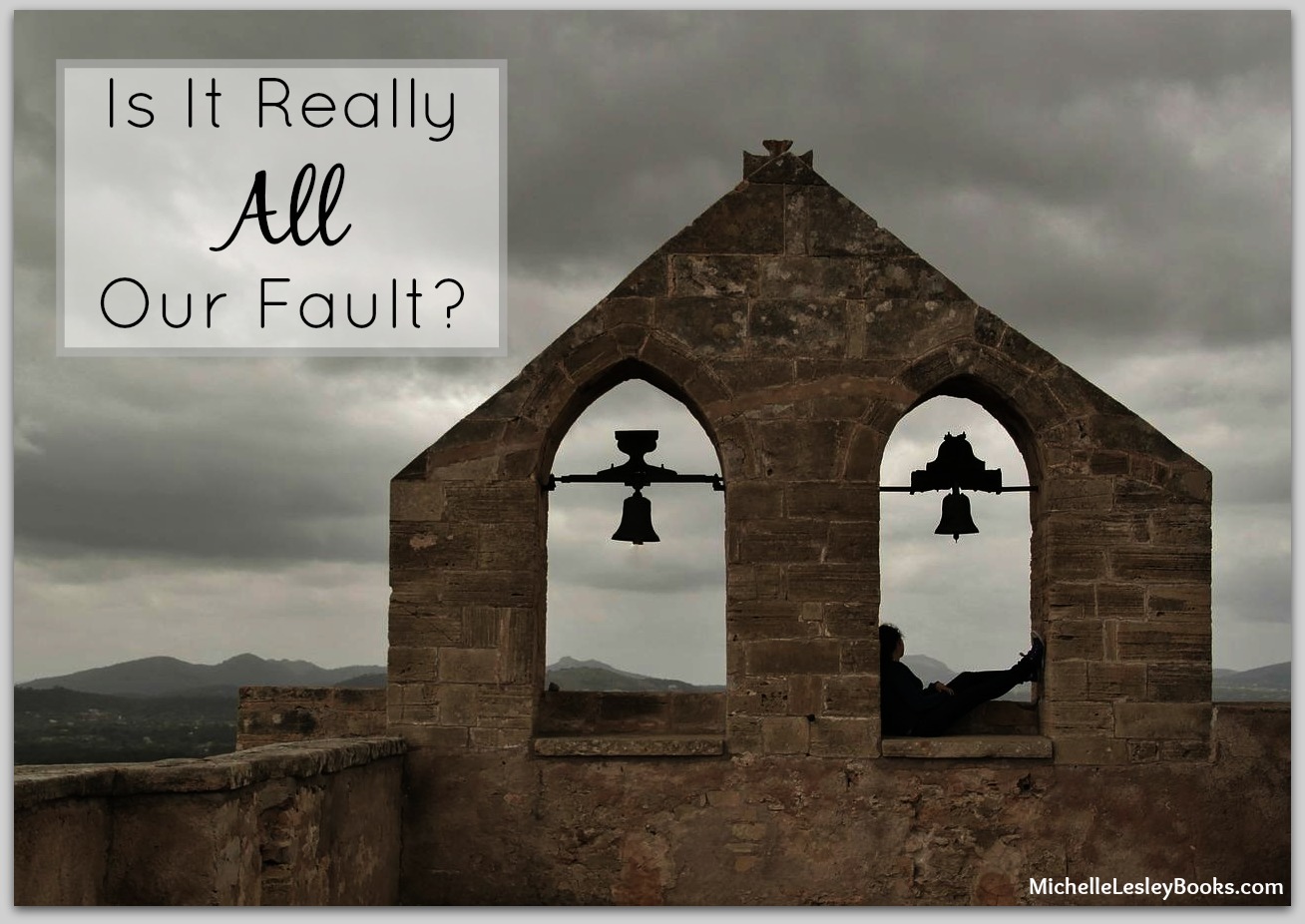
Is It Really All Our Fault?

all our fault

“If the church would just _________,
the world would flock to us.”

“The world is in the state it’s in because
the church has fallen down on the job.”

Over the past few years, I’ve been hearing and reading statements like these more and more frequently. But are they true? Is the world really in such sad shape as a result of the failings of the church?

Yes!…and…no.

It is absolutely true that the visible church – everything that wears the label “church” or “Christian,” whether or not it’s biblical Christianity – has a lot to be ashamed of. Westboro. TBN. Homosexual church leaders and members. Pastors caught in adultery. Child molestation scandals. Female “pastors.” All manner of demonic behavior masquerading as “worship,” blasphemously attributed to the “Holy Spirit.”

Even churches with an orthodox statement of faith – which, to onlookers, seem to be doing fine, biblically – water down the gospel in the name of being seeker sensitive, use materials produced by false teachers, invite false teachers to speak at their conferences, fail to evangelize, place women in unbiblical positions of leadership, have pastors and teachers whose main form of teaching is eisegesis and pandering to felt needs, fail to provide for the needs of their members and their surrounding community, focus on fun and silliness in their youth and children’s ministries instead of Scripture and holiness, allow members to gossip, backbite, and exercise selfishness, fail to practice church discipline, make their worship services into irreverent entertainment-fests, have “pastors” who are little more than stand up comedians, and have largely biblically ignorant congregations.

Some churches are spiritually healthier than others, but nobody’s getting out of this one with clean hands. Even the healthiest church is doing something wrong in some little nook or cranny. And as Christ’s bride, it is incumbent upon us, whenever we discover those nooks and crannies, to repent, set things right, and do things biblically as we move forward.

Christ loved the church and gave himself up for her, that he might sanctify her, having cleansed her by the washing of water with the word, so that he might present the church to himself in splendor, without spot or wrinkle or any such thing, that she might be holy and without blemish. Ephesians 5:25b-27

That’s Christ’s vision of the church. A vision all churches fall woefully short of. And when the church fails in any area, it does contribute to the downhill slide of the world, because it is not being the city on the hill Christ wants it to be, and it is producing individual Christians (or false converts) who aren’t being the salt and light Christ wants them to be.

But is it fair to lay all the world’s woes and sinfulness at the doorstep of the church? Is it really true that if we would just clean up our act in this area or on that issue that we’d magically see an influx of pagans begging, “Sirs, what must I do to be saved?”

No, it isn’t.

The world isn’t steeped in sin because of the failings of the church. The world is steeped in sin because of the Fall.

Look back over history. The world was vicious and depraved long before the church ever came on the scene. And, for that matter, long before God set apart and established Israel as His chosen people. (Hello? The ante-diluvian world? Sodom and Gomorrah? Ancient Egypt? Baal and Molech worship?)

Examine any era in the last two millenia when you think the church was doing a better job than it is now and take a look at the society that church was situated in. The New Testament church? It was surrounded by a world of war, oppression, torture, debauchery, sexual deviance, slavery, misogyny, poverty, famine, and child abuse.

The head of the church, Jesus Christ, spent over thirty years physically present on this earth. We know He conducted His ministry perfectly. Not once did He fail to preach the gospel or provide for people’s needs or fall short in any other way. He even went so far as to lay His life down for the sin of the world. And what impact did that have on His immediate society? Did all the Pharisees repent and temple worship was restored to godliness? No. Did Rome stop ruling the world with an iron fist? No. Did acts of sedition and perversion and persecution suddenly disappear? No. In fact, some of those things actually got worse during and after Jesus’ time.

Just like He prophesied.

You see, Jesus didn’t say, “Be more like Me and the world will come running,” or “The church can solve the ills of the world.” He said:

If you were of the world, the world would love you as its own; but because you are not of the world, but I chose you out of the world, therefore the world hates you. John 15:19

Indeed, all who desire to live a godly life in Christ Jesus will be persecuted, while evil people and impostors will go on from bad to worse, deceiving and being deceived. 2 Timothy 3:12-13

The more the church and individual Christians look and act like Christ, the more world will hate, persecute, and ostracize us.

The church is not going to fix all the evils of society. And it’s not fair to lay that burden of responsibility – one that even Jesus’ earthly ministry didn’t accomplish – on believers who genuinely love their Savior and want to serve Him. Holding out the stick and carrot of a utopian world to the church – if only we’ll get our act together – does nothing but breed hopelessness, despair, and futility in the pews.

Does the church have a lot of repenting to do? Yes. Are there right hands we need to chop off and right eyes we need to gouge out in order to facilitate obedience to Christ? You bet. Should we be exponentially more proactive and passionate about preaching the gospel and meeting the needs of a lost and dying world? Absolutely.

But we do not do those things because we’re failing the world. We do those things out of love for and faithfulness to Christ. Christ is our goal, not a changed world. Christ is the prize we’re to fix our eyes on, not a society that behaves itself. Christ is the finish line we press toward, not domestic tranquility and morality.

Christ.

Because if it’s the church’s job to set the world right, we’re doomed. The world sins because the world is made up of sinners. And the world will continue to sin – even if every church on the planet suddenly becomes perfect – because the world is made up of sinners. But if the church’s highest attainment is love for Christ, faithfulness to Christ, and obedience to Christ, then we are successful in God’s eyes regardless of what the world around us looks like.

Let’s be faithful and trust God to handle changing the world.

Forgiveness, Throwback Thursday

Taking Offense

Good sense makes one slow to anger, and it is his glory to overlook an offense. Proverbs 19:11

Have you ever noticed how easily people get offended these days? We have to watch what we say, wear, and display. We have to be careful about how (or if) we express our political and religious views. A mere, “you look nice today” can be the beginning of a lawsuit.

Even as Christians, it’s easy to get sucked in to wearing our feelings on our sleeves and taking offense to everything that rubs us the wrong way. Certainly, there are important, biblical issues that we need to take a firm stand on in society, in the church, and at home, but for those of us who follow Christ, most personal offenses do not require a confrontation. Most personal offenses demand that we extend grace and love to the offender.

That’s a bitter pill for the flesh to swallow if you’re anything like me. My flesh wants revenge. My flesh wants justice and retribution to immediately prevail. My flesh wants that person to grovelingly admit he or she was wrong and beg for forgiveness. And I know it’s my carnal nature that wants those things because both Jesus’ teachings and His life stand in direct opposition to such desires:

The Pharisees insinuated that Jesus was of illegitimate birth and that his mother was promiscuous.  They called Him a Samaritan – a racial epithet which, in that time, would have been on par with calling someone the “n-word” during the Civil Rights movement. And they called him demon-possessed – which called his mental health and intelligence into question. And all of these insults carried with them the overriding weightiness of calling Him unclean; someone under God’s judgment who deserved to be an outcast.

What did Jesus do? He didn’t retaliate. He used the offensive remarks to keep on trying to reach the hearts of the Pharisees – the offenders – with the gospel.

Jesus taught us to…

…love our enemies

…do good to those who hate us

…bless those who curse us

…pray for people who abuse us

…turn the other cheek

…give to those who want to take from us

…treat others the way we want to be treated.

Even on the cross, after being falsely accused, verbally abused, wrongly arrested, hauled in front of a kangaroo court, and illegally put to death, Jesus’ words for His foes were not pronouncements of judgment and wrath, but, “Father, forgive them, for they know not what they do.”

That’s a pretty tough act to follow. But then, the calling of Christ is not a calling to “be carried to the skies on flowery beds of ease” but a calling to deny ourselves, take up our crosses daily, and give up our lives for Him. That precious calling may not end up with you being crucified for your faith, but surely it can start by ignoring that tiny arrow whizzing past your head as you love the person aiming the bow at you.

Take the offense. Overlook it. Extend grace. Forgive. Bless. Walk in the way of your Master.


What are some good ways to extend grace
when someone offends you?

Sanctification, Throwback Thursday

Throwback Thursday ~ Jesus Wants You to Be a Hater

Originally published February 26, 2015

hater

Hater. It’s a word that gets tossed around a lot these days. If you disagree with someone, you’re a hater. If you believe the Bible when it says something is a sin, you’re a hater. If you vote pro-life or pro-marriage, you’re a hater. Gone are the days when a Christian could stand on her convictions without being accused of hating everyone else who does not hold those same convictions.

In fact, when you first read the title of this article, I’m betting that’s what you thought I was saying Jesus wants us to do: hate everyone who doesn’t agree with us.

And I hate that.

I hate the fact that Satan has sold the world the lie that those of us who love Christ with all our hearts hate the sinners He died for.

Did you know that the Bible actually tells us to hate certain things? Not people who disagree with us or people enslaved by sin- that’s the world’s definition of being a hater. Luke 6:27-28 tells us:

But I say to you who hear, Love your enemies, do good to those who hate you, bless those who curse you, pray for those who abuse you.

We are not to hate, but to love, do good to, bless, and pray for those who, because they are at enmity with Christ, are at enmity with us.

But as Christians, the Bible tells us there are certain things it is good and holy for us to hate. If we don’t hate them, we’re being disobedient to our Lord.

We are to hate evil:

The fear of the Lord is hatred of evil. Pride and arrogance and the way of evil and perverted speech I hate. Proverbs 8:13

We hate evil, pride, arrogance, and perverted speech because God is good and holy. Evil stands in rebellion against God’s person and in opposition to God’s purposes. Pride and arrogance exalt self over God, who alone is to have preeminence in all things. Dishonest, wicked speech can damage God’s beloved children and lead them away from Him.

We are to hate opposition to God’s word:

Therefore I consider all your precepts to be right; I hate every false way. Psalm 119:128

When we love the Lord and His ways, we will necessarily come to hate false ways and false doctrine which defy His word and lead us, and others, away from Him.

We are to hate our own sin:

For we know that the law is spiritual, but I am of the flesh, sold under sin. For I do not understand my own actions. For I do not do what I want, but I do the very thing I hate. Romans 7:14-15

While it is good to hate evil in the world, we must also hate the evil that lurks within us in the form of sin. Those who have been born again loathe their sin and continually and sorrowfully turn from it, flinging themselves upon the mercy of Christ for forgiveness.

We are to “hate” all things in comparison to our love for Christ:

If anyone comes to me and does not hate his own father and mother and wife and children and brothers and sisters, yes, and even his own life, he cannot be my disciple. Luke 14:26

Our devotion to Christ must run so deep that we are gladly willing to sacrifice any relationship -even with our closest family members- any worldly goods, even our lives, if required to by our Lord in His word. Our love for Him should so far surpass our affections for all others that any other love relationship seems like hate in comparison.

There is a time to love, and a time to hate. When we love Christ, we will hate what is evil and cling to what is good. The hatred of the things the Lord calls us to hate is evidence that we love Him and are having our hearts and minds conformed to His.

If you’re a Christian, by God’s definition, you’re a hater. And that’s not a bad thing.


THIS ARTICLE WAS ORIGINALLY PUBLISHED AT SATISFACTION THROUGH CHRIST.