
A re-blog in honor of Good Friday…


I will redeem you with an outstretched arm and great acts of judgment.
I will take you as My people, and I will be your God.
You will know that I am Yahweh your God, who delivered you..
Exodus 6:6b-7a

A re-blog in honor of Good Friday…
I will redeem you with an outstretched arm and great acts of judgment.
I will take you as My people, and I will be your God.
You will know that I am Yahweh your God, who delivered you..
Exodus 6:6b-7a
A re-blog in honor of Good Friday…
 Never forget.
We will remember.
The words jump off the page, off the screen, from our lips. A haunting breath whispering of unspeakable tragedy and heart rending grief.
The terrorist attacks of September 11, 2001 did something to this country. It changed our history. It changed us.
It was a despicable act of cruelty. People innocent of any crime against their executioners were brutally slaughtered in service to a god who demands the death of infidels.
It was egregious. Horrific. Abominable. And we will never forget. Nor should we.
Do this in remembrance of Me.
The words lie quietly on the page, beckoning us back to another day. A day dusty with the passing of centuries. But it changed our history. It changed us.
It was a despicable act of cruelty. Jesus, innocent of any crime, was brutally slaughtered by executioners serving a God who demands the death of infidels.
View original post 87 more words
Ladies, do you believe in woman’s intuition? Do you have it? I’m not talking about premonitions– having a feeling that some future event is going to take place- I mean intuition. Being able, for example, to sense from a friend’s tone of voice that she’s having a bad day, noticing from the body language of two people who are “just friends” that romance is brewing beneath the surface, or discerning the tension between two people who are seemingly cordial to one another.

Maybe men have this “super power” too, but I’ve noticed it more with women. I believe it might have something to do with the way God has hard wired us. Nothing against men here (y’all are awesome in your own masculine way), but we women generally tend to be more sensitive to and concerned about other people’s feelings, we listen “between the lines,” and we hear and analyze tone of voice more. It’s one of the great things about the way God has created us that helps us as we nurture, comfort, and care for others.
But lately, I’m noticing that this “super power” of ours can also be a super problem.
Our sensitivity to tone (of voice, of writing, someone’s demeanor, etc.) is a hindrance rather than a help to us when we refuse to evaluate the content of what someone is saying to us simply because his manner of speaking, writing, or behavior has offended our sensibilities. This is especially harmful when that content is biblical truth.
Our sensitivity to tone is a hindrance rather than a help to us when we refuse to evaluate the *content* of what someone is saying simply because his manner of speaking, writing, or behavior has offended our sensibilities.
Tweet
I have recently observed several instances of this, all involving women who, at best, found it difficult (with some outright refusing) to put aside their feelings of offense at the writer’s or speaker’s tone in order to compare the content of his speech or writing to Scripture to see if it might be true. (And, by the way, the speech and writing I’m referring to here are sermons, commentary, and articles, not someone writing or speaking to these women personally.) I can sympathize. It’s happened to me plenty of times.
Often, when we hear a fellow Christian put biblical truth bluntly in black and white and it rubs us the wrong way, our first reaction is to quote part of Ephesians 4:15 and chastise him for failing to “speak the truth in love.” But is that the only point of Ephesians 4? Let’s take a look at it in context:
And he gave the apostles, the prophets, the evangelists, the shepherds and teachers, to equip the saints for the work of ministry, for building up the body of Christ, until we all attain to the unity of the faith and of the knowledge of the Son of God, to mature manhood, to the measure of the stature of the fullness of Christ, so that we may no longer be children, tossed to and fro by the waves and carried about by every wind of doctrine, by human cunning, by craftiness in deceitful schemes. Rather, speaking the truth in love, we are to grow up in every way into him who is the head, into Christ, from whom the whole body, joined and held together by every joint with which it is equipped, when each part is working properly, makes the body grow so that it builds itself up in love.
Ephesians 4:11-16 (emphasis mine)
When I was in elementary school, one of the reading comprehension tasks we were often assigned was to find the “main idea” of a piece of writing. So, what is the “main idea” of this passage in Ephesians 4? I’ll even make it multiple choice (my favorite!).
Is the main idea of the passage:
a) Teachers and preachers should speak the truth in love so that they will not offend anyone.
b) A discussion of the different types of leadership roles in the church.
c) Christian leaders are to equip church members to grow to spiritual maturity which builds spiritually healthy and unified churches.
While the passage touches on some of the ideas in a and b, the main point is c. We’re to grow up. We are to listen to preachers, teachers, and writers who rightly handle God’s word, even if we come across one every now and then who steps on our toes with his demeanor or tone.
And it’s important to remember that just because our feelings are hurt doesn’t necessarily mean the other person sinned or did anything wrong. Sometimes you and I take things the wrong way because we’re not listening, we’re not understanding, or because we’re incorrectly reading our own hurts and past experiences into what the other person is saying. And none of that is her fault.
Sometimes the reason we’re offended is because the other person is speaking or writing simply and directly without wrapping her words in fourteen pillows of feelings-coddling. (Believe it or not, this is the way people used to speak all the time before feelings became such an idol in our culture. You could just say things without all the caveats.) We’ve grown so used to everyone walking on egg shells and tiptoeing around everyone’s feelings when we write and speak, lest anyone be “triggered,” that when someone simply says what she has to say without beating around the bush, we take offense that she hasn’t bent over backwards in her wording to make sure our feelings haven’t been hurt. And that’s not her fault, either.
And finally, sometimes we think -or claim– our feelings have been hurt by the other person’s tone, when, really what’s happening is that the Holy Spirit is convicting us, or we know she’s right in what she’s saying but we’re too proud to admit it. And those things aren’t her fault, either.
Just because someone says something and you get offended doesn’t automatically mean she’s at fault. Sometimes the fault is yours.

Just because someone says something and you get offended doesn’t automatically mean she’s at fault. Sometimes the fault is yours.
Tweet
Look, I know it’s hard. There are people out there who offend me sometimes, too, but persevering through the offense will grow us into mature women of Christ and make our churches healthier.
Statistically speaking, more women regularly attend church these days than men. And when I say “more,” I mean 61% women to 39% men. Can you imagine the impact it would have on the health of our churches if all of those women were pursuing spiritual maturity through biblical truth and sound doctrine?
Instead, we are often like a little girl in a burning building. The fireman is vehemently insisting that the little girl come with him to escape, and she refuses to move because he hasn’t said it nicely enough.
We are often like a little girl in a burning building. The fireman is vehemently insisting that the little girl come with him to escape, and she refuses to move because he hasn’t said it nicely enough.
Tweet
Ladies, I say this to all of us (including me) in love, because true love is desiring what’s best for someone:
It’s time for us to grow up. It’s time to stop taking our dollies and stomping home from the playground in a huff every time somebody speaks or writes strenuously. It’s time to stop crying about our hurt feelings, put on our big girl panties and be women.
It’s time to stop taking our dollies and stomping home from the playground in a huff every time somebody speaks or writes strenuously. It’s time to stop crying about our hurt feelings, put on our big girl panties and be *women*.
Tweet
Discerning women. Berean women. Women of God’s word. Women who can handle having our feathers ruffled and come out on the other side stronger for it.

Too often, we make the mistake of equating a soft tone of voice and a sweet disposition with “love”. But many of the people who speak with this kind of “love” are not speaking the truth. They are smooth talking, charismatic con men selling snake oil for our souls.
Too often, we make the mistake of equating a soft tone of voice and a sweet disposition with “love”. But many of the people who speak with this kind of “love” are not speaking the truth.
Tweet
If we’re not careful, we can become people who “will not endure sound teaching, but having itching ears they will accumulate for themselves teachers to suit their own passions, and will turn away from listening to the truth and wander off into myths” (2 Timothy 4:3-4), or “weak women, burdened with sins and led astray by various passions, always learning and never able to arrive at a knowledge of the truth” (2 Timothy 3:6b-7), or even “children unwilling to hear the instruction of the Lord; who say…“Do not prophesy to us what is right; speak to us smooth things, prophesy illusions,” (Isaiah 30:9-11).
We forget that our Master, the perfect embodiment of love, didn’t always speak softly and act politely when the gospel was at stake. Because there are things out there that are much more important than our feelings, and biblical truth is one of them.
There are things out there that are much more important than our feelings, and biblical truth is one of them.
Tweet

These are my notes from my ladies’ Sunday School class this morning. I’ll be posting the notes from my class here each week. Click here for last week’s lesson.
Through the Bible in 2014 ~ Week 14 ~ Apr. 6-12
Judges 19 – 1 Samuel 17
The King and I(srael)
Up until now, Israel has been under the leadership of Moses, Joshua, and a string of judges, including current prophet/judge, Samuel. But some of the elders have decided it’s time for a king. Why? Let’s take a look.
1 Samuel 8; 10:17-24
Why did Israel demand a king?
The cycle of the judges:
Israel was in a cycle in which: they would have a judge for several years and everything would go smoothly for them. 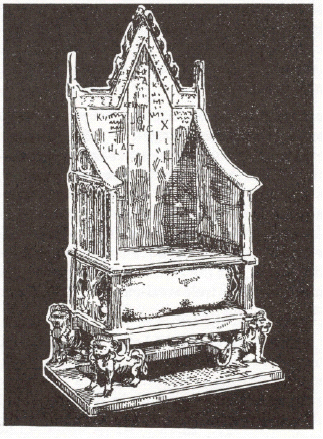 God would give them victory in battle (or peace), their harvests would be bountiful, etc. Then, the judge would die, Israel would get into idolatry again, things would go badly for several years, they would cry out to the Lord, the Lord would raise up another judge, and the cycle would start all over again.
Israel likely thought it was the lack of succession from one judge to another that was the cause of all the turmoil, and that if they had a kingship (with built in succession) the chaotic years would cease, and things would go smoothly from there on out. What they failed to realize was that it was their obedience to God that brought peace during the lives of the judges, not a seamless changing of the guard.
The appearance of strength:
Another reason Israel may have wanted a king was that it gave the appearance of strength to other nations. Without a king, neighboring nations probably viewed Israel as weak and vulnerable, leading to more attacks. Of course, this would lead Israel to depend more on the Lord, and that’s exactly what He wanted.
“Everybody else is doing it”:
Finally (8:5), they wanted a king “like all the nations.” Whether this was because they admired the other nations’ structure of government, economy, large armies, etc., or, because Israel wanted to look more prestigious (or stronger- see above) in the eyes of other nations, they were blind to the fact that they would have had things so much better under God’s Kingship.
Why didn’t God want Israel to have a king?
God was already their king.
Israel didn’t need a human king. God was far more capable than any human king of winning battles, providing for them, ensuring a good economy, establishing and enforcing law and order, etc.
God wanted Israel to look to Him for everything.
We tend to look to the President and Congress for 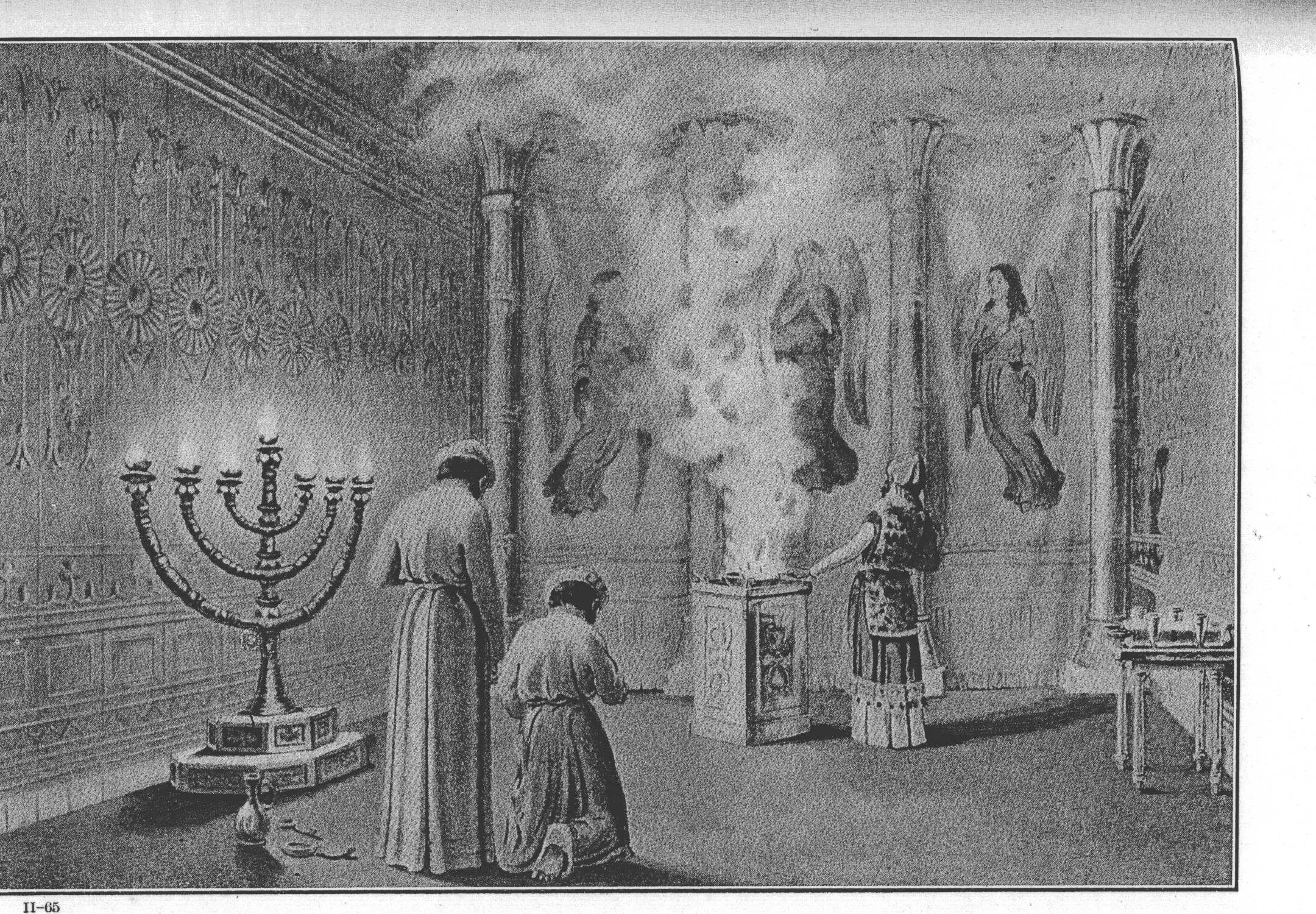 governance, the grocery store for food, our jobs for paychecks, our doctors for healthcare. God wanted Israel to look to Him for every aspect of their lives: government, provision, health, food, everything. Because He is sovereign over all that happens on earth and in heaven, He wants us to recognize that we should be looking to Him for these things as well. He wants us to realize that we are completely dependent on Him.
Israel’s desire for a king was another rejection of God, which brought Israel ever closer to severe judgment. (Isaiah 28:21, Ezekiel 18:23,32, 2 Peter 3:9)
Even though Israel deserved judgment for her many rebellions against God, judgment is a last, undesirable resort for Him. Isaiah tells us that judgment is God’s “strange work”. Ezekiel reminds us that God takes no pleasure in the death of the wicked. Peter writes that God is not willing that any should perish but that all should come to repentance.
Small rebellions can lead to bigger rebellions. A loving parent knows this and tries to keep this from happening by disciplining his child. With a small rebellion, we might start out with a small discipline, such as taking away dessert. As the rebellions get bigger or more frequent, bigger discipline,  such as spanking or grounding might be appropriate.
Most children learn to control their behavior through these moderate forms of discipline, but a few may eventually become so destructive, addicted, or abusive that parents have to go to the extreme end of “tough love” by throwing them out of the house or turning them over to the authorities. It’s all done in love and all in an effort to bring the child home. This is exactly what was happening with the Israelites.
This is why God did everything necessary to keep Israel from His severe judgment. He carefully and specifically laid out the Law, promised them blessings for obedience and described the consequences for disobedience in gory detail, made examples out of people who disobeyed, offered forgiveness for repentance, gave them (initially) good and godly leaders (Moses, Joshua, the judges), and performed miracles to help them believe in Him. All this in an effort to stop their slide into total rejection of Him and the consequence of final judgment.
One last chance (8:10-18)
Israel could never say she hadn’t been warned. In these verses God told them directly and specifically exactly what their new king would be like, how he would treat them, and the consequences that would follow: confiscation of private property, slavery, God turning a deaf ear to their pleas for help. But still they demanded a king. This king God had just described. They were at the point of no return, and they plunged ahead despite the warning. Why?
Hearts of Stone (Ezekiel 11:19, Romans 1:22-25)
Just as a small rebellion can lead to bigger and bigger rebellions, a small hardening of the heart can eventually lead to a complete hardening of the heart.
In the movie Frozen, Elsa (the snow queen), accidentally  shoots an icicle ray (or whatever you call it) at her sister’s (Anna) heart, which causes Anna’s heart to slowly begin freezing bit by bit. If Anna doesn’t receive “an act of true love” before her heart completely freezes, she will turn into an ice statue forever.
This is similar to what was happening with Israel. Their continual rebellion was hardening their hearts against God bit by bit, until they would eventually be completely hardened against Him. Romans tells us that when people persist in ungodliness despite the many opportunities for mercy, grace, and salvation God has offered them, He eventually “gives them over” to a hardened heart. He gives them what they want: life without Him.
What does all this have to do with me? (Isaiah 55:9)
Everything. We are just like Israel in so many ways. We’re born into this world having already been shot through the heart with Satan’s “icicle” of sin, the sin nature we inherited from Adam and Eve. We spend our lives rebelling against God, our hearts slowly hardening, bit by bit, looking for another king (usually ourselves), so we can be just like everybody else, because what the world has to offer looks desirable to us.
But God doesn’t want us to have another king, because He’s already THE King, and He’s far better and more capable than any other king we could put on the throne of our lives. He wants us to look to Him for salvation, provision, comfort, strength, everything. So, God extends grace and mercy to us in a variety of ways, some pleasant, some not, to turn us towards the cross and Christ for salvation. He does this so that we can repent and turn to Him instead of facing the final judgment of hell in eternity.
Sometimes, we also see a similarity to Israel’s demand for a king in our prayer lives. We can ask, beg, and plead with God for things He doesn’t want us to have, and even get mad at Him when He doesn’t give us what we want. We must always keep in mind that His ways are higher than our ways and that what He wants for us is always better than what we want. Let us never get to the point in our prayer lives where our will is more important to us than God’s will. Israel’s way was, “No! But there shall be a king over us!” Jesus’ way was, “Nevertheless, not my will, but yours, be done.” Let’s take our example, not from Israel, but from the the King of Israel, King Jesus.

I’ve been married to a minister of music for over 20 years. My husband has served at many different churches in a variety of capacities: on staff, interim, supply, revivals, conferences, retreats, etc. Over those 20+ years and in those various capacities, I’ve observed a number of things about him, pastors, church musicians, and congregations from a unique vantage point.
Now, with a little help and a lot of input from a few sister minister of music’s wives, it’s true confessions time. Time for us to tell all, here in Part 2 of Real Ministers of Music’s Wives of Anychurch, U.S.A.
Turn Your Radio On, and Listen to the Music in The Air
The minister of music understands that there are songs we love to sing along with on KLOVE or Pandora that we’d also like to sing in church, and, in a lot of cases, he’d probably like to, too. There are a variety of reasons why the songs we like might not get sung in church:
 The lyrics contain faulty or watered down theology. The minister of music’s job is to lead us in worship. We can’t worship if we’re singing something that conflicts with God’s word or doesn’t focus on Him and His nature, character, and deeds.
 Play Us a Song, You’re the Piano Woman
Just by way of information, not every minister of music’s wife plays the piano. I’m one of them. Sorry. I wish I could.
One Singular Sensation
 Regardless of how many pop stars got their start by singing in church, the purpose of the worship service is to worship God. There are many wonderful and talented soloists who, in humility and faithfulness, pour their hearts out to God in song at their local churches and do a great job of it. There are also a few divas on their way up the ladder looking for a stepping stone to greatness. Church isn’t American Idol. Find a karaoke bar.
Show a Little Bit of Love and Kindness
It’s always encouraging for a minister of music to hear that he  did a great job with the choir or that you really worshiped this morning. It’s encouraging when a pastor mounts the platform for his sermon and says thank you, or I really liked that song, or refers back to/quotes one of the songs during his sermon. Little things like that go a long way, so offer your minister of music a word of encouragement when you can.
Also, if your church participates in clergy appreciation month (usually the month of October), please don’t forget your minister of music, youth pastor, associate pastor, etc. They all work hard to shepherd you, and it doesn’t feel good to be left out.
War- What is it Good For?
The worship wars (contemporary worship music vs. traditional hymns) are alive and well. Sometimes, rather than being a general in that war, our minister of music might just be a casualty of it.

Everybody has particular genres of music that we’re most comfortable with. When a different style comes along, it can be jarring. It can cause angst. It can cause arguments. But when we worship God, our focus is not to be on what makes us happy or comfortable. Often, we get so concerned about whether the worship at church pleases or offends us that we don’t stop to think about whether it pleases or offends God.
But that’s the main concern of the minister of music. Which songs, regardless of style, will be pleasing to the Lord and lead people into truth about Him? While he’s trying to do his best to sort this out week by week, he’s possibly being pulled in a variety of directions by a variety of people over style. How many people will leave the church if we sing more hymns than contemporary songs? How many people will stop giving in the offering if we sing more contemporary songs than hymns? Who’s going to accost me after church and complain? How will the pastor and elders react to this week’s order of service? It can be a lot of pressure and take his focus off of where it needs to be: what will be pleasing to God?
Just as one man’s trash is another man’s treasure, the songs we don’t like might just be someone else’s favorite. What if we looked at singing the songs we don’t particularly like as a way to serve and encourage our brothers and sisters in the congregation who do like those songs?
Why’s Everybody Always Pickin’ on Me?
There’s no nice, sweet way to say this, so I’m just gonna throw it out there. Church members can sometimes be mean. 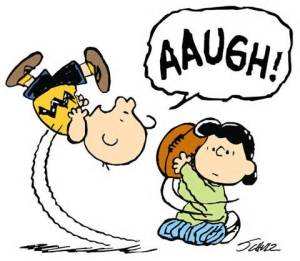 I mean, mean. Let me hasten to add that most of the time, most church members are not. The majority of church members are kind, loving, supportive, and definitely appreciated by the pastor and staff. However, the others are definitely out there. I have seen church members treat pastors, ministers of music, and other church staff the way I wouldn’t treat a dog. There’s no excuse for that.
The minister of music isn’t perfect. There may be times when he does something unbiblical or hurtful and at those times, it’s necessary for the appropriate person to talk with him, under the provisos of Matthew 18, about whatever is wrong. But there are other times when people get their feathers ruffled –even though the minister of music hasn’t done anything wrong or unbiblical—simply because their personal preferences haven’t been catered to.
It’s OK to talk with our ministers of music about things, even personal preferences, but let’s do it in an encouraging and helpful way rather than a griping or attacking way. Screaming, threatening, name calling, constant complaints, and nasty anonymous notes and emails are never appropriate, and if that’s what is transpiring, then the problem is not with the minister of music it’s with the person who’s acting that way. If we know that a member of our church is acting that way towards anyone, pastor, staff, or layperson, we must intervene and be a catalyst for making things right.
God calls us to encourage one another and build each other up, so let’s get at it! Let’s try to affirm our ministers of music (and pastors and other staff!) whenever we’re able!
What’s something you can do
to be an encouragement to your minister of music?
