Christian women, New Testament, Obedience, Sunday School, Women

Miraculous Inceptions: Elizabeth and Mary ~ Sunday School Lesson ~ 10-5-14

inceptions

These are my notes from my ladies’ Sunday School class this morning. I’ll be posting the notes from my class here each week. Click here for last week’s lesson.

Through the Bible in 2014 ~ Week 40 ~ Sep. 28- Oct. 4
Nehemiah 8-13, Psalm 126, Malachi, Luke 1-3, John 1, Matthew 1-3, Mark 1
Miraculous Inceptions: Elizabeth and Mary

Background/Timeline
1. 424 – 6 B.C. The Intertestamental Period- Nehemiah 13 and the book of Malachi record the last historical events and the last prophecy, respectively, of the Old Testament. Over 400 years would pass between those events and and the opening of the New Testament. Although God was still at work in the world and in the lives of His people, Scripture does not record anything from this time period. There was no prophetic word from God during the Intertestamental Period, thus, it is often called the 400 years of silence.

2. 424-334 B.C.- Israel remained a Persian territory for about 100 years after the last recorded events in the Old Testament

3. 334-331 B.C.- Alexander the Great conquers Persia and gains control of all Persian holdings, including Israel. Greek rule is established by 332 B.C.

4. 301-198 B.C.- After the death of Alexander the Great, his generals vie for control. General Ptolemy I Soter sets up the Greek Ptolemaic dynasty in Egypt (later demanding to be made Pharaoh). Ptolemaic rule of Israel begins.

5. 198 B.C.- Another Greek, Antiochus the Great defeats the Ptolemaic dynasties and takes over. He persecutes Israel to the extreme, not allowing them to keep the Sabbath, forcing them to offer unclean sacrifices, and eat unlawful foods.

6. 166-142 B.C.- Mattathias, a Jewish priest, and his five sons lead the 24 year Maccabean (named for Judas Maccabeus, the oldest son and leader) Revolt against Antiochus. The Jews eventually won their independence (though they still retained many Greek ways), and Mattathias set up the Hasmonean dynasty of priests (unbiblical since priests could only come from the family line of Zadok, and his family did not) to govern Israel.

7. 63 B.C.- Rome takes over the known world, including Israel.

8. 37-4 B.C.- Rome sets up Herod the Great as king of Israel. He is still king when Jesus is born.

The stage was set. After four hundred years of silence God was about to speak again, act mightily on behalf of His people again. And it all started with two godly women.

Luke 1:5-24

Elizabeth
It’s helpful to remind ourselves right from the start that, although we know something amazing is about to happen, Elizabeth and Zechariah had no idea. They were just regular people going about their daily lives.

5- Zechariah was a priest, but Elizabeth was also from the priestly tribe. (And what did the priests do? They minister before the Lord; just what John would do.) They were likely respected in their community and what we would consider “upper middle class,” at the least.

6 (John 9:3, Romans 9:10-16)- Both Zechariah and Elizabeth were godly people. “Blameless” doesn’t mean “sinless,” it just means that they loved the Lord, desired to obey Him, and kept His commands and statues the best they could, repenting when they sinned. It’s important this fact was mentioned before Luke went on to say that she was barren. Barrenness was often seen as a punishment from God for sin. Sometimes it was, but that wasn’t the case here. As Jesus would later say as he healed the man born blind, Elizabeth wasn’t being punished for sin, “but this happened so that the works of God might be displayed in” her.

But by the same token, Elizabeth did not earn this honor God was about to bestow on her by living blamelessly. There were probably thousands of other godly Israelite women living at that time. Why Elizabeth and not one of them? That answer is found in the mind of God alone. It is, as Hebrews says, “not because of works but because of him who calls.”

8-13- The angel appears and begins telling Zechariah what’s about to happen. This is an answer to prayer (13) for Zechariah and Elizabeth. Scripture doesn’t say this, I am only speculating, but it would not surprise me if they had stopped praying for a child long ago. Elizabeth was not only barren, both of them were “advanced in years” (7). Maybe they thought God had said “no” when He had really said “not yet.” But now was God’s perfect timing. Can you think of any other Bible characters who conceived when they were old and/or had been barren for years? Several of our Old Testament heroes came into the world this way: Hannah (Samuel), Rebekah (Jacob), Rachel (Joseph), and Mrs. Manoah (Samson) were all barren until God opened their wombs. But Elizabeth’s pregnancy in old age after years of barrenness would probably have reminded her community most of Sarah (Isaac). All of these miraculous Old Testament births after barrenness would certainly have alerted Israel that John would be one to watch.

Also notable is that, while the angel may have appeared and spoken to Zechariah, it was Elizabeth that God would use to bring John into the world. God is God. He could have dropped John out of the sky or grown him out of the ground like a tree. But He didn’t. He chose a woman to work through. It’s just another example of the way God values and uses women as He accomplishes His purposes.

24-25- When amazing things happen to godly people, godly people respond in godly ways. There’s no doubt Elizabeth was overjoyed that her prayer for a child was finally being answered in such a miraculous way and with such a child. But she responded humbly and modestly, staying in seclusion -possibly as an act of gratitude or to ensure a safe pregnancy- for five months. She also responded with thanks and acknowledgement of God’s grace and power in answering her prayer.

Luke 1:25-38

Mary
Mary and Elizabeth were cousins of some degree, but their lives were very different from one another. Mary was young, probably in her teens, while Elizabeth was older. Elizabeth was from a priestly lineage (Aaron). Mary was from a kingly lineage (David). Elizabeth had been married many years. Mary was only engaged. Elizabeth was not a virgin. Mary was. Elizabeth and Zechariah were financially comfortable. Mary’s family was poor. Elizabeth had been praying for a child for years. The last thing Mary would have wanted at that point in her life was a baby.

26-30- There was nothing special about Mary. She was a regular girl from a regular family growing up and about to get married.

“O favored one” literally means “full of grace.” It is an expression used elsewhere in Scripture as a general reference to a Believer. Luke called Elizabeth blameless and righteous and simply called Mary a Believer. Likely this difference was to drive home the point that Elizabeth was not barren due to sin. Also, Elizabeth would probably have been more mature in the faith since she was older and had access to a live-in priest.

As with Elizabeth, we see that God chooses whom He will for His own reasons. Mary was a godly young woman, and God was pleased with this, but she was a sinner just like everyone else. She had not “found favor with God” or earned her position as Jesus’ mother because she was somehow holier than other young women like her. God’s favor rested on Mary because He chose her, not because she earned it.

34-37- Both Mary and Zechariah were confused and questioning when an angel showed up and announced an unplanned pregnancy. So why was Zechariah rebuked while Mary was merely given an explanation? First, Zechariah was a priest, and knew the Scriptures intimately. He knew there was precedent for his situation (Sarah, Rebekah, Rachel, etc.), had even prayed for a child, and should have known that God was capable of doing the same thing in his own family. There was zero precedent for Mary’s situation. She hadn’t prayed for a child, wasn’t married, and a virgin birth was unheard of. Though she undoubtedly knew some of the Scriptures, she certainly wouldn’t have known them as well as a priest. God knows the heart, and He knew that Zechariah’s question was born of doubt, and Mary’s was born of confusion, ignorance, and a desire to understand.

38- Once again, a godly woman responds in a godly way. She didn’t express what was probably a very real fear– that she would be accused of adultery and possibly stoned, or that Joseph would divorce her (which he nearly did). She simply trusted that the God who was about to do this amazing thing was big enough to protect her from whatever might come her way. Whatever God wanted to do with her was fine. She was His servant.

Elizabeth, Mary, and Me (2 Corinthians 12:9)
The God who said “My power is made perfect in weakness,” (2 Cor.) has always delighted to show Himself glorious through weak, sinful, ordinary people from all walks of life like Elizabeth, Mary, and each of us. Though God will probably not do something as major in my life or yours as He did in Elizabeth’s and Mary’s lives, He is still at work in our lives, accomplishing His Kingdom purposes. And that is what is important.

Too many Christians these days wear themselves out running around asking, “What’s my purpose? What’s my purpose?” when what we should really be asking is, “What is God’s purpose for His Kingdom, and how can I be obedient to Him so He can accomplish His purposes through me?” Mary and Elizabeth both considered themselves nothing more than God’s slaves, and humbly submitted to whatever God wanted to do in their lives, whether it would bring joy or hardship. Will we do the same?


Bible, Bible Study, Christian women, Women

You’re Not as Dumb as You Think You Are: Five Reasons to Put Down that Devotional and Pick Up the Actual Bible

Bible Five Reasons

As a women’s Bible study author and teacher, I have the unique privilege of talking to women from all kinds of backgrounds about their spiritual lives. I can’t tell you how many times I’ve had women share with me that they didn’t grow up in church, or they grew up in a church that “didn’t allow” them to read the Bible, and now they have to use a Bible study or devotional book in their quiet time or they’re afraid they won’t be able to understand the Bible. My heart goes out to these ladies because they desperately want to learn from God’s word, but somewhere along the way, someone or something has convinced these perfectly intelligent women–I haven’t met a dumb one, yet– that they’re not good enough or smart enough for God’s word.

As Colonel Potter used to say:

ColPotter MM

Ladies, you are not dumb. God created you smart enough to understand the Bible, and He created the Bible to be understandable. He loves you and wants you to read, embrace, and apply His word to your life. So don’t be afraid to throw that Daily Bread out the Open Windows of your Upper Room and read a chapter out of your Bible instead. Why?

1. Because you need spiritual nutrition, not mind candy.
The other day I was asked my opinion of a popular women’s daily devotional web site. I read a few of the devotions, and the basic format of what I found was a Bible verse (or worse, part of a Bible verse) followed by an inspiring or poignant personal story. Frequently, the Bible verse had little or nothing to do with the story. There’s nothing wrong with reading a good story, but that’s not the same thing as studying God’s word. Other “Bible” studies are built largely on the author’s opinions. You’ll find that I think… or I believe… far outnumber God’s word says… (quoted verbatim, in context, and with a chapter/verse reference). Still others are basically advice or “life tips” books.

Don’t let the fact that a book, magazine, or website bills itself as a “Bible study” or a “devotional” fool you. If all you’re reading is the author’s unsubstantiated opinions, advice, or anecdotes from her (or someone else’s) life, you are studying her story, not God’s story.

There are many good, doctrinally sound studies out there that can be a fine supplement to your regular study of God’s word, and there are many more “Bible studies” and devotionals that are merely feel-good stories, or worse, contain teaching that actually conflicts with the Bible. But how will you know the difference if you don’t know what God’s word says by reading it?

If you don’t know enough of what God’s word says to use it as your measuring stick for other books, you’ll end up doing the same thing a child would do when offered anything in the world that he wants to eat. He’ll choose what looks and tastes good (which might be candy or it might be poison) instead of what’s good for him. When you pick up a Bible study or devotional, you might not know what you’re getting, but when you pick up your Bible, you can be sure you’re getting the very words of God, and that’s what your spirit needs to feed on to grow up healthy.

2. Because King James has been dethroned.
No disrespect intended. The King James Version of the Bible is a good translation, and the language is beautiful, but if you have trouble with 1611 English, it’s not the only game in town anymore. Some of our modern translations (please note: that’s translations not paraphrases) are actually more accurate than the KJV because thousands more biblical manuscripts have been discovered since it was first published, allowing translators to be more precise. Two of these, which I highly recommend, are the New American Standard Bible (NASB) and the English Standard Version (ESV).

If you can read books, recipes, magazines, instructions, and Facebook (good heavens– if you can decipher certain Facebook posts, you can comprehend anything), and understand them, there is a Bible translation out there that you can understand. You can even check most of them out for free at BibleGateway.com.

3. Becase the Holy Spirit promised to help you.
I always find it heartwarming to hear someone say, “Before I was saved, I read the Bible, but it didn’t make any sense to me. But now when I read it, I get it!” What changed? The Holy Spirit now lives inside that person. He convicts us of sin, leads us to love the things of God, and shapes us to be more like Christ. One of the ways He does that, according to 1 Corinthians 2:14-15, John 14:26, and 1 John 2:27 and other passages, is that He helps us understand and apply God’s word to our lives.

Before you start reading your Bible, take a moment to pray, confess and repent of your sin, and ask the Holy Spirit to help you understand and obey His word. He’ll do it, because He keeps His promises.

4. Because you can get by with a little help from your friends.
 
While the Holy Spirit illumines our understanding of the Scripture, it’s both immediate and a process, so sometimes, you’ll run across a verse that stumps you, a word you don’t understand, or passages that seem to conflict with each other. Fortunately, the Holy Spirit is/was at work helping other godly men and women to understand the Scriptures, too, and one of the ways He can help you is through their study and hard work.

Cross References:
Take a look at your Bible. See any little superscript numbers or letters in the text? Find the corresponding letter/number, and you’re likely to see the reference for another related Bible verse. Look it up. Clear passages of Scripture interpret unclear passages, and it will probably shed some light on what you’re finding confusing.

Study Bibles:
I almost hesitate to recommend study Bibles because there are so many shoddy ones out there, but if you can find a good one they are extremely helpful. Good study Bibles contain the entire text of the Bible plus notes and explanations on most of the verses. They also often contain historical, cultural, and background information on each book and author, maps, charts, glossaries, etc. As to the shoddy ones, generally speaking, stay away from “theme” Bibles (the Bible for teachers, for athletes, for petroleum engineers who eat waffles for breakfast–yes, I’m kidding– the environmental Bible, the NASCAR Bible, the Duck Dynasty Bible– no, I’m not kiding), and from any Bible whose title contains a televangelist’s name (such as the Bibles T.D. Jakes, Joyce Meyer, and Joel Osteen have put out).

For my “hard copy” Bible, I use and strongly recommend the MacArthur Study Bible. It is my understanding that the Lutheran Study Bible and the ESV Study Bible are also very good, although I have not personally had a chance to check them out myself. And there are some phenomenal (and free!) study Bible apps out there. I absolutely LOVE the Faithlife Study Bible and the Bible study app from Olive Tree. And check out this article from Tim Challies: What Makes a Really Good Study Bible?.

Commentaries, Dictionaries, and Bible Study Helps
Commentaries are a Bible scholar’s written explanation of Scripture. Bible dictionaries will help you with definitions of certain words and phrases. And there are many other notes, outlines, and other Bible study helps you can use to better your understanding of Scripture. The resources page at BibleGateway.com contains several of these, including Matthew Henry’s commentary (my favorite). The Christian Classics Ethereal Library (CCEL) has a treasure trove of thousands of resources to help you study. And Logos Bible Software has a great free app that has dozens of resources.

5. How badly do you really want this, anyway?
Nobody ever won a medal at the Olympics by practicing her sport for five minutes a day. Edison didn’t invent the light bulb by messing around in his garage for a few hours on the weekend. And, despite the titles of some Christian books, nobody ever grew to spiritual maturity by spending five minutes a day reading a devotional.

Think about the things you spend your time on. Work, cooking, cleaning, TV, social media, novels… If asked, we would probably all say that our relationship with Christ is more important than any of these things, but do our day planners reflect that?

Anything worth having is worth investing time and effort into. It’s worth working at it and sharpening your skills. And nothing–nothing–is more worthwhile than growing closer to Christ. Is Christ worth some time and effort to you?

So, ladies, this is probably going to sound strange coming from a women’s Bible study author, but you don’t need my book, or anybody else’s, to study the Bible. Just pick up the Scriptures, pick a book, start reading at the beginning, and keep going until you get to the end. People did that for thousands of years before Bible studies hit the scene. They did just fine, and you can too.

Christian women, Church, Complementarianism, Men, Tough Passages, Women

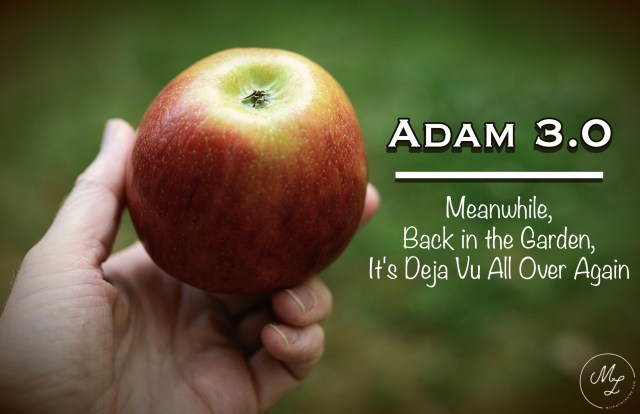
Adam 3.0: Meanwhile, Back in the Garden, It’s Deja Vu All Over Again

I do not permit a woman to teach or to exercise authority over a man; rather, she is to remain quiet. For Adam was formed first, then Eve; and Adam was not deceived, but the woman was deceived and became a transgressor.

1 Timothy 2:12-14

Because it’s my passion to see Christian women become holy, passionate, obedient disciples of Jesus Christ, I’ve dealt with this passage a lot and done a lot of research on it. Scripture is crystal clear that women are not to instruct men in the Scriptures in the church in the capacity of pastor or teacher, nor are they to hold authority over men in other positions in the church. (I’ve outlined Scripture’s case for this here if you’d like to do some further study.) And, unfortunately, there are many women in the church who are disobeying this Scripture (I used to be one of them)– some out of rebellion, and some out of ignorance. But until recently, I –and every other piece of information I’ve studied on the subject– have dealt with the issue of women stepping outside their God-ordained role in the church strictly as a women’s issue.

A few days ago, a friend of mine asked for my opinion on a Q&A video produced by a well known pastor. The pastor was asked, “Is it a sin for men to listen to women speakers [female Christian conference speakers, pastors, teachers, etc.]?”

And that’s when it hit me. I’d never heard this question addressed, or even asked, before. First Timothy 2:12ff is always dealt with from the perspective of women and towards women – that this is a women’s sin issue.

But to treat this role rebellion strictly as the sin of women is to pour gasoline on the fire. If it’s a singularly women’s problem, then it naturally falls on women with a right understanding of God’s Word on the issue to deal with it, right? And if these women are the ones who have to confront and deal with this sin, even at the local church level, they’re being placed smack dab in the misappropriated role they’re trying to fight because they’re being asked to do the job of elders and pastors whose responsibility it is to maintain order and discipline in the church.

In other words, when it’s time to deal with the sin of role busting, don’t send a woman in to do a man’s job.

When it’s time to deal with the sin of role busting, don’t send a woman in to do a man’s job.

The fact that there’s even a need for an article like this, never mind that a woman is writing it, is indicative of the pervasiveness of the problem. Why do we so rarely hear pastors or other Christian men exhorting men in the church to stand on God’s Word, properly fill out their own role in the church, and also deal with the problem of female disobedience to this Scripture? Why are Christian men becoming accomplices to women’s sin by seeking out female pastors and teachers to be their spiritual leaders? I believe there are three reasons:

The fact that there’s even a need for an article like this, never mind that a woman is writing it, is indicative of the pervasiveness of the problem.

1.
Adam 3.0

Give Genesis 3–the story of the Fall–a read through the lenses of 1 Timothy 2:12. See any similarities between what happened in the Garden and what’s happening in the church?

The man is off somewhere, not fulfilling his role of spiritual guardian, leader, and protector, leaving the woman alone and vulnerable to Satan’s attack. Satan tempts the woman to sin and she succumbs. The woman then entices the man to sin, and instead of standing on God’s Word, refusing to sin, and correcting her, he actually joins her in her sin. And when God calls the man to account for this whole scenario, what does the man do? He blames the woman.

Was Eve responsible for her decision to sin? Of course. That’s why we even have 1 Timothy 2:12-14 in the Bible. But God gave the man the authority and God held the man ultimately responsible. That’s why we see passages like Romans 5:12-14 (and others) attributing the sin in the Garden to Adam rather than Eve.

While there are many faithful pastors and Christian men out there diligently laboring to be godly teachers and leaders in the church–and praise God for those men!–there is a large and increasing number of men in our churches, both pastors and laymen, who are failing to fulfill the role God has called men to in the church. Pastors who will only preach what tickles people’s ears. Men who sit in the pews refusing to teach or serve or lead or even attend faithfully.

As it was in the Garden, these Christian men are nowhere to be found as Satan creeps into the church and attacks women with this temptation. And, as God called out then, could He be calling out now, “אָדָם, – Adam- Man, where are you“?

As God called out then, could He be calling out now, “אָדָם, – Adam- Man, where are you”?

2.
Men are lazy.

I know that sounds harsh, but before all the brothers get their boxers in a bunch, please hear what I’m not saying. I’m not saying that all men are lazy or that women are never lazy or that men are lazy in every aspect of their lives. What I’m saying is that, in this particular instance of women stepping outside God’s role for them in the church, too many men are sitting back with the attitude that, hey, if somebody else is willing to do the work why not let her? Instead, women (not to mention boys and younger men) should be seeing men in the church step up and say, “I’ll study hard so I’ll be equipped to teach that class.” “I’ll preach the sermon, not my wife.” “I’ll be willing to shoulder the load God has given me instead of pushing it off on a woman.”

Women (not to mention boys and younger men) need to see men in the church step up and say, “I’ll be willing to shoulder the load God has given me instead of pushing it off on a woman.”.

3.
Men are afraid of women. 

Not afraid of them physically, but afraid of the ones who will make a scene, cause strife, split churches, get pastors fired, and generally make life hell on earth for anyone who dares to put his foot down firmly on the Word of God and say, “You’re in disobedience. You need to repent and step down.” I know these women (and, of course, there are men who do this, too). I have had plenty of them come after me, and, having a husband who’s been in ministry for over 20 years, I’ve seen plenty of them attack pastors, staff, deacons, etc., and I don’t blame men for feeling scared. But Jesus has called men to defend His Bride from all enemies, both foreign and domestic, and feeling scared doesn’t excuse them from doing what’s right and biblical. Would that godly men would look to the courage Jesus exhibited on His way to the cross. That they would look at Peter, Paul, James, and the other apostles as their example of valor, as these forebears in the faith chose flogging, hardship, jail, and martyrdom over compromising the Word of God.

Would that godly men would look to the courage Jesus exhibited at the cross. That they would look at Peter, Paul, James, and the other apostles who chose flogging, hardship, jail, and martyrdom over compromising the Word of God.

Churches don’t need pastors who are afraid to rock the boat, even if that’s what the church seems to want. Churches need a man who will stand for Christ and His Word, no matter the cost to him personally or vocationally. A pastor can’t call his people to do that in their own lives if he isn’t willing to do it in his, knowing that the God who was strong enough to save him out of the pit of Hell is strong enough to find him another job and provide for his family if it comes to that. We need pastors who are faithful to preach and carry out the Word in season and out of season, trusting Almighty God to have their backs.

Churches don’t need pastors who are afraid to rock the boat, even if that’s what the church seems to want.

God has given women a phenomenal, and much needed, role in the church. He has given men a different, yet equally phenomenal and much needed role in the church. For the local church to function in a healthy way, both men and women have to fill out our own roles correctly. And women can’t and shouldn’t have to do the job of godly men in addition to our own.

Women can’t and shouldn’t have to do the job of godly men in addition to our own.

Some might regard my tone here as stringent. Peter, Paul and the other apostles probably raised some eyebrows when they used a stringent tone, too. But when a house is burning down, the fireman doesn’t tiptoe in, hand you flowers, and politely request that you, pretty please, come with him. And that’s where we are in the church. The house is burning down around us. And, in the end, this article is not meant to be a castigation of pastors or other Christian men, but an impassioned plea from a church lady who wants to see her sisters make it out alive.

Help us. Please. Despite what some professing Christian women might say, we, and the body of Christ, desperately need our brothers to be the heroic men of God that they have the right, the calling, and the responsibility to be.

Women, and the body of Christ, desperately need our brothers to be the heroic men of God that they have the right, the calling, and the responsibility to be.

Christian women, Idolatry, Sanctification, Women

Little Women

I’d rather have Jesus than men’s applause
I’d rather be faithful to His dear cause
I’d rather have Jesus than worldwide fame
I’d rather be true to His holy name

We sang this lovely hymn in church the other day, and it was perfect timing. For the past couple of weeks, I’ve been thinking about women I’ve known across the years, women I’ve known of (but not personally) across the years, and the woman I’ve known best across the years, me. And I’ve been thinking about how and where we find our worth, fulfillment, and contentment and where we should find it: in Christ.

I don’t know about you, but one of the sins I constantly struggle against is coveting. It’s a sin we don’t think about very much. A private one that, often, nobody knows about except God and me.

Coveting is a sin we don’t think about very much. A private one that, often, nobody knows about except God and me.

And you know what I covet? What I think we all covet? Men’s applause. Worldwide fame. Or, at least, fame in my little corner of the world.

When we were children in Sunday school, coveting was sometimes explained to us as “wanting for ourselves what someone else has.” Her new doll. His fancier bike. It’s a decent kid-level definition, but in the same way that Jesus reminded us that the root sin of murder is hate and the root sin of adultery is lust we need to mature in our understanding of coveting, and realize that it also has a root sin: discontentment. Sometimes, it’s discontentment with what we have (greed), and sometimes it’s discontentment with who we are.

And who are we?

As Believers, we are children of the God of the universe who, despite our sin and rebellion against Him, loved us enough to lay down His own life to rescue us. He listens to us. He accepts us. He provides for us. And don’t even get me started on Heaven.

And if contemplating all that isn’t enough, the Bible tells us to be content. So why aren’t we? Why woud we rather have Jesus and men’s applause, and worldwide fame?

Because, as John Calvin so aptly put it, “Man’s nature, so to speak, is a perpetual factory of idols.” Our sinful flesh is always looking to gratify itself rather than glorify God. Any time our hearts say, “God’s not enough. I want more,” we’re committing idolatry, because whatever the “more” is, it’s other than God and lesser than God, and we’re seeking it instead of seeking God. And, as women, one of the biggest “more” idols we seek is feeling good about ourselves, or feeling worthy of love and acceptance.

Our sinful flesh is always looking to gratify itself rather than glorify God.

But instead of looking to Christ and letting Him define for us a right perspective of ourselves, we hit the crack pipe of the praise of men. It’s fast. It’s cheap. It’s easy. And the high is nearly instantaneous.

Instead of looking to Christ and letting Him define for us a right perspective of ourselves, we hit the crack pipe of the praise of men. It’s fast. It’s cheap. It’s easy. And the high is nearly instantaneous.

How? Allow me to introduce you to some frenemies of mine:

Mother and Daughter Hugging

Marla MegaMom- Marla lives for and through her kids. Their successes are her successes. Their failures, her failures. She subtly or overtly pressures her kids to achieve because if they fail she’s afraid others won’t see her as a good mom. And being a failure as a mom means being a failure in life.

Woman Singing

Dina Diva- Dina literally seeks the applause of others. She’s the top church soloist and the star of every Christmas production. She’s a public speaker or an instrumentalist or an actress, anything that can be done on a stage. Dina doesn’t feel good about herself unless people are clapping for her.

woman-164299_640-1978279293

Veronica Victim- Poor Veronica. Everything in her life is always going wrong at home, at work, at church, with friends, with her health, with her car, with her dog. Nobody understands just how hard Veronica has it, so she makes it her life’s mission to let people know. In every story she tells, Veronica is the victim, and somebody else (or everybody else) is the bad guy. Please feel sorry for Veronica, because that’s the only way she can feel better about herself.

woman_angel_costume_kindlephoto-8131448

Helen the Heroine- Helen is Veronica’s cousin. In every story Helen tells, she’s the heroine, the paragon of virtue, the one who did everything right – short of severing a limb – to make everything work out, and somebody else is the bad guy. Helen is divorced and the bad guy is usually her ex-husband, but she’s versataile enough to apply her story telling skills to situations at work, church, with friends, etc. Helen thinks if you don’t see her as a heroine, she’s worthless.

super-woman-halloween-adult-costume-aef98eb9
Photo courtesy of CostumeCollection.com.au

Sally Superwoman- Sally does everything, and she does it superbly. She’s employee of the year at work and world’s best wife and mom at home. She’s a gourmet cook, flawlessly recreates every cake and craft on Pinterest, and her house looks like a photo shoot for Better Homes and Gardens. Other women know she’s got it all together, so she keeps all her plates spinning at a furious pace, because if one of them fell where would she be?

MP900178801

Popular Polly- Polly is everybody’s friend. She’s one of the sweetest people you’ll ever meet with never a cross word for, or about, anybody. She agrees with (or at least doesn’t obviously disagree with) whatever is being said by the person she’s talking to at the moment, so it can be hard to pin down what she really believes. When someone unfriends/unfollows Polly on social media, she takes it personally, wondering what she did wrong. She only likes herself if enough other people like her.

reading-216862_640

Know It All Nettie- Maybe she’s got multiple degrees, or maybe she’s just well read, but Nettie is an expert. In everything. She sees it as her calling to educate people, starting a lot of sentences with, “Well, actually…” and rarely asking questions that would reveal her lack of knowledge on a subject. Ignorance is a weakness in Nettie’s mind, and she wants to be seen as strong.

MP900427741_kindlephoto-8317786

Maisy the Martyr- Whenever there’s a request for helpers at church, someone to pull overtime or fill in for a co-worker, volunteers at the soup kitchen, the fulfillment of the smallest need of her family, Maisy will be there, working tirelessly. She secretly gets angry when no one recognizes her for all her hard work or when people take advantage of her, but she’s afraid to say no because she’s afraid people will be upset with her, and what kind of person would she be then?

Woman Doing Sit-ups

Let’s Get Physical Phyllis- Whether she’s one to wear revealing clothes so all the men stare or she’s an organic, vegan workout queen, or she’s a clotheshorse, Phyllis is all about one thing: her body and how it looks. Did a construction worker whilstle at her today? A co-worker compliment her outfit? If not, maybe Phyllis had better lose a few more pounds or get that plastic surgery she’s been considering. After all, if people stop looking, she’s nothing.

man-315069_640

Man-datory Maude- Maude always has a man. Always. Preferably an awesome one, but even a mediocre or lousy man is better than no man at all. Why? It’s tangible proof somebody wants her. Otherwise, how will people be able to see she’s a worthwhile person?

MP900289528

Take Charge Tallulah- Follow? You must be joking, darling. Tallulah was born to lead and plays second fiddle to no one. She’s the chair of every committee she’s on, and always the one to round up the worker bees and start doling out orders. No points for second place. If you’re not first, you’re last. Tallulah needs the submission of others to feel self confident.

Are you one of these women? Or, if you’re as Sybil as I am, maybe you’re all of these women to one extent or another. Little women, all. Little, because Maisy, Helen, Sally, and all the rest are coveting and settling for crumbs of approval from others when God is offering them the whole bakery of His delight in them. Little, because they’re zeroing in on one tiny aspect of their lives to earn the praise of men instead of lifting their eyes to the broad expanse of Heaven and focusing on the Christ who loves them and has set them free to rest in His acceptance of them through His shed blood.

There’s nothing wrong with eating right or being friendly, or serving, singing, or teaching. Those are all good things. But just as God can take the most evil things and use them for good, we, because of our sinful nature, have a tendency to take good things and use them for evil. And evil isn’t too strong a word when we’re talking about taking the good gifts and talents God has given us and using them to pursue idolatry.

Just as God can take the most evil things and use them for good, we, because of our sinful nature, have a tendency to take good things and use them for evil.

So what can we do? Romans 12:21 tells us, “Do not be overcome by evil, but overcome evil with good.” When that evil coveting of praise and notoriety rears its ugly head:

  • Overcome it by confessing your coveting and idolatry and asking God to forgive you for it.
  • Overcome it by asking God to help you do everything for His glory, so that men will praise Him and make His name famous instead of yours.
  • Overcome it by letting go and saying no. If you’re Dina, it’s OK to let somebody else have the leading role. If you’re Maude, it’s OK to stay home on date night. If you’re Veronica and someone asks how you’re doing, it’s OK to smile and say, “Fine.”
  • Overcome it by preaching the gospel to yourself. Remember how big God is, how small and weak you are and the lengths of love that He went to to save you anyway. Not because of who you are, but because of who He is. Rest in that, and praise and thank God for it.

And let’s have no more of these little women.

Easter, Forgiveness, Gospel, Old Testament, Salvation, Sunday School, Types and Shadows, Women

Easter with the King: The Story of Nabal, Abigail and David ~ Sunday School Lesson ~ 4-20-14

sunday school

These are my notes from my ladies’ Sunday School class this morning. I’ll be posting the notes from my class here each week. Click here for last week’s lesson.

Through the Bible in 2014 ~ Week 15 ~ Apr. 13-19
1 Samuel 18-31, Psalm 11, 59,7,27,31,34,52,56,120,140-142,17,35,54,63,18
Easter with the King: The Story of Nabal, Abigail and David


Since the whole Bible points to Jesus, the whole Bible tells the story of the gospel. Even the Old Testament. Even the story of David, Abigail, and Nabal.

1 Samuel 25:2-42

flock of sheep in israelFilthy Rich (2)
3000 sheep/1000 goats was definitely rich (even today it wouldn’t be too shabby). While cattle are more valued in our culture for their meat, milk, and leather, sheep and goats were more valued in Israel for these, and also for sacrifices. Sheep and goats were Israel’s “pantry on the hoof.”

I Pity the Fool (3)
The name “Nabal” means “fool.” As we have seen throughout the OT, names weren’t just random labels. They told something about the person’s character or life, where he was from, who he was related to, etc. Sometimes names were changed to reflect life circumstances: Ben-oni (son of my sorrow) to Benjamin (son of the right hand- Genesis 35:18), Naomi (pleasant) to Mara (bitter- Ruth 1:20), Simon (God has heard) to Peter (rock- Matthew 16:18).

It seems odd, even by Israel’s standards, to name an infant “fool,” but we have no way of knowing whether this was the case or whether he acquired this name later in life after earning it by his behavior.

“Abigail” means “My father is joy.”

An Offer You Can’t Refuse? (4-13, Deuteronomy 22:1-4, 18:7, 21:11, 15:7-8, Leviticus 19:10, 23:22)
This incident hits our Western ears as odd or inappropriate, even presumptuous or akin to extortion, but Middle Eastern hospitality etiquette and neighborliness, not to mention God’s Law was, and still is, much different from ours in many cases.

Nabal did not ask David to guard his shepherds and flocks. Indeed, he probably didn’t even know David was doing so unless the shepherds told him when they brought the sheep in for shearing. (And since “one cannot speak to him” {17} maybe they didn’t.) David, however, when he met up with the shepherds, took it upon himself, out of his own good will, to look out for them. Maybe he had sympathy for them because he had also been a shepherd.

michael-corleoneDavid and his men likely put their lives on the line numerous times protecting Nabal’s livelihood. And he didn’t do it with an “I scratch your back; you scratch mine” attitude, thinking he would later demand pay from Nabal. He also didn’t take advantage of the shepherds (such as extorting sheep/goats in exchange for protection) while they were with him. David was obeying the spirit of all those “good neighbor laws” we read about (ex: Deuteronomy 22:1-4). The law is not just “don’t harm your neighbor,” but also, “do good to your neighbor.”

Remember, these shepherds were alone out in the wilderness with the flocks. There was no police force or army to protect them from raiding bands of Philistines. If the Philistines saw a thousand goats and 3000 sheep and wanted them, they just took them and captured or killed the shepherds. No legal redress, no sheep insurance. Nabal’s entire portfolio was at stake. You would think once he found out what David had done –for free and out of the goodness of his heart—Nabal would be extremely grateful. But was he? Nope.

David’s men arrived, explained themselves, and asked politely for whatever food Nabal could spare (kind of hard to make groceries when you’re on the run living in caves). They did not demand his best, and they did not demand he provide enough for their entire company of 600 men. They had even come on a feast day when Nabal was celebrating his wealth, should have been in a good mood, and should have had plenty of extra food on hand. And notice this telling little phrase, “they said all this to Nabal in the name of David, and then they waited.” (9) Now here’s one way Middle Eastern culture is similar to Southern culture. If someone was standing there telling you about all those nice things he had done for you, how long would it take before you gleefully interrupted him and offered him everything under the sun in thanks? Well, Middle Easterners aren’t as shy about interrupting as we are, and furthermore, they would take it as the highest insult if you didn’t take everything they offered.

Not Nabal, though. First, he pretended not to know who David was. Pretty ridiculous, since David’s conquests were well known throughout Israel (18:7, 21:11- even outside Israel), not to mention the fact that he was next in line for the throne. Next, he insulted David’s men by accusing them of lying about working for David. Of course, if he had been interested in finding out whether or not that was true, he could have brought his shepherds in and asked them if these were the guys who had protected them.

David’s men went back and reported what had happened. David’s immediate response was for everyone to “strap on his sword.” It seems like kind of an extreme response to us, but we have to keep a few things in mind. First, the Law. Nabal was breaking both the letter and the spirit of it. While there was no specific law covering a band of mighty men coming to you and asking for food on a feast day, there were laws about taking care of people who were hungry and poor, such as the gleaning laws (Leviticus 19:10, 23:22).

Deuteronomy 15:7-8 says: “If among you, one of your brothers should become poor, in any of your towns within your land that the Lord your God is giving you, you shall not harden your heart or shut your hand against your poor brother, but you shall open your hand to him and lend him sufficient for his need, whatever it may be.”

When we read through Ruth, we saw Boaz doing a great job of fulfilling this law for Ruth and Naomi. Here, Nabal is showing the exact opposite of Boaz’s kindness and generosity.

Second, Nabal’s actions showed disregard and ingratitude for God’s provision and blessing. God blessed Nabal with wealth and protected that wealth (through David) without Nabal even knowing about it. Do we see any evidence that Nabal was humbled that God should do such a thing for him, or thankfulness to God for what He had provided? No. We see only selfishness, stinginess, and a blatant disregard for God as sovereign provider.

Finally, David’s response was likely an answer to Nabal’s accusations. “He wants to know who David is? He wants to know whether or not my men are lying? Well, let’s go show him the answer to his questions and see if he changes his tune.”

The Go-Between (14-31, John 12:14-15)
Abigail was quite a remarkable woman. This was not the first time Nabal had acted this way. He had a long standing history of being harsh and worthless (“son of Belial” is also applied to Satan in 2 Corinthians). And here, Abigail was going behind his back and defying him. This was no small thing for any wife in Israel. But for Abigail, it could have meant a beating or worse when Nabal found out. It’s possible she was even risking her life. And for what? To save him. Without his knowledge that she was saving him. Without his knowledge that he even needed saving.

Why in the world would Abigail want to save someone who was probably making her life a living hell? She could have just let David and his men handle Nabal. Certainly he would have www-St-Takla-org--abigail-entreats-mercygotten what he deserved. But she stepped in because it was the right thing to do. It was right to obey God by providing for David and his men. It was even right to protect her husband from his own foolishness and bringing David’s wrath down upon himself. But even more, she did it because she loved God, and maybe even her husband, too.

She sent the gift on ahead (19) to appease David’s wrath, then presented herself to him on Nabal’s behalf. Notice that she got down off her donkey (23). Kings rode donkeys. Rich people and people of high standing rode donkeys. She left her wealth and position behind and got as low as she could get, bowing down, humbling herself, and submitting herself to David. For Nabal.

Then Abigail did something even more remarkable. She said (24-25), “On me alone, my lord, be the guilt. Please let your servant speak in your ears, and hear the words of your servant. Let not my lord regard this worthless fellow, Nabal, for as his name is, so is he.” She—a completely innocent party to Nabal’s sin (25)—voluntarily takes on the guilt and consequences of his sin. (Is this starting to sound familiar?) In v. 28, she asked David to “Please forgive the trespass of your servant.” It wasn’t her trespass, but Nabal’s. She was asking forgiveness for him.

The King’s Response (32-35)
David blessed Abigail, not just for her prudence and godliness, but also because she had satisfied his wrath and kept him from exercising it on Nabal. Her gift was sufficient, and David granted her petition to extend forgiveness to Nabal.

Happily Ever After (36-42)
Well, except for Nabal. Abigail had to tell Nabal what she had done. She’d been gone for a while and had taken quite a bit of food out of the house. No sense trying to cover it up. Hopefully Nabal would be grateful she saved him from certain death. When she told him, did he repent? Humble himself? The text doesn’t say that he did. It says “his heart died within him.” It’s generally believed this means that Nabal had a stroke (especially since it further says that he “became as stone” and lived for ten more days). Did he become enraged at what Abigail had done, and this physical exertion contributed to a stroke? We can’t know for certain. What seems unlikely is that he genuinely repented, because God “struck Nabal and he died.” As we’ll see later with David, while we usually do suffer the consequences of our sin, God shows mercy and forgiveness to the repentant.

David was thankful he had not taken matters into his own hands and that God had handled the situation. Justice had been served. And for her faithfulness, Abigail—who considered herself the lowliest of servants, only fit to wash the feet of other servants—ascended to the position of Queen. Back on her donkey where she belonged, exalted out of humility to sit at the right hand of the king.

The Backstage Gospel (Psalm 14:1, Philippians 2:6-8, 9-11)
Often, in stories like this, the characters aren’t just playing themselves, they’re playing out the parts of the gospel.

As with Nabal, God blessed His people richly with life, family, provisions, and all kinds of other blessings she wasn’t even aware of. The people didn’t ask God to do these things. God, the Good Shepherd, did these things for them out of the goodness of His own heart, the same way David had done for Nabal. But, as with Nabal the fool, “The fool says in his heart, ‘There is no God.’ They are corrupt, they do abominable deeds, there is none who does good.” (Ps. 14) The same way David presented himself to Nabal and told him what he had done for him, God, over and over, reminded Israel of the way He had protected and provided for them. But just as Nabal rejected David, so, Israel rejected God, and rebelled against Him in favor of their own sin and selfishness. And, like David, God’s wrath was inflamed.

Enter Jesus. Just as Abigail intervened on behalf of Nabal, Jesus intervened on behalf of Israel and all mankind. Just like Abigail, He laid down His life to save us. Before we ever knew Him. Before we ever knew we needed saving. Why? Why would He even want to save us Nabals? He could have let God exercise His wrath on us. We certainly deserve it. But in the same way that Abigail acted in love and in doing what was right, Jesus loved His Father and us enough to fulfill righteousness and to bring God glory by staying His hand of wrath.

In the same way that Abigail got down off her donkey, leaving behind all prestige and humbling herself to the lowest position possible—a servant only worthy of washing other hp-crossshadowservants’ feet— Jesus “though he was in the form of God, did not count equality with God a thing to be grasped, but emptied himself, by taking the form of a servant [one who washed other servants’ feet], being born in the likeness of men. And being found in human form, he humbled himself by becoming obedient to the point of death, even death on a cross.” (Phil. 2:6-8) And for whom? Us Nabals. “On me alone, my Lord, be the guilt,” Jesus said, even though, like Abigail, He was completely innocent. He voluntarily took on the guilt and consequences of our sin when He died in our place on the cross, and He did it to win forgiveness for us.

Jesus sent this offering of His life for the atonement of our sin on ahead of Himself to the Father, and God’s wrath was satisfied. Jesus’ offering was sufficient, and God granted His petition to extend forgiveness to the likes of us. And just as David picked Abigail up from her humility and she ascended to the position of queen, Jesus ascended to sit at the right hand of the King, and “God has highly exalted him [Jesus] and bestowed on him the name that is above every name, so that at the name of Jesus every knee should bow, in heaven and on earth and under the earth, and every tongue confess that Jesus Christ is Lord, to the glory of God the Father.” (Phil. 2:9-11)

This story didn’t have a happy ending for Nabal, because Nabal didn’t repent and submit himself to God. Nabal ended up taking the guilt and consequences for his sin himself (death) instead of gratefully humbling himself and being thankful for the gift of Abigail’s intervention and David’s forgiveness. But the rest of us Nabals can have a happy ending. Jesus has paid the price for our sin with His death, burial, and the resurrection we celebrate today. He completely satisfied the wrath of God on our behalf. It is finished. Forgiveness has been purchased with His blood. If we will humble ourselves, repent of our sin, and accept the beautiful gift of forgiveness God is extending to us at the request of His Son, we can be reconciled to God now and live happily in the ever after.