Forgiveness, Gospel, Salvation, Sunday School, Types and Shadows

Joe & Moe: Delivery Boys ~ Sunday School Lesson ~ 2-2-14

sunday schoolThese are my notes from my ladies’ Sunday School class this morning. I’ll be posting the notes from my class here each week.Click here for last week’s lesson.

 Through the Bible in 2014 ~ Week 5 ~ Jan. 26- Feb. 1
Genesis 41 – Exodus 9
Joe (Joseph) & Moe (Moses): Delivery Boys (Part 1)


→         ┼     ←→    II
Old Testament                     Gospels         Acts-Revelation    (Christ’s Return)

All of the Old Testament points to Christ. Throughout the OT, we see Israel, a people in need of deliverance, and throughout the OT, we see God use men as types and shadows of Christ, each pointing out a facet of the way He would deliver His people from their bondage to sin.

Let’s look back at some of the people we’ve studied so far and how they are types of (symbolize) Christ. Look at these people through the lenses of Jesus’ life.

Adam– One Man (Romans 5:17)
As sin entered the world through the first/only begotten son, so salvation entered the world through God’s only begotten Son.

Abel– Death of the innocent (Hebrews 12:22-24)
We see the good, obedient, innocent shepherd, betrayed by his brother and killed for no crime of his own.

Noah– The only righteous man (Genesis 6:9, 1 Peter 3:18)
We see salvation take place through the only righteous man on earth, scorned by sinners. We see the death of sin, the burial (at sea), and the resurrection to new life.

Job– The Suffering Servant (Isaiah 53:3,10)
In Job, we see Christ, the innocent, misunderstood and accused by those who should have been His friends, suffering, not for His own sin, but for God’s greater plan: that God might be glorified.

Abraham– The Obedient Son (Philippians 2:5-8)
Abraham left the comfort and position of his homeland in exchange for a life of sojourning in a land not his home. He was obedient to God whatever the cost to himself. So, Christ emptied Himself of His position and comfort in Heaven to sojourn on earth and live in obedience to God, whatever the cost.

Isaac– The Promised Son (Genesis 3:15) and The Lamb of God (Genesis 22:8,14, John 1:29)
God told Abraham He would send him a son, and after many years, the promise came true. The son of the Abrahamic Covenant was born in a miraculous way. In Genesis, God promised to send His Son, and after many years, and many reminders of God’s promise to Israel, the Son of the new covenant was born in a miraculous way.

Lamb of God- He was the only acceptable sacrifice. He took the wood for the sacrifice upon his back and walked up the hill to his place of death. “God will provide for himself the lamb for a burnt offering, my son.” “On the mount of the Lord it shall be provided.” That mountain, Mt. Moriah, turned out many years later to be Calvary. “Behold, the Lamb of God, who takes away the sin of the world!”

Jacob– Cornerstone (Matthew 19:28)
Jacob through his twelve sons/tribes, was the foundation of God’s people, Israel. Jesus, delegating through His twelve disciples, is the foundation of God’s people, the church.

Joseph– Deliverance Through Forgiveness (Genesis 50:20, Acts 5:31) (Genesis 45:5,7-8; 50:15-21, Luke 23:33-34, 1 John 1:5-9)
Joseph was a deliverer, as was Christ. His life shows us one aspect of Christ’s delivering us from our sin: forgiveness. I did a study on this a while back and wrote a blog article about it. It’s like one of those optical illusion pictures where if you look at it one way, it’s an old, ugly woman, but if you look at it another way, it’s a young, pretty woman. This is a “story optical illusion.” See if you can see Joseph and Jesus at the same time.

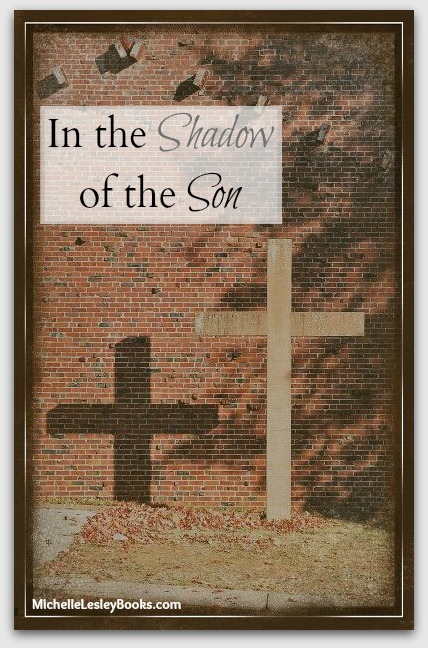
QueretaroCrossShadow1In the Shadow of the Son

And after all this: hating him, taking him away from his family and all he knew, selling him as a slave, working his way up only to lose everything again when he was falsely accused of rape and imprisoned for years for a crime he didn’t commit, forgotten by the cupbearer for two years, unsure how his brothers were treating Benjamin or his father, not even knowing if his father was still alive, Joseph forgave his brothers and gave them a new start, a new life.

When Joseph’s brothers saw that their father was dead, they said, “It may be that Joseph will hate us and pay us back for all the evil that we did to him.” So they sent a message to Joseph, saying, “Your father gave this command before he died: ‘Say to Joseph, “Please forgive the transgression of your brothers and their sin, because they did evil to you.”’ And now, please forgive the transgression of the servants of the God of your father.” Joseph wept when they spoke to him. His brothers also came and fell down before him and said, “Behold, we are your servants.” But Joseph said to them, “Do not fear, foram I in the place of God? As for you, you meant evil against me, but God meant it for good, to bring it about that many people should be kept alive, as they are today.So do not fear; I will provide for you and your little ones.” Thus he comforted them and spoke kindly to them.
Genesis 50:15-21

And when they came to the place that is called The Skull, there they crucified him, and the criminals, one on his right and one on his left.  And Jesus said, “Father, forgive them, for they know not what they do.” And they cast lots to divide his garments.
Luke 23:33-34

As Jacob forgave his brothers and Christ forgave his executioners, this is exactly what Christ does for us. We repent, and He forgives us for our sin. He gives us a new life.

This is the message we have heard from him and proclaim to you, that God is light, and in him is no darkness at all. If we say we have fellowship with him while we walk in darkness, we lie and do not practice the truth. But if we walk in the light, as he is in the light, we have fellowship with one another, and the blood of Jesus his Son cleanses us from all sin. If we say we have no sin, we deceive ourselves, and the truth is not in us. If we confess our sins, he is faithful and just to forgive us our sins and to cleanse us from all unrighteousness.
1 John 1:5-9

The story of Joseph is a beautiful story of a man rejected, betrayed, and done away with, only to live again victoriously, and forgive and save his betrayers. Just like Jesus.
Bible, Sin, Sunday School, Types and Shadows, Women

Godly Womanhood – The Fall ~ Sunday School Lesson ~ 11-17-13

sunday school

These are my notes from my ladies’ Sunday School class this morning. I’ll be posting the notes from my class here each week. Click here for last week’s lesson.

Godly Womanhood – The Fall
Genesis 3

3:1-6- Why did Satan approach the woman instead of the man?

1. 1 Peter 3:7

2. Eve was created after Genesis 2:16-17.

3. Women generally tend to be a little more believing about spiritual things than men.

4. Women generally have a greater appreciation for beauty.

5. Satan was playing on her God-given desire to help her husband.

3:6- What was Eve’s response to temptation?

1. She stepped out of her God-assigned role.

2. She believed something that was in conflict with God’s word and acted on it.

3. She failed to fulfill her God-assigned role of helper.

4. She used her power and influence to turn her husband the wrong way.

3:6-9 What was Adam’s response to temptation?

1. Adam failed to fulfill his God-assigned role of leader.

2. Adam gave in to something that was in conflict with God’s word and acted on it. (1 Timothy 2:14)

3:10-24- What were the results of their sin?

1. Shame and guilt (10-11).

2. Blame shifting (12-13).

3. A line was drawn in the sand of redemptive history (14-15).

4. Adam and Eve personally bore the consequences of their sin (16-19, 23)

5. Adam and Eve’s sin has affected every person on earth ever since then (16-24).

6. God gives a foreshadowing of His covering of sin (21).

What lessons can we learn from this passage about being a godly woman?

Bible, Gospel, Salvation, Types and Shadows

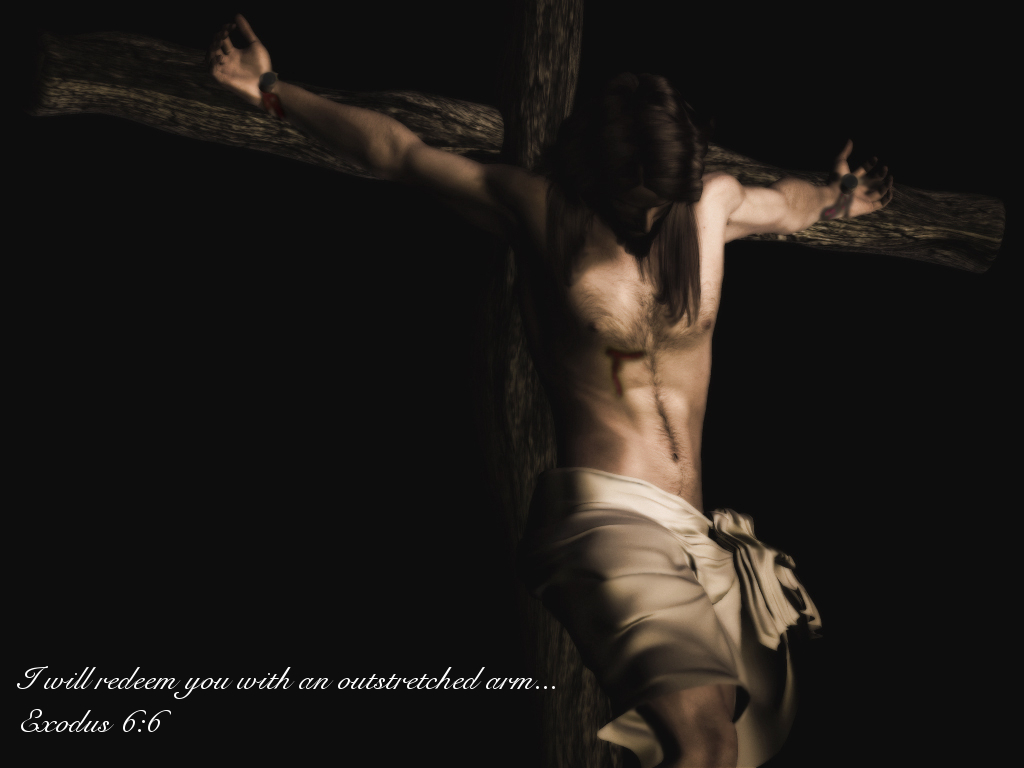
The Cross in the Exodus

jesus-christ-cross-0204_phixr


I will redeem you with an outstretched arm and great acts of judgment.
I will take you as My people, and I will be your God.
You will know that I am Yahweh your God, 
who delivered you..
Exodus 6:6b-7a

Bible, Types and Shadows

Types and Shadows: Study Notes on Exodus 1-2

Image

Do you know what types and shadows are? To put it simply, it’s when we take a look at an Old Testament character and notice things in his life that are similar to, and foreshadow, the life and ministry of Jesus. I really enjoy studying types and shadows. For me it’s like Twilight Zone meets a treasure hunt meets the Bible.

This morning I was studying the first two chapters of Exodus, and I noticed several instances of Moses foreshadowing the life of Jesus. I have a couple of friends who enjoy types and shadows, and I figured there might be a few more of you who get as geeked up about this stuff as we do, so I thought I’d share my study notes with y’all.

A few of caveats: these are just “off the top of my head” study notes, so think of this as a rough draft rather than a polished article. Also, I didn’t consult any commentaries or other resources, so I’m sure I missed a lot of things that others have picked up on. Finally, this pretty much covers only Exodus 1 and 2, which ends before the burning bush episode, before Moses even returns to Egypt, so there are tons of things in Moses’ later life that I haven’t covered. There are many more examples of types and shadows after chapter 2, I just haven’t gotten to them yet.

MH900014974

Types and Shadows in Exodus 1-2

  • Moses and Jesus were both born under oppressive kings who feared a takeover by the Hebrews and ordered a mass infanticide of Hebrew baby boys.
  • Moses and Jesus were both “adopted” by a parent who raised them as their own children: Moses, by Pharaoh’s daughter; Jesus, by Joseph.
  • Moses left the glory of his throne and palace and his position of royalty to “become” one of his own people, whom he delivered out of bondage to slavery. Jesus left the glory of Heaven and emptied himself of His royal position as King to become one of His own people, whom He delivered out of bondage to sin.
  • Rejection of Moses’ and Jesus’ reign/authority by their own people:
    “Who made you a prince or a judge over us?” (Moses)
    “We do not want this man to reign over us.” (Jesus)
    “We have no king but Caesar.” (Jesus)
  • Moses and Jesus both sat down by a well (Ok, this is less type/shadow and more of a common thing for Israelite shepherds to do. Wells were communal gathering places for shepherds.) And speaking of shepherds…
  • Moses was a shepherd. Jesus is the Good Shepherd.
  • Moses and Jesus both escaped from leaders who were trying to kill them.
  • Moses and Jesus were both “sojourners in a foreign land.” 
  • God heard Israel’s groaning and sent them a deliverer at just the right time: after 400 years. He sent Moses after 400 years of slavery and Jesus after 400 years of silence during the intertestamental period (between the end of the Old Testament and the beginning of the New Testament).
  • Both Jesus and Moses returned to their homelands after the kings who wanted to kill them had died. God called Moses back to Egypt. God called Jesus out from Egypt.

Well, what did I miss? What other types and shadows do you see in Exodus 1 and 2?

Bible, Types and Shadows

In the Shadow of the Son

shadow son

Once, there was a father who sent his beloved son on a journey far away from home. The son was to seek out the father’s other children who had been separated from the father for quite some time. Quite willingly, the son went.

But when the son arrived at his destination, he found that his brothers had strayed away from where they were supposed to be, seeking greener pastures. So the son went after them and found them. He met them right where they were.

His brothers saw their father’s favored son coming for them. They hated him and everything he said and stood for because they knew he was to be in authority over them. It had been foretold. They conspired to kill him and bury him in a pit. Then, the prophecy of his authority over them would not come true.

The brothers stripped him of his robe and drenched it in the blood of an animal they had sacrificed for this purpose. They stripped him of his dignity, his favored status, and, if possible, his father’s love and approval. It was an attempted coup to knock the prince off his throne.

When they were finished, they threw him into a pit that had never held another man’s body. They sat down to eat, returning to life as usual.

But it wasn’t enough. Revenge is a meal that never satiates.

The brothers determined to turn the favored son over to a rough pack of wealthy heathens. They wouldn’t dirty their hands to kill him. Their brother’s life would rest in the hands of foreigners who had no part in their family line. And so the son’s fate was sealed.

By oppression and judgment he was taken away;
and as for his generation, who considered
that he was cut off out of the land of the living,
stricken for the transgression of my people?
And they made his grave with the wicked
and with a rich man in his death,
although he had done no violence,
and there was no deceit in his mouth.
Isaiah 53:8-9

His closest brother sold him out for pieces of silver, for the price of a slave. Life, as he knew it, was over.

Later, another brother would peer into the pit to see what had become of him. “He is gone!” the brother discovered to his great distress and sadness. Little did he know that the favored son had risen up out of the pit. He would rise in power to deliver the very brothers who had hated him and plotted his death, as well as myriads of others who didn’t even know him.

Who was this favored son? He is the One who has taken away our reproach and added us as sons and daughters into God’s family. He is Joseph, the forefather. He is Jesus, the Son.

Based on Genesis 37.