Evangelism, Homosexuality, Throwback Thursday

Throwback Thursday ~ There’s Mor Than Just Chikin at Steak* Here

Originally Published July 26, 2012Image

*Yes, I know I spelled it wrong in the title. That was on purpose. See the cows? :0)

If, this far into the game, you don’t know about “Chick-fil-A-gate” –as I’m calling it– you must have been living in a cave over the past few weeks. Without internet access, newspapers, cable TV, or, especially, social media.

In a counter response to the homosexual community’s response to Dan Cathy’s response (you’re following this, right?) to an interviewer’s questions, former governor/presidential candidate, Mike Huckabee created a Facebook event called “Chick-fil-A Appreciation Day”. Basically, he’s encouraging all who agree with Mr. Cathy’s position on traditional marriage to support him and the restaurant chain (and make up for any business he has lost from the pro-homosexual community) by showing up at their local Chick-fil-A next Wednesday (Aug. 1) and buying some chicken.

In the broad scope of things, this day of appreciation is a nice idea, but one that will quickly be over when Chick-fil-A employees mop up and lock up at close of business. For better or worse, the whole brouhaha will soon blow over and people will go back to their lives.

Or will they?

You see, I’m betting that in a counter-counter response to the Chick-fil-A supporters, there will be some pro-homosexual groups of protesters who also show up. (Don’t hate on that. As long as they aren’t breaking any trespassing, traffic, etc., laws, they are well within their Constitutional rights to do so.)

That’s why I say there’s more at stake here than just chicken.

What if you had a chance to impact one of those people for eternity? What if you could play a part in making next Wednesday the turning point in someone’s life? What if you could be the first person ever to show someone what real Christianity looks like?

As nice of an idea as it is to throw Chick-fil-A some love, Jesus didn’t command us to support businesses we agree with. He commanded us to carry the gospel.

“Go therefore and make disciples of all the nations, baptizing them in the name of the Father and the Son and the Holy Spirit, teaching them to observe all that I commanded you;” Matthew 28:19-20a

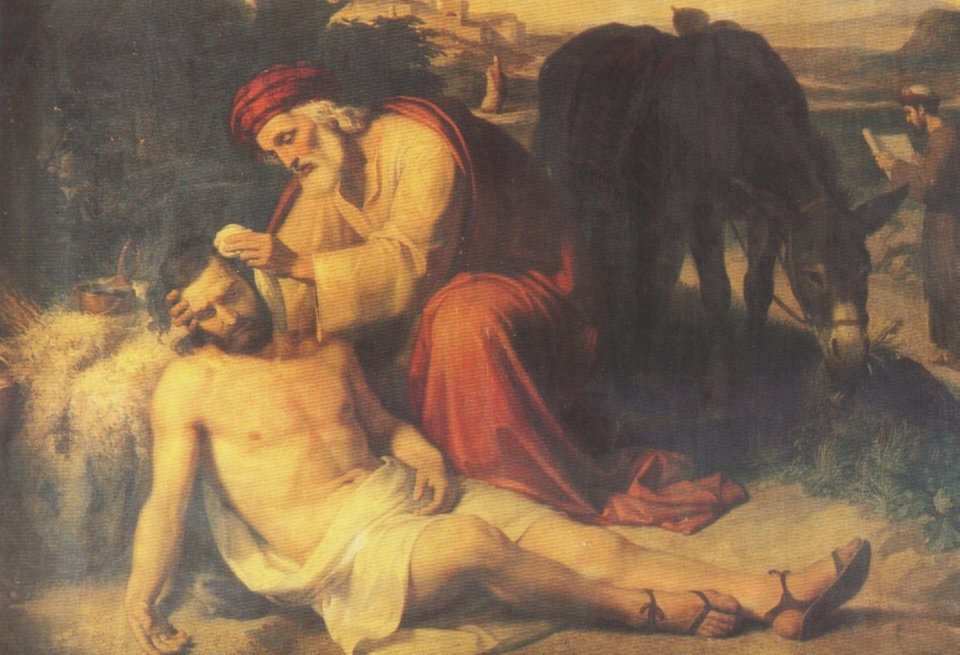
If we walk into a Chick-fil-A next week, past a group of people who are dying in their sins, and ignore them, are we any better than the priest and the Levite who left a beaten and bloody man to die in the road rather than rescuing him? Even if they aren’t conscious of it themselves, these people have been battered, bloodied, and enslaved by Satan.

And we’re going to “pass by on the other side” to buy a chicken sandwich?

“Go and do the same” as the one who showed mercy, said Jesus.

Take them a cooler of iced down cokes. Tell them you love them. Ask them if there’s anything they need.  Show them you love them by taking the time to take an interest in them, personally. (Nobody feels loved if they think they’re just a notch on your spiritual belt.)

And share the gospel.

You might get laughed at or cursed at or mocked, but there’s no greater way to show mercy than to show someone the Savior.

Your chicken sandwich could change somebody’s life.

Forever.

Gospel, Homosexuality, Salvation, Sin

An Apology, A Request for Forgiveness, and Some Clarifications

Dear Readers-

I need to say I’m sorry for something, ask forgiveness from some of you, and clarify a few things.

I’ve gotten a lot of good feedback from the article I wrote yesterday on World Vision’s announcement/reversal along with my commentary about unrepentant homosexuality (and other sins) precluding salvation. And when I say “good feedback,” I don’t mean that it was all positive and affirming. In fact, nearly all of it was negative. I got called a lot of names and accused of a lot of things, and it’s never a viscerally pleasant experience when that happens.

But It’s good when that happens, because I always want to take the time to pray about it and consider whether the observations people have made about what I wrote are right, biblically speaking. Because I want everything I write to line up with God’s word. And it doesn’t always line up, and sometimes I need other people to help me see that. Hey, I’m a sinful human being. I mess up. Often.

So here’s where I need to say I’m sorry to some of you and ask your forgiveness.

First, I’d like to clarify what I am apologizing for:

1. Anything I said that was not in line with Scripture. I have read and re-read my article and do not see anything that is in conflict with Scripture, but if anyone can point me to any Scripture I have violated, I would be most grateful. As I said, I want everything I write to line up with God’s word.

2. My tone. I am deeply and sincerely sorry that my tone was offensive to some of you. I know that many of you, as do I, have friends and loved ones being held captive by Satan in the sin of homosexuality. When you’re walking through the pain of losing someone you love to Satan’s clutches, even the gentlest reminder of that loss can be excruciating. Please believe me when I tell you I know how that feels from personal experience. It hurts. A lot. However, my tone was not nearly as gentle, sensitive, or compassionate as it should have been to those of you who are grieving over your homosexual loved ones. Where I perceived that I was simply being direct, I came off as unkind and unloving. That was not my intent at all, and I am sincerely sorry.

3. My lack of clarity. I am extremely sorry for my failure to be completely clear in what I wrote in yesterday’s article. I did not communicate clearly enough on two points: a.) Whether or not people who are homosexuals can be saved, and, b) whether or not people who are genuinely saved can continue to struggle with homosexual temptation and sin. Let me take another shot at it.

a) Let me state unequivocally that any unbeliever who repents of (turns away from, abandons) his sin (all sin, not just homosexuality), asks God to forgive his sin, believes in the physical death, burial, and resurrection of Christ for his sin, and trusts that in that death, burial, and resurrection Christ paid the penalty for his sin, may be saved. Anyone. Homosexual or heterosexual. There is no sin a person can commit, physically or mentally, that prevents him from repenting and being saved.

What cannot happen is for a person to be saved apart from repentance. Scripture is very clear about this. Just a few examples:

“Repent, for the kingdom of heaven is at hand… Bear fruit in keeping with repentance.” Matthew 3:2,8

John the Baptist said that, and Jesus said of him, “Truly, I say to you, among those born of women there has arisen no one greater than John the Baptist.” (Matthew 11:11)

 “Now after John was arrested, Jesus came into Galilee, proclaiming the gospel of God, and saying, “The time is fulfilled, and the kingdom of God is at hand; repent and believe in the gospel.” Mark 1:14-15

Jesus himself said that. Repent and believe in the gospel.

To the woman caught in adultery,

“Jesus stood up and said to her, “Woman, where are they? Has no one condemned you?” She said, “No one, Lord.” And Jesus said, “Neither do I condemn you; go, and from now on sin no more.” John 8:10-11


If we say we have fellowship with him while we walk in darkness, we lie and do not practice the truth.

If we say we have not sinned, we make him a liar, and his word is not in us.

Whoever says “I know him” but does not keep his commandments is a liar, and the truth is not in him,

but whoever keeps his word, in him truly the love of God is perfected. By this we may know that we are in him: whoever says he abides in him ought to walk in the same way in which he walked. 1 John 1:6,10, 2:4-6

This was written by John, “the disciple whom Jesus loved” (John 13:23, etc.), one of Jesus’ “inner circle” of disciples.

The Bible knows nothing of a willfully unrepentant conversion to Christ or life in Christ (what we used to call a ‘carnal Christian’ in the old days). It is a contradiction in terms and simply does not exist. Every time I have ever heard or read the term “gay Christian,” (including in the announcement by World Vision) it has been in reference to people who stubbornly, proudly, and unrepentantly continue to practice homosexual behavior despite knowing that the Bible says it is sin. That is why I said “there is no such thing as a ‘gay Christian,’ because that is the way the term is most commonly used. If people are using the term “gay Christian” to mean someone who used to be a homosexual and God graciously saved them out of homosexuality, or if they are using that term to mean someone who is truly saved but is tempted by, and sometimes even falls into homosexual sin, but then genuinely repents and strives to live a Christlike life, there’s a more accurate term for that: Christian. That is not the group of people to whom I was referring when I said, “there is no such thing as a ‘gay Christian’,” because that is not how the term is commonly used. I apologize for not explaining that issue more clearly.

b) I thought that when I said, “There are people who repent of those things, are graciously saved by God, and who may continue to struggle against those sins” (in my original article) I was being clear that, yes, people who are genuinely saved can be tempted by, and even give in to, any number of sins, including homosexual sin, and then repent of those sins and be forgiven. But I think I was wrong in not expanding on that thought, because it caused some misunderstandings. That’s my fault, and I’m sorry.

Christians sin. I sin. You sin. Everybody sins. Daily. Hourly. Minute-ly. Being a sinner, one thing I’ve learned is that Satan is not terribly creative with temptation, but he is efficient. Once he’s successful in getting me to commit a particular sin, he continues to come at me with temptation to that particular sin because he knows that’s where I’m weak. (Why bother experimenting with other temptations when he already has one (or several) that works, right?) So, while I’ve heard of people who were saved out of homosexuality or drugs or thievery or whatever, and from the moment of conversion were never again tempted to do those things, I think it’s far more common for Satan to continue to tempt people in their weakest areas, particularly a sin as powerful and consequential as homosexuality.

The difference between a “gay Christian,” (as I described above in point a) and a genuinely regenerated Christian who is tempted by and might give in to homosexual sin is, again, repentance. One of the hallmarks of people who are genuinely saved is that they hate their sin. They don’t want to sin. They do their best to avoid sin. They look at it with disgust and are disgusted with themselves when they give in to it. And when they do sin, they confess it to God and ask for His forgiveness, which He kindly and lovingly pours out. Yes, genuinely saved Christians, especially brand new ones, may fall into even a “big” sin, like homosexual sin, many times, but as God continues to work in their lives, they grow up into Christ, and they begin to look and act more like Him. They, and people who have known them over a long period of time can see the progress God is making in their lives little by little.

There are many, many people who claim to be Christians. I think the most recent statistic I read was that over 80% of Americans claim to be Christians. I think if that were true, America would look very different. It is not what people say with their mouths that shows or determines whether or not they are actually born again. It is the fruit of their lives that is the evidence. Jesus said in Matthew 7:21:

“Not everyone who says to me, ‘Lord, Lord,’ will enter the kingdom of heaven, but the one who does the will of my Father who is in heaven.”

And in John 3:36:

“Whoever believes in the Son has eternal life; whoever does not obey the Son shall not see life, but the wrath of God remains on him.”

If we have friends or loved ones who claim to be Christians, but have shown little or no progression towards Christlikeness, proudly embrace their sin, and show no signs of repentance over a long period of time, it may be time, as painful as it might be, to consider that, while they may have prayed a “sinner’s prayer,” made a profession of faith, or been baptized, it’s possible they were never genuinely saved. It might be time to begin praying for their salvation and offering them the hope and forgiveness that can only be found through true repentance and faith in Christ.

So, again, I am sincerely sorry for anything I said that conflicts with Scripture, for coming off as harsh or unloving instead of using a more compassionate tone, and for not explaining things clearly enough. If I offended you in any of those ways, would you please forgive me?
For the sake of clarity, though, I need to make sure I explain what I am not apologizing for, because I don’t want anyone to think I am apologizing for biblical truth. (And, in fairness and appreciation to the Christians who wrote to me, none of them asked me to, and all of them agreed with what the Bible says on this subject.)

I am not apologizing for the Bible’s stance that homosexual thoughts and behavior are sins that require repentance, nor for my agreement with the Bible about that, nor for writing about it.

I am not apologizing for sharing the gospel in a “law, first; gospel, second” format. This is the proper format for sharing the gospel. Repentance is required for salvation, but in order to repent, people must first understand why they need to repent and what they need to repent from. We cannot just assume that people already know this.

I am not apologizing for the content of any of the remarks I made which are in line with Scripture, though, again, I do apologize for any instance in which the way I made those remarks was unnecessarily offensive.

I am not apologizing for temporarily holding off on taking World Vision’s reversal decision at face value. While I rejoice that they quickly changed their policy back to one that conforms to biblical standards, and I was glad to read the statements they made in the reversal decision, there are still major problems with Richard Stearns’ theology as evidenced by his remarks in the original announcement. Problems that major don’t change overnight, and Richard Stearns is still at the helm. Furthermore, in subsequent information that has come to light, there is a question about whether or not World Vision actively and verbally shares the gospel with the people they serve. If you’d like to read an excellent article about why it can be prudent to watch for the fruit of repentance for a period of time, click here.


Finally, if you are reading this and you are a homosexual (interestingly, the people I usually hear from on these types of articles are heterosexuals), please know that there is hope. If you call out to Christ in repentance and faith, He has promised to set you free from your sin. All of your sin, not just homosexuality. You can find freedom, cleansing, peace, forgiveness, comfort, and a brand new life in Him. I hope you’ll trust Him today.

Thanks to all of you faithful readers who bear with me, a sinner saved by grace.

Michelle

Gospel, Homosexuality, Salvation, Sin

The Hole in World Vision’s Gospel: UPDATE #2

Update #2: Some readers wrote me with some concerns about this article. I have done my best to address those concerns here.

Update: World Vision released this statement today (March 26) reversing its earlier decision. It’s my prayer that this decision is born of genuine repentance (which would truly be cause for rejoicing!) rather than a reaction to negative PR and loss of donors. 

th

Earlier this week, World Vision’s U.S. President, Richard Stearns, publicly announced that the relief organization would change its employment policy and begin hiring practicing, unrepentant homosexuals who are legally “married.” Understandably, many in the evangelical community (including me) are shocked and saddened that this Christian organization would decide to bow its knee to the world instead of to God’s word.

But all Stearns’ bloviating about “unity,” whether or not World Vision now endorses homosexual “marriage” in the political arena, and uniformity of hiring practices is gnat straining. The camel is in the headline: “gay Christians.” And ever since World Vision opened up its throat wide enough to swallow that dromedary, it’s been gulping down the gnats as a chaser.

There is no such thing as a “gay Christian.”

There just isn’t. When a person comes to Christ for salvation, he doesn’t cling to, rationalize, or defend his sin, whatever it may be. He abandons it and flees to the cross for mercy and forgiveness. That’s why there’s no such thing as a “Christian prostitute” or a “Christian murderer” or a “Christian thief” or a “Christian hatemonger,” and there’s no such thing as a “Christian homosexual.”

There are people who repent of those things, are graciously saved by God, and who may continue to struggle against those sins:

Or do you not know that the unrighteous will not inherit the kingdom of God? Do not be deceived: neither the sexually immoral, nor idolaters, nor adulterers, nor men who practice homosexuality, nor thieves, nor the greedy, nor drunkards, nor revilers, nor swindlers will inherit the kingdom of God. And such were some of you. But you were washed, you were sanctified, you were justified in the name of the Lord Jesus Christ and by the Spirit of our God.
1 Corinthians 6:9-11

You see, the good news of the gospel is not that Jesus accepts you the way you are. Because the way you are -whether you’re a homosexual, an idolater, a thief, a drunk, or the average Jane down the street- is a putrid, rotten, decomposing corpse. Dead. That’s what you are: dead. I’m talking Lazarus in the tomb, dead. “Lord, he stinketh,” dead. D-E-A-D, dead in your trespasses and sins.

Now, just who is this puny little so-called “Jesus” Stearns (and many others) speaks of who just leaves people in that awful condition? Not any Jesus that’s found in the Bible, that’s for sure.

The good news of the gospel is that Jesus loved you enough to go to the cross to take the punishment for your sin so He could raise you from the dead and give you life. Holy life. Forgiven life. Peaceful life. Joy-filled life. Jesus isn’t in the business of holding the hands of cadavers. He’s in the resurrection business. And Christians are supposed to be about the business of carrying the deceased to the feet of Christ so He can do His mighty and miraculous work.

But, I guess World Vision isn’t, anymore.

And it’s both shameful and abominable that an organization that claims the name of Christ would spinelessly cave to Satan’s twisting of God’s word about salvation, because, ultimately, people’s eternities are at stake here. When someone has the life-giving truth of the gospel, refuses to extend it to people, and tells them lies that keep them in bondage to sin, that someone has blood on his hands.

Soteriology is the foundation of ecclesiology, even for para-church ministries. And World Vision’s foundation has a huge crack in it.

Homosexuality, Law- Old Testament, Old Testament, Sunday School

Law and Order: CVI (Christians Vs. Israel) ~ Sunday School Lesson ~ 3-23-14

sunday school

These are my notes from my ladies’ Sunday School class this morning. I’ll be posting the notes from my class here each week. Click here for last week’s lesson.

Through the Bible in 2014 ~ Week 12 ~ Mar. 16-22
Deuteronomy 14-34, Psalm 91
Law and Order: CVI (Christians Vs. Israel)

th

About a month ago we took a look at the Law in the Old Testament, and talked about why God gave the Law to Israel in the first place. Christians are often accused of “picking and choosing” which laws to obey (like the prohibitions against homosexuality) and which not to obey (laws about clothes, food, etc.), so, today, we’ll be talking about why Israel had to obey all the laws but Christians can’t and shouldn’t.

Deuteronomy 31:9-13
Did God consider His Law to be important? How can you tell from this and the rest of the book of Deuteronomy, Leviticus, and other passages we’ve read? Why did God consider His Law to be important?

All Laws Are Not Created Equal
While all laws are equally holy because they were all set forth by a holy God, there are different kinds of laws and different penalties for breaking various laws. The three main categories of Law are: civil, ceremonial, and moral.

Civil Law (22:1,8; 23:19; 24:5-6; 21:15-17; 14:28-29)
At this time in history, Israel had a unique form of civil government: theocracy. This meant that, while they had human leaders such as Moses, elders, and tribal leaders, God was their king and lawgiver. This included civil or societal “law and order” types of laws as well as inheritance laws, property regulations, taxes, etc. These laws were similar to the laws our local, state, and federal governments make for us today. All citizens of Israel were bound by them, and violation of these laws required punishment and/or restitution.

Christians and the Civil Law (Romans 13:1-2)
Which country are we citizens of? Are citizens of other nations bound by U.S. law (in their own nations)? Are we, living in the U.S., bound by the laws of other nations? This is why Christians are not bound by OT Israel’s civil laws, and it is not a problem for us to wear clothes made of two types of fabric, or build houses without parapets around the roofs (unless our own government decides to make these things law). Those laws were for the citizens of that nation at that time in history. We are bound by our city, parish, state, and federal laws at this time in our history.

After Christ’s ascension, the gospel was opened up to people of all nations and God’s people –Christians – began to spread all over the earth. We are no longer under a theocracy, but various forms of government in various nations. This is why Romans 13 tells us to obey those in authority over us, not to obey OT civil law. We are to obey the laws of our own country as long as they do not conflict with anything God has stated in His word.

Ceremonial Law (16:1-17; 26:1-2)
The ceremonial laws mostly had to do with making sacrifices, feasts, “unclean” laws, and who could or could not serve in God’s house. Again, all of these laws applied to Old Testament Israelite Jews (many of them also applied to sojourners in Israel, especially those who wanted to embrace Judaism). They did not apply to other religions, other nations, or non-Israelites outside of Israel. All of these laws, regulations, and practices pointed to the coming of the Messiah, who would fulfill them. Ceremonial law was always intended to be temporary and limited.

Christians and the Ceremonial Law (Hebrews 10:1, 11-14)
Christians are not OT Jews under the Mosaic Covenant. We are NT Christians under the covenant of grace (which is also why the blessings for obedience and curses for disobedience in Deut. 28 do not apply to us). All of the ceremonies, sacrifices, even the temple itself, were a picture and foreshadow of what was to come: Christ. Because Christ was the perfect, once for all, sacrifice for our sin, we no longer need to make sacrifices. If we did, it would almost be like preferring to read the menu than actually eat the steak, or preferring to stand out in the theater lobby looking at movie posters instead of going in and watching the movie.

Actually, it would be a slap in God’s face for Christians to go back to the OT ceremonial laws and ways of worship because it would be like saying, “I prefer the imperfect blood of bulls and goats covering my sin to the perfect sacrifice of Your precious Son which can take away my sin.”

Moral Law (Exodus 20:1-17; Leviticus 11:45, Romans 2:14-15)
The moral portion of the law covers behaviors, thoughts, and attitudes that are intrinsically right or wrong: lying, murder, coveting, adultery, helping the disadvantaged, etc. Because God is good and holy, His people are to portray His goodness and holiness to a watching world. We constantly see God telling Israel, “Be holy for I am holy.” The moral laws reflect the nature and character of God. God is truth, so do not lie. God is loving, so do not hate. God is faithful, so do not be unfaithful. God is generous and giving, so do not steal.

Moral Law is “transcendent,” which means that it applied even before it was codified (Remember when Cain killed Abel? Murder was still wrong then even though the Law would not be given until Exodus 20.), and will continue to apply until Christ returns. Moral Law applies to all people everywhere. God says this Law is written on our hearts; we know basic right from wrong by our consciences. As we discussed last week, the first and highest moral law was to love God only, and love Him above all else. When God holds first place in a person’s life, obedience to His moral law is a natural overflow of the heart.

Christians and the Moral Law (1 Peter 1:14-16; 1 John 2:4-6)
While Christians cannot and should not obey the OT ceremonial or civil laws, we are to obey the moral laws, most of which are restated somewhere in the NT. Often, Jesus reminds us that God is not after behavior modification, rather, He’s after our hearts. It’s not enough to restrain yourself from murdering someone; Jesus says to love our enemies and pray for those who persecute us. It’s not enough to refrain from adultery; Jesus tells husbands to love their wives to the point of laying down their lives for them and wives to respect and submit to their husbands. This kind of selfless love for God and others was always the intent behind the OT moral laws. It becomes clearer in the NT through the teaching and sacrificial example of Jesus. We follow His example of love for God, obedience to God, laying down His life for others, and serving others.


Jesus and the Law (Matthew 5:17-18)
Jesus Himself said that He did not come to abolish the Law, but to fulfill it. He did this by perfectly obeying the civil, ceremonial, and moral law. He further fulfilled the ceremonial law by concluding it. When Jesus said, “It is finished,” it was. The final sacrifice had been made, once for all. When Jesus died, the veil of the temple that separated people from the Holy of Holies—the very presence of God—was split in two, signifying that, through the final sacrifice, Jesus, we may now enter into God’s presence and be reconciled to Him.


Additional Resource:
The Gospel by Numbers by Ligon Duncan at the 2014 Together for the Gospel conference (This is one of the best sermons I’ve ever heard. I encourage everyone to take the time to listen to it.)

Calvinism/Arminianism, Celebrity Pastors, Cessationism/Continuationism, Church, Complementarianism, Homosexuality

Keep On Keeping Up: 5 Issues Christians Need Guidance About from Our Pastors ~ Part 1

14333566699421

Read Part 2 of this article, “Keep On Keeping Up: 6 More Issues Christians Need Guidance About From Our Pastors” here.

"Ignorance? Of Benny Hinn? A man in Brown’s position claiming ignorance of Benny Hinn would be tantamount to an Olympic swimmer claiming ignorance of Michael Phelps or for a high level employee of Microsoft claiming ignorance of Bill Gates."
“Ignorance? Of Benny Hinn? A man in Brown’s position claiming ignorance of Benny Hinn would be tantamount to an Olympic swimmer claiming ignorance of Michael Phelps or for a high level employee of Microsoft claiming ignorance of Bill Gates.”

Last week, I read a great article by Justin Peters entitled “Ignorance Is Not An Option.” In the article, Dr. Peters addresses a recent incident in which “charismatic theologian, author, and radio host Dr. Michael Brown” claimed not to know about the reputation and heresy of Benny Hinn, one of the most notorious false teachers in the Word of Faith movement. I know about him. You probably know about him. How could someone in Dr. Brown’s position not know at least the basics about Benny Hinn and why no Christian should endorse him?

It got me thinking- “ignorance is not an option” applies to far more than this one, isolated incident. We church members desperately need our pastors to keep up with at least the basics of current trends and thought in evangelicalism, and in theology and doctrine.

Why? There is a tsunami of materials, ideas, and personalities out there, and church members- even though we should seek to keep abreast, ourselves -need help sorting through it all. What’s biblical? What’s not? Also, pastors need to be informed about who and what they endorse (even tacitly), lest they encourage their church members to follow a person or doctrine that is not in line with God’s word.

So, what, specifically, are some of those current trends that we folks in the pew need our pastors to keep up with? Here are a few, along with some great resources to spare pastors some leg work:

Celebrity Pastors and Christian Authors: Do you know who Joyce Meyer, Matt Chandler, Rick Warren, Joel Osteen, John Piper, John MacArthur, Andy Stanley, Steven Furtick, Beth Moore, Mark Driscoll, Tony Campolo, David Platt, and Rachel Held Evans are (just to name a few)?

Do you know why your people should or shouldn’t be listening to/reading them? What about any controversies surrounding them? Do you have a general awareness of whether they have a track record of, and are currently teaching, sound doctrine or false doctrine?

Church members may not know the answers to these questions, but they’re walking into Christian bookstores and buying their books, re-tweeting them, and listening to their podcasts. If a church member comes and asks you about one of these pastors/authors, what will your recommendation be? We church members need our pastors not to go by the pastor/author’s popularity, whether what they write or say sounds pleasing to the ear, how many books they’ve sold, that their stuff is sold at a store you think is trustworthy, or how big their church is. Whether we know it or not, we need your deciding factor to be: Does what they teach consistently match up with God’s word (in context)?

*Resources:
Fighting for the Faith: Listen regularly, or make good use of the search box. Chris Rosebrough has analyzed the teaching of nearly all of the people in the list above as well as many others.
Apprising Ministries: While I sometimes feel Ken Silva’s tone is too sharp, his posts are saturated with links to articles and videos of questionable teachers (plus tons of other resources) that you can check out for yourself.

Complementarianism vs. Egalitarianism: In a nutshell, complementarianism is the view that God’s roles for men and women in marriage and in the leadership of the church are different, yet equally important. Wives are to submit to their husbands, and husbands are to lovingly lead their wives and children. The roles of pastor and elder are reserved to men, and women are not to teach the Bible to men or hold authority over men in the church.

Egalitarianism basically says that there are no gender restrictions on any positions in the church, including that of pastor, and that husbands and wives are to be “mutually submissive” to one another, removing any distinctive definition of headship.

The church, and women, especially, have been heavily influenced by culture on this issue, but what does God’s word say about it?

Resources:
Complementarianism vs. Egalitarianism- Which View Is Biblicaly Correct? by GotQuestions.org
The Council on Biblical Manhood and Womanhood

Cessationism vs. Continuationism: Did the “miracle” or “sign” gifts such as speaking in tongues/other languages, healing, visions, direct revelation from God, raising the dead, etc., come to an end with the closing of the canon or death of of the last apostle, or do these gifts continue in the same way today?

Resources: 
Strange Fire Conference audio from John MacArthur
Continuationism and Cessationism: An Interview With Dr. Wayne Grudem- Part 1 and Part 2 by Tim Challies

Calvinism vs. Arminianism:  I don’t think I could boil down the tenets of Calvinism or Arminianism to a brief paragraph in any sort of way that wouldn’t have people on both sides hot under the collar. This has been a strenuously debated topic, particularly for Southern Baptists, for the last several years.

So, let me just say, and I’m sure everyone on both sides can agree, it is extremely important to know what the Bible says about our sin nature, free will, election and predestination, and whether or not a person can lose his salvation. These are weighty issues with eternal consequences that shouldn’t be dealt with lightly or in a way that seeks to reinforce our own opinions at the expense of what God’s word says.

Resources: 
Calvinism and Arminianism by Theopedia.com

Homosexuality In the Church: Homosexuality is certainly not the only sin out there, but it’s the sin that’s the hottest topic right now. Do you know the Scriptures that address homosexuality? Do you know how to answer the canard: “Christians say that homosexuality is against God’s law, yet they eat shellfish and wear garments of mixed fabrics, which is also against God’s law,”? What would you tell a church member who thinks it’s not loving to call homosexuals to repent of their sin and trust Christ or that godly “love” means we should validate their sin? Do you know how to help Christians who are former homosexuals deal with temptation to their old sins? Is it biblical to allow unrepentant, practicing homosexuals to serve in leadership positions in the church? Things like this may be going on in your own denomination, so it’s important for church members to be trained in what God’s word actually says.

Resources: 
Homosexuality by CARM.org
How Can We Help Christians Who Are Struggling with Homosexual Desires? by John Piper
Homosexuality and the Modern Church by Robert Gagnon and Tony Reinke

*The resources given are obviously not an exhaustive list. For the most part, they are resources I have used myself, found to be helpful, and trust to be generally doctrinally sound. There are many other wonderful resources out there, but, naturally, our most important resource is to compare all things to God’s word in context.


Read Part 2 of this article, “Keep On Keeping Up: 6 More Issues Christians Need Guidance About From Our Pastors” here.