Faith

Being Slaughtered by Terrorists Isn’t the Worst Thing that Can Happen to You

Everybody seems to be walking around scared these days. I’m a little scared, myself. It’s understandable. There’s a lot of scary stuff happening. Boko Haram. Ebola. ISIS. The persecution of Christians abroad, and, increasingly, here at home.

Terrorism, suicide bombers, the seemingly daily acts of violence that take the lives of innocent bystanders– that all used to happen over there. Thousands of miles across the ocean. And all we had to do to make it go away was turn off the TV, click over to Farmville, or put down the paper. Problem solved. It was unfortunate, but didn’t really touch our lives in any meaningful way.

Until now.

Now we know that there are terrorists living among us right here in the United States, as well as those trying to infiltrate our country by stealthily crossing our borders. When will the next beheading or 9-11 take place on U.S. soil? Who will the next victim be? Will it be you? Will it be me? Will it be thousands of us in one fell swoop?

Any reasonable person would be afraid of that.

Don’t.

That’s what Jesus said. Just don’t.

We’ve got bigger fish to fry in the fear department. Even though it would be awful, the worst thing that could happen to someone is not being killed or even tortured by a terrorist. The worst thing that could happen is for someone to spend an eternity in Hell because she has rejected Christ (which should tell you something about how horrific Hell is).

If you have never turned from your sin and placed your faith in Christ’s death, burial and resurrection as payment for the penalty for your sin, how you’re going to die is the least of your worries compared to what’s going to happen to you after you die. That should scare the living daylights out of you.

If you have never turned from your sin and placed your faith in Christ, how you’re going to die is the least of your worries compared to what’s going to happen to you after you die.

The good news is, Christ offers to forgive you today. His goodness for your badness. His purity for your sinfulness. His grace for your gross. He will set you free from your sin so you’ll no longer fear standing before Him on the day of judgment.

Christ offers to forgive you today. His goodness for your badness. His purity for your sinfulness. His grace for your gross. He will set you free from your sin.

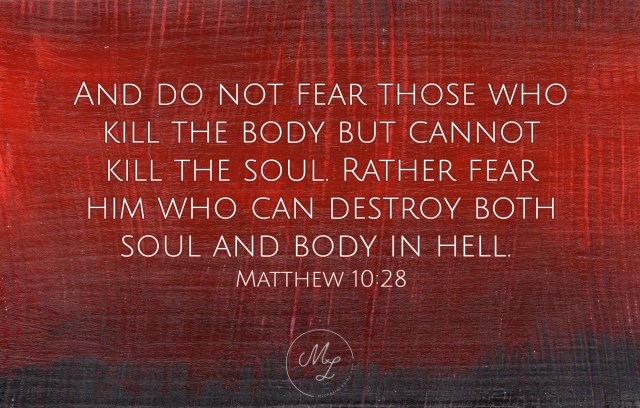
And, if you belong to Christ, you have nothing to fear in this life or the next. Take a look back at that verse. It says to “fear him who can destroy both soul and body in hell.”  But if you’re in Christ, you no longer have to be afraid of Him. And the first part of the verse says not to be afraid of people who can kill your body but not your soul. Nothing to fear now. Nothing to fear later.

So what’s left to fear? Nothing.

What must I do to be saved?

Faith, Old Testament, Suffering, Sunday School, Trust

But Even If He Does Not… ~ Sunday School Lesson ~ 9-21-14

Shadrach

These are my notes from my ladies’ Sunday School class this morning. I’ll be posting the notes from my class here each week. Click here for last week’s lesson.

Through the Bible in 2014 ~ Week 38 ~ Sep. 14-20
Daniel, Ezra 1-6, Psalm 137, Haggai
But Even If He Does Not…

Exile. God has been warning Israel of the consequences of idolatry for centuries and has finally brought it to fruition. Last week we saw Ezekiel comfort the people with the good news that God’s anger and their punishment would not last forever, but today we find them smack dab in the middle of their time as Babylonian expatriates. How could they live as God’s people while being punished in a pagan nation? How could they please Him apart from temple sacrifices and offerings? Shadrach, Meshach, and Abednego are going to show us.

Daniel 3

The Problem- 1-7 (Exodus 20:1-6)
Here, the stage is set for the drama that is about to unfold. Nebuchadnezzar set up a 90 foot tall (probably much of that was a large base), 9 foot wide statue of himself, and commanded everyone under his rule to worship it. Emperor/king worship was not uncommon at any time during the Old or New Testament periods. While the emperor’s ego certainly must have played into this, it was mainly about loyalty and obedience to that leader and his rule. He was trying to preclude any hint of sedition while reinforcing to the people that he had control over every aspect of their lives. This was an especially important message to drive home to all of the governmental officials (2), because they were the ones most likely to slaughter the emperor and stage a coup.

From the emperor’s perspective, emperor worship also had less to do with actual religion and worship than submission to his absolute rule. Nebuchadnezzar and nearly everyone else in Babylon worshiped a panoply of gods, which was fine with Nebuchadnezzar as long as none of those gods superseded him and his rule in the eyes of his subjects. He was to be esteemed and obeyed above all others. That’s where our young Hebrew friends found themselves butting heads with Nebuchadnezzar’s new law. God is not OK with his people worshiping any other god before, besides, instead of, or in addition to Him. He is the only God, and He alone is to be worshiped, even if your life is on the line.

The Persecution- 8-12 (2 Timothy 3:12, John 15:18)
Shadrach, Meshach, and Abednego were three of the Judean exiles. We saw in chapter 1 that they, along with Daniel, were godly young men who risked their lives to be obedient to God’s commands. By the end of chapter two, Nebuchadnezzar had promoted them to prominent positions in his government. This is probably why the Chaldeans accused them– they were jealous. As with Daniel’s accusers in 6:4-5, they likely could not find any other grounds on which to discredit Shadrach, Meshach, and Abednego because they were upstanding, ethical, loyal citizens.

Satan hates God and anyone who loves and serves Him. John 15:18 says,

If the world hates you, know that it has hated me [Jesus] before it hated you.

Because of this hatred, Satan will do anything in his power to get God’s people to turn away from Him or sin against Him. He is the force behind all persecution, and he often uses his own servants to attack God’s servants. This was true for Shadrach, Meshach, and Abednego, and it is true for us today. Second Timothy 3:12 says,

Indeed, all who desire to live a godly life in Christ Jesus will be persecuted,

If we love God and strive towards holiness, we will find ourselves under attack at times.

The Predicament- 13-15
Being a child of God can often mean facing scary situations in which we are tempted to cut corners or sin. Shadrach, Meshach, and Abednego were tempted to bow down to the image the first time when the music played. Here, the heat is turned up because they’re standing in front of the man who holds their lives in his hands, and they face the same temptation a second time. Why not just do it? God will understand and forgive them, right?

The Profession- 16-18 (Psalm 115:3, Romans 8:28)
Although it’s tempting to think that way, we can’t, and Shadrach, Meshach, and Abednego prove this out beautifully. They would rather die than disobey their true King. And notice the strength of their testimony in the simple fact that they needed no time to consider Nebuchadnezzar’s offer (16). Immediately, they answered that their minds were made up. Under no circumstances would they bow to the image.

Why? Because they knew nothing was going to happen to them? No. We know that because we have the rest of the story. We have to remember that this was a real event happening to real people in real time, the same way things happen to us. They didn’t know what was going to happen next. For all they knew, they were toast. Yet they stood and boldly declared that God was able to do anything and they trusted Him no matter what.

But even if he does not…Those are probably the most important words in this story. To Shadrach, Meshach, and Abednego, God was still God, still worthy of worship and obedience, whether he spared their lives or not. Can we say the same?

There are a lot of false teachers out there that will tell you it is always God’s will for you to be healed, wealthy, successful. And if you’re not, it’s your fault because of your lack of faith. But the Bible clearly teaches the opposite. If God had not saved Shadrach, Meshach, and Abednego, could anyone say it was due to their lack of faith? Did God refuse to take away Paul’s thorn in the flesh because of his lack of faith? Were 11 of the 12 disciples martyred because they lacked faith?

The truth is, Our God is in the heavens; he does all that he pleases. (Ps.) God does what He does for His glory and our good. And, much like when we take our children to the doctor for a shot, what’s good for us can be scary and painful. What if God doesn’t heal you? What if your child dies? What if your marriage isn’t reconciled? What if you lose your job? For those that love God and are called out to His purposes, He works all things together for good (Rom.) He has not promised us an easy way, but a difficult way. But He has promised to be with us all the way. Can we stand in faith with Shadrach, Meshach, and Abednego and say, but even if He does not…?

The Peril and the Protection- 19-30
If we were writing this story, it would probably end right after verse 18 with Nebuchadnezzar so impressed with Shadrach, Meshach, and Abednego that he backed down and honored them for their courage and integrity. But God’s didn’t want Nebuchadnezzar to be impressed with Shadrach, Meshach, and Abednego. God wanted Nebuchadnezzar to be impressed with Him.

If you’ll notice, God did not rescue Shadrach, Meshach, and Abednego after their profession of Him. Things got worse. Nebuchadnezzar got angrier. The fire got hotter. God did not rescue them before they got tied up. Or before they got to the furnace. Or before they were thrown into the furnace. Or before they hit the bottom of the furnace. God allowed these three men who loved Him and were loyal to Him above all else to hit bottom before He rescued them. He didn’t rescue them from the furnace, He rescued them through the furnace.

God (possibly the preincarnate Christ in a theophany) was with them in the fire and, eventually, He brought them out on the other side. What do you think that did for their faith in Him? How much more intimately did they know Him, how much more thankful were they, and how much more intensely did they worship Him after God walked through the fire with them?

It’s the same for us. We grow to know and love God so much more intimately, when, instead of rescuing us from trials, He walks through them with us. I would not know and trust God as provider the way I do today had He not walked with me through some very difficult situations that only He could provide for. Others know God as healer or comforter or strength because of what He has walked through with them.

And what happened to Shadrach, Meshach, and Abednego wasn’t just about them, personally. God had a broader purpose for their suffering, and also for Daniel’s experience in the lions’ den. In those two incidents (and others), God got to pull back the curtain and reveal Himself to pagan people who desperately needed Him. He showed that He was superior to their gods, that they needed to repent and turn to Him, and that He loves His children. It had always been God’s plan to make Himself known to the Gentiles as well as the Jews, and here were God’s first missionaries. If these four men hadn’t gone through what they went through, Nebuchadnezzar and the rest of watching Babylon would not have seen God. What they went through showcased the great God they served.

Likewise, our trials can be an opportunity to point people to the Christ who has rescued us from the ultimate fire, and who can rescue them as well. Even if He does not…is a glorious opportunity to shine the spotlight on our great, mighty and merciful God.


Faith, Gospel, Salvation, Sin, Throwback Thursday, Tragedy

Throwback Thursday ~ Never Forget…

Originally Published September 11, 2013

9-11neverforgetNever forget.

We will remember.

The words jump off the page, off the screen, from our lips. A haunting breath whispering of unspeakable tragedy and heart rending grief.

The terrorist attacks of September 11, 2001 did something to this country. It changed our history. It changed us.

It was a despicable act of cruelty. People innocent of any crime against their executioners were brutally slaughtered in service to a god who demands the death of infidels.

It was egregious. Horrific. Abominable. And we will never forget. Nor should we.

Do this in remembrance of Me.

The words lie quietly on the page, beckoning us back to another day. A day dusty with the passing of centuries. But it changed our history. It changed us.

It was a despicable act of cruelty. Jesus, innocent of any crime, was brutally slaughtered by executioners serving a God who demands the death of infidels.

But this was no infidel. This was no innocent victim dying needlessly and for no one. This was God Himself laying down His life to take the place of the infidel. You. Me. He satisfied His own wrath against us by pouring it out on His Son.

The cross drove a stake into the heart of sin and death that day and shouted across the expanse of creation, “NO MORE.”

It was egregiously beautiful. A horrific triumph. Abominably liberating. And we will never forget. Nor should we.

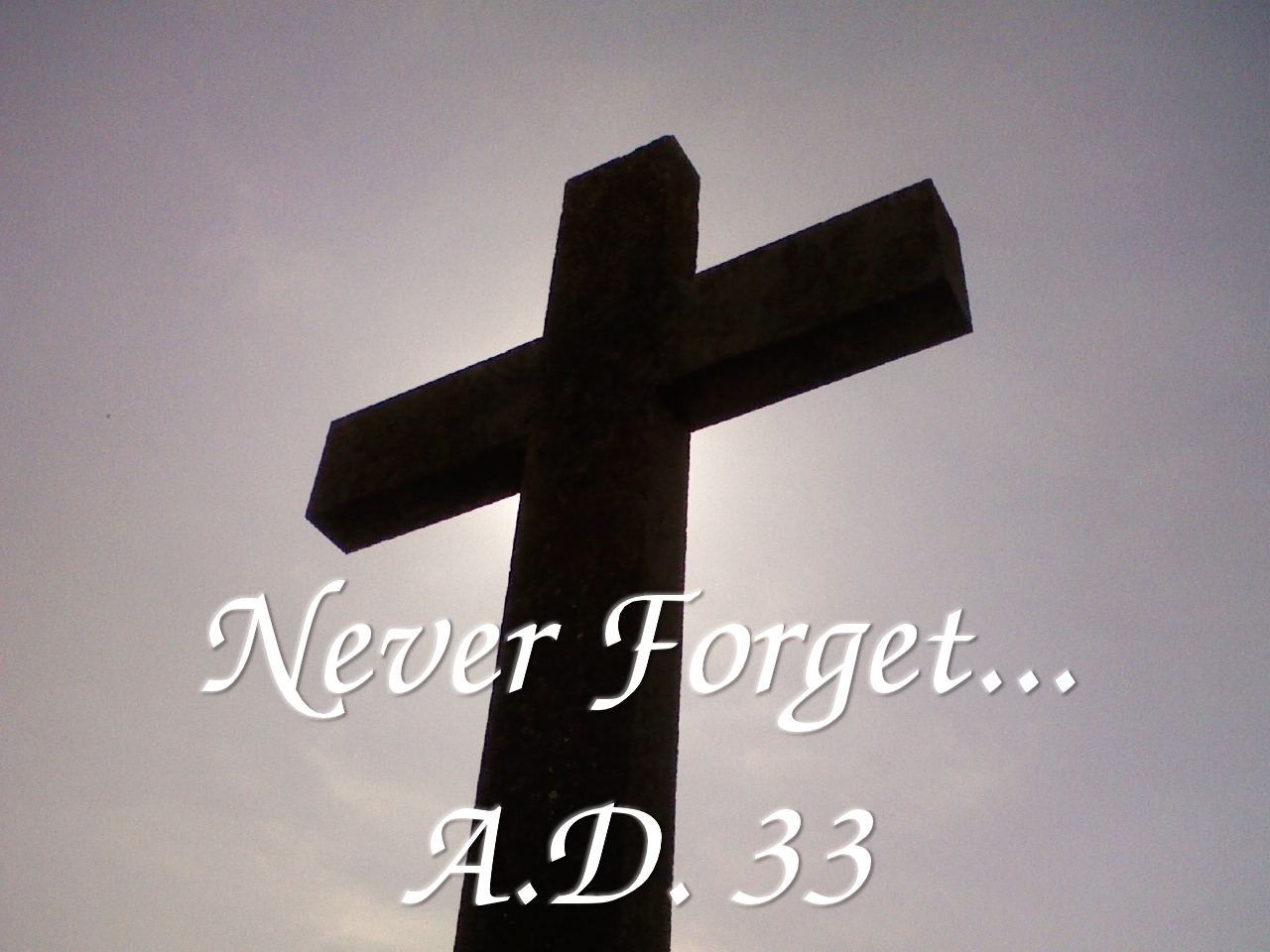
cross_phixr

Faith, Second Coming, Suffering

In the Mean Time

When I was a little girl, around three or four years old, my mother occasionally needed to drop me off at a daycare center so she could run errands or attend to other things you can’t take care of with a pre-schooler in tow.

I hated it.

Even 40+ years later, I remember being terrified. I wasn’t a regular, so I didn’t know any of the other kids or the teachers or the routine or where anything was located. I didn’t want to be there because I didn’t fit in. I wanted to go home. I felt completely uncomfortable the entire time I was there. In fact, I remember crying unconsolably. When would my mom come back and get me out of this God-forsaken place?

Don’t cry. Your mom’s coming back for you soon.

I’m sure some kind teacher whispered that in my ear as she put her arms around me, the same way I’ve whispered it in the ears of children I’ve comforted over the years.

And, finally, Mom would come back, take me away, and everthing would be all right.

Today, I still feel like that tiny child sometimes.

There are days when the evil and sadness of this world overwhelm me. When problems in my own life terrify me.

I hate it.

You see, I don’t fit in here. This isn’t my home. I don’t want to be here. And sometimes, I cry inconsolably…

When, Lord? When will you come back and get me out of this God-forsaking place?

And that’s when the kind and precious Holy Spirit wraps the arms of the Word around me and whispers…

Don’t cry. Your Savior’s coming back for you soon.

Soon, little ones. Dry your tears. He’s coming back for us soon.

Out of honor to my mom, I just wanted to say that I totally understand why she had to take me to the daycare from time to time. I would have done the same thing with my child. I’m sure it was a fine daycare with loving teachers. I’m just the kind of person who never outgrew stranger anxiety. This was my brokenness, not anyone else’s unkindness.
Faith, Old Testament, Parenting, Prayer, Sunday School, Trust

Meet the Parents (of Samson) ~ Sunday School Lesson ~ 4-6-14

sunday school

These are my notes from my ladies’ Sunday School class this morning. I’ll be posting the notes from my class here each week. Click here for last week’s lesson.

Through the Bible in 2014 ~ Week 14 ~ Mar. 30-Apr. 6
Judges 1-18
Meet the Parents (of Samson)

In this week’s reading, we said goodbye to Joshua and met up with a variety of Israel’s lesser known judges. We also read about three better known characters in Israel’s history, judges Deborah, Gideon, and Samson. Often, when we come to passages like this, it’s like a treasure hunt. We focus on the valuables that are in plain sight. But, if we dig just a little, we can find more gems just beneath the surface. Today, we’re taking a look at two godly people who had a profound impact on Samson’s life: his parents.

Judges 13-14

Mr. and Mrs. Manoah
It’s always interesting to me that, just as we saw last week with the two spies, some of the most faithful of God’s servants are ordinary people like you and me serving God as they go about their daily tasks. And, just as with the two spies, in many cases, we never find out their names.  Samson’s mother was just this kind of nameless, faithful servant. Though we know little about her husband, Manoah, the most important thing about him—his faith—comes through loud and clear.

Barrenness (13:2-3)
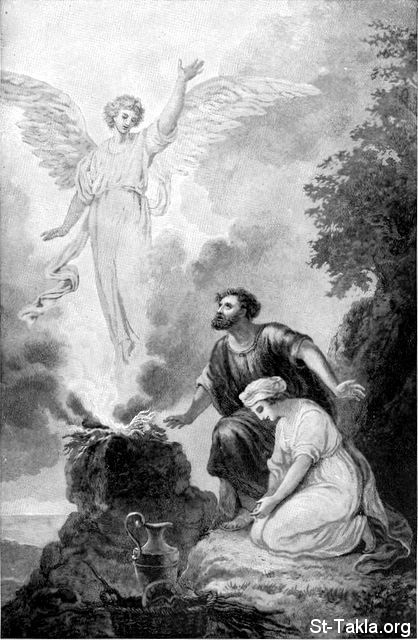
Mrs. Manoah was barren. Have you ever noticed how many “big names” in the Bible had mothers who were previously barren or who conceived miraculously? Joseph (Rachel), Samuel (Hannah), John the Baptist (Elizabeth), even Jesus (Mary), just to name a few. Things are different today, but, in manoah-wife-angel-offering the Bible, a miraculous conception was often a sign that the child would grow up to be a mighty man of God.

Barrenness was usually seen by others in the community as a curse by God or a punishment for sin (and sometimes it was: 2 Samuel 6:23). During that time in history, the only way for women to achieve status and be considered successful was by marrying and having children- particularly sons. A woman’s entire self-worth—in her own eyes, her husband’s eyes, and the eyes of her community—was at stake. So it’s easy to see why women and their husbands would have spent a great deal of time crying out to the Lord in prayer and seeking to be obedient to Him in hopes that He would grant their request for a child. We see this most clearly in the case of Hannah (1 Samuel 1), and it’s reasonable to surmise that this was likely also the case for Manoah and his wife.

Belief, Not Doubt (13:3-8)
It’s interesting that both times the angel of the Lord appeared to deliver His message, He initially appeared, not to the man, Manoah, but to the woman, his wife. Was it because she was praying at the time, or because her faith was stronger than her husband’s? This passage doesn’t tell us, so we don’t know. But, notice Mrs. Manoah’s reaction to the news that she would conceive. Did she laugh in disbelief like Sarah and Abraham did (Genesis 17:17,18:12)? Did she doubt like Zechariah (father of John the Baptist: Luke 1:18)? No, Mrs. Manoah believed. And, as a godly wife should, the first person she shared the news with and sought direction from was her husband.

Now let’s consider the reaction of Manoah to his wife’s news. Did he think her desire for a child had sent her over the edge or that she was making this up? No. He believed her without question. What does this tell us about the character, faith, and influence on her husband of Mrs. Manoah? “The heart of her husband trusted in her” (Proverbs 31:11) because she was a godly, trustworthy woman.

A Household of Faith (13)
In addition to spending time praying for a child, Mr. and Mrs. Manoah probably prayed regularly, like many other faithful Israelites, for deliverance from the Philistine oppressors, and here, we find them in prayer again.

Manoah not only trusted his wife, he had faith that the Lord would fulfill His promise. His first reaction was to believe and ask God the best way to obey Him. “And God listened to the voice of Manoah…” and answered his prayer of faith. He came back—to Manoah’s wife. Again, Manoah believed her without question and followed her out to meet the angel of the Lord.

When they met up with the angel, we see further evidence of this couple’s godliness. Though the angel had appeared and spoken twice with Mrs. Manoah, she, as a godly wife, does not take control of the situation or assert superiority over her husband. She takes a step back and, as a godly husband and leader of his home, Manoah steps up to the plate to assume the responsibility for his family and receive God’s instructions.

Manoah’s conversation with the Lord is fraught with faith. He doesn’t ask how or why they’re suddenly being blessed with a miracle child even though they’re just ordinary people. He simply accepts that it will happen. Manoah is confident that God is telling the truth and will keep His promise when he says, “When [not if] your words come true…” (12, 17). He believes God’s word that Samson will “begin to save Israel from the hand of the Philistines,” (5) when he asks about “the child’s manner of life, and…his mission” (12) so that he and Mrs. Manoah could prepare him to do so. He trusted in the www-St-Takla-org--12-Angel-Visits-Manoah-and-His-Wifecharacter of God, “the one who works wonders,” (19) and worshiped Him as such. He and Mrs. Manoah feared and trusted in God’s holiness as they fell on their faces at His departure (20).

Without a total grasp of the situation (22), Manoah believed God’s word that, “no man can see Me and live” (Exodus 33:20). Only later (21) did Manoah understand that He had been speaking with the angel of the Lord (Jesus – theophany: an appearance of the pre-incarnate Christ – {“My name…is wonderful” (18)- see Isaiah 9:6}—this is how people could “see God and live” even though God had said, “you cannot see Me and live.” They could not live through seeing God the Father, but they could live through seeing God the Son. Also a piece of supporting evidence for the Trinity). Jesus, the true deliverer and judge came personally to announce the birth of this temporal deliverer and judge who would point ahead to Christ.

Finally, we come full circle to Mrs. Manoah’s quiet trust in the Lord. Even with a strong faith like Manoah had, there can be moments of confusion. How could God say to Moses –the greatest leader Israel had ever known, the friend of God!—“you cannot see My face, for man shall not see me and live,”—yet here he and his wife were, having seen Him, but somehow still unscathed? How could anyone understand this?

But Mrs. Manoah shows us that faith means trusting God’s word even when we don’t fully understand His actions. Yes, it was true that God had said that people couldn’t live through seeing Him, but it was also true that He had visited them and told them they were going to have a son who would be a deliverer for Israel. How could both of those things be true at the same time? She probably couldn’t understand it either, but she encouraged her husband to trust God even in their confusion (23). And God kept His promise (24-25)

Trusting Despite the Circumstances (14:1-10)
Kids grow up, and as broken, sinful human beings, they sometimes make foolish decisions despite being raised in a godly home. That’s what Samson seems to have done here. While the Philistines were not one of the seven nations the Israelites were specifically forbidden to intermarry with, the principle behind God’s forbidding of intermarriage with those other nations was the same for the Philistines: they were idolaters and enemies of God and His people.

As godly parents, Mr. and Mrs. Manoah tried to steer their adult son to a godly choice of a wife. They reminded him that he was one of God’s people, and surely wanted him, as a leader in Israel, to set a good example for the people. Once again, they were seeking to be faithful to God.

thInstead of honoring his parents, Samson chose poorly. Or so it seemed. Either Samson was operating solely on lust and God sovereignly used the situation to His own advantage, or Samson, moved by God, was intentionally trying to infiltrate the Philistines by marrying in. The passage doesn’t make this precisely clear to us.

And, it wasn’t clear to Samson’s parents, either. So, perhaps thinking that they could influence the girl’s family or hoping Samson would change his mind, they went along with his decision and accompanied him to meet the new in laws. Once again, though the circumstances were worrisome and hard to understand, Mr. and Mrs. Manoah trusted that the God who had already worked so many wonders in their lives could handle this situation. They had faithfully obeyed what God had asked them to do and raised Samson in a godly home. Now, they had to sit back and watch God take care of the rest. And He did. Again, God kept His promises.

And we know that for those who love God all things work together for good,
 for those who are called according to his purpose. Romans 8:28