Faith

Back to the Basics, Part 1: Grab God’s Hand


Hello, readers! I am taking this week off. I hope you’ll enjoy this three part series while I’m gone.


Originally published January 12, 2011

mp900440954255b1255d

Every year at this time, there’s a lot of talk about New Year’s resolutions. The new year seems to bring with it a feeling of starting fresh, getting a do-over. I’ve never really been one for making resolutions, but this year, New Year’s coincided with some work God was doing in my life to give me a fresh start.

Sometimes we can get into a rut in our spiritual lives, a rut that’s too deep to just step out of by making a few minor adjustments. God has to reach down and pull us up and out of it. That’s where I was. Spiritually, I felt dry; as if God were in the other room, and I couldn’t quite find the door to get to Him. My Bible study and prayer time were shallow and hit-and-miss at best, and I was frustrated.

In answer to my crying out to Him, the Lord began to pull me up out of that rut. As He did, what He showed me was that I needed to get “back to the basics” in my spiritual life. This article is the first in a series exploring the basics God is leading me back to.


Grab God’s Hand

Also if anyone competes as an athlete, he does not win the prize unless he competes according to the rules.

2 Timothy 2:5

Looking back, I can see that one of the ways I got into my rut in the first place was some “stinkin’ thinkin'”. My spiritual life was just beginning to show some signs of dryness around the edges. I thought it was because I was doing my Bible study and prayer time out of habit every day rather than doing them because I felt a supernatural draw to them.

I decided that, rather than have my time with the Lord as a built in part of my every day schedule, I would ask God to give me a hunger for Him and his Word, and that when I felt that longing for Him, I would spend time with Him. I honestly did this with the best of intentions, because I felt myself slipping away from the Lord and wanted to be close to Him again.

Good intentions are a great thing, but if the action they inspire is wrong, the intention is worthless.

Good intentions are a great thing, but if the action they inspire is wrong, the intention is worthless. The action has to be the correct one. Mine was not. John Wesley said, “A fanatic is one who seeks desirable ends, but ignores constituted means.” “Constituted means” simply refers to the normal order of operations God has set up. For example, if I want a cake– a desirable end –I don’t hit my knees, ask God to send me a cake, and then go look in the oven to see if it’s there. I go to my cabinet, get out the ingredients, mix them up, and bake them. Those are God’s constituted means by which I can get cake.

It works the same way in our spiritual lives. Holiness, sanctification (spiritual growth), and hunger for the things of God aren’t three wishes magically granted by a genie, even if you call that genie “God”. You have to use God’s “constituted means” – the work of the Spirit and your obedience – to get there.

Holiness, sanctification, and hunger for the things of God aren’t three wishes magically granted by a genie. You have to use God’s “constituted means” – the work of the Spirit and your obedience – to get there

Paul describes our walk with the Lord as a race or athletic event. You don’t just rub a lamp, make a wish, and, BAM! you’re a great athlete. You get up every day and train and condition whether you feel like it or not. Some days, you’ll be excited about working out, other days, you’ll want to stay in bed, but regardless of how you feel, you still do it. It’s the “doing it” that creates the desire to hone your abilities more, and makes you love the sport more.

Likewise, we will never develop holiness and a closer walk with the Lord just by asking Him for them and then sitting and waiting. As we ask, we have to do the work of study and prayer– even when we don’t feel like it. It is in the “doing it” that God creates the hunger for more of Him. I discovered as I waited and waited for God to draw me close to His side that I was slipping farther and farther away from Him. I was trying to get to my desired end without using His constituted means.

So, when we’re down in that rut we can’t get out of, we should cry out to God to reach down and lift us out of it, but that’s not all. When God extends His hand to pull us out, we’ve got to reach up and grab hold of Him and hang on, even when we don’t feel like it. That’s called obedience, and Jesus said if we love Him, we’ll obey Him.

There are going to be some dry spells. After all, God didn’t talk to Moses from the burning bush every day, now did He? The answer is not to ask God to set the bush on fire, but to hang on to Him in faith when all we see in front of us is a charred pile of sticks.

The answer is not to ask God to set the bush on fire, but to hang on to Him in faith when all we see in front of us is a charred pile of sticks.

Keep walking, keep obeying, keep seeking Him. He has promised we’ll find Him.
Faith

God is NOT Running for Office

Originally published October 1, 2008

Everybody seems to have an opinion about God. Some love Him. Some hate Him. Some will swear He doesnโ€™t exist, while others seem to have Him confused with Santa Claus. Many complain that He isnโ€™t doing His job.

If you were to ask a hundred people who they think God is youโ€™d get a hundred different answers. We all want God to be who we think He is. We want Him to fit neatly into the little box weโ€™ve designed for Him so thatโ€”like the perfect purse or pair of shoes to our favorite dressโ€”He doesnโ€™t clash with our lifestyles, but rather, fits right in and complements what weโ€™ve already got going.

Over the course of the past few months, Iโ€™ve heard or read statements similar to these:

  • I think Jesus was a liberal because He did X, Y, and Z.
  • I’m homosexual. God wouldn’t create me this way and then send me to hell because of it.
  • I think God is much less concerned with (insert sin being defended here) than He is with people being nice to each other.
  • Please pray that God will bless me as I move in with my boyfriend.
  • Iโ€™ve decided _______ isnโ€™t a sin.
  • We shouldnโ€™t be preaching about this or that Biblical principle at church, because people might get offended and stop attending.

Iโ€™ve got news for all of us, myself included:

Who God is is not determined by opinion polls.

Who God is is not determined by opinion polls.

Heโ€™s not a politician who will change His personality or his stance on the issues to please us, because we are not His constituentsโ€”weโ€™re His creation.

So just who is this God anyway? Moses had the same question when he was first starting out. In Exodus 3:13-15, God has just told Moses that He wants him to lead the children of Israel out of Egypt. Moses, trying to wrap his brain around this unforeseen turn of events, says to God in verse 13 (my paraphrase here), โ€œOk, when I get there and tell the Israelites that God has sent me to them, and they say โ€˜Who is this God youโ€™re talking about? What is His name?โ€™ What am I supposed to say?โ€

And God said to Moses, โ€œI AM WHO I AMโ€ (14a)

This is My name forever, and this is My memorial-name to all generations. (15b)

God is who He is. Not who we think He is. Not whatโ€™s convenient and palatable to us. Not who we want Him to be. He has always been that way, still is, and always will be, as we see at the end of verse 15.

God is who He is. Not who we think He is. Not whatโ€™s convenient and palatable to us. Not who we want Him to be. He has always been that way, still is, and always will be.

Alright, so we know that God is who He is. How do we go about finding out what โ€œisโ€ is? Well, if we want to know who a human being is, we spend a lot of time with that person, we talk to him, we listen to what he has to say, and we watch him in action.

Itโ€™s the same with God. We spend time with Him. We talk to Him in prayer. We listen to what He has to say about Himself in His Word, the Bible. We observe the way He acted in the Bible and the way He acts around us today.

As we get to know a person better, we may discover some things about him that we donโ€™t like or donโ€™t understand. Maybe he puts ketchup on his eggs (ick!), or roots for the wrong football team (anybody who plays against LSU), orโ€”horror of horrorsโ€”puts the toilet paper on the roll so that it comes out from the bottom rather than over the top (We all know thatโ€™s the wrong way, right? It goes over the top. :0)

As we discover things we don’t like about a human being, does our dislike or lack of understanding about one of his particular quirks or habits change said quirk or habit? No.

Again, it’s the same way with God, and even more so, because while a person might be willing to change some of his ways to please another person, God is not. And if we think about it, why should He? And would we really want Him to bend to suit our fancies even if He were willing to do so?

Would we really want God to bend to suit our fancies even if He were willing to do so?

Imagine you bought an over the top, fantastic new car and had the opportunity to meet the car’s designer. At this meeting, he tells you all of the things you should do and not do to keep the car running in tip top shape. He even gives you a detailed owner’s manual reiterating everything he’s just told you. Would you believe what he says about taking care of the car?

How much more should we believe and obey what God has to say about the way we should live? He designed us. He knows exactly how we work and what is good for us and what isn’t good for us. Moreover, He loves us and always wants what is best for us. We didn’t design us or anything in our environment. We don’t know everything. Lots of times we don’t even want what’s best for ourselves because we don’t know what’s best for ourselves. Who are we to tell God how He ought to run things?

When God says something is a sin–harmful to us and an affront to Him– it is. When He says something is good and holy, it is. End of story, no discussion, period. You and I don’t get to change those things to suit ourselves. When we try to, what we’re ultimately saying is that God is wrong and doesn’t know what He’s doing. That we know how to handle things better than He does. That we are more qualified for the job of being God than He is.

When God says something is a sin–harmful to us and an affront to Him– it is. When He says something is good and holy, it is. End of story, no discussion, period.

This is the absolute antithesis of Christianity. Jesus said, “…If anyone wishes to come after Me, he must deny himself, and take up his cross and follow Me.” There is no such thing as a “Christian” who willfully, purposefully, and continuously decides to immerse himself in, and pursue, a lifestyle of anything God calls sin. Becoming a Christian requires that we put ourselves, our opinions, our feelings and our impulses aside and submit to the authority of Christ. Salvation does not take place until we embrace the fact that He is God and we are not.

When we refuse to bow to who God really is, who He says He is in the Bible, and start redesigning Him according to our own opinions, according to what’s popular, or according to what is politically correct, what we have done is to set up an idol, a false god, to worship. Take a look at Exodus 20:1-4, and notice that in the middle of verse 4, it says we are not to “make for [ourselves] … any likeness of what is in heaven above“. While we may not be carving a literal statue of stars or planets to worship, which is the context of this passage, we frequently figuratively carve out our own likeness of heaven’s God.

God is who He is. We can take Him or leave Him, but we can’t re-make Him. We were made in His image, not He in ours. He isn’t going to formulate a platform we’ll like so He can earn our vote. He already holds the office of King, and even though He’s frequently opposed, He’s not going to be deposed.

Faith

Kissing the Face of God

Originally published October 15, 2008

A few Sundays ago as we were getting ready to go to church, I picked up my five year old, hugged him, and asked, โ€œAre you ready to go to worship?โ€

He smiled and nodded, gave me a kiss on the cheek and then said something which he will never recall, but which I will never forget. He said,

โ€œI just kissed you and God at the same time.โ€

Iโ€™m not sure what he, in his five year old reasoning, meant to convey by that statement, but I have been thinking about what God could have meant by it ever since.

Because Iโ€™m a Christian, my body quite literally houses the Holy Spirit, so in a way, what my son said was true.

The last part of 1 Corinthians 6:20 says that because the Holy Spirit lives in me, Iโ€™m to glorify God in my body. Everything my body says or does is supposed to point people to God, so that when they look at me, they see Him.

Wow. Thatโ€™s a pretty heavy duty responsibility. Am I doing that?

Unfortunately, the answer is โ€œnoโ€ more often than I care to admit.

I want to live that way, though. I want people to feel Godโ€™s healing in my touch, hear His kindness in my voice, experience His forgiveness in my embrace. Because Iโ€™m the only Jesus some will ever see, I want to be Jesus to them.

Faith, Gratitude, Prayer

Throwback Thursday ~ Welfare Check

Originally published March 30, 2011

“Why can’t You just give me this so I don’t have to ask anymore?”

I know. It sounds like a pretty spiritually immature thing to pray. But to be honest, I was weary of taking this ongoing problem to the Lord every time it reared its ugly head. Why couldn’t He just fix it permanently so I didn’t have to deal with it anymore?

Because I don’t like dealing with problems. They make me uncomfortable. I don’t like being uncomfortable. I’d rather God would just make the problems go away and then everything would be blue skies and rainbows for me all the time. Just the way I like it.

Even the most liberal Liberal has heard a story or two about the welfare system that made him raise an eyebrow. As a radical, right-wing, uptight, Bible-thumping, evangelical Conservative, I’ll admit I’ve groused about the problems with the system a time or two. I think one of the things that tends to bother most people about some of the stories we hear is the sense of entitlement a few (certainly not all) welfare recipients can develop. It’s as though they are owed a nice lifestyle without having to lift a finger. They take what they receive for granted, and whatever they are given is never enough. They always want more. Nicer. Better. No gratitude, just gimme.

Hmmm…
That hits uncomfortably close to home.

You see, I’m living in God’s welfare system.

When was the last time I had to ask God for air to breathe? Or to make my heart beat? Or for clean water to drink, bathe, and do laundry in? Or food for my table?

When was the last time I even thought about the fact that I can think clearly enough to thank Him that I don’t have a psychiatric disorder or a brain injury? How often do I get down on my knees and praise God that I can get back up again? I can walk. I can talk. I can see. I can hear.

God has blessed my family with six beautiful, healthy children, four of whom I was able to conceive, carry, and bear, relatively complication free.

I have a wonderful, godly husband and great father to my children who isn’t a drug addict or a gambling addict, or an alcoholic, or a workaholic, or unfaithful or abusive to me. We live in a nice house, on a nice street, in a nice safe neighborhood.

God has blessed me with an extended family as well as a church family who both love me in spite of my numerous faults. He’s even given me the humbling honor of being able to serve Him in ministry.

But I always want more. Nicer. Better. No gratitude, just gimme.

God has blessed me so much. But I always wantย more.ย Nicer.ย Better.ย No gratitude, just gimme.

Paul said in 2 Corinthians 12:7-9 that God gave him a thorn in the flesh to keep him from exalting himself. Frequently our focus in that passage is on speculating as to what, exactly, the “thorn” was. We fail to notice in the next verse that that thorn kept Paul coming back to the Lord, crying out to Him again and again. And that’s right where Paul needed to be.

Sometimes that’s one of the purposes of our problems. God has blessed us with so many things we can forget we need Him. Until there’s a problem. And that problem can drive us back to crying out to Him in dependence in a way that no blessing ever could.

So maybe it’s time for a little welfare check:

1. Have you thanked God lately –really thanked Him- for all the blessings we tend to take for granted – food, clothing, freedom, a vehicle, etc.? Do you live as though God owes you these things?

2. In what ways do problems tend to drive you towards, or away from, God?

3. What does your prayer life look like when everything is going well in your life? When problems arise? How can you apply Philippians 4:6 in your prayer life?

Faith, Sin

Throwback Thursday ~ The “Forbidden Fruit” Fallacy

Originally published February 20, 2015

You’ve heard the old adage: “forbidden fruit is sweeter.” When people use this phrase, what they mean is that if you tell someone he can’t have or do something, he’s going to want to have or do it all the more just because it’s forbidden.

I heard this little clichรฉ several times last week on blogs, on Facebook, in discussion groups, etc., in reference to the deluge (yes, I contributed to it) of Christian blog and press articles decrying the movie Fifty Shades of Grey, and discouraging Christians from attending. Apparently – and I can see where they’re coming from, a little, I guess – some folks felt that the strong, repetitive, and biblical stand against Fifty Shades turned it into a piece of forbidden fruit that a) actually informed Christians (who would have been otherwise oblivious) that this movie even existed (Really? People are tech savvy enough to be on Facebook, Twitter, and blogs, but they were completely unaware of this movie? Ok, I suppose it’s possible.) and b) made Christians want to go see the movie because of its verboten status. The implication was that, if Christians went to see this movie, it was the fault – at least in part – of Christian writers who had warned against it.

Seems reasonable, right?

Until, that is, you start looking at this line of thinking a little more closely through the lens of Scripture.

Pop quiz: What does the phrase “forbidden fruit” allude to?
a) prunes
b) Snow White’s poisoned apple
c) the fruit of the tree of the knowledge of good and evil in Eden

Please tell me you answered “c,” because, if you didn’t, I might have to sit down and cry. When God put Adam in the Garden way back in Genesis 2, He said, “You may surely eat of every tree of the garden, but of the tree of the knowledge of good and evil you shall not eat, for in the day that you eat of it you shall surely die.” (2:16-17) Fruit. Forbidden. Boom.

Notice that God is the One who forbade Adam from eating this fruit. God’s way, throughout the entirety of Scripture, is to warn the people He loves of the dangers and consequences of sin, not to remain silent and keep His fingers crossed that they don’t stumble into a pit. God didn’t stick the tree in the middle of the Garden and say to Himself, “Gee I hope Adam doesn’t notice this tree and eat from it, but I’m not going to mention it to him because I’m scared that I’ll make him aware that it exists, and that he’ll want to eat from it just because I said he can’t.” Uh uh. God pointed it out and said, “No.”

God’s way, throughout the entirety of Scripture, is to warn the people He loves of the dangers and consequences of sin, not to remain silent and keep His fingers crossed that they don’t stumble into a pit.

And let’s take a gander at something else in this story. What caused Adam and Eve to eat from the tree? Was it God telling Adam not to eat from it? No. If that was all it took, why don’t we find Adam eating the fruit immediately after God told him not to? Why didn’t Eve immediately eat from the tree upon learning from Adam of God’s prohibition against it?

Because the warning is not what led them to sin.

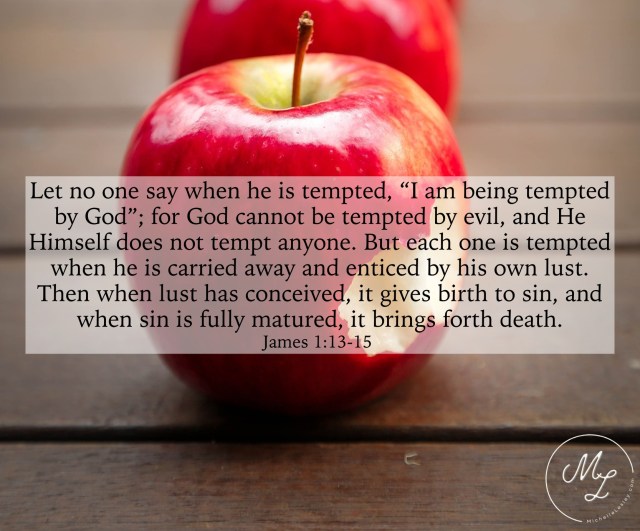
We don’t see Eve lay a finger on that fruit until Satan enters the picture. He tempted her, and she gave in to sin.

It wasn’t God’s fault for putting the tree there. It wasn’t God’s fault for warning them. It was Adam’s fault and Eve’s fault for being disobedient.

And giving in to sin is still our fault today. If you went to see Fifty Shades of Grey, it’s not God’s fault for allowing the movie to exist. It’s not some Christian blogger’s fault for making you aware of the movie or warning you not to see it. It’s your fault. You were tempted. You gave in to sin. (The good news is that if you will repent, God will graciously forgive you.)

As Christians we are to be imitators of God. “Whoever says he abides in him ought to walk in the same way in which he walked.” (1 John 2:6) That means that when we see sin that could easily ensnare our brothers and sisters, we don’t turn our heads. We don’t mind our own business. We don’t keep our mouths shut to be polite. We do the same thing God did time after time in the Bible. We run into the fray to rescue those we love.

When we see sin that could easily ensnare our brothers and sisters, we don’t turn our heads. We don’t mind our own business. We don’t keep our mouths shut to be polite. We run into the fray to rescue those we love.

And we are not to blame if there are those who choose to charge headlong into sin rather than heed the alarm we sound.