Book, Jacob

E-BOOK SUPER SALE!!!

Image

All e-versions of “Jacob” are on sale! Get a Kindle or Nook copy for just 99 cents, or other e-version at CBD for just 79 cents! (Click the hyperlinks here, or click on the “Books” tab above.)

You can give “Jacob” as aย GIFT, too! At these prices, you can get one for all the women on your Christmas list!

And don’t forget your women’s Bible study group! You don’t have to have an e-reader or tablet. “Jacob” can be downloaded to your smart phone, computer, or tablet, too. This is a much less expensive way (especially for small churches on a limited budget) to do a women’s Bible study than ordering a $15 workbook for everybody. It’s a great time to start thinking about January Bible studies!

Order your copies today– this is a limited time offer!

False Doctrine, False Teachers, New Apostolic Reformation, Top 10

Top 10 NAR* and Seeker-Driven Buzzwords

I study false teachers pretty often. I watch their videos, listen to their sermons, and read their articles. And I’ve noticed that there are some common buzzwords that New Apostolic Reformation* and Seeker-Driven false teachers tend to use over and over again. Naturally, these words are just that: words. Just because you hear your pastor, Sunday School teacher, or favorite Christian celebrity utter one or more of them doesn’t necessarily mean he or she is a heretic. But if you’re constantly hearing these words and phrases, it could be a red flag that you need to vet the person you’re listening to more carefully and see whether or not his or her theology matches up to what the Bible says. So, here, in no particular order are 10 such buzzwords and some of the false teachers who are fond of them:

1. The Glory

Photo Credit: Revival Magazine


“Sometimes as I stand in the glory my hands and feet will begin to drip with supernatural oil, representing the miracle anointing of God.” ~ Joshua Mills


 2. In The Natural

Photo Credit: Awesome God Ministries


“I learned that even when we are in a place of obedience, we often have no way in the natural of knowing for sure whether we are right or wrong.” ~ Joyce Meyer


3. Shaking/Shifting

Photo Credit: Apprising Ministries

“If we continue to pray and call out to God, the nation will shift.”

“There is terror in Tampa, Tallahassee and Miami – a ring of terror; but, God has a ring of fire. Shaking, shaking, shaking.” ~ Cindy Jacobs


4. Decree

images
Photo Credit: Do Not Be Surprised


“Decree and declare… THE FAMINE IS OVER!” ~ T.D. Jakes


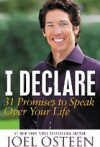
5. Declare

Photo Credit: Amazon


“I declare that I am a ‘no lack’ person and receive every blessing You have prepared for me.” ~ Joel Osteen


6. Spirit-man

Photo Credit: Jennifer LeClaire Ministries


“Pray always and when you catch your mind trying to reason out a prophetic revelation, let your spirit man rise up and take control.” ~ Jennifer Leclaire


7. Holyspirit

the-holy-spirit-364251_640

A number of NAR personalities refer to the third Person of the Trinity as “Holyspirit” -as though that were His first name- instead ofย the Holy Spirit. For example, “Holyspirit said to me the other day…”

It is nearly impossible to isolate a text example of this as a) it is usually verbal and b) search engines always include the word “the” in search results.


 8. In the heavenlies

Photo Credit: The Elijah List


“War in the heavenlies. We can battle against the enemyโ€™s strategies through prayer and declaration of the Word. This wins the battle in the heavenlies before it hits the earth.” ~ Patricia King


9. Come into agreement/alignment

Photo Credit: The Elijah List


“…the Bible states that God, before time, determined your zip codeโ€”that spiritual place and geographical location; when you get into that spot, everything around you will begin to come into alignment.” ~ Cindy Trimm  


10. Cast vision

Photo Credit: FBC Jax Watchdogs


“Sure, I cast visionโ€”but it has taken every staff member and volunteer we have to pull it off.” ~ Perry Noble


What are some common words and phrases
you often hear false teachers use?

Wednesday's Word

Wednesday’s Word ~ Revelation 21

10340005_861800553860880_6718115999629917744_n

Revelation 21

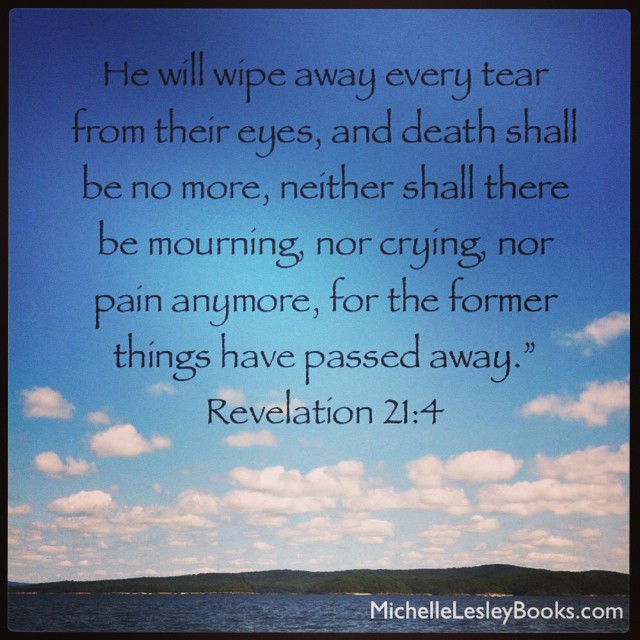
Then I saw a new heaven and a new earth, for the first heaven and the first earth had passed away, and the sea was no more. 2 And I saw the holy city, new Jerusalem, coming down out of heaven from God, prepared as a bride adorned for her husband. 3 And I heard a loud voice from the throne saying, โ€œBehold, the dwelling place of God is with man. He will dwell with them, and they will be his people, and God himself will be with them as their God. 4 He will wipe away every tear from their eyes, and death shall be no more, neither shall there be mourning, nor crying, nor pain anymore, for the former things have passed away.โ€

5 And he who was seated on the throne said, โ€œBehold, I am making all things new.โ€ Also he said, โ€œWrite this down, for these words are trustworthy and true.โ€ 6 And he said to me, โ€œIt is done! I am the Alpha and the Omega, the beginning and the end. To the thirsty I will give from the spring of the water of life without payment. 7 The one who conquers will have this heritage, and I will be his God and he will be my son. 8 But as for the cowardly, the faithless, the detestable, as for murderers, the sexually immoral, sorcerers, idolaters, and all liars, their portion will be in the lake that burns with fire and sulfur, which is the second death.โ€

9 Then came one of the seven angels who had the seven bowls full of the seven last plagues and spoke to me, saying, โ€œCome, I will show you the Bride, the wife of the Lamb.โ€ 10 And he carried me away in the Spirit to a great, high mountain, and showed me the holy city Jerusalem coming down out of heaven from God, 11 having the glory of God, its radiance like a most rare jewel, like a jasper, clear as crystal. 12 It had a great, high wall, with twelve gates, and at the gates twelve angels, and on the gates the names of the twelve tribes of the sons of Israel were inscribedโ€” 13 on the east three gates, on the north three gates, on the south three gates, and on the west three gates. 14 And the wall of the city had twelve foundations, and on them were the twelve names of the twelve apostles of the Lamb.

15 And the one who spoke with me had a measuring rod of gold to measure the city and its gates and walls. 16 The city lies foursquare, its length the same as its width. And he measured the city with his rod, 12,000 stadia. Its length and width and height are equal. 17 He also measured its wall, 144 cubits by human measurement, which is also an angel’s measurement. 18 The wall was built of jasper, while the city was pure gold, like clear glass. 19 The foundations of the wall of the city were adorned with every kind of jewel. The first was jasper, the second sapphire, the third agate, the fourth emerald, 20 the fifth onyx, the sixth carnelian, the seventh chrysolite, the eighth beryl, the ninth topaz, the tenth chrysoprase, the eleventh jacinth, the twelfth amethyst. 21 And the twelve gates were twelve pearls, each of the gates made of a single pearl, and the street of the city was pure gold, like transparent glass.

22 And I saw no temple in the city, for its temple is the Lord God the Almighty and the Lamb. 23 And the city has no need of sun or moon to shine on it, for the glory of God gives it light, and its lamp is the Lamb. 24 By its light will the nations walk, and the kings of the earth will bring their glory into it, 25 and its gates will never be shut by dayโ€”and there will be no night there. 26 They will bring into it the glory and the honor of the nations. 27 But nothing unclean will ever enter it, nor anyone who does what is detestable or false, but only those who are written in the Lamb’s book of life.


The Holy Bible, English Standard Version Copyright ยฉ 2001 by Crossway Bibles, a division of Good News Publishers


Questions to Consider:

1. What is the purpose of theย bookย ofย Revelation? Which genre(s) of biblical literature (prophecy, epistle, narrative, wisdom, etc.) is the book of Revelation? What is the historical backdrop for this book?

2. What is the final, eternal dwelling place for Believers? (1-3) Compare and contrast the eternal reward of Believers (1-7) with the eternal punishment of unbelievers (8).

3. Study the verses that talk about the new heaven and new earth (1-7) and the new Jerusalem (10-27) and, in your own words, write a description of each, including both their physical appearances and characteristics.

4. How could verse 5 serve as a theme verse for this chapter? What is the significance of…

  • The new heaven, earth, and Jerusalem
  • God wiping away all tears, etc. (4)
  • God making His dwelling place with man
  • The glory of God giving light to the city

…and all the other elements of this chapter, to the theme of God making “all things new”?

5. Which aspect of the new heaven/earth/Jerusalem described in this chapter is most moving to you, and why?

Uncategorized

Blog Swap

ย I have a few Blog Swap slots to fill for November and December. If you’d be interested, please read the information below and drop me an e-mail. I’m especially looking for Thanksgiving and Christmas items (DIY, recipes, crafts, kids’ activities, party ideas, date night suggestions, creative writing, etc.) but other topics would be great, too.


blog swap

Got a blog? How would you like a little more exposure? How about a blog swap?

Sometimes blog hops and link parties can have so many contributors that your blog/article gets lost in the shuffle and you end up reaching fewer people than you’d planned on. With a blogย swap, you get 100% of the audience’s focus.

It’s essentially an exchange of guest posts. You post one of my articles (I’ve got nearly 400 to choose from) with a link back to my blog and I’ll post one of yours with a link back to your blog. It’s a win-win for reaching more people. (Quick stats: I’ve got 300+ subscribers here at the blog, 550+ followers on Facebook, and about 30 followers on Google+, and I do link Blog Swap articles to those two social media accounts.)

Details:

1. Blog Swaps run as a semi-regular weekly feature on Mondays (the day may change in the future).

2. I’d like for my article to run concurrently on your blog, but if you have a conflict, no problem. You can run it any time the week prior to the Monday your article is scheduled to run here.

3. Send me up to five of your best articles to choose from. You’re welcome to choose any of my articles you like. (Just let me know if you need help/suggestions.) Fair warning-if you’re new, you should know that nearly all of my articles have to do with biblical topics, and all are written from a biblical perspective.

4. Any subject matter is fine as long as neither your article nor your blog in general violate Scripture or scriptural principles. Recipes, crafts, DIY, marriage, home schooling, singles, parenting, book/movie reviews, men’s interest, photo blogging, nutrition, exercise, etc., are all welcome.

5. If you submit articles of a theological or biblical nature, please also include a statement of faith. (It’s fine to link to your denomination’s or church’s statement of faith on their web site and say, “I agree with this.” Click on my “Statement of Faith” tab above for an example.) I cannot publish articles/blogs that I find to be in contradiction to sound doctrine.

6. Got friends with blogs? Please share this around!

Think you’d be interested in doing a blog swap with me? E-mail me at MichelleLesley1@yahoo.com with your name, links to up to 5 articles, a brief description of your blog, and your statement of faith (if applicable).

Looking forward to hearing from you soon!

Law- Old Testament, New Testament, Sunday School

Woe is We ~ Sunday School Lesson ~ 11-9-14

10411357_871793486194920_2743410473784962078_n

These are my notes from my ladiesโ€™ Sunday School class this morning. Iโ€™ll be posting the notes from my class here each week. Click here for last week’s lesson.

Through the Bible in 2014 ~ Week 45 ~ Nov. 2-8
Luke 18:15-21:38, Mark 11-13, John 12, Matthew 22-25
Woe Is We

Matthew 23

Background:
The Pharisees* were the movers and shakers in Jewish religious life. They held positions of authority in the Sanhedrin (Jewish governing council) and temple, and generally concerned themselves with keeping and enforcing what they perceived to be proper law and order within Judaism.

The main problem with the Pharisees (as Jesus so often, and rightly, pointed out) was that they had added hundreds of their own laws on top of God’s laws and equated the keeping of their laws with the keeping of God’s laws. We often look back through history and chide them for this (sometimes deservedly, sometimes hypocritically), but let’s keep something in mind: they had seen what disobedience to God’s law had caused. Warfare, siege, starvation, bloodshed, exile. It was horrific. But instead of seeking to love God with all their hearts and obey Him out of that love, they started “double fencing.” If God put up a “no trespassing” fence around, say, working on the Sabbath (doing your regular job/work instead of resting and worshiping), the Pharisees backed up about 100 yards and put up an additional fence to make sure you wouldn’t break that law. You couldn’t walk more than a certain number of steps- that might lead to working. You couldn’t rub grain in your hands to hull it and eat it (Luke 6:1-2)- that was too much like working.

One of the things Jesus was trying to show people, including the Pharisees, was that a right relationship with God was about loving Him, not rule-keeping. This scared the Pharisees. It probably sounded too loosey-goosey. They were afraid that if Israel didn’t maintain strict adherence to the law, anarchy would break out and result in an even harsher judgment from God than they had previously experienced. And since Jesus was spearheading this movement away from the heavy burden of Pharisaical law, the Pharisees wanted to get rid of Him.

As we approach chapter 23, the Pharisees’ approach to getting rid of Jesus had been largely passive aggressive instead of direct. Hoping to show Jesus for the blasphemer they thought He was, they spent most of chapter 22 trying to trick Him into saying something they could nail Him on. Taxes, the resurrection of the dead (that was actually the Sadducees), the greatest Commandment. They couldn’t seem to trip Him up. Jesus, having answered all their thinly veiled questions, turns the tables on the Pharisees, and manfully addresses them, and their sin, directly, pulling no punches.

Intro to Woe (23:1-12)
Jesus prefaces what he is about to say to the scribes and Pharisees by addressing the disciples and the gathered crowd. He wants to make sure the people understand that there is a difference between God’s law, which is good, and the Pharisees’ perversion of God’s law, which is bad. The people were to keep God’s law as it was presented in Scripture (3), not as it had been built upon by the Pharisees. Furthermore, whatever good motive the Pharisees might have started out with in making all these extra laws (i.e. keeping the people from breaking God’s law), their motive had now morphed into attention and honor-seeking (3-7). They were no longer motivated by a genuine concern for God’s people and holiness, but by a desire for accolades and prominence. Jesus wanted the people to be careful not to fall into that trap themselves (8-10), especially the disciples, who would soon be heading up the New Testament church. They were to humble themselves and serve those they shepherded, not become “celebrity pastors.”

Woes 1&2 (13-15, Luke 3:8, Genesis 15:6)
It’s interesting that the Pharisees were so proud of their Abrahamic heritage (“We have Abraham for our father…” Luke 3:8) but they forgot what God declared to be the theme of Abraham’s life- righteousness through faith, not law-keeping:

And he [Abraham]believed the Lord, and he counted it to him as righteousness. Genesis 15:6

The Pharisees were believing and teaching a false doctrine of righteousness by works, not faith. They were teaching this both to the Jews under their care (13) and to any Gentiles who might be seeking the one true God (15). False doctrine, even if it sounds good and holy to the ear, even if it seems to be “Bible-ish,” even if it’s being preached by someone in religious authority, sends people to Hell. Jesus says so right here. The only gospel that saves is the one Jesus preached, the one that is true to God’s word.

Woe 3 (16-22, Matthew 5:34, Exodus 20:16, Proverbs 12:22, John 14:6)
These days, nobody seems to give a second thought to saying, “I swear to God,” to make people believe them, even when they’re lying. People place their hands on a Bible in court, swear to tell the truth, and then perjure themselves, fearing only the legal consequences, not the spiritual. The Pharisees were a little more concerned that God might zap them if they used His name to convince someone of their honesty, all the while deceiving him. Their deceitfulness was so pervasive that they had devised a list of things they could swear by that wouldn’t bring down God’s wrath even if they were lying. But they were only deceiving themselves. It didn’t matter what they swore by, because everything belongs to God and is under His control. God’s command is not to lie (Ex.). Period. He says that “lying lips are an abomination” (Pr.) The God who says, “I am THE TRUTH,” (Jn.) wants us to be so in love with truth that truth is all we speak, rather than seeing how many lies we can get away with.

Woe 4 (23-24)
The tithe didn’t really cover these tiny little herbs, but the Pharisees dutifully measured out a tenth of everything to show their righteousness. But they were so focused on the metrics of righteousness that they had lost the heart of righteousness. That’s why we see them, in several instances, not rejoicing that a blind or crippled person had been healed, but chastising Jesus for healing the person on the Sabbath. Notice that Jesus didn’t say they were wrong to tithe, only that they should not have forgotten to love and serve their neighbors while doing so. Their religion had become a rigid skeleton of laws and regulations, do’s and don’t’s. No heart, no flesh.

This is one that so many churches today are guilty of without even realizing it. When we focus on man-made rules and traditions to the extent that we don’t notice the people we’re trampling on in the process, or we cannot help people because we’ve backed ourselves into a corner with our own rules (and please notice, I’m talking about man-made rules here, not strict adherence to sound doctrine, which is required by Scripture), we are doing exactly what Jesus was scolding the Pharisees for.

Woes 5&6 (25-28, 1 Samuel 16:7b)
1 Samuel 16:7b says:

For the Lord sees not as man sees: man looks on the outward appearance, but the Lord looks on the heart.โ€

And what Jesus saw in the Pharisees’ hearts was people who were dead (27) in their sins (25). They concerned themselves only with appearing righteous to others, not with the actual condition of their hearts. Because they were unsaved, the best the Pharisees could do was to put on a facade of holiness, and they worked hard to maintain that facade. Jesus tried to explain to them that if their hearts were right with God through faith, humility, and repentance, a righteous outward appearance would be a natural overflow of the righteousness inside. Righteousness isn’t about what we do, it’s about who we are in Christ. It isn’t about behaving like a good person, it’s about trusting in the only good Person who ever lived and having His goodness credited to our accounts.

Woe 7 (29-36)
Jesus is already pretty torqued, but you mess with His faithful servants, and He goes ballistic. Remember all the prophets we read about in our study of the Old Testament and the way many of them were treated? Many of them were murdered by God’s people simply for speaking God’s word to them. And here came the Pharisees, patting themselves on the back, decorating tombs, and saying, “Well, of course we would never have done such a thing.” Hogwash. They were already plotting to kill Jesus (in fact, by now, they had already tried stoning Him and throwing Him off a cliff), and they would go on to martyr 11 of the 12 apostles as well as others of Jesus’ followers in the early church era. Anybody who spoke the truth of God rather than what the Pharisees wanted to hear was in just as much danger as an unpopular Old Testament prophet.

Some Christians are very much the same today. They read the gospel accounts of the Pharisees plotting against, and crucifying, Jesus and think to themselves, “I would never do that,” but if a fellow Christian calls them to repent of obvious sin, or shows them that they’re following false doctrine or a false teacher, they immediately attack that person as “judging,” “unloving,” “divisive,” etc.

Whoa (37-39)
Christ’s public teaching ministry was over with this final diatribe. Having completed these seven woes, what is His tone? Is it angry? Condemning? No, it is sorrowful. One of the defining characteristics of Jesus is that, no matter how much we have sinned, He loves us. And, in the same way you can be absolutely furious with your child yet still love him, Jesus loved these Pharisees. It grieved Him that they preferred their sin of a fake relationship with God to a real relationship with God. God is not the cruel taskmaster the Pharisees’ endlessly burdensome law-keeping implied. In Christ, there is freedom from the yoke of the law– the freedom to love God and obey Him from the heart. That’s what Jesus wanted for the Pharisees. He didn’t want to punish them; He wanted to set them free. Free from duty and drudgery. Free from facades and fear. Free to rest in Christ and enjoy their Father rather than slaving away for Him.

And that’s what Jesus wants for us, too. He obeyed the Law perfectly for us so we wouldn’t have to (because we can’t). And when we trust that He did that for us, He gives us the righteousness that He earned with His law-keeping. Jesus sets us free from the need to strive, to try harder, to pull ourselves up by our own bootstraps. He sets us free to love and enjoy Him.

Whoa.

*Who Were the Sadducees and the Pharisees? by Got Questions?