Holidays (Other), New Year's

Info., Reminders, and Announcements for the New Year

Happy (almost!) New Year! I hope you’ve had a lovely holiday season with family and friends and that Christ has blessed you with rest and worship.

As we get things kicked off for the new year next week here on the blog, I wanted to share some information, reminders, and announcements with you.

๐ŸŽ‰ Are you new to my blog? Here’s some quick info. to help you get acclimated.

๐ŸŽ‰ Starting next week, I’ll be going back to my Tuesday – Thursday (rather than Monday – Friday) blog schedule.

๐ŸŽ‰ If my blog and resources have been helpful to you and you’d like to bless my family with a gift via PayPal, Patreon, or CashApp, please click here. Your kindness and generosity are greatly appreciated. Big hugs and thank you’s to those who have donated in the past or donate regularly!

๐ŸŽ‰ If you don’t already follow one or more of my social media pages, come join in the fellowship! Here are all of my social media links.

๐ŸŽ‰ Are you listening to A Word Fitly Spoken yet? Amy and I would love for you to join us on your favorite podcast platform. Starting next week we’ve got some super new episodes to help you get 2025 started on the right foot.

๐ŸŽ‰ Need a speaker for a women’s conference, retreat, or other event? Looking for a guest for your podcast? I still have slots available on my calendar for 2025. Click here for more information.

๐ŸŽ‰ And speaking of conferences, how would you like to attend a conference I’ll be speaking at? Check out my speaking engagement calendar and register at a conference near you!

Thank you so much for your loyal readership and the kind words so many of you have encouraged me with. You are such a blessing to me, and it is my honor to serve you through writing and resources. May we all strive to please our Lord Jesus Christ together in 2026, and may this be the year of His coming.

Holidays (Other), New Year's

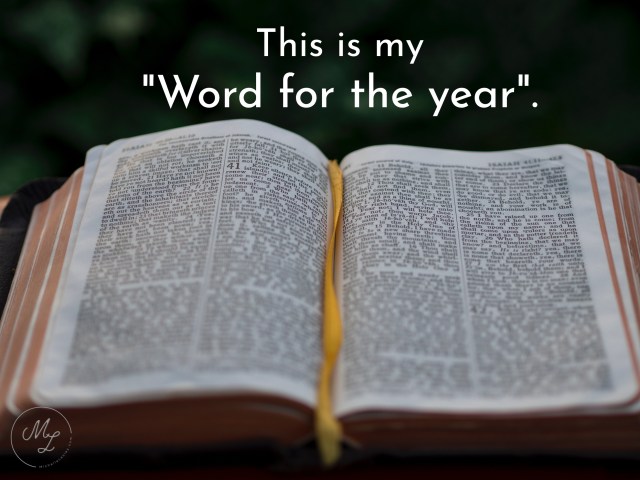
The Mailbag: My word for the year is…

Originally published January 7, 2019

I canโ€™t seem to find information on one topic that keeps coming up with women I am friends with. โ€œOne wordโ€ for the year. They are all waiting to โ€œhearโ€ from God what one word they need to focus on for the year. I have been asked what my word for the year is. I just think… the Word Of God is my word for every year. Do you happen to have any links, resources, or input?

I wish there weren’t any links or resources on this, but, unfortunately, it looks like a small cottage industry – both secular and evangelical – is growing up around this unbiblical concept. (I’m not going to give anyone free advertising and website hits by providing their links.)

The idea is pretty simple. You pick (or God “speaks” to you) a word that represents some sort of change you want to see in your life and you focus on that word, especially during situations when you want to see that change manifest itself, for the remainder of the year. For example, if you want to be a more peaceful person, you might choose “peace” as your word for the year. You find some way to think about or meditate on the word “peace” every day, but especially in worrisome or chaotic situations, and that’s supposed to make you a more peaceful person by the end of the year.

The only problem with this is – as with so many things in pop evangelicalism – the Bible.

You will not find this practice taught, endorsed, or even mentioned in the Bible. In fact, I suspect this idea traces its roots back to some form of Eastern mysticism. It’s a modern day twist on repeating a mantra. And somebody thought it would be a good idea to “Christianize” it – so she slapped a thin coat of “this is how God can speak to you and work in your life” paint over the surface of it.

That’s not how this works. That’s not how any of this works. You don’t just get to make up Christianity as you go along. That’s God’s job, not ours, and He already set it up exactly the way He wants it – in the Bible.

We know that God is not going to speak a certain “word for the year” to people for two reasons. First of all, extra-biblical revelation is unbiblical. God speaks to us through His all-sufficient written Word, not audibly. Which brings us to reason number two. Because God speaks to us through His written Word, and there’s nothing in His written Word about getting a word for the year, we can be certain that He’s not going to be whispering a word for the year in anybody’s ear.

OK, so let’s take the extra-biblical revelation component out of it. What if we go at it from a sanctification angle? Maybe I’ve noticed that I tend to worry too much, so I decide, for the sake of my own spiritual growth, that my word for the year is going to be “peace”, and I’m going to focus on that word this year?

Still not biblical. Not just because it’s not taught in the Bible (although that’s certainly reason enough), but for a host of other reasons as well.

For starters, we are not in charge of our sanctification, God is. He is the one who gets to decide what work He’s going to do in our hearts, and how He’s going to do that. And that’s a really good thing because He is infinitely wiser and more powerful than we are and He knows our hearts much better than we do. You probably won’t hear many of your girlfriends choosing words like “suffering”, “humility”, or “repentance” as their word for the year, but God knows that areas like these – the ones we often push back against with the greatest resistance – are the ones we usually need the most work on.

Next, sanctification isn’t linear. You don’t tackle peace, master it, then move on to patience, master it, and then move on to whatever’s next. And that’s how this “word for the year” thing is set up. This year, you choose the word “peace”. Next year, maybe you’ll choose “patience”, and so on. But what do you do when you get to the end of the year and you know you haven’t mastered peace yet? What then? Do you choose the word “peace” again? Give up on peace and choose another word?

Biblical sanctification is more like a big bowl of spaghetti noodles. Everything is all tangled up and inter-connected. At any given time, God could be working on one or five or a dozen different aspects of your character. And while you’ll rejoice when you occasionally look back over how much you’ve grown, you’ll never “master” any aspect of Christlikeness this side of Glory.

Finally, God has already prescribed our role in sanctification, and meditating on a particular word for the year is not even a little part of it. Our role in sanctification is to abide in Christ. How? We learn the “how” of abiding in Christ from studying our Bibles. John 15 offers us a little glimpse:

V.1: I [Jesus] am the true vine, and my Father is the vinedresser. Recognize that, as I mentioned, God is the vinedresser – the one who prunes, waters, fertilizes, harvests – not you.

V.2: …every branch that does bear fruit he prunes, that it may bear more fruit. Bear up under pruning as God conforms you to the image of Christ. Cooperate with whatever He’s working on in your life by obeying Him, thanking Him, and realizing that He’s doing it to make you more fruitful.

V.4: As the branch cannot bear fruit by itself, unless it abides in the vine, neither can you, unless you abide in me. Recognize and practice your dependence on Christ and His work for you and in you, not on a word you meditate on. You can’t be a fruitful Christian by coming up with your own way to grow in Christ. You can only do it His way.

V.7a: If you abide in me, and my words abide in you… To abide in Christ is simply to live for Him and commune with Him day by day. One of the ways we do that is to study “His words” – the Bible – so that those words will live in us. We ingest the words of Christ by studying our Bibles at home, with our Sunday School or Bible study class at church, sitting under good preaching at our church, and consuming other biblical materials during the week.

V.7b: …ask whatever you wish, and it will be done for you. If you’re abiding in Christ and His Word is abiding in you – what kinds of “whatever you wish” things do you think you’ll be asking Him for? Your foundational prayer to anything else you might ask for will be for God to be glorified and for Him to make you more like Christ. “Father, please heal me, but only if that will glorify You and make me more like Christ.” “Lord, I’d like You to take away this difficult situation at work, unless letting it continue would grow me to be more like Christ. Help me to glorify You no matter what.” Prayer is one of God’s prescribed methods of sanctification.

V.8: By this my Father is glorified, that you bear much fruit and so prove to be my disciples. Glorify God by bearing the fruit of the Spirit, displaying the fruit of obedience, harvesting the fruit of evangelism, and by doing so, displaying for the world what a real disciple of Christ looks like in order to point them to Him.

V.10,12,14: If you keep my commandments, you will abide in my love…This is my commandment, that you love one another as I have loved you…You are my friends if you do what I command you. Obey Christ’s commands and love others the way He loves you. That’s the heart of your role in sanctification. It’s an outward focus on how you can bring Him glory in any situation by obeying Him and loving others with a die-to-self love rather than a navel-gazing, self-centered, inward focus on “How can I be a better me?”.

V.11: These things I have spoken to you, that my joy may be in you, and that your joy may be full. Don’t forget the joy! What joy is there in a word that you focus on? How can you quantify whether or not you’re a better person at the end of the year and derive joy from that? Sanctification God’s way offers instant, daily gratification in the joy department. Joy dwells in us because the Holy Spirit dwells in us. Joy wells up when we see the hand of God at work in our hearts and lives, when He answers prayer, even just from spending time with Him in His Word, worship, and prayer. Joy is communion with a Person, not satisfaction over a job well done of pulling yourself up by your own boot straps.

This “word for the year” thing is not necessary or biblical. When someone asks you what your word for the year is, just hold up your Bible and tell her, “All of these.”

This “word for the year” thing is not necessary, it’s not biblical, and it kicks God out of His rightful place of authority in sanctification and attempts to put self in the driver’s seat. You’re on the right track with your thinking. When someone asks you what your word for the year is, just hold up your Bible and tell her, “All of these.” After all, Christ gives us abundant life. Why would we limit ourselves to one measly little word when we can study all of God’s words?


If you have a question about: a Bible passage, an aspect of theology, a current issue in Christianity, or how to biblically handle a family, life, or church situation, comment below (Iโ€™ll hold all questions in queue {unpublished} for a future edition of The Mailbag) or send me an e-mail or private message. If your question is chosen for publication, your anonymity will be protected.

Marriage

33 Things I’ve Learned in 33 Years of Marriage

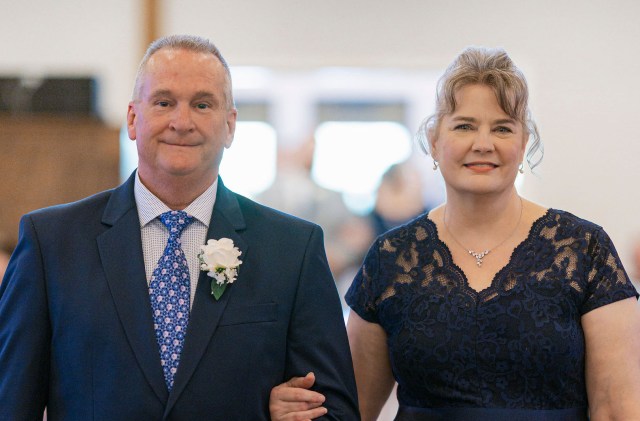
Today is my 33rd wedding anniversary. My husband and I married on a lovely Tuesday evening between Christmas and New Years in a church bedecked with pink poinsettias. And six kids, a growing bevy of kids-in-law, grandbabies, several houses, and a few dogs later, here we still are, plugging away at this โ€œโ€˜til death do us partโ€ thing. There have been a lot of โ€œfor betterโ€ times, and some โ€œfor worseโ€ times. Days when we celebrated โ€œfor richerโ€ and years when we survived โ€œfor poorer.โ€ A few โ€œin sicknessโ€ moments, but, praise God, weโ€™ve mostly lived โ€œin health.โ€

Thereโ€™s a lot I didnโ€™t know about living with a completely different person when I first said โ€œI do,โ€ but here are some things Iโ€™ve learned both in my own marriage, and from the marriages of others, over the last thirty-three years.

1. This, too, shall pass.

Itโ€™s easy to look at one fight, one difficult time, and think, in the moment, โ€œThatโ€™s it. This marriage is over,โ€ but after a while, you realize this is just one tree in the forest of your marriage. At some point, things will calm down and youโ€™ll be on the other side of it. Marriage is a cross country marathon, not a sprint on smooth pavement. Keep going.

2. โ€œNot tonight, Dearโ€ฆโ€

Every couple has to come to their own unique mutual agreement and understanding of each spouseโ€™s wants and needs when it comes to sex. Coercion and manipulation are neither appropriate nor biblical, but neither is depriving each other. There are going to be times when youโ€™re not in the mood for sex but your husband is. If lack of โ€œthe moodโ€ is the only thing causing you to say no, say yes anyway, and do it joyfully and enthusiastically. Think of it this way- your husband probably isnโ€™t always โ€œin the moodโ€ to go to work or take out the trash or help with the kids, but you want him to do those things anyway, with a happy heart, because he loves you. Marriage is about serving each other in all aspects of life, whether youโ€™re in the mood at the moment or not.

3. Submit

Biblical submission is not, as secular feminists might have you believe, for weak women, but for strong, godly women. It takes much more strength to exercise self control and obey Godโ€™s Word than to just do and say whatever you feel like doing and saying. Take it from a headstrong, opinionated gal who thinks sheโ€™s always right- itโ€™s not easy, but biblical submission will make your marriage better, healthier, and more Christ-centered, and will grow you to be more like Jesus.

4. Some things are better left unsaid.

You donโ€™t have to verbalize every thought that comes into your mind, especially when those thoughts are critical, whiny, argumentative, โ€œI told you so,โ€ constantly corrective, complaining, cutting, or in any way unchristlike. Sometimes your most shining moment will be keeping your mouth shut to the glory of God.

5. Forgive quickly

You wonโ€™t find a passage of Scripture that says itโ€™s OK to hold a grudge or dangle your forgiveness over your husbandโ€™s head until he has groveled sufficiently. The Bible says we are to be kind and tenderhearted and to forgive the way Christ forgave us. Do you forgive your husband the way Christ forgives you?

6. Put your husband first.

After your relationship with Christ, your first love, loyalty, service, confidentiality, and time belong to your husband. Not your children, and not your mother, sister, or best friend. Your husband comes first.

7. Donโ€™t undermine your husband with the kids.

God gives your husband the ultimate responsibility for and authority over your family. While you and he can and should privately discuss how to handle disciplinary issues with the children and other family situations which arise, he makes the final decision. Do not collude with the children, argue with your husband in front of them about his decisions, keep secrets from your husband, or otherwise attempt to circumvent his directives. Support him, submit to him, and present a united front.

8. Affirm your husband privately and publicly.

Women can practically turn complaining about their husbands into a competitive sport. Donโ€™t go there. Would you like for your husband to sit around with his friends and complain about you? Donโ€™t do it in a braggadocious way, but, as opportunities arise, let others hear you affirming your husband and thanking God for him. And be sure you do so when itโ€™s just the two of you, too.

9. Donโ€™t publicly shame your husband.

As Christians, we should always โ€“ privately and publicly โ€“ behave in a way that honors God. As married women that godly behavior will also honor our husbands. Donโ€™t ever berate or belittle your husband in front of others (or in private, either), including on social media. Donโ€™t behave in public in ways that would embarrass him. When others think about your relationship with your husband, you want them to think, โ€œWow, he’s really blessed!โ€ not โ€œPoor guy.โ€

10. Divorce is not an option.

This is the mindset with which couples should both enter marriage and handle normal1 fights and difficulties. Do not bring the โ€œD-wordโ€ out during an argument. God says marriage is for life. It is not disposable.

11. Pray for your husband and for yourself as his wife.

This is probably the most powerful thing you can do for your husband and your marriage. Pray for your husbandโ€™s walk with the Lord, situations heโ€™s facing at work, weaknesses heโ€™s struggling with. Pray that God will help you to be a godly wife, and that He will show you how best to support and encourage your husband. Want your husband to change in some way? Donโ€™t nag. Pray for him, and pray that God will help you to respond to your husband in a Christlike way.

12. You were always on my mindโ€ฆ

Donโ€™t those little acts of thoughtfulness from your husband โ€“ unexpected flowers, doing the dishes, a love note – brighten your day and deepen your love for him? Your husband feels the same way. Cook his favorite meal, send him an occasional text letting him know youโ€™re thinking about him, wear the lingerie he likes. Make him feel special and loved.

13. Extend grace.

Your husband is going to mess up. Often. So are you. Donโ€™t turn his every mistake and sin into World War III. The Bible tells us that love covers a multitude of sins. Extend the same love and grace to him in his offenses that you want him to extend to you in yours.

14. Heโ€™s your husband, not your child.

Donโ€™t speak condescendingly to your husband, order him around, or otherwise treat him like heโ€™s one of your children. Heโ€™s not. Show him the respect, support, and love a godly wife is to give her husband.

15. Be on the same page, theologically, before marriage.

The Bible is clear that we are not to partner with unbelievers, and the most painful consequences for disobeying this command are often seen in marriages in which a Christian marries an non-Christian. But even if you both profess faith in Christ, itโ€™s important to be in agreement on things like which denomination or church youโ€™ll join and why, what the Bible says about salvation, menโ€™s and womenโ€™s roles in marriage and the church, parenting, giving offerings, regular attendance, and other theological issues.

16. Admit when youโ€™re wrong and ask forgiveness.

If youโ€™ve sinned against your husband, crucify that pride, admit it, and ask him to forgive you. And donโ€™t forget to repent and seek Godโ€™s forgiveness as well.

17. Youโ€™re not your husbandโ€™s Holy Spirit.

It is the Holy Spiritโ€™s job to convict your husband of his sin, not yours. Certainly the two of you should talk things out, and itโ€™s OK to kindly and lovingly discuss how his sin affects you, but no amount of preaching at him or castigating him with Scripture will change your husbandโ€™s heart, so donโ€™t try. Only the Holy Spirit can do that.

18. God made you the helper, not your husband.

Every family operates differently when it comes to careers, childrearing, and household chores. Couples must reach a mutual agreement about who will carry out which tasks, and should help each other whenever the need arises. That being said, biblically speaking, God has placed wives in the role of helping their husbands, not the other way around. Your husband should not have to work all day and then come home, make supper, clean the house, and raise the children while you pursue hobbies or leisure activities. You both have responsibilities to take care of. Make sure youโ€™re helping him take care of his by taking care of yours.

19. Thank God for your husband.

Donโ€™t forget to thank God for blessing you with your husband. Especially when what you really want to do is hit him with the car. Pour your heart out to God about your anger, sure, but then start thanking God for all of your husbandโ€™s good qualities. You might be surprised at the way it changes your heart, your frame of mind, and your ability to forgive.

20. Take joy in the simple things.

Marriage is not a Hallmark movie, a jewelry store commercial, or a Carnival Cruise brochure. Itโ€™s just not, so donโ€™t expect it to be. Enjoy just spending time talking, working on a project together, or doing chores side by side. Sometimes itโ€™s not โ€œHe went to Jared,โ€ but โ€œWe went grocery shopping,โ€ that can bring the most joy.

21. Your husband canโ€™t read your mind.

Your husband wants to do things for you and give you gifts that please you. If he asks which restaurant you want to go to, donโ€™t say โ€œI donโ€™t careโ€ if you do. Tell him. Donโ€™t tell him whatever he gets you for your birthday will be fine and then pout because he didnโ€™t get the gift your heart was set on. If he does something that bothers you, discuss it with him. Donโ€™t make reading your mind a test of your husbandโ€™s love for you.

22. Donโ€™t go behind your husbandโ€™s back.

Unless what you want is a husband who feels betrayed and doesnโ€™t trust you. If he makes a decision, abide by it. If he asks you not to do something, donโ€™t. If you think heโ€™s wrong, discuss it with him privately, kindly, and lovingly. But, unless it conflicts with Scripture in some way, respect, support, and submit to your husbandโ€™s leadership and decisions.

23. Another man is not the answer.

You might go through some rocky times in your marriage. Confiding in or seeking comfort from another man will only make things worse or irreparable. Donโ€™t be the foolish woman Proverbs 14:1 speaks of who โ€œtears her house down with her own hands.โ€ Another man is the source of more problems, not the fix for your current problems.

24. Help him the way he needs to be helped

Your role in marriage is to be your husband’s helper. But sometimes your idea of how to help will be different from his idea of what’s helpful. Maybe you think his socks should be sorted by color while he prefers them organized categorically (dress socks, atheletic socks, etc.) Whenever possible, help your husband in the way he prefers to be helped, not the way you prefer to help him.

25. Your husband is a valuable resource

God has given you a unique human being with his own background, perspective, education, experiences, and thought processes as a live-in resource. Take advantage of that gift! Trying to figure out how to handle a situation at work or at church? Wondering if you should move the couch across the living room or underneath the window? Attempting to master the art of grilling? Ask your husband for his advice or input. The old saying, “Two heads are better than one,” is true, and he might just wow you with a skill, talent, or knowledge you didn’t know he had!

26. Perfection is an unrealistic expectation

Social media, rom-coms, romance novels, other couples at church – sometimes it seems like everyone has the perfect life, the perfect marriage, the perfect husband. Don’t buy into that lie. Movies and books can afford to idealize – they’re fiction. And the real life husbands and couples you see in your newsfeed and on Sunday morning? Sure they might be doing well in an area you’re struggling with, but they’ve got problems in other areas. There’s no such thing as a perfect husband or marriage, so don’t compare yours to someone else’s. Be thankful for the strengths your husband has and the healthy aspects of your marriage, and pray about or work on those aspects that need godly growth.

27. You don’t complete me

Sure, it was a great romantic line in Jerry Maguire, but if you’re putting the burden of “You complete me,” on your husband, you’re putting it in the wrong place. The only place we can find our completeness, our identity, our contentment, is in Christ. Your husband will let you down many times during your marriage (just like you will let him down) because he is an imperfect, sinful human being. Christ will never let you down. Don’t saddle your husband with the impossible to carry burden of your contentment.

28. Set a godly example

Is your husband unsaved? Be the embodiment of the gospel to him through your godly submission, behavior, and demeanor. Is he saved but a bit weak in some areas of life or sanctification? Don’t parade your righteousness in that area around or toot your own horn in an effort to shame or guilt him into doing what’s right. Rather, with a quiet and gentle spirit, and most often, “without a word,” humbly set a good example. He never reads his Bible? Make sure you’re getting up every day and reading yours. You wish he’d ask you how your day was? Treat him the way you want to be treated, and ask how his day was. Your example may not change your husband’s behavior, but that’s not the goal. The goal is to honor and glorify God and to be a godly influence on your husband (which God can use any way He wants to) instead of a stumbling block.

29. Laugh

Some of the most intimate moments you will have with your husband won’t be in the bedroom. They’ll be the moments when you look at each other across a crowded room…and, internally, laugh hysterically together because you’re sharing the same thought. Private jokes, funny faces, code words, hilarious memories. All of those things that only the two of you share and find funny. Laughter grows love.

30. Be thankful for the pearl

Only Christians who have been married for at least 30 years can truly appreciate why pearls are the traditional emblem of the 30th wedding anniversary. A pearl is formed when a grain of sand or other foreign substance distresses the oyster. The oyster doesn’t let that foreign body destroy it. The oyster protects itself by dealing with the problem in a way that turns out to be beautiful and a blessing to others. Over the years, Satan will attack your marriage, and sometimes he’ll use other people and outside circumstances to do it. But if the two of you respond in a godly way, God will use that situation for your good and His glory, and protect your marriage in a beautiful way that can even be a blessing to others. Don’t resent the sand. Be thankful for the pearl.

31. Pray together

In addition to praying for your husband, pray with him, if possible. I’m so thankful my husband wants to pray with me. It has drawn us closer together in our relationship with one another and in our own individual relationships with the Lord.

32. Embrace the empty nest

My husband and I became “empty nesters” when our last child moved out on his own in 2024. Statistically, it’s a phase of life when a lot of couples divorce. I think it’s because this is uncharted territory, especially if you began having children right after marrying. It’s just the two of you now. It’s new. It’s different. And it can be very deep, meaningful, and exciting, because you’re are embarking on a whole new journey – the journey of growing old together. Use those remaining years to focus on one another, invest in one another, and finish your race strong in Christ.

33. The only constant is change

You can’t get set in your ways, even as you grow older. The world changes. Life circumstances change. Your children grow up, get married, have babies, and bring new people into the family to love. You’ll probably have to downsize to some degree. You might move to a new home. Maybe you or your spouse will develop a disability or ailment. One or both of you may retire. Things will never stop changing, and living in Christlikeness is about adjusting and learning new ways of doing things that bring honor and glory to Him.

God has been so gracious to my husband and me over the last three decades. I have often failed at many of the things on this list, while God has protected us from the others. I could probably list at least 33 more things, but it all boils down to this: deny yourself, take up your cross and follow Christ, and love your husband the way you want him to love you. That’s the number one thing I’ve learned in all these years, and I’m so grateful to God for sanctifying me through my marriage and blessing me with my dear husband.


1We can all think of exceptions and extraordinary circumstances to all of these points. This article pertains to generally healthy Christian marriages, not instances of abuse. If you are being abused get help and get somewhere safe.


Bible Study

Bible Reading Plans for the New Year- 2026

Happy New Year! Do you make resolutions or set goals you’d like to accomplish during the new year? A lot of people resolve to read the Bible more often or read it through in a year. If that’s you but you’re not quite sure where to start, here are some awesome and unique reading plans that can help. (Click titles for links to each plan.)

(Please note- I do not necessarily endorse all of the content of the websites linked below. These links are provided for Bible reading plans only. I do not endorse anything at any of these sites which conflicts with the theology outlined at my “Statement of Faith” and “Welcome” tabs at the top of this page. Should you choose to explore these sites beyond the linked Bible reading plans, please do so discerningly and reject anything that conflicts with Scripture.)

1. The Chronological Plan

I cannot recommend this plan strongly enough. You’ll read through the entire Bible in a year, following the events as they happened chronologically. I have been through this plan several times (I even took my ladies’ Sunday school class through it in 2014). It is wonderful for helping you see the big picture of the Bible as well as how all the little pieces of the biblical puzzle fit together.

2. Six Ribbons

For this perpetual plan, you’ll need six ribbons or book marks to mark off six sections of your Bible: Law (Genesis โ€“ Job), Psalms, Proverbs, Prophets (Ecclesiastes โ€“ Malachi), NT Narrative (Matthew โ€“ Acts), NT Letters (Romans โ€“ Revelation). Each day, in each section, read from the beginning of the first full chapter on the left hand page, through the right hand page. Then turn the page and stop reading at the end of whatever chapter you’re in. Or you could read a different pre-determined amount each day. The object is to advance each ribbon at least one page each day.

3. Every Day with Christ

“This plan has 4 readings per day, intended for two separate reading times: first two links in the morning, second two in the evening. The Proverbs are spread out throughout the year for deeper inspection. Youโ€™ll read through the entire Bible in one year.” Have the daily readings emailed to you, use schedule on the web page (with a link to each day’s reading), or screenshot or print out the PDF to keep in your phone or Bible.

4. Denny Burk’s Bible Reading Plan

“In 2009, I created a plan that calls for reading all the books of the Bible in canonical order in one year. A couple years ago, I revised this plan to make the daily readings more evenly distributed.” The plan is available in Word, PDF, or app format.

5. 21-Day Challenge

New to daily Bible reading and don’t want to bite off more than you can chew? Try Back to the Bible’s 21-Day Challenge. Each day, you’ll read one chapter in the book of John, and in three weeks, you’ll be finished. It’s a great way to get your feet wet.

6. 2 Year Canonical Plan

“This plan is set up for two years, five days a week; to allow one to catch-up if necessary, on the weekend. The daily reading allocation is based upon the number of words in a chapter to provide a better average daily reading time.”

7. An Easy Bible Reading Program for 2024 2026

Read through the New Testament in a year, approximately one chapter a day, Monday through Friday, or read through the whole Bible in a year, 3.25 chapters a day, every day.

8. Every Word in the Bible

Take time to slowly savor God’s word with this relaxed pace plan. Readings alternate between the Old and New Testament to keep you from getting bogged down in some of the more difficult sections. You’ll read through the whole Bible, one to two chapters per day, in three years.

9. A 31 Day Encounter with Jesus

Over the course of 31 days, you’ll read the story of Jesus’ earthly life and ministry from Old Testament prophecy to His ascension.

10. The 5122 Plan

“The plan is called 5122 (five-one-two-two), which helps you remember its structure. Every day you read:

  • 5 Psalms
  • 1 chapter of Proverbs
  • 2 chapters of the Old Testament
  • 2 chapters of the New Testament

You read straight through each section in linear fashion. When you reach the end of a book (like Psalms), you start over from the beginning…In just over a year, you’ll have read Psalms and Proverbs twelve times each, the New Testament twice, and the Old Testament once.”

11. 5 Day Bible Narratives Reading Plan and Family Devotional

You can use this year long, 5 days a week plan individually or with the whole family. It “focuses only on the narratives [stories] of Scripture, along with all of the psalms and proverbs,” and includes a 52 week catechism, a weekly hymn, and a study guide for each day’s reading. You can access the plan online, in CSV format, in Google Calendar, and via daily email notifications.

12. Gospels in a Month

“This plan reads through the Gospels in the New Testament in one month: three chapters each day.” Have the daily readings emailed to you, use schedule on the web page (with a link to each day’s reading), or screenshot or copy/paste/print the schedule to keep in your phone or Bible.

13. 30-day Scripture Study for Biblical Marriage

“Each day read a passage from the Scripture Reading List, then follow it up by working through the daily [journaling-style] Bible study page. This will take approximately 10+ minutes.”

14. 6 Month Bible Reading Plan

“This 6 month Bible reading plan is designed to provide a comprehensive and balanced approach to reading the Bible. It includes three daily readings, each from different sections of the Bible. The first reading is taken from a Psalm, Proverb, or Ecclesiastes, providing wisdom and reflection. The second reading is from the New Testament, exploring the teachings and life of Jesus and the early Christian community. The third reading alternates between an Old Testament passage and a Gospel, creating a harmonious understanding of Godโ€™s teachings throughout history. By overlapping readings, such as pairing Hebrews with the Law and prophets with Revelation, the plan encourages a holistic understanding of Godโ€™s Word and its consistent message. If you are able to set aside the time to read the Bible through in 6 months you wonโ€™t regret it.”

15. The Scholar’s Bible Reading Plan in Chronological Order

“This Bible reading plan will take you through the entire Bible in an historical linear timeline order with the first events first to the last.” Organized into 365 daily readings, but undated, so you can take as long as you like.

16. Daily Psalm Bible Reading Plan

Possibly the simplest plan of all: Read one Psalm per day for 150 days (Be sure to set aside plenty of time on Day 119!). Set up an account to track your progress and receive email reminders.

17. Getting Back to the Bible

This 9-week plan designed by John MacArthur is a weekly, rather than daily plan. You are given a block of Scripture at the beginning of each week, and you decide how to break it up into manageable daily chunks that fit your schedule. Readings alternate between the Old and New Testaments. In 9 weeks, you’ll read through Mark, Luke, John, Romans, Proverbs, and part of Psalms.

18. The Bible in 90 Days

“Read the Bible cover to cover by investing as little as 30 minutes a day.

In 90 days (two โ€œgrace daysโ€ are included) youโ€™ll see the big picture of Godโ€™s great story unfold before you.” Can’t be done, you say? Think of it as binge-reading the greatest story ever told.

19. The M’Cheyne Plan

How about reading through the Bible in a year with your spouse or family (you could also do this one individually)? With the M’Cheyne plan you’ll read through the Old Testament once, the New Testament and Psalms, twice. Each day, you’ll read an OT chapter and a NT chapter as a family and another OT chapter and NT chapter on your own (“in secret”). Free Daily Bible study offers suggestions for making this a two or three year plan if one year seems too daunting.

And for my followers with reading difficulties, or if you’d just like to add more Bible into your day via audio, my friend, Justin Peters, read aloud through the M’Cheyne plan a couple of years ago. Here’s the play list.

20. Bible Reading Plan Generator

This handy dandy little algorithm allows you to design your own Bible reading plan. You choose the start date, the length of the plan, your language, your favorite format, which books of the Bible you want to read, which days of the week you want to read, and several other options, and the Bible Reading Plan Generator creates a custom designed plan just for you.


Bible Reading Plans for Children

(Need recommendations for children’s Bibles? Click here.)

Depending on the age and maturity of your child (especially teens), I would certainly recommend any of the plans above or in the “Collections” section below. Perhaps you would want to start off with one of the shorter plans or one of the plans designed for new Believers or those who are new to reading the Bible. That being said, here are a few plans that are billed as being designed specifically for children:

Through the Bible in 20 Days– “…intended to be a child’s first exposure to regular Bible reading…geared toward ages 8 to 10. It includes twenty days of reading to be spread over one month, with five readings done per week.”

Through the Bible in 60 Days– “…designed to be a childโ€™s second exposure to regular Bible reading,” this plan builds on the 20 day plan (above). “…geared toward ages 11 to 13. It includes sixty days of reading. This could be spread over three months, with five readings done per week.”

100 Day Summer Reading Plan– Though dated for the summer of 2021, this plan could be used at any time of the year. It breaks down the main plot points of Scripture into seven sections in case your child needs a break between sections. More info. here. (Please note I have not vetted, and thus, am not recommending anything on this page except the reading plan. Zondervan’s theology has been sketchy at times.)

Children’s & Teens’ Bible Reading Plans– Dozens of plans of varying lengths that will take your child through various books of the Bible, Bible overviews, topics, etc. Several of the plans have a few reading comprehension style questions for your child to answer at the end of each day’s reading. I was not able to vet all of these due to the sheer number of plans, but the several I checked appeared to be doctrinally sound. There are also helpful hints for encouraging your child to habitually study the Word. Carefully vet any of the additional or supplementary resources recommended before using them. I am recommending the reading plans only.

Be sure to thoroughly vet (for sound doctrine) any plan or website before assigning it to your child.


Collections of Reading Plans

Need more suggestions? Check out these collections of Bible reading plans:

  • Ligonier– A wide variety of plans, most available in PDFs.
  • ReadingPlan– There are literally hundreds of plans to choose from (there was no way I could vet even a fraction of them, so be very discerning) in this great little app. Download the one you like (Settings>>Reading Plan>>View Available Plans), set your start date, link up your favorite online Bible, and start reading. You can even sync and share your progress and set a daily reminder for reading.
  • Bible Study Tools– Some awesome “start any day you like” plans, ranging in length from ninety days to two years.
  • Bible Gateway– Several great plans, especially if your church uses the Revised Common Lectionary or the Book of Common Prayer and you want to follow along at home. Log in each day and the selected text is displayed on your screen, or subscribe to your plan via e-mail. (Note: I would not recommend the Daily Audio Bible plan. It uses several different “translations,” which is an interesting idea, but while some are accurate, reliable translations (ESV, HCSB), others are faulty paraphrases (The Message, The Voice). However, many translations on Bible Gateway have an audio option, so pick another plan with a good translation and listen away!)
  • Into Thy Word– A number of diverse plans, including one in large print, from 31 days to one year in length. Available in PDF or Microsoft Word formats.
  • Heartlight– Five different one year plans that will take you through all or parts of the Bible. Daily passages are linked so you can read online, but translations are limited, so you might want to use the printable PDF guides with your own Bible.
  • Blue Letter Bible– Several one and two year plans that cover the whole Bible. Available in PDF format.
  • Bible Plan– Yearly and monthly plans, one chapter per day plans, and a few miscellaneous plans. Sign up for daily reminders for your plan via e-mail. These plans are available in many different languages.

Not Recommended:

While there are untold numbers of wonderful Bible reading plans out there, unfortunately, there are some I would not recommend due to their affiliation with certain unbiblical ministries or teachers. It’s certainly not unbiblical to use a mere Bible reading schedule (Day 1: read this passage, Day 2: read that passage, etc.) no matter where it comes from, but plans from the ministries below also have accompanying teaching or commentary that conflicts with Scripture:

Tara Leigh Cobble, The Bible Recap, & D-Group

The Bible Project

Through the ESV Bible in a Year with Jackie Hill Perry


Additional Resources

The Mailbag: Which Bible Do You Recommend?

My Favorite Bible & Study Apps

The Mailbag: I love the Bible, but I have to force myself to read it

Nine Helps for Starting and Sticking to Daily Bible Study

10 Simple Steps to Plain Vanilla Bible Study

Rightly Dividing: 12 Doโ€™s and Donโ€™ts for Effective Bible Study

Bible Book Backgrounds: Why You Need Them and Where to Find Them

The Mailbag: As a newly doctrinally sound Christian, should I stop journaling? (Taking notes on the text of Scripture.)


Which plan looks most interesting to you?
Have a plan you love that isn’t listed? Please share!

Christmas

Merry Christmas 2025!

Merry Christmas. May God bless you this day with the knowledge and hope that the incarnation made possible the sinless perfection, the passion and crucifixion, and the glorious resurrection of our wonderful Lord and Savior, Jesus Christ.