Sanctification, Sin

Throwback Thursday ~ 6 Reasons to Recapture Righteous Anger

Originally published November 3, 2017

Do you ever get the sense that anger is a problem in the church these days? It’s more apparent if you’re on social media, but even if you’re not you’ve probably seen Christians acting in anger in your church and Christian groups you belong to. Maybe even among your Christian family and friends.

In the evangelical social construct today’s Christian women have built and immersed themselves in where “being nice” is the highest attribute we can attain to, anger – any anger whatsoever – is usually seen as sin. The antipode of the sweet, effervescent, always-positive, don’t-rock-the-boat church ladies we’re “supposed” to be.

In the evangelical social construct today’s Christian women have built and immersed themselves in where “being nice” is the highest attribute we can attain to, anger – any anger whatsoever – is usually seen as sin.

Time to pick up the biggest rocks we can find and smash that pretty pink stained glass window, ladies.

The problem with anger in the church is not anger itself, but that Christians get angry about the wrong things instead of the right things, and act on that anger – sometimes even anger over the right things – in the wrong way. There are many things Christians should be angry about. Indeed, if Christians got angry about the things we’re supposed to get angry about and acted on that anger in a biblical way, the church would be better – and more Christlike – for it. But what are the right and godly reasons for getting angry and acting on that anger?

If Christians got angry about the things we’re supposed to get angry about and acted on that anger in a biblical way, the church would be better – and more Christlike – for it.

1.
Anger Is an Attribute of God

No character trait God exhibits can ever be considered intrinsically sinful because God is holy and perfect. God displays anger numerous times in the Bible, yet we know God is without sin. Therefore, we know that the emotion of anger itself is not a sin. It can’t be, or that would make God a sinner, and, by definition, not God. God’s anger demonstrates for us that there are times and situations in which anger is holy and good, and that there are godly ways to act on that anger.

God’s anger demonstrates for us that there are times and situations in which anger is holy and good, and that there are godly ways to act on that anger.

2.
Imago Dei

People are made in the image of God. The creation reflects – albeit dimly and sinfully – the Creator. No one has to teach us how to feel anger or love or justice or desire. Those things are just there, hard wired into us from the womb simply because we’re image bearers. Our sin nature is where the train jumps the tracks with those attributes, because sin causes us to apply those attributes to the wrong objects (loving an idol, desiring someone else’s spouse) and to express those attributes in wrong ways (vengeance, abuse).

3.
Multi-Tasking Attributes

God is simultaneously perfect in love, power, wrath, kindness, compassion, anger, justice, mercy, grace, patience, and all His other attributes. When we see Him pouring out His wrath, that doesn’t mean His attributes of love and compassion have disappeared. When God executes judgment, that doesn’t mean He has ceased to be a merciful and patient God. All of God’s attributes are 100% present and potent all of the time. And – though filtered through our sinful flesh – the same is true for Christians. Expressing anger over the right things in a godly way does not cancel out the fact that you’re also loving, kind, patient, peaceful, or joyful. God created us to reflect His nature by simultaneously exhibiting His attributes in a godly way.

God created us to reflect His nature by simultaneously exhibiting His attributes in a godly way.

4.
Symbiotic Anger

How can we know whether we’re getting angry over the right things or the wrong things? It is right and good to be angry over the things that anger God – idolatry, the defaming of His name, false doctrine, sin in the church, people who harm or take advantage of the innocent and vulnerable, dishonesty, cruelty, deception, the failure to do what is right – first and foremost when we see these sins in our own hearts and lives, but also against others who perpetrate these sins. But we may not be angry for sinful reasons such as pride, selfishness, impatience, self-righteousness, inflexibility, greed, hate, bigotry, lust, and personal preferences. What the Bible shows God getting angry about we should be angry about, too.

What the Bible shows God getting angry about we should be angry about, too.

5.
Anger Versus Sadness

A few months ago on social media, I mentioned an incident in which a male member of a certain church sinfully took advantage of several female members of that church. Without exception, every Christian woman (and many of the men) who commented on the incident made the statement (or some variation of it), “That’s so sad.” There are many aspects of a sinful situation over which it’s appropriate to feel sad. It was right to feel sad for this man’s completely innocent wife and children, as well as his victims and the church, who all suffered as a result of his sin. Jesus wept over the effect sin had on His beloved Jerusalem and the rift that sin created between God’s people and Himself. But, interestingly, both Matthew and Luke show us an instance of Jesus’ sorrow over sin immediately preceding or followed by an instance of Jesus’ anger over sin. It’s fine to feel sad for the people who innocently suffer as a result of someone else’s sin. It’s godly to grieve over the general effects and ultimate consequences of sin. But don’t stop there. We should also be angry at sin and at those who blaspheme the name of God and harm others by committing sin. The biblical instances of God being angry over sin and those who perpetrate it far outnumber the instances of God grieving over the effects of sin. Sadness is good, but it shouldn’t replace godly anger toward sin.

Sadness over sin is good, but it shouldn’t replace godly anger toward sin.

6.
Harness the Wild Stallion

Up until now, we’ve mostly been looking at the emotion of anger, but the emotion of anger usually leads to action. The fact that the emotion usually leads to action doesn’t mean the emotion always should lead to action. Sometimes it shouldn’t lead to action at all. Sometimes it shouldn’t lead to action right away. Sometimes it shouldn’t lead to action from you, but from a more appropriate person.

But most of the time, if you’re experiencing righteous anger over the right things, that godly anger should motivate you to take godly action using godly methods. And one of those godly methods is understanding the difference between letting the wild stallion of anger tear madly around the corral and putting a bit and bridle in its mouth to harness and guide all of that energy into plowing a field or pulling a wagon. Venting your anger to a friend might make you feel better temporarily, but it does nothing to fix the problems created by the sin you’re angry about. Harness your anger with the fruit of the Spirit and use that anger as a tool to energize and motivate you to help the victims of sin, call the sinner to repentance, set up a plan to prevent this sin from happening again, and repair the damage done by sin.

How often do you become righteously angry over sin? When you hear a false teacher twist God’s Word, do you blow it off as no big deal? Does it faze you at all when church members refuse to submit to your pastor’s biblical leadership? Do you lend an ear when your best friend verbally eviscerates her godly husband to you?

Ladies, there are things WORTH getting angry about. Righteous anger is not a bad, unloving, or unladylike thing.

Ladies, there are things worth getting angry about. Righteous anger is not a bad, unloving, or unladylike thing. If someone intentionally hurt your child, you would come unglued because you love him so much. What does it say about our love for the Lord when we defend people who mock Him, give the benefit of the doubt to those who defame Him, or yawn apathetically when people rebel against Christ and His Word? When someone blasphemes the name of the holy God of the universe, the Savior who willingly endured the cross for your sin, why wouldn’t you get angry about that? When someone attacks, betrays, or perpetrates evil upon a fellow image bearer – especially if that person is a brother or sister in Christ – you are right to be angry at both the sin and the sinner.

Anger over sin and evil is good and holy. God exhibits anger over sin and evil, and we, as His image bearers, should share His indignation. When Christians are angry over the right things and use that anger to fuel a godly response to sin it makes the church more biblically healthy and grows it to greater Christlikeness.

When Christians are angry over the right things and use that anger to fuel a godly response to sin it makes the church more biblically healthy and grows it to greater Christlikeness.

Mailbag

The Mailbag: Potpourri (Women Bible Translators… Doctrinally sound deliverance ministry… Brain fog and Bible/book reading)

Welcome to another โ€œpotpourriโ€ edition of The Mailbag, where I give short(er) answers to several questions rather than a long answer to one question.

I like to take the opportunity in these potpourri editions to let new readers know about my comments/e-mail/messages policy. Iโ€™m not able to respond individually to most e-mails and messages, so here are some helpful hints for getting your questions answered more quickly. Remember, the search bar (at the very bottom of each page) can be a helpful tool!

Or maybe I answered your question already? Check out my article The Mailbag: Top 10 FAQs to see if your question has been answered and to get some helpful resources.


This was a wonderful article. I was curious how the question about women translating sermons would apply to people who translate the Bible into a new language. Usually they are in a team. But if a lady was working as part of a team would she not have to discuss Scripture with men and theology and doctrine in discussing proper word use? Would this be preaching to men and therefore not a job allowed women?

A very thoughtful question! It is always good to think about various applications of God’s Word.

I want to start my answer with a simple exercise that I hope will help all of my readers to distinguish “preaching” from “not preaching”. Assuming you attend any approximation of a doctrinally sound church, I want you to picture what your pastor does when he steps in front of the congregation during the worship service on Sunday morning. What does it look like? Is he holding a private small group discussion about doctrine or other biblical topics? Is he writing a blog article? Is he sharing the gospel one on one with a lost person? Is he posting a Bible verse on social media? Is he being interviewed? Is he recording a podcast?

No (And yet, women have been accused of “preaching to men” for doing all of these things). He is standing there, alone, exhorting, proclaiming, and teaching (hopefully expositorially) the written Word of God to the assembled local church body.

If you ever wonder whether someone is “preaching,” compare what he or she is doing to that mental picture of your pastor. Does it look basically the same? If not, it’s probably not preaching.

Let’s put a woman working on a Bible translation team through that grid. She’s working in some sort of office-type setting, using Bible translation software on her computer, doing research, interviewing native speakers, meeting with colleagues for discussions about various words, passages, etc. Does that look like what your pastor does on Sunday morning? I hope not, because that’s not what a pastor is supposed to be doing on Sunday morning. He’s supposed to be preaching the Word to the assembled local church.

Theย Bible prohibitsย women from pastoring, preaching to men, instructing men in the Scriptures, and holding authority over menย in the gathering of the Bodyย โ€“ the church โ€“ not in collaborative, non-preaching, situations like this outside the local gathering.

In fact, we have an example of this in Scripture, in Acts 18, where Priscilla and her husband, Aquila, took Apollos aside privately and โ€œexplained to him the way of God more accuratelyโ€. Priscilla is never rebuked or spoken negatively about in Scripture for having done this. In fact, Paul commends her and gives thanks for her as a helper to him and the church in Romans 16.

Are there some positions in Bible translation organizations that only qualified pastors should hold? Probably. Are there situations in which a doctrinally sound, biblically qualified pastor should make the final decision on doctrinal issues that may arise? Most likely. But generally speaking, most of the time there’s no biblical problem with a woman serving on a Bible translation team. And if there is, it’s not because Bible translation equals preaching.


I recently tried to leave the Word of Faith church, but experienced tough demonic problems.ย I have realized I have a spirit (not the Holy Spirit) moving in me.ย Are there any non NAR deliverance resources you can point me to?ย 

I have read the Bible 12 times cover to cover, just to share with you I am not a brand new believer and am familiar with the Scripture if you would like to share something in there.ย ย 

Yes, a doctrinally sound local church. I’m not trying to blow you off or oversimplify your problem. I’m telling you that when you experience problems like this, God’s solution is for you to go to your pastor for counsel, not to some parachurch “deliverance” ministry (even if it’s doctrinally sound, not that there is such a thing). Your pastor is responsible for shepherding your soul. Your pastor knows you, and he and your church family can walk with you through this situation 24/7.

Your pastor can also help you understand what the Bible says about what you’re experiencing. I have no doubt that you might be experiencing some sort of demonic oppression or harassment, but no one who is genuinely born again can be possessed by a demon because she is indwelt by the Holy Spirit. And reading the Bible does not equal being a Believer (I’m not saying you think it does.). There are plenty of atheists who have read the Bible numerous times. So, to come straight to the point, either you’re not genuinely saved and you might be possessed, or you are genuinely saved, and you’re misunderstanding what’s actually going on with you, spiritually. A good pastor can help you sort that out according to Scripture.

If you aren’t already in a doctrinally sound local church, find one today at the Searching for a new church? tab (in the blue menu bar at the top of this page) and make an appointment with the pastor. Explain your situation, and ask for help.

Additional Resources

What does the Bible say about demon possession? at GotQuestions

Am I Really Saved? A First John Check Up (Bible study)

Deliverance Deception playlist by Doreen Virtue


I am struggling with brain fatigue/fog and wonder if you have any advice to help me and others suffering from this frustrating problem. When I sit down to read the Bible, I canโ€™t read more than a few verses before I feel the fatigue, and I remember nothing. It is affecting my quiet time with God. I would appreciate what Scripture has to say about this and how I can work around or overcome it.


I have a short stack of Christian books I want to read. My issue is that I have very poor reading concentration and comprehension which turns an otherwise leisurely and enjoyable pastime into a laborious and frustrating trial. I would appreciate any Biblical insight into how to overcome this disabling problem so I can enjoy reading.

I thought it was interesting that I received these very similar questions from two different readers within just a few days of each other.

This is really less a theological question than a practical one, so let me offer you what I’ve got, and then, readers, leave your tips and suggestions of what has worked for you in the comments section:

  • If your issues are neurological, ask your neurologist for help and suggestions.
  • Eat right, and get plenty of rest and exercise.
  • Cut way back on your TV and social media time. TV and social media train your brain to have a short attention span and to be distractable.
  • When it’s time to focus on Scripture or your book, get alone in a quiet room with no distractions. Turn off your phone, music, TV, etc. Use a white noise app or video if you need to.
  • Use the audio option on your Bible app or listen to Justin Peters or Gabriel Hughes read the Bible to you.
  • Find the audio book version of the book you’re trying to read.
  • Once you’re able to build up your focus as you listen to the audio version of your Bible or book, try reading along for a certain portion of that time. You might want to start with a goal of 5 minutes of reading along, then increase it by a minute every few days or so.
  • When you’re able to read along with the audio for 15-30 minutes, gradually start weaning yourself off the audio a few minutes at a time.
  • Set small, achievable time limit goals for your listening, listening/read along, and reading, and gradually increase them.
  • Take notes as you listen. The quality of the notes doesn’t matter when you first start out. Listening for something (anything!) to write down will help you focus.
  • Memorize Scripture and meditate on it throughout the day.
  • Write Scripture. Just find a passage you like and copy it down word for word (handwritten) as many times as you like. It will help you memorize Scripture and also keep your focus on reading it as you’re copying it.

Readers, any other suggestions that have worked well for you? Comment below.


If you have a question about: a Bible passage, an aspect of theology, a current issue in Christianity, or how to biblically handle a family, life, or church situation, comment below (Iโ€™ll hold all questions in queue {unpublished} for a future edition of The Mailbag) or send me an e-mail or private message. If your question is chosen for publication, your anonymity will be protected.

Speaking Engagements

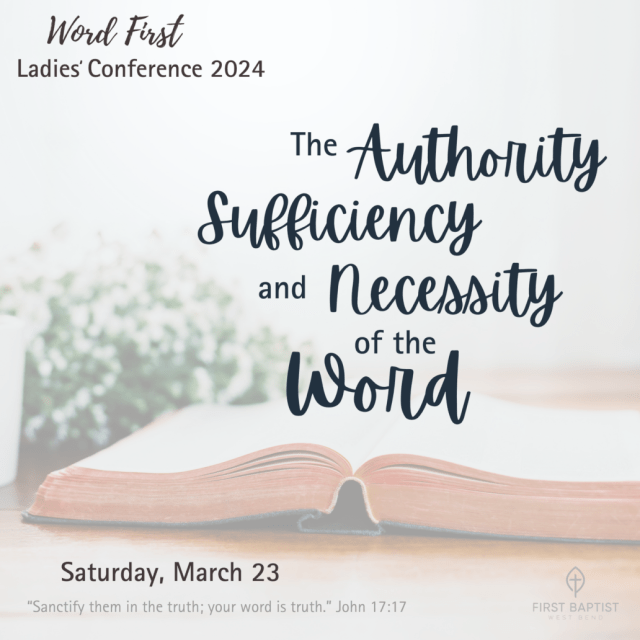
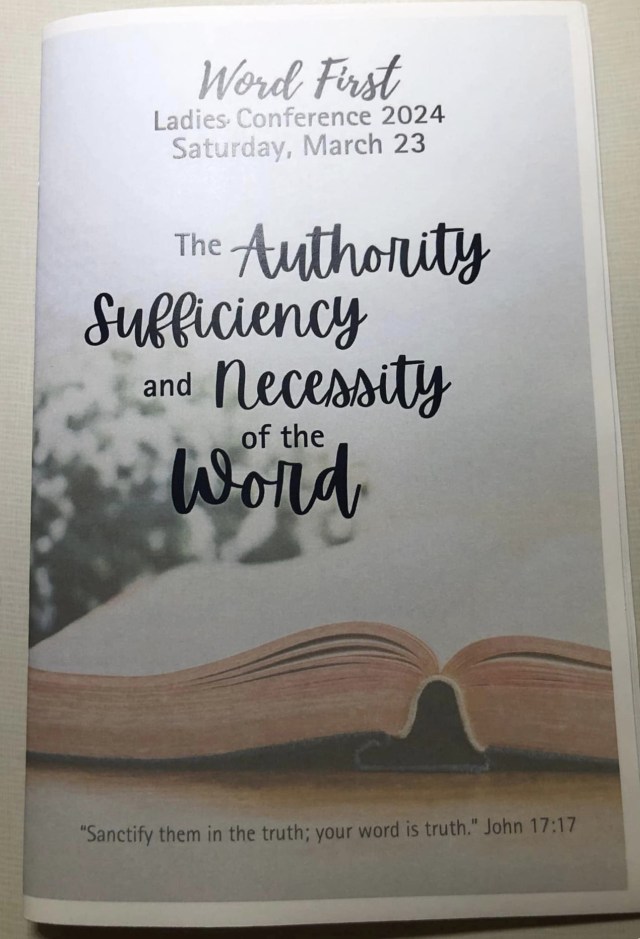
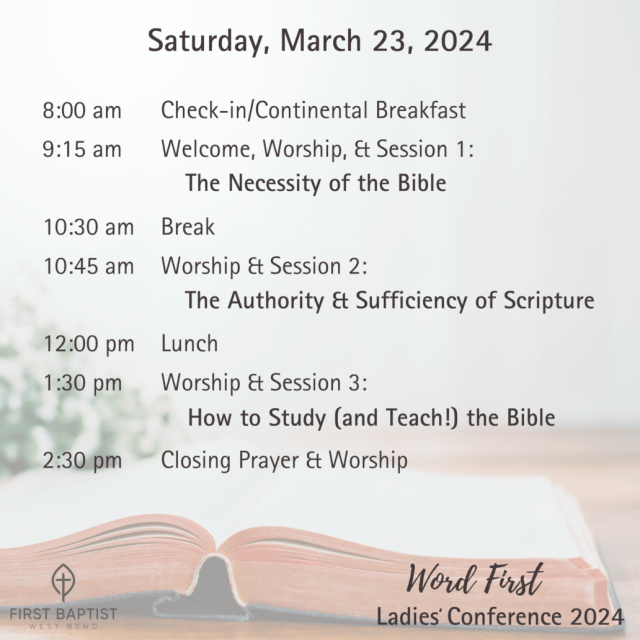
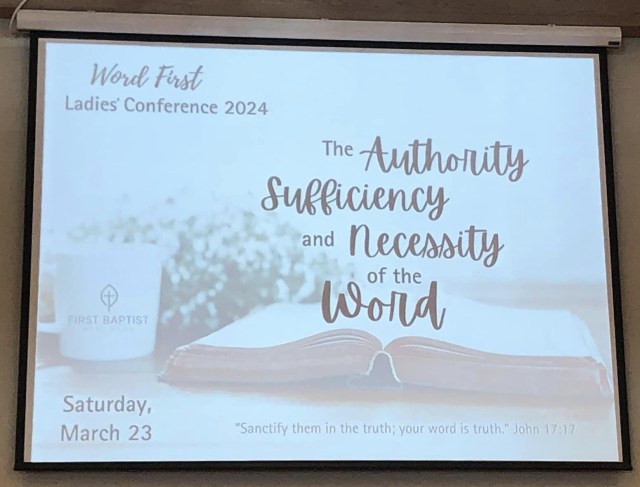
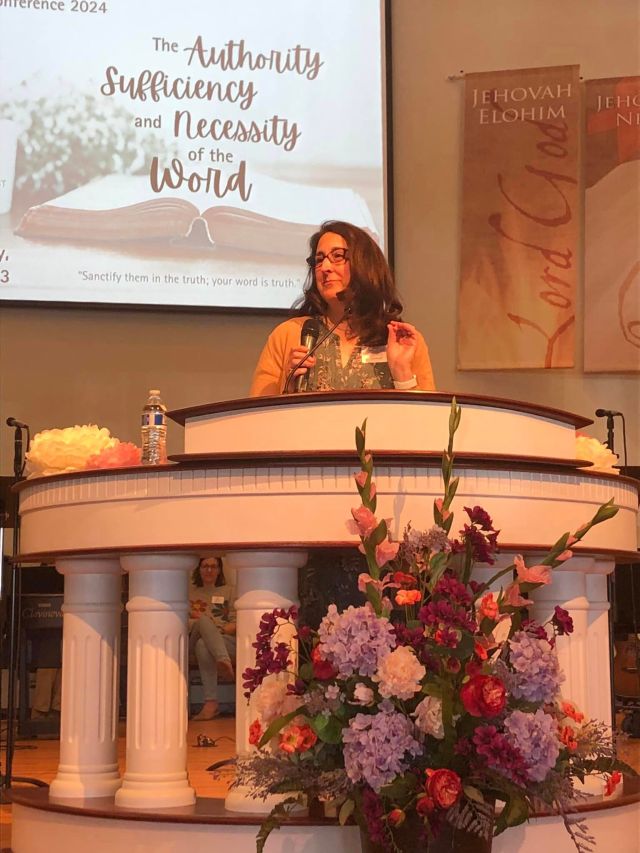
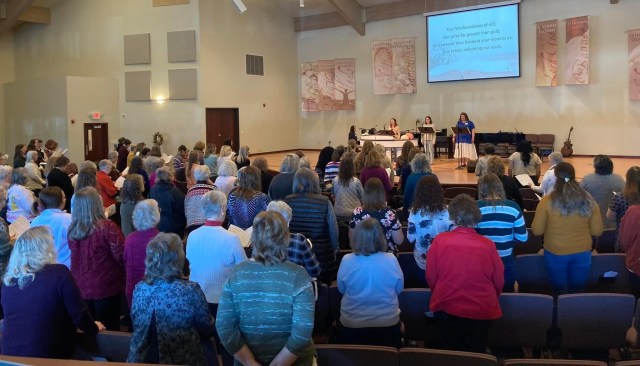
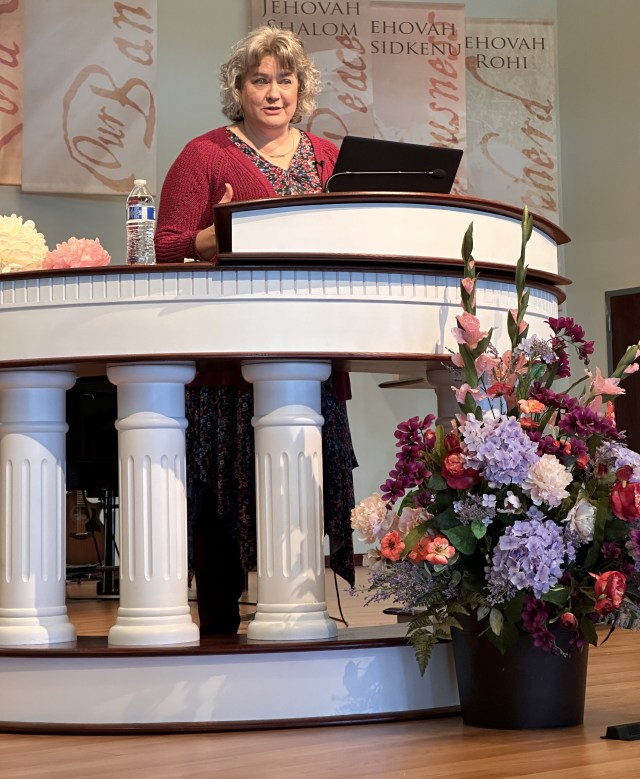
Report Back: Word First Conference


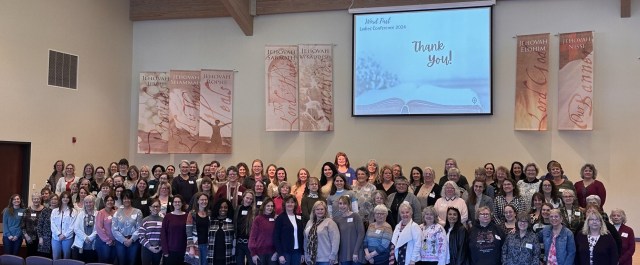
I recently had a wonderful time fellowshipping and sharing with the lovely ladies of West Bend, Wisconsin, and the surrounding area at First Baptist Church’s Word First women’s conference. It was exciting to finally meet, in person, my sweet friend, Marci Ferrell (You are following her over at Thankful Homemaker and on Facebook and Instagram, right?) who served as conference coordinator and made my first trip to Wisconsin so memorable.
Friday evening, I landed in Milwaukee, where I did not get to see Arnold’s or Shotz Brewery, or meet Richie, the Fonz, or Laverne and Shirley – the only sad part of my trip. Do better, Milwaukee.๐Ÿ˜‰

But at least I did get to visit some snow during my stay:
Marci and her delightful husband Doug took me for a scrumptious dinner at a cozy Italian bistro, whose special that night was salmon ravioli. I love salmon, I love ravioli, and the marrying of the two did not disappoint. 100% would recommend.

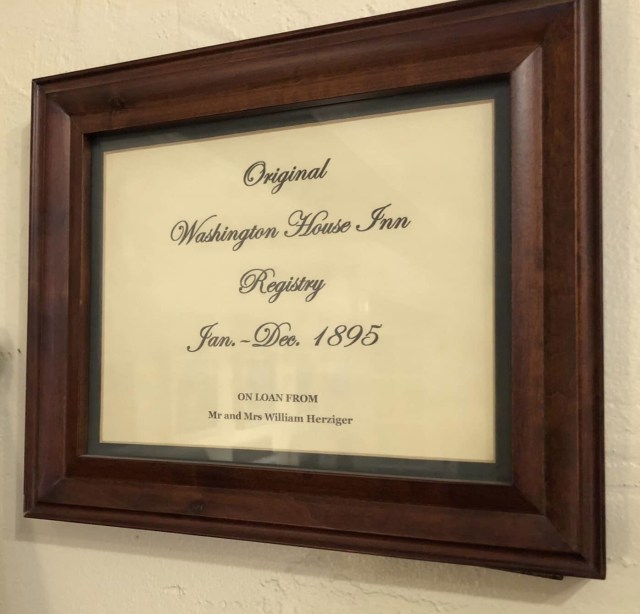
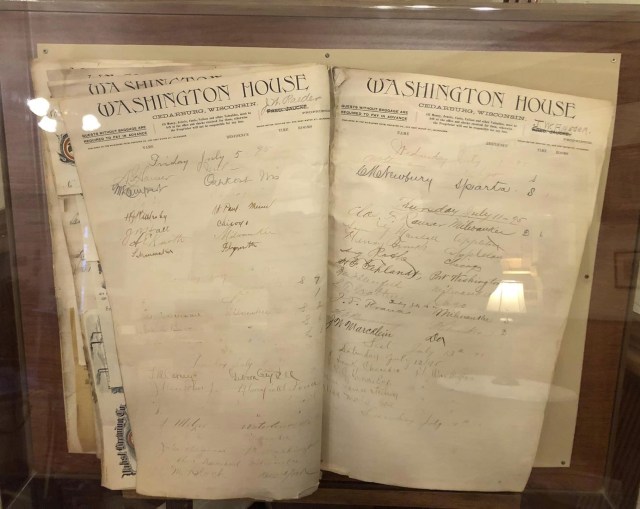
After dinner, they got me settled in at The Washington House Inn, where I had a fabulous time getting my history/antiques/nostalgia nerd on.

A much better picture than I could have taken. And friends my age will appreciate this: how long has it been since you checked into your room at a hotel, opened the desk drawer, and found a folder with postcards and stationery embossed with the hotel’s name and address? A charming blast from the past for me!

Thank you, Marci, for the lovely hostess gift bag waiting for me in my room!

Saturday dawned bright and early with a crisp, sunny day to welcome the ladies to the conference.

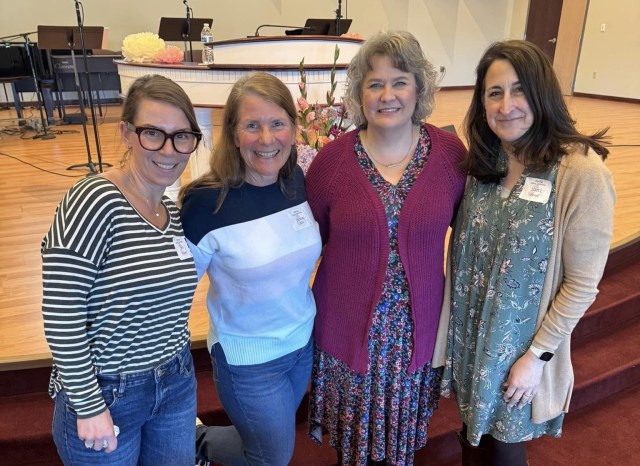
The inviting registration area was in the capable and efficient hands of these wonderful sisters.

Awesome swag bags received by every attendee!

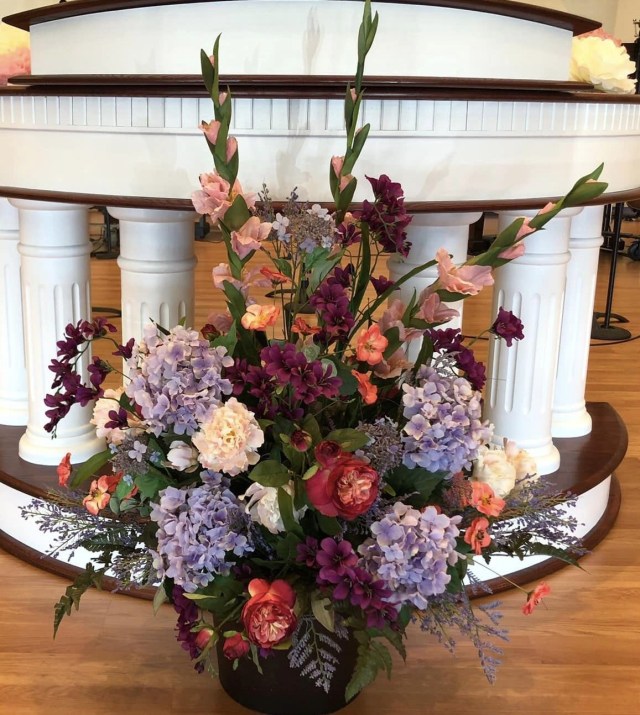
Lovely flowers and decor in abundance…

A hearty, healthy breakfast is a great way to start any conference!

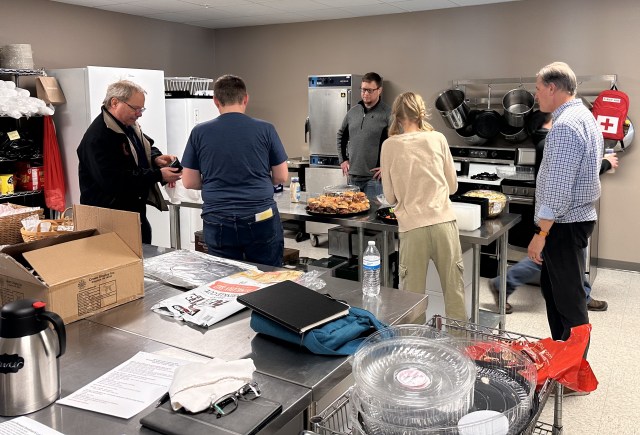
Big thank you’s to the kitchen crew who made sure we were well fed at breakfast and lunch!

Marci got the ball rolling with announcements and a warm welcome.

These sweet voices started us off in song at the beginning of every session.

In session 1, we covered The Necessity of the Bible. We explored the reasons the Bible is so imperative for us as Christian women along with some tips for incorporating more Scripture into our daily lives.

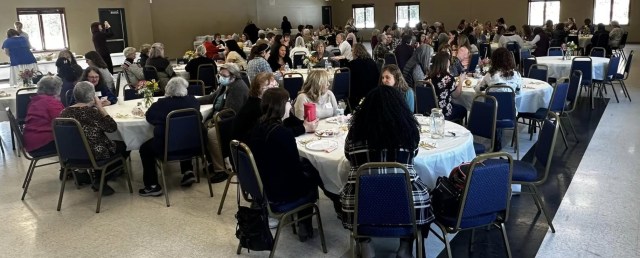
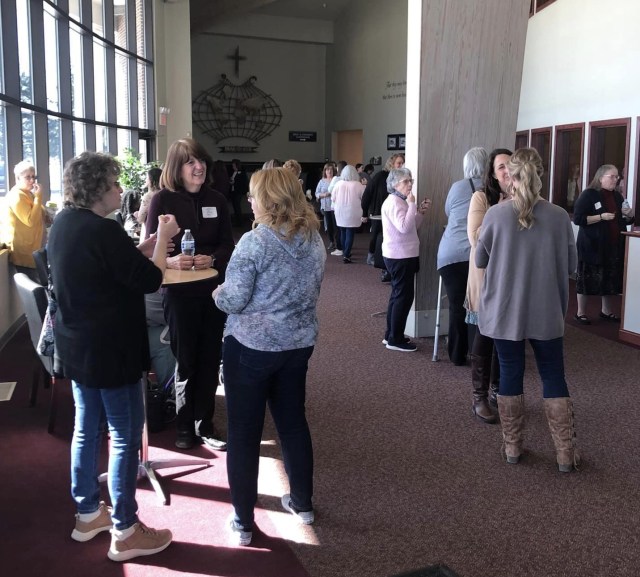
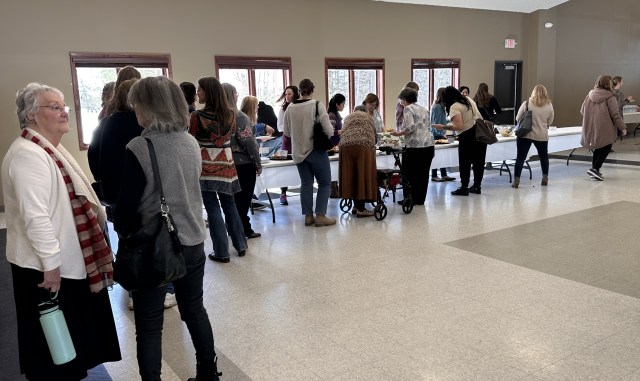
Lots of good food and fellowship were enjoyed during the break time that followed!

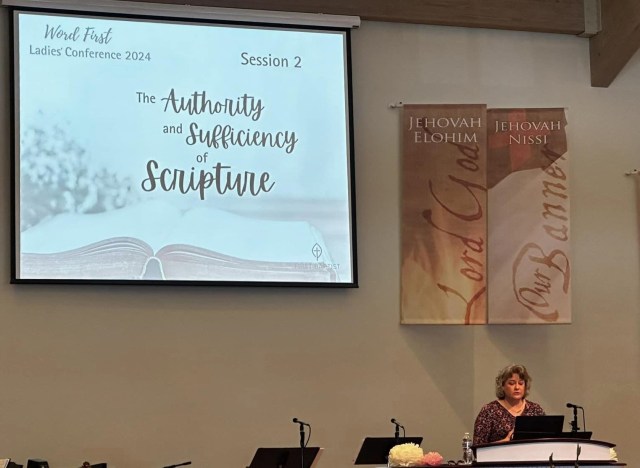
In our second session, The Authority and Sufficiency of Scripture, we took a look at how and why we are to submit to the authority of Godโ€™s Word, and why the written Word is sufficient for our every need as Christians.

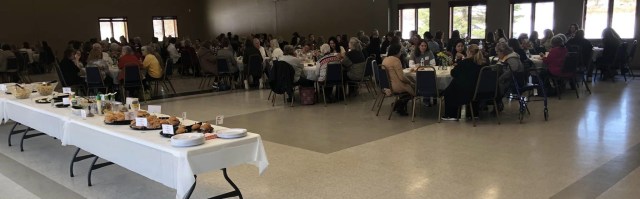
Session two was capped off by a delicious lunch. The ladies enjoyed getting to know each other and discussing what they had learned.

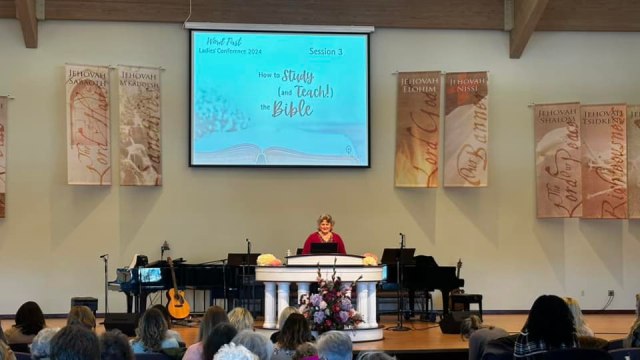
Our final session of the day was How to Study (and Teach!) the Bible. This is such a crucial skill for Christian women today. Weโ€™ve got to be good students of the Word so we can disciple our own children and the women and children of our churches.

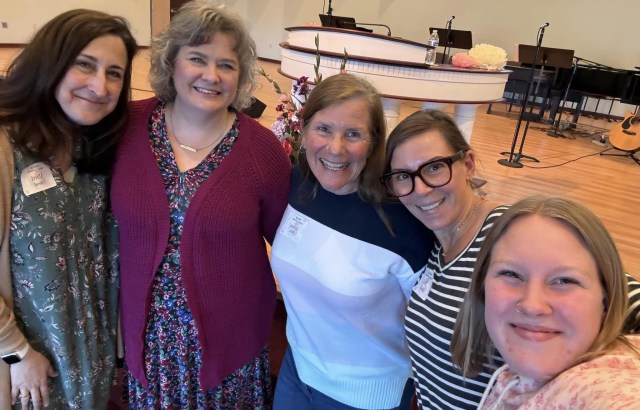
All too soon, it was time to go. Meeting the ladies – and chatting and taking pictures! – after conferences is one of my favorite things!

This is Timi, our number one fan of A Word Fitly Spoken! (Check out the t-shirt she had custom made. That’s dedication, baby!) Timi was so kind to review several of our most recent episodes with me and share her thoughts and what she had learned. What an encouragement!

Timi also generously blessed me with these made-in-Wisconsin snacks- fudge, taffy, and real Wisconsin cheese curds!

Another dear sister who attended graciously gave me some apple butter from her orchard.

After a joyful day with God’s people, Marci and Doug took me to another terrific eatery (with more cheese curds, fried this time – yum!)…

…and then off to my hotel for a few hours of sleep before my early morning flight home.

It was such a fantastic weekend with the ladies of First Baptist. Thanks so much to Marci, Doug, and all the other brothers and sisters of FBC for making me feel right at home. Thanks also to all the men and women who worked so hard to host a fantastic conference and extended such warm hospitality to me. If you’re ever in the area and need a good church to visit, make plans to spend the Lord’s Day with these wonderful brothers and sisters.


If your church or organization is ever in need of a speaker for a womenโ€™s event, Iโ€™d love to come share with your ladies as well. Click here for more information, or to find an upcoming event near you!


Photo Credits

Several of these photos were taken and contributed by conference attendees. You may assume that if they are good quality, or if I’m in them, that I didn’t take them. All other photos by Michelle Lesley.

Faith, Suffering

Wayback Wednesday ~ Facing the Furnace

Originally published July 28, 2010

Nebuchadnezzar responded and said to them, “Is it true, Shadrach, Meshach and Abed-nego, that you do not serve my gods or worship the golden image that I have set up?

“Now if you are ready…to fall down and worship…very well; But if you do not worship, you will immediately be cast into the midst of a furnace of blazing fire; and what god is there who can deliver you out of my hands?”

Shadrach, Meshach and Abed-nego replied to the king, “O Nebuchadnezzar, we do not need to give you an answer concerning this matter.

“If it be so, our God whom we serve is able to deliver us from the furnace of blazing fire; and He will deliver us out of your hand, O king.

“But even if He does not, let it be known to you, O king, that we are not going to serve your gods or worship the golden image that you have set up.”

Then Nebuchadnezzar was filled with wrath, and his facial expression was altered toward Shadrach, Meshach and Abed-nego. He answered by giving orders to heat the furnace seven times more than it was usually heated.

Then these men were tied up in their trousers, their coats, their caps and their other clothes, and were cast into the midst of the furnace of blazing fire.

Then Nebuchadnezzar the king was astounded and stood up in haste; he said to his high officials, “Was it not three men we cast bound into the midst of the fire?” They replied to the king, “Certainly, O king.”

He said, “Look! I see four men loosed and walking about in the midst of the fire without harm, and the appearance of the fourth is like a son of the gods!”

Then Nebuchadnezzar came near to the door of the furnace of blazing fire; he responded and said, “Shadrach, Meshach and Abed-nego, come out, you servants of the Most High God, and come here!” Then Shadrach, Meshach and Abed-nego came out of the midst of the fire.

The…king’s high officials gathered around and saw in regard to these men that the fire had no effect on the bodies of these men nor was the hair of their head singed, nor were their trousers damaged, nor had the smell of fire even come upon them.

Nebuchadnezzar responded and said, “Blessed be the God of Shadrach, Meshach and Abed-nego, who has sent His angel and delivered His servants who put their trust in Him, violating the king’s command, and yielded up their bodies so as not to serve or worship any god except their own God.

“Therefore I make a decree that any people, nation or tongue that speaks anything offensive against the God of Shadrach, Meshach and Abed-nego shall be torn limb from limb and their houses reduced to a rubbish heap, inasmuch as there is no other god who is able to deliver in this way.”

Daniel 3:14-29

What a great story. It’s almost Disney-ish in the telling. Three boys rise from virtual anonymity to high and respected places of power and influence. Next– oh no! –there’s a brief period of drama and suspense. But then, as we knew it would, comes the happy ending. Cut and print. That’s a wrap.

Hang on. Rewind.

If you grew up in church like I did, you probably can’t remember a time when you didn’t know the happy ending to this story. Check that. This wasn’t a story. This was a historical event. It was a real situation that happened to real, flesh and blood people, with real feelings, just like you and me. And just like you and me, when these boys were in the middle of their circumstances, they didn’t know what was going to happen next or how things would turn out in the end.

I think we forget that sometimes. We forget how frightening it must have been for Shadrach, Meshach and Abed-nego to stand up to this megalomaniacal king and say, “Regardless of the outcome, we’re not going to worship an idol.” They served in Nebuchadnezzar’s court. They had seen what this guy did to people who disobeyed him. Cruel and unusual punishment was his specialty.

Shadrach, Meshach and Abednego weren’t out to be heroes. They didn’t know that they would be written about and set an example for Bible-readers for thousands of years to come. Their only concern was personal obedience to God. Whether they lived or died. Whether or not anyone else noticed. They were in it for God, and God alone.

But since they were written about, what can we learn from their example?

Truly following and obeying God means trouble is coming our way.

How’s that for an advertisement for Christianity? Jesus didn’t say, “Follow Me so you can have ‘your best life now’.” He said, if you want to follow Me, you’d better realize from the get-go that you’re going to have to deny yourself and prepare to be crucified daily (Luke 9:23). He said, “Look, the world hates Me. If you follow Me, they’re going to hate you, too.” (John 15:18-20) He said, “In this world, you will have tribulation.” (John 16:33). Following Jesus is not a skip through the park.

Gird up. Now.

Where do you think Shadrach, Meshach and Abednego got the spiritual fortitude to stand against Nebuchadnezzar? These weren’t guys who just attended church, read the Bible, and prayed whenever they happened to feel like it. They didn’t have a lackadaisical attitude towards their walk with God. You know how I know that? Because people like that don’t do great things for God. People like that fold when faced with the furnace.

These guys were firmly rooted in the Word and in prayer. They were serious about obeying God, even when it came down to meal time (Daniel 1:8-15). They had such an awe and reverence for God that they feared His judgment more than the furnace. They were able to stand firm because they were already girded up in the faith.

They had such an awe and reverence for God that they feared His judgment more than the furnace. They were able to stand firm because they were *already* girded up in the faith.

Don’t kick against the trials, embrace them.

God is sovereign. Any circumstance that comes into your life was put there, or allowed there, by Him. Even if it’s a circumstance that is confusing, horrific, or heartbreaking, He is allowing it into your life for His glory and for your good. Maybe He’s revealing something to you about Himself, such as His faithfulness or His power. Maybe He’s disciplining you so that you will repent and obey Him. Maybe He’s teaching you a skill, such as patience, endurance, or persistence in prayer. Whatever it is, what greater blessing could there be than the God of the universe wanting to work in your life?

Just as Shadrach, Meshach and Abednego did not have to be dragged kicking and screaming to the furnace, accept that God has the right to use whatever means He deems necessary to work in your life, and thank Him for even wanting to. (Romans 5:3-5)

Trials allow us to know God in a new way.

It’s one thing to know, “…I will never leave you nor forsake you.” (Hebrews 13:5) just because the Bible says so. It’s another thing entirely to know it because you have walked it with your own two feet. Just as Shadrach, Meshach, and Abednego would never have come to know the manifest presence of God had it not been for the furnace, we cannot know Him as Provider without experiencing desperate need. We cannot know Him as Healer without facing disease. We cannot know Him as Comforter without experiencing crushing loss. It is not until we are in the furnace with nowhere else to turn but to God that we can experience the fullness of His promises.

It’s one thing to know, “โ€ฆI will never leave you nor forsake you,” just because the Bible says so. It’s another thing entirely to know it because you have walked it with your own two feet.

What about Bob?

Or Joe or Mary or Nebuchadnezzar and all his cronies? What effect does the trial you’re going through, your reaction to it, and God’s handling of it, have on the people around you who need to know Jesus? Maybe it’s not just to grow you, but to bring someone else to salvation.

In verses 2, 3, and 27, Daniel gives a detailed list of the heads of state who witnessed this event. That was no accident. In His mercy, God brought each of these officials to Babylon to show Himself to them. Through Shadrach, Meshach, and Abednego’s obedience and subsequent suffering, God’s glory and power, and the fact that He was the only true God, were displayed for all to see. Look at the reaction Nebuchadnezzar had in verses 26-29. In verse 26, this idol builder does a 360 and calls God, “the most high God”. In verses 27 and 29 he says, “Blessed be the God of Shadrach, Meshach and Abednego…there is no other god who is able to deliver in this way.”

Trials aren’t any fun. They can be scary. They can be heart-wrenching. But if God gets glory, how small a sacrifice and how great an honor is our suffering.

Trials aren’t any fun. They can be scary. They can be heart-wrenching. But if God gets glory, how small a sacrifice and how great an honor is our suffering.

Mailbag

The Mailbag: What’s In a Name?

Originally published July 22, 2019

How should my child and I refer to a child who is transitioning (girl to boy)? This is not a child with whom we are close. She is the granddaughter of a neighbor and visits them once or twice a year. Because she and my daughter are near the same age (tweens), they spend time together while she is visiting. 

She recently arrived for a visit and informed my daughter that she is transitioning and wants to be called Brandon* instead of Shannon from now on. She now dresses like a boy and has a male-looking haircut.

I have already talked to my daughter about the biblical issues at play and have explained that we need to be loving and kind to her friend, but also not cooperate with her delusion of becoming a boy.

I don’t want to use the pronoun “he” to refer to this child because it is not biologically possible and it is sinful to try to change the gender God gave you. But what about her transition name (Brandon)? People change their names and I don’t think that’s sinful. But to change it for the purpose of denying your God-given gender would be.

Would you call her by her given name or her new name?
*Names changed

This is such a heartbreaking situation, and it’s happening way too often. So called “gender reassignment” is physically, psychologically, and spiritually abusive. Children in sexual identity sin need loving, kind, supportive, biblical help, not for someone, especially their parents who are supposed to protect them and do what’s best for them, to enable them in their dysfunction.

You didn’t ask about this, and you might already be doing it, but could I suggest two things before we get into the names and pronouns? Pray fervently for this child. Pray by yourself, with your daughter, with your whole family. Pray for her parents and grandparents. Pray for opportunities to share the gospel with all of them. This child is in for a very painful life, physically, emotionally, and spiritually.

In addition to loving her and sharing the gospel with her, try to do little things that will subtly continue to keep Jesus in front of her eyes whenever she’s with your family: say the blessing before meals, invite her to go with you to the church picnic or youth activities at church, do a mother-daughter Bible study every morning and ask her if she’d like to join you and your daughter. Don’t beat her over the head with these things or stop doing things with her that she would consider “normal” (going for a swim or out to get hamburgers), but try little avenues like this for introducing her to Christ.

Now as far as calling this little girl “Brandon” and using male pronouns for her, I would probably land very close to where you are on the issue. The way we use and understand language as human beings is very impactful, which is precisely why we’re starting to see people getting fired from their jobs for refusing to use male pronouns for women who think they’re men, and vice versa. Changing the language changes the tide of the movement. Once the people pushing this agenda get the language changed, changing laws, hearts, and attitudes is much easier for them. They even think it can change reality – that a woman can actually become a man and a man can actually become a woman.

As Christians, we should recognize better than anyone how integral someone’s name can be to her identity. God’s name is I AM. It’s not just an arbitrary label chosen for its mellifluous lilt. That is the essence of who He is. Matthew gives us two names for God’s Son – Jesus, “Yahweh saves,” and Immanuel, “God with us” – these names tell us His true identity and purpose. And all over the Bible, we see the importance of a person’s name to his or her identity. People’s names often had ontological meaning. And sometimes God changed a Bible character’s name at a milestone moment to indicate that that he was moving into a new phase of life. Abram to Abraham. Sarai to Sarah. Jacob to Israel.

Interestingly, there’s even an incident in the Bible that parallels the name-changing issue today. When Nebuchadnezzar took the people of Judah captive and changed the names of Daniel, Hananiah, Mishael, and Azariah to Belteshazzar, Shadrach, Meshach, and Abednego, he did so as a method of forcibly assimilating them into their new identity as Babylonian slaves in Babylonian culture. He was attempting to change their entire identity – the way they thought about themselves – from sons of God to conquered slaves of Babylon and make that new identity a reality. And that’s what’s going on with Shannon as well as the sexual identity agenda “pronoun police.” The change of name and pronouns is an attempt to change the new identity of the person into a reality. But every time someone uses the biologically correct name and pronouns for someone in sexual identity sin, that person is jolted out of her delusion of being the opposite sex and right back into the inescapable reality of the sex God created her to be. (It’s the sexual identity sin version of the positive confession aspect of Word of Faith theology: If you just believe hard enough and say all the right things and never the wrong things, you can speak your desires into existence. Scary, huh?)

So when someone in sexual identity sin asks you to call her by an opposite sex name and pronouns, it’s not some “no big deal” kind of thing. Whether that person realizes it or not, she is asking you to help perpetuate her delusion and protect her from being confronted by the reality of the way God created her, so that she can continue believing that what she wants to be true actually is true.

I have said on previous occasions that Christians shouldn’t use opposite sex names or pronouns (or made up/incorrect pronouns like “ze,” “fae,” or “them/their”- referring to an individual) for all of the aforementioned reasons and more. I do understand that for various reasons of employment, family peace, and so on, there are godly people out there who may decide in their own circumstances to use opposite sex names and pronouns for people in sexual identity sin, and I want to make clear that, while I almost certainly would not agree with those decisions, I don’t necessarily think those godly people are, across the board, sinning by doing so. This is a tough issue to navigate because the Bible doesn’t explicitly tell us what to do in this situation. We need to prayerfully examine the issue and the Scriptures and follow our biblically informed consciences in our particular situations. So please hear me clearly: this reader asked what I would do in her particular situation (which doesn’t involve the possibility of losing a job, being arrested, etc.) so that’s how I’m going to answer.

I could not, without violating my biblically informed conscience, call Shannon Brandon and start using male pronouns for her. However, I would also realize that she is going to feel hurt by not being called Brandon, which could cause her to distance herself from my family and the gospel influence we could have upon her.

The way you worded your e-mail, it sounds like Shannon came in and sort of announced or told your daughter that her name is Brandon now or that’s what she’d like to be called. Shannon announcing this is not the same thing as you and your daughter agreeing to comply with it.

Personally, what I would do, is just skip using formal names and not worry about the pronouns. The pronouns will be easier to dispense with because he/him/his and she/her/hers are third person pronouns. In other words, you use them when talking about someone (to another person), not when you’re talking to someone. When you’re talking to someone, you use second person pronouns (you/your/yours) which are already gender neutral.

Avoiding using Shannon’s formal name may also be easier than you realize, especially since you don’t see her very frequently. Think about how often you actually use your husband’s, children’s, or friends’ names when speaking directly to them in conversation. Usually, we don’t start a conversation with someone we’re sitting across from by saying, “Bob, let me tell you about my day,” we just start talking. We also use pet names (sweetie, kiddo, my friend) and nicknames (Green Eyes, Tiger, Boss). Some people are in the habit of calling others by their last names, military style. If Shannon’s “boy name” and “girl name” started with the same letter (ex: going from Shannon Johnson to Steve Johnson) you could call her by her initials.

One of the main reasons people in my house call each other by name is if we’re trying to get that person’s attention or call them from another room. Instead of your daughter calling to Shannon from another room or through a closed door, “Shannon, would you like a drink?”, teach your daughter to walk up to Shannon, tap her on the shoulder, or wait until she comes into the room, and ask her the question once the two have made eye contact. (She’s probably already good at this since most kids that age have earbuds in all the time!) Among kids, “Hey!” “Yoo hoo!” or a yoo hoo-type whistle to get her attention can also work. Keep all of these kinds of things lighthearted and casual, and Shannon might not even notice. Meanwhile, you can keep on loving her and sharing the gospel with her.

Anyway, that’s the kind of thing I would do unless Shannon point blank says something like, “I want to be called Brandon. Will you please call me that?” or “Why aren’t you calling me Brandon?”. At that point, you or your daughter will need to lovingly and briefly explain that in the same way Shannon feels uncomfortable being called a girl name, your daughter feels uncomfortable calling her a boy name. Ask Shannon if there’s some kind of compromise she and your daughter could make (initials, nickname, “secret code names” they can have fun making up, etc.) that would make both of them feel comfortable.

If she wants to know why you/your daughter feel uncomfortable, lovingly tell her the truth. “We love God. God made you a girl. If we call you by a boy’s name, we feel like we would be saying He did something wrong or made a mistake, or that we would be lying about how He made you. But we do still love you and still want to be friends.” If you feel like it would be appropriate or helpful, you might want the grandparents to be present while you have this conversation. You and your daughter might also want to role play this scenario ahead of time so that she will feel prepared when it’s time to have this conversation.

When you have this conversation with Shannon, you need to understand that it most likely won’t be well-received and that it could very well be the last conversation you have with her. Her grandparents may be angry with you. Her parents may be angry with you. As Christians who stand firmly and lovingly on Scripture, we should expect the world to hate us.

If the world hates you, know that it has hated me before it hated you. If you were of the world, the world would love you as its own; but because you are not of the world, but I chose you out of the world, therefore the world hates you. Remember the word that I said to you: โ€˜A servant is not greater than his master.โ€™ If they persecuted me, they will also persecute you. If they kept my word, they will also keep yours. But all these things they will do to you on account of my name, because they do not know Him who sent me. John 15:18-21

Do not be surprised, brothers, that the world hates you. 1 John 3:13

But Christ calls us to separate ourselves from the world and be loyal to Him even if it costs us everything- including those we love the most:

Whoever loves father or mother more than me is not worthy of me, and whoever loves son or daughter more than me is not worthy of me.
Matthew 10:37

The gospel divides. And Christians are always called to stand on Christโ€™s side of the divide.

Yet, we should also remember Christ’s promises to us:

Blessed are you when others revile you and persecute you and utter all kinds of evil against you falsely on my account. Rejoice and be glad, for your reward is great in heaven, for so they persecuted the prophets who were before you. Matthew 5:11-12

But rejoice insofar as you share Christ’s sufferings, that you may also rejoice and be glad when his glory is revealed. If you are insulted for the name of Christ, you are blessed, because the Spirit of glory and of God rests upon you. But let none of you suffer as a murderer or a thief or an evildoer or as a meddler. Yet if anyone suffers as a Christian, let him not be ashamed, but let him glorify God in that name. 1 Peter 4:13-16


If you have a question about: a Bible passage, an aspect of theology, a current issue in Christianity, or how to biblically handle a family, life, or church situation, comment below (Iโ€™ll hold all questions in queue {unpublished} for a future edition of The Mailbag) or send me an e-mail or private message. If your question is chosen for publication, your anonymity will be protected.