Bible Study

Nine Helps for Starting and Sticking to Daily Bible Study

We’ll be getting started on our new Bible study next week.
In the meantime, I thought this might be helpful.

Originally published March 31, 2015
9 helps daily bible study

It seems to be a common dilemma among new Christians, Christians who have never developed the habit of daily Bible study, and even those whose current Bible study methods or materials just don’t seem to be “working.” You know you need to be studying God’s word efficiently and effectively every day, but you aren’t quite sure how to get the ball rolling.

Let me just say right off the bat that getting over that ginormous hurdle between knowing you ought to study your Bible today and actually doing it is normal. Every Christian goes through that at least occasionally. So don’t worry that your flesh balking initially when it’s time to open your Bible means you aren’t saved or you don’t have enough faith, or whatever. But don’t let it stop you either. There are some things you can do to get off to a good start with setting up and sticking to a daily Bible study time. What can you do to set yourself up for success?

Prioritize It

Take a little time to get alone with the Lord, and be honest with Him and yourself. Is daily Bible study actually important to you – something you want to do? Why or why not? Do you feel like you should be studying, but you don’t really have a desire to? Ask God to help you understand your motivations and submit them to Him. Ask him to give you a passion for His word. Ask Him to help you to be obedient to Him in making His word a priority in your life.

Pair It

Pair your study time with something you already do faithfully, and at roughly the same time, every day. Study while you’re eating lunch, during the baby’s nap time, right after you exercise, as soon as you get up in the morning, etc. Piggybacking onto something that’s already built in to your schedule helps you stay faithful and keeps you from forgetting.

Plan for It

Do your best to block off your schedule for your Bible study time and guard that time from interruptions. Turn your phone off and get away from social media. Don’t schedule other appointments or activities that might run long and impinge on your study time. Take care of any possible contingencies that could come up before you get started.

Be Purposeful About It

The Bible should be studied in an orderly way so you can understand and apply it properly. I usually recommend simply picking up the Bible and studying it rather than using Bible study books and workbooks, and having a systematic plan of study is essential, not only to proper understanding and application of God’s word, but also to keep you from wasting time trying to figure out what to study each day. Choose a book of the Bible, start at the beginning, and work your way through it, or choose a plan for working your way through the New Testament, Old Testament, or whole Bible.

Pare It

Bible reading plans are great, but some of them can simply require so much daily reading that you don’t have time to slow down, take it all in, and linger over what you need to linger over. You don’t have to read the whole Bible in a year, but if a plan interests you, you could tweak the timing of it or pare it down in some way so you’re not biting off more than you can chew. Go for quality rather than an overwhelming quantity. Many beginners find that a chapter a day (unless it’s Psalm 119!) is just about right.

Partner with Someone

Check in regularly with a friend or your husband and discuss what each of you is learning from God’s word and how He’s using what you’re studying to make you more like Christ. It’s great fellowship and will help keep you both accountable to staying in the Word.

Positively Reinforce It

It’s true that studying God’s word is its own reward, but sometimes disciplining yourself to stick to a schedule needs a little extra boost of incentive, especially when you’re just starting out. How about making a deal with yourself that you can get on social media, watch TV, have dessert, etc., only after you’ve had your Bible study time? Or that if you don’t miss any days of studying your Bible for a whole week, you’ll reward yourself with an ice cream cone, a bubble bath or some other small treat?

Pursue It

Realize from the get go that there are going to be some days when you’re going to forget to study your Bible, or oversleep, or have an emergency, or just plain old give into temptation to skip it. Take a breath. It’s OK. If there was sin involved, repent and ask God’s forgiveness. If there’s still time left in the day, and you’re able, go ahead and pull your Bible out, even if it’s not your regularly scheduled time. If not, just get back up on that horse tomorrow. God’s mercies are new every morning (Lamentations 3:22-23).

Prize It

Above all, whether it’s a day when you’ve had a fantastic time in God’s word or a day when you’ve messed up royally, keep your eyes on the prize and see the long term value in spending time in the Scriptures each day. God is using His word to grow you in holiness and make you more Christlike.

All Scripture is breathed out by God and profitable for teaching, for reproof, for correction, and for training in righteousness, that the man of God may be complete, equipped for every good work.
2 Timothy 3:16-17

THIS ARTICLE WAS ORIGINALLY PUBLISHED AT SATISFACTION THROUGH CHRIST.
Movies

Movie Tuesday: The Riot and the Dance- Earth

The Riot and the Dance- Earth (2018)

Join in the glorious uproar of creation with The Riot and the Dance- Earth, a boisterous new nature documentary featuring a biologist who was once told he would never succeed if he kept blabbing about all that silly Creator-creature nonsense. But now you can follow along with Dr. Gordon Wilson as he traverses our planet, basking in God’s masterpieces whether he’s catching wildlife in his own back yard or in the jungles of Sri Lanka. (Yeah, he did get bitten, but not by the cobra.)

Showstopping footage and powerful narration will open your eyes to the extraordinary glory found all over the animal kingdom. From leopards and langurs to vipers and elephants and beyond, The Riot and the Dance is a cinematic exploration that you won’t want to miss.

Normally, I post Movie Tuesday movies you can watch for free right here on the blog, but The Riot and the Dance- Earth is only available free in some venues (more about that in a sec), and I didn’t want you to miss it – it’s that good. The cinematography is beautiful, and so is the theology. And it’s only part 1 of this creation documentary series! The Riot and the Dance- Water releases on March 6.

You can watch The Riot and the Dance- Earth at the following venues (and others – check your favorite video venue):

Amazon Prime Video:

Free for Subscribers
Rent for $3.99

Hulu

YouTube:

Rent for $2.99

Uncategorized

New Year, New Look (and where’s that search bar?)


By now (hopefully!), you’ve noticed that the blog has a bit of a new look to it. I like to “redecorate” every now and then. Many of you have offered kind words of encouragement on the new look. Thank you!

Just a couple of things to know as you’re cruising around…

•In addition to the new design, I upgraded from a free hosting plan to a hosting plan that removes those pesky ads you’re used to seeing if you don’t have an ad blocker. And that plan ain’t cheap. If you’d like to kick in a little spare change through PayPal or Patreon to help defray that cost, I’d be most grateful. (Just as a reminder, I don’t make any income from blogging, I don’t sell books or other resources, and I don’t put resources behind a paywall.)

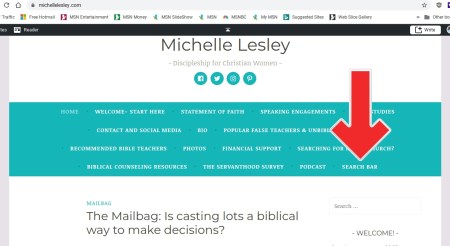
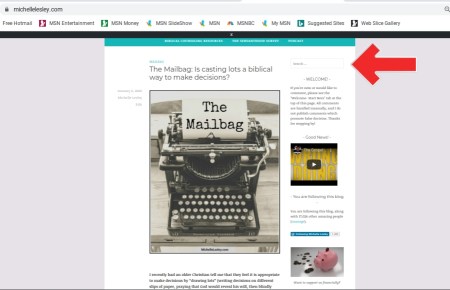
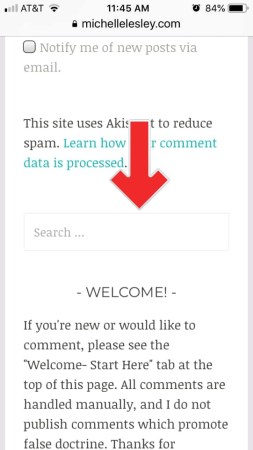
•Are you searching for the search bar? My apologies if you haven’t been able to find it. The configuration of the blog is different if you’re using a desktop/laptop than if you’re using a tablet or phone.

On the desktop/laptop layout, there’s a handy little sidebar with all kinds of helpful links running down the right side of the page. The search bar is at the very top of that sidebar:

On the tablet and phone layout, they have taken that sidebar and moved the whole thing (including the search bar) from the side of the page to the bottom of the page. Here’s what that looks like if you’re looking for the search bar:

But I thought that might be a little cumbersome to find, so I added a second search bar to hopefully make things a little easier. On all layouts, the second search bar is at the very bottom of the page, right above the social media icons:

So just to recap, there are now two search bars on the blog for your searching convenience. For desktop/laptop users, there’s one at the top and one at the bottom. For phone/tablet users there’s one at the bottom and one almost at the bottom. And, in case you forget, I’ve added a search bar link in the blue menu bar at the top of this page to remind you:

Hope this helps solve the mystery of the missing search bar! :0)

Mailbag

The Mailbag: Is casting lots a biblical way to make decisions?


I recently had an older Christian tell me that they feel it is appropriate to make decisions by “drawing lots” (writing decisions on different slips of paper, praying that God would reveal his will, then blindly drawing one piece and choosing that decision). They justified this by saying that in Acts 1:26, the disciples did this to choose Matthias. How would you respond?

Super question! Whenever we see Bible characters doing something in Scripture, it’s always a good idea to figure out whether or not we should be doing the same thing.

My response would be to encourage the person to read Acts 1 in its entirety to get a better understanding of what took place when Matthias was chosen.

We need always to keep two things in mind when we read the book of Acts: 1) it is a historical narrative, and 2) it is transitional. 

A historical narrative is simply a report of what happened – like a newspaper article – not usually a command for us to do the exact same thing as the characters in the story. It is largely descriptive, not prescriptive. Acts reports that Peter raised Dorcas from the dead, but that does not mean that God is commanding you to raise people from the dead any more than Genesis reporting that Noah built an ark means that God is commanding you to build an ark. So the simple fact that Acts reports that Matthias was chosen by lot does not automatically mean that’s how we’re to make decisions.

Acts is also transitional. It records the events that took place as God’s people were transitioning from following Old Testament Judaism to establishing the New Testament church. And in the same way that when you’re building a house you only lay the foundation once, many of the events or issues in Acts were a “one and done” kind of thing (ex: the sign of speaking in foreign languages, the apostolic sign gift of miraculous healing, the question of circumcision, etc.)

It’s a little bit like opening up a brand new board game for the first time. You’ve got to assemble the spinner, punch the tokens out of the piece of cardboard, take the plastic wrap off the cards, and figure out what that poorly worded rule in the instructions means. But the second time you pull that game out to play it, you don’t have to do those things again, because you already did them the first time. You can just start playing the game.

Both the descriptive and transitional nature of the book of Acts should make us extremely cautious about blindly emulating the specific behaviors of its characters. When we want to know whether or not we should behave in a certain way, we need to look first to the prescriptive passages of Scripture which deal with that issue.

If we wanted to know how to have a godly marriage, for example, we would look at passages like Ephesians 5:22-33, 1 Corinthians 7, and Exodus 20:14,17. These are all passages that clearly tell us what to do and what not to do in order to have a godly marriage.

What we would not do is look at David’s and Solomon’s lives and conclude that polygamy is God’s design for marriage. We would not read about Hosea and assume that God wants Christian men to marry prostitutes. We would not read the story of the woman at the well and think that being married five times and then shacking up with number six is OK with Jesus.

So which prescriptive passages can we look at that teach us how to make decisions in a godly way?

If any of you lacks wisdom, let him ask God, who gives generously to all without reproach, and it will be given him. James 1:5

But be doers of the word, and not hearers only, deceiving yourselves. For if anyone is a hearer of the word and not a doer, he is like a man who looks intently at his natural face in a mirror. For he looks at himself and goes away and at once forgets what he was like. But the one who looks into the perfect law, the law of liberty, and perseveres, being no hearer who forgets but a doer who acts, he will be blessed in his doing. James 1:22-25

Trust in the Lord with all your heart, and do not lean on your own understanding. In all your ways acknowledge him, and he will make straight your paths. Be not wise in your own eyes; fear the Lord, and turn away from evil. Proverbs 3:5-7

(These are just a few verses, and of course there are others that would be pertinent to specific details about particular decisions. Read more about godly decision-making here.)

Ask God for wisdom, do what His Word says, turn away from evil, persevere, trust God and His Word above what you can see in your circumstances, and He will direct you. This is the Bible’s general instruction to us about making godly decisions. Christians are not instructed to cast lots in order to make decisions.

But is it a sin for Christians to cast lots, flip a coin, draw straws, etc., when making a decision? Maybe, but not necessarily.

You described your friend’s process of lot casting this way:

writing decisions on different slips of paper, praying that God would reveal his will, then blindly drawing one piece and choosing that decision

I realize you were probably trying to be brief with that description and there’s likely more to it than that. But if that’s an accurate description of how she makes most of her decisions – putting no more thought, wisdom, or effort to search the Scriptures into her decisions than that – then I would say that probably qualifies as the sin of laziness. Because God has been clear to us in His Word that we’re to make the effort to use the brains He gave us to dig into Scripture to see what He has to say about the issue, ask Him for wisdom and guidance, trust Him, and obey Him.

Additionally, I’m concerned that, if she doesn’t know her Bible well enough to make decisions based on Scripture rather than casting lots, and if she thinks making decisions this way is biblical simply because of a descriptive verse about Matthias, then she probably doesn’t have enough knowledge of Scripture to guarantee that all of the decisions she writes down on her pieces of paper are biblical. I mean, what if she has two pieces of paper and she writes down, “Leave my husband for my boyfriend,” and “Stay with my husband and be a godly wife.”? One of those choices isn’t biblical. Is she going to assume it is and that God wants her to leave her husband for her boyfriend if that’s the paper she draws?

On the other hand, let’s say your friend is a mature Christian who knows her Bible. She’s trying to decide between two job offers that would each be equally biblical for her to take. She has prayed and asked God for wisdom. She has compared each job, its requirements, and its logistics with Scripture. She has sought out godly counsel. She’s equally drawn to both jobs. Yet she still can’t bring herself to make a final decision. If the only way she can bring herself to make that final decision is to flip a coin or cast a lot, I can’t see any biblical problem with that. (Is that scenario likely to happen? Probably not. There’s rarely a situation in which both options are exactly equal. Life just doesn’t work like that, and that’s one way God guides us and gives us wisdom.)

Finally, I’d like to point out a few more things about the casting of lots for Matthias. Namely, that the way the disciples did it, and the circumstances in which they did it, are vastly different from your friend’s circumstances and the way she’s doing it. Again, let’s look at Acts 1 in its entirety.

• The casting of lots for Matthias took place before Pentecost and the coming of the Holy Spirit (Acts 2), which means that, with regard to receiving direction from God for a particular decision, the disciples were still operating in an “Old Testament” sort of way. This is why we see lot casting much more commonly in the Old Testament, and we never see it again in the New Testament after Acts 1. From Acts 2 on, we see Christians praying for the Holy Spirit’s guidance and direction. If your friend is a Believer, she, unlike the disciples in Acts 1, has the indwelling Holy Spirit to guide her.

• Look at the timeline (v. 6-11). Jesus had just ascended, like, five minutes ago. Not only was there no Holy Spirit (in the sense that we have the Holy Spirit now), there was no church, no New Testament to read for instruction, very few Believers, and no understanding of how to “do” Christianity. The disciples were doing the best they could with the knowledge that they had, and nearly all that knowledge was from the Old Testament. Your friend has the benefit of having  the entire New Testament, a pastor and fellow Believers to counsel her, and 2000 years of church history that has hammered out how to “do” Christianity.

• If your friend is simply writing two options on pieces of paper, praying God will help her pick the right one, and then blindly picking, she’s not casting lots the same way the disciples did for Matthias. Look at verses 12-26.

·This was not a personal, individual decision, this was a corporate decision for the embryonic church. The eleven remaining disciples (13), the women, Mary, and Jesus’ brothers (14), about 120 in all (15), were all gathered and taking counsel together.

·This body of Believers was gathered together for an extended time of corporate prayer for direction to make the right decision for the church, not a quick “God please help me pick the right piece of paper,” kind of thing.

·The disciples searched and knew the Scriptures that applied to this situation (15-20) and had a biblical set of parameters for making the decision about who would take Judas’ place. (21-22)

The way the disciples cast lots for Matthias was much more akin to the scenario I described above about your friend choosing between two jobs (which, as I said, would not be biblically problematic).

I think it would be much more beneficial and spiritually healthy for your friend to learn how to make decisions based on Scripture than to continue her practice of casting lots. I would strongly suggest she read my article Basic Training: 8 Steps to Finding God’s Will for Your Life.


If you have a question about: a Bible passage, an aspect of theology, a current issue in Christianity, or how to biblically handle a family, life, or church situation, comment below (I’ll hold all questions in queue {unpublished} for a future edition of The Mailbag) or send me an e-mail or private message. If your question is chosen for publication, your anonymity will be protected.