I just read your January 9th blog on Carey’s story. That is me regarding the journaling. I have journaled for 10 years and have saved them all. Now I don’t know if I should stop altogether. I already threw out all my Sarah Young books, Beth Moore, Lysa, etc. It’s like I’m starting over after 32 years as a Christian. I just found you this week through Justin Peters and I’m so grateful. So should I stop journaling too? I did automatic writing- ugg!
Don’t we serve a wonderful God? His mercies are not only new every morning, they are new even after 32 years! I’m so thrilled for you that God has opened your eyes and given you a fresh start. (P.S. Stick with Justin’s stuff. He is awesome.)
The word “journaling” gets tossed around a lot these days. Coloring in your Bible has come to be known as “Bible art journaling”. Then there’s the type of mystical or contemplative “journaling” you’ve touched on which can include automatic writing (one of the reasons Sarah Young’s Jesus Calling is false doctrine and should be avoided like the Plague).
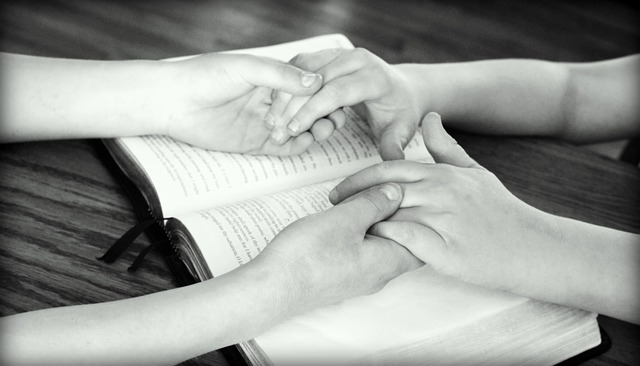
But there is a type of journaling you can do in conjunction with your personal Bible study and prayer time which is perfectly biblical. If it would help you to differentiate this type of biblical journaling from the mystical journaling you’ve done in the past, you might want to call it “taking notes” or “written Bible study” or something like that, instead. But if you need to put some time and space between the unbiblical type of journaling you used to do and beginning to journal again in a biblical way, it’s perfectly OK to take as long of a break from journaling as you need.
When it comes to journaling in a biblical way, it might help to look at studying the Bible through the lens of studying for a college class.
A lot of students go into college thinking that all they need to do is show up for class, write down whatever the teacher says will be on the test, read the chapter, and they’ll learn what they need to learn. But if you go through freshman orientation or take a study skills class, one of the learning strategies you’ll be taught is how to study your textbook.
First of all, you read the material in an organized way. Most people going to college don’t have to be told this, but when you sit down to study, say, a history book, you start at the beginning of the book and you work your way through to the end. You don’t start by reading two paragraphs out of the middle of chapter 7, then move on to the last three sentences of chapter 49, then the first half of chapter 1.
Do you see where I’m going with this? That’s how people “study” the Bible sometimes, and it’s just as crazy to study the Bible that way as it would be to study a history book, or math book, or science book that way.
So you’re reading along in an organized way. Take notes. Write down any questions you might have about the text, words you need to look up, etc. Write down what you learn about God from that text, or how the characters in that text set an example for you of something you should or shouldn’t do. Write down any commands from the text that you need to obey. Write down how the passage points to Christ. Write down anything the text reminds you to pray about. Write down anything God is convicting you about as you read the text. Write down any practical applications the text has for situations in your life. Write down a careful summary of the text. Write down any other Scriptures the text you’re reading reminds you of.
You might want to highlight or underline things in your Bible that you want to remember.
As you’re studying your Bible you’ll probably notice some footnotes. Take a look at those footnotes and see if there are any cross-references listed. A cross reference is a Scripture that’s related to the Scripture you’re reading that might help explain it a little bit better. So look up those cross-references and maybe make some notes on them.
This kind of “journaling” can be very helpful as you study your Bible. You might also want to jot down anything you’re praying about and, later, how God answers. You could include any notes you take on your pastor’s sermons or points you want to remember from the Sunday School lesson. Keeping these journals and looking back over them from time to time is an excellent way to see how God is growing you in the knowledge of His Word, your trust in Him, and your obedience.
If writing is the way you best process your thoughts and the information you’re learning, then by all means, continue journaling! Just make sure you’re doing it in a biblical way.
Additional Resources:
10 Simple Steps to Plain Vanilla Bible Study
Rightly Dividing: 12 Do’s and Don’ts for Effective Bible Study
Bible Study Articles and Resources
Bible Studies
If you have a question about: a Bible passage, an aspect of theology, a current issue in Christianity, or how to biblically handle a family, life, or church situation, comment below (I’ll hold all questions in queue {unpublished} for a future edition of The Mailbag) or send me an e-mail or private message. If your question is chosen for publication, your anonymity will be protected.