Southern Baptist/SBC

Change in the SBC? Field Notes from the Grassroots

The annual meeting of the Southern Baptist Convention is coming up in a few weeks.

As a lifelong Southern Baptist, I have thoughts. Feelings, even.

For the past several years – some might even say it started as soon as the Conservative Resurgence was over – the SBC has been on a slow but steady downward and unbiblical trajectory. False teachers line the (virtual) shelves of LifeWay Retail and headline LifeWay-sponsored conferences. False doctrine like extra-biblical revelation and Critical Race Theory are championed. Women have been preaching to men at conferences and para-church events for decades, and now women preaching the Sunday morning sermon in SBC churches is increasing in frequency and acceptance. NAMB was recently taken to task for sponsoring church plants with female pastors. Yoking with heretical, New Apostolic Reformation organizations – for example, when sitting SBC President Ronnie Floyd was a featured speaker at IHOP’s 2015 conference or when LifeWay’s Sunday School curriculum recommends music by Jesus Culture – a clear violation of Scripture, is defended.

And so much more.

It’s a real mess, folks. And to many average Southern Baptists like me, with no power, no position, it’s a mess that feels insurmountable. Beyond discouraging. Hopeless. Not worth the effort of trying to save.

Why? Because nobody in power cares what doctrinally sound, Joe and Jane Churchmember think. In fact, Joe and Jane often feel like we are seen by some in SBC leadership as ignorant, backwoods annoyances to the ruling class. The huddled unwashed masses stupidly crying, “Biblical reform!” as the multi-seminary-degreed elites condescendingly pat us on the heads and send us back to our pews assuring us they know what’s best.

I watched it happen in 2012 when I attended the annual meeting. A messenger went to the microphone after then president/CEO Thom Rainer’s report on LifeWay and began to express concern about the false teachers LifeWay carries. Dr. Rainer’s answer? “Trust the trustees.” The trustees, of course, being the ones who approved those authors for sale by LifeWay in the first place.

There are several brave and hardy Joes and Janes out there who still have fight left in them. Who believe the SBC is worth saving. Who believe it can be turned around if there’s a groundswell of involvement from the grassroots.

God bless them.

I mean that with all my heart. God bless them – mightily. I admire and heartily support them, and I urge you to support them too. I hope, against all hope, that they are right.

But I think there may be a bit of a disconnect in understanding where the “It’s time to chuck the whole thing” side of the aisle is coming from. So I just wanted to take a few moments to air that out – at least from my perspective.

“Show Up”

“Change is made by those who show up.” I’ve heard it multiple times from several different voices in the “grassroots for change” movement urging Joe and Jane to be present at the annual meeting each year. And, in theory, I completely agree. If you can show up, you should.

But in practice, it’s not as easy as it sounds. Yes, if you’ve got plenty of money, your time is your own, and your health and life circumstances permit you to travel to wherever the convention is being held every year, it’s pretty easy to show up.

It’s also easy to forget that not every Southern Baptist is so blessed. In fact, I would take a wild guess that probably 85% or more of Southern Baptist church members and a significant number of SBC pastors are not that comfortably fixed.

We don’t have hundreds or thousands of extra dollars in our family budgets every year to fly or drive what’s often thousands of miles across the country to the meeting site and pay hundreds more for a hotel, meals, and other expenses once we get there. That’s not the type of expense a lot of families can sacrifice for, save up, or scrape together just because we’re being urged to “show up” – the money simply isn’t there.

We have jobs that prevent us from taking time off for the convention. Many of those jobs don’t offer paid vacation time. If we don’t work, we don’t get paid. In some jobs, if you don’t show up whenever you’re needed, you get fired. Even for those fortunate enough to get paid vacation time, that time is limited and may need to be spent on something else – a family wedding, caring for a sick loved one, painting the house.

Some who can afford to make the trip and have the time to do so are limited by other life circumstances such as their health, local responsibilities, and family obligations.

It’s even difficult for many SBC pastors to attend the convention. Are we forgetting that the majority of our churches are small and many of our pastors are bi-vocational? “According to the 2014 Annual Church Profile (ACP) report, 90% of the churches reporting average fewer than 272 in their worship service, and 75% average fewer than 131.”1 Think about how much it would cost to fly your pastor to Nashville, feed him, rent him a car, and put him up in a downtown hotel for several days. How many of our churches that run 20 or 30 or 40 in Sunday worship can afford that? Some of them can’t even afford to pay their pastors a salary.

And then there are the Janes and Joes who are able and willing to attend the convention but find themselves members of doctrinally unsound SBC churches that actually agree with CRT or women pastors or any of the other aforementioned issues. Maybe their churches were once sound, but have taken an unbiblical turn. Or maybe God has only recently opened their eyes to sound doctrine and they’re trying to effect change in a stiff-necked church before being forced to abandon ship. How many of those church members are going to get approved as messengers by their churches? Having been in that situation myself, I can answer that question: Zero. That’s how many.

Many of these difficulties also hold true for the state conventions and associational meetings we’re urged to attend, meetings which are often held during work hours in the middle of the week and sometimes hundreds of miles from home.

It’s really easy for some to say, “If you don’t show up and vote, you can’t complain,” but the effect on those who want to show up, but can’t, is discouragement.

Are we effectively – albeit unintentionally – being respecters of persons by only giving a voice to those who can afford to “show up”? Are we not functionally discriminating against and silencing smaller, poorer churches and church members?

Biblical dissent is silenced or ignored.

For those of us who have seen how biblical dissent is handled by many SBC leaders, we have no reason to believe we’ll be listened to or taken seriously even if we do “show up” at associational meetings, state conventions, or the national convention.

I know of plenty of pastors and church members (including me) who have attempted to contact their local associational leaders, their state convention leaders, or leaders at the national level about some of these problematic issues. They’ve been placated. They’ve been ignored. Their emails, letters, and phone calls have gone unanswered. They’ve been dressed down and told they were wrong, or didn’t have enough faith, or were unloving or in sin, or weren’t being Christlike.

Last year we saw the grassroots outcry against David Uth, president of the 2020 SBC pastors conference, for inviting false teachers and a female pastor to headline the event. He still dug his heels in and refused to heed the godly reproof he received.

Current SBC president J.D. Greear makes a public statement about the Bible “whispering about sexual sin,” publicly supports and defends false teachers like Beth Moore, and maintains a friendship with at least one female “pastor” – among many other things – and completely ignores anyone who takes him to task for it.

The unspoken “11th Commandment” threat of retaliation against denominational, LifeWay, and seminary employees who, after exhausting all of the “proper channels” to no avail, speak out against unbiblical actions by their employers, superiors, or other denominational leaders, is an open secret, and no joke to those who have been intimidated, negatively impacted, fired, or forced to resign.

At the 2019 convention, messengers attempted to speak against Resolution 9, and their microphones were turned off. And I already mentioned what happened at the 2012 convention.

I appreciate the faith and optimism of those who think our voices can still be heard, I truly do. And I desperately hope they are right. Nothing would make me happier. But in the current SBC climate of ignoring, silencing, and even threatening biblical dissent and correction, surely they can also understand why many of us would wonder why any doctrinally sound Southern Baptist would ever dream of being listened to and taken seriously.

So….what’s the solution?

Many average church members and pastors who want change have no voice because they can’t afford to show up in person at the convention, and even if they do show up, there’s no reason to believe their voices will be heard, much less heeded. So, what’s the solution?

I can think of two practical remedies that might help a little.

Virtual attendance and distance voting- Every time I’ve suggested this or heard someone else suggest this, it has been immediately shot down – often by those urging involvement from the grassroots – in favor of messengers “showing up” in person, and because “the technological capability for this doesn’t exist.”

I’m sorry, I’m fully aware of how dense I am when it comes to technology, but I look around and see online shopping, PayPal, people filing their taxes and census forms online, online classes and testing, and all kinds of other very official things being done online that involve the transmission of sensitive information that has to be accurate, and I have an extremely difficult time believing that the Southern Baptist Convention can’t find some way in the next few years to make streaming the convention, submitting input and questions online, and voting online a reality. This is the 21st century and we still seem to be operating with a horse and buggy mindset.

Convention “Scholarships”- If you really want people to “show up,” you’re going to have to make it financially possible for those who can’t afford it. Commendably, many individual churches already do this for their own pastors and messengers, paying for their airfare, accommodations, and/or other expenses.

What about grassroots organizations establishing some sort of “scholarship” fund for pastors and potential messengers who would like to attend the convention, but neither they nor their churches can afford to send them? (Here’s a wild idea- why don’t we de-fund the ERLC and use those funds for this kind of thing instead?) What about churches and church members in the city in which the convention is being held opening their doors to pastors and messengers traveling on a shoestring budget and providing them with a place to stay, meals, and transportation around town?


Again, I wholeheartedly support my SBC brothers and sisters who are trying to effect change within the current system and structure. And I encourage all doctrinally sound Southern Baptists who can attend this year’s annual meeting to do so, and to fight hard and vote biblically. My own son and several members of my church are going to be attending, and I’m cheering them on. I’d go myself if I could. I’m hoping and praying for lots of good to be accomplished.

I don’t have all the answers. I’m not trying to be a Debbie Downer. I just know that if you do what you’ve always done, chances are, you’re going to get what you’ve always gotten.

And I just don’t think the Southern Baptist Convention can survive much more of that.

1So-Called โ€œSmallerโ€ Churches and the Future of the SBC

Southern Baptist/SBC

Interview with Anticipated SBC Presidential Nominee: Mike Stone

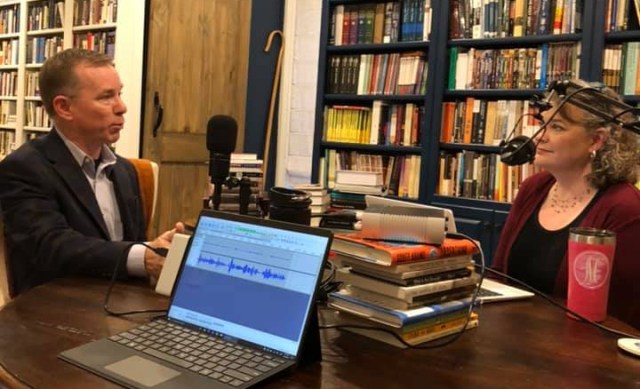
Mike Stone, Michelle Lesley

Earlier this week, I had the opportunity to attend an event sponsored by the Louisiana chapter of the Conservative Baptist Network featuring Pastor Mike Stone, anticipated 2021 nominee for president of the Southern Baptist Convention.

The next morning, Pastor Mike graciously made the time to sit for a brief interview with me, which I’m making available to you today for informational purposes, especially if you’re Southern Baptist.

I’m sure there are some theological topics on which Pastor Mike and I don’t see eye to eye, so this isn’t meant to be an endorsement of anything that conflicts with my theology as outlined in my Welcome and Statement of Faith tabs, nor is the fact that Pastor Mike is appearing on my blog an endorsement of any of my theology that conflicts with his positions. This interview was simply a service both of us are providing to you so that you may know where Pastor Mike stands on the issues I asked him about.

That being said, as a brother and sister in Christ who share a passion for the sufficiency of Scripture, a disdain for so-called “soft-complementarianism,” and a desire to see the Southern Baptist Convention straighten up and fly right, I feel certain we have far more in common than not. I found Pastor Mike to be a warm and caring brother, and I commend him for taking a firm, biblical stand on some issues which, sad to say, will not earn him any brownie points in certain sectors of the SBC. That takes guts, and I respect that. I thoroughly enjoyed our chat.

Listen in on the audio player above or on my YouTube channel (audio only).

I know some of y’all like transcripts when I post audio. I was not able to transcribe Pastor Mike’s portion of interview, but you may read my questions – as well as a post-interview addendum to Pastor Mike’s answer to question #2 – here.

Many thanks to Pastor Mike Stone, the Conservative Baptist Network, the Louisiana chapter of the Conservative Baptist Network, CBN Steering Council member, Pastor Lewis Richerson, and Benjamin Lesley- producer, for making this interview possible.

Mailbag

The Mailbag: Potpourri (Unfollowing iffy teachers, Teacher training, Church search & 9Marks, Charitable giving, SBC21, AWFS transcripts)

Welcome to another โ€œpotpourriโ€ edition of The Mailbag, where I give short(er) answers to several questions rather than a long answer to one question.

I like to take the opportunity in these potpourri editions to let new readers know about my comments/e-mail/messages policy. Iโ€™m not able to respond individually to most e-mails and messages, so here are some helpful hints for getting your questions answered more quickly. Remember, the search bar (at the very bottom of each page) can be a helpful tool!

Or maybe I answered your question already? Check out my article The Mailbag: Top 10 FAQs to see if your question has been answered and to get some helpful resources.


Iโ€™m currently listening to a [Bible study] podcast. I have enjoyed it so far because after I read, Iโ€™m able to hear a different perspective, maybe the speaker goes over something I didnโ€™t catch, or maybe the speaker says something that isnโ€™t how I interpreted the text. I always go back to the Scripture and compare when her opinion and mine differ to see what the scripture says. Thereโ€™s now been two issues that I just believe she is plan wrong about. At what point would you cut ties? My husband has told he wants me to really ponder if the teacher is trustworthy if she adds to Scripture or changes God’s intent. Iโ€™m all for testing everything I read/listen to against Scripture, but at what point would you consider not following a teacher due to misleading or just plain wrong information?

At the point at which my (doctrinally sound) husband expressed concern, if I hadn’t already unfollowed her on my own.

Ladies- if you have a godly, doctrinally sound husband who knows his Bible, be thankful (as I’m sure the reader who sent in this question is). What a wonderful gift God has given you! He’s able to give you a biblical perspective on things you might not have thought about before, he can give you godly counsel on those things, and he cares about your spiritual life and growth in holiness.

If you have a husband like that and he’s saying, “I don’t think you should listen to that podcast, read that author, etc.,” I would urge you to give serious thought to what he’s saying. I would also recommend heeding his leadership and unfollowing that person, even if you don’t totally agree with him. It’s very likely that one day, you’ll look back at that author or podcaster and see your husband’s concerns more clearly, and be glad you took his advice. And even if you don’t, or even if he turns out to be wrong, you’re still demonstrating respect for, and submission to his spiritual leadership – and that’s worth way more to your marriage and to being a godly wife than any podcast, book, YouTube channel or anything else.

If you’re in a position in which you’re having to decide for yourself whether or not to continue following a certain “iffy” teacher, here’s what I’d recommend:

  • Make sure the “red flags” you’re seeing are actually biblical issues (as this reader’s red flags were), not personal preferences. You may not like that a pastor likes hymns instead of more contemporary (doctrinally sound) worship music or that a (doctrinally sound) female teacher has really short hair, but that’s personal taste, not being unbiblical.
  • Be sure you understand and can rightly handle Scripture well enough to make sure it’s the teacher who’s the one in error, not you.
  • Make certain that what you’re hearing as a red flag wasn’t just a “one and done” instance of the teacher accidentally misspeaking, flubbing her words, or not being as clear as she could have been.
  • If you’re seeing red flags and you’re a new Christian or you know yourself well enough to know you could be easily swayed by this teacher into believing something wrong, stop following her.
  • Consider that for every red flag you’re seeing, there could be another red flag that your’e not recognizing or that this teacher hasn’t revealed yet.
  • If you’re a mature Christian who’s following this teacher for biblical instruction and you’re increasingly seeing red flags, that’s God’s way of telling you -through what you know from His Word- that you don’t need to be receiving teaching from this person.
  • If you don’t want to follow or are uncomfortable following a certain teacher, that doesn’t require you to make any sort of public declaration that others shouldn’t follow her or that she is a false teacher. You can simply make the quiet, personal decision to stop following her.
  • Remember, there’s no law that says you have to follow any particular teacher, or any teachers at all for that matter. Christians have been doing just fine for 2000 years simply being taught by their own pastor, elders, and teachers at church.

While reading your article, McBible Study and the Famine of Godโ€™s Word, I finally realized my struggle with leading the womenโ€™s study is because I havenโ€™t been trained to teach. Unfortunately, there arenโ€™t any strong teachers in my church – a big problem. Do you have any suggestions or recommendations for learning how to learn? Online, books, etc.?

The first thing I would recommend is that you explain your dilemma to your pastor and ask him to train you (and others in your church – One on one meetings between a pastor and a woman are not a good idea. Plus, it sounds like a lot of people in your church need to be trained.) to teach.

If your pastor is not a “strong teacher” or is incapable of training others to teach, you probably need to start looking for a new church. One of the biblical qualifications for pastors is that they be “able to teach” (1 Timothy 3:2) and be “able to give instruction in sound doctrine” (Titus 1:9). Paul exhorted Pastor Timothy: “what you have heard from me in the presence of many witnesses entrust to faithful men, who will be able to teach others also.” Pastors ought to be able to teach others to teach.

As your pastor is training you, you may wish to work through some of my Bible studies, or use them as studies for your women’s class. My studies are designed to teach women how to study or teach straight from the text of Scripture in a “learn by doing” sort of way. Once you get a feel for the kinds of things you should be seeing in the text and questions you should be asking of the text, you can take off those “training wheels” and fly solo.


Are you suggesting that the churches listed at the search engines at your Searching for a new church? resource are the only churches that are teaching biblically?

Not at all. That resource is not, nor is it meant to be, a comprehensive list of every doctrinally sound church on planet Earth. That would be impossible. I’m sure there are thousands of other perfectly doctrinally sound churches out there (and if you are personally connected to any others, please let me know.) That resource is merely a suggestion of some of the doctrinally sound churches in various areas of the world that Christians can check out if they’re looking for one to join.

I would like clarification on 9Marks website.

It’s a little hard to “clarify” when I’m not sure what the question is. :0) I can only infer that, like others, you’ve noticed Mark Dever and a few other pastors/teachers in that circle who, over the past few years, seem to have occasionally dipped a toe into the social justice waters.

I added the 9Marks “church search” to my list of church search engines several years ago before that became an issue. I believe that the majority of churches that are listed at the 9Marks site probably also applied to be listed before this became an issue or are not aware that it is currently an issue.

So far, as far as I know, Mark Dever and 9Marks haven’t turned rabidly woke, given a full-throated endorsement of Critical Race Theory, spoken out in favor of clear progressivism or liberalism, etc. I’ll continue to keep an eye on them, and if and when that happens, I’ll remove the 9Marks church search. But right now, they’re still at the stage of being decent brothers in Christ who every once in a while make an iffy statement or two. The churches on the 9Marks list aren’t required to agree or align with everything Mark Dever and 9Marks say, and, at the moment, I believe that the majority of the churches on that list are doctrinally sound.

If you have misgivings about 9Marks, by all means, skip that church search engine and use the others I have listed. And, as the disclaimer on that page says: “Please use this list only as a suggestion of churches to check out using biblical wisdom and discernment.” You are responsible for personally vetting any church you choose to visit or join.


Do you know of, and/or recommend, any particular causes or charities that areโ€ฆ well, Godly (moral and ethical)? There are so many charities that don’t use their donated funds for their advertised causes (you know, instead the donations go to support the CEO’s million dollar mansion and such). I want to give, I just don’t know to whom or what.

The first place you should be giving is to the offerings of your local church – to support your pastor and staff, pay the bills, contribute to the upkeep of the church, support missionaries, etc. This is part of being a faithful church member.

If you still have money left over after that, ask your pastor about the missionaries and other Christian organizations (ex: a local crisis pregnancy center, orphanages, church plants, etc.) your church supports financially, and give more money directly to these organizations. You should follow your pastor’s leadership and work hand in hand with your church in supporting these entities.

And if you still have money left over after that, would you adopt me? :0) Just kidding. If you follow any doctrinally sound podcasts, pastors, teachers, or authors, find out which parachurch organizations they support. For example, two of the ministries I follow are Grace to You and Wretched. I would love to be able to support The Master’s Academy International, which trains indigenous pastors all over the world to minister in their context. One of Wretched’s sponsors I would contribute to is Pre-Born, a pro-life ministry that emphasizes sharing the gospel.

(And just FYI: I do not recommend Samaritan’s Purse / Operation Christmas Child.)

May God bless your generosity.


Will there be a 2021 version of the Arrive Prepared resource for this yearโ€™s SBC Annual Meeting?

I thought about that a couple of weeks ago, but to be perfectly transparent I am so disillusioned with and depressed by the state of the Southern Baptist Convention at the national level right now that I just don’t have the heart for it.

Last year, I was in more of a “Let’s charge into hell with a water pistol and DO this thing!” frame of mind. This year, that has been replaced by a heaviness of spirit. Though there are many individual (and autonomous – for those not in the know, all SBC churches are autonomous) doctrinally sound SBC churches out there, including my own (and I’m so thankful for all of them), I just don’t have any reason to believe that anything is going to change at the national level. I think it’s just going to continue to get worse – more false teachers, more false doctrine, more egalitarianism, more Critical Race Theory, more liberalism, more biblical ignorance, more tolerance for sin, more 11th Commandment, more erosion of the authority and sufficiency of Scripture, and continued disdain for those of us in the Calvinist ghetto of the SBC.

I have never in my life more fervently hoped to be proved wrong, and I completely support my doctrinally sound brothers and sisters who are still standing in the flames brandishing their water pistols. But I’m shell shocked. That’s honestly just where I am right now.

In my estimation, about 85% of the information in the “Arrive Prepared” article is still accurate and relevant for this year’s annual meeting. Since the 2020 annual meeting was canceled due to COVID, my thinking is most of the same issues will be addressed this year, particularly abuse and Critical Race Theory / Resolution 9 (if you haven’t yet checked out the CRT video series I posted a few weeks ago, that would be a great resource).

I imagine issues surrounding COVID and the vaccine, the Equality Act, and persecution of the Western church will also be brought up. I hope the issues with NAMB (the North American Mission Board), including their church plants that have employed female “pastors” and co-“pastors,” will be biblically addressed, but my guess would be that that issue will be tabled or sent to committee or buried under procedural regulations and nothing will really be done about it clearly and publicly.

If you want to keep up on the issues, I would suggest following the people and organizations listed at the end of that article.

Sorry to sound like a Debbie Downer. I promise I’ll continue to think and pray about it, and if the Lord changes my mind, I’ll write a piece on it.


Could you please provide transcripts for each episode of A Word Fitly Spoken?

No, but we can come really close in two ways:

  1. Amy has started uploading our episodes (audio only) to our YouTube channel. There’s a “CC” button at the bottom of each YouTube video that allows you to turn on captions. (She has posted several of our past episodes as well.)
  2. All of our episodes are scripted, and we stick pretty closely to the script. Going forward, I’ll be posting the link to the Google Doc of our script for each episode in the show notes of that episode. Just click on “(Tran)Script” in the show notes. Many of our earlier episodes have been scripted from one of Amy’s or my blog articles, and if you’ll look in the show notes for that episode, you’ll find the link for that article.

If you have a question about: a Bible passage, an aspect of theology, a current issue in Christianity, or how to biblically handle a family, life, or church situation, comment below (Iโ€™ll hold all questions in queue {unpublished} for a future edition of The Mailbag) or send me an e-mail or private message. If your question is chosen for publication, your anonymity will be protected.

Southern Baptist/SBC

Arrive Prepared: Resources for Messengers to the 2020 Annual Meeting of the Southern Baptist Convention

The 2020 Annual Meeting of the Southern Baptist Convention
has been canceled due to the Coronavirus.
Click here to read more.


If you’re attending or serving as a messenger from your
church to the 2020 SBC, be sure to bookmark
this article and return to it periodically.
I will update it as needed between now and the Convention.
If you won’t be attending, please pass this along to your pastor and any messengers or attendees you know.

Please send me links to any SBC 2020 information, resources, or issues that should be added to this article.


Are you a Southern Baptist who’s concerned about – or maybe not even aware of – the direction the SBC is headed? If so, I’m glad you stopped by. I’m encouraging all of my Southern Baptist readers and followers to serve as messengers from your churches to the 2020 annual meeting of the Southern Baptist Convention and make your doctrinally sound, biblically informed voice heard.

At the 2019 Convention, a significant procedural problem was highlighted by the passage of Resolution 9 (more below). It was a resolution that dealt with two complex, and – to many messengers (and even SBC leaders) – unfamiliar issues, Critical Race Theory and Intersectionality. These highly technical and intricate issues were brought to the floor for a vote near the end of the day when some messengers had already left, others were tired, hungry, and ready to leave after a long day, and when time was limited. Concerns have been raised that, due to some of these factors, many messengers may not have had a solid grasp of the issue they were voting on and its consequences for the SBC.

I’d like to help rectify that situation in some small way by providing you with resourcesย ahead of time that will allow you toย #ArrivePrepared at #SBC2020.ย Convention procedures. Hot button issues. The original text of some of the resolutions you’ll be voting on. If messengers are to vote biblically, prayerfully, and sober-mindedly, they must be given the time to read, process, and pray for godly wisdom regarding the issues.ย 

When and where is the Convention being held?

Tuesday, June 9 – Wednesday, June 10, 2020

Orange County Convention Center
West Concourse
9800 International Drive
Orlando, FL 32819

Get more information, including the meeting schedule, discounted hotel rates, and childcare, at the SBC 2020 Annual Meeting Website

What is a messenger, and how do I become one?

A messenger is a member in good standing at a church in friendly cooperation with the Southern Baptist Convention who is approved by her church to attend the annual meeting and vote on the items presented during during the business sessions. Contact your pastor to find out how to become an approved messenger for your church.

More details and requirements for messengers and churches

Messenger pre-registration form/instructions for churches

What is a resolution, and how do I submit one to be voted on at the SBC?

A resolution is basically a public statement in favor of or opposing a particular issue, and frequently calling for some sort of voluntary action from Southern Baptists on that issue. The best way to understand what a resolution is is to read through some resolutions from the past. You can check out resolutions from all the way back to 1845, and get an idea of which issues the SBC was facing at the time and how Southern Baptists just like you thought the SBC should respond. Messengers vote for or against resolutions, and resolutions either pass or fail. It is important to understand that because of SBC polity, resolutions that pass are non-binding on the local church. In other words, your church is free to follow or not follow each resolution as your pastor and/or congregation sees fit. You do not need your pastor’s permission or approval to submit a resolution, but his input and guidance could be very helpful.

Past resolutions

How to submit a resolution

Members of the 2020 Committee on Resolutions

2020 Resolutions and Motions

These are items messengers may have the opportunity to vote on at the Convention. (Parliamentary procedure or committee action may preclude a vote.) I would love to publish the text of, or information regarding as many votable items as possible so messengers can read, inform themselves, and especially pray about how they should vote.

If you know someone who will be submitting a resolution or making a motion at the Convention and would like to have it published here,
please contact me as soon as possible.

Resolutions

This is the original text of these motions that will be submitted to the Committee on Resolutions. Please bear in mind, the Committee on Resolutions has the authority to “reword” these resolutions in any way they choose and then present theย editedย version to the Convention for a vote. This was a major issue with Resolution 9 last year. The Committee “reworded” the original resolution so much that the edited version ended up saying basically the opposite of the original version. The Committee also has the authority to decline to present a resolution for a vote. When you arrive at the Convention, please carefully read the versions of the resolutions you are given before voting on them.

On Beholding the Majesty of God submitted by Pastor Allen Nelson, Perryville Second Baptist Church, Perryville, AR

On A Reformation of Corporate Worship Practices submitted by Pastor Allen Nelson, Perryville Second Baptist Church, Perryville, AR

On God’s Good Hierarchical Design submitted by Jared Longshore, Associate Pastor, Grace Baptist Church, Cape Coral, FL

Motions

Motion to Rescind Resolution 9 (2019)ย (more information below)

Motion to approve the first Sunday in February as the annual George Liele Church Planting, Evangelism and Missions Day, (to begin in 2021)

Possible motion related to theย ERLC Task Forceย (see “The ERLC Task Force” under “Hot Button Issues” below)

Who are the nominees we’ll vote on for SBC President?

It can sometimes be hard to find out the names of specific nominees until the nominations are actually made at the Convention, because “campaigning” for the office of SBC president (or any other position of leadership) has historically been considered to be in poor taste from an etiquette perspective. However, in the last few years, those who are planning to make a nomination for president sometimes announce their intentions and the nominee on social media, in their state SBC newspaper, or elsewhere.

These are the potential nominees I’m aware of. If you know of others, please let me know so I can list them here. You wouldn’t vote for a U.S. Presidential candidate without finding out about him and his positions. It’s even more important, from a spiritual perspective, to find out about the SBC presidential nominees and their positions.

Dr. Albert Mohler– President of Southern Baptist Theological Seminary, former SBC pastor, instrumental in the Conservative Resurgence, theologian, author, blogger, podcaster

Randy Adams– Executive Director of the Northwest (Oregon, Washington, Idaho) Baptist Convention, former SBC pastor, former leader in the BGC of Oklahoma. Read Randy’s blog to learn more about his views. Announcement of nomination and goals here,ย here, and here. Facebook ย Twitter

(For more information on the nominees, please Google them or visit their social media pages.)

SBC 2020 Hot Button Issuesย to Be Aware Of

โญ•Abuse in the SBC Not only is the abuse issue itself likely to be addressed, be aware that the egalitarian movement within the SBC is using the abuse issue as a vehicle for pushing egalitarianism further into the SBC. Just one example: At the 2019 Caring Well conference on abuse, Beth Moore reportedly said that “having too few women in power has directly contributed to the sexual abuse crisis in the Southern Baptist Convention.” (This conference, where Beth Moore was not corrected for her many egalitarian remarks, was hosted by the Ethics and Religious Liberty Commission of the SBC.)

โญ•Egalitarianism- Increasingly, SBC pastors are allowing women to preach the Sunday sermon in their pulpits, teach co-ed Sunday School and Bible study classes, and preach at co-ed conferences. The current president of the Southern Baptist Convention, J.D. Greear, has close friends who are female pastors, and has not only spoken glowingly of Beth Moore but publicly defended her when John MacArthur suggested she should not be preaching. For years, the majority of LifeWay’s best selling women’s “Bible” study authors and conference speakers, including Beth Moore, Christine Caine, Priscilla Shirer, Lisa Harper, Lysa TerKeurst, and Jennie Allen, among others, have continued to preach to men at conferences and during the Sunday morning worship service at local churches. If things continue on their present trajectory, the SBC will likely codify approval of women pastors into the Baptist Faith and Message within just a few years.

โญ•Resolution 9- If you don’t know what Critical Race Theory and Intersectionality (CRT/I) are, youย must inform yourself and learn why they are dangerous, unbiblical social constructs that all Christians should repudiate and reject. In 2019, the heavily edited Resolution 9 presented CRT/I as a “helpful analytical tool,” and messengers voted to pass it. This year a motion will be made to rescind Resolution 9.

โญ•The SBC Pastors’ Conference Each year a conference for pastors is held immediately preceding the SBC annual meeting. This year’s Pastors’ Conference speaker/performer lineup includes a number of doctrinally unsound people. The most problematic are…

Wayne Cordeiro who pastors a Foursquare Gospel church. This denomination was founded by female preacher, heretic, and faith healer, Aimee Semple McPherson. It encourages women to be pastors, and there is a female “pastor” on staff at Cordeiro’s church.

Hosanna Wongย who is herself a “teaching pastor”.

Jim Cymbalaย whose church’s statement of faith declares that they adhere to the false teaching of the second (separate from salvation) baptism of the Holy Spirit.

Phil Wickham who is affiliated with Bethel Music.

David Hughes whose wife is co-“pastor” of his church, and who isย heavily into seeker-driven evangeltainment, even incorporating sexually provocative themes like Victoria’s Secret and Game of Thrones into his church’s materials and worship services.

You can read more details about each of these in Pastor Gabriel Hughes’ article, What In the Wide World Is Going On with the Southern Baptist Convention?

The SBC Executive Committee, David Uth, pastor of First Baptist Church Orlando, and president of the pastor’s conference (ergo, responsible for inviting the lineup) and others in SBC leadership have been contacted by numerous SBC pastors and other Southern Baptists protesting these egregiously unbiblical speakers and performers.

Due to this reproof, the SBC Executive Committee has voted to make their providing venue space for the Pastors’ Convention contingent upon Dr. Uth amending the lineup of speakers and performers. They have given him until March 30 to do so.

View the entire lineup of speakers/performers at theย SBC Pastors’ Conference Website.ย David Uth has invited feedback and questions about the Pastors’ Conference at SBCPC2020@firstorlando.com. (Be polite and godly. State which church you’re a member of. If you’re a pastor, state this, and whether or not you’ll be attending the conference.)

โญ•The ERLC Task Force– The SBC Executive Committee has voted to form a task force to investigate the activities of the Ethics and Religious Liberty Commission (ERLC) “in response to ‘ongoing concerns’ cited by EC members, state leaders, and other Southern Baptists that the ERLC is not adequately fulfilling its Convention-approved ministry assignments.”

Over the past several years, many Southern Baptists have grown concerned over the (far too numerous to list here) progressive, left-leaning positions and actions which the ERLC, under the leadership of Dr. Russell Moore, has taken on social and political issues, most notably: filing an amicus brief on behalf of Muslims attempting to build a mosque, creating an animal rights video that likened animal rights to the rights of pre-born children, hosting/sponsoring the MLK 50 Conference (honoring Martin Luther King, Jr.- a serial adulterer, who denied Christ’s resurrection and virgin birth despite claiming to be a Christian), and endorsing the Revoice (“gay Christian”) conference.

Because of these, and many other issues that suggest a liberal drift in the ERLC, a number of SBC churches have withheld or diverted their financial contributions to the Cooperative Program in protest, to the tune of at least $1.5 million, triggering the EC’s decision to form the task force.

The executive officers of the ERLC wrote a public letter of protest against the task force, essentially claiming that the EC is overstepping its authority and that it is the responsibility of the ERLC trustees (on whose watch the liberal drift has taken place, and who have stated they have complete “confidence in Dr. Mooreโ€™s leadership and in the effectiveness of the Commissionโ€™s ministry”) to hold the ERLC accountable.

In their letter of protest, the officers stated that they have instructed the ERLC not to comply with the task force “until messengers [at the 2020 SBC Annual Meeting] have an opportunity to signal their belief that such a task force is appropriate and legitimate.” This may indicate that someone in leadership at the ERLC is planning to make a motion at the Convention to dissolve or denounce the task force. You may have an opportunity to vote on this motion so it’s extremely important that you inform yourself on the issues and arrive at the convention prepared to vote intelligently.

Where can I get informed on the issues and keep up with the latest SBC news, so I’ll #ArrivePrepared at the Convention?

Watch the cinedoc By What Standard, filmed mostly at the 2019 SBC annual meeting. It is a good overview of CRT/I, egalitarianism, and other issues.

Connect with Founders Ministries and start reading. They have already addressed a number of these issues and seek to keep Southern Baptists informed.

Subscribe to The Sword and The Trowel podcast and listen in as Tom Ascol and Jared Longshore bring you (among other interesting topics) the latest SBC news.

Join the Conservative Baptist Network, a new, grassroots movement of pastors and Southern Baptists who want to see the SBC return to biblical fidelity. (Attend their launch event on June 8 at the Convention if you can.)

Subscribe to Baptist Press, the news agency of the SBC.

Follow pastors Tom Ascol and Tom Buck on Twitter. They always know what’s going on and what the biblical response should be.

And keep coming back to this article. I will continue to update it with news and links between now and the Convention.

Southern Baptist/SBC

The 11th Commandment: 6 Principles for Boldly and Biblically Breaking It

Every organization has them. Those unwritten rules that everybody seems to know. That newcomers learn through whispered admonitions or perhaps by inadvertently breaking them. The Southern Baptist Convention – and probably a lot of other denominations and parachurch ministries – has them too, and one that more and more people are learning about has, tongue in cheek, been dubbed “The 11th Commandment”:

Thou shalt not publicly criticize
other Southern Baptist leaders.

It seems to apply mostly to the upper echelons of SBC leadership: entity heads, celebrity pastors and authors, seminary leaders, the SBC president, the head of LifeWay. Basically anybody with power, position, or name recognition.

And we’re not talking about slandering or lying about someone. Naturally, that would be sinful and worthy of reproof. We’re talking about anything negative or critical even if it’s biblically correct and necessary.

I don’t know anyone personallyยน who has told me he’s/she’s been in this situation, but I’ve heard several stories from reliable sources over the past few years of pastors, people who work for LifeWay, SBC seminary employees, etc., who would like to speak publicly, biblically, and truthfully about sinful situations or unbiblical decisions in the SBC, but are reluctant to do so for fear of losing their jobs or positions. (On a smaller scale, I have heard from plenty of women who have been spiritually abused and bullied into silence, or out of their own churches, by church leadership for daring to speak out against LifeWay-endorsed false teachers.)

Think about that for a minute. This is a purportedly Bible-believing Christian organization in which doctrinally sound Christians are afraid to publicly stand for biblical truth for fear of retaliation from other Christians. Hush up. Cover up. Don’t shine the light of Scripture into the dark corners of the SBC.

This is an organization which, not so many years ago, battled to preserve the concepts of the inspiration, infallibility, and inerrancy of the Bible. A Bible which says:

Walk as children of light (for the fruit of light is found in all that is
good and right and true)

Take no part in the unfruitful works of darkness, but instead expose them. Ephesians 5:8b-9,11

If we truly believe these words are breathed out by God (inspiration), completely trustworthy (infallible), and without error (inerrant), how can there be a culture of back room intimidation in the SBC?

Why isn’t the Scripture we say we believe being obeyed?

Sin. People are sinning and it’s negatively impacting fellow Believers. Just like when I sin it negatively impacts fellow Believers. Just like when you sin it negatively impacts fellow Believers.

Anyoneยน who is helping to create a culture of intimidation against fellow Believers for speaking out in accordance with Scripture is in sin and needs to repent and be forgiven by the grace and mercy of Christ.

But, often, when we’re sinned against, even by brothers and sisters in Christ, the person sinning against us doesn’t repent right away (or sometimes, ever). She continues in her sin against us. Although we might be able to talk to the person and encourage her with Scripture to do what is right in the eyes of the Lord, we can’t change her heart. Only the Holy Spirit can convict someone of sin and give her the gift of repentance.

So, as leaders continue to attempt to enforce the “11th Commandment,” the only remaining decision to be made by those feeling pressured into silence is, “How do I respond to this? Do I speak out and risk my job, my reputation, my church, and a peaceful life for my family, or do I remain silent?”. I would encourage these folks to prayerfully consider the following biblical principles about this issue.

1.
Be Wise

As Ecclesiastes tells us,

For everything there is a season, and a time for every matter under heaven:…a time to keep silence, and a time to speak;

Don’t just let your default response be to keep your head down and your mouth shut regardless of the issue that comes your way. There are times when it is biblically valid to remain silent, but there are also times when we are required by Scripture to speak up, regardless of the personal cost. You must ask God for wisdom to discern how to respond biblically to each situation, and then you must act accordingly, trusting God with the outcome.


2.
Know the Issues

You’ve got to know your Bible and know where Scripture lands on various issues. That goes hand in hand with making a wise decision about whether to speak out or remain silent. Using wine versus grape juice for the Lord’s Supper isn’t a make or break New Testament issue for the church, so you probably won’t want to risk your job over something at that level of adiaphora, but false teachers who are wreaking spiritual havoc on your denomination and the church when you have the power and the platform to biblically denounce it? Speaking out on that issue is all over the Old and New Testament, and you’ll want to be sure you follow Scripture appropriately in your particular situation.


3.

Count the Cost

โ€œIf anyone comes to me and does not hate his own father and mother and wife and children and brothers and sisters, yes, and even his own life, he cannot be my disciple. Whoever does not bear his own cross and come after me cannot be my disciple. For which of you, desiring to build a tower, does not first sit down and count the cost, whether he has enough to complete it? Otherwise, when he has laid a foundation and is not able to finish, all who see it begin to mock him, saying, โ€˜This man began to build and was not able to finish.โ€™ Or what king, going out to encounter another king in war, will not sit down first and deliberate whether he is able with ten thousand to meet him who comes against him with twenty thousand? And if not, while the other is yet a great way off, he sends a delegation and asks for terms of peace. So therefore, any one of you who does not renounce all that he has cannot be my disciple. Luke 14:26-33

Have you counted the cost of being Jesus’ disciple? It’s high. Jesus says you “cannot be My disciple” if you aren’t willing to sacrifice relationships with your closest loved ones in favor of Christ and His Word. If you aren’t willing to sacrifice your physical life. If you aren’t willing to bear your own cross and follow after Him. If you don’t renounce all that you have. That includes your job, your reputation, comfort, ease, and security for your family, your church, your friends, book deals, speaking engagements, and sitting at the cool kids’ lunch table with evangelical celebrities. Jesus was despised and rejected by men. Are you, His servant, greater than your Master?


4.
Don’t Miss Your Calling

Then Mordecai told them to reply to Esther, โ€œDo not think to yourself that in the king’s palace you will escape any more than all the other Jews. For if you keep silent at this time, relief and deliverance will rise for the Jews from another place, but you and your father’s house will perish. And who knows whether you have not come to the kingdom for such a time as this?โ€ Esther 4:13-14

Go back and read the entire book of Esther. One of the main ideas of this little book is this:

Any position, power or platform you have is given to you by God,
and you are not merely to preserve and protect it, but to steward it for His purposes.

Just like God didn’t make Esther queen as an end in itself, God didn’t give you that job at LifeWay or that position at a seminary for you to protect it at any cost. He gave it to you as a means to an end – His glory, and the furthering of His Kingdom. Esther was willing to risk death, divorce, even banishment to speak up because she realized God had put her in the position of queen as a means of bringing about His purpose of delivering God’s people. Is it possible that’s why God put you in the position you’re in – to give you the voice and platform to speak out so others could be informed and inspired to stand up for biblical truth? Don’t let fear of the consequences rob you of the joy and honor of being used by God to bring about His purposes.


5.
In His Steps

Jesus. John the Baptist. Peter. Paul. Isaiah. Jeremiah. Samuel. Gideon. The Minor Prophets. Allย of these men (and more) spoke out against ungodliness among the people of God, and all of them paid dearly for it. Maybe some of them were afraid. Maybe some of them were concerned about their families and livelihoods. But all of them put God’s Kingdom and His people ahead of personal concerns and trusted that if they did what was right in God’s eyes, He would take care of them. And the same God who never failed them will never fail you.

Let the boldness and bravery of these men inspire you to be unwaveringly courageous. Let their unflagging resolve inspire you to forge ahead with no turning back. Let the depth of their faith inspire you to take God at His Word and believe Him for everything. We still need heroes of the faith today. Be the next one by following in the footsteps of the heroes of Scripture.


6.
Share in Suffering

Share in suffering as a good soldier of Christ Jesus.
2 Timothy 2:3

Suffering for the name of Christ and the truth of His Word is such a major theme of the New Testament I couldn’t begin to list all the passages that address it. When you’re a servant of Christ, suffering the same reproach He suffered from the same kind of people for the same reasons isn’t an option. It goes with the territory.

Second Timothy 3:12-13 says:

Indeed, all who desire to live a godly life in Christ Jesus will be persecuted, while evil people and impostors will go on from bad to worse, deceiving and being deceived.

And not only is suffering the reproaches of Christ guaranteed, we need to grasp the fact that this kind of suffering is an honor for the Believer.

And when they had brought [Peter and the apostles], they set them before the council. And the high priest questioned them, saying, โ€œWe strictly charged you not to teach in this name, yet here you have filled Jerusalem with your teaching, and you intend to bring this man’s blood upon us.โ€ But Peter and the apostles answered, โ€œWe must obey God rather than men…and when they had called in the apostles, they beat them and charged them not to speak in the name of Jesus, and let them go. Then they left the presence of the council, rejoicing that they were counted worthy to suffer dishonor for the name. Acts 5:27-29, 40-41

Read the whole account in Acts 5:17-42. Men of God were threatened, imprisoned, and subsequently beaten, by their “denominational leadership” for boldly proclaiming the Word of God to the people of God in the house of God. And those men of God got back up, dusted themselves off, and rejoiced because God Himself had seen fit to bless them with this honor.

We’ve got to radically transform our perspective on suffering for the name and Word of Christ:

  • We need to internalize and embrace the prospect of suffering rather than fearfully kicking against it and avoiding it.
  • We’ve got to fully wrap our minds around the fact that we won’t just suffer at the hands of unbelievers outside the church, we’ll also be persecuted by unbelievers (and sometimes even Believers) inside the church.
  • And finally, we not only desperately need to see suffering the reproaches of Christ as an honor rather than an embarrassment, we need to support, encourage, and stand with fellow Believers who are being persecuted rather than being ashamed to be counted with them.

When you face an “11th Commandment” issue there are some hard questions you need to ask yourself: Am I embracing the prospect of suffering for Christ, or avoiding it? Am I grasping the fact that the attempt by other Christians to silence me on a biblical issue is persecution? Am I ashamed of God’s Word and ashamed of being counted with those who are standing for it? Am I choosing to stay silent because that is the biblically wise decision regarding an inconsequential matter or am I just being a coward? Am I fearing God or fearing earthly consequences? Those are questions only you can answer through prayer and by rightly dividing and applying God’s Word.


Sometimes it is biblically wise to remain silent, but in the times when Scripture requires us to boldly take a stand for Christ and for His Word, weย dare notย seek to avoid suffering by caving in to the pressure of the 11th Commandment.

But if the watchman sees the sword coming and does not blow the trumpet, so that the people are not warned, and the sword comes and takes any one of them, that person is taken away in his iniquity, but his blood I will require at the watchman’s hand. Ezekiel 33:6


ยนI am not personally privy to specific examples of specific people intimidating others or being intimidated by someone, so this article is not aimed at any specific person/people. This article is about the principles surrounding the “11th Commandment”.