

Forgiveness, Obedience, Old Testament, Sin, Sunday School

David’s Sin: You da Man! ~ Sunday School Lesson ~ 5-18-14

sunday school

These are my notes from my ladies’ Sunday School class this morning. I’ll be posting the notes from my class here each week. Click here for last week’s lesson.

Through the Bible in 2014 ~ Week 20 ~ May 11-17
1 Chronicles 19-20, 2 Samuel 10-18, Psalm 20, 65-67, 69-70, 32, 51, 86, 122, 3-4, 12-13, 28, 55
David’s Sin: You da Man!


www-St-Takla-org--david

How could David, a man after God’s own heart (1 Samuel 13:14), sink to the level of committing adultery and murder? What was he thinking? How did he respond to being confronted by Nathan? What can we learn about how to deal with our own sin?

2 Samuel 11, 12:1-15, Psalm 51

2 Samuel 11- Setting the Stage for Sin

v. 1- “But David remained at Jerusalem.”
As we’ve read about David’s previous battles, where did we always find David when the fighting was going on? Back at the palace? No. He was out there with his men, leading things. This time, he was somewhere he wasn’t supposed to be. Can you think of a time when you were somewhere you knew you shouldn’t have been, which led to temptation?

v. 3- Eliam and Uriah: Mighty Men (2 Samuel 23:34, 39)
Both Eliam and Uriah were part of David’s mighty men. These weren’t just nameless, faceless Joe Blows in his army, but part of his inner circle who had been with him through thick and thin with fierce loyalty.

v. 4- The paternity test
Lest there be any question that maybe this was Uriah’s baby after all, verse 4 makes clear that the reason David saw Bathsheba bathing was that she was cleansing herself after “that time of the month.” David took her afterwards and Uriah was miles away at the battle, so only David could have been the father.

v. 8- Making Whoopee
(If you don’t know what that means, you’re not old enough to remember “The Newlywed Game” from the 1960s-70s. YouTube it.) “Go down to your house and wash your feet.” Since washing was done right before bed, this idiom meant for Uriah to go home and enjoy “knowing” his wife in the biblical sense.

thv. 9-13- A man of valor
Uriah, possibly inspired by David’s past honorable leadership, acted more valiantly and loyally here than his king did.

v. 4, 26- A willing participant?
Notice that this passage doesn’t tell us anything about what Bathsheba was thinking or feeling about all this. Remember, David was the king. You didn’t say no to the king if you wanted to live, especially if you were a woman. And furthermore, she knew he was “God’s anointed.” Surely such a man wouldn’t lead her to do anything wrong, would he? So, even if Bathsheba had been attracted to David, there was some level of coercion and advantage taking going on here on David’s part. Verse 26 makes a special point of telling us that she lamented over her husband. She loved him. David didn’t just sin with Bathsheba, he also sinned against her.

v. 27- Evil
I think in this case, the HCSB captures this verse better than the ESV (my preferred/usual translation): “The Lord considered what David had done to be evil.” That pretty much sums up what David had done, and it sums up our sin in God’s eyes as well. Evil.


2 Samuel 12:1-15- A Guilty Verdict

v. 1- Confronathan
Nathan wasn’t just a prophet; he was David’s friend and adviser. God sent him to confront David about his sin, and gave him the wisdom and the words to do it in exactly the right way.

v.1-4- The cast of characters
The rich man represented David. The poor man represented Uriah. The lamb represented Bathsheba. What do you think the traveler represented?

v. 4- Leaving out the welcome mat for temptation (1 Corinthians 10:13)
The traveler represented David’s temptation. Temptation is a lot like a visit from a traveling salesman. It comes and goes, it shows up unexpectedly, and it always tries to get you to spend more than you want to on something that seems fabulous but never lives up to the hype. When temptation rang David’s doorbell, he flung open the door and welcomed it in as an invited guest. As new creatures in Christ, we don’t have to do that. 1 Corinthians 10 says God will always provide a way for us to escape temptation.

One of those ways of escape is to not be home to answer the door. As I mentioned earlier, David wasn’t even supposed to be home when that temptation came around. He was supposed to be out on the battlefield with his troops. One way to avoid temptation is to be where you’re supposed to be and not be where you’re not supposed to be.

v. 4- Offering sacrifices to the idol of self
We also see in verse 4 that the rich man not only refused to send the traveler away and welcomed him in, but he also slaughtered a lamb to feed the traveler. The Israelites did slaughter lambs for food, but what else did they slaughter lambs for? Sacrifices.

David didn’t just welcome temptation in, he sacrificed for it. He was no longer sacrificing to honor God, but to gratify his own selfish desires. He sacrificed things that belonged to him—his integrity, his morals, his reputation, his example to his people, and his relationship with God. But he also sacrificed Bathsheba and Uriah who did NOT belong to him.

What are some ways we might sacrifice things, or others, for sin?

v. 5-6- The log in his eye (Matthew 7:3-5)
Isn’t it interesting how we can so clearly see the sin of others while simultaneously being blind to our own sin? “Why do you see the speck that is in your brother’s eye, but do not notice the log that is in your own eye?” (Matt. 7:3)

“He had no pity.” David never considered how his actions would affect Uriah and Bathsheba. He only thought about himself. Temptation and sin blind us to what we’re doing to ourselves, others, and God.

v. 7ff- Faithful are the wounds of a friend (Proverbs 27:6, Galatians 6:1-2, John 15:13)
Nathan was acting in three roles here. He was David’s friend, his brother in the Lord, and the man of God, and he loved David in all three capacities by showing him his sin. In the same way, we are to love our friends, our sisters in Christ, E1221909136and those under our spiritual leadership or influence. We care enough about them to help them out of sin, even at the risk of the relationship (Gal. 6)

Nathan confronted David wisely. Remember, David was the king—he could do (and had done) whatever he wanted to do, and he had already killed one man. Nathan knew this going in. Nathan also acted lovingly, boldly, and firmly. His commitment to what God had told him to do was greater than the love of his own life (John 15) or the love of his relationship with David. How often do we look the other way to keep the peace or preserve a relationship with someone instead of obeying what God has told us to do?

v. 7-9- Against Thee, Thee only…
I, I, I, I… Notice how many times God refers to Himself in these three verses? He is making it clear—and David gets the message as we will see in Psalm 51:4—that it is primarily God against whom David has sinned. Though others may be casualties or collateral damage (as Uriah and Bathsheba were), when we sin, we set ourselves up as enemies of God and wage war against Him.

v. 8- Gimme, gimme (Hebrews 13:5)
If all God had blessed him with had not been enough, God would have given him more. The fact that God had not given him more shows us that God had given David exactly what He wanted him to have. But David was not content with all the blessings God had given him. He selfishly wanted things God didn’t want him to have.

v. 9-10- Hatred for God’s word = Hatred for God
“Despised” and “evil”- When we sin, no matter how “small” it is, we are showing hatred for God’s word. Hating God’s word is evil. Notice in v. 9, “you have despised the word of the Lord,” and in v. 10, “you have despised me.” To despise God’s word is to despise God Himself.

v. 11-12- Public discipline for private sin? (Numbers 32:23)
Why did God discipline David publicly when he had sinned privately?

First, David had not sinned completely privately. Many people knew at least part of what he had done: the servants he sent to take Bathsheba in the first place (4), the servants who were in the house at the time(s) of the affair, Joab, likely several of the soldiers serving directly under Joab and with Uriah, probably the messenger who brought word of Uriah’s death, Nathan, and of course, Bathsheba herself. And you can bet that a lot of those people didn’t keep what they knew to themselves. “Your sin will find you out,” (Num. 32) is certainly true, especially for sins of this magnitude.

With all those people knowing what David had done, how would it reflect on God if He disciplined David privately? It would look as though God had given him a pass, that certain, special people were above God’s law. That’s how things were for kings of pagan nations. Israel and Israel’s God were different, not like the other nations. Furthermore, it would have diminished God’s justice in the eyes of Israel if God disciplined David privately and Israel couldn’t see it. How could they trust His justice if it looked like His justice was inconsistent?

Second, David was famous, highly visible. Like it or not, he set an example for the people. When he did right, it was a good example. Here, he did wrong and it was a bad example. Through his actions and God’s visible discipline, the people learned what not to do in their own lives.

v. 13- Admission of guilt
David didn’t try to justify his sin or retaliate against Nathan. It is precisely because he was a man after God’s own heart that he simply and humbly confessed, “I have sinned.”

v. 13-14- God’s merciful forgiveness
Because David confessed his sin and repented of it, God mercifully forgave him. While David had said the “rich man” should die for his sin (5), and David was guilty of crimes deserving the death penalty, God removed that penalty from him. The consequences of his sin would remain (the death of the baby), but the punishment was taken away.

1176199_570889419639205_1633472194_n

Psalm 51- Repentance and Restoration

Have mercy on me, O God,
    according to your steadfast love;
according to your abundant mercy
    blot out my transgressions.
Wash me thoroughly from my iniquity,
    and cleanse me from my sin!

For I know my transgressions,
    and my sin is ever before me.
Against you, you only, have I sinned
    and done what is evil in your sight,
so that you may be justified in your words
    and blameless in your judgment.
Behold, I was brought forth in iniquity,
    and in sin did my mother conceive me.
Behold, you delight in truth in the inward being,
    and you teach me wisdom in the secret heart.

Purge me with hyssop, and I shall be clean;
    wash me, and I shall be whiter than snow.
Let me hear joy and gladness;
    let the bones that you have broken rejoice.
Hide your face from my sins,
    and blot out all my iniquities.
Create in me a clean heart, O God,
    and renew a right spirit within me.
Cast me not away from your presence,
    and take not your Holy Spirit from me.
Restore to me the joy of your salvation,
    and uphold me with a willing spirit.

Then I will teach transgressors your ways,
    and sinners will return to you.
Deliver me from bloodguiltiness, O God,
    O God of my salvation,
    and my tongue will sing aloud of your righteousness.
O Lord, open my lips,
    and my mouth will declare your praise.
For you will not delight in sacrifice, or I would give it;
    you will not be pleased with a burnt offering.
The sacrifices of God are a broken spirit;
    a broken and contrite heart, O God, you will not despise.

Do good to Zion in your good pleasure;
    build up the walls of Jerusalem;
then will you delight in right sacrifices,
    in burnt offerings and whole burnt offerings;
    then bulls will be offered on your altar.

Idolatry, Sunday School, Worship

Worship Gone Wrong, Worship Gone Right ~ Sunday School Lesson ~ 2-16-14

sunday school

These are my notes from my ladies’ Sunday School class this morning. I’ll be posting the notes from my class here each week. Click here for last week’s lesson.

Through the Bible in 2014 ~ Week 7 ~ Feb. 9-15
Exodus 30-Leviticus 10
Worship Gone Wrong ~ Worship Gone Right

Think about the last time you were invited over to someone’s house for dinner or a visit. Even if it was your closest friend’s house, did you go into her kitchen and start rearranging her cabinets so the dishes would be the way you like them? Refold her towels into thirds instead of halves? Insist on fried chicken when she had planned baked? Would you like it if your closest friend came to your house and started doing things like that?

What’s your favorite flower? Mine is pink roses, and my husband knows this very well. Would it have been loving for my husband to give me a cactus for Valentine’s Day—even though he knows I can’t stand them –because that’s the plant he likes best?

We all have a certain way we like things done at our own homes for certain reasons. We have all been given gifts that make us feel loved and cherished (and some gifts that haven’t). God is no different. When we come into His house to worship Him, we abide by His “house rules” out of love and respect for Him. We are to offer Him the worship He desires, not because it makes us happy or comfortable, but because that’s what makes Him “feel loved.”

This week’s reading was all about worship. Worship done the right way – God’s way, and worship done the wrong way – man’s way.

Worship Gone Wrong: Man’s Way (Exodus 32)

32:1-2: Worship goes wrong when we take our focus off God.
Moses didn’t bring them out of Egypt, God did. But the people’s focus was only on the temporal and tangible. They hounded Aaron to give them a god they could see and worship their own way rather than an invisible God whose ways were holy and different from theirs. They were not thinking about what God wanted but what they wanted.

32:2-14: Worship goes wrong when the pastor is more interested in pleasing the people (or himself) than pleasing God.
Rather than leading the people and holding up God’s standard for them, Aaron gave in to their base desires. Contrast this with Moses who was more interested in God’s glory, His name being honored among the heathens, and His covenant promises, than Moses’ own self interest of being made a “great nation”.

32:4-6: Worship goes wrong when we paste God’s name on man made rituals.
Notice that they essentially called the golden calf “God” and claimed that worshiping it was actually worshiping God. This was not a situation in which they were inventing a new god to worship.

32:15-19: Worship goes wrong when we break God’s law (Exodus 19-20:21).
The people had heard from the very mouth of God himself, “You shall have no other gods before me. You shall not make for yourself a carved image, or any likeness of anything that is in heaven above, or that is in the earth beneath, or that is in the water under the earth. You shall not bow down to them or serve them…” Those are the first and second Commandments! They knew God’s Law and intentionally broke it. Our worship is unacceptable to God (indeed, it isn’t worship at all) when we do it while knowingly disobeying Him. (Naked church, homosexuality affirming “churches”, female pastors.)

32:25: Worship goes wrong when we give unbelievers the opportunity to mock God.
When the people “break loose” from doing things biblically with the pastor leading the way (as in the New Apostolic Reformation movement, for example), the world rightly mocks them. As a result, many unbelievers understandably take the position, “If that’s what Christianity is, I don’t want any part of it.” This is to our shame. (This is different, however, from being mocked for upholding biblical standards, such as standing against abortion or homosexuality.)

32:26-28: Worship goes wrong when people refuse to repent of their sin (Matthew 18:15-17, 1 Corinthians 5:11-13).
The three thousand men who refused to repent of their idol worship were the problem here, not the Levites. They were given every opportunity to repent and refused. This compounded their sin by forcing their brothers into a horrific situation of having to kill them.

Today, when church members refuse to repent of their sin, God has instructed us to put them outside the fellowship (after due process). This is painful for all involved, and puts brothers and sisters who are trying to faithfully follow God’s word in the awful position of having to confront and discipline people they may dearly love. It often causes a deep wound that necessarily hinders worship.


Worship Gone Right: God’s Way

God cares about the smallest details of how we approach Him in worship. (Exodus 30, 39)
He’s not an “anything goes” God. We see this in the detailed instructions about the construction of the ark, the tabernacle, and all its accessories, right down to the recipe for the anointing oil (30) and the little pomegranates on the hems of the priestly garments (39). (We’ll also see His instructions about worship to the church in the New Testament.) If God cares this much about the little details of worship, what are some things in our worship services and other church activities that we need to think about as to whether or not they’re pleasing to God?

God takes worship seriously, and so should His people (Exodus 32, Leviticus 10, Acts 5:1-11, 1 Corinthians 11:29-30).
The results of the golden calf incident (32), the strange fire incident (10), as well as situations in the New Testament show us that the way we worship and conduct activities in the church is no trivial matter to God. When He gives instructions about worship, He means what He says. It is just as wrong for us in the New Testament church to disregard God’s instructions about the Lord’s supper, giving offerings, qualifications for pastors/teachers, etc., as it was for Nadab and Abihu to offer “strange fire” before the Lord.

This doesn’t mean we can’t experience and express joy during worship—God wants us to! But there are also times to weep over our sin, listen intently to God’s word, and pray fervently. What are some things that show that a church/church members take worship seriously?

The men who lead God’s people have a grave responsibility to lead biblically, and God’s people have the responsibility to follow them biblically. (Exodus 32, Leviticus 10, 2 Timothy 4:1-5)
Pastors are to be faithful to God and His requirements for worship regardless of what the people clamor for. When pastors give in to the sinful desires of their people, they both endorse and give their people the opportunity to sin. So long as the pastor is standing by Scripture, we are to follow his leadership and support him.

The results of worship gone right (Leviticus 9:22-24)
When worship is done biblically, the pastor is in right relationship with God. He’s in the right position spiritually to be a blessing to God’s people. God blesses the people, they see His glory, He is pleased with their worship, His presence is with them, and it generates more worship.

Bible, Church, Sin

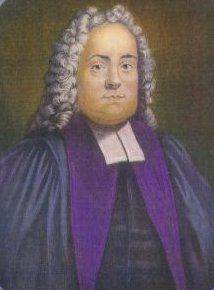
Matthew Henry on Leviticus 19:17

images

Do you use commentaries as you study the Bible? My favorite commentaries are Matthew Henry’s “Commentary on the Whole Bible.” (It’s pretty cheap on Kindle {get the unabridged version!} and absolutely free on BibleGateway.com).

I’m studying the book of Leviticus right now, and, this morning, Leviticus 19:17 was one of the verses on deck. I really liked Matthew Henry’s teaching on it, so I thought I’d share it with you. Since 17 century British English can be a little cumbersome in the 21st century, I’ve written a brief synopsis below each of his points. My words are in purple.

“You shall not hate your brother in your heart, but you shall reason frankly with your neighbor, lest you incur sin because of him.” Leviticus 19:17

VII. We are commanded to rebuke our neighbour in love (Lev. 19:17): Thou shalt in any wise rebuke thy neighbour. 1. Rather rebuke him than hate him for an injury done to thyself. If we apprehend that our neighbour has any way wronged us, we must not conceive a secret grudge against him, and estrange ourselves from him, speaking to him neither bad nor MatthewHenrygood, as the manner of some is, who have the art of concealing their displeasure till they have an opportunity of a full revenge (2 Sam. 13:22); but we must rather give vent to our resentments with the meekness of wisdom, endeavour to convince our brother of the injury, reason the case fairly with him, and so put an end to the disgust conceived: this is the rule our Saviour gives in this case, Luke 17:3.

Synopsis: If somebody sins against you, don’t hold a grudge or seek revenge. Go to him in love, talk it out, and forgive him.

2. Therefore rebuke him for his sin against God, because thou lovest him; endeavour to bring him to repentance, that his sin may be pardoned, and he may turn from it, and it may not be suffered to lie upon him. Note, Friendly reproof is a duty we owe to one another, and we ought both to give it and take it in love. Let the righteous smite me, and it shall be a kindnessPs. 141:5. Faithful and useful are those wounds of a friendProv. 27:5, 6. It is here strictly commanded, “Thou shalt in any wise do it, and not omit it under any pretence.” Consider, (1.) The guilt we incur by not reproving: it is construed here into a hating of our brother. We are ready to argue thus, “Such a one is a friend I love, therefore I will not make him uneasy by telling him of his faults;” but we should rather say, “therefore I will do him the kindness to tell him of them.” Love covers sin from others, but not from the sinner himself. (2.) The mischief we do by not reproving: we suffer sin upon him. Must we help the ass of an enemy that has fallen under his burden, and shall we not help the soul of a friend? Exod. 23:5. And by suffering sin upon him we are in danger of bearing sin for him, as the margin reads it. If we reprove not the unfruitful works of darkness, we have fellowship with them, and become accessories ex post facto—after the factEph. 5:11. It is thy brother, thy neighbour, that is concerned; and he was a Cain that said, Am I my brother’s keeper?

Synopsis: It is our biblical duty to call brothers and sisters in sin to repentance because we love them. We should both give and take correction in love. If we fail to correct our brothers and sisters, we are actually hating them instead of loving them. If we do not correct them, we are accessories to their sin.

Church, Sanctification

Revive Us Again


Thirty three per cent of clergy and thirty six per cent of laymen
report having visited a sexually explicit web site.
Christianity Today survey, August 2000

The divorce rate of born-again Christians (32%)
is higher than that of atheists and agnostics (30%).
Barna Research Group 2008

Twenty per cent of women who have abortions
are born-again or Evangelical Christians.
The Alan Guttmacher Institute, 1996

We rarely find substantial differences between
the moral behavior of Christians and non-Christians.
George Barna, Founder, Barna Research Group

You are the salt of the earth; but if the salt has become tasteless,
how can it be made salty again?
It is no longer good for anything, except to be thrown out
and trampled under foot by men.
Jesus, Matthew 5:13

Once upon a time, when I was a little girl, my parents took my sister and me to visit some of our elder relatives. For the evening meal, the lady of the house set a beautiful, formal table, complete with lovely crystal salt cellars at each place.

Having attended approximately zero formal dinners in my decade-long, casual dining existence, I had never seen a salt cellar. Since it happened to be sitting next to my goblet of unsweetened iced tea, I presumed it was my own personal sugar bowl.

I was puzzled as to why the spoon was so tiny, but forged ahead in an attempt to sweeten my tea with spoonful after spoonful…of salt. After one swig, I realized my mistake, but to maintain decorum, I did my best to eat my meal while taking an occasional small sip of the tea-flavored salt water. It was a long dinner.

I have never been so thirsty for a fresh drink of water before—or since—that moment.

We, the body of Christ, are supposed to be salt. Look around. How are we doing? By and large, instead of the church making the world thirsty for the Living Water, we have become so worldly ourselves that we are in danger of losing our savor altogether.

The Western church, the American church, the local church, maybe even your church—is in desperate need of revival. Not a revival meeting. Revival.

Revival is not a special event to win the lost. It is a time when God’s people, both individually and corporately, humble themselves, cry out to God in repentance and return to a fresh, empowered, obedient love relationship with Him.

Aren’t you tired of seeing statistics like the ones at the beginning of this article? Tired of the church having so little impact on a lost and dying world? Tired of simply going through the motions in your spiritual life and at church? Have you ever, as I have, taken a step back, looked at your walk and your worship, and said, “There’s got to be more to the Christian life than this”?

There is more. Much more. God desires that we have a full, exciting, vibrant, dynamic relationship with Him. But it’s going to cost us. It will cost our pride, our time, our repentance, our obedience, and our priority. It will require that we become dissatisfied and uncomfortable with the status quo of complacency.

I think we’re up for the challenge.

Turn away my eyes from looking at vanity,
and revive me in Your ways.
Psalm 119:37